How Do Kids Eyewear Specs Differ for PE Class vs Ball Sports Stocking?
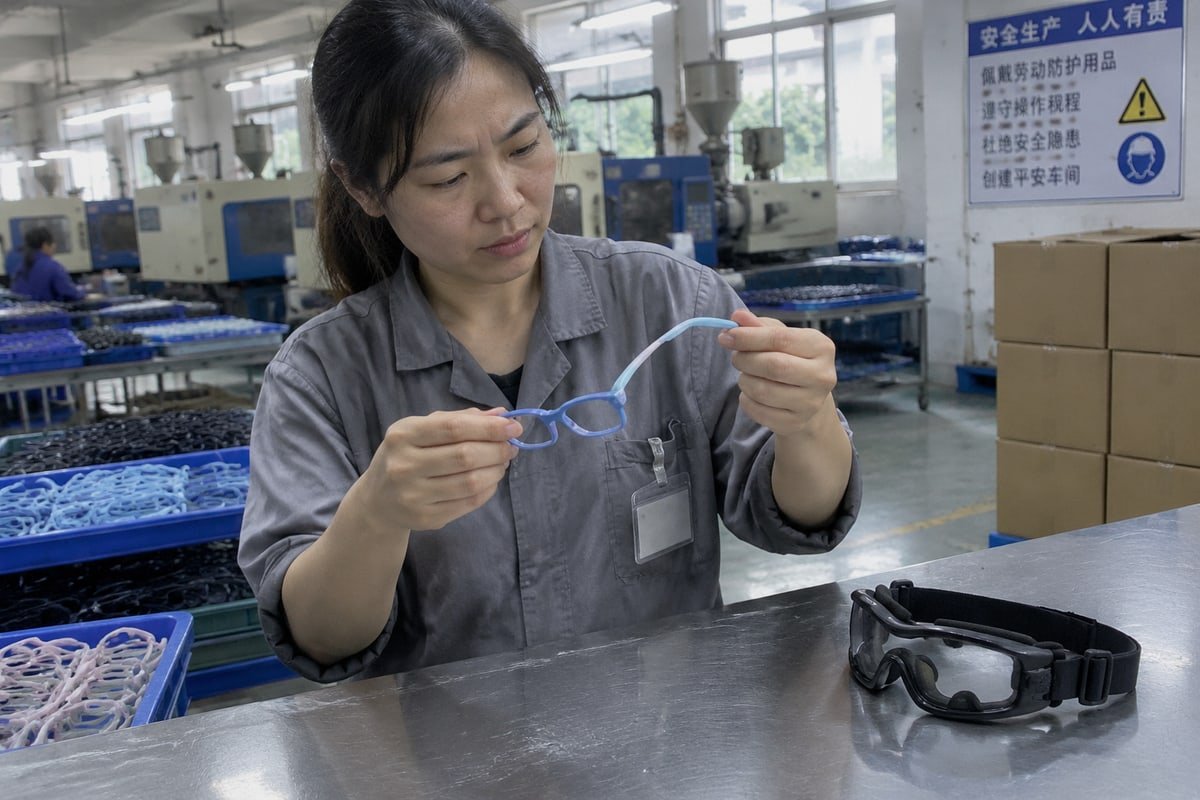
Buyers often ask our Taizhou team for one kids eyewear specs sheet covering both PE class and ball sports. That shortcut leads to returns and complaints. Here is the fix.
Kids eyewear specs for PE class prioritize versatility: flexible TPEE or TR90 frames, lightweight polycarbonate lenses, and secure comfortable fit. Ball sports eyewear demands ASTM F803 impact resistance, thicker lenses, padded wraparound goggles, full-tension straps, and helmet compatibility.
The two categories look similar on a shelf. They are not built the same way. Below, I break down lens and frame specs, certifications, materials, and ordering options so you can stock both correctly.
How do I choose lens and frame specs for PE class eyewear versus ball sports eyewear?
Last spring our QC line rejected a batch because the temples snapped back too slowly. That frame was fine for PE, but never for basketball.
Choose PE class eyewear with flexible TR90 or TPEE frames, clear polycarbonate lenses, and light retention. Choose ball sports eyewear with ASTM F803 rated goggles, 3mm center-thickness lenses, brow and bridge padding, full wraparound straps, and side ventilation.
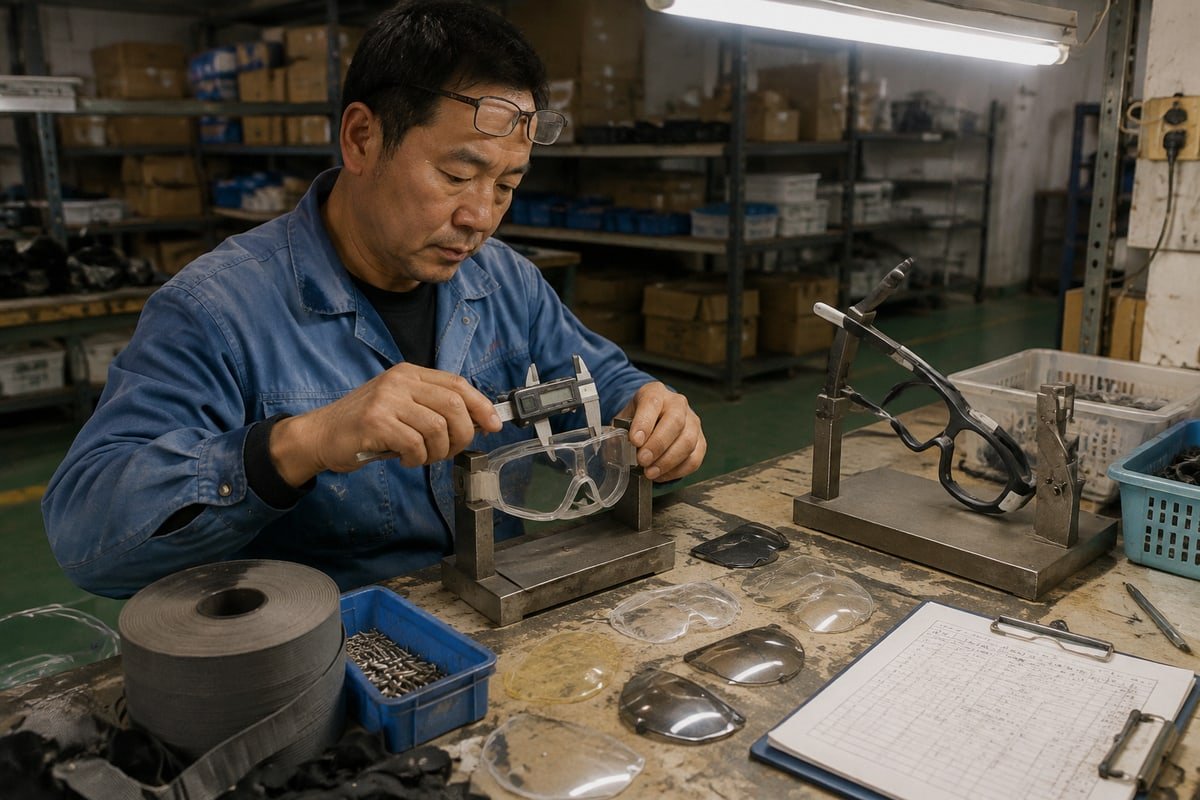
Here is the side-by-side view I share with new buyers before we talk about anything else.
| Spec area | PE class eyewear | Ball sports eyewear |
|---|---|---|
| Main goal | Versatility and all-day comfort | Impact protection and sport-specific fit |
| Lens material | Polycarbonate, clear or light tint | Polycarbonate or Trivex, often 3mm center thickness |
| Frame shape | Low-profile, lightweight, flexible | Wraparound frames with side coverage |
| Padding | Minimal, to keep weight down | Silicone bridge padding plus brow padding |
| Retention | Temple arms, optional ear hooks or light cord | Full-tension elastic wrap-around strap |
| Ventilation | Basic | Side-venting ports and anti-fog ventilation |
| Helmet use | Standalone wear | Low-profile designs that fit under helmets |
Why PE class specs lean toward versatility
PE class mixes running, jumping, tag games, and light ball play. The risk is moderate and unpredictable. A child wears the eyewear for a long period. So comfort wins. Our flexible TPEE temples 1 and TR90 fronts fit this use well. They bend instead of breaking. They stay light on small noses. Clear polycarbonate lenses 2 give neutral optics that work indoors and outdoors. That matters because a PE class can move from the gym to the field in one lesson.
Why ball sports specs lean toward protection
Ball sports bring targeted impact. A finger, an elbow, or a fast ball hits the eye area directly. So the frame needs a wraparound shape, padding at the bridge and brow to spread blunt force, and a lens thick enough not to pop out. The 3mm center thickness is the common floor for this reason. A full elastic strap keeps the goggle in place through sudden head movement. Some ball sports lines add amber or rose tints to sharpen ball contrast against grass or sky.
The buyer objection I hear most
Many product pages suggest one pair can cover PE, basketball, and baseball. I understand the appeal for inventory. But the clinical guidance is sport-specific, and I have seen why. A PE frame that shifts slightly is fine on a running track. The same shift during a rebound leaves the eye exposed. My advice is to stock a comfortable PE line and a separate rated goggle line, and to sell them as different products.
What safety certifications should I check when stocking eyewear for different sports activities?
A procurement manager from Australia once sent me a spec sheet listing only "CE" for a basketball goggle. We had a long call about that.
Check the ASTM F803 standard for basketball, racquet sports, lacrosse, field hockey, and baseball fielders. Check ASTM F910 for batting helmets and faceguards. For PE class sunglasses and optical frames, verify UV400 compliance and general impact resistance test reports.
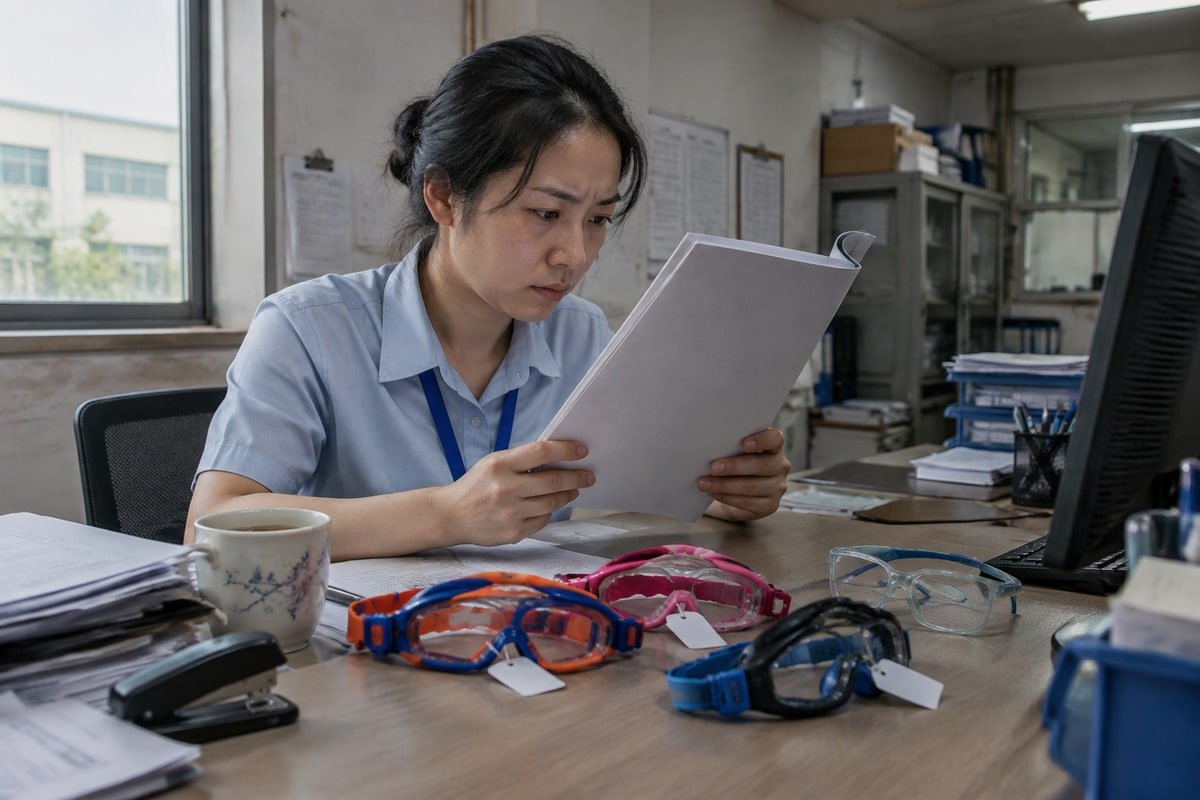
Certifications tell you what a product was tested to do. They do not tell you if it fits the sport. So I always start with the activity and work backward.
The standards that matter by activity
| Activity | Standard to check | What it covers |
|---|---|---|
| Basketball, tennis, squash, lacrosse, field hockey | ASTM F803 3 standard | Sports protective goggles tested against high-velocity projectile impact |
| Baseball or softball fielders | ASTM F803 | Goggle protection for players not at bat |
| Baseball or softball batters and base runners | ASTM F910 | Helmet-mounted faceguards and visors |
| PE class, running, playground, general outdoor | UV400 plus impact resistance reports | Optical and sunglass frames for everyday active use |
Why ASTM F803 is the trust signal for ball sports
Retail product pages now list ASTM F803 up front. Parents are shopping by standard, not only by style. The reason is simple. A rated goggle is tested against a projectile at high speed. Some guidance notes prescription polycarbonate lenses can withstand a projectile traveling at about 90 mph. That number is why polycarbonate lenses are the default for shatterproof materials 4 in sports eyewear. Trivex is another option for prescription sports glasses when a lighter lens is needed.
Why baseball is the clearest example of role-based specs
Baseball splits protection by position. Batters and base runners face a pitched or thrown ball at close range. So they need a helmet with an attached faceguard. Fielders face a lower but still real risk. So they can use ASTM F803 goggles. If a buyer stocks only goggles for a baseball program, they leave batters under-protected. If they stock only faceguards, fielders have nothing. I explain this early so the assortment covers both roles.
What we do on our side
Our core range is flexible TPEE and TR90 sunglasses and optical frames for PE class, playground, and everyday wear. We do not attach a sports rating to those products unless a third-party lab report supports it. When a buyer wants a rated goggle line, we treat it as a separate ODM project and ask for lab testing before any claim goes on the packaging. I would rather lose a quick order than ship a claim I cannot back.
How can I match flexible TPEE or TR90 frames to the impact level of each sport category?
Every week we weigh the same trade-off: softer TPEE for comfort or stiffer TR90 for hold. The answer depends on the sport's impact level.
Match TPEE temples and full-TPEE frames to low-impact PE, running, and playground use where flexibility and comfort matter most. Match stiffer TR90 fronts with TPEE temples to moderate-impact court and field play. Reserve rated ASTM F803 goggles for high-impact ball sports.
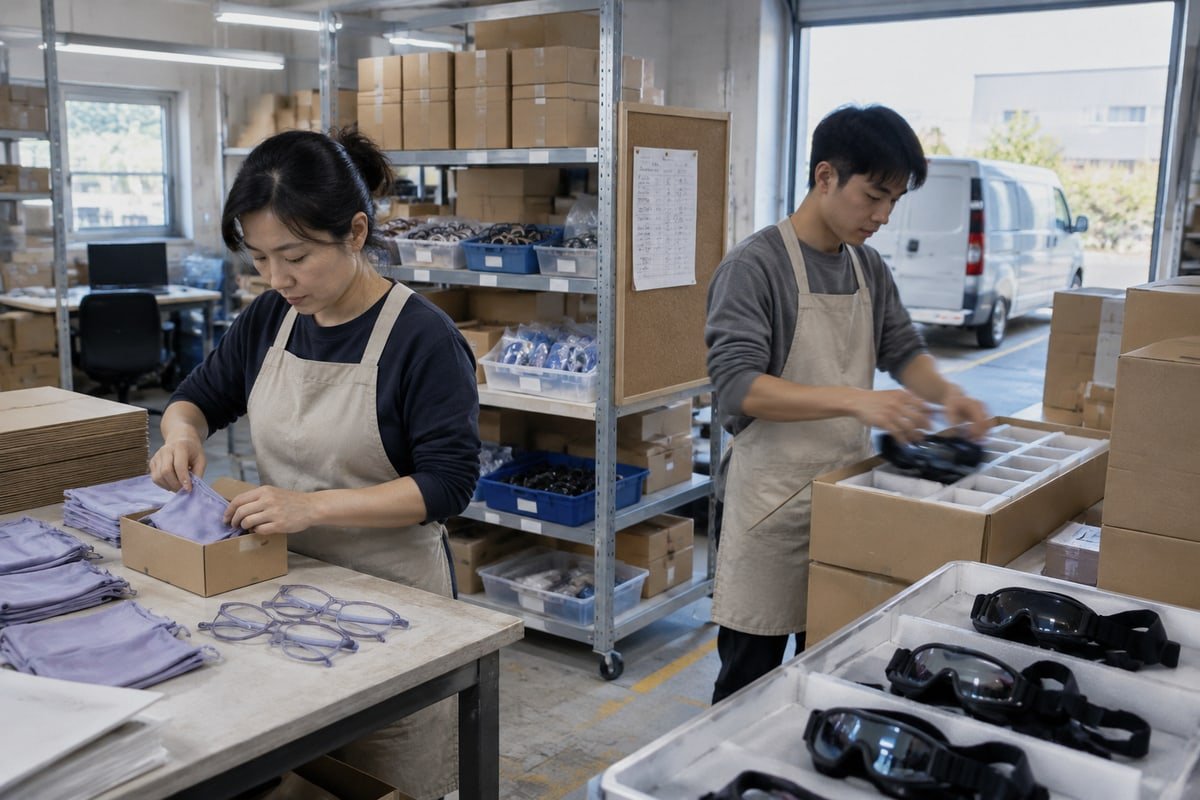
Material choice is where our 15 years of flexible-frame work pays off. Both TPEE and TR90 are environmentally friendly and lightweight. But they behave differently on a child's face.
How the two materials behave
TPEE is very soft. It bends almost flat and returns to shape. It is gentle on the ears and temples. That makes it ideal for long wear and for younger children who pull at their glasses. TR90 is stiffer. It still flexes, but it holds shape under load. A TR90 front keeps the lens seated when the frame gets knocked. Our most common build is a TR90 front with TPEE temples. The front holds the lens. The temples stay comfortable.
A simple matching process
- Rate the sport's impact level: low, moderate, or high.
- Pick the frame body based on how much the lens needs to stay seated.
- Pick the temple or strap based on how much retention the movement demands.
- Confirm the lens is polycarbonate and the thickness suits the impact level.
- Check helmet compatibility if the sport uses one.
| Impact level | Example activities | Frame recommendation | Retention |
|---|---|---|---|
| Low | PE warm-ups, running, playground, cycling | Full TPEE or TR90 front with TPEE temples | Temple arms, optional cord strap |
| Moderate | Volleyball, soccer, PE ball games | TR90 front with TPEE temples, wraparound shape | Adjustable head straps or ear hooks |
| High | Basketball, lacrosse, racquet sports, baseball fielding | ASTM F803 rated sports protective goggles | Full-tension elastic strap |
Where flexibility is not enough
I want to be direct here. Flexibility is a comfort and durability feature. It is not a substitute for a tested impact rating. A frame that survives being sat on in a school bag is a great PE frame. It is not automatically a basketball goggle. For high-impact play, the lens retention, side coverage, and padding matter more than temple flex. Some newer performance frames use castor-bean-based bio-polymers for better flexural fatigue under repeated stress. That is a promising direction for ball sports gear. It still needs the right standard behind it.
The wearability objection
Some buyers push back that full goggles are too bulky for kids to accept. There is truth in that. But there is a counter-effect too. Kids in proper goggles often play with more confidence because they feel protected. The modular hybrid frame is one answer to this tension. It lets parents swap temple arms for a full strap, so a PE-look frame becomes game-ready. We can build that swap into the temple hinge on our TR90 fronts for buyers who want one frame body across two lines.
What MOQ and customization options work best when stocking eyewear for multiple sports use cases?
Fifteen years in eyewear taught me one lesson: buyers who launch on existing styles first learn the market before spending on custom molds.
Start with lower MOQs on existing styles, around 800 to choose from, and customize colors, logos, lenses, and packaging per sport line. Add branded accessories like hard cases, adjustable head straps, and cleaning cloths so one order serves PE class and ball sports buyers.
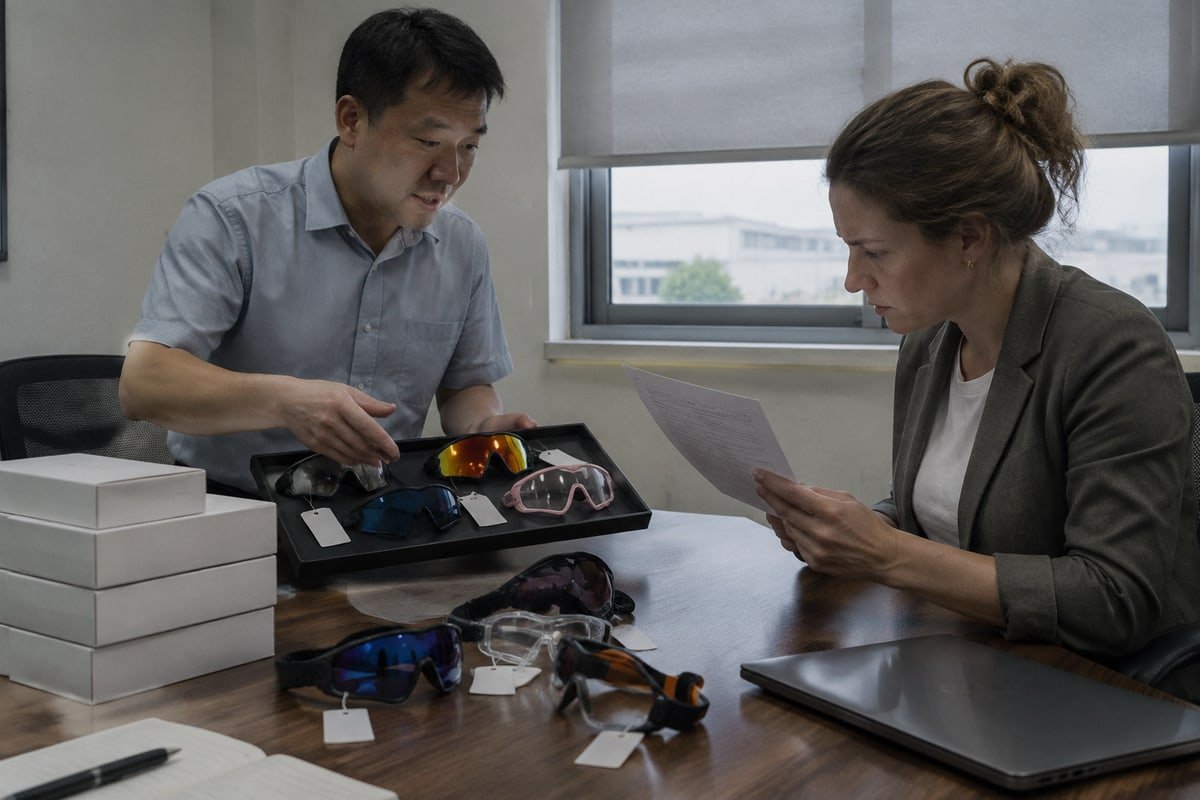
Stocking for several sports does not have to mean several tooling investments. Here is how I structure it with brands in Europe, Japan, and Australia.
Step one: launch on existing styles
Our catalog holds around 800 existing styles. A buyer can pick a low-profile TR90 frame for PE and a wraparound TPEE-temple frame for court play without paying for a mold. MOQs on existing styles run lower than custom projects because the tooling is already done. This lets a new brand test both categories with less risk. If one line sells, the buyer scales it. If it does not, the loss is small.
Step two: customize what the customer sees
Color, logo, lens tint, and packaging are where a brand shows its identity. We handle all of these under our OEM/ODM support. For a PE line, I usually recommend clear or light lenses and playful colors. For a ball sports line, I suggest amber or rose tints and darker frame colors with contrast branding. Logos go on the temple, the case, and the cloth so the presentation is consistent.
Step three: build the accessory set
Accessories decide whether a product looks retail-ready. Our kids' accessory sets pair a hard-shell zippered glasses case, a microfiber cleaning cloth, an elastic head strap with adjustable buckles, and a cord-style strap with slider and rubber loop ends. One of our pastel sets uses a rainbow, smiling clouds, and stars in pink and light blue, with a flower-shaped zipper pull. We also make a matching padded EVA pouch and a velvet drawstring bag in the same theme. The elastic head strap doubles as a retention upgrade for moderate-impact play. The cord strap suits PE use. So one accessory kit covers both use cases.
| Order option | Best for | Customization depth | Relative MOQ |
|---|---|---|---|
| Existing style, stock colors | Market testing, first orders | Logo and packaging | Lowest |
| Existing style, custom colors | Established brands adding a sport line | Colors, logo, lens tint, accessories | Moderate |
| Custom mold | Brands with proven demand and unique fit | Full shape, materials, and all branding | Highest |
What we check before shipping
Every order passes through our 5S-managed workshop with roughly 120 workers. We check hinge flex, lens seating, temple return, and print quality on every batch. Packaging gets a final visual check so cases, cloths, and straps match the frame color story. I would rather delay a day than ship a mixed set.
Conclusion
One spec sheet cannot cover every sport. Mismatched eyewear risks injury and returns. Match specs to impact level, verify standards, and build ranges with a partner who knows flexible materials.
Interested in sourcing the products mentioned in this article? See details and request a quote here:
Footnotes
1. Technical overview of thermoplastic elastomers, the flexible material used in durable children’s eyewear frames. ↩︎
2. Authoritative medical guidance on why polycarbonate is the preferred material for sports safety. ↩︎
3. Official website for the organization that establishes the primary safety standards for sports eyewear. ↩︎
4. Leading non-profit organization dedicated to eye health and safety standards for protective eyewear. ↩︎
More Articles You Might Like

September 29, 2026
How to Interpret Material, Age, and Warning Info on Kids' Eyewear Hang Tags?
September 29, 2026
How to Recycle Discarded Kids' Eyewear Accessories: Can Silicone and Plastic Parts Be Sorted?
September 29, 2026
How Recyclable Are Kids' Eyewear Materials, and What Are Eco-Friendly Alternatives?
Looking for a Reliable Kids Eyewear Partner?
Explore 800+ ready styles and full OEM/ODM support tailored to your brand.
Get in Touch English
 Español de México
 Deutsch
 Français
 日本語
 العربية
 Português do Brasil