How Recyclable Are Kids’ Eyewear Materials, and What Are Eco-Friendly Alternatives?
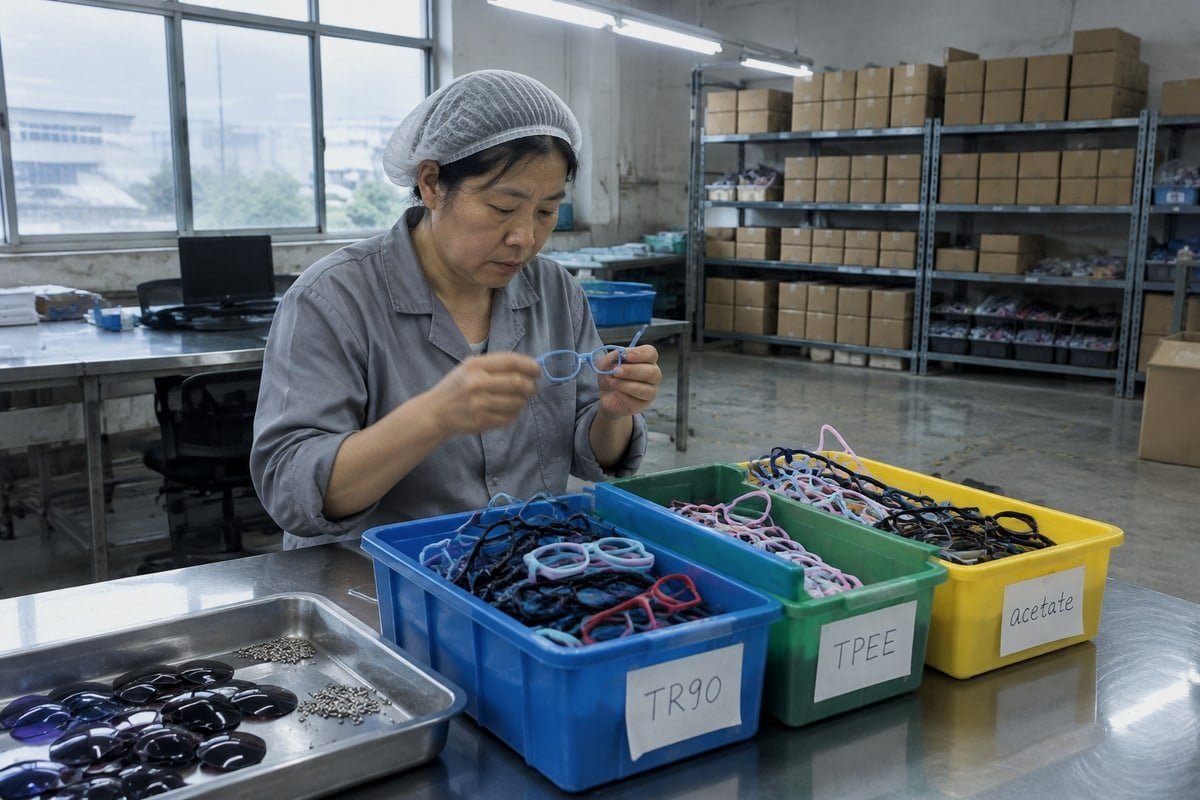
Importers keep asking me one question about kids’ eyewear materials: can these frames really be recycled castor-oil-based polyamide 1? On our Taizhou production line, the honest answer is more complicated than any label.
Kids’ eyewear materials are only partially recyclable. TR90, TPEE, and acetate frames are thermoplastics that can be reprocessed in theory, but mixed hinges, lenses, and coatings block curbside recycling. Eco-friendly alternatives include bio-acetate, castor-oil polyamide, recycled PET, and repairable frames backed by take-back programs.
That short answer hides a lot of detail. Some of it will change what you specify. Some of it will change which supplier you trust. I will walk through the materials we mold every day, the alternatives buyers ask about, the checks that separate real claims from greenwashing, and the safety trade-offs you cannot ignore.
How do I know if TPEE and TR90 materials are actually eco-friendly for children's eyewear?
The trade-off we weigh whenever a buyer requests a greener frame is simple: material origin versus material lifespan stainless steel or titanium 2. TPEE and TR90 win on lifespan, but they do not start green.
TPEE and TR90 are petroleum-based thermoplastics, so they are not bio-based by default. They are eco-friendlier than many alternatives because they are BPA-free, need no plasticizers, mold with little scrap, and survive years of rough use. Verify claims with material data sheets, not marketing.
What TR90 and TPEE actually are
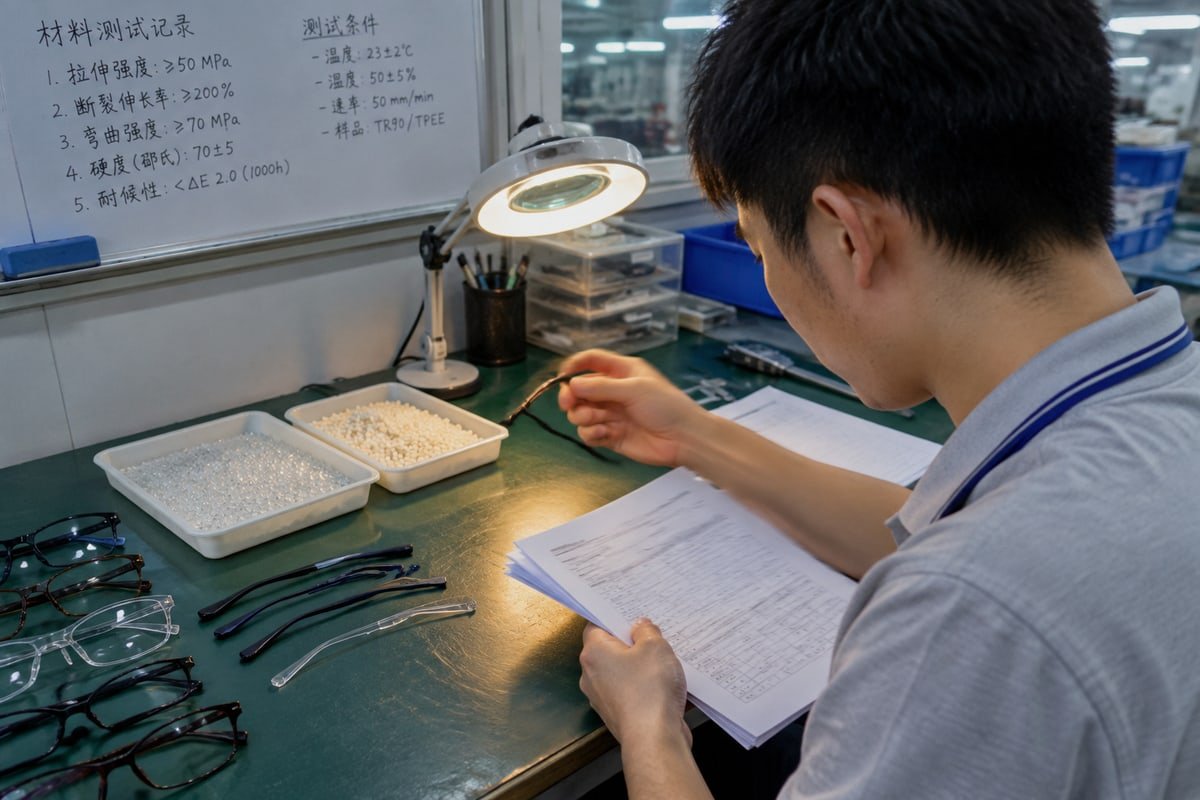
TR90 is a polyamide. It sits in the nylon family. TPEE is a thermoplastic polyester elastomer. In their standard grades, both come from petroleum feedstocks. Neither one qualifies as biodegradable eyewear, and I will not tell you otherwise. But both are BPA-free materials. Both are molded without the plasticizers that soften traditional cellulose acetate 3. That matters when a toddler chews the temple tips, which happens more than any catalog admits.
Where these materials earn their credentials
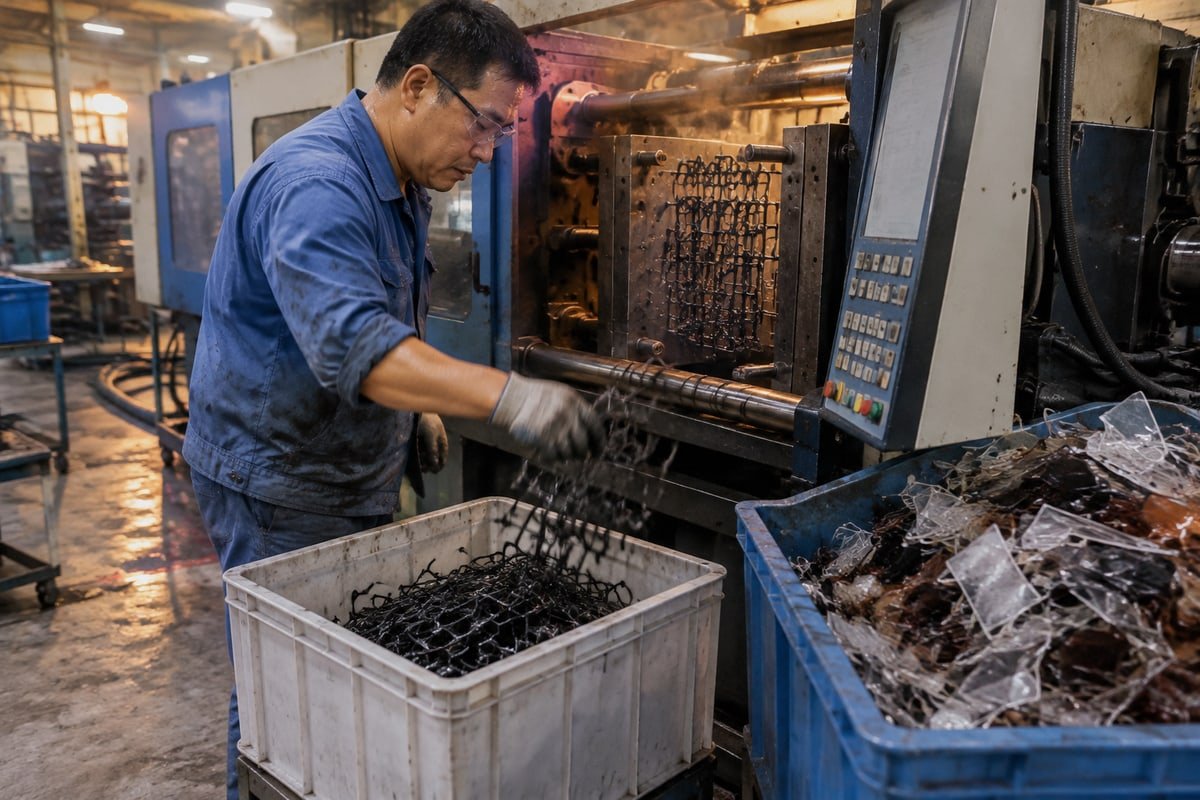
Three points carry the argument. First, injection molding. A TR90 or TPEE frame is molded to its final shape, so scrap is limited to sprues and runners, and those can be reground. Cutting acetate from sheet is different. That subtractive process can turn 70-80% of the block into waste. Second, durability. Children's frames are outgrown far more often than they are worn out. A frame that survives to be handed to a younger sibling has already halved its carbon footprint per year of use. Third, remeltability. A clean, single-material TR90 or TPEE part can be reground and processed again.
| Material | Standard origin | Molding waste | Remeltable | Curbside accepted | Kid-friendly traits |
|---|---|---|---|---|---|
| TR90 (polyamide) | Petroleum | Low | Yes, if clean and sorted | No | Flexible, light, BPA-free |
| TPEE (polyester elastomer) | Petroleum | Low | Yes, if clean and sorted | No | Very flexible, soft on skin |
| Cellulose acetate | Wood pulp and cotton, with plasticizers | High (cut from sheet) | Limited | No | Comfortable, stylish, heavier |
| Stainless steel / titanium | Mined metal | Medium | Yes | Sometimes, if stripped | Recyclable, but stiffer for toddlers |
Recyclable in theory versus recyclable in practice
Here is where skeptical buyers push back, and they are right to. A durable plastic is still a plastic. Being remeltable means nothing if the pair never reaches a facility that can remelt it. Screws, metal hinge inserts, silicone nose pads, lens coatings, and the lenses themselves all need separating first. Standard household recycling will not do that work. So the honest position is this: TPEE and TR90 are not green by origin. Their case rests on lifespan, clean processing, and design choices that let parts come apart. That is why we favor single-material frame bodies and screw hinges that release the temples. It is also why I ask buyers to think about the take-back path before they ask about the resin.
What sustainable material alternatives should I consider when sourcing kids' sunglasses and optical frames?
A buyer from Australia once asked us for a fully compostable kids' sunglass frame. We had to explain, gently, why that request would fail a drop test in week one.
The strongest sustainable material alternatives for kids' eyewear are bio-acetate, castor-oil-based polyamide, recycled PET or recycled ocean plastic frames, and stainless steel or titanium for older children. Pair any of these with modular, repairable designs and a take-back or donation path.
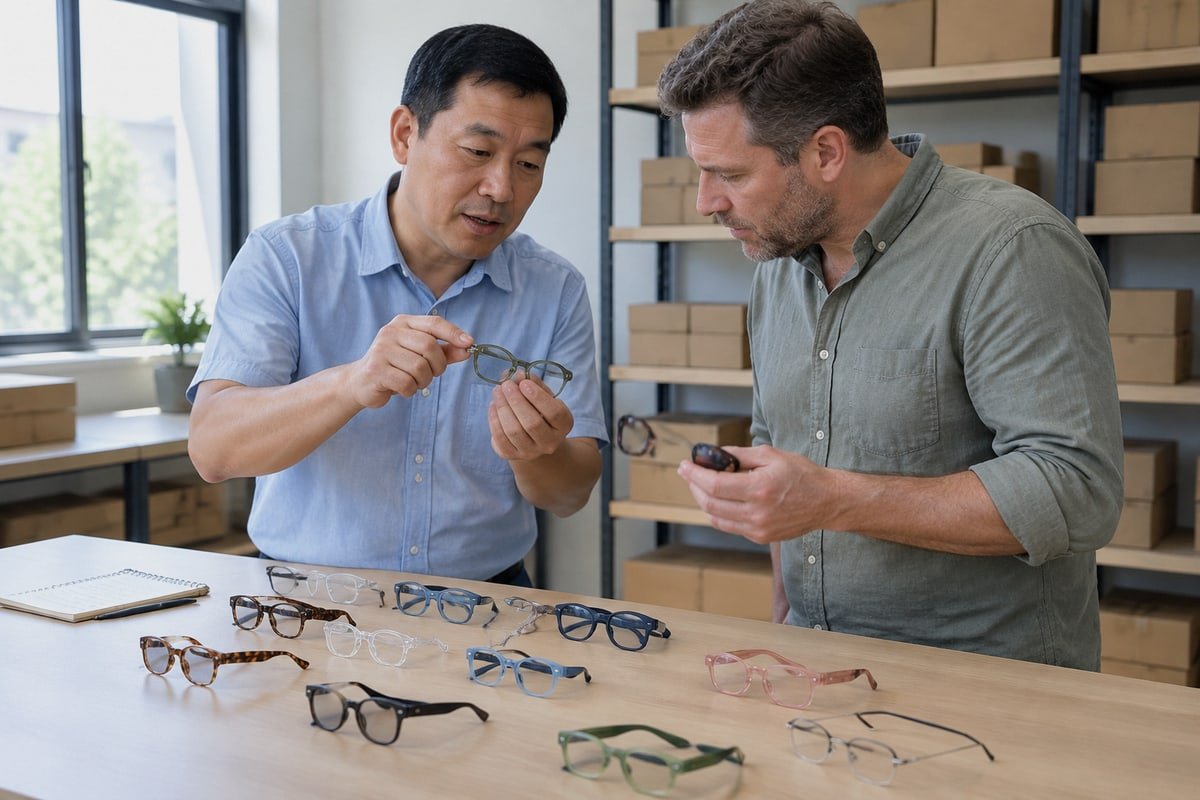
Start with the comparison, then read the detail below it.
| Alternative | What it is made from | Best kids' use case | Main strength | Main limitation |
|---|---|---|---|---|
| Bio-acetate frames | Cellulose from wood pulp and cotton, organic plasticizers | Optical frames, older kids | Renewable feedstock, premium feel | Biodegrades only in industrial conditions; high cutting waste |
| Castor-oil polyamide | Plant-based polyamide, similar to TR90 | Sports and active sunglasses | Flexible, lower carbon footprint than petroleum nylon | Costs more; supply is narrower |
| Recycled PET / recycled nylon 4 | Post-consumer bottles or fishing gear | Everyday sunglasses | Diverts existing waste, impact-resistant | Feedstock consistency must be controlled |
| Recycled ocean plastic | Ocean-bound waste, reprocessed | Brand storytelling lines | Strong sustainability message | Color and batch variation |
| Stainless steel / titanium | Metal | Older children, optical | Highest recyclability potential | Stiffer, less forgiving of rough play |
| Modular / repairable design | Any material, replaceable parts | All ages | Cuts total waste per child | Needs spare-part logistics |
Bio-acetate frames and plant-based plastics
Bio-acetate keeps the look and comfort of cellulose acetate but swaps petroleum plasticizers for plant-derived ones. It is biodegradable under specific industrial conditions, not in a garden bin. Some brands now publish a minimum bio-based carbon content for their acetate, which is the kind of number I like to see. Castor-oil polyamide is the more interesting option for our category. It behaves like TR90, so it flexes and bounces back, but its feedstock is plant-based. For kids' sports eyewear it is becoming the preferred plant-based plastic. When a buyer asks, we can evaluate bio-based polyamide grades for a project on request.
Recycled ocean plastic and R-PET
Recycled polyethylene terephthalate and recycled nylon are now molded into frames designed for active children, with impact resistance built into the spec. Some lines report substantial recycled content by weight. The real risk is not weakness. It is inconsistency. Recycled feedstock changes from lot to lot, so color matching and flexibility must be checked on every batch.
Metal, modular, and printed options
Stainless steel and titanium beat every plastic on recyclability, as long as the silicone nose pads and plastic temple tips are stripped first. For toddlers, though, metal is unforgiving. Modular frame architecture solves a different problem: parents replace only the outgrown bridge or the broken temple rather than the whole pair. On-demand 3D printing with recycled filament removes the 70-80% cutting waste of traditional acetate production entirely. Together these options form a hierarchy: durable and repairable first, recycled or bio-based with proven content second, mixed-material frames with no end-of-life path last.
How can I verify a manufacturer's environmental claims before placing a bulk eyewear order?
During an incoming-material check last year, our QC team rejected a resin lot because the supplier's paperwork did not match the pellets. That habit protects you too.
Verify environmental claims by requesting the resin supplier's technical data sheet, third-party test reports for the specific lot, a written recycled or bio-based content percentage, and a factory audit or video tour. Then confirm whether the frame has a real repair, take-back, or donation path.
Greenwashing in eyewear rarely looks like a lie. It looks like a true statement stretched past its meaning. "Eco-friendly" is not one property. A frame can be bio-based, recycled, recyclable, repairable, or reusable, and each of those needs its own proof. I use a six-step sequence with new buyers, and I suggest you run it on us as well.
A six-step verification process
- Name the resin. Ask for the exact material grade and the resin supplier. "Eco nylon" is not an answer. A data sheet with a grade number is.
- Ask for the percentage. Recycled content and bio-based content should come as a written number, with the method used to measure it. If a brand can publish minimum bio-based carbon content, a factory can too.
- Tie tests to the lot. Third-party reports for lens UV400 performance or frame impact behavior should reference a batch, not just a product name. Reports older than the mold are a warning sign.
- See the workshop. A real factory with around 120 workers and a 5S-managed floor can show you material storage, regrind handling, and labeling on a live video tour. A trading company cannot.
- Ask about the end of life. Does the design allow disassembly? Is there an optical frame recycling program, a donation partner, or a buy-back scheme attached to the product?
- Check the packaging claim separately. Cases, pouches, cloths, and straps are separate materials with separate claims.
What good evidence looks like
| Claim | Acceptable evidence | Red flag |
|---|---|---|
| "Recyclable" | Single-material body, disassembly instructions, named recycling partner | "Recyclable" printed on a mixed-material frame |
| "Bio-based" | Data sheet stating bio-based carbon content percentage | "Plant-based" with no number |
| "Recycled content" | Percentage by weight plus feedstock source | "Made with recycled materials" only |
| "Low carbon" | Molding process described, waste rate stated | Carbon footprint of eyewear cited with no boundary |
| "Safe for kids" | BPA-free material declaration, lens UV test per lot | Certificate for a different product |
Why end-of-life programs matter more than labels
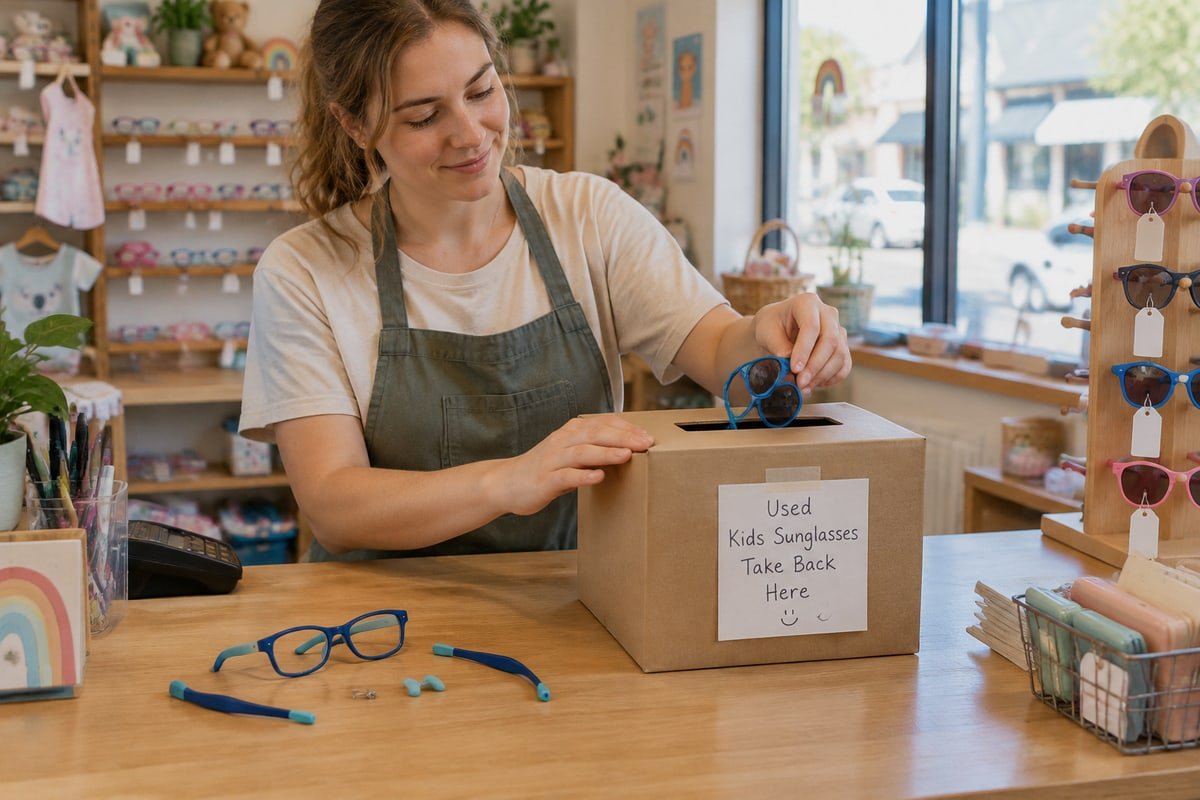
Take-back can work at scale. One major contact-lens and eyecare recycling program has reported collecting and recycling more than 119 million units in the United States, which municipal systems could never have handled. One eyewear collection initiative separates donations into plastic, metal, and lens groups before turning each into raw material. Store-based reuse models route wearable glasses to refurbishment and send the rest to recycling partners. Looking ahead, Digital Product Passports carried by micro-engraved codes could tell a sorter exactly what a frame is made of, solving the identification problem that stops eyewear at the recycling gate today. That is the circular economy in optics in practice. When we ship to buyers in more than twenty countries, the ones who ask about these programs are the ones who build lasting brands.
Will choosing recyclable materials affect the durability and safety of my kids' eyewear products?
Fifteen years of making children's frames taught us one lesson early: a sustainable frame that snaps at the bridge is not sustainable. It is landfill with better marketing.
Choosing recyclable materials does not have to reduce durability or safety, but the specific grade matters. Single-material TPEE and TR90 frames, castor-oil polyamide, and quality bio-acetate can all meet standard impact and flexibility requirements. Weak recycled blends or brittle biodegradable plastics can fail, so test every lot.
Flexibility is a safety feature, not a comfort feature
A child falls onto the side of their face. The frame either bends and returns or it cracks and leaves an edge. This is why we build TR90 frames with TPEE temples rather than chasing the most "green" material on paper. The rigid TR90 front holds the lenses in place. The TPEE temples flex around the ears and take the abuse. Castor-oil polyamide keeps this behavior while lowering the carbon footprint, which is why I see it as the most realistic upgrade path for active kids. Bio-acetate is comfortable and premium, but it is stiffer, so we steer it toward optical frames for older children rather than toddler sunglasses.
| Material choice | Flexibility | Impact behavior | Skin safety | Recyclability path | Our verdict for kids |
|---|---|---|---|---|---|
| TR90 front + TPEE temples | High | Bends, returns | BPA-free, no plasticizers | Remeltable if separated at hinge | Best all-round for ages 1-10 |
| Castor-oil polyamide | High | Bends, returns | BPA-free | Remeltable, plant-based origin | Best sustainable sports option |
| Bio-acetate | Low to medium | Can crack under hard impact | Plant-based plasticizers | Industrial biodegradation | Optical frames, older kids |
| Recycled PET blend | Medium | Depends on lot control | Must be verified per lot | Recycled input, remeltable | Good with strict QC |
| Brittle biodegradable plastic | Low | Cracks | Often untested | Composting only | Not suitable for children |
Lenses and small parts
Eco-friendly lens materials are the weak spot in most sustainability stories. Polycarbonate and polarized TAC lenses deliver UV400 protection and impact resistance, and children's eyes come first. So we do not compromise the lens spec to chase a recycling claim. Instead we make sure lenses release cleanly from the frame so they can be sorted into their own stream. The same logic applies to screws and nose pads. Any small part that a child could detach and swallow is a safety issue before it is a recycling issue, and we design around both at once.
Accessories that extend product life
Durability also depends on what happens off the face. Our retail-ready sets pair each frame with a hard-shell EVA zippered case, a soft velvet drawstring pouch, a microfiber cleaning cloth, an adjustable elastic head strap, and a cord-style eyeglass strap. Each item exists for one reason: a frame that is stored, cleaned, and secured lasts long enough to be handed down or donated. With around 800 existing styles, a new brand can launch this kind of complete set without heavy mold investment, then test which sustainable material story its market actually rewards. Full OEM/ODM support covers custom colors, logos, lenses, and packaging, so the eco claim on the box matches the frame inside it.
Conclusion
Recyclability alone will not make kids' eyewear green. Choose durable TPEE or TR90 or proven bio-based frames, verify every claim, and plan the end-of-life path before you order.
Interested in sourcing the products mentioned in this article? See details and request a quote here:
Footnotes
1. ISO standard for polyamide materials used in molding and extrusion, relevant to plant-based nylon alternatives. ↩︎
2. ISO standard specifying requirements for spectacle frames, including those made of metal. ↩︎
3. Overview of cellulose acetate composition and its derivation from wood pulp and cotton. ↩︎
4. EPA data on plastic recycling rates and material-specific waste management. ↩︎
More Articles You Might Like
September 29, 2026
How to Interpret Material, Age, and Warning Info on Kids' Eyewear Hang Tags?
September 29, 2026
How to Recycle Discarded Kids' Eyewear Accessories: Can Silicone and Plastic Parts Be Sorted?

September 29, 2026
How to Prevent Kids Eyewear Accessories From Deforming During Shipping and Stacking?
Looking for a Reliable Kids Eyewear Partner?
Explore 800+ ready styles and full OEM/ODM support tailored to your brand.
Get in Touch English
 Español de México
 Deutsch
 Français
 日本語
 العربية
 Português do Brasil