What Are Kids Eyewear Spec Requirements for Sports vs Ball Games?
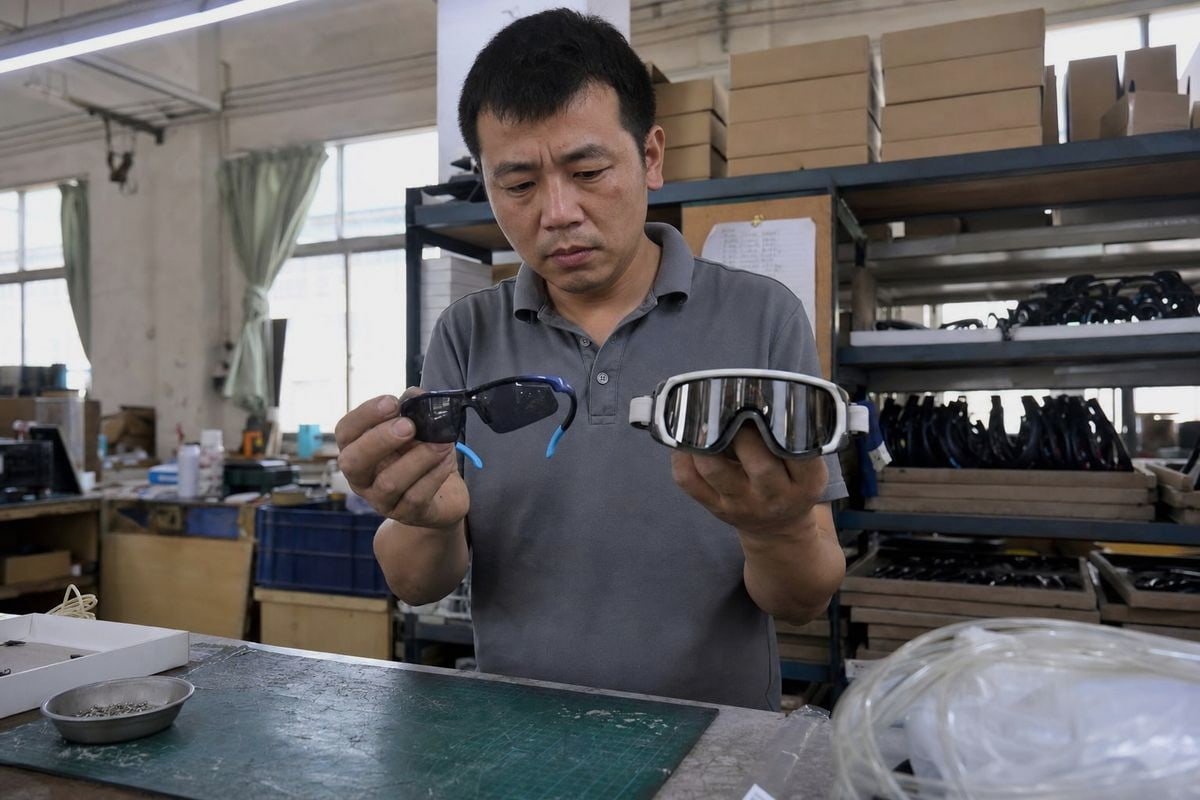
Kids eyewear spec requirements confuse many buyers who assume one “sports” spec fits everything. On our Taizhou production line, we see that mistake cost brands real money.
Kids eyewear spec requirements differ by risk: general sports need ASTM F803-rated impact resistance, polycarbonate lenses, flexible TR90 frames, and secure straps. Ball games add projectile-focused specs — enclosed goggle designs, rear-loading lenses, padding, and sometimes ASTM F910 or helmet compatibility.
The core idea is simple. Match the eyewear to the sport’s main hazard: movement, contact, or a flying ball. Below, I break down each spec so you can source with confidence.
What Impact Resistance Standards Should I Look for in Kids' Sports Eyewear?
A procurement manager from Australia once asked me why her supplier's "sports glasses" cracked in a drop test. The answer was simple: they were fashion frames with a sporty look, not protective sports eyewear built to a standard.
Look for ASTM F803, the primary impact resistance standard for youth sports eyewear. It covers basketball, soccer, tennis, racquet sports, field hockey, and lacrosse, and requires lenses and frames to survive high-velocity projectile testing that ordinary kids' eyeglasses are never designed to pass.
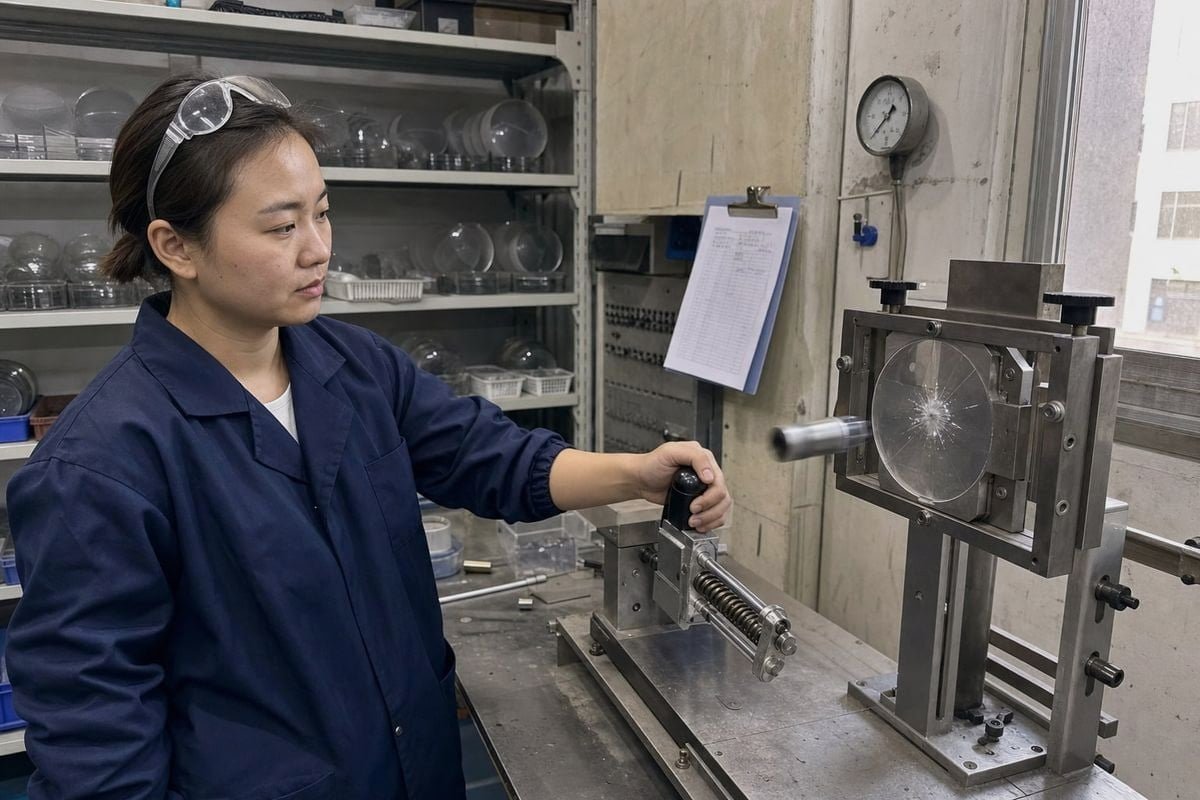
The ASTM F803 1 standard is the benchmark I point every B2B buyer toward first. In plain English, it means the eyewear was shot with objects at sport-relevant speeds, and neither the lens nor the frame failed in a way that could injure the eye. Regular optical frames — even good ones — are tested for durability, not for stopping a tennis ball. That distinction matters for eye injury prevention 2, and it should shape your product brief before you talk tooling or colors.
Why Regular Kids' Glasses Fail on the Field
Everyday frames use hinges, lens bevels, and materials chosen for comfort and style. Under impact, a standard lens can pop inward toward the eye. A rigid acetate frame can snap and create sharp edges. Sports-rated designs solve both problems with retained lenses and flexible, shatterproof eyewear construction.
Reading the Standards Landscape
| Standard | What It Covers | Relevance for Kids |
|---|---|---|
| ASTM F803 | Racket sports, basketball, soccer, field hockey, lacrosse eyewear | The core youth sports benchmark |
| ASTM F910 | Face protection for baseball/softball batters | Ball games with helmets |
| ANSI Z87.1 | Occupational/industrial impact | Not a sports substitute |
| CE / EN sunglass norms | UV and general lens safety | Baseline only, not impact-rated |
In our fifteen years building children's frames, buyers who specify the standard upfront get better quotes, cleaner QC criteria, and far fewer surprises at inspection.
How Do I Choose the Right Lens Material for Ball Games Versus General Sports?
Lens sourcing involves a trade-off we weigh constantly at our factory: optical clarity versus impact performance versus cost. For children's active eyewear, that triangle almost always resolves in favor of one material family.
Choose polycarbonate lenses for both categories — they are lightweight, shatterproof, and naturally UV-blocking. For ball games with fast projectiles, specify thicker polycarbonate in a rear-loading lens design. Trivex is a premium alternative offering sharper optics with comparable impact resistance. Never use glass.
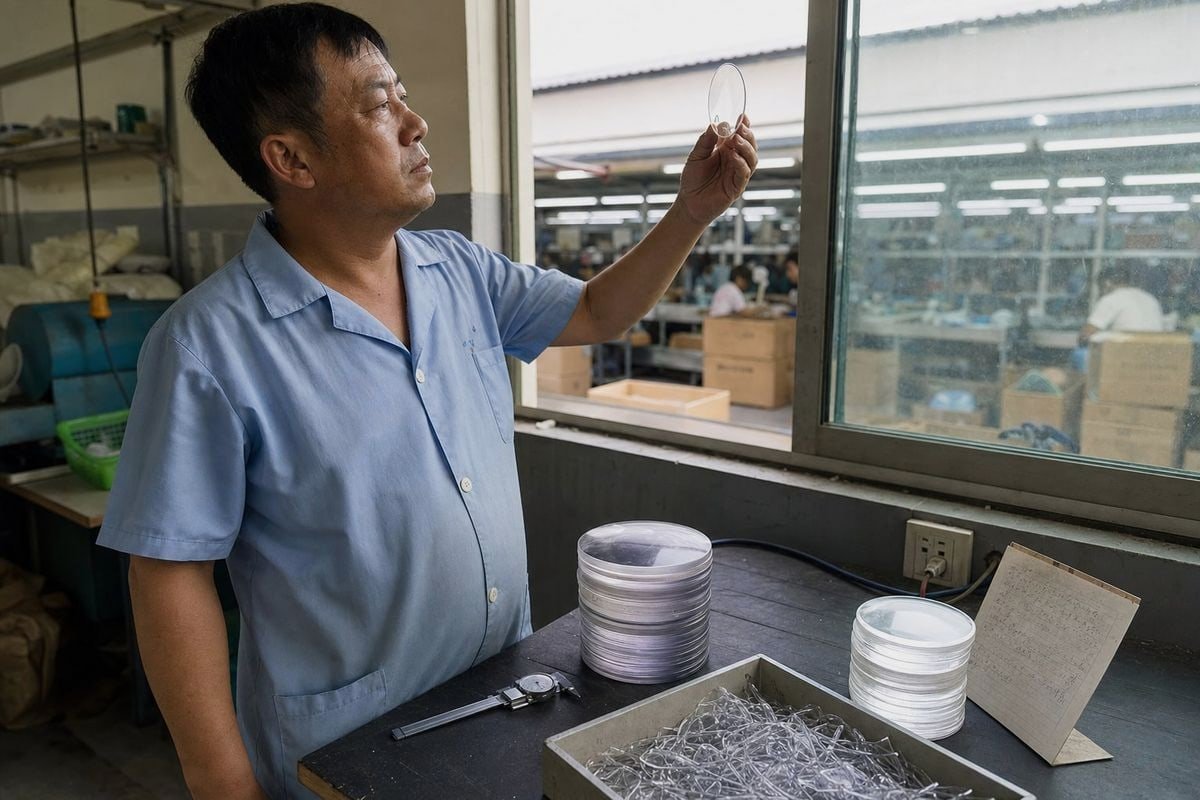
Polycarbonate earns its position as the industry default for good reasons. It absorbs impact by flexing rather than fracturing. It weighs little, which matters on a small nose bridge. And it blocks UV inherently, before any coating is applied UV protection 4. Trivex 5 costs more but delivers better optical clarity — worth considering for prescription sports goggles where a child wears the lenses for hours.
For ball games, the lens spec goes further than material. Rear-loading lens architecture uses an internal frame lip so a direct frontal hit pushes the lens outward, away from the eye, instead of inward. That single design detail separates true ball-game goggles from general sport sunglasses.
Lens Material Comparison
| Material | Impact Resistance | Weight | Optical Clarity | Best For |
|---|---|---|---|---|
| Polycarbonate | Excellent | Very light | Good | All kids' sports; default choice |
| Trivex | Excellent | Very light | Very good | Prescription sports goggles |
| CR-39 plastic | Moderate | Light | Very good | Casual wear only, not sports |
| Glass | Poor (shatters) | Heavy | Excellent | Never for kids' sports |
Tints, Contrast, and Coatings
Outdoor field play benefits from UV400 6 tinted or polarized lenses — options we build across our sunglass range. Indoor ball games need clear lenses. Some buyers ask about yellow lenses; they cut glare but can reduce visual acuity, so I do not recommend them universally. Emerging contrast filters tuned to "optic yellow" tennis balls can help tracking, but they are a niche upgrade, not a baseline spec. What is baseline: anti-fog coating and ventilation on tight-fitting goggles, plus hydrophobic treatments that resist sweat and skin-oil buildup during long, high-exertion matches.
What Frame Flexibility and Fit Features Keep My Kids' Sports Eyewear Safe During High-Impact Play?
During a recent QC round on our 5S-managed workshop floor, we twist-tested a batch of TR90 frames with TPEE temples through full 180-degree flexes. That flexibility is not a gimmick — it is a safety spec.
Safe kids' sports frames use flexible high-impact polymers like TR90 or Grilamid that bend rather than snap, wrap-around geometry for side protection, shock-absorbing padding at the nose and temples, and adjustable head straps that keep the eyewear centered during sprints, cuts, and collisions.
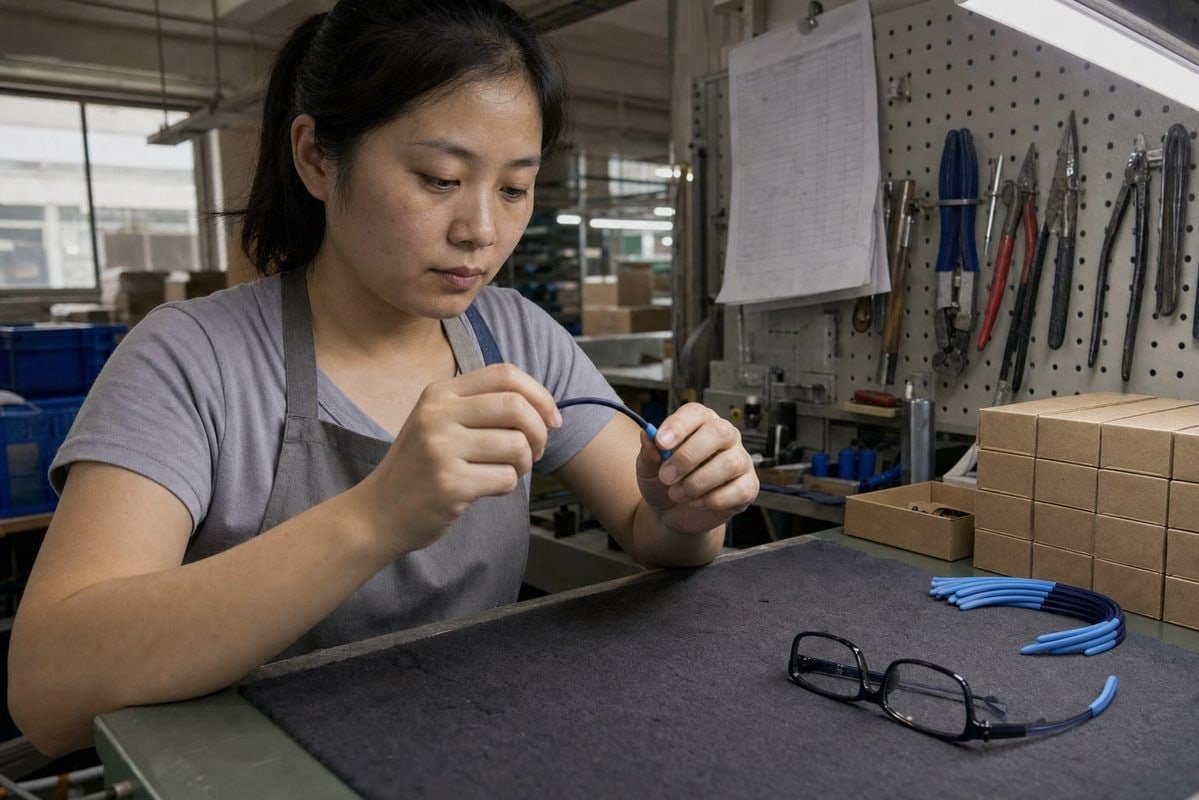
Frame behavior under stress is where children's eyewear engineering gets serious. A rigid frame that splinters on impact can cause the very facial laceration it was supposed to prevent. That is why we build most of our children's lines in TR90 and TPEE — materials that flex, absorb energy, and return to shape. Our two-tone temple designs with soft silicone tips exist for the same reason: grip and comfort keep the frame where it protects.
Fit Is a Safety Feature, Not a Comfort Feature
Eyewear that slides down a sweaty nose stops protecting at the exact moment of impact. For active play, ordinary temple arms are not enough. Adjustable head straps or elastic sports bands hold the frame stable through rapid direction changes. Internal padding at the bridge and temples then does double duty: it cushions the face and distributes kinetic energy across a wider area during a hit.
The Fit Checklist I Give Buyers
- Wrap-around frames or goggle geometry that closes the gap at the sides of the eyes.
- Soft, hypoallergenic nose padding sized for a child's low nasal bridge.
- Strap anchors or convertible temples so one SKU can serve casual and sport use.
- Growth-friendly sizing — replaceable bridge inserts and strap adjustment extend usable life across seasons.
- No exposed metal edges or hard hinge points at impact zones.
Because we hold around 800 existing styles, brands can usually test a wrap-around or goggle-style fit in the market before committing to custom molds. That lowers risk while the fit spec proves itself with real kids.
Do I Need Different Certifications for Ball Game Eyewear Compared to Other Sports Gear?
A Japanese kids' brand once sent us a single spec sheet covering soccer glasses and baseball goggles together. We flagged it immediately — those two products live under different certification logic, and merging them creates compliance gaps.
Yes. General sports eyewear typically needs ASTM F803 certification alone. Ball games with high-velocity projectiles often require additional, sport-specific compliance — such as ASTM F910 for baseball batting or NOCSAE requirements for lacrosse — plus mandatory helmet or face-guard integration in many leagues.
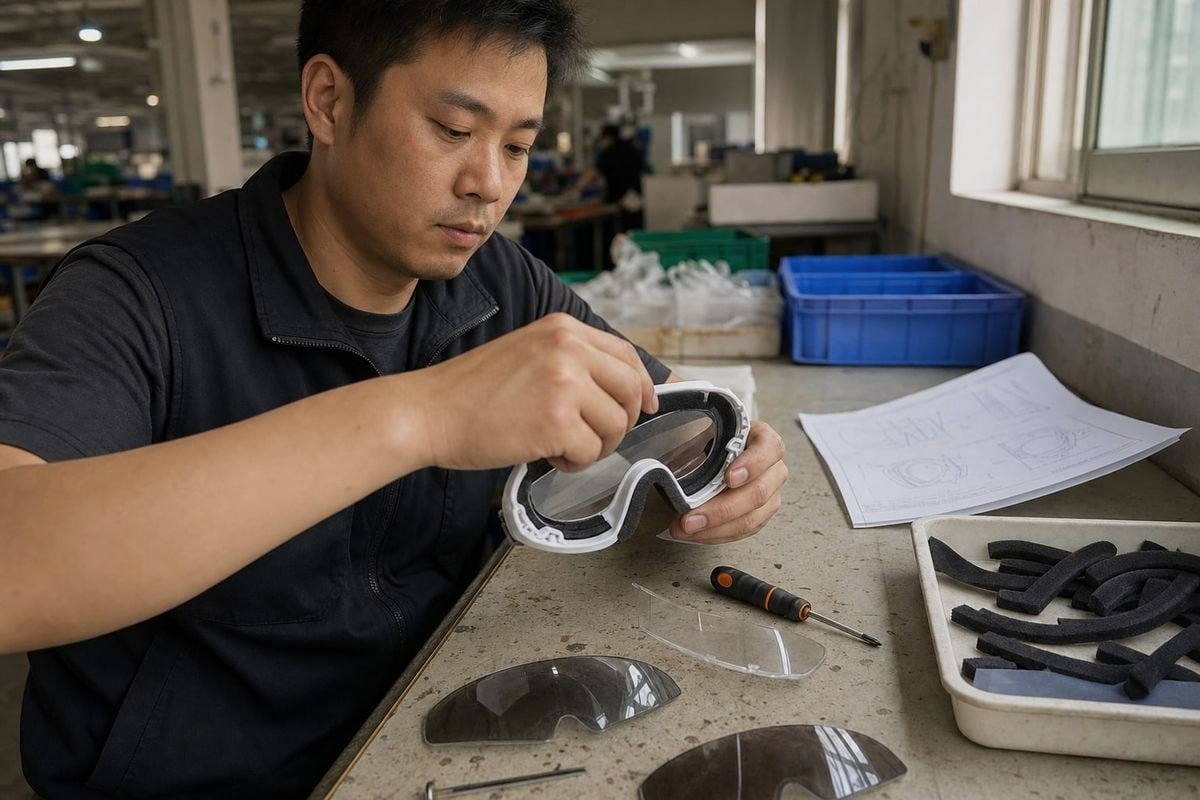
The certification question is really a risk-profile question. In soccer, basketball, and racquet sports, the dominant hazards are collisions, elbows, and deflected balls — ASTM F803-rated protective sports eyewear addresses those well. In baseball and softball, a pitched or batted ball arrives faster and harder than F803 scenarios contemplate. That is why batting situations fall under ASTM F910 face protection, usually integrated with a batting helmet, and why lacrosse leagues lean on NOCSAE 7-governed gear.
Some buyers push back: "Isn't one certified goggle simpler for our whole range?" I understand the appeal, but it oversimplifies a real safety distinction. A single SKU cannot honestly claim coverage for both a tennis rally and a fastball. The stronger commercial move is a small, clearly positioned range: an F803 goggle for court and field sports, and a helmet-compatible solution for hard-ball sports.
Certification Mapping by Sport Type
| Sport Category | Primary Hazard | Certification Focus | Design Emphasis |
|---|---|---|---|
| Soccer, basketball | Contact, elbows, deflections | ASTM F803 | Secure fit, wrap coverage, strap retention |
| Tennis, racquetball, squash | Close-range ball/racquet strikes | ASTM F803 | Enclosed goggle, rear-loading lens |
| Baseball, softball (batting) | High-velocity pitched ball | ASTM F910 + helmet | Helmet/face-guard integration |
| Lacrosse, field hockey | Stick and ball impact | ASTM F803 / NOCSAE rules | Full enclosure, padding, retention |
| Cycling, skiing, outdoor field | Sun, wind, debris | UV400 + impact-resistant build | Shield lens, helmet compatibility, anti-fog |
Regional rules add another layer. When we support customers across twenty-plus countries, we align lens and material documentation with the destination market during OEM development — before packaging, not after. Helmet compatibility deserves early attention too: low-profile temples or strap-based designs must physically fit under or with the helmet your target league mandates.
Conclusion
Match kids eyewear spec requirements to the hazard: ASTM F803 and secure fit for general sports, enclosed certified protection for ball games. Source by risk profile, and every child stays safer.
Footnotes
1. Explains the standards organization behind the primary sports eyewear impact standard. ↩︎
2. CDC resource on vision health and injury prevention supporting the safety rationale. ↩︎
3. Background on the shatterproof, UV-blocking material used in kids’ sports lenses. ↩︎
4. WHO information on UV radiation health effects, relevant to lens UV-blocking claims. ↩︎
5. Wikipedia background on the premium optical material mentioned as an alternative to polycarbonate. ↩︎
6. Authoritative FDA guide confirming UV400 standards for maximum eye protection from solar radiation. ↩︎
7. Background on the athletic equipment standards body governing lacrosse and helmet safety. ↩︎
More Articles You Might Like

Looking for a Reliable Kids Eyewear Partner?
Explore 800+ ready styles and full OEM/ODM support tailored to your brand.
Get in Touch English
  Español de México
  Deutsch
  Français
  日本語
日本語  العربية
  Português do Brasil