Kids’ Eyeglass Straps vs Sports Eyewear Bands: Which Type Fits Your Child?
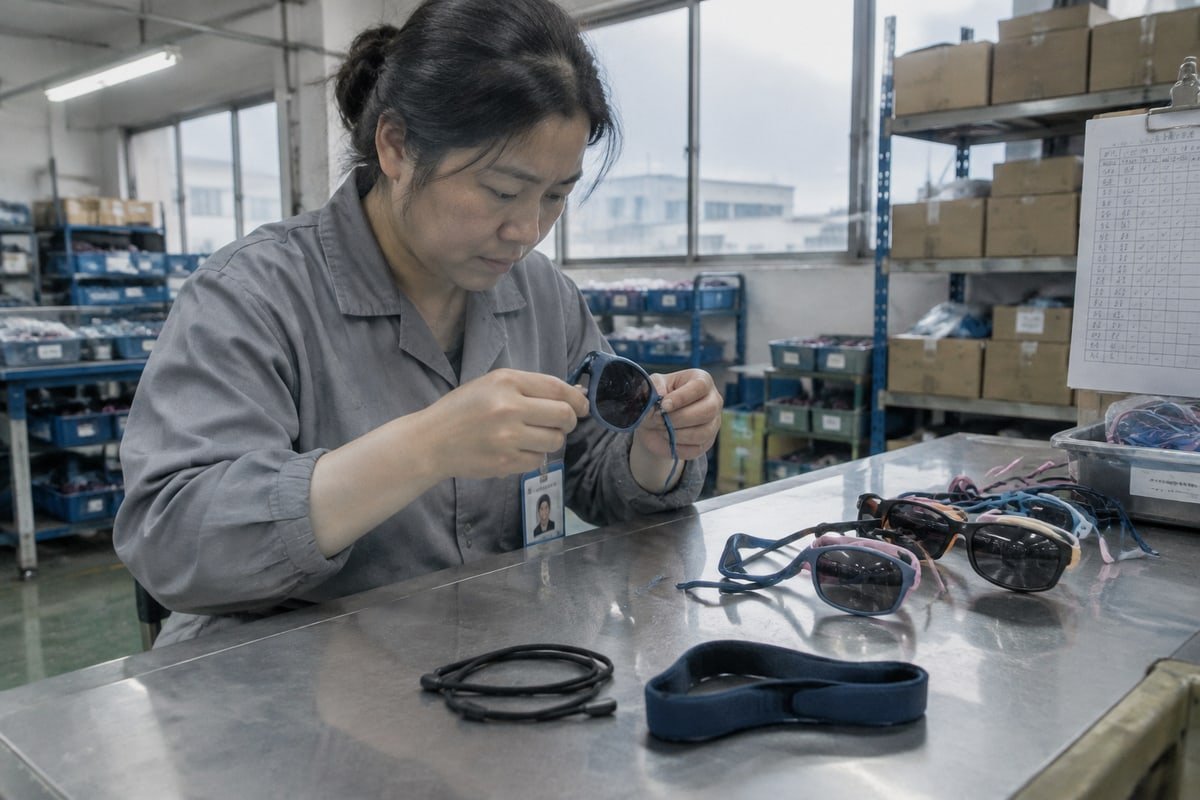
Every month our Taizhou QC team inspects kids’ frames returned with bent temples from playground falls. That damage is why kids’ eyeglass straps vs [sports eyewear band](https://okayeyewear.com/what-safety-precautions-apply-kids-wearing-optical-frames-during-active-play/)s matters to us.
Kids’ eyeglass straps suit everyday retention: light, low-profile cords or elastic bands that stop slipping during school and casual play. Sports eyewear bands suit vigorous activity: wider neoprene or silicone systems that hold frames firmly through sweat and impact. Match the type to your child’s activity level, not age.
The two products look similar. They solve different problems. Below, I walk through how to tell which one your child needs, what safety features count, which materials feel good on small heads, and how brands can source both together.
How do I know if my child needs an eyeglass strap or a sports band?
A procurement manager from Australia once asked me for one strap that works for every child in her range. I told her the honest answer starts with movement, not age.
Watch how the glasses behave. If frames slip during class, reading, or casual walking, a basic kids' eyeglass strap is enough. If frames fall during running, jumping, cycling, or contact sports, or if sweat is involved, your child needs a sports eyewear band with firmer, wider retention.
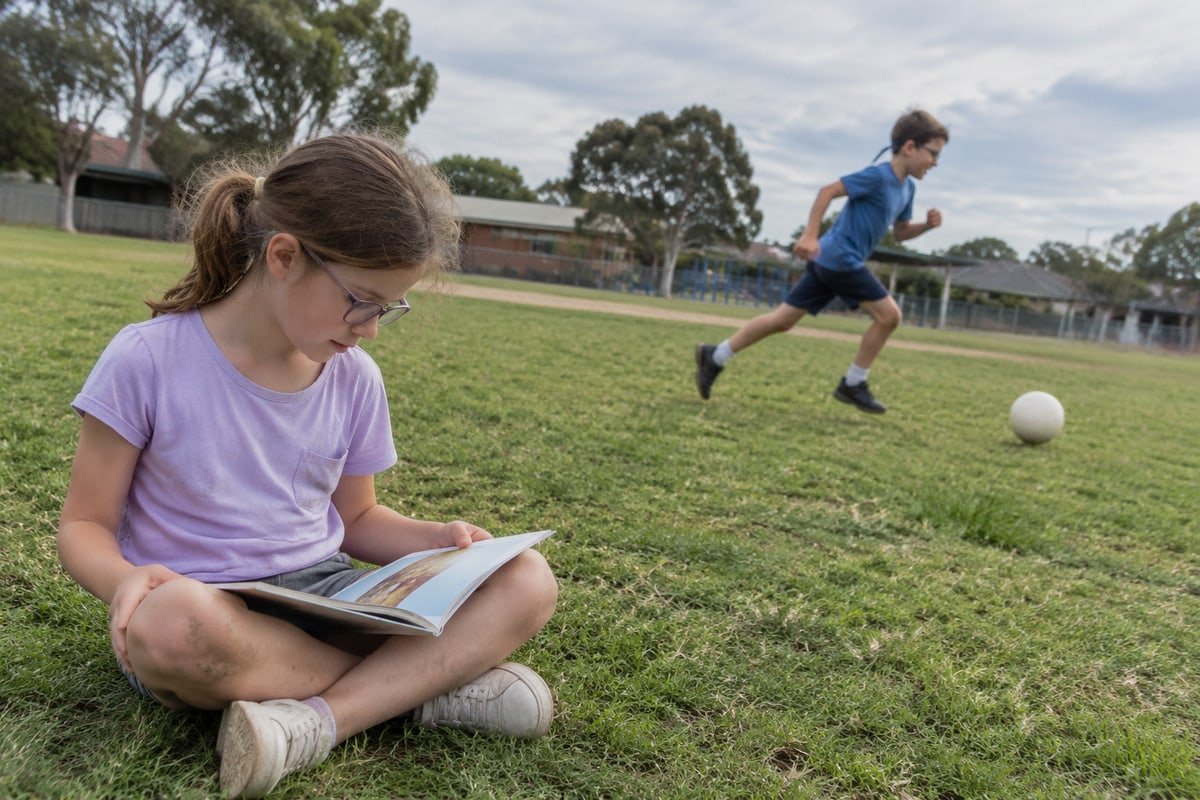
Here is the quick comparison I share with buyers before we look at any samples.
| Feature | Kids' eyeglass strap | Sports eyewear band |
|---|---|---|
| Main job | Stop slipping and loss during daily wear | Hold frames steady under high motion and contact |
| Typical width | Thin cord or narrow elastic | Wide elastic, neoprene, or silicone |
| Hold strength | Light to moderate | Firm, high tension |
| Visibility | Low profile, easy to hide under hair | Visible, looks like athletic gear |
| Sweat handling | Limited | Designed for sweat and water |
| Best for | Classroom, reading, casual play | Soccer, basketball, cycling, swimming |
Three activity levels
I break children into three groups. Light activity covers classroom wear and casual daily use. A simple retainer works here. Moderate activity covers recess and playground time. An elastic strap with good grip is the better choice. High activity covers soccer, basketball, gymnastics, cycling, running, and swimming. These children need a sports eyewear band, a neoprene retainer, or even a full head strap when frames keep falling.
The "overkill" objection
Some parents tell me sports bands are too much. They worry the band looks bulky or feels tight. I understand that. My advice is to start with the least bulky option that fits the activity. Then upgrade only if the glasses still slip during movement. This keeps the child comfortable and keeps compliance high.
Toddlers versus older kids
Toddlers need the most help. Their frames are small, their heads are round, and they pull glasses off. A soft, adjustable kids' eyeglass strap helps them get used to wearing frames. Older children care about appearance. For them, a "sports-branded" band often works better than a plain retainer, because it feels like athletic equipment rather than a medical fix. We see this pattern across our youth athletic glasses orders as well.
Fit check you can do at home
Put the glasses on slightly loose. Ask your child to jump, bend, and shake their head. Tighten the strap step by step until the frame stays centered. If you reach maximum tension and the glasses still move, you have outgrown a basic strap.
What safety features should I look for in kids' eyewear retention straps?
Years ago we approved a strap sample with a hard bead slider. A distributor's fitting test showed it dug behind kids' ears under helmets. We changed the design that season.
Look for controlled give so frames release rather than yank, flat-profile adjustment sliders instead of hard beads, secure non-slip attachment matched to the temple type, and materials that resist sweat. Inspect straps regularly and replace them every six to twelve months. No strap turns ordinary glasses into safety goggles.
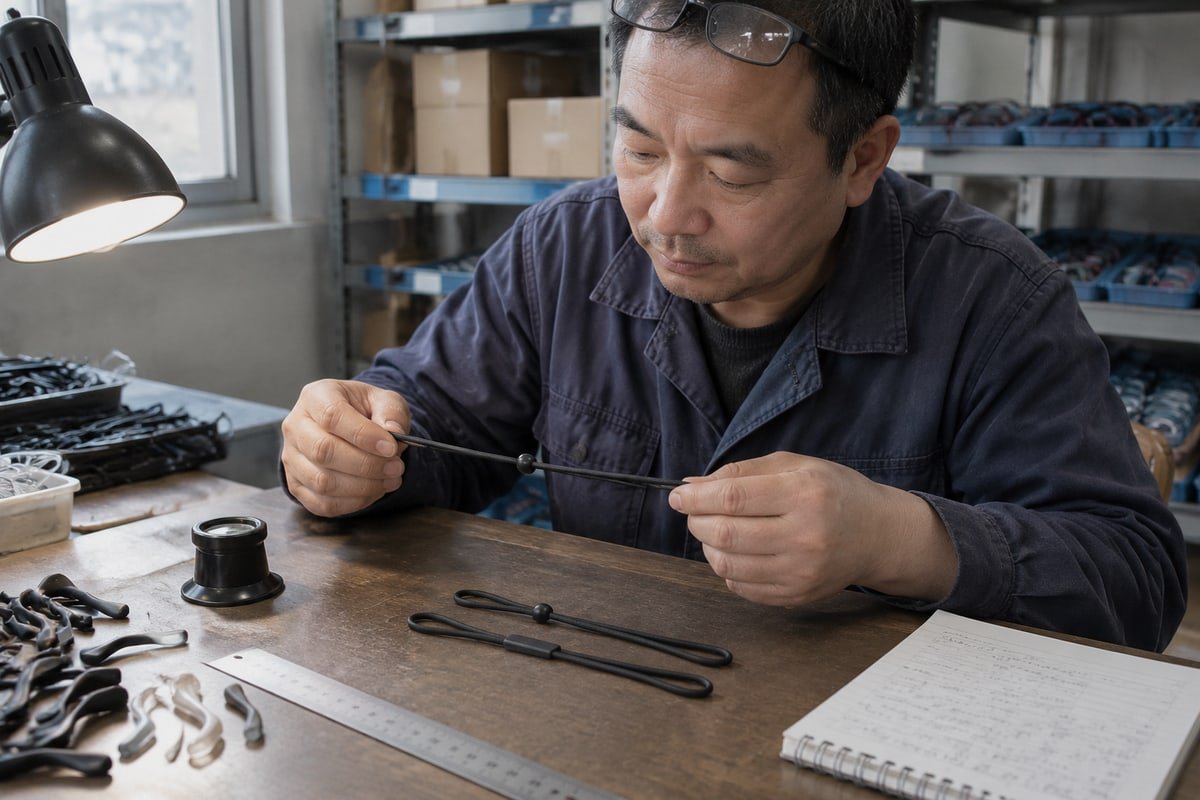
Safety in eyewear retention systems comes down to five points. I check each one when we approve a new accessory for a brand.
Controlled give, not rigid pull
A strap should hold the frame in place. It should not act like a leash. If a strap has zero stretch and another child grabs the glasses, the frame gets yanked hard against the face. Elastic with reasonable give lets the frame release with less force. This is one reason our TPEE temples 1 pair well with straps. Flexible temple tips bend instead of snapping when a strap pulls sideways.
Flat-profile sliders
Standard eyeglass straps often use round beads to adjust length. These beads sit at the back of the head. Under a bike helmet, they create pressure points and what parents call "helmet headaches." Sports bands with flat-profile adjustment sliders or adjustable silicone toggles avoid this. The slider lies flat against the head.
Attachment matched to the frame
Not every strap fits every temple. The attachment method matters more than most buyers expect.
| Frame temple type | Recommended attachment | Why it works |
|---|---|---|
| Thick plastic or TR90 temples | Slip-on silicone sleeves | Wide sleeve grips the temple without slipping |
| Thin metal temples | Hook-and-loop or pierced attachment | Thin arms slide out of loose sleeves |
| Toddler frames with short temples | Short fixed-length or adjustable loops | Kids' models run roughly 6.5–10 inches |
| Prescription sports goggles | Integrated head band | Goggle arms are shaped differently from glasses |
Correct tension protects vision too
Adjustability is not only about comfort. The frame must sit centered without pressing on the nose bridge 2 or behind the ears. For children with high-index or multifocal prescriptions 3, even a 2mm slip can distort vision. A stable band keeps the optical center aligned with the eye.
What a strap cannot do
I say this to every brand we work with. A strap keeps glasses on. It does not make them protective. High-risk sports like basketball or baseball still call for dedicated prescription sports goggles with polycarbonate frames 4 and impact-resistant lenses. Those products are built to ASTM F803 safety standards. A retention strap on regular frames is not.
Replace on a schedule
Elastic loses stretch. Silicone sleeves loosen. Replace straps every six to twelve months with regular use, or sooner if you see fraying or slack. Many brands sell multipacks for this reason.
Which material feels most comfortable for my child's active lifestyle?
Every season I weigh the same trade-off on our sample table: neoprene glasses retainers feel plush but hold sweat, while silicone wipes clean but grips harder against skin.
For all-day wear, soft elastic or nylon-spandex straps feel lightest and least noticeable. For sweaty sports, medical-grade silicone stays non-porous and easy to sanitize, while padded neoprene cushions the head during long sessions. Choose the least bulky material that still holds the frame steady during your child's activity.
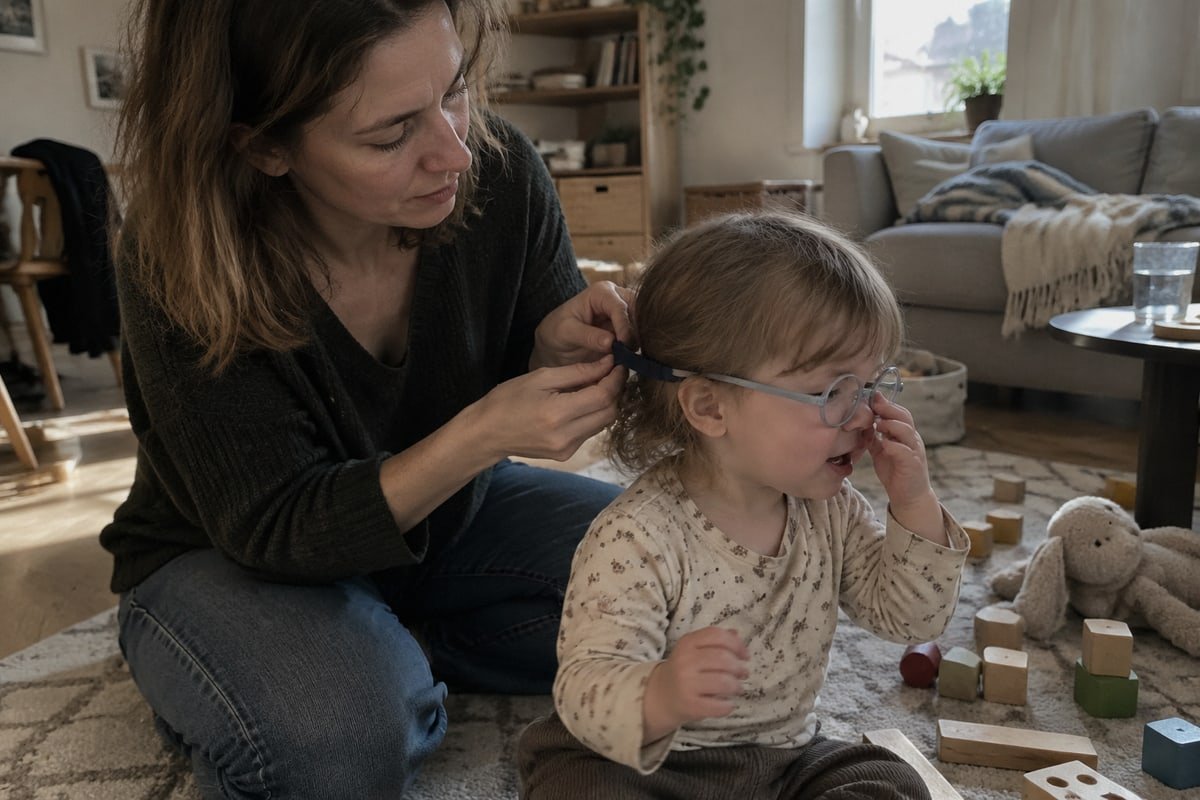
Comfort decides whether a child keeps the glasses on. A perfect strap that itches gets pulled off in ten minutes. I compare four materials below.
| Material | Feel on skin | Sweat and water | Cleaning | Best use |
|---|---|---|---|---|
| Elastic / nylon-spandex | Soft, stretchy, light | Absorbs sweat | Machine washable | Daily wear, school, moderate play |
| Silicone (medical-grade) | Smooth, firm grip | Non-porous, waterproof | Wipe or rinse | Swimming, sweaty sports, sensitive skin |
| Neoprene | Padded, cushioned | Handles sweat, but absorbs | Hand wash, air dry | Long sessions, cycling, contact sports |
| Thin cord | Very light, barely felt | Limited | Wipe | Low-profile daily use, older kids |
Elastic and nylon-spandex
This is the everyday workhorse. It stretches to fit growing heads. It feels soft behind the ears. It is also washable, which parents value. The downside is sweat. Fabric holds moisture and needs regular washing to avoid odor.
Silicone
Silicone is my choice for water and heavy sweat. Medical-grade silicone 5 is non-porous, so it does not absorb skin oils. It resists bacterial buildup that can cause breakouts along the hairline. It is also easy to sanitize, which matters when several children share a swim class. The trade-off is grip. Silicone can pull on fine hair if the band is too tight. We add anti-slip ear hooks or soft sleeves on our frames so the silicone strap does not need extreme tension to hold.
Neoprene
Neoprene is the padded option. It spreads weight around the head and reduces pressure points. Children in long cycling or soccer sessions like it. But neoprene is absorbent. It needs washing after sweaty use, and it dries slower than silicone.
Cord-style retainers
Thin cords are the least visible. Older children who dislike the "babyish" look often accept them. They are less secure for aggressive motion, so I only recommend them for daily wear.
Frame material matters as much as strap material
A strap presses the frame against the face. If the frame is rigid, that pressure hurts. Our TR90 and TPEE frames flex with the head, so a snug band feels less harsh. When we develop a strap for a brand, we test it on our own flexible frames first.
Can I order both strap types from one manufacturer for my eyewear brand?
Our biggest lesson over 15 years in Taizhou is simple: brands lose sales when the strap, case, and cloth arrive from three suppliers in three shades of pink.
Yes. A full OEM/ODM children's eyewear factory can supply cord-style kids' eyeglass straps and buckle-adjustable sports eyewear bands together with matching cases and cleaning cloths. You choose colors, prints, and logos once, and every accessory ships retail-ready in one consistent brand palette.
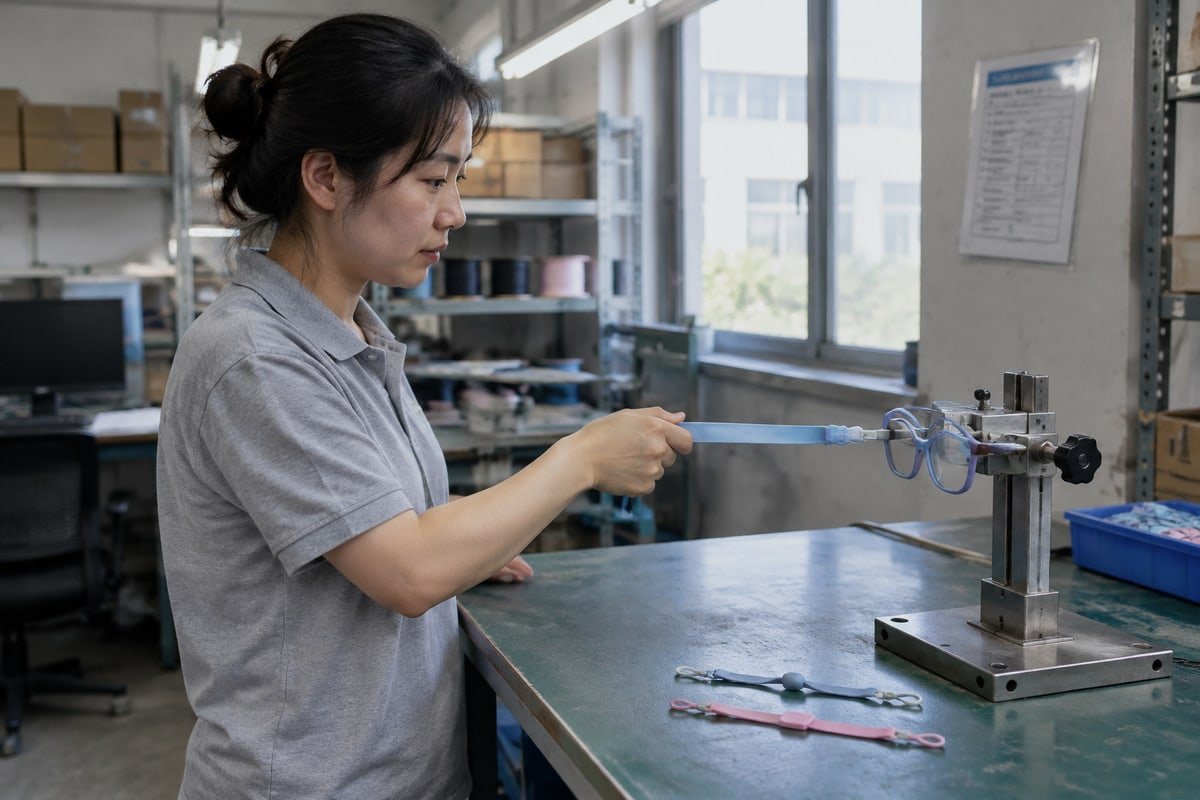
Sourcing accessories separately creates three problems. Colors do not match. Delivery dates do not align. And the strap may not fit the frame you are selling. We solve this by building accessory sets alongside the frames.
What a coordinated set looks like
One of our recent kids' sets shows the approach. Every piece carries the brand name and the same rainbow-and-cloud artwork.
| Item | Function | Design detail |
|---|---|---|
| Hard-shell zippered case | Protects frames in a school bag | Padded EVA, glossy pink or two-tone blue and pink, flower zipper pull |
| Velvet drawstring pouch | Soft storage or gift packaging | Lavender fabric, embroidered rainbow and stars |
| Microfiber cleaning cloth | Lens care | Light blue, cartoon bunny in heart sunglasses |
| Elastic head strap | Sports retention | Light blue, adjustable buckles, star and rocket print |
| Cord-style eyeglass strap | Daily retention | Pink, adjustable slider, rubber loop ends |
Both strap types sit in one box. The parent picks the one that fits the day. The brand sells a complete solution instead of a bare frame.
How we develop accessories with a brand
- You pick a frame from our roughly 800 existing styles, or share your own design.
- We confirm the temple width and end-tip shape so the strap sleeve fits without slipping.
- You choose colors, prints, and logo placement for each accessory.
- We produce samples and test the strap on the actual frame.
- Our QC team checks stitching, slider function, and print alignment before packing.
- Everything ships together, retail-ready.
The versatility objection
Some buyers ask for one universal strap for kids and adults. Universal products do sell. But children's temples are shorter and thinner. A universal sleeve often slides off a toddler frame. I recommend at least two sizes, or an adjustable design with a defined kids' range around ages 3 to 12.
Why a real factory matters here
Accessories look simple. They are not. Slider tension, elastic recovery, and print durability all need control. Our workshop runs on 5S management with about 120 workers. The same team that molds TR90 frames with TPEE temples also handles the straps. That means the strap is tested on the frame it will actually retain, not on a generic sample.
Lower risk for new brands
A new children's brand does not need to invest in molds to launch a strap program. Existing frame styles plus customized accessories let you test the market with smaller orders. Once a set proves itself, we scale production and packaging with you.
Conclusion
Slipping glasses frustrate kids and damage frames. Start with the lightest kids' eyeglass strap that works, upgrade to a sports eyewear band when play gets rough, and source both together.
Interested in sourcing the products mentioned in this article? See details and request a quote here:
Footnotes
1. Technical overview of thermoplastic polyester elastomer (TPEE) properties used in flexible eyewear. ↩︎
2. Technical definition and anatomy of the nose bridge in eyewear design. ↩︎
3. National health institute resource on refractive errors and corrective prescriptions. ↩︎
4. Authoritative medical guidance on protective eyewear materials for sports. ↩︎
5. Regulatory body overseeing materials used in medical-grade devices and accessories. ↩︎
More Articles You Might Like

September 29, 2026
How to Interpret Material, Age, and Warning Info on Kids' Eyewear Hang Tags?
September 29, 2026
How to Recycle Discarded Kids' Eyewear Accessories: Can Silicone and Plastic Parts Be Sorted?
September 29, 2026
How Recyclable Are Kids' Eyewear Materials, and What Are Eco-Friendly Alternatives?
Looking for a Reliable Kids Eyewear Partner?
Explore 800+ ready styles and full OEM/ODM support tailored to your brand.
Get in Touch English
 Español de México
 Deutsch
 Français
 日本語
 العربية
 Português do Brasil