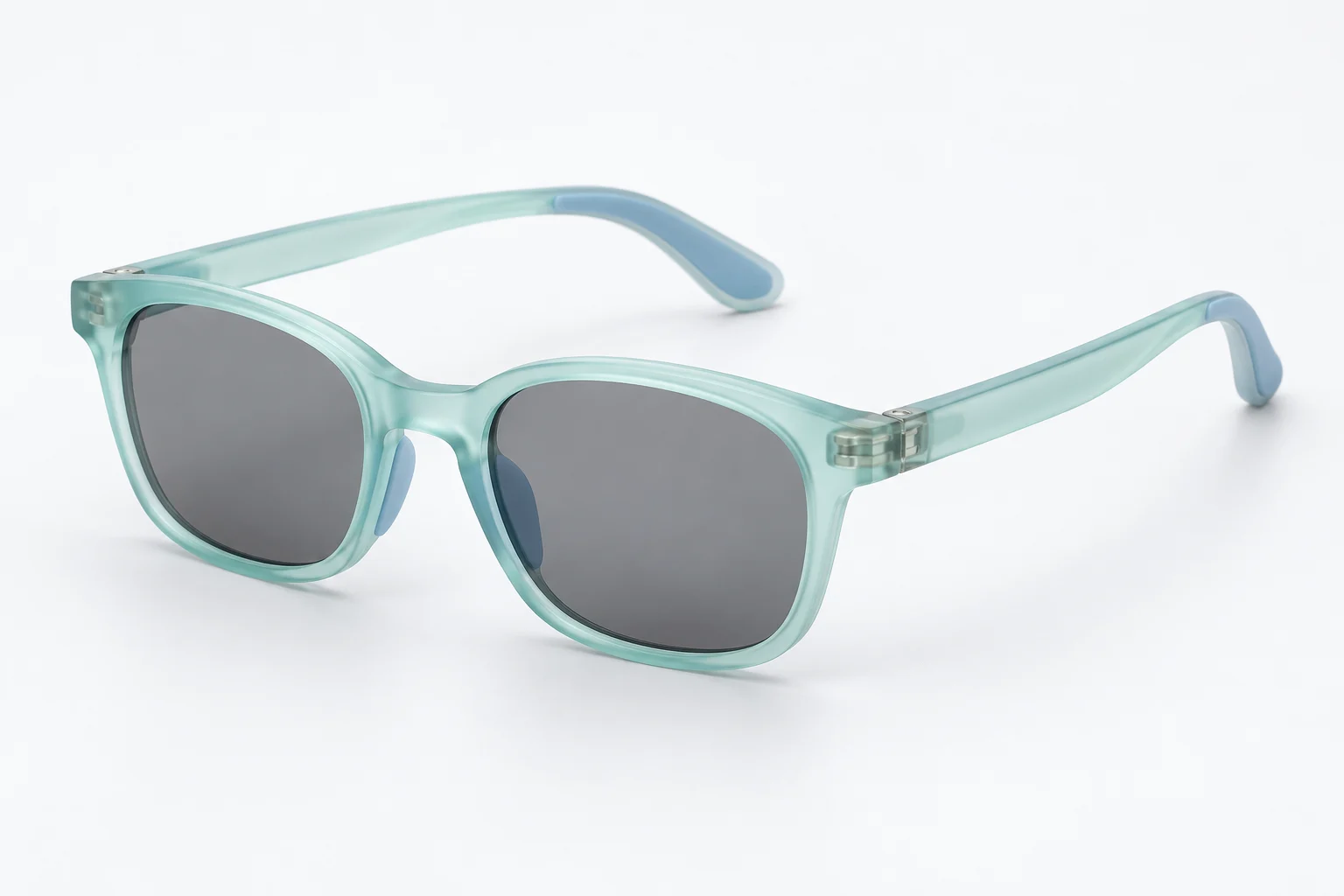
Frame & temple
Choose materials and contact zones.
Make it your own.
Choose your material
Why choose this option?
- Material traitsFlexible copolyester elastomer; hardness and recovery vary by grade.
- Benefits for children’s eyewearFlexibility can help a well-designed frame cope with everyday bending and handling.
- Why choose itChoose when a flexible feel is a priority. Compare a bending sample and quotation.
- Before productionConfirm resin maker, grade, hardness, finished-frame tests and target-age fit.
Why choose this option?
- Material traitsA sourced transparent-polyamide material request; the exact resin must be identified.
- Benefits for children’s eyewearA suitable grade and frame design can reduce wearing weight while keeping the shape you want.
- Why choose itChoose for a light-feel collection with your preferred colours and finish.
- Before productionConfirm supplier datasheet, actual weight and resistance tests. The name alone does not establish equivalence to EMS TR 90.
Why choose this option?
- Material traitsHytrel-family copolyester elastomers offer flexibility, recovery and flex-fatigue resistance.
- Benefits for children’s eyewearThese properties support designs intended to tolerate repeated everyday flexing.
- Why choose itChoose when documented resin sourcing and repeat-flex performance matter to your collection.
- Before productionYour imported-material request is checked at quotation. Confirm brand, manufacturer, grade and origin; the current Hytrel reference is Celanese. No frame is unbreakable.
Why choose this option?
- Material traitsEMS Grilamid TR 90 is a transparent polyamide with chemical and stress-cracking resistance.
- Benefits for children’s eyewearIt supports lightweight frames and resistance to common wear-related stresses.
- Why choose itChoose for a light-feel optical or sun collection with a specified EMS grade.
- Before productionConfirm grade documentation, frame weight, finish compatibility and finished-product tests. Comfort also depends on fit.
Why choose this option?
- Rilsan Clear Transparency, light-feel design and chemical resistance. Properties vary by grade.
- Pebax flexibility Softer contact zones or more structured parts: choose the grade to suit the design.
- Pebax Clear 1200: 94% Measured bio-based carbon, ASTM D6866. Castor-oil-derived feedstock. Source: Arkema datasheet.
- Other grade examples Rilsan G850: 45%. Rilsan G820: 62%. Other Pebax grades differ.
- What the percentage means Bio-based carbon in the resin, not whole-eyewear mass. It does not establish biodegradability, recycled content, greater safety or a lower carbon footprint.
- Why choose it Combine performance-led design with a documented, traceable renewable-source material story.
- Before production Confirm supplied grade, availability, fit for the design and finished-product tests.
Why choose this option?
- Material traitsA high-performance polymer family known for impact toughness, hydrolytic stability and heat resistance.
- Benefits for children’s eyewearToughness and resistance to moisture can support durable parts and a practical care routine, with the right design.
- Why choose itConsider for a technically differentiated collection after checking colour, weight, outdoor ageing and process suitability.
- Before productionConfirm the actual supplied grade. Resin heat resistance does not mean assembled eyewear can be boiled or steam-sterilised. Food-contact uses do not prove eyewear compliance.
Illustrative options. Final specification and combination confirmed with your sample.
Two materials. One frame.
Why choose this option?
- Material / constructionA TR-based outer part with a softer TPU layer at selected contact zones.
- Why choose itUseful when you want a structured frame and a softer feel around the nose or inner temples.
- Before productionSelect contact-zone shape, hardness and bonding by sample; softness alone does not prove anti-slip or skin compatibility.
Why choose this option?
- Material / constructionA TPEE outer part with a softer TPU contact layer.
- Why choose itUseful when flexible handling and a softer touch are both design priorities.
- Before productionConfirm two-shot bonding, hardness, fit and repeated-flex testing with the exact grades.
Images show appearance only. Confirm final specifications with your sample.
Lenses
Choose a material, thickness and effect.
Material & thickness
Why choose this option?
- Material / constructionOptical-grade polycarbonate offers low weight and toughness.
- Why choose itChoose when wearing weight and everyday handling are priorities; select thickness with the frame.
- Before productionConfirm optical quality, coating, UV transmission and finished-lens impact testing. Thin does not automatically mean safer.
Why choose this option?
- Material / constructionOptical-grade polycarbonate offers low weight and toughness.
- Why choose itChoose a PC option when weight and handling matter; compare 1.1 and 1.3 mm with the chosen design.
- Before productionThickness alone is not a performance rating. Confirm fit, optics, UV transmission and finished-lens impact testing.
Why choose this option?
- Material / constructionTAC is a cellulose-acetate film construction, commonly used around a polarising layer.
- Why choose itChoose when you want a slim sun-lens format; specify a polarising version if glare reduction is required.
- Before productionConfirm whether polarisation is included, plus laminate quality, edge stability, UV and impact test results. TAC is not PC.
Why choose this option?
- Material / constructionTAC film constructions can carry a polarising layer.
- Why choose itChoose when a laminated sun-lens design suits the collection; discuss glare reduction as a separate specification.
- Before productionConfirm polarisation, thickness, frame fit, edge stability, UV and impact test results.
Why choose this option?
- Material / constructionAn acrylic lens option with a commonly requested 1.3 mm thickness.
- Why choose itConsider for a cost-led collection only when its tested performance meets the intended use.
- Before productionDo not choose on price alone for children. Confirm impact, optical and UV requirements; do not assume PC-equivalent toughness.
Why choose this option?
- Material / constructionPolyamide sun lenses combine low weight, flexibility and optical clarity.
- Why choose itChoose for a premium light-feel sun collection or a lens geometry that benefits from this material.
- Before productionConfirm actual lens grade, tint, geometry, coatings and finished-product tests; the nylon name is not a UV rating.
Why choose this option?
- Material / constructionPolyamide lens construction with a polarising filter.
- Why choose itChoose for outdoor sun collections when glare from reflective surfaces is a priority.
- Before productionPolarisation is separate from UV protection. Confirm UV transmission, filter performance, tint category and intended use.
Why choose this option?
- Material / constructionA PC lens with a specified colour-vision-assistance filter request.
- Why choose itChoose only for a clearly defined specialist requirement, not as a default children’s lens.
- Before productionReview filter suitability and optical tests individually. No treatment or universal colour-vision benefit is promised.
Images show appearance only. Confirm final specifications with your sample.
Choose the lens effect
Why choose this option?
- Material / constructionA coating changes the lens surface appearance.
- Why choose itChoose to differentiate a sun collection through colour and reflectivity.
- Before productionSpecify coating durability, tint category and UV performance separately; appearance does not prove protection.
Why choose this option?
- Material / constructionTint changes gradually across the lens.
- Why choose itChoose when the collection calls for a softer colour transition rather than one uniform tint.
- Before productionConfirm transmission at relevant lens areas, tint category and suitability for the intended use.
Why choose this option?
- Material / constructionA photochromic lens changes tint in response to its activation conditions.
- Why choose itChoose for a collection that needs a light-responsive lens option.
- Before productionActivation, temperature, response time and performance behind glass vary. Confirm the exact lens and sample.
Why choose this option?
- Material / constructionA lens designed to filter a defined part of the blue-light spectrum.
- Why choose itChoose when your buyer has a defined transmission or colour-appearance requirement.
- Before productionRequest the transmission curve. Do not claim prevention of myopia, eye disease or digital eye strain from this option alone.
Images show appearance only. Confirm final specifications with your sample.
Colours & finishes
Choose colour, feel and surface character.
Colour, touch & gloss
Images show appearance only. Confirm final specifications with your sample.
Special visual effects
Images show appearance only. Confirm final specifications with your sample.
Logo & patterns
Choose where and how your artwork appears.
Choose the logo position
Images show appearance only. Confirm final specifications with your sample.
Screen printing & lens marking
Images show appearance only. Confirm final specifications with your sample.
Printing & decoration
Images show appearance only. Confirm final specifications with your sample.
Texture, handwork & laser
Images show appearance only. Confirm final specifications with your sample.
Packaging
Build a retail-ready presentation.
Paper boxes
Why choose this option?
- Material / constructionA cylindrical paper packaging structure.
- Why choose itChoose when a recognisable shelf presentation and printable outer surface matter.
- Before productionConfirm board, wall thickness, lining and product fit; outer packaging is not automatically crush-proof.
Why choose this option?
- Material / constructionA die-cut paperboard carton supplied in a folding format.
- Why choose itChoose when storage space and printed brand presentation are priorities.
- Before productionConfirm board weight, folded dimensions and whether an inner case or pouch is needed.
Why choose this option?
- Material / constructionAn outer paper sleeve with a sliding inner tray.
- Why choose itChoose when presentation and convenient access matter to the retail experience.
- Before productionConfirm tray fit, board thickness, opening direction and shipping protection.
Why choose this option?
- Material / constructionA two-piece paper box with a separate lid.
- Why choose itChoose for a gift-led collection with space for a coordinated set.
- Before productionConfirm dimensions, lining, lid fit and shipping requirements.
Images show appearance only. Confirm final specifications with your sample.
Protective cases
Why choose this option?
- Material / constructionA structured case covered with synthetic PU material.
- Why choose itChoose when you want a leather-look presentation and a branded surface without specifying genuine leather.
- Before productionConfirm inner support, lining, closure and finish durability; protection depends on the whole construction.
Why choose this option?
- Material / constructionA moulded EVA case with a fabric or synthetic cover and zip.
- Why choose itChoose when you want a defined shape and an enclosed storage format.
- Before productionConfirm shell firmness, lining, fit and zipper durability. Not a crush-proof guarantee.
Why choose this option?
- Material / constructionA flexible synthetic-leather case.
- Why choose itChoose when a slim, soft case and branded appearance matter more than rigid-shell support.
- Before productionConfirm closure and lining; soft cases are not intended to provide hard-case crush protection.
Images show appearance only. Confirm final specifications with your sample.
More existing packaging styles 7 options · expand
Why choose this option?
- Material / constructionDenim-look cover, EVA structure and velvet-style lining.
- Why choose itChoose for a casual textile presentation with a zippered case.
- Before productionConfirm actual fibre composition, lining, fit and physical sample.
Why choose this option?
- Material / constructionFrosted PU cover, EVA structure and velvet-style lining.
- Why choose itChoose when a wipeable-look exterior and attachment feature suit your collection.
- Before productionConfirm actual cleaning instructions, carabiner attachment, zipper and fit.
Why choose this option?
- Material / constructionA felt construction with zip and moulded detail.
- Why choose itChoose for a softer textile-led visual identity.
- Before productionConfirm the actual internal support, felt composition and protective performance; the style name does not establish an EVA core.
Why choose this option?
- Material / constructionWashed leather-style kraft-paper construction.
- Why choose itChoose when a tactile paper appearance fits your brand presentation.
- Before productionConfirm composition, structure and care; paper appearance does not prove recyclability or certification.
Why choose this option?
- Material / constructionKraft-paper-style sleeve and drawer construction.
- Why choose itChoose for a paper-texture retail identity and sliding access.
- Before productionConfirm board, lining and sourcing evidence before using certification or environmental claims.
Why choose this option?
- Material / constructionDie-cut cardboard with colour-printed artwork.
- Why choose itChoose when printed storytelling and coordinated packaging matter.
- Before productionConfirm board thickness, print finish and product fit.
Why choose this option?
- Material / constructionAn existing car-shaped zippered case option.
- Why choose itChoose when a playful presentation fits the children’s collection.
- Before productionConfirm dimensions, construction, hardware and age-appropriate design; not sold as a toy by default.
Images show appearance only. Confirm final specifications with your sample.
Pouches & sleeves
Why choose this option?
- Material / constructionA felt sleeve or pouch structure.
- Why choose itChoose for tactile presentation and a compact everyday storage accessory.
- Before productionConfirm felt fibre composition, thickness and closure; not a rigid protective case.
Why choose this option?
- Material / constructionPolyester microfiber fabric.
- Why choose itChoose when you want a light storage pouch with room for branding.
- Before productionConfirm fabric weight, weave, seams and cleaning suitability; do not use a dirty pouch to wipe lenses.
Why choose this option?
- Material / constructionA recycled-polyester microfiber request.
- Why choose itChoose when your collection includes verified recycled-content sourcing.
- Before productionConfirm recycled percentage and traceability. Recycled content does not automatically mean better cleaning or biodegradability.
Why choose this option?
- Material / constructionCotton fabric with a drawstring closure.
- Why choose itChoose for a natural-fibre presentation and a reusable storage accessory.
- Before productionConfirm fibre blend, fabric weight, print and washing instructions; not a lens-cleaning cloth or crush-resistant case.
Why choose this option?
- Material / constructionCanvas-style woven fabric.
- Why choose itChoose when a heavier textile feel and a printed brand surface suit the collection.
- Before productionConfirm canvas fibre composition, weight and lining; canvas does not necessarily mean 100% cotton.
Why choose this option?
- Material / constructionA synthetic PU surface on a backing material.
- Why choose itChoose for a coordinated texture and branded surface.
- Before productionConfirm PU construction, backing, closure and durability; do not describe it as genuine leather.
Why choose this option?
- Material / constructionA genuine-leather material request.
- Why choose itChoose for a premium tactile presentation where natural variation is welcome.
- Before productionConfirm leather type, thickness, lining, finish and care; suitability depends on the finished pouch.
Why choose this option?
- Material / constructionA neoprene-based fabric construction.
- Why choose itChoose for a sporty presentation and flexible storage format.
- Before productionConfirm thickness, seams and closure; do not promise waterproofing or impact protection without testing.
Why choose this option?
- Material / constructionNylon fabric in a drawstring format.
- Why choose itChoose for compact carry storage with an outdoor-oriented look.
- Before productionConfirm weave, coating, fabric weight and closure. Nylon alone does not establish waterproof performance.
Why choose this option?
- Material / constructionVelvet-style pile fabric.
- Why choose itChoose when tactile presentation is part of a gift or premium collection.
- Before productionConfirm fibre composition, lining and colourfastness; pile fabric is not automatically safe for lens wiping.
Images show appearance only. Confirm final specifications with your sample.
Final wrapping
Why choose this option?
- Material / constructionA transparent polyethylene inner bag with a seal-strip closure, as shown in the real samples.
- Why choose itChoose for a compact inner wrap that helps keep products together and separate from loose items.
- Before productionConfirm thickness, closure and packaging warnings appropriate to the market; keep bags away from young children.
Why choose this option?
- Material / constructionA milky-white PLA inner bag with an open top. This supplied style has no adhesive seal, zip strip or snap closure.
- Why choose itChoose for individual inner wrapping inside a case, box or outer pack; the open top makes insertion and removal simple.
- Before productionConfirm film composition, thickness, size and disposal evidence. PLA does not mean home-compostable or degradable in any environment; industrial facilities may be required.
Images show appearance only. Confirm final specifications with your sample.
Accessories
Add the useful finishing touches.
Cleaning cloths
Why choose this option?
- Material / construction80% polyester / 20% polyamide microfiber blend.
- Why choose itChoose when you want a reusable cleaning accessory with your branding.
- Before productionConfirm split-fibre structure, weave, lint and coating compatibility. Rinse grit away first; no scratch-free guarantee.
Why choose this option?
- Material / constructionA recycled-polyester microfiber request.
- Why choose itChoose when documented recycled content is part of your accessory brief.
- Before productionConfirm blend, recycled percentage, traceability and lens-coating cleaning tests; recycled does not automatically mean cleaner or softer.
Why choose this option?
- Material / constructionPolyester microfiber fabric.
- Why choose itChoose a branded care accessory with the required size, weight and weave.
- Before productionConfirm lint, cleaning results and coating compatibility. Fibre name alone does not determine performance.
Why choose this option?
- Material / constructionPolyester/polyamide microfiber; 80/20 is one possible blend.
- Why choose itChoose when you want to specify the blend, weave and hand feel for your lens-care accessory.
- Before productionConfirm actual composition and cleaning results. Do not assume a different blend is automatically better.
Images show appearance only. Confirm final specifications with your sample.
Retainers, tags & stickers
Why choose this option?
- Material / constructionA retainer linking the temple ends. Material depends on the selected strap.
- Why choose itChoose when extra retention is useful for the intended activity and age group.
- Before productionConfirm material, connection, length and age-appropriate safety design; a strap is not a substitute for correct frame fit.
Why choose this option?
- Material / constructionA tag with your chosen board or other material.
- Why choose itChoose to present product details, brand story and care information at retail.
- Before productionConfirm material, thickness, attachment and print. Do not add certifications without evidence.
Why choose this option?
- Material / constructionA printed paper or film label with adhesive.
- Why choose itChoose for product identification, packaging labels or a coordinated unboxing experience.
- Before productionConfirm substrate, adhesive, removability and print. Keep adhesive away from lenses unless explicitly approved.
Images show appearance only. Confirm final specifications with your sample.
 English
 Español de México
 Deutsch
 Français
 日本語
 العربية
 Português do Brasil