What Weight Range Prevents Kids’ Eyewear From Sliding or Leaving Marks?
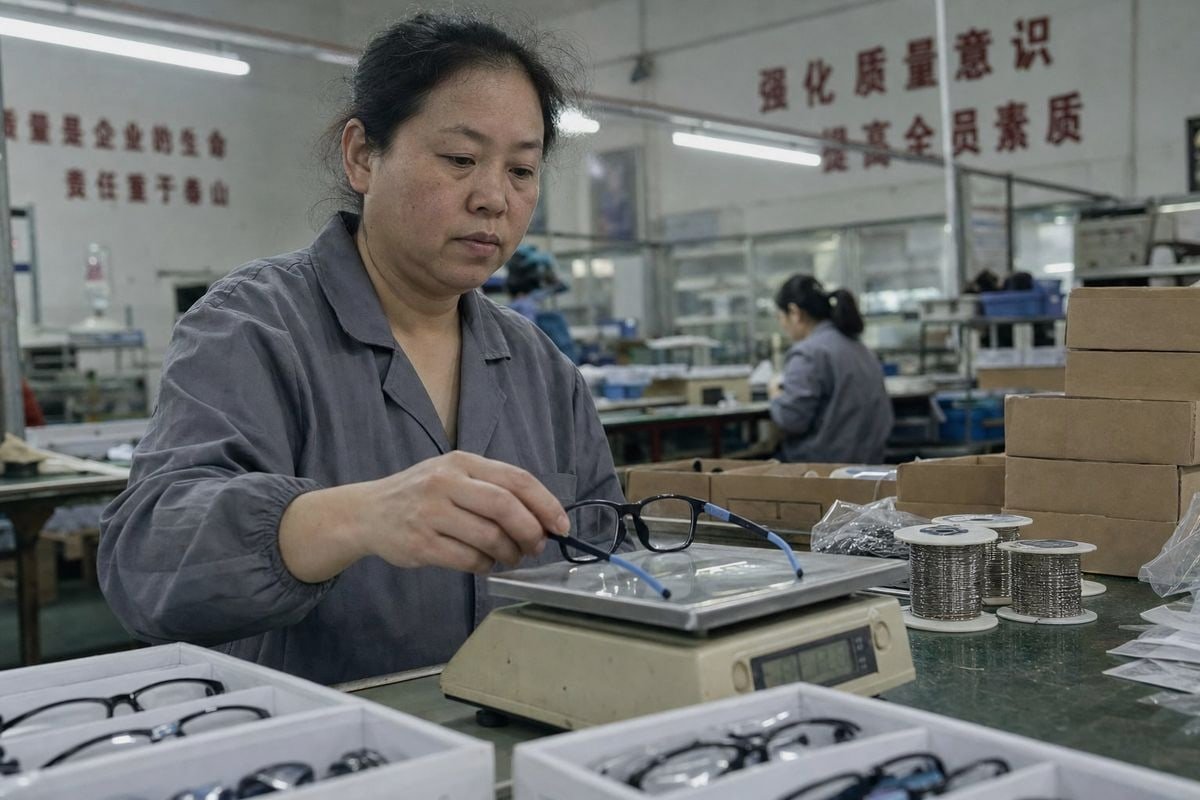
Kids’ eyewear weight is a question I hear weekly on our production line 1 in Taizhou. Buyers see returns pile up when frames slide down noses or leave angry red marks.
Kids’ eyewear weight should stay between 12–16 grams for toddler frames and 16–22 grams for school-age frames, with total weight (frame plus lenses) under 30 grams. Combined with correct bridge width and temple fit, this range prevents sliding and pressure marks.
Those numbers are a starting point, not the whole story. Below, I break down how weight, materials, and fit work together, and what to demand from your supplier.
How Do I Determine the Ideal Frame Weight for My Kids' Eyewear Line?
Last year, a European baby-brand buyer sent us a competitor's frame that weighed 26 grams. Parents complained it slid constantly. Our engineers rebuilt it in TR90 at 17 grams, and the complaints stopped.
Determine ideal frame weight by age group: 12–16 grams for toddlers (ages 1–4), 16–22 grams for school-age children (ages 5–12). Keep total weight with lenses under 30 grams for standard prescriptions and under 40 grams for high-power corrections.
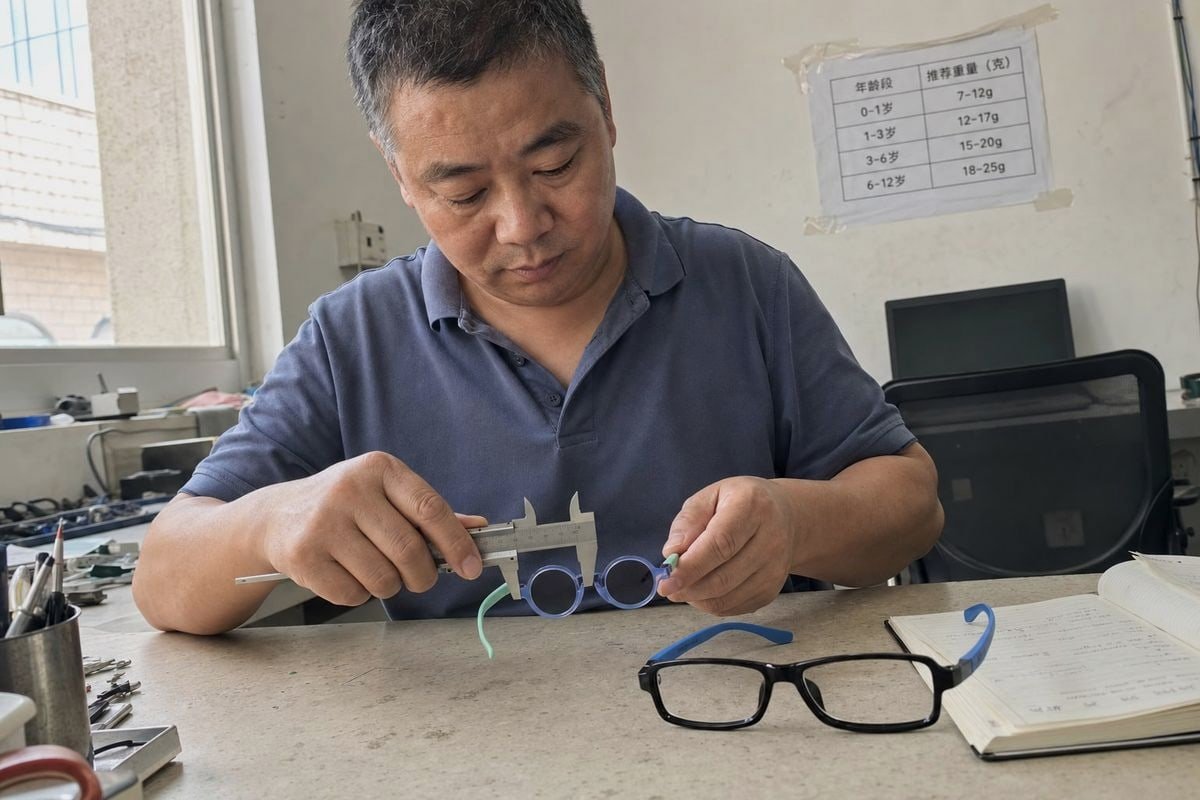
Weight matters because a child's nose bridge is still developing. It is flatter and softer than an adult's. Heavy frames concentrate nose bridge pressure on cartilage that cannot support it. Over time, that causes sliding, red marks, and even skin indentation.
But here is the objection I raise with every new buyer: there is no single "magic weight" that guarantees comfort. A 14-gram frame with the wrong bridge width measurement will still slide forward. A 20-gram frame with a well-matched bridge and correct temple arm length can feel invisible. Weight sets the ceiling for comfort. Fit determines whether you reach it.
Practical Weight Benchmarks by Age
We use these targets when developing new styles across our range of roughly 800 existing models:
| Age Group | Frame-Only Weight | Total Weight (with lenses) | Priority |
|---|---|---|---|
| Infants/Toddlers (1–4) | 12–16 g | Under 25 g | Softness, flexibility, strap option |
| Preschool (4–6) | 14–18 g | Under 28 g | Stable bridge, flexible temples |
| School-age (6–12) | 16–22 g | Under 30 g | Durability, secure fit for play |
| High prescriptions (any age) | As light as possible | Under 40 g | Thin, light lens materials |
Some ultra-light pediatric frames 2 reach 6–11 grams. Those are excellent for optical use with heavier lenses. For sunglasses that face rough handling, we usually recommend the 14–20 gram sweet spot, because extreme lightness sometimes trades away durability.
Why Total Weight Beats Frame Weight
Lenses often weigh more than the frame itself. A thick prescription lens can double the total weight and pull the frame forward. That is why our optical frame specs always list frame-only weight, and we advise buyers to model total weight with their target lens packages before finalizing a design.
Which Materials Help Me Achieve Lightweight Yet Durable Kids' Frames?
The trade-off we weigh on every new mold is simple: shave grams without sacrificing the twist-and-bend abuse a four-year-old will inflict. After fifteen years making children's frames, TPEE and TR90 win that fight almost every time.
TR90 flexible plastic and TPEE deliver the best strength-to-weight ratio for kids' frames, enabling 12–22 gram designs that bend without breaking. Pair them with polycarbonate or Trivex lenses to minimize total weight and front-heavy sliding.
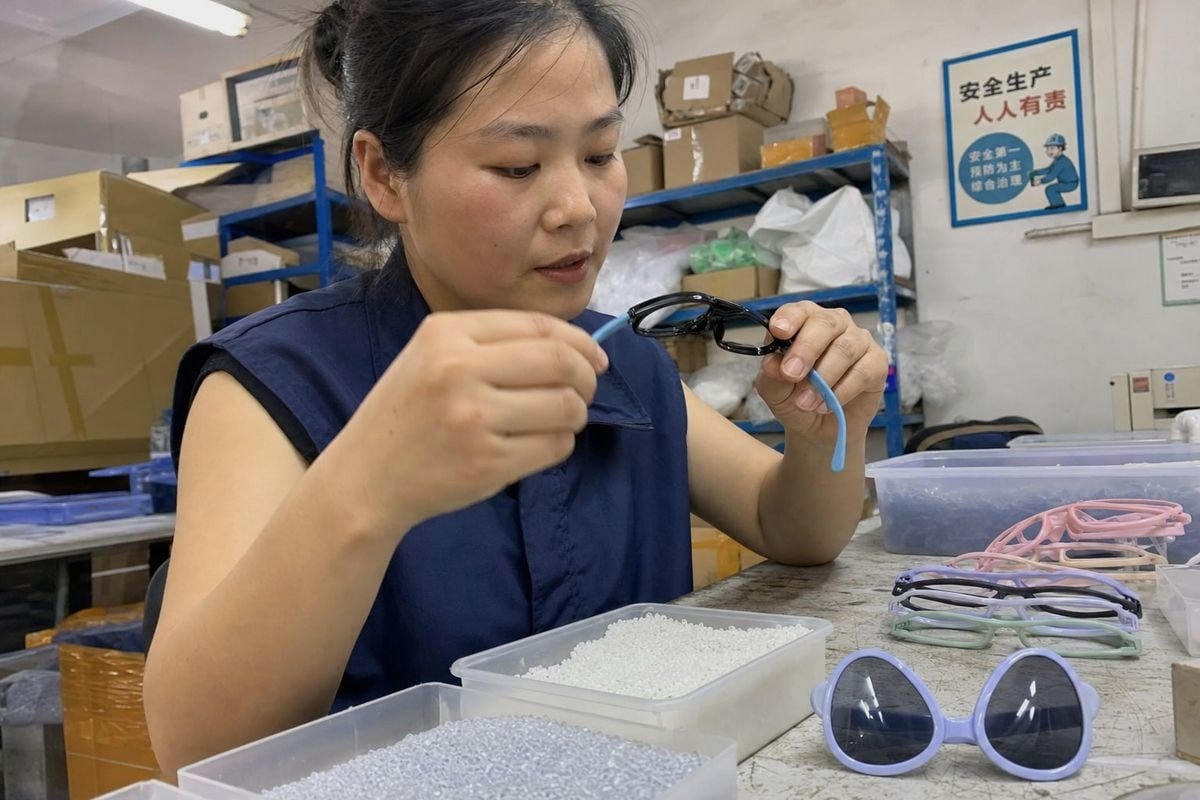
Material choice drives three things at once: weight, safety, and comfort. Let me walk through the options as we present them to brand buyers.
Frame Materials Compared
| Material | Typical Frame Weight | Flexibility | Best Use Case |
|---|---|---|---|
| TPEE | Very light, 12–18 g | Extremely flexible, near-unbreakable | Toddler sunglasses, baby frames |
| TR90 | Light, 14–22 g | Highly flexible, memory return | Optical frames, school-age styles |
| TR90 + TPEE temples 3 | Light, 15–20 g | Rigid front, soft temples | Hybrid comfort designs |
| Standard acetate | Heavier, 20–35 g | Low flexibility | Fashion styles, older teens |
| Metal | Variable, 18–30 g | Low, can bend permanently | Not recommended for young kids |
Our hybrid construction — a TR90 front with TPEE temples — is one of our most requested builds. The rigid front holds lenses securely and keeps the optical geometry stable. The soft TPEE temples flex around the head and never dig in behind the ears. One of the styles from our current line uses exactly this approach: a glossy TR90 front with two-tone flexible temples and textured silicone tips for extra grip.
Lens Materials Matter Too
Polycarbonate is the standard child-safe lens 4: lightweight and highly impact resistant. For high-index prescriptions 5, Trivex runs roughly 10% lighter than polycarbonate, which noticeably reduces the front-heavy pull that drags frames down the nose. For sunglasses, we offer UV400 and polarized options that add negligible weight.
A common buyer worry: does flexible mean flimsy? No. TR90 has memory properties. It returns to shape after twisting. TPEE goes further and survives being sat on. Both are environmentally friendlier options than many legacy plastics, which matters to the baby-brand buyers we serve in Europe, Japan, and Australia.
How Can I Prevent Slipping and Red Marks on Children's Noses and Ears?
A distributor in Australia once returned samples because kindergarten testers kept pushing the glasses back up during outdoor play. The frames weighed only 15 grams. The problem was a bridge two millimeters too wide — a lesson we now apply in every pediatric frame fitting review.
Prevent slipping and red marks by matching bridge width to the child's nose, keeping frames light and balanced, and adding anti-slip features: silicone nose pads, textured temple tips, cable temples, or ear grips. Weight distribution matters as much as total weight.
Sliding and marking have opposite causes, and fixing one badly can trigger the other. Understanding both sides helps you specify frames that avoid the trap.
Diagnosing the Two Problems
| Symptom | Common Cause | Design Fix |
|---|---|---|
| Glasses slide down | Bridge too wide, frame too big, heavy lenses | Keyhole bridge, correct sizing, lighter lenses |
| Glasses slide during play | Smooth temples, no rear anchor | Anti-slip ear grips, cable temples, strap option |
| Red marks on nose | Bridge too narrow, weight on nose | Adjustable nose pads, wider contact area |
| Red marks behind ears | Temples too short or over-bent | Correct temple arm length, soft TPEE tips |
| Pinching at temples | Frame front too narrow | Larger frame size, spring hinges |
Design Features That Actually Work
The best fixes increase contact area or add a secondary anchor point. A keyhole bridge or medical-grade silicone nose pads 6 spread load across more skin, lowering pressure per square millimeter on the soft nasal bridge. Adjustable nose pads let opticians fine-tune fit as the child grows between frames.
At the back, cable temples that curl behind the ear counteract the forward pull of lens weight. For toddlers, we mold soft ear hooks or offer an elastic strap. For school-age kids, textured silicone temple tips — like the embossed circular grip pattern on our two-tone TR90 style — add friction without clamping force. Some newer designs go further, shifting weight toward the temple tips so the ears act as a lever that lifts load off the nose. Emerging concepts like moisture-responsive micro-textured bridges are interesting, but proven silicone grips solve most real-world sliding today.
A Quick Fit Test for Your QC Team
- Have the child look down, then up quickly. The frame should not drop.
- Check the bridge after ten minutes of wear. No red imprint should remain.
- Confirm eyes sit centered in the lenses.
- Run a finger behind the ears. No pressure ridge should be forming.
What Weight Standards Should I Request When Sourcing From a Manufacturer?
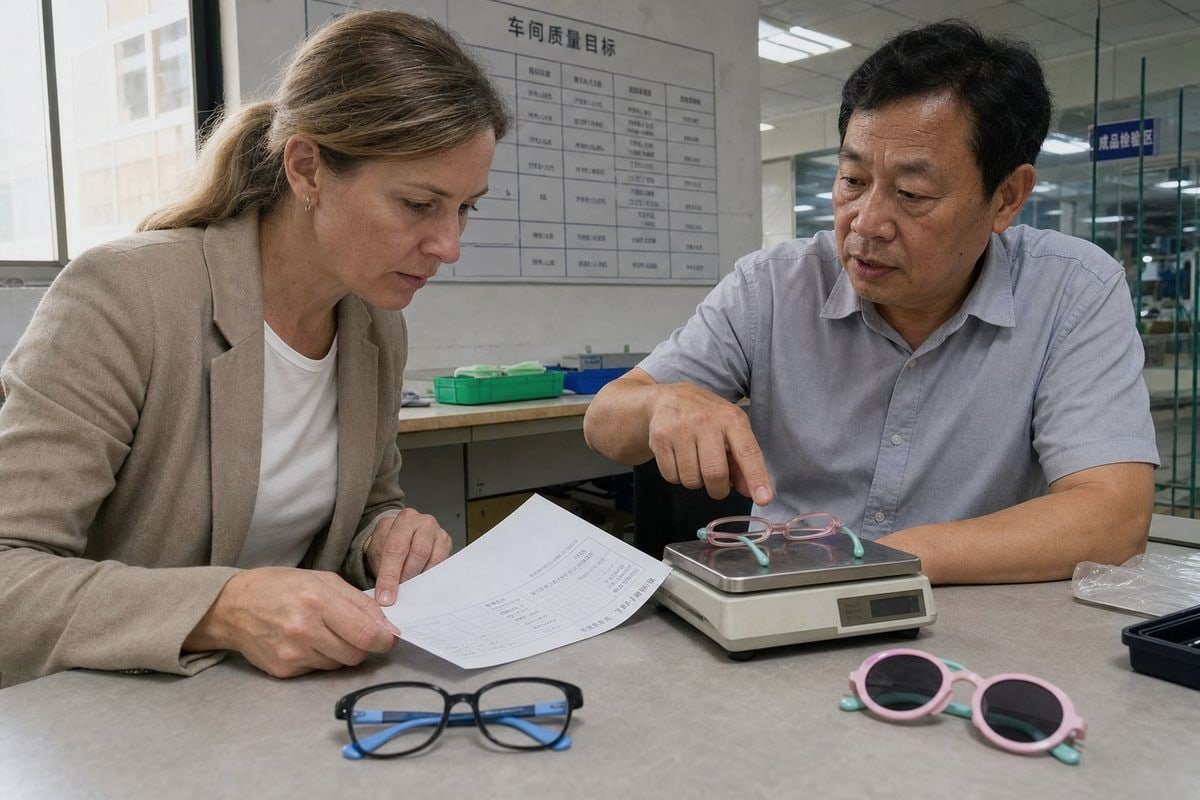
Buyers who send us a one-line "make it lightweight" brief usually get frustrated later. The buyers who succeed send a spec sheet. After exporting to brands in more than 20 countries, I can tell you exactly what that sheet should contain.
Request written weight specifications per SKU: frame-only weight with a ±1 gram tolerance, target total weight with your lens package, material certification for TR90 or TPEE, and per-batch weight sampling during QC. Ask for weight data on every sample approval sheet.
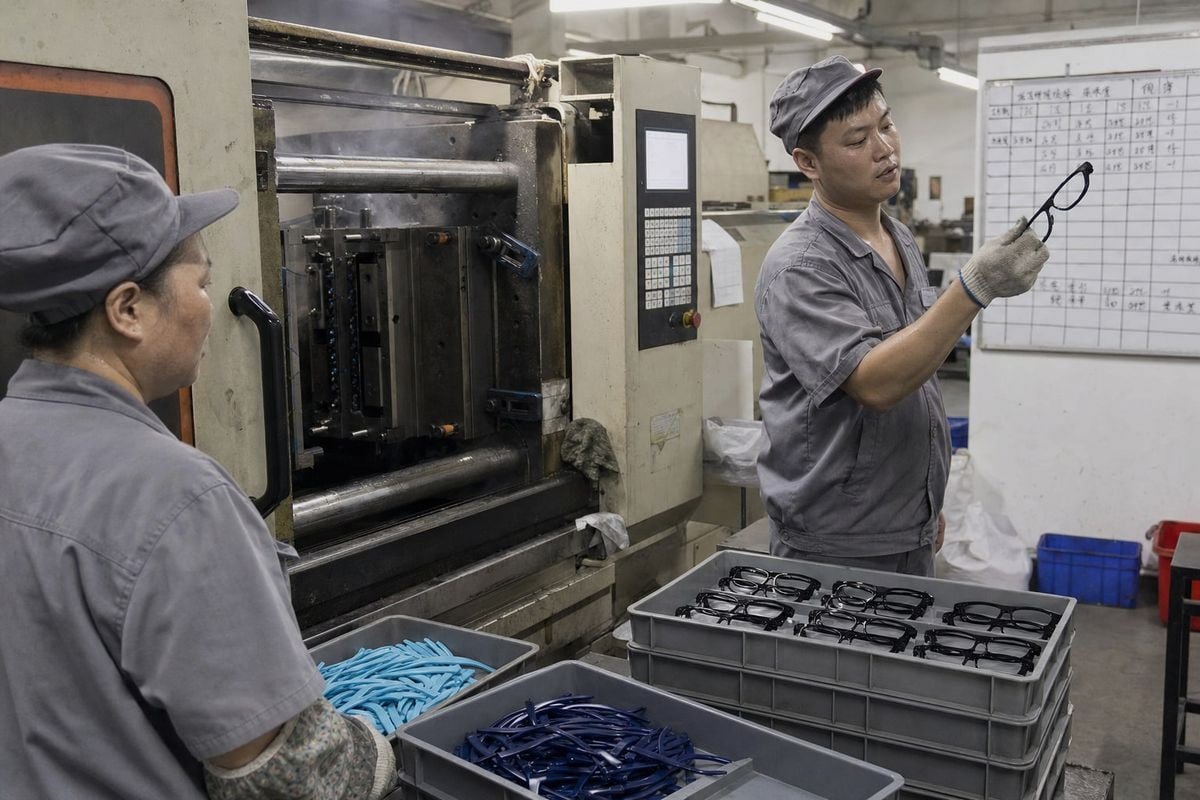
Weight consistency is a quality signal. If a factory's frames vary by 3–4 grams within one batch, that tells you their injection molding process 7 or material sourcing is unstable. In our 5S-managed workshop, we weigh sample frames from each production run because weight drift often reveals a material or molding problem before anything else does.
The Spec Sheet Checklist
Here is what I recommend putting in your purchase agreement or tech pack:
- Frame-only weight per SKU. State the target gram weight and a tolerance, typically ±1 gram for TR90 and TPEE frames.
- Total weight target. If you sell optical frames, specify the expected weight with your standard lens package installed.
- Material declaration. Require confirmation that the frame is genuine TR90 flexible plastic or TPEE, not a cheaper blend. Blends are heavier and more brittle.
- Fit dimensions alongside weight. Ask for bridge width measurement, lens width, and temple arm length by age band. Weight without fit data is meaningless.
- Sample weight verification. Weigh your pre-production samples yourself. Compare golden samples against bulk shipments.
- Batch QC protocol. Ask how many pieces per batch are weighed and what triggers a rejection.
Questions That Reveal a Serious Supplier
Ask the factory how they balance weight against durability, and listen for specifics. A supplier with genuine flexible-material expertise will talk about wall thickness, hinge design, and how temple tip density affects the center of gravity. A trader reselling generic stock will not. This is also why starting from an existing tooled style — we hold around 800 — lets a new brand hit proven weight and fit targets without gambling on new mold development.
Conclusion
Target 12–22 grams by age, keep totals under 30 grams, and demand written specs. Light frames plus correct fit — that combination ends sliding, red marks, and returns.
Footnotes
1. Authoritative Wikipedia definition for manufacturing context. ↩︎
2. Expert advice from the American Academy of Ophthalmology on selecting appropriate frames for children. ↩︎
3. Technical background on thermoplastic elastomers (TPEE) used for flexible and durable eyewear components. ↩︎
4. Official FDA guidance on the safety and impact resistance requirements for children’s eyeglass lenses. ↩︎
5. Explains the optical properties and material science behind high-index corrective lenses. ↩︎
6. Scientific overview of silicone materials, emphasizing their flexibility and biocompatibility in medical applications. ↩︎
7. Authoritative Wikipedia technical overview of the manufacturing process.
More Articles You Might Like

Looking for a Reliable Kids Eyewear Partner?
Explore 800+ ready styles and full OEM/ODM support tailored to your brand.
Get in Touch English
  Español de México
  Deutsch
  Français
  日本語
日本語  العربية
  Português do Brasil