Can You Replace Lenses After a Prescription Change for Kids Eyewear?
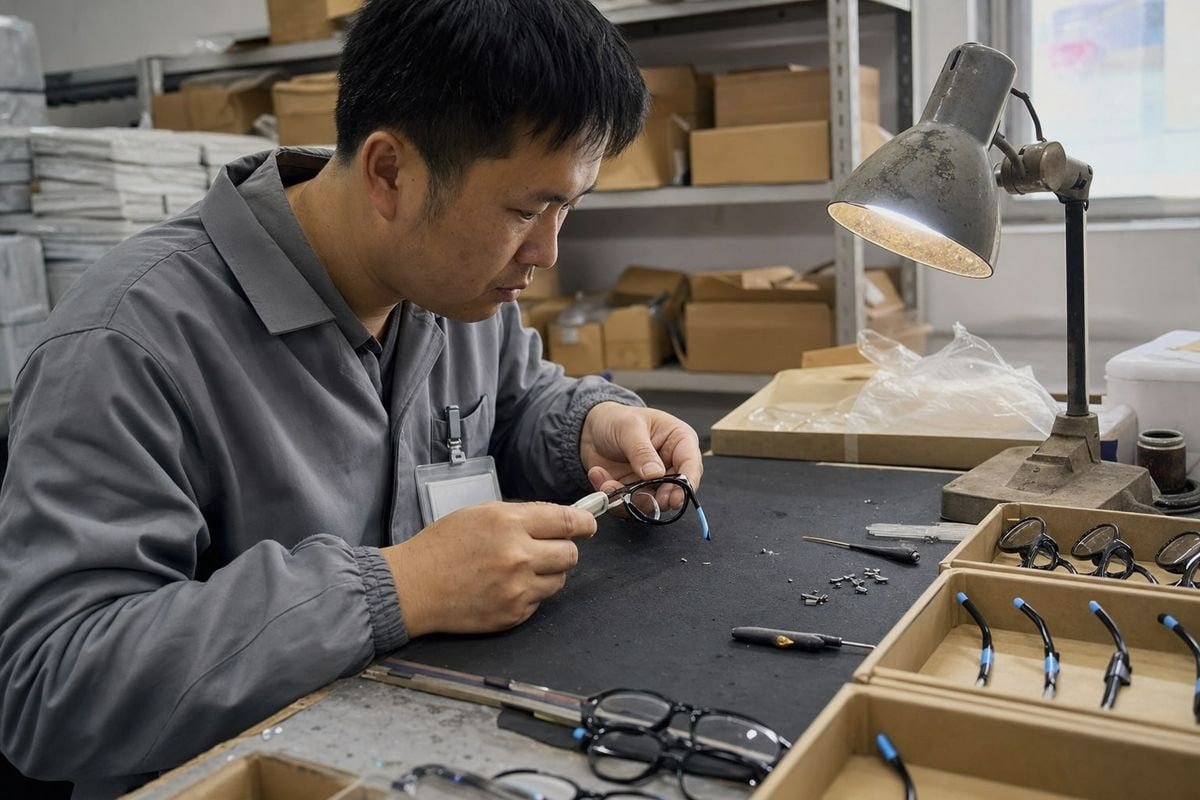
Yes, you can replace lenses after a prescription change for kids eyewear — but only if the frame was built for it. On our production line, we see the difference daily.
Yes, you can usually replace lenses after a prescription change for kids eyewear, provided the frame is structurally sound, still fits the child, and the groove design supports re-lensing. Frames made from flexible TR90 or TPEE materials tolerate lens removal and remounting far better than brittle plastics.
That short answer hides a lot of detail. Frame design, material choice, and your factory’s capabilities all decide whether re-lensing is easy or risky. Let me walk you through each piece.
How do I know if my kids' eyewear frames are designed for easy lens replacement?
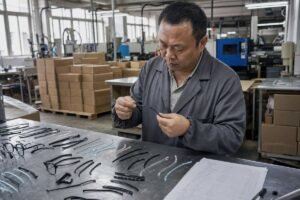
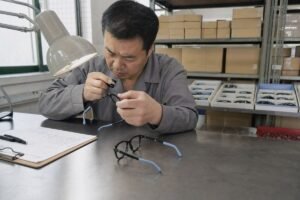
During a QC round in our Taizhou workshop last year, I watched a technician pop a demo lens out of a TR90 frame 1, flex the rim, and reinsert it in under a minute. That flexibility is not an accident — it is designed in.
Frames designed for easy lens replacement have a full-rim construction, a consistent bevel groove, flexible rim material like TR90 or TPEE, and enough rim depth to grip a new lens securely. If the rim resists gentle flexing or shows micro-cracks, re-lensing becomes risky.
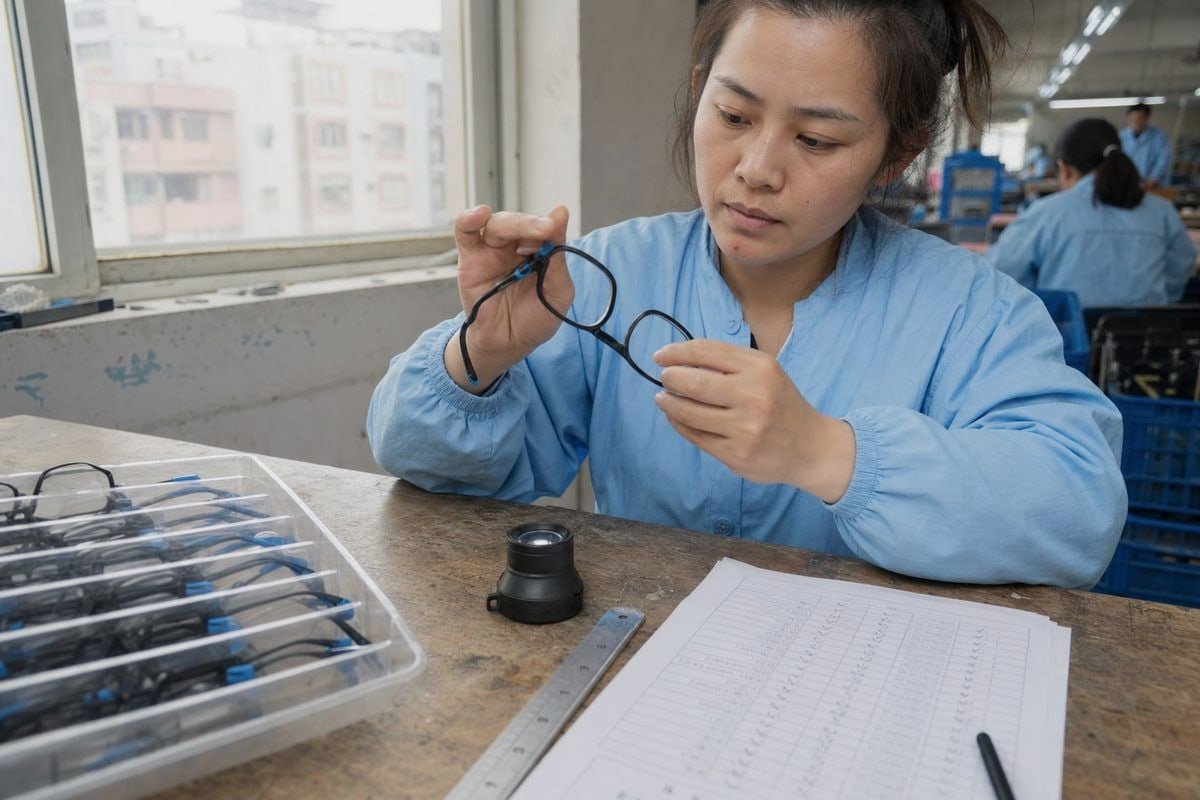
The easiest way to judge a frame is to look at three things: the rim style, the material, and the groove quality. Full-rim frames hold the lens inside a continuous bevel groove, so an optical lab can heat the frame slightly, flex it, and swap the lens. Semi-rimless and shield-style frames — like the sport wraparound sunglasses we produce with a single-lens shield — are much harder to re-lens because the lens itself provides part of the structure.
Material matters more than parents realize
Brittle injection plastics 2 harden over time. When an optician applies heat and pressure to insert a new lens, an aged brittle frame can snap. That is why our engineers standardized on TR90 fronts, often paired with TPEE temples. These materials keep their flexibility for years, so frame durability survives multiple lens swaps.
Quick frame check for re-lensing suitability
| Frame feature | Re-lensing friendly? | Why it matters |
|---|---|---|
| Full-rim TR90 or TPEE | Yes | Flexes under heat without cracking |
| Aged brittle acetate/plastic | Risky | Micro-cracks can cause the rim to snap |
| Semi-rimless design | Difficult | Lens carries structural load |
| Single-lens sport shield | Usually no | Lens shape is model-specific |
| Deep, uniform bevel groove | Yes | New lens seats securely and stays put |
One more subtle point: a stressed rim can squeeze the new lens unevenly. That creates internal stress points known as birefringence, which shows up as peripheral rainbow distortion and can cause unexplained headaches in children. A well-designed groove prevents this.
What should I look for in a manufacturer to support prescription lens updates for children's frames?
A procurement manager from Australia once asked me a blunt question: "If a parent's optician refuses to re-lens your frame, whose problem is that?" It was a fair challenge, and it shaped how we now document our frames for buyers.
Choose a manufacturer that publishes lens groove specifications, uses flexible child-safe materials, offers polycarbonate or Trivex lens options, and provides consistent dimensional tolerances across production batches. Consistency is what allows any local optical lab to re-lens the frame confidently after a prescription change.

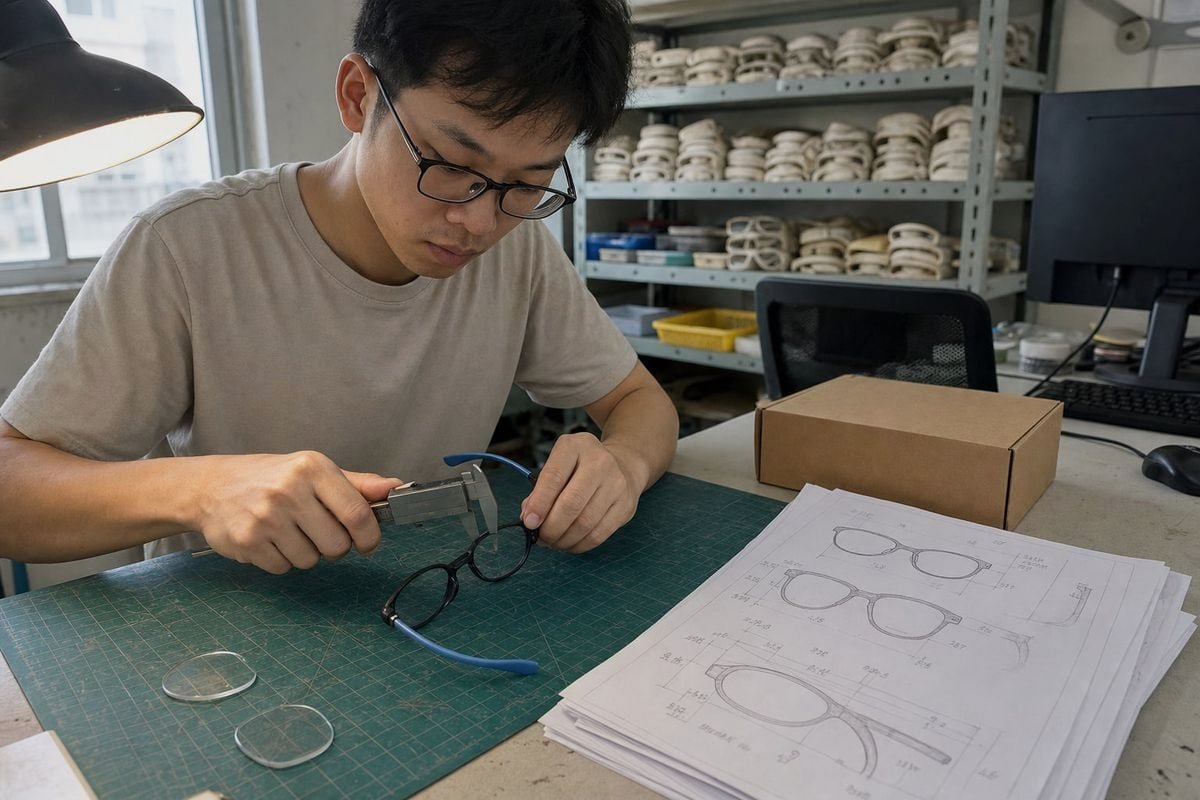
Prescription lens updates only work smoothly when the frame behaves predictably. If batch one has a slightly shallower groove than batch three, an optical lab cutting replacement lenses 3 will get inconsistent results, and your brand takes the blame. Over fifteen years of eyewear production, we have learned that dimensional consistency is the single most underrated spec in children's frames.
The capabilities checklist
Here is what I would ask any factory before committing:
- Do you supply full frame and groove drawings, including base curve, so labs can cut compatible lenses?
- Are your materials genuinely flexible — TR90 fronts, TPEE temples — or just labeled "flexible"?
- Can you supply frames with polycarbonate lenses or Trivex material options fitted in-house?
- How do you control batch-to-batch tolerance on rim dimensions?
- Do your frames account for a child's growing pupillary distance 4, with lens shapes that give labs room to position the optical center correctly?
That last point deserves emphasis. A child's pupillary distance increases as they grow. Even if the frame still fits, the optical center of the old lens may no longer align with the pupils. A generous, well-proportioned lens shape gives the optical lab flexibility to decenter the new lens correctly — something we deliberately factor into our optical frame designs.
There is also a commercial angle worth knowing. Parents can often use the lens-only benefit in their vision insurance coverage 5 for a mid-year prescription update, then save the full-frame allowance for the next growth spurt. Retailers with re-lensable frames capture both transactions. Many also offer a prescription change warranty, typically 60 to 90 days, covering one free lens remake if the optometrist adjusts the prescription shortly after purchase. Your frames need to survive that remake process without incident.
Can I work with a factory that offers replaceable lenses without redesigning my whole frame collection?
The trade-off we weigh most often with new brand clients is this: mold investment versus speed to market. Redesigning an entire collection for replaceable lenses sounds expensive — but in most cases, it is unnecessary.
Yes. Most factories with existing full-rim tooling can support replaceable lenses without a redesign. Since re-lensing depends on groove geometry and material flexibility rather than styling, an experienced supplier can audit your current collection, confirm which models qualify, and adjust only the exceptions.

This is exactly why we maintain around 800 existing styles in our catalog. A buyer launching a children's eyewear line does not need to fund new molds to get re-lensing capability. They can select from ready frames that already use full-rim TR90 construction, then customize colors, logos, lens coatings, and packaging under our OEM/ODM program. The lens replacement capability comes built into the tooling; the branding sits on top.
What actually needs to change — and what doesn't
| Element of your collection | Redesign needed? | Typical action |
|---|---|---|
| Full-rim optical frames | No | Confirm groove specs; document for labs |
| Full-rim sunglasses (round, wayframe styles) | No | Swap tinted lenses for Rx-ready clear lenses |
| Semi-rimless models | Sometimes | Limit to non-Rx use or modify to full-rim |
| Single-lens sport shields | Yes, if Rx needed | Add an Rx insert or exclude from Rx line |
| Temples, hinges, colorways | No | Purely cosmetic; no effect on re-lensing |
Take our two-tone kids frame with a glossy black front, navy TPEE temple sections, and sky-blue silicone tips. That model ships with clear demonstration lenses precisely so an optical lab can replace them with prescription lenses. Nothing about the color-blocking or the embossed grip texture needed to change.
There is a myopia management 6 angle here too. Some practitioners recommend re-lensing an outgrown-prescription pair with a slightly lower-strength prescription to create a dedicated near-work pair for screen time. Frames that support easy re-lensing let your retail partners offer that service, which extends the life of every frame you sell.
How do I ensure lens replacement services meet safety and quality standards for children's eyewear?
Early in our export history, we learned a hard lesson: a beautiful frame means nothing if the replacement lens fitted downstream fails an impact test. Since then, we treat the whole lens-replacement chain — not just our factory gate — as part of quality.
Ensure safety by mandating polycarbonate or Trivex lenses for all children's replacements, verifying impact resistance and UV protection, checking optical center alignment against the child's current pupillary distance, and inspecting the frame for stress or cracks before and after lens insertion.
For children, lens material is non-negotiable. Polycarbonate lenses and Trivex material are the only responsible choices, because kids fall, collide, and throw their glasses into backpacks. Standard plastic lenses 7 can shatter on impact. When our optical lab services team fits lenses in-house, polycarbonate with a scratch-resistant coating is our default for children's orders, and we recommend buyers write the same requirement into their retail partner agreements.
A practical safety verification checklist
- Confirm the new lenses are polycarbonate or Trivex, with UV400 protection.
- Verify a scratch-resistant coating is applied — kids' lenses take heavy abuse.
- Check the optical center against a fresh pupillary distance measurement from a recent optometrist eye exam, not last year's numbers.
- Inspect the frame under magnification for micro-cracks before lens insertion.
- After insertion, check for stress patterns in the lens edge that indicate an over-tight rim.
- Re-check the fit on the child: temples should not pinch, and the bridge should leave no red marks.
Cost, standards, and who pays
| Item | Typical consideration | Why it matters for kids |
|---|---|---|
| Lens replacement cost | Varies widely with coatings and material | Often cheaper than a full new pair if frame is sound |
| Impact-rated lens material | Polycarbonate or Trivex only | Essential safety standard for active children |
| Warranty window | Commonly 60–90 days for Rx changes | One free remake if the prescription is adjusted early |
| Fit inspection | Required at every re-lensing | Growth can outpace prescription changes |
One final nuance for your retail training materials: physical growth often outpaces prescription changes. If the frame pinches or slips even though the rims are perfect, replace the whole pair. A safe re-lensing program knows when to say no.
Conclusion
Replacing lenses after a prescription change works when frames are flexible, consistent, and documented. Build your kids eyewear line on re-lensing-ready frames, and every prescription update becomes a retention opportunity — not a return.
Footnotes
1. Explains the properties of polyamide materials like TR90 used in flexible, durable eyewear frames. ↩︎
2. Authoritative Wikipedia entry explaining the injection molding process for plastic materials. ↩︎
3. Professional guidance on lens materials and the various options available for prescription replacement lenses. ↩︎
4. Defines the clinical importance of measuring the distance between pupils for accurate lens centering. ↩︎
5. Federal glossary definition of vision coverage within the context of health insurance. ↩︎
6. WHO resource detailing the global impact of vision impairment and strategies for myopia control. ↩︎
7. Provides technical background on the history and materials used in modern plastic corrective lenses. ↩︎
More Articles You Might Like
Looking for a Reliable Kids Eyewear Partner?
Explore 800+ ready styles and full OEM/ODM support tailored to your brand.
Get in Touch English
  Español de México
  Deutsch
  Français
  日本語
日本語  العربية
  Português do Brasil