What Are the Structural Differences Between Sporty and Everyday TR90 Kids’ Frames?
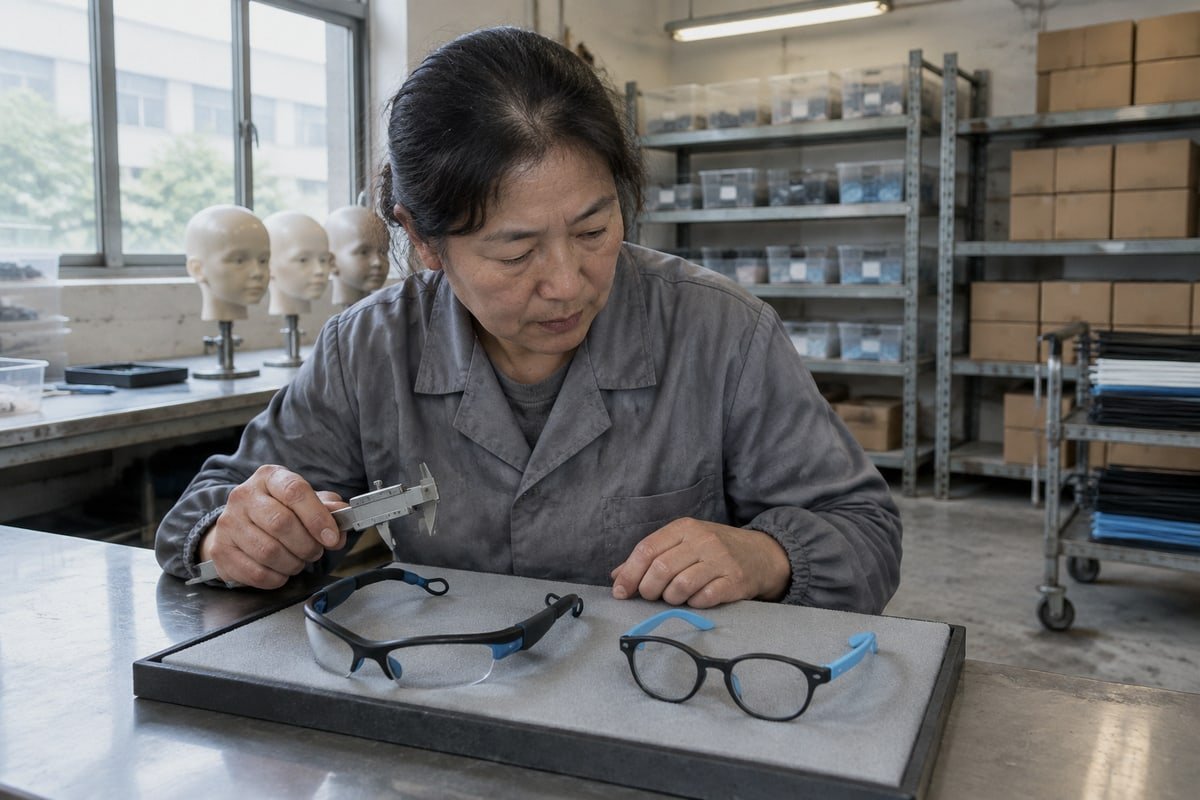
Buyers often ask our factory why sporty and everyday TR90 kids’ frames feel so different. Choose the wrong structure and you get slipping, returns, and unhappy parents.
Sporty and everyday TR90 kids’ frames share the same lightweight thermoplastic memory resin, but sporty frames add a high-wrap base curve, rubberized temple tips, wide saddle bridges, reinforced or screwless hinges, and strap apertures. Everyday frames use flatter fronts, smooth temples, standard spring hinges, and softer nose fits.
The material is only the starting point. The structure decides how a frame behaves on a running, sweating, fidgeting child. Below, I break down the four areas that matter most, and then I explain how you can source both types without doubling your supplier list.
How Do Sporty TR90 Frames Stay Secure During Active Play Compared to Everyday Styles?
Last month our QC team tilted a sporty sample forward on a head form, then shook it. It stayed put. The everyday sample slid in seconds.
Sporty TR90 frames stay secure through a wrap-around design with an 8-base curve, rubberized temple tips that grip during sweat, tighter temple curvature, a wide saddle bridge, and molded strap apertures for adjustable headstraps. Everyday styles rely on a flatter 4–6 base front and a standard fit.
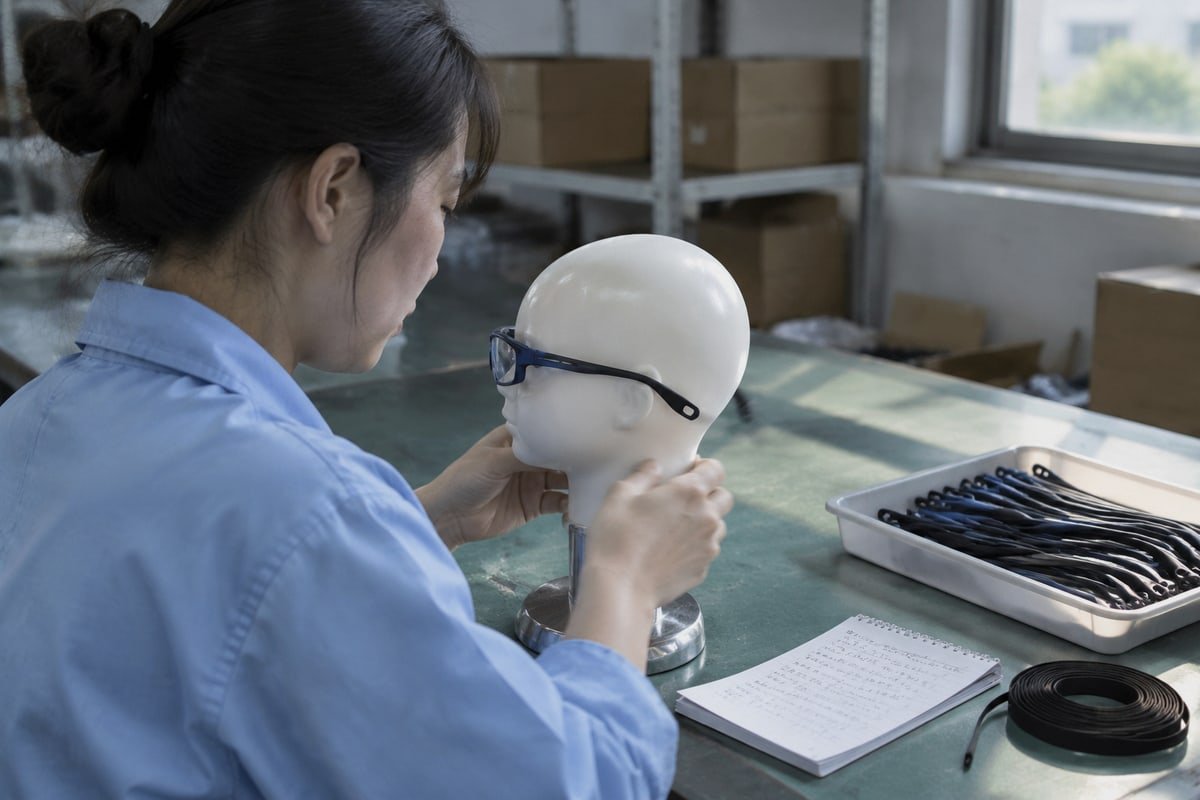
That shake test is not a lab standard. It is just a habit we picked up over fifteen years of building kids' eyewear. But it shows the point clearly. Retention is a design result, not a material result. Here is how the two categories compare, feature by feature.
| Retention feature | Sporty TR90 kids' frame | Everyday TR90 kids' frame |
|---|---|---|
| Frame base curve | High-wrap 8-base | Flatter 4–6 base |
| Temple tips | Rubberized or co-molded TPE | Smooth TR90 or soft TPEE tip |
| Temple curvature | Tight inward hook behind the ear | Gentle comfort bend |
| Bridge | Wide saddle bridge | Narrower keyhole or fixed bridge |
| Strap option | Molded apertures for adjustable headstraps | Rarely included |
| Main goal | Zero bounce during motion | Easy on, easy off |
Frame geometry does most of the work
A high-wrap front 1 follows the curve of the child's head. So the temples start closer to the skull and hug it along their full length. That reduces the lever effect that makes a flat frame tip forward when a child looks down. An everyday round or rectangle front sits flatter. That looks more like ordinary prescription glasses, which is what many parents want for school photos. But it depends more on the ears and nose to hold position.
Grip material on the temples
On our sporty styles we pair the TR90 front with TPEE temples or rubberized temple tips. Sweat makes smooth plastic slippery. A textured elastomer does the opposite. It grips harder when damp. Higher-end sporty frames use double-injection molding 2. The TPE is fused to the TR90 base during molding, so it does not peel after months of sun and sweat. Glued-on grip pads are cheaper, but we see them lift at the edges, and that is a return waiting to happen.
Straps as a backup, not a fix
Adjustable headstraps are useful for ages 3–6 and for cycling or climbing. Still, I tell buyers that a strap should never rescue a badly shaped frame. If the frame only stays on with the strap, the base curve or temple length is wrong for that age band.
What Design Features Make Everyday TR90 Frames More Comfortable for All-Day Wear?
Each everyday frame we develop forces one trade-off. More grip means more pressure. More softness means more slip. We tune each style toward eight hours of classroom wear.
Everyday TR90 frames gain all-day comfort from a flatter 4–6 base curve, slim uniform rims, soft temple tips with gentle ear bends, a narrow anatomical bridge or keyhole shape, standard spring hinges, and a 12–15 gram weight. Hypoallergenic properties reduce skin irritation during long school days.
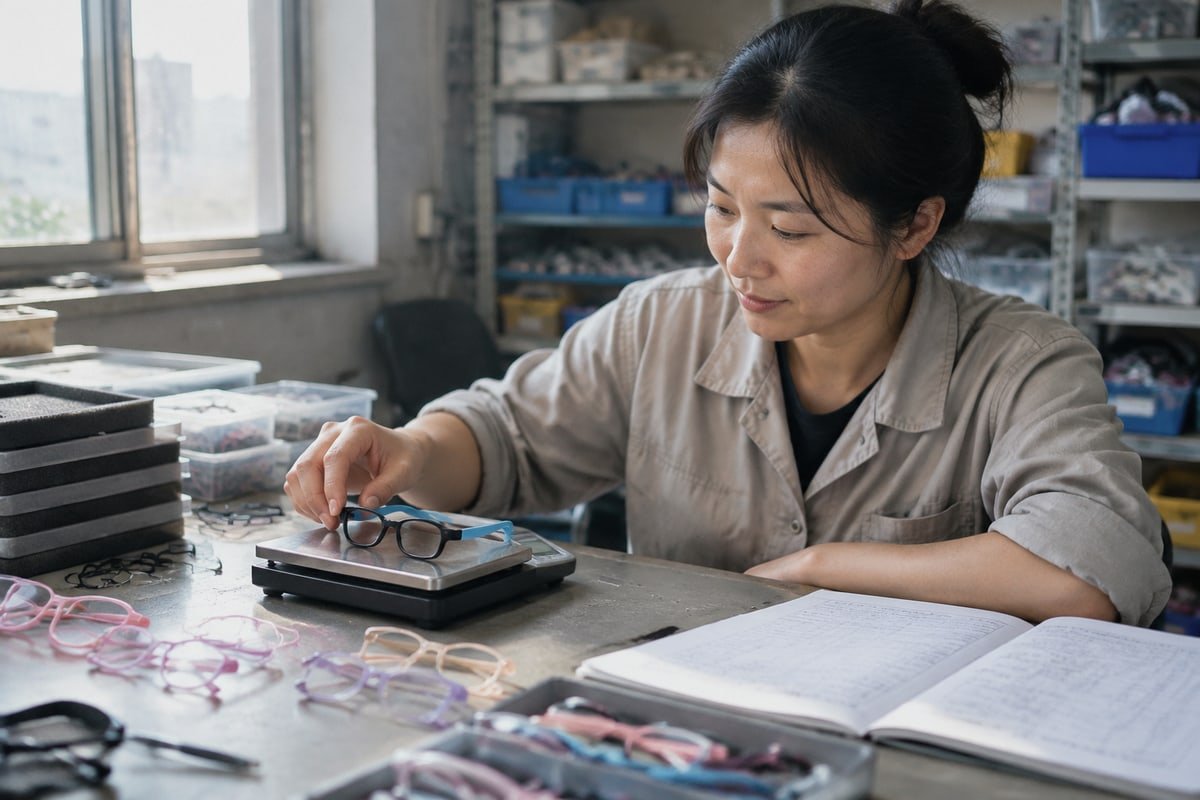
Comfort over a full day is about pressure points, not about grip. A child wearing glasses from breakfast to bedtime will notice a hard temple tip long before they notice a slightly loose fit. So our everyday range shifts priorities. Let me walk through the features that make the difference.
Weight and balance
Thermoplastic memory resin 3 is already light. Our everyday kids' optical frames land around 12–15 grams in many configurations. That low weight matters for two reasons. First, less mass means less pressure on the nose. Second, less mass means less bounce, so we do not need aggressive grip features to hold the frame in place. A light frame can afford to be gentle.
The bridge and the nose
Sporty frames use a wide saddle bridge to spread load during impact. Everyday frames can use a narrower anatomical bridge shaped to a child's low, soft nose profile. One of our popular everyday styles uses a keyhole bridge on a matte black round front with sky-blue temples. The keyhole shape lifts contact off the top of the nose and spreads it to the sides. Kids with flatter bridges find this far more comfortable than a straight bar.
Temples and hinges
Everyday temples are simpler. They run straight, then bend gently down behind the ear. We finish them with a soft matte tip, like the pink tips on our translucent gradient style, rather than a heavy rubber sleeve. Standard metal spring hinges 4 let the temples flex outward when a child pulls the glasses off with one hand. That small give protects the hinge and reduces squeeze on the temples.
| Comfort feature | Why it matters for all-day wear |
|---|---|
| 4–6 base flat front | Fits like standard prescription glasses; no cheek contact |
| Slim uniform rim | Less weight, lighter look, easier to pair with outfits |
| Keyhole or anatomical bridge | Spreads pressure on low, soft kids' noses |
| Soft matte temple tips | No hard edge behind the ear after hours of wear |
| Spring hinges | Temples flex outward, less squeeze on the head |
| Hypoallergenic TR90 and TPEE | Fewer skin reactions on sensitive young faces |
A buyer objection worth answering
Some buyers tell me sporty frames are simply better because they are more secure and tougher. I understand the logic. But a wrap-around design with straps and rubber sleeves looks like sports gear. A seven-year-old who only needs glasses for reading in class does not want that. The extra hardware also makes the glasses harder to take on and off. For school-and-casual use, the everyday structure wins on comfort and on how often the child actually wears the frame. The best frame is the one that stays on the face, and that includes staying on by choice.
Why Do Sporty TR90 Frames Often Need Reinforced Hinges and Wraparound Shapes?
A German outdoor brand once sent us a broken competitor sample. The hinge screw had backed out during a cycling trip. That conversation shaped our sporty hinge approach.
Sporty TR90 frames need reinforced or screwless hinges because active play bends the temples thousands of times and screws work loose. Wraparound shapes hold lenses in place, add lateral coverage, and let a deeper safety bevel stop lenses from pushing inward during a frontal impact.
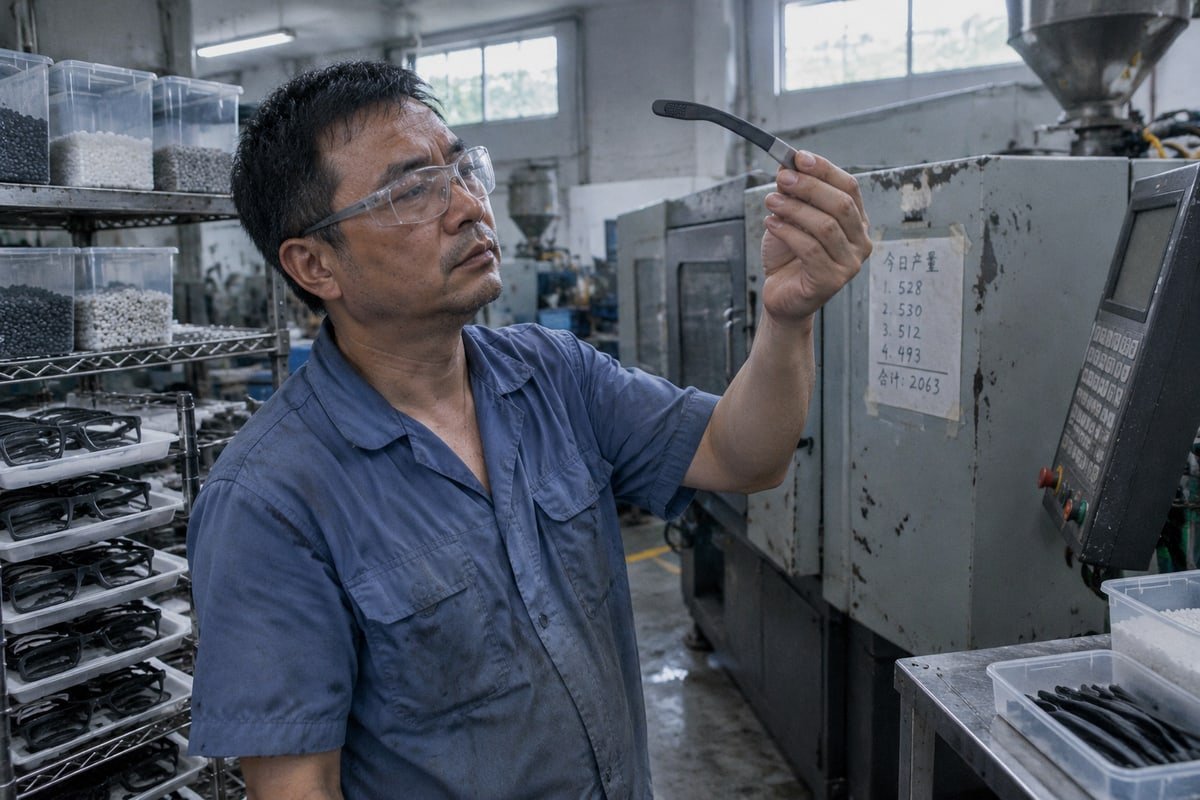
The hinge is the weakest point on any kids' frame. On an everyday frame it opens and closes a few times a day. On a sporty frame it also takes side loads every time a ball, a hand, or a sibling knocks the glasses. So the two categories treat hinges very differently.
| Hinge approach | Typical use | Strength | Notes |
|---|---|---|---|
| Standard metal spring hinge | Everyday frames | Good | Comfortable, easy to adjust, screws may loosen over time |
| Reinforced spring hinge with thicker lug | Sporty crossover frames | Better | Thicker TR90 around the lug resists cracking |
| Screwless hinge technology | Dedicated sporty frames | Best for rough use | No screw to back out; integrated pin or snap-fit design |
Why the hinge area gets thicker
We add material at the lugs and the bridge on sporty molds. Those two spots take the highest stress in a fall. TR90 has high tensile strength 5 and good impact resistance for its weight, but a slim lug still cracks if a frame hits the ground temple-first. A thicker section spreads the load. This is why sporty fronts look chunkier. It is not a styling choice. Everyday frames keep a slim, uniform rim because they are not expected to take that kind of hit.
What the wraparound shape actually does
The wrap-around design does three jobs at once:
- It keeps the lens in place. A curved lens seated in a curved rim resists popping out sideways during a fast head turn.
- It adds lateral coverage. Wind, dust, and stray fingers hit the frame instead of the eye.
- It supports a deeper safety bevel. On our sporty molds the internal lens channel is cut deeper. So if a ball hits the lens straight on, the lens pushes against the channel wall rather than toward the eye.
Tuning the polymer, not just the shape
One detail buyers rarely see is polymer variation. We can specify a slightly harder TR90 grade for the front so the lens stays stable, while the temples stay highly flexible for a contoured fit. Some sporty fronts also carry molded-in micro-vents along the brow bar. These equalize temperature behind the lens and cut fogging during hard play. None of this makes sense on an everyday frame. It would add cost and change the clean look for no real benefit.
Can I Order Both Sporty and Everyday TR90 Frame Styles From the Same Manufacturer?
We learned years ago that splitting sporty and everyday orders across two suppliers creates color mismatches. So we built both categories into one Taizhou workshop.
Yes. A full OEM/ODM kids' eyewear factory can supply both sporty and everyday TR90 frame styles from one production line, with matched colors, shared logos, unified packaging, and one quality-control standard. Choosing from an existing style library avoids mold costs for both categories.
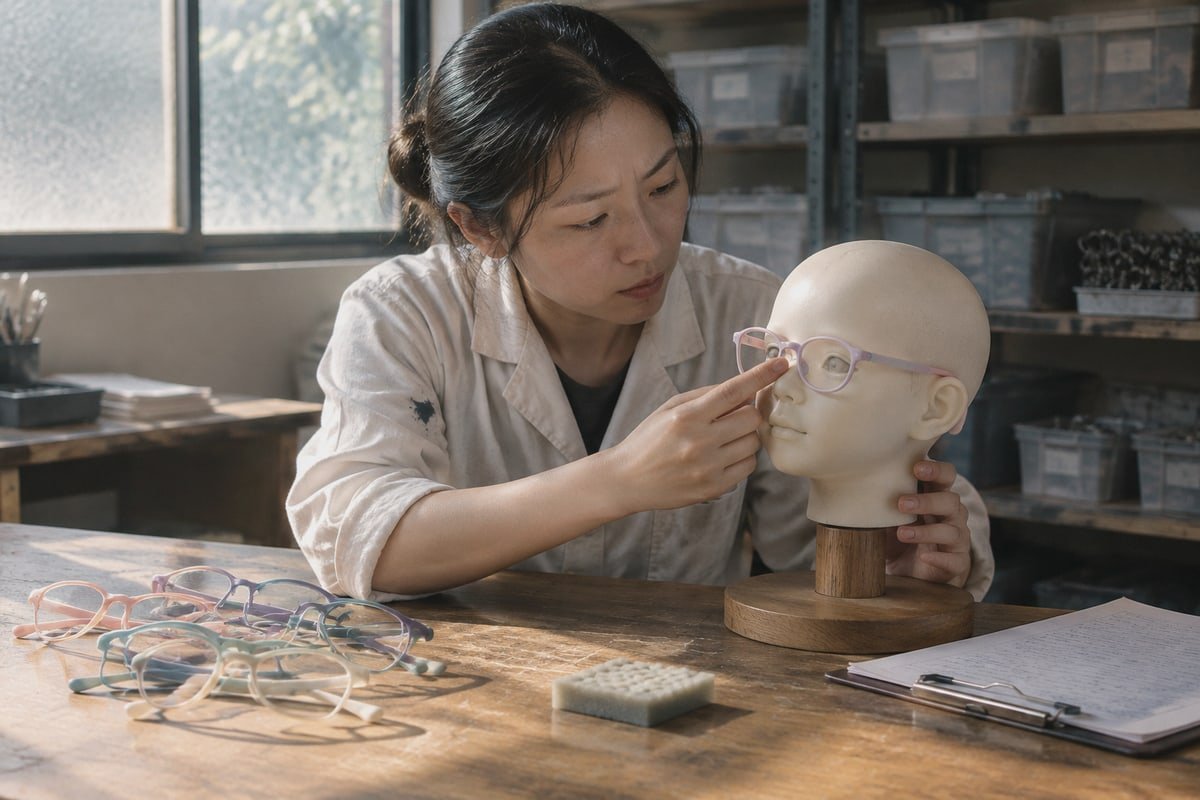
Most kids' brands do not sell only one type of frame. A baby and children's brand in Australia might sell a school optical line and a beach sunglass line to the same parents. Buying both from one factory saves more than shipping. It keeps the brand consistent. Here is how we handle a mixed sporty-and-everyday program.
A practical process for a two-category order
- Define the use case first. We ask about age bands, such as 3–6, 6–12, or 8–15, and whether the frame is for school, sport, or both. This decides the base curve and hinge type before we talk about color.
- Pick from existing styles. We hold around 800 existing styles across sunglasses and optical frames. Most brands find a sporty wrap and an everyday round or rectangle that fit their range. No new mold means lower risk for a first launch.
- Match the colorway. We run the same masterbatch across both categories. A sky-blue temple on the everyday round frame can match the sky-blue accent on the sporty wrap.
- Customize the rest. Logos on the temple, lens choice such as UV400 or polarized, packaging, cases, and cleaning cloths can all be shared or split between lines.
- Run one QC standard. Our 5S-managed workshop checks hinge action, lens seating, and temple flex on both categories. The sporty frame gets an extra check on strap apertures and grip-tip bonding.
Which category does your product actually need?
| Child's routine | Recommended structure | Key features to specify |
|---|---|---|
| School, reading, screen time | Everyday | 4–6 base, keyhole bridge, spring hinge, soft tips |
| Recess plus after-school sports | School-to-play crossover | Moderate wrap, TPEE temples, reinforced lugs |
| Cycling, ball sports, hiking | Sporty | 8-base wrap, screwless hinge, strap apertures, deeper bevel |
| Toddlers 3–6 outdoors | Sporty with strap | Full TPEE flexibility, adjustable headstraps, wide saddle bridge |
The crossover category deserves a note. Demand for school-to-play frames is growing. These frames look everyday-casual but carry TPEE temples, slightly thicker lugs, and more flex. They handle rough playground treatment without looking like sports goggles. For many brands this is the safest first product because it serves the widest range of parents.
What to ask any factory before you commit
Ask whether the grip material is co-molded or glued. Ask what the frame weighs in your chosen size. Ask how the hinge is secured. Ask whether the lens channel depth differs between the sporty and everyday molds. A real factory with its own workers and tooling can answer all four in one email. A trading company usually has to go and ask someone else.
Conclusion
Same TR90, different structures. Sporty frames prioritize grip and impact resistance; everyday frames prioritize comfort and style. Match the structure to the child's routine, and returns drop.
Interested in sourcing the products mentioned in this article? See details and request a quote here:
Footnotes
1. Explains the optical geometry and curvature terminology used in wrap-around frame design. ↩︎
2. Authoritative Wikipedia entry defining the multi-material process used to combine TPE and TR90 materials. ↩︎
3. Provides technical background on the polyamide material commonly referred to as TR90 in eyewear manufacturing. ↩︎
4. Link to international standards for ophthalmic optics and spectacle frame performance requirements. ↩︎
5. Scientific study regarding the mechanical properties and durability of high-performance polymers. ↩︎
More Articles You Might Like



Looking for a Reliable Kids Eyewear Partner?
Explore 800+ ready styles and full OEM/ODM support tailored to your brand.
Get in Touch English
 Español de México
 Deutsch
 Français
 日本語
 العربية
 Português do Brasil