How Should Retailers Stock TR90 Kids Optical Frames by Age and Gender Trends?
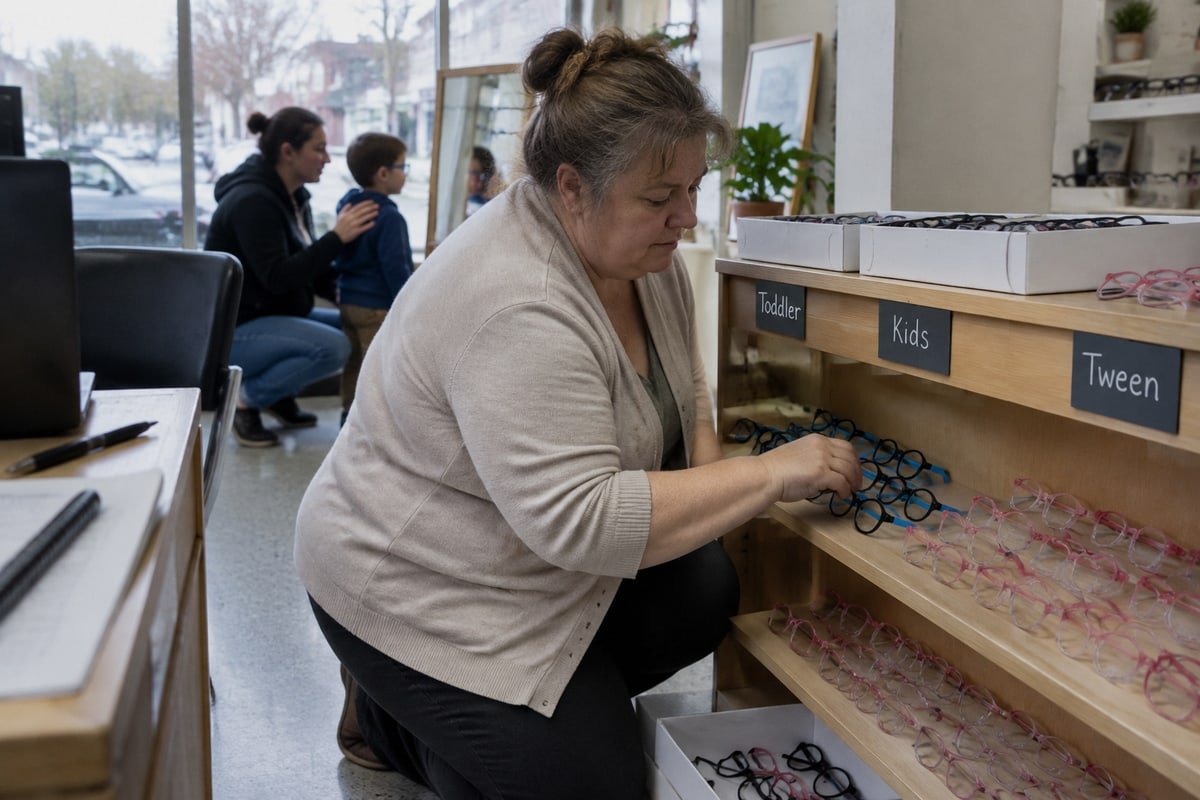
An Australian buyer once told our factory team her TR90 kids optical frames sat unsold while parents begged for missing sizes. That wasted cash. Age-led stocking fixes it.
Retailers should stock TR90 kids optical frames by age first, then gender. Build a durable, lightweight core for ages 0–8 in 35–45mm lens widths, expand into style-led shapes and finishes for ages 9 and up, and keep roughly 40% of inventory in unisex colors.
That is the short answer. The rest of this article shows how to apply it. I will walk through [age band](https://okayeyewear.com/how-kids-optical-frames-categorized-age-style-differences/)s, gender signals, inventory ratios, and sizing rules. Each section draws on what we see on our own production line in Taizhou and on what our buyers in more than 20 countries report back to us.
How do I choose the right TR90 frame styles for different children's age groups?
On our flex-test bench, a toddler frame gets twisted far harder than a teen frame. That single difference shapes how we advise buyers to assort by age.
Choose TR90 frame styles by developmental stage: ultra-flexible rounded or square-balanced frames for ages 0–4, brighter colors with more shape variety for ages 5–8, transparent, frosted and sport-inspired styles for ages 9–12, and trend-led shapes with matte finishes for teens 13 and up.

Age is the best first filter for children's eyewear. A three-year-old and a thirteen-year-old wear glasses for the same reason. But they treat them very differently. The younger child drops them, sits on them, and pulls them off by one temple. The older child cares whether the frame looks like something a friend would wear. Your assortment has to respect both realities.
Why TR90 earns its place in the younger bands
TR90 is a thermoplastic polyamide. In the trade it is often called a flexible memory resin. It bends under load and returns to shape. That impact resistance is why the 4–10 age bracket benefits most from the material. Product examples across the market commonly land around 12–15g per frame, which is light enough that a small child forgets the glasses are there. We build most of our children's optical range on TR90 fronts, and many styles pair the front with TPEE temples for even softer flex around the ears.
| Age band | Recommended shapes | Must-have features | Style latitude |
|---|---|---|---|
| 0–4 | Rounded or square-balanced | Ultra-flexible TR90, universal low bridge, maximum durability | Very low; comfort wins |
| 5–8 | Square, soft rectangle, round | Durable TR90, spring or screwless hinge, brighter colors | Moderate; simple, character-free touches |
| 9–12 | Round, geometric, sport-inspired | TR90 core, transparent or frosted finishes | High; fashion enters |
| 13+ | Trend shapes, architectural squares, hexagons | TR90 plus optional acetate or mixed-material looks | Very high; treat as teen fashion |
From functional to fashionable
Here is the objection I hear most from optical buyers. "If TR90 is the durable choice, why not stock only functional frames?" The problem is that older kids and teens reject utility-looking frames, even when the frames survive everything. The fix is not to abandon TR90. The fix is to change the finish, not the chassis. Matte "Mini-Me" styles that mirror adult quiet-luxury trends work well for ages 10–13. They move the look away from high-gloss primary colors without giving up the flexible core. For teens, a few acetate or mixed-material pieces can sit beside the TR90 range as a premium visual tier. TR90 still wins on durable children's spectacles, so it should remain the volume driver.
One more age-linked note. Many optical retailers now run myopia management programs 1 for school-age children. Defocus lenses need precise centration. A TR90 frame holds its shape through daily abuse, so the lens stays where the optician placed it. That structural stability is a real selling point in the 6–12 band.
What gender-based design trends should I consider when stocking kids optical frames?
A Japanese brand once asked us for a strict 50/50 pink-and-blue split. We suggested a neutral core first, and their reorder pattern later proved that call right.
Treat gender as a color and finish layer, not a structural rule. Stock pastel pinks and baby blues for younger children, brighter colors, crystal-clear and frosted finishes for older kids, and let shape and color signal gender for teens instead of overt labels.
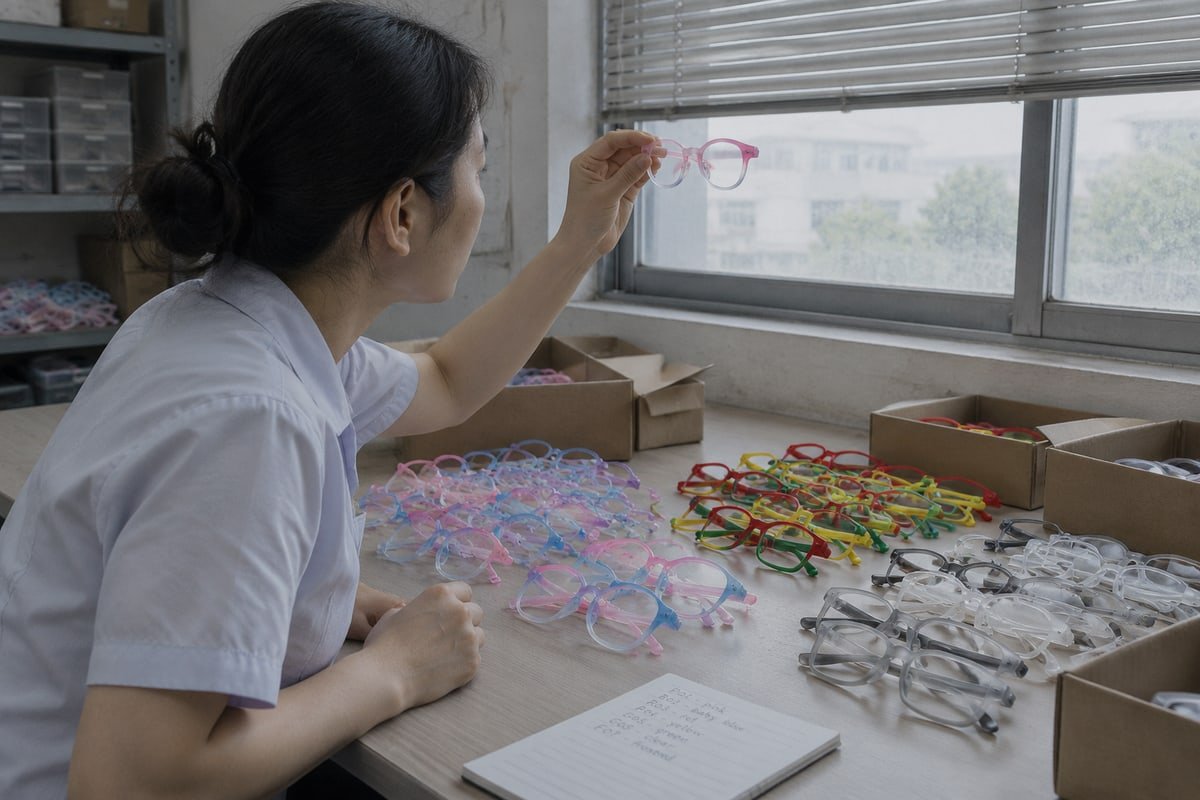
Gender still matters at the shelf. But it matters in a narrower way than many buyers expect. Parents buy for fit, durability, and price first. Children then pick color. So the structure of the frame should be shared across genders, and the surface should carry the signal. That is how we design most of our 800 existing styles. One mold, several color stories.
Color and finish signals by age
| Age band | Girl-skewed signals | Boy-skewed signals | Shared unisex core |
|---|---|---|---|
| 0–4 | Soft pink, lilac | Baby blue, mint | Clear, gray, navy |
| 5–8 | Candy pink, coral | Bright blue, green | Black, red, crystal |
| 9–12 | Pink gradient, frosted rose | Two-tone black and blue, smoke | Translucent sage, amber, clear |
| 13+ | Matte nude, tortoise-look | Matte black, gunmetal tones | Earth tones, low-gloss neutrals |
Two frames from our own range show this in practice. One is a classic round with a matte black front and glossy sky-blue temples. The two-tone contrast reads as sporty and modern, and it sells to both boys and girls in the 7–12 band. The other is a rounded-square frame with a crystal-to-pink gradient and matte pink temple tips. It leans feminine, but it has no bows, no glitter, and no character print. That restraint keeps it wearable and keeps it from dating quickly.
The trends that are actually moving
Current adolescent fashion trends push toward what some retailers call "Expressive Futurism." Hexagons and architectural squares are replacing traditional ovals in the youth market. Crystal-clear and frosted finishes are also spreading downward from teen ranges into the 9–12 band. Meanwhile, more parents are moving away from strict gender binaries. Translucent earth-tone palettes such as sage, amber, and clear answer that shift with genuine unisex eyewear styles.
Now the objection. Some buyers worry that a neutral-first strategy looks bland. The real risk runs the other way. A heavily gendered buying plan overcomplicates your order and creates dead stock when color preferences shift by region or age. A neutral core, layered with gender-skewed accents where local sell-through supports them, gives you both variety and safety. Use merchandising presentation to add the gender cue. Do not bake it into the SKU list.
How can I balance my inventory between boys', girls', and unisex TR90 styles?
Depth or breadth? Every time we plan a production run for a distributor, we weigh a few deep core SKUs against a wider, thinner spread of styles.
Balance wholesale optical inventory by holding about 40% in unisex TR90 styles, then splitting the rest between boys' and girls' color stories based on local sell-through. Go deep on a few proven silhouettes in core sizes and widen the style spread only in older-child SKUs.
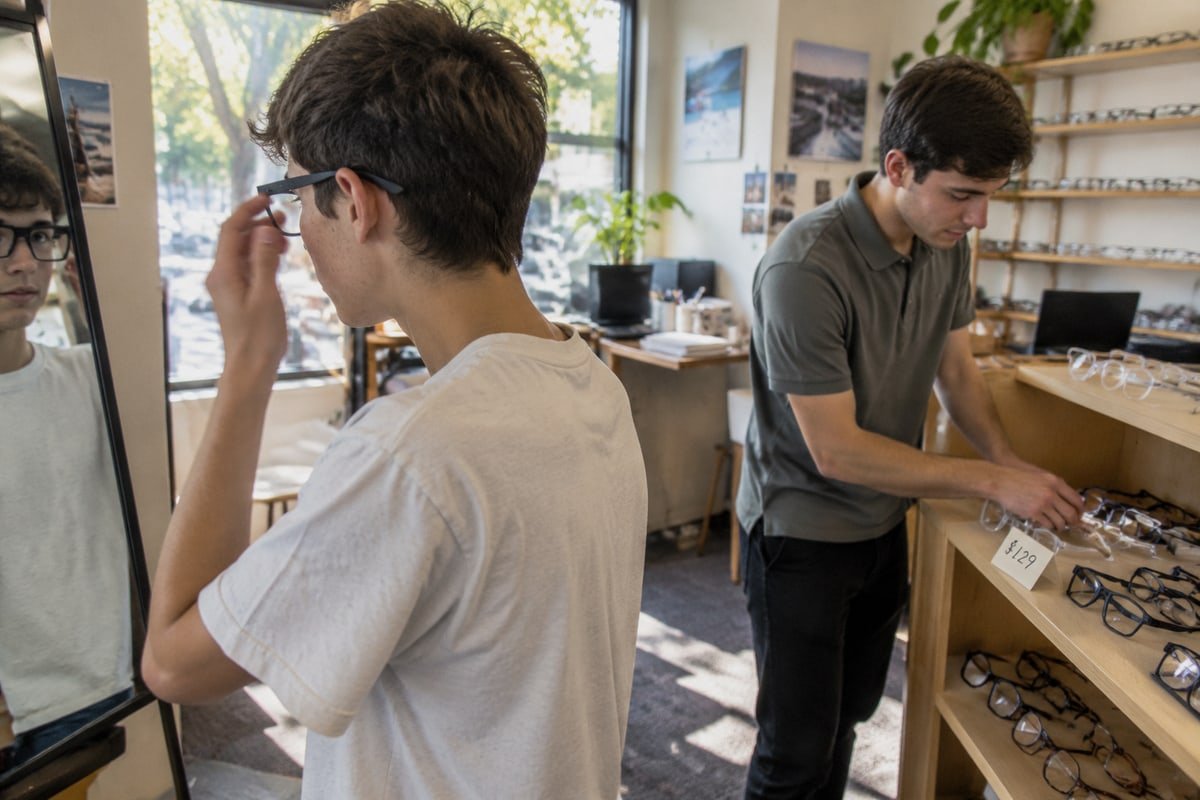
The market context helps here. One estimate puts children's flexible-frame eyewear 2 at about $3.5 billion, growing at an 8.2% CAGR through 2028. Asia-Pacific holds more than 45% of production and consumption in that same summary. Growth is real, but so is competition. Your inventory has to turn, not just look full.
A four-step balancing process
- Set the neutral core. Start with black, navy, clear, gray, and red. These colors work across genders and across ages. Stock them deepest in the 41–45mm and 46–52mm sizes, where most school-age demand sits.
- Add the unisex trend layer. Bring your unisex share to about 40% with translucent earth tones like sage, amber, and clear. These appeal to parents who want gender-neutral options and to older kids who follow adult trends.
- Layer gender-skewed accents. Split the remaining 60% between softer pastels and brighter, sportier colors. Adjust the ratio by region. A European importer and a Middle East distributor rarely want the same pink-to-blue mix.
- Review sell-through every season. Cut the accent colors that stall. Reorder the core. Let older-child SKUs carry the style experiments.
| Age band | Unisex share | Girl-skewed share | Boy-skewed share | Depth strategy |
|---|---|---|---|---|
| 0–4 | 50% | 25% | 25% | Few styles, many units per style |
| 5–8 | 40% | 30% | 30% | Proven silhouettes, moderate depth |
| 9–12 | 40% | 30% | 30% | Wider style spread, shallower depth |
| 13+ | 35% | 35% | 30% | Trend rotation, small runs |
Handling the material and tier questions
Buyers often ask whether TR90 is the only flexible material worth stocking. It is not. Silicone and TPEE are serious competitors in kids' flexible lines. We make TPEE frames ourselves, and many of our best-selling optical styles use a TR90 front with TPEE temples. Silicone suits the 0–3 band well, but it is softer and holds lens centration less firmly. So the practical answer is to let TR90 carry the optical core and use silicone or TPEE where the youngest wearers need extra softness.
Two tactics support pricing. First, tactile merchandising works. Display a TR90 frame in a flexed state, such as a 180-degree temple bend, and parents see the durability before you say a word. Second, a bio-based TR90 tier, often sold under the Grilamid BTR name, is emerging as a premium option for eco-conscious parents. If you trial it, confirm the resin source with your supplier and price it as a distinct tier rather than mixing it into the core.
For new brands, the deepest lesson is about risk. With around 800 existing styles available from our catalog, a buyer can build a full age-and-gender assortment without paying for a single new mold. Test, learn, then customize colors and packaging once the data is in.
Which sizing and fit guidelines should I follow when stocking optical frames for kids?
Years ago a European importer reported our early samples slid down toddlers' noses. That lesson taught our team pediatric frame sizing starts at the bridge, not the lens.
Follow a tiered pediatric frame sizing plan by lens width: 35–40mm for ages 0–3, 41–45mm for ages 4–6, and 46–52mm for ages 7–12. Prioritize universal low bridges for younger children and add adjustable silicone nose pads only where narrow bridges need them.

Fit is where good TR90 kids optical frames either succeed or come back as returns. A frame that is light, flexible, and beautiful still fails if it slides, pinches, or sits crooked. The good news is that a small set of rules covers most cases.
The sizing tiers
| Age band | Lens width | Typical bridge need | Temple guidance |
|---|---|---|---|
| 0–3 | 35–40mm | Universal low bridge, wide contact area | Short, soft, often with a strap option |
| 4–6 | 41–45mm | Universal bridge or keyhole bridge | Flexible temples, spring or screwless hinge |
| 7–12 | 46–52mm | Universal bridge; adjustable pads for narrow faces | Bendable temples, curved tips |
| 13+ | 50–54mm | Standard or adjustable | Near-adult temple length |
Bridge fit optimization
Young children have flatter, lower nasal bridges 3 than adults. That is why a high proportion of your younger-age stock should use a universal bridge design. It spreads contact across the nose and holds the frame without any adjustable hardware. Adjustable silicone nose pads have their place, mainly for narrow faces in the 7–12 band and for teens. But they add small metal parts and adjustment work, so they should not be the default for toddlers. The keyhole bridge on our matte black and sky-blue round style is a good middle ground for ages 6–10. It sits low and still looks stylish.
Hinges, temples, and retention
Spring hinges and adjustable straps have become standard in active children's lines. A screwless hinge design goes one step further. It removes the small screw that loosens and falls out, which is a common failure point on the playground. Curved, soft-touch temple tips improve retention for children who run, climb, and sleep in their glasses by accident. Blue-light filtering lens options are also increasingly attached to kids' frames as device use rises, so it makes sense to offer them on the 7+ sizes.
Safety claims parents actually read
Skin safety is the first question many parents ask, especially for children with sensitive skin. Buyers should expect their TR90 stock to be positioned as BPA-free hypoallergenic eyewear, and they should ask their supplier for material documentation 4 rather than relying on a label alone. We use environmentally friendly materials across our TR90 and TPEE ranges and share material information with buyers on request. Comfort features such as smaller nose bridges, lighter frames, and bendable temples are no longer hidden engineering details. They are now part of the selling story, and they belong on your product cards.
Conclusion
Mis-sized, over-gendered stock ties up cash. Sort TR90 kids optical frames by age first, layer color second, and partner with a factory that flexes with you.
Interested in sourcing the products mentioned in this article? See details and request a quote here:
Footnotes
1. WHO offers global health resources and data regarding the management of myopia in children. ↩︎
2. Statista provides market research and growth projections for the global flexible-frame eyewear sector. ↩︎
3. ISO develops international standards for the design and testing of ophthalmic optics and frames. ↩︎
4. PubMed is a database for scientific research on material biocompatibility and hypoallergenic safety standards. ↩︎
More Articles You Might Like


Looking for a Reliable Kids Eyewear Partner?
Explore 800+ ready styles and full OEM/ODM support tailored to your brand.
Get in Touch English
 Español de México
 Deutsch
 Français
 日本語
 العربية
 Português do Brasil