What Do Parents Prioritize in TR90 Kids Optical Frames?
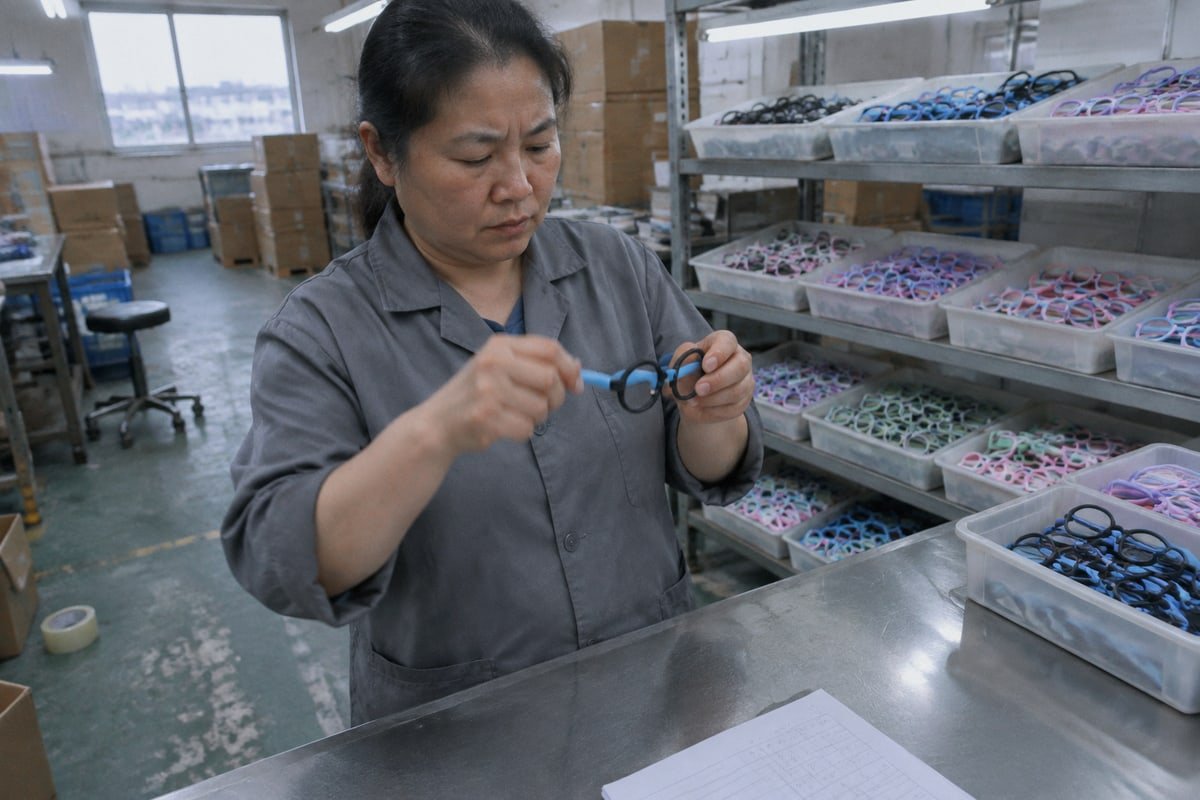
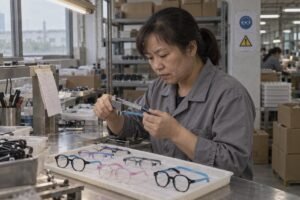
On our Taizhou production line, TR90 kids optical frames 1 face one brutal question: will a child actually keep them on? Broken bridges and sore noses say no.
Parents prioritize safety, durability, comfort, and secure fit in TR90 kids optical frames, well ahead of style. They want frames that bend instead of snapping, weigh little enough for all-day wear, stay gentle on sensitive skin, and hold position during active play.
That list sounds simple. In practice, each point hides a material decision, a design decision, and a quality-control decision. Below, I walk through the four questions buyers ask us most often, and what parents are really checking behind each one.
How Do I Know If TR90 Frames Are Truly Safe for My Child's Daily Wear?
Our QC team runs one simple check on every TR90 batch: bend the temple hard, release it, and watch whether it returns flat. Safety starts there, not in a brochure.
TR90 frames are safe for daily wear when they combine a flexible memory polymer that bends without snapping, BPA-free construction, hypoallergenic properties for sensitive skin, and screwless or secured hinges that leave no small parts loose. Ask your supplier for material documentation before ordering.
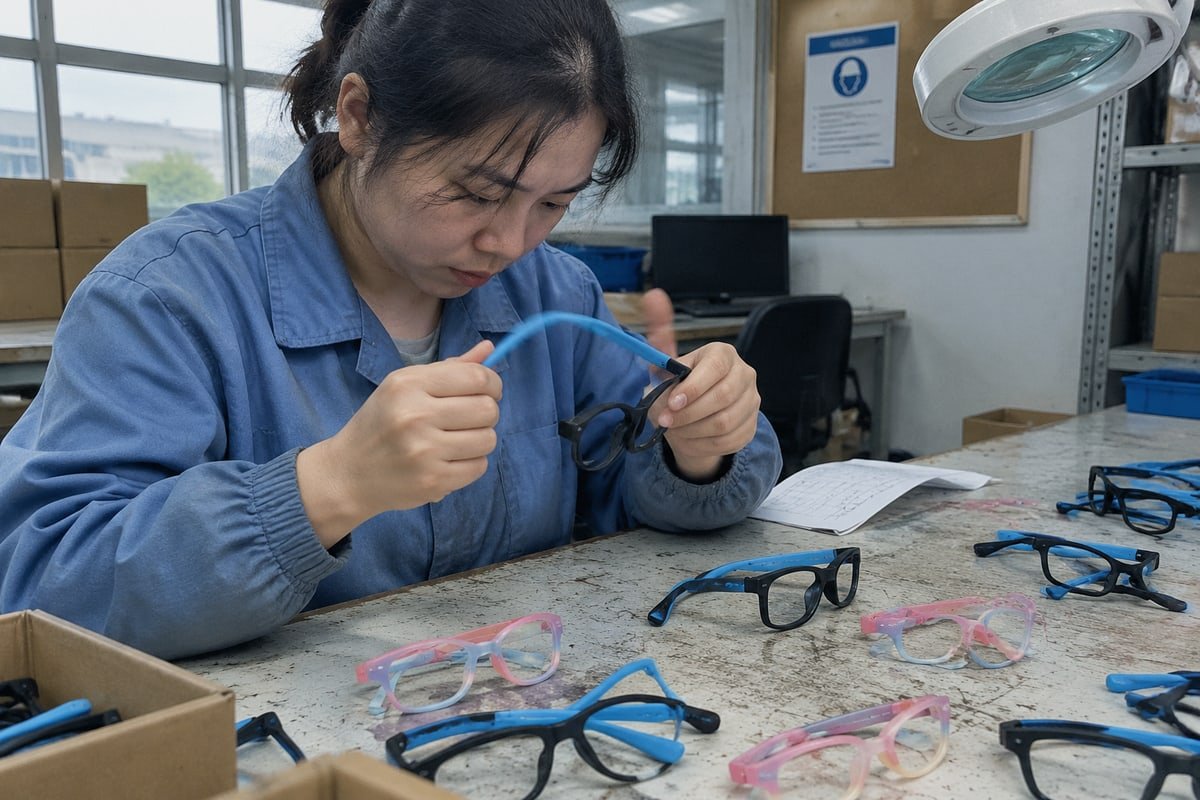
When parents say "safe," they usually mean three separate things. The frame should not break into sharp pieces. The material should not irritate skin. And nothing small should fall off. I find it useful to separate these, because a frame can pass one test and fail another.
What TR90 actually is
TR90 is a nylon-based thermoplastic. Many buyers know it by the trade name Grilamid TR90. It behaves like a flexible memory polymer 2: you can twist it, sit on it, or drop it, and it returns to its original shape. That is the opposite of rigid injection plastic, which tends to crack under the same stress. Some grades are now bio-based 3, made partly from castor oil, which matters to eco-conscious households in markets like Europe and Australia. We can source these variants for brands that want a renewable story on the packaging.
The three safety layers parents check
| Safety layer | What parents fear | What a good TR90 frame does |
|---|---|---|
| Impact resistance | A fall on the playground snaps the frame into a sharp edge | Flexes on impact and springs back; no shatter, no splinter |
| Skin contact | Rashes, red marks, nickel allergy from metal parts | Hypoallergenic, non-toxic, BPA-free construction; no nickel touching skin |
| Small parts | Loose screws become a choking hazard for toddlers | Screwless hinge technology or captive, locked hinge pins |
The third layer is often overlooked. Traditional tiny hinge screws work loose over months of daily wear. For frames aimed at ages three to six, we recommend screwless hinge technology or, at minimum, a hinge design where the pin cannot back out. Parents rarely ask for this by name. But they notice when a screw is missing.
One more point. TR90 resists chemical degradation from skin oils and sweat far better than cheaper plastics. A frame that yellows or turns brittle after a summer is not a safe frame, even if it passed inspection on day one. That is why our 5S-managed workshop checks surface finish as closely as flex.
Why Do Parents Prefer Flexible TR90 Material Over Traditional Plastic Frames?
Rigid plastic gives sharper edges and a glossier look; TR90 gives forgiveness. When we plan a new kids' collection, we choose forgiveness almost every time.
Parents prefer flexible TR90 over traditional plastic because it bends and springs back instead of cracking, weighs noticeably less, resists sweat and skin oils without yellowing, and holds its shape for accurate lens centration. Fewer breakages mean fewer replacements and lower total cost.

Here is the comparison the way I explain it to importers who are switching suppliers.
| Feature | TR90 | Traditional rigid plastic |
|---|---|---|
| Behavior under stress | Bends, recovers | Cracks or snaps |
| Weight | Very light | Heavier |
| Sweat and skin-oil resistance | High; slow to yellow | Moderate; can go brittle |
| Shape stability over time | High; keeps lens alignment | Can warp with heat |
| Hypoallergenic properties | Yes | Varies by grade |
| Color and finish range | Wide, including translucent and two-tone | Wide |
| Replacement risk | Low | Higher |
Durability is really a cost argument
Parents do not buy TR90 because they love polymers. They buy it because a snapped frame means a new frame, a new fitting, and a child without clear vision for a week. Brands see the same math from the other side: fewer damaged returns and fewer warranty claims. In our export experience, this "replacement risk" is the quiet driver behind most reorders.
The age split: three to ten versus older kids
For children roughly three to ten, TR90 is the practical starting point. These kids drop, sit on, and chew their glasses. Flexibility and torsion resistance matter more than anything else. Older kids and teens shift toward style variety and a more substantial feel, and some parents ask about acetate for that reason.
I do not treat this as a reason to abandon TR90. It is a reason to design it better. Our two-tone styles, such as a matte black round front with sky-blue temples, or a rounded-square frame that fades from clear crystal to soft pink, give an acetate-like look with TR90 behavior. Buyers get the style story for the older child and the durability story for the parent.
Why shape stability matters for prescriptions
There is a newer reason parents and opticians favor TR90. Advanced myopia management lenses 4 need precise optical centration. A frame that warps in a hot car or slowly spreads over time moves the lens off center. TR90's dimensional stability protects that alignment, which improves prescription lens compatibility for these demanding designs.
What Comfort Features Should I Look for When Choosing TR90 Optical Frames?
A procurement manager from Australia once told me her return data had nothing to do with breakage. Kids simply took the glasses off.
Look for ultra-lightweight construction, an ergonomic bridge fit sized for a child's low nose, soft silicone nose pads, TPEE or spring-flex temples that grip without pinching, smooth hypoallergenic surfaces, and optional adjustable head straps. Comfort drives compliance, and compliance is what makes the prescription work.
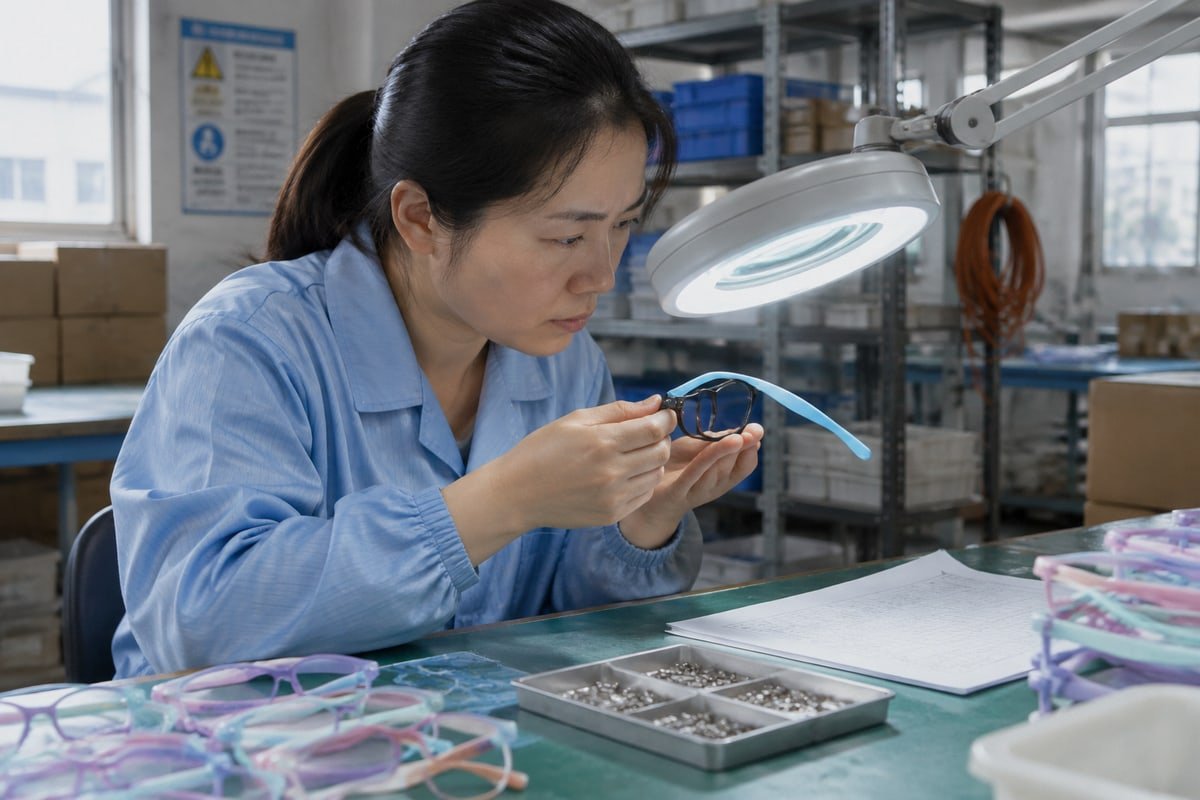
That conversation changed how I think about comfort. A durable frame in a school bag is worth nothing. The best kids' frame is the one the child keeps on. So I now treat every comfort feature as a compliance feature.
The comfort features that actually change behavior
- Weight. TR90 kids optical frames are light enough that many children forget they are wearing them. Less weight means fewer pressure marks and less fidgeting.
- Ergonomic bridge fit. Children have lower, flatter nose bridges than adults. A keyhole or saddle bridge 5 cut for a child's face spreads the load and stops the frame from sliding down. Silicone nose pads help on styles where the bridge alone is not enough.
- Temple design. This is where we lean on our TPEE expertise. Our TR90 frames with TPEE temples pair a stable front with soft, grippy arms that curve behind the ear without pinching. The temple tips should be rounded and matte, not sharp or glossy.
- Surface feel. Smooth, hypoallergenic surfaces avoid the itching that makes a child pull the frame off.
- Adjustable head straps. For toddlers and for sport, a strap keeps the frame in place and takes weight off the ears.
| Comfort feature | Problem it solves | Most useful for |
|---|---|---|
| Ultra-light TR90 front | Pressure marks, headaches | All ages |
| Child-cut bridge or silicone nose pads | Slipping, red marks on nose | Ages 3–8, low bridges |
| TPEE or flexible temples | Pinching behind ears | Ages 3–10, active kids |
| Adjustable head straps | Frames falling off during play | Toddlers, sport use |
| Color and shape variety | Child refuses "boring" glasses | Ages 6 and up |
Style is part of comfort
There is a real tension here. Parents prioritize safety and material. Children gravitate to bright colors and playful shapes. Frame selection ends up being a negotiation between the two. I see this as a design brief, not a problem. Parents buy the protection; children buy into the look. With around 800 existing styles and custom color options, we help brands offer both without a new mold for every variation.
One last comfort note. Many buyers now ask about blue-light lens options for screen-heavy kids. The frame material does not change, but clear, lightly tinted lenses fit well into a comfort-first story.
How Can I Tell If TR90 Kids Frames Will Last Through Active Play?
Fifteen years of making kids' eyewear taught us one lesson: the frame rarely fails at the lens. It fails at the hinge and the bridge.
TR90 kids frames will last through active play if they show genuine torsion resistance, spring back flat after twisting, use a shatterproof design with secure lens retention, have reinforced or screwless hinges, and come from a factory that inspects flex and finish on every batch.
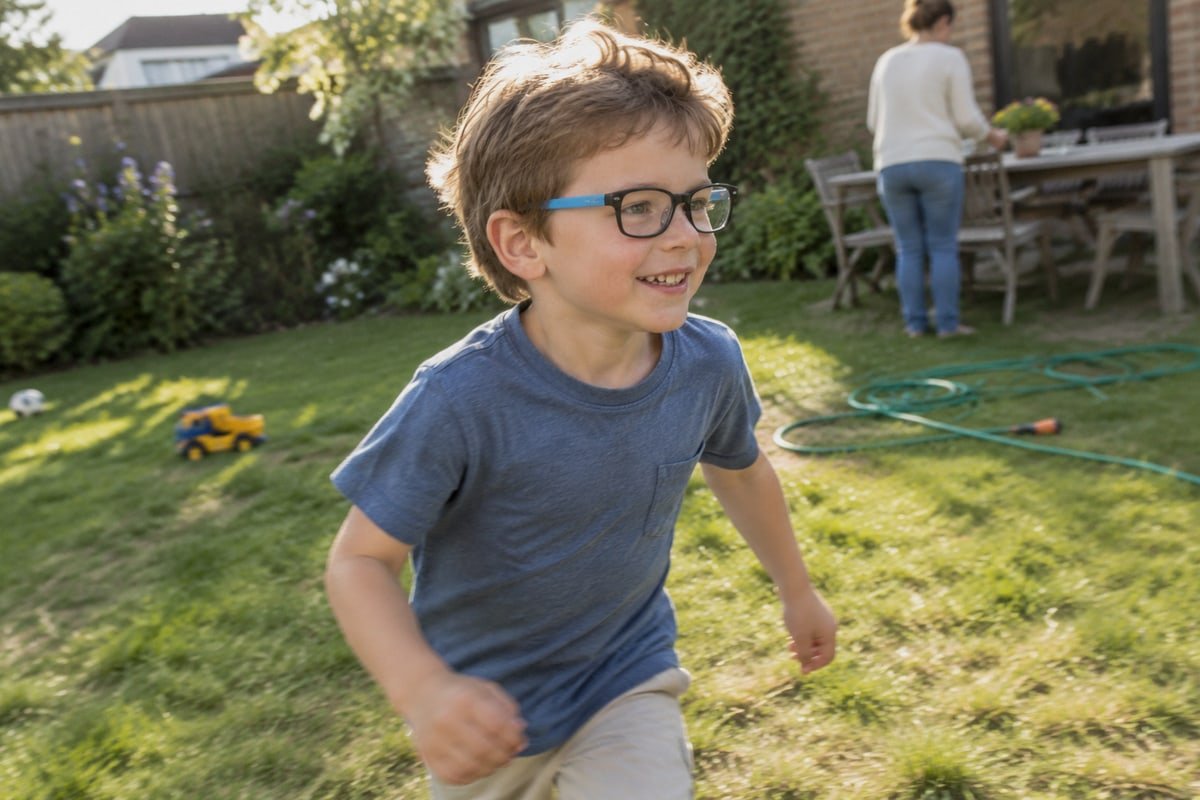
You cannot judge durability from a product photo. You can judge it from a sample. Here is the sequence I suggest to every buyer who receives our samples, whether they are a baby-product brand in Japan or an optical distributor in Europe.
A five-step sample test any buyer can run
- Twist test. Hold the front and twist one temple through a wide angle. Release. A true flexible memory polymer returns flat with no white stress line. A cheap blend shows a pale crease or stays bent.
- Temple splay. Open both temples well past their normal stop. TR90 frames with good torsion resistance flex at the hinge area without cracking the front.
- Drop test. Drop the frame onto a hard floor from table height a few times. Check for chips at the lens rim and any hinge play.
- Lens retention. Push gently on the lens from behind. A shatterproof design keeps the lens seated in the groove. If it pops out easily, it will pop out on the playground.
- Sweat and oil check. Handle the frame with warm hands, leave it a few days, and check for tackiness or dulling. TR90 should stay smooth and stable.
Where frames actually fail
| Failure point | Warning sign on the sample | What we do about it |
|---|---|---|
| Hinge | Loose screw, wobble after splay test | Reinforced hinge design or screwless hinge technology |
| Bridge | Stress line after twist | Correct wall thickness, proper TR90 grade |
| Lens groove | Lens pops or rattles | Groove depth matched to lens; prescription lens compatibility checked |
| Temple tip | Cracks where tip meets arm | TPEE temple or rounded, thicker tip |
| Surface | Yellowing, stickiness | Resistant TR90 grade, finish inspection per batch |
Why the factory matters more than the material
TR90 is a material, not a guarantee. Two factories can buy similar resin and produce very different frames. Wall thickness, mold quality, hinge choice, and inspection discipline decide whether the frame survives a school year. Our 5S-managed workshop and roughly 120 workers give us the consistency that brands in 20-plus countries rely on for repeat orders. When a buyer asks me how a frame will last, I show them the process, not just the polymer.
Conclusion
Broken, uncomfortable frames cost brands trust. TR90 kids optical frames built for flexibility, comfort, and safety solve that, and our factory helps brands deliver them with confidence.
Interested in sourcing the products mentioned in this article? See details and request a quote here:
Footnotes
1. ISO 12870:2018 specifies the fundamental requirements and test methods for unglazed ophthalmic spectacle frames. ↩︎
2. Technical specifications for Grilamid TR90, the high-performance flexible memory polymer used in quality eyewear. ↩︎
3. International standard ISO 16620-1 for determining the bio-based content of plastic products. ↩︎
4. WHO fact sheet discussing global vision impairment and the necessity of effective myopia management. ↩︎
5. Overview of eyeglass frame components including different bridge designs for ergonomic fit. ↩︎
More Articles You Might Like


Looking for a Reliable Kids Eyewear Partner?
Explore 800+ ready styles and full OEM/ODM support tailored to your brand.
Get in Touch English
 Español de México
 Deutsch
 Français
 日本語
 العربية
 Português do Brasil