Does Kids’ Eyewear Warranty Cover Frame Breakage?
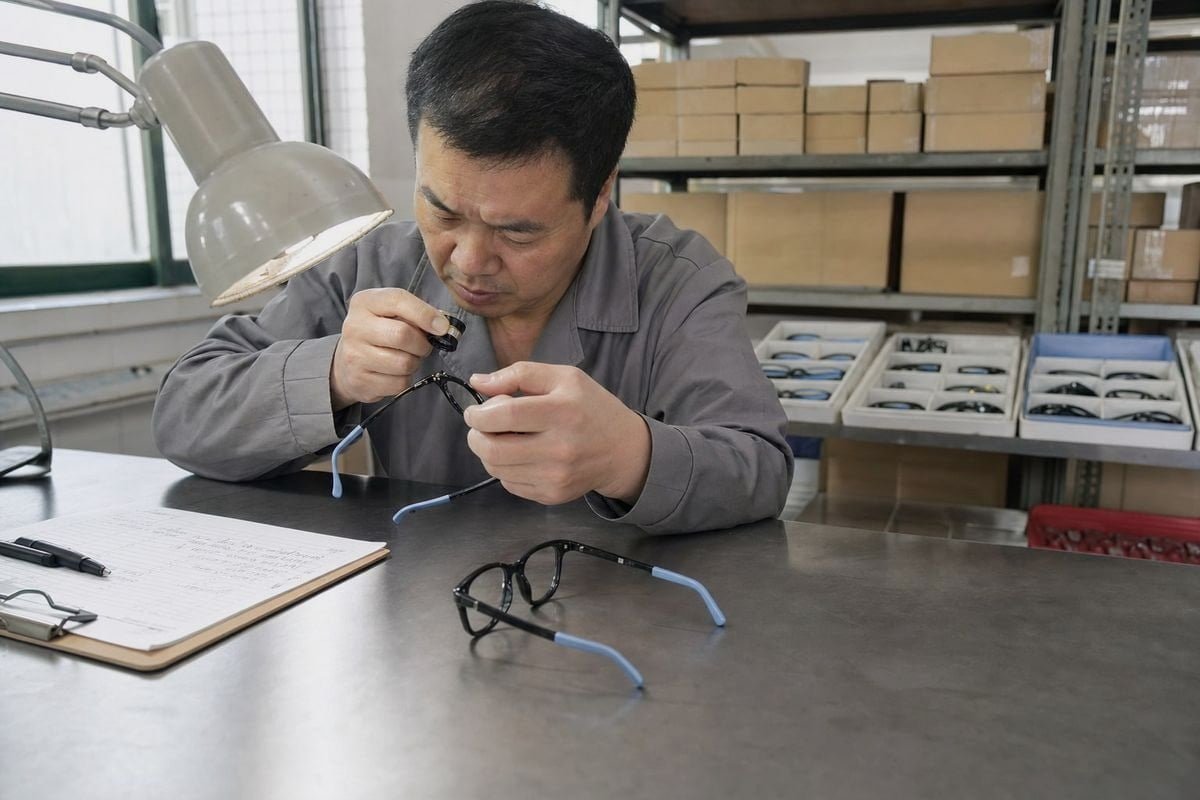
Kids’ eyewear warranty questions land in my inbox weekly at our Taizhou factory. Buyers worry: a child snaps a frame, the parent demands a refund, and nobody knows who pays.
Kids’ eyewear warranties sometimes cover frame breakage, but not always. Standard manufacturer warranties cover only manufacturing defects like faulty hinges or cracking under normal use. Accidental breakage is usually covered only through a separate protection plan, kids-specific guarantee, or enhanced retailer policy with copays and conditions.
The word “warranty” hides two very different promises. Let me break down [what each one actually covers](https://okayeyewear.com/what-warranty-kids-sunglasses-typically-cover-does-the/), and how you can protect your brand and your customers.
What does a typical kids' eyewear warranty actually cover?
A buyer from Australia once forwarded me a photo of a frame snapped clean at the bridge. Her first question was simple: defect or accident? That distinction decides everything in a warranty claim.
A typical kids' eyewear warranty covers manufacturer defects only: cracked frames caused by material flaws, loose or failing hinges, peeling finishes, and structural failures under normal use. It excludes accidental damage, lost or stolen glasses, DIY repairs, heat damage, and normal wear and tear.
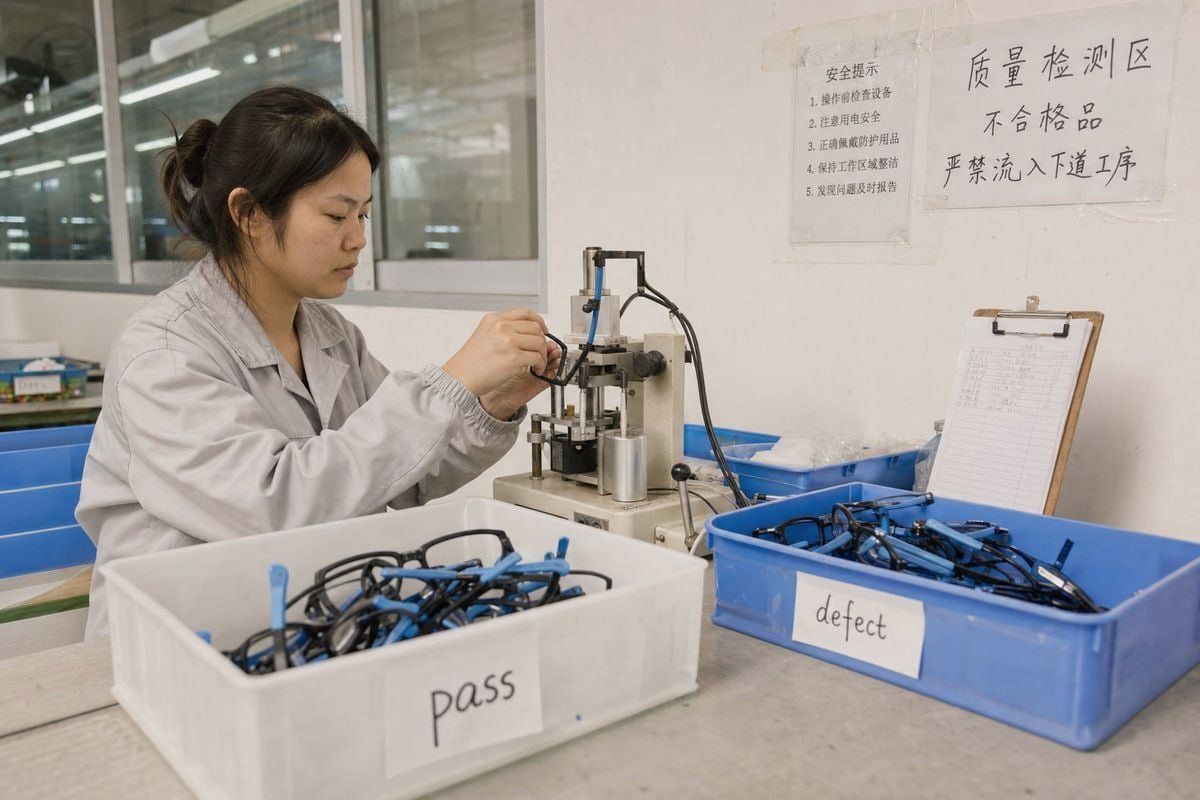
In my fifteen years of making children's frames, I have seen the same confusion repeat itself. Parents assume "warranty" means "free replacement no matter what." Retailers mean something much narrower. The gap between those two expectations is where complaints are born.
The three layers of coverage
There are really three separate promises in the market, and consumers mix them up constantly:
| Coverage Type | What It Covers | Typical Cost | Typical Duration |
|---|---|---|---|
| Basic manufacturer warranty | Manufacturer defects 1 in materials or workmanship | Included free | 12–24 months |
| Breakage / extended protection plan | Accidental damage, snapped temples, smashed frames | Paid add-on, often with a $25–$50 copay | 12 months, often one-time |
| Retailer replacement policy | Store-specific perks, sometimes unconditional for kids under 12 or 13 | Varies by package | Varies |
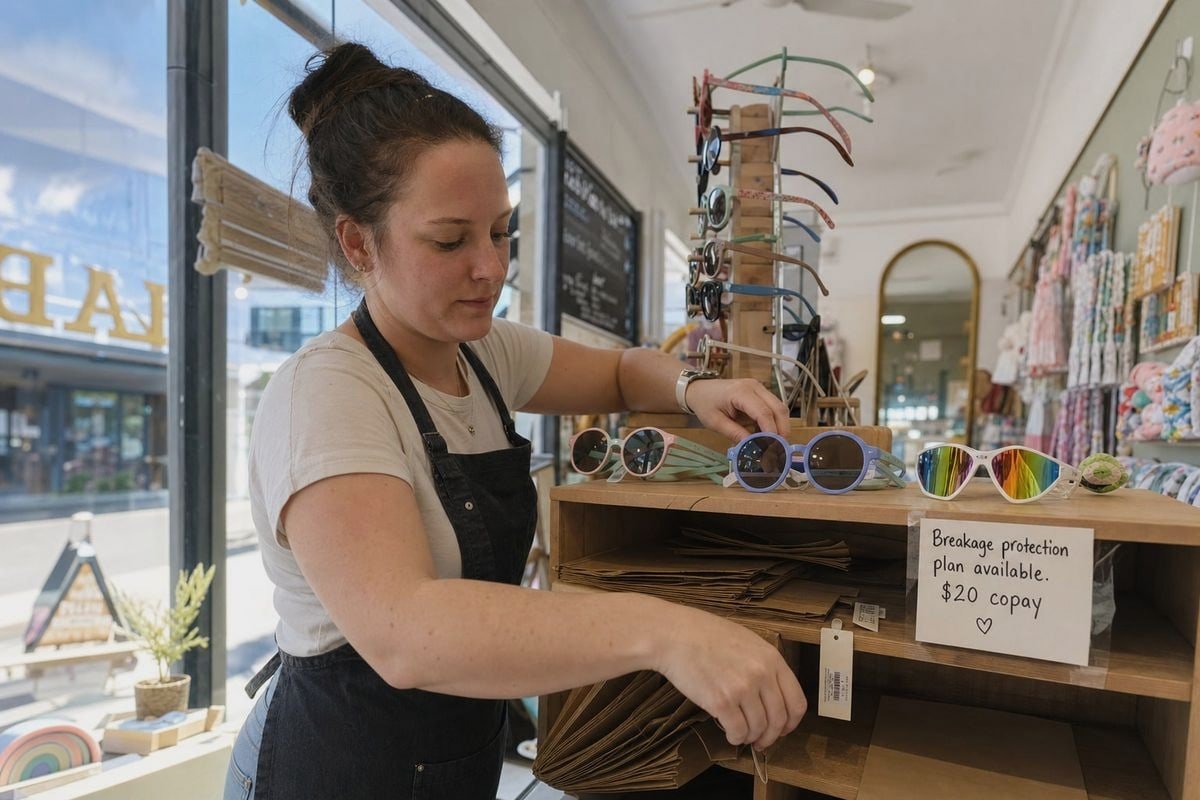
Real-world policies show how wide the range is. Some optical clinics 2 cover accidental frame breakage for two years but exclude broken lenses. Others offer a one-time replacement for smashed frames for a flat fee around thirty-five dollars. A few chains sell a kids' breakage protection plan with a fifty-dollar copay, limited to eyewear bought in that store. Meanwhile, other practices state plainly that accidental damage and breakage are never covered under the standard guarantee, even with a two-year defect warranty on children's frames.
What almost never gets covered
Across nearly every policy I have reviewed with buyers, the same exclusions appear. Lost or stolen glasses are almost never covered, because most policies require the physical return of the broken parts. Damage from abuse or mishandling is excluded. Self-repairs with glue or tape often void the warranty entirely, since adhesives can permanently damage flexible frame materials 3. Excessive heat, like a dashboard in summer, is excluded too. And note that a lens replacement policy is usually separate; a frame-breakage plan does not automatically include scratched lenses, even ones with a scratch-resistant coating.
How can I set clear warranty terms with my frame supplier?
Early in my export career, a European distributor and I lost weeks arguing over one vague contract line: "supplier covers defective frames." Neither of us had defined "defective." That mistake taught our factory to write warranty terms into every quotation.
Set clear terms by defining "defect" versus "accident" in writing, agreeing on a defect-rate threshold, specifying evidence requirements like photos or returned frames, fixing the claim window, and deciding who pays replacement shipping. Put all of this into the purchase contract before production starts.
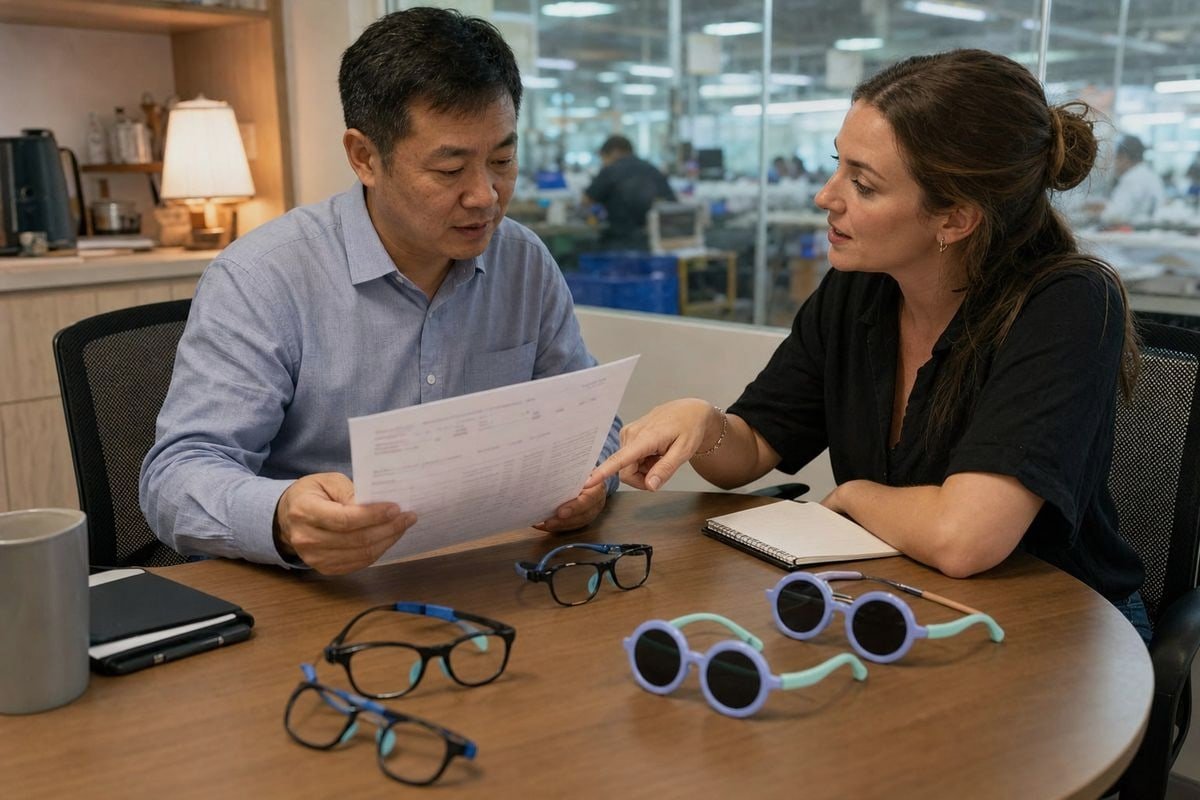
For a brand or importer, your consumer-facing warranty is only as strong as the agreement behind it. If your supplier will not stand behind hinge failures, you end up absorbing every claim as an out-of-pocket repair cost. In our experience exporting to twenty-plus countries, the buyers who negotiate these five points upfront almost never have disputes later.
The five terms to nail down
- Define "manufacturer defect" precisely. List the failure modes 4: hinge screws loosening within normal use, coating peeling, frame cracking without impact, temple detachment at the joint. Anything caused by impact, bending beyond design limits, or heat is the consumer's side.
- Agree a defect-rate allowance. Mass production is never perfect. A sensible contract states an acceptable defect percentage per shipment, with credit or free replacement units on the next order when it is exceeded.
- Fix the evidence standard. Photos first, physical return only if needed. Shipping broken frames back across an ocean rarely makes economic sense; we usually accept clear photo documentation and batch codes.
- Set the claim window. Twelve months from delivery is common. Align it with the warranty you promise consumers, plus a buffer for stock sitting in your warehouse.
- Decide who pays what. Replacement units, lab processing fees, and shipping charges should each have a named payer. Ambiguity here is where relationships sour.
A worked example
One of our Japanese buyers sells TR90 optical frames 5 with a one-time replacement guarantee for children under twelve. We agreed that genuine defects are replaced free on the next container, while accidental breakage replacements are supplied at a discounted component price. Because we hold ~800 existing styles in our catalog, replacement stock 6 in the same style and size is rarely a problem. That predictability is what lets her market a generous kids' policy without financial risk.
Why do TPEE and TR90 frames reduce breakage claims?
Our engineers run a simple demonstration for visiting buyers: they twist a TPEE-temple frame into a full loop, then let it spring back. Rigid acetate would have snapped in half. That single test explains most of our repeat orders.
TPEE and TR90 are flexible frame materials with high memory and impact resistance. They bend, twist, and rebound instead of snapping when a child sits on them, drops them, or pulls the temples outward. Fewer fractures mean fewer breakage claims, lower warranty costs, and happier parents.
Warranty economics start with material choice. Every claim your brand pays out traces back to a design or material decision made months earlier. This is where genuine flexible-material expertise matters more than price per unit.
How the materials behave under stress
TR90 is a thermoplastic with shape memory. It flexes under load and returns to its original geometry. TPEE goes a step further in softness and elasticity, which is why we often pair TR90 fronts with TPEE temples: the front holds the lenses in stable alignment, while the temples absorb the twisting and pulling that children inflict daily. Both materials are lightweight, so frames sit gently on small noses, and both are environmentally friendly compared with many alternatives.
| Failure Scenario | Rigid Plastic Frame | TR90 Frame with TPEE Temples |
|---|---|---|
| Child sits on glasses | Frame often cracks at bridge | Frame flexes and rebounds |
| Temples pulled outward | Hinge or temple snaps | Temples bend and recover |
| Dropped on hard floor | Corner chips or fractures | Impact absorbed, no fracture |
| Daily on-off handling | Stress cracks develop over time | Shape memory resists fatigue |
The commercial payoff
Fewer breakages change the math of every policy you offer. A brand selling durable children's eyewear can afford a more generous accidental damage protection plan, because actual claim frequency stays low. Some of our customers even use that durability as a selling point: a bolder guarantee than competitors, funded by frames that simply do not break as often. On our production line, we also test hinge cycles and temple flex repeatedly during QC, because a warranty is only cheap to honor when the product rarely needs it. For active kids in playgrounds, sports fields, and school bags, flexibility is not a luxury feature. It is claim prevention built into the material itself.
What should I look for in a manufacturer's after-sales support?
A procurement manager from a kids' outdoor brand once told me she chose us over a cheaper quote for one reason: we answered her defect question with a documented process, not a promise. That conversation shaped how I think about after-sales support.
Look for a documented claims process, fast photo-based defect assessment, spare parts and replacement stock availability, consistent QC records by batch, clear response timeframes, and willingness to share failure analysis. Strong after-sales support turns warranty problems into quick fixes instead of brand-damaging disputes.
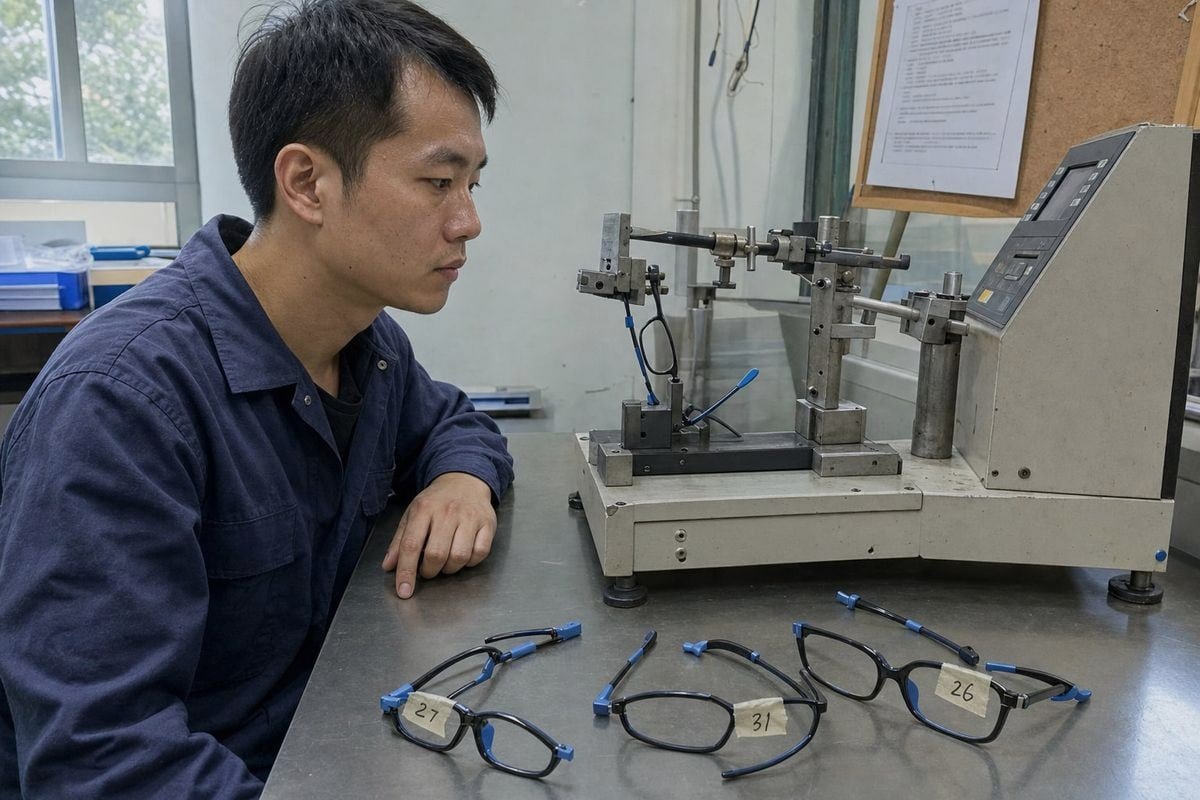
After-sales support is where a supplier's real character shows. Anyone can send a clean sample. The question is what happens eight months later when a batch issue surfaces or a retail partner escalates a complaint.
A practical evaluation checklist
| What to Check | Why It Matters | Green Flag |
|---|---|---|
| Claims process | Prevents chaos when defects appear | Written steps: photos, batch code, resolution timeline |
| Response speed | Parents will not wait weeks | Committed reply window, e.g. within 48 hours |
| Replacement stock | Discontinued frames kill claims | Deep style catalog and component availability |
| Component-level support | Modular repairs cost less | Single temples, bridges, or nose pads supplied separately |
| Failure analysis | Fixes root causes, not symptoms | Supplier investigates and reports on returned samples |
| QC traceability | Isolates problems to one batch | Batch codes and inspection records kept per order |
Trends worth asking about
The market is moving beyond simple replace-or-refuse policies. Modular frame designs now enable component-only claims, where a single broken temple ships instead of a whole frame. Subscription-style eyewear models are emerging, covering repairs and size upgrades as a child grows. Some myopia management programs 7 bundle no-questions-asked frame coverage so treatment is never interrupted. Eco-conscious brands are even testing circularity warranties, offering discounts when broken frames are returned for recycling. A forward-looking supplier should be able to discuss these models with you.
One more point from our side of the workshop: after-sales support also depends on OEM/ODM documentation. When we develop custom colors, logos, lenses, and packaging for a brand, we keep the full spec on file. If a claim arrives two years later, we can reproduce the exact frame. Also ask how the supplier's terms interact with vision insurance benefits and any extended protection plan you sell downstream, so every layer of coverage lines up without gaps.
Conclusion
Kids' eyewear warranty coverage for frame breakage is conditional: defects yes, accidents only with a protection plan. Define terms clearly, choose flexible materials, and partner with suppliers who back you after the sale.
Footnotes
1. Legal definition of product liability and manufacturing defects in consumer goods. ↩︎
2. Overview of optical practices and the clinical environment where eyewear is dispensed. ↩︎
3. Technical details on TPEE and other flexible polymers used in durable goods. ↩︎
4. Authoritative Wikipedia entry defining engineering failure modes clearly. ↩︎
5. Authoritative manufacturer page for TR90 (Grilamid TR) material properties. ↩︎
6. Definition of replacement inventory and stock management in supply chains. ↩︎
7. Authoritative medical source from the American Academy of Ophthalmology regarding myopia control. ↩︎
More Articles You Might Like
Looking for a Reliable Kids Eyewear Partner?
Explore 800+ ready styles and full OEM/ODM support tailored to your brand.
Get in Touch English
  Español de México
  Deutsch
  Français
  日本語
日本語  العربية
  Português do Brasil