Can Nose Pads, Temple Tips, and Screws on TR90 Kids Optical Frames Be Replaced?
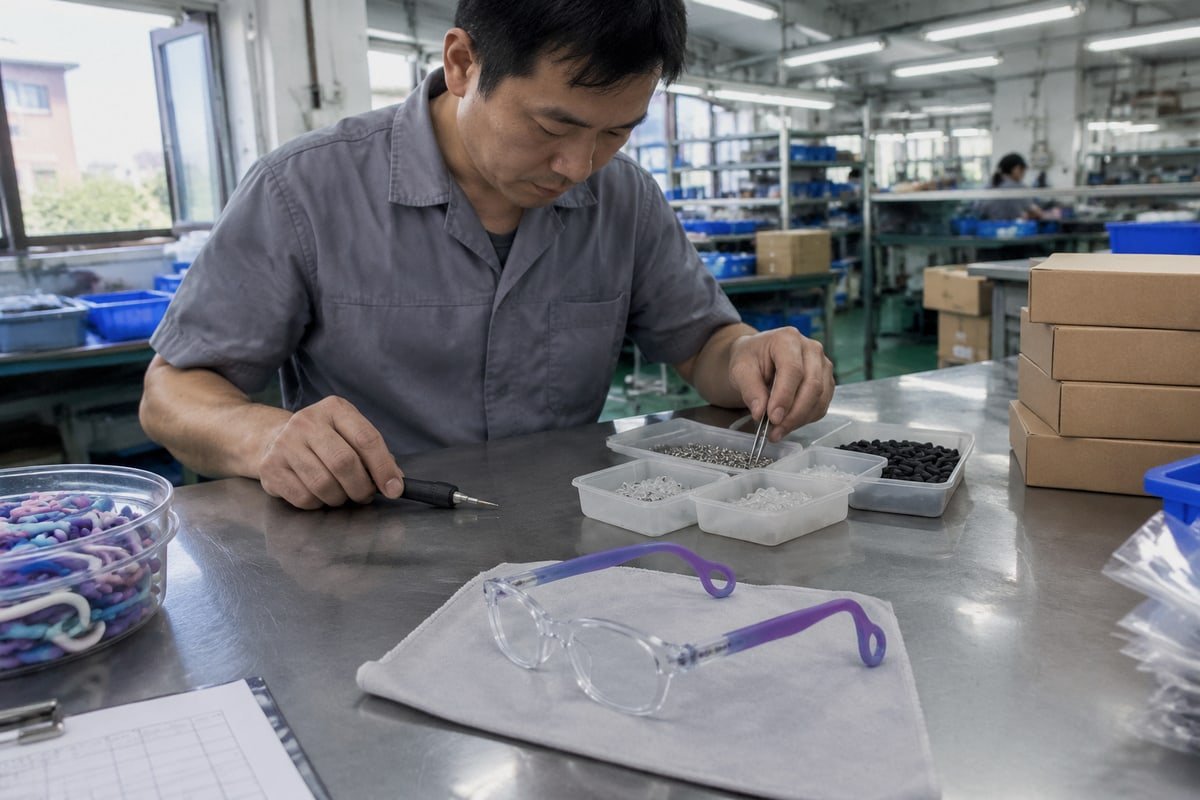
A lost screw or [torn nose pad](https://okayeyewear.com/what-if-nose-pads-kids-optical-frames-turn-yellow-crack/) can retire a child’s glasses overnight. On our Taizhou line, we design TR90 kids optical frames so those parts are serviceable.
Yes, nose pads, temple tips, and screws on TR90 kids optical frames can usually be replaced when the frame uses screw-in pads, slip-on tips, and standard M1.0–M1.4 screws. Frames with molded-in nose bridges or integrated temple ends are not designed for part replacement.
The short answer is “sometimes.” The long answer depends on how the frame was built. Below, I walk through which parts are made to come off, how to find the right spares, what a supplier can add to a bulk order, and whether repeated repairs hurt safety.
Which parts of TR90 kids optical frames are actually designed to be replaceable?
Last month our QC team pulled a batch aside because one temple tip slid off too easily. That small check shows how we think about serviceable parts.
Screws, screw-in or snap-in nose pads, and slip-on or screw-secured temple tips are designed to be replaceable on TR90 kids optical frames. Molded nose bridges, integrated temple ends, and proprietary hinge parts are not, so replaceability depends on the specific frame design.
What TR90 is and why it matters for repairs
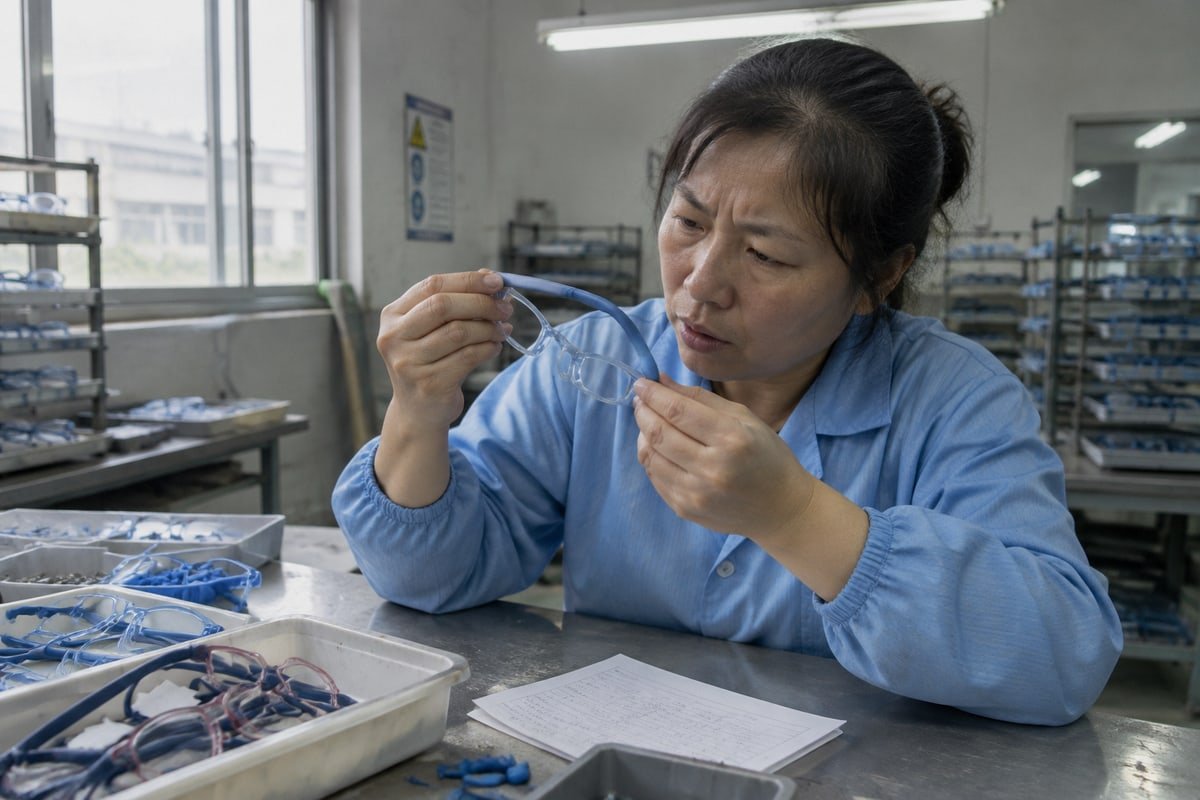
TR90 is a thermoplastic memory resin 1. It is light, it bends without snapping, and it springs back to its original shape. That frame flexibility and durability is why we use it for kids optical fronts, often paired with softer TPEE temples. It is also a hypoallergenic frame material, which matters for children with sensitive skin.
But flexibility does not equal serviceability. A frame is only repairable if its parts were made as separate pieces. So the first thing I do with any frame is look at how it was assembled, not what it was made from.
The three parts, one by one
| Part | Replaceable design | Non-replaceable design | Typical fix when integrated |
|---|---|---|---|
| Nose pads | Screw-in, snap-in, or push-on pads on pad arms | Integrated bridge molded into the front | Stick-on silicone pads |
| Temple tips | Slip-on tips over an internal wire, or screw-secured tips | Tip molded as part of the arm | Add a sleeve or replace the whole temple |
| Screws | Standard M1.0–M1.4 hinge and pad screws | Proprietary pins, rivets, or custom hinges | Manufacturer spares only |
On our translucent crystal fronts with gradient TPEE temples, the looped ear hooks are separate anti-slip ear grips. They slide off and swap. On some low-cost market frames, the tip is simply the end of the arm. There is nothing to swap.
The hybrid case
Many kids frames are hybrids. The front is TR90, but the pad arms are metal and the optical frame hinges use stainless steel optical screws 2. These are the easiest to service because the hardware is standard. A pure molded TR90 frame with an integrated bridge is the hardest. Check which one you have before buying any spare part.
How do I find the right replacement nose pads, temple tips, or screws for my frames?
One trade-off we weigh on every new style is screw size versus hinge strength. Bigger screws hold better, but they need thicker TR90 around the hinge.
To find the right replacement, identify the attachment type first, then measure the original part: screw thread diameter (usually M1.0–M1.4), nose pad mount style (screw-in, snap-in, or stick-on), and temple tip inner diameter. Match those specs, or ask the frame supplier for original spares.
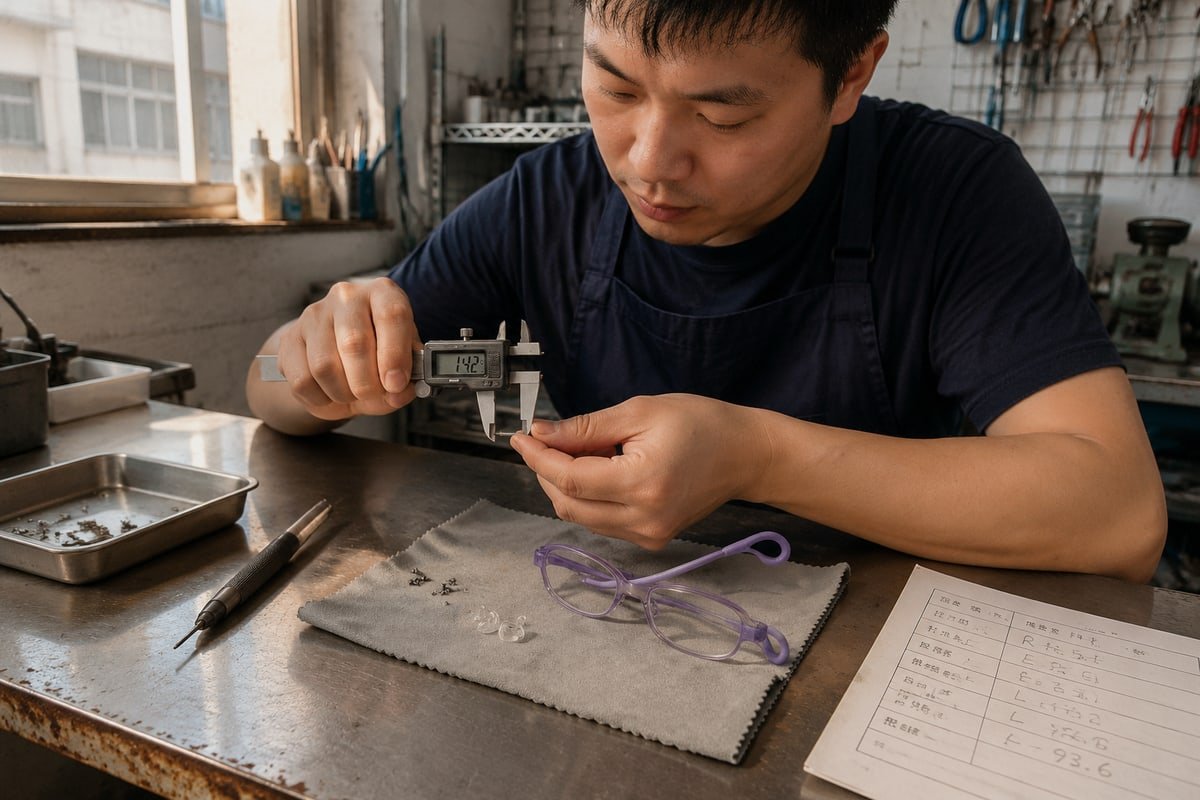
Buying the wrong part wastes money and sometimes damages the frame. So I follow a fixed order every time. Attachment type comes first, measurement comes second, and only then do I buy.
A simple four-step process
- Identify the mount. Look at the nose area. Do you see pad arms and a tiny screw? That is screw-in. Do you see a pad that clips into a slot? That is snap-in. No arms at all? That is an integrated bridge, and you need stick-on silicone nose pad replacements.
- Remove the old part. Use a magnetized precision screwdriver so the screw does not vanish into carpet. Keep a microfiber cloth under the lenses to prevent scratches.
- Measure. Use the checklist below.
- Match, then order. A generic eyewear repair kit 3 covers most screws. Tips and pads are more frame-specific.
The measuring checklist
| Part | What to measure | Common kids range | Note |
|---|---|---|---|
| Hinge screw | Thread diameter and length | M1.0 to M1.4 | Most repair kits cover this range |
| Nose pad screw | Thread diameter | M1.0 to M1.2 | Often smaller than hinge screws |
| Nose pad | Pad width and mount style | 11 to 15 mm | Silicone is the safest choice for kids |
| Temple tip | Inner diameter of the tip opening | Frame-specific | Must match the wire or arm profile |
When to skip generic parts
If the frame uses a proprietary hinge, or the temple tip has an unusual profile, generic parts will not fit. That is when you contact the frame maker. On our side, every style in our catalog has a parts list, so a buyer can quote the style number and get the exact screw or tip. This is far faster than guessing with a diy glasses adjustment kit from a pharmacy.
Can my supplier provide spare parts or repair kits along with my bulk order?
A procurement manager from Australia once asked us to add spare screws and tips to her first order. We now suggest that to most new brand partners.
Yes, a genuine factory can supply matching spare parts with a bulk order, including stainless steel optical screws, silicone nose pad replacements, and color-matched temple tips. Ask for spares at the sampling stage so part specs, colors, and packaging are confirmed before mass production.
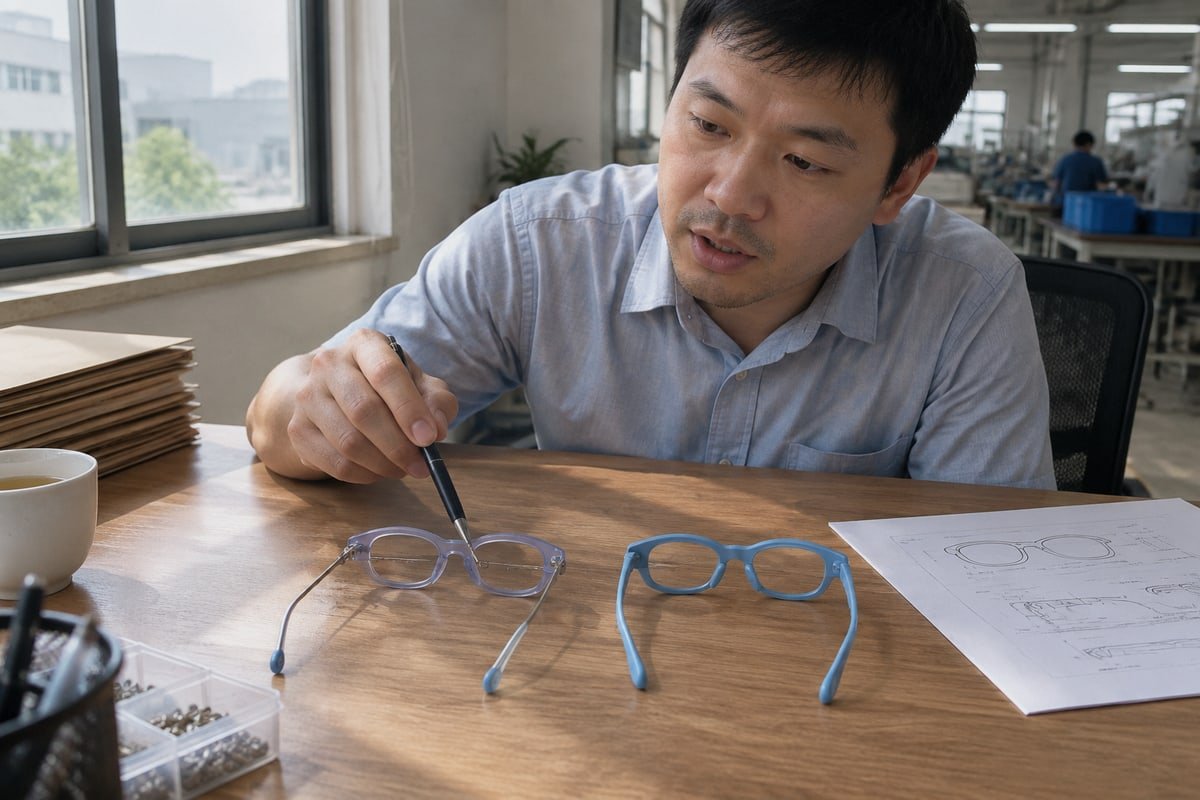
This is one of the clearest differences between working with a real factory and working with a trading company. A trader buys finished frames and rarely holds loose components. A factory makes the components, so spares are just another line on the order.
What you can request
| Spare option | Typical form | Best for |
|---|---|---|
| Loose screws | Bagged by size, matched to the hinge | Retailers and opticians doing quick fixes |
| Nose pad sets | Silicone pads, matched to the mount type | Hygiene replacement after months of wear |
| Temple tips | Color-matched, sized to the arm | Kids whose tips stretch or get chewed |
| Branded repair kit | Small pouch with driver, screws, pads, tips | Retail add-on or warranty support |
What to ask for at the sampling stage
I always recommend raising spares when you approve samples, not after production. At that point we can confirm three things. First, the screw size for that style. Second, the tip color, because a lavender gradient temple needs a lavender tip. Third, the packaging. Some brands want spares inside the case. Others want a separate branded pouch.
Why factory-direct spares matter
Our workshop runs on 5S management 4, and the same bins that feed the assembly line can fill a spare-parts order. With around 800 existing styles, a new brand can pick a frame, add a matching repair kit, and launch without a mold investment. Full OEM/ODM support covers the pouch, the logo, and the instruction card. For a buyer focused on pediatric eyewear maintenance and after-sales confidence, that is a real advantage.
Will frequent part replacement affect the safety or durability of TR90 frames for kids?
We learned early that most hinge failures came from over-tightened screws, not from replacement itself. That lesson changed how we brief our assembly team.
Frequent part replacement does not weaken TR90 frames when done correctly. The thermoplastic memory resin tolerates repeated flexing, and swapping pads, tips, or screws restores fit and hygiene. Damage comes from over-tightening, stripped screw holes, alcohol-based cleaners, and mismatched parts, not from replacement itself.

Some buyers raise a fair objection here. Kids frames are small, cheap, and heavily stressed. Why not just replace the whole frame? I take that view seriously, and it is right in some cases. But for most wear points, a correct part swap is cheaper, faster, and keeps a child in a frame that already fits.
The mistakes that actually cause damage
- Over-tightening. TR90 threads are tiny. Cranking a screw can crack the frame front or strip the hole. Snug is enough.
- Ignoring a stripped hole. If a screw keeps loosening, the screw is rarely the problem. The hole is. A slightly larger screw or a factory replacement temple fixes it.
- Alcohol-based cleaners. TR90 can suffer environmental stress cracking near the hinges when exposed to certain alcohol cleaners. Warm water and mild soap are safer.
- Heat reshaping. TR90 has a much higher melting point than acetate. Home heating methods that "set" acetate around a new part do not work on TR90 and can warp it.
- Mismatched tips. A tip with the wrong inner diameter slides off. On a child, that means the glasses drop at the wrong moment.
Small habits that extend frame life
A drop of low-strength, non-permanent thread locker on hinge screws stops loosening from daily flexing. Replacing silicone nose pads every few months also matters for hygiene, since sweat and oil build up and can irritate skin.
Repair or replace? A quick guide
| Situation | Repair | Replace |
|---|---|---|
| Lost or loose screw, hole intact | Yes | No |
| Stretched or chewed temple tip | Yes | No |
| Worn or dirty nose pad | Yes | No |
| Stripped screw hole | Sometimes, with a larger screw or new temple | Often simpler |
| Cracked frame front | No | Yes |
| Child has outgrown the frame | No | Yes |
When a repair changes the frame geometry, or when lenses are involved, I recommend an optician. They can confirm the fit is still correct after the swap.
Conclusion
Loose screws and worn pads should not end a frame's life. Choose TR90 kids optical frames built with serviceable parts, and keep matching spares within reach.
Interested in sourcing the products mentioned in this article? See details and request a quote here:
Footnotes
1. TR90 is a brand name for a specific type of polyamide (Nylon 12) used in high-performance eyewear. ↩︎
2. The FDA regulates eyeglass frames as medical devices, ensuring materials and components meet safety standards. ↩︎
3. Statista provides industry-wide data on the eyewear market, including accessories and repair components. ↩︎
4. ISO standards govern quality management systems like 5S to ensure manufacturing consistency and safety. ↩︎
More Articles You Might Like


Looking for a Reliable Kids Eyewear Partner?
Explore 800+ ready styles and full OEM/ODM support tailored to your brand.
Get in Touch English
 Español de México
 Deutsch
 Français
 日本語
 العربية
 Português do Brasil