How Do Standards Define Choking Hazard Risk From Small Parts in Kids’ Eyewear?
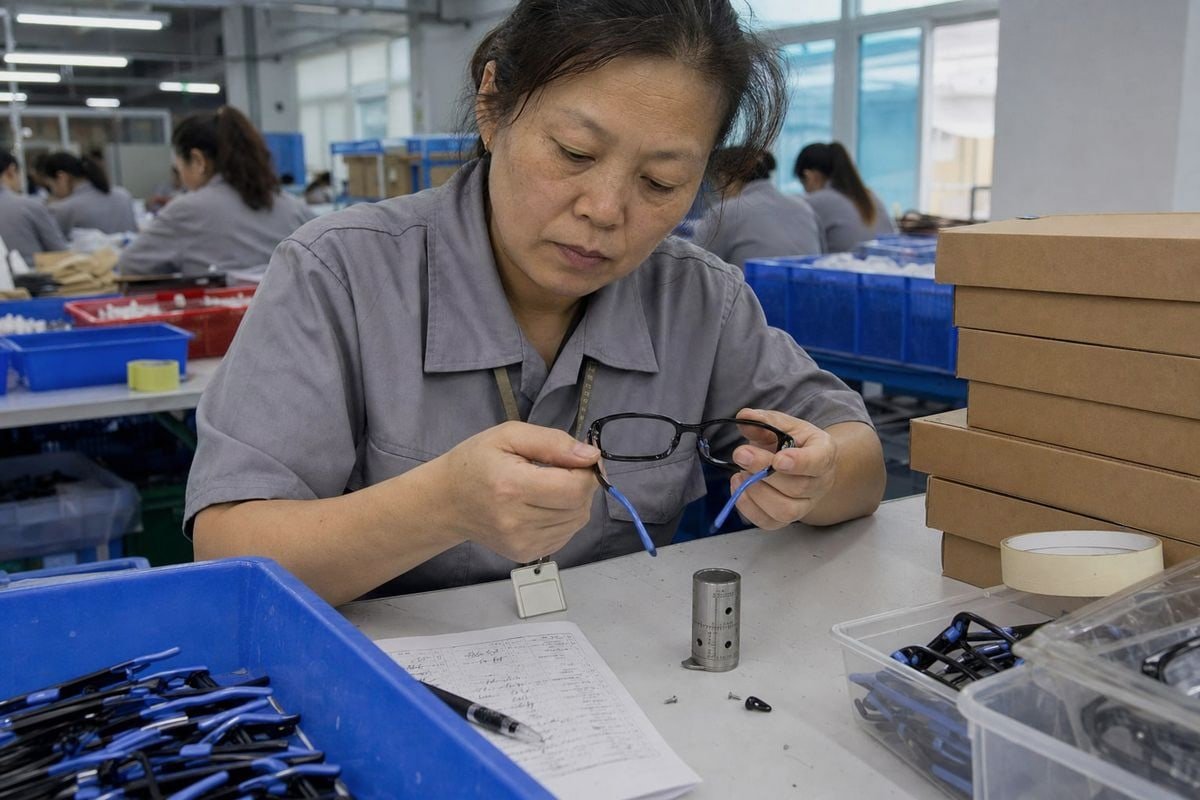
Choking hazard risk from small parts in kids’ eyewear worries every buyer I meet. One detached screw can trigger a recall, destroy a brand, and, far worse, endanger a child. Our factory builds every frame around preventing exactly that.
Standards define choking hazard risk from small parts in kids’ eyewear using 16 CFR Part 1501: any component that detaches during use-and-abuse testing and fits completely inside a small parts cylinder (31.7 mm wide, 57.1 mm deep) is classified as a choking, aspiration, or ingestion hazard.
That single sentence hides a lot of detail. Let me walk you through the standards, the tests, the weak points, and how to pick a manufacturer that gets all of it right.
What safety standards apply to small parts on children's eyewear I import?
A procurement manager from Australia once asked me why her lab report cited a toy standard for optical frames. It surprised her. In our fifteen years exporting kids' eyewear, that question comes up constantly.
Children's eyewear must satisfy 16 CFR Part 1501 for small parts, ASTM F963 when frames have play value, EN 71-1 compliance for European toy-classified eyewear, plus ISO 12870 for frame durability. Age grading determines which rules apply, with the strictest small-parts ban covering products for children under three.

The first thing to understand is that these are functional standards, not just dimensional ones. Regulators do not simply measure your frame. They ask two questions. Can any part come off? And if it does, is that part small enough to lodge in a young child's airway?
The core standards at a glance
| Standard | Region | What it governs for kids' eyewear |
|---|---|---|
| 16 CFR Part 1501 | USA | Defines small parts via the test cylinder; bans them in products for under-3s |
| ASTM F963 1 | USA | Toy safety, including mechanical strength testing for character or costume eyewear |
| EN 71-1 2 | Europe | Classifies eyewear with play value as a toy; sets detachment force limits |
| ISO 12870 | International | Baseline durability requirements for spectacle frames |
| ASTM F803 | USA | Impact protection for sports protective eyewear |
Here is a nuance that catches many importers off guard. A plain optical frame for a seven-year-old is not a toy. But a sunglasses style shaped like cat ears, or printed with cartoon characters, can be judged to have play value. Under EN 71-1 3, that reclassifies it as a toy and triggers stricter mechanical requirements. Our two-tone pastel round frames and color-blocked optical styles are designed to stay clearly on the eyewear side of that line, while still passing toy-level pull tests as a safety margin.
Age-appropriate labeling also matters. For products aimed at ages three to six that contain or can produce small parts, a choking hazard warning label 4 is mandatory in the US market. We flag this for buyers during packaging development, because a missing warning statement is one of the easiest ways to get a shipment held at customs.
How do I test my kids' eyewear designs for choking hazard compliance?
Before any new style leaves our Taizhou workshop, it goes through an internal abuse routine that mimics what accredited labs will do. I have watched samples survive a drop test and then fail on a single temple twist. That is why we test everything.
Test kids' eyewear by simulating child use and abuse — drop, torque, tension, flexure, and impact — then checking whether any liberated part fits completely into the small parts cylinder without compression. If a detached piece fits fully inside, the product presents a choking hazard.
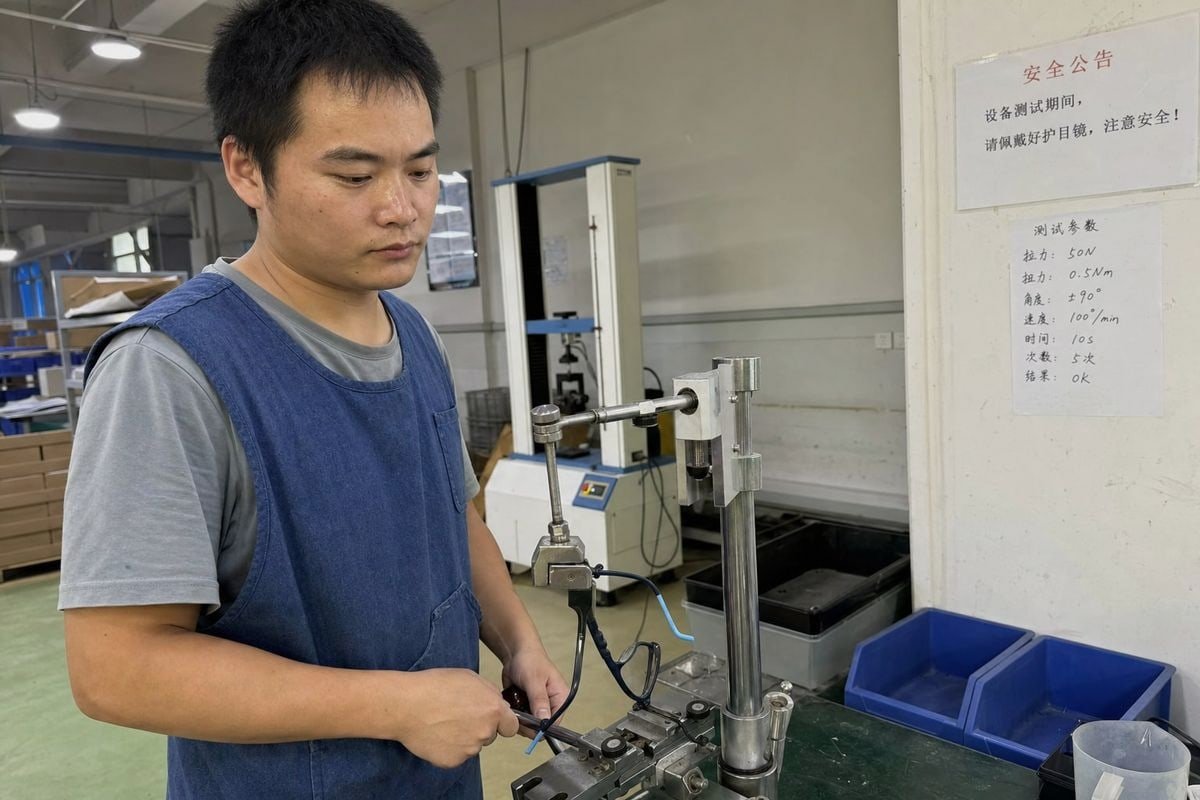
Think of compliance as a "breakage plus size" rule. Breakage alone is not a failure. Size alone is not a failure. The hazard finding requires both: a part must come off, and that part must fit wholly inside the cylinder, in any orientation, without being compressed.
The testing sequence in practice
- Pre-test inspection. Identify every removable or potentially detachable component: screws, nose pads, end tips, decorative appliqués.
- Use-and-abuse testing. Apply drops onto a hard surface, then torque and tension testing on temples and hinges at specified forces. Frames get twisted, bent, and pulled the way a toddler actually treats them.
- Fragment collection. Gather anything that separated, cracked off, or delaminated.
- Cylinder check. Place each fragment into the small parts cylinder. Roughly 31.7 mm in diameter and 57.1 mm deep, it approximates the fully expanded throat of a child under three.
- Verdict. Any fragment that fits entirely inside means the design fails for under-3 use, or requires warning labels for older age grades.
One buyer objection I hear is that the cylinder is only a proxy, not a real measurement of choking probability, so passing it may not guarantee real-world safety. That criticism is fair, and it is exactly why we do not treat the cylinder as our finish line. We add flexure cycles on TPEE temples and mechanical strength testing beyond the minimum, because a regulatory proxy sets the floor, not the ceiling. Note one exemption: pieces of fabric, elastic, string, or fuzz liberated during testing are not counted as small parts, but nothing on a typical frame qualifies for that carve-out.
We also advise buyers adding smart features to remember Reese's Law 5: any button-cell battery compartment must be tool-secured to prevent ingestion.
What frame and lens components are most likely to fail small parts regulations?
Years of lab reports have taught our engineers one blunt lesson: the hinge screw fails first, almost every time. That is the reason many of our newer kids' styles use a screwless hinge design molded directly into flexible TPEE.
The highest-risk components are hinge screws, detachable nose pads, temple end tips, decorative appliqués, and lens fragments. Small metal hardware fails most often in lab testing because it loosens under vibration and torque, then fits easily inside the small parts cylinder.
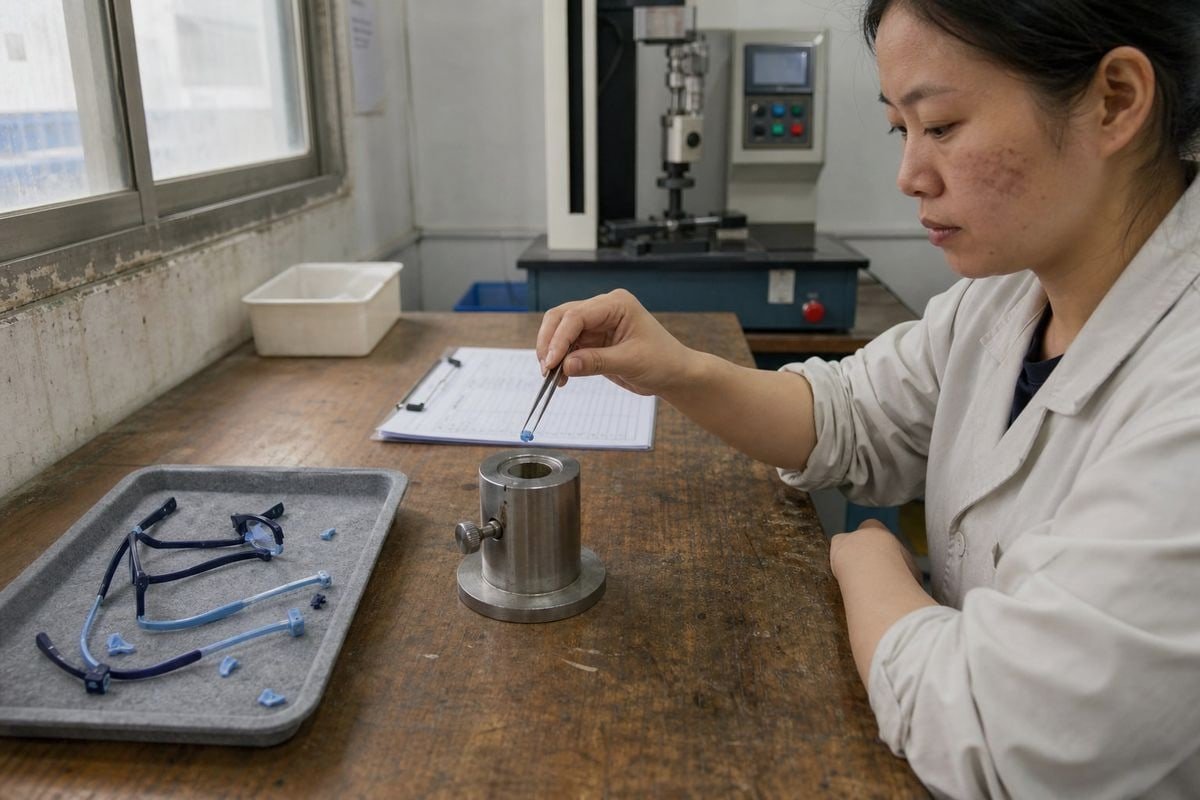
Look at any children's frame and mentally disassemble it. Every piece smaller than a wine cork is a candidate for failure. Here is how we rank the risk on the styles we produce.
Component risk ranking
| Component | Failure mode | Risk level | Design countermeasure |
|---|---|---|---|
| Hinge screws | Loosen under vibration and torque | Very high | Screwless hinge design or thread-locked, recessed screws |
| Nose pads | Nose pad detachment under pull force | High | Integrated one-piece molded bridge |
| Temple end tips | Slide off under tension | High | Co-molded or bonded silicone tips |
| Decorative appliqués | Snap off brittle attachments | Medium-high | Printed or in-mold decoration instead of glued parts |
| Lens fragments | Cracking or shattering under impact | Medium | Polycarbonate lenses 6 passing drop-ball protocols |
| Battery doors (smart eyewear) | Open without a tool | Medium | Tool-secured compartments per Reese's Law |
Material choice changes the risk profile too. Brittle plastics snap into cylinder-sized shards. Flexible TR90 and TPEE 7 deform and rebound instead of fracturing, which is why we build kids' frames from them. Two newer risks deserve attention as well. First, 3D-printed frames can delaminate along print layers into small, sharp shards rather than snapping cleanly. Second, some bio-based materials show accelerated environmental stress cracking as they age, meaning a frame that passes testing when new could shed small parts after a year of sun and sweat. When buyers ask us about sustainable materials, we test aged samples, not just fresh ones.
Sport shields, like our single-lens wraparound styles, actually simplify compliance: one large lens, fewer joints, fewer small parts to worry about.
How can I choose a manufacturer that guarantees choking hazard compliance for my brand?
A European baby-brand founder once told me she had received three quotes cheaper than ours, then asked each supplier for their small-parts test approach. Two went silent. That conversation is why she still orders from us today.
Choose a manufacturer with documented compliance experience: in-house torque, tension, and drop testing, third-party lab reports for your target markets, child-safe material expertise, screwless or secured hinge options, and correct age-appropriate labeling on retail-ready packaging. Verify factory audits before ordering.
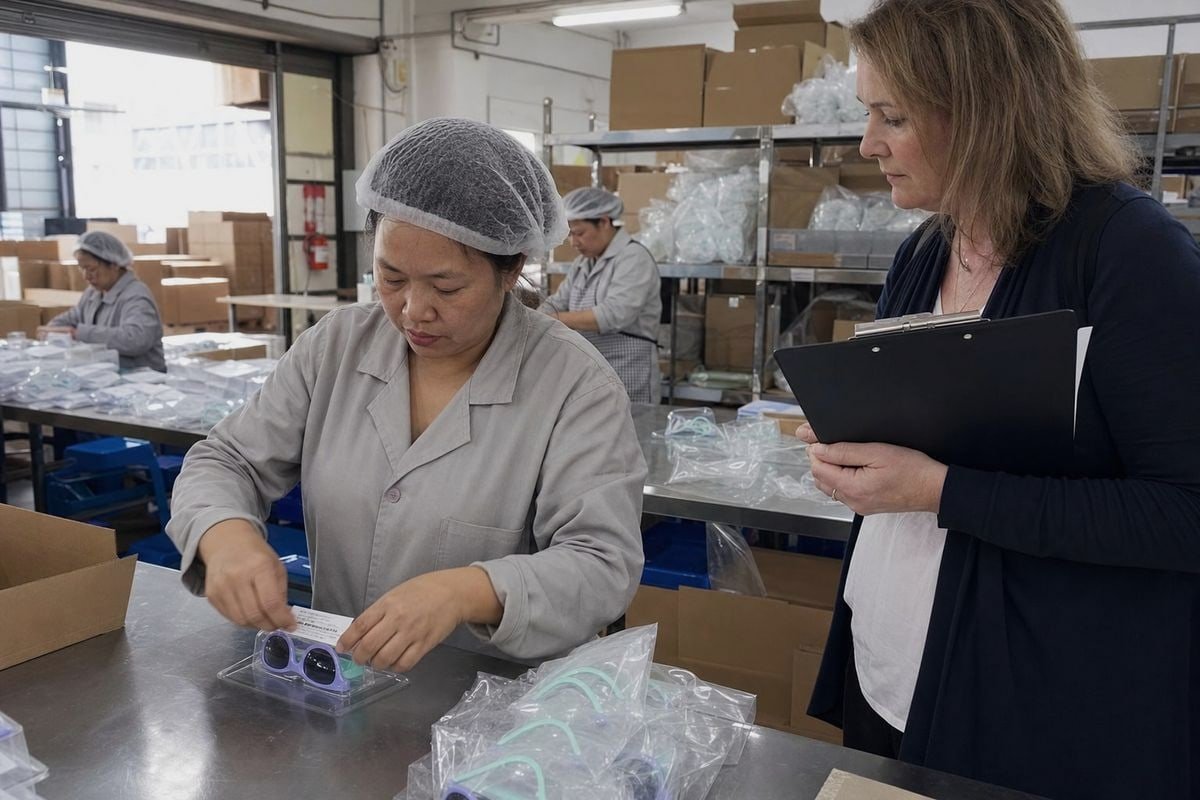
Compliance is not a certificate you buy at the end. It is a chain of decisions made through design, tooling, material sourcing, assembly, and QC. A weak link anywhere breaks the whole chain, so evaluate the entire process, not just the final report.
A practical supplier checklist
| Question to ask | Strong answer | Warning sign |
|---|---|---|
| Do you perform in-house use-and-abuse testing? | Yes, with torque, tension, and drop rigs on the line | "We only test if the client requests it" |
| Which standards do your kids' frames meet? | Names 16 CFR 1501, ASTM F963, EN 71-1, ISO 12870 by number | Vague claims like "fully certified" |
| What materials do you use? | Flexible TR90, TPEE, with material data sheets | Cannot identify the resin |
| Can you reduce small-part count? | Offers screwless hinges, molded nose bridges, in-mold decoration | Only glued decorations and standard screws |
| How do you handle labeling? | Applies age grading and choking-warning text per market | Leaves labeling entirely to the buyer |
There is also a commercial angle. New brands often assume compliance-grade eyewear requires custom molds and huge minimums. It does not have to. Because we maintain roughly 800 existing styles that have already been engineered around these failure points, a brand can launch with tested designs, custom colors, logos, and packaging — without betting heavy mold investment on an unproven market. That lowers both your financial risk and your regulatory risk at the same time.
Finally, insist on transparency. Our workshop runs under 5S management, and we welcome buyer audits and third-party inspections. A partner who hesitates to show you their testing bench is telling you something important.
Conclusion
Choking hazard risk in kids' eyewear comes down to one rule: no detached part may fit the small parts cylinder. Design out weak points, test hard, and partner with a factory that proves compliance.
Footnotes
1. Official ASTM standard page for toy safety requirements referenced in the article. ↩︎
2. EN 71-1 is the referenced EU toy safety standard that reclassifies play-value eyewear. ↩︎
3. Background on the European toy safety standard governing play-value eyewear classification. ↩︎
4. CPSC guidance on mandatory choking hazard labeling requirements for children’s products. ↩︎
5. Official CPSC page explaining the button battery safety law referenced in the article. ↩︎
6. Background on the impact-resistant material used in children’s eyewear lenses. ↩︎
7. Explains the flexible polymer properties that reduce brittle small-part fragmentation risk. ↩︎
More Articles You Might Like


Looking for a Reliable Kids Eyewear Partner?
Explore 800+ ready styles and full OEM/ODM support tailored to your brand.
Get in Touch English
  Español de México
  Deutsch
  Français
  日本語
日本語  العربية
  Português do Brasil