What Compliance Requirements Should Kids’ Sunglasses Packaging Design Meet?
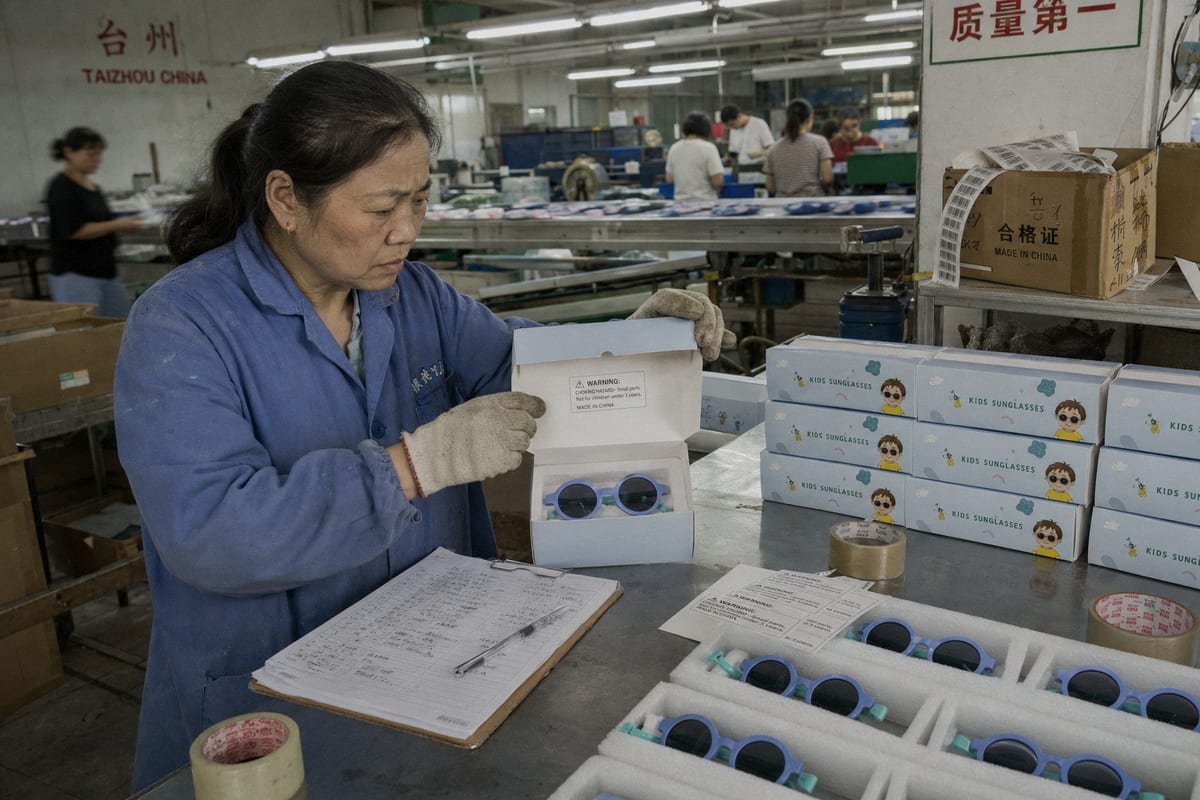
Kids’ sunglasses packaging design compliance is where I have seen beautiful brands stumble. On our production line in Taizhou, one missing warning label once delayed a full container. That pain is avoidable.
Kids’ sunglasses packaging must carry safety certification marks (CE, FDA-related labeling), batch tracking labels, age grading statements, choking hazard warnings, UV400 protection labeling, lens category information, country-of-origin marks, and recycling symbols. Requirements vary by market, so packaging artwork should be verified against each destination country’s children’s product rules.
Packaging for children’s eyewear is not just branding. Regulators treat it as part of the compliance chain. Below, I break down what your artwork actually needs, market by market.
What Safety Certifications Should I Look for in Kids' Sunglasses Packaging Labels?
A buyer from Europe once sent me a gorgeous box mockup with zero compliance mark 1s on it. Our team flagged it before print — and that review saved her launch. Certification marks come first, design second.
Kids' sunglasses packaging should display the CE mark for the EU, UKCA for Britain, reference to ISO 12312-1 standards or AS/NZS testing where applicable, UV400 protection labeling, and support U.S. requirements like the Children's Product Certificate and FDA impact-resistance compliance for lenses.
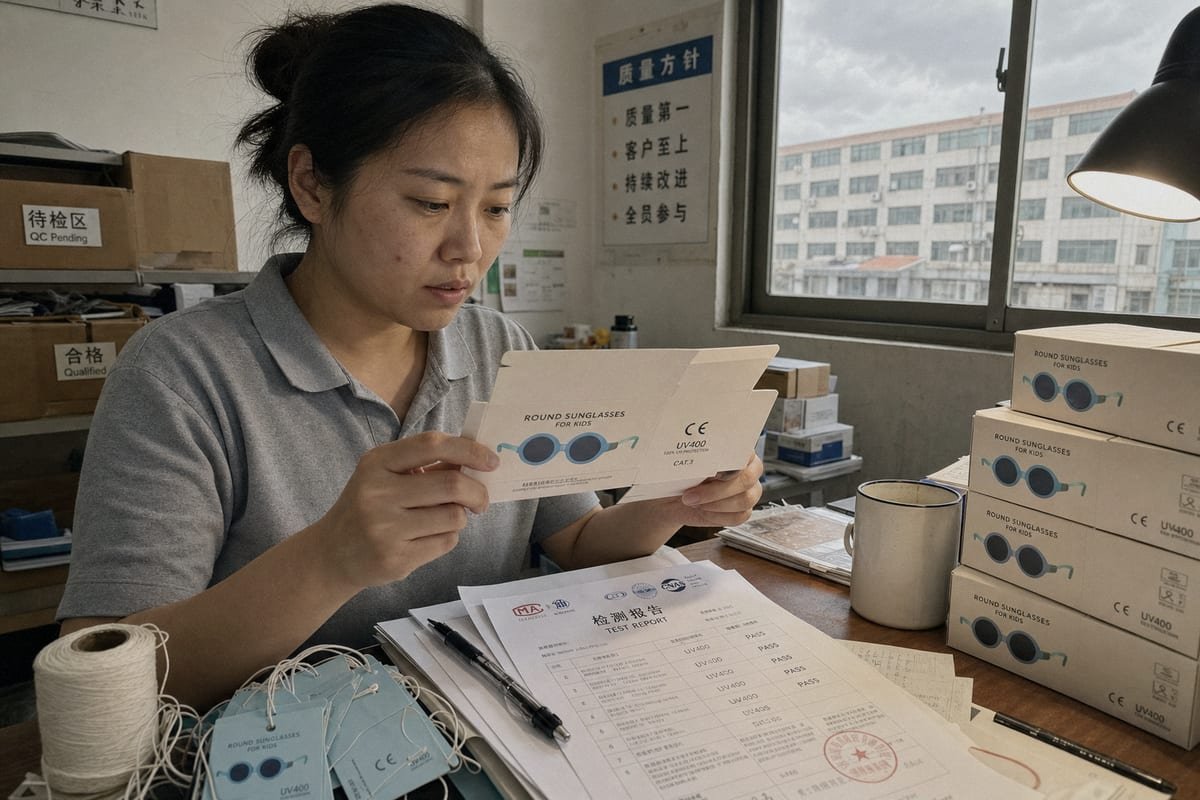
Certification marks tell customs officers, retailers, and parents that the product behind the packaging has been tested. In our 15 years making children's eyewear, we have learned that each mark has its own placement rules, and packaging can only substitute for on-product marking in some jurisdictions.
The Core Marks by Market
| Mark or Reference | Market | What It Signals | Placement Notes |
|---|---|---|---|
| CE mark | EU | Sunglasses meet PPE regulation requirements | Must be visible, legible, and indelible; can appear on frame, packaging, or label |
| UKCA mark | UK | UK conformity post-Brexit | Similar placement flexibility to CE |
| ISO 12312-1 standards | Global reference | Lens filter categories and optical safety | Usually cited on packaging or insert |
| CPC reference | USA | Children's Product Certificate 2 exists after third-party testing | Certificate travels with shipment; packaging supports traceability |
| UV400 protection labeling | Global | Lenses block wavelengths up to 400nm | Typically a hangtag, sticker, or printed panel |
Why the CE Mark Deserves Extra Care
CE marking requirements are strict on legibility. The mark must keep its minimum proportions when scaled. I have seen artwork where a designer shrank the CE logo into a decorative footer — that fails inspection. French guidance allows required markings to sit on the frame, packaging, label, or a combination, which gives designers some room. But the mark must never be obscured, distorted, or printed in a low-contrast color that disappears against the background.
UV Claims Must Match Test Reports
When we supply UV400 or polarized lens options 3, we always match the packaging claim to the actual lens test data. Never let marketing language outrun your lab reports. If the box says UV400, the technical file 4 must prove it. Overclaiming UV performance on a children's product is one of the fastest ways to attract regulatory attention.
How Do I Ensure My Packaging Meets International Children's Product Regulations?
The trade-off we weigh most often is shelf appeal versus regulatory real estate. Our OEM packaging team blocks out compliance zones on the artwork before any brand graphics go in — it is the only workflow that consistently works.
Start with the strictest destination market, map every mandatory element onto the artwork first, then verify packaging materials against chemical limits like CPSIA and REACH. Confirm third-party test reports, a Children's Product Certificate for the U.S., and EPR registration before approving print files.
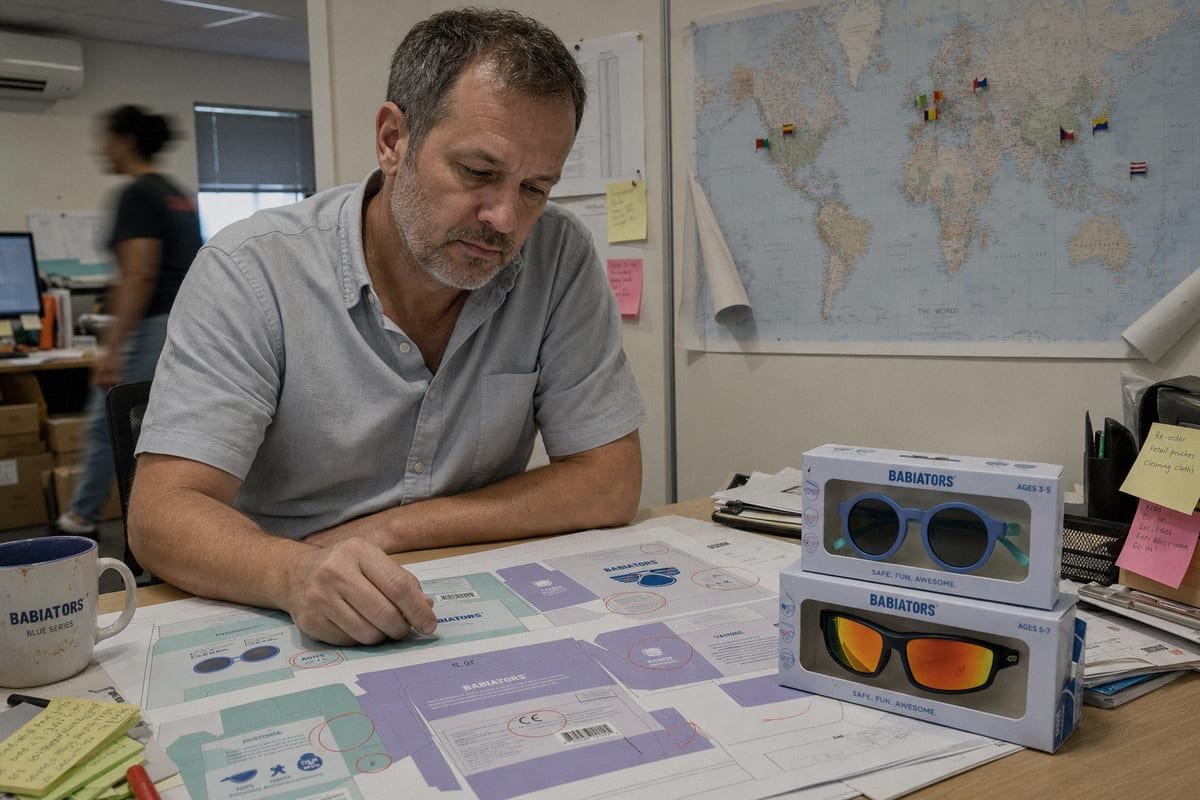
International compliance is layered. There are product rules that show up on packaging, rules about the packaging material itself, and presentation rules that decide whether your item legally counts as a children's product at all.
Layer One: Product Rules That Live on the Box
In the U.S., CPSIA compliance 5 drives most obligations. A product intended primarily for children 12 or younger is a children's product. That triggers third-party testing at a CPSC-accepted lab, a Children's Product Certificate (CPC), and tracking labels. Lead and phthalates testing 6 applies to accessible components, and your packaging often carries the traceability data that connects the retail unit back to those test reports. Separately, FDA medical device registration matters because sunglasses are regulated as medical devices; sunglasses are exempt from 510(k) submission, but establishment registration, device listing, and impact-resistant lens rules under 21 CFR 801.410 still apply.
Layer Two: The Packaging Material Itself
| Requirement | Region | What to Verify |
|---|---|---|
| Heavy metal limits (lead, cadmium, mercury, hexavalent chromium) | EU | Packaging component test reports |
| CPSIA chemical limits | USA | Inks, coatings, and any child-accessible packaging parts |
| EPR registration and reporting | EU / UK | Producer registration, recycling fees, symbols like Triman in France |
| Recyclability marking | Various | Correct local recycling symbols per market |
Layer Three: Presentation Decides Classification
Here is the nuance many brands miss. The CPSC considers how a product is represented in its packaging, display, promotion, and advertising when deciding whether it is a children's product. Cartoon characters, pastel palettes, and small sizing on the box all signal a children's item. You cannot design a playful kids' box and then argue the product is general-purpose eyewear. When we help buyers with retail-ready packaging, we assume children's product rules apply in full and design accordingly.
A Practical Verification Sequence
- List every destination market before artwork begins.
- Pull the mandatory label elements for the strictest market.
- Reserve space for those elements on the dieline first.
- Confirm material and ink compliance with your packaging supplier.
- Cross-check final artwork against test reports and the technical file.
- Get a pre-shipment compliance review before mass printing.
What Warning Labels and Age Information Are Required on Kids' Eyewear Packaging?
Early in my export career, a shipment of our flexible TPEE frames needed a last-minute hangtag reprint because the age grading statement was missing. Since then, warnings and age information get checked twice at our 5S-managed workshop before packing.
Kids' eyewear packaging typically requires an age grading statement, choking hazard warning labels where small parts exist, batch tracking labels with manufacturer, location, date, and batch number, lens category and usage warnings such as not suitable for driving, and country-of-origin marking for imports.
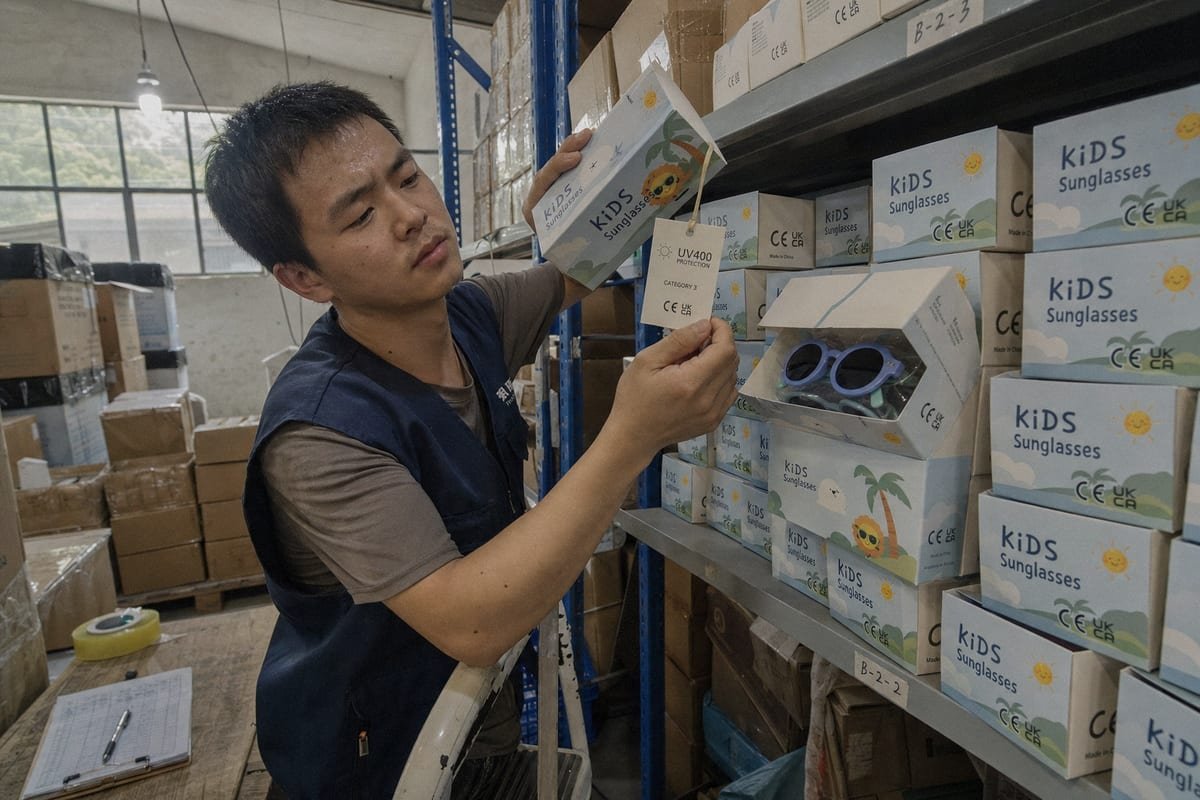
Warnings and age information do two jobs. They protect children, and they protect your brand from recalls and liability. Let me break down each required element.
Age Grading Statements
An age grading statement tells the buyer, the retailer, and the regulator which children the product suits. For sunglasses, this usually reads as an intended age range, such as ages 3 and up. The statement must match reality. Our pastel round frames sized for toddlers cannot carry a vague all-ages claim, because sizing and design clearly target young children. Misleading age claims are a common and avoidable mistake.
Choking Hazard and Small Parts Warnings
Sunglasses contain small components — hinge screws, nose pads, decorative parts. If any accessible part could detach and fit a small-parts cylinder, choking hazard warning labels 7 become relevant, especially for products marketed to younger age bands. Even where a formal warning is not mandated, we advise buyers to assess detachment risk. Our TR90 frames with TPEE temples are engineered to flex rather than snap, which reduces breakage into small pieces, but the packaging assessment still has to happen.
Batch Tracking Labels
| Tracking Element | Purpose |
|---|---|
| Manufacturer or importer name | Identifies who is responsible |
| Production location | Locates the factory of origin |
| Date of manufacture | Narrows recall scope by time |
| Batch or run number | Enables precise, rapid recalls |
The CPSC expects tracking information on both the product and its packaging, where practicable. On small kids' frames, the packaging often carries the fuller tracking detail while the frame carries an abbreviated mark.
Lens and Usage Warnings
Several jurisdictions require the lens category on packaging, and some — including markets following ASEAN-style rules — require warnings such as not suitable for driving and road use where the lens category demands it. Australia and New Zealand mandate category and warning labeling at the point of sale under their children's sunglasses standards. One universal rule: never let a price sticker or promotional over-label cover a required marking.
A procurement manager from Australia recently asked me this exact question during a video call about our 800-style catalog. My honest answer: a good factory partner should carry much of this load, but the importer keeps legal responsibility.
Yes — an experienced OEM manufacturer can provide test reports, technical documentation, correct lens category data, compliant artwork templates, tracking label systems, and market-specific guidance for the U.S., EU, UK, and Australia. The importer remains legally responsible, so choose a factory with genuine export compliance experience.
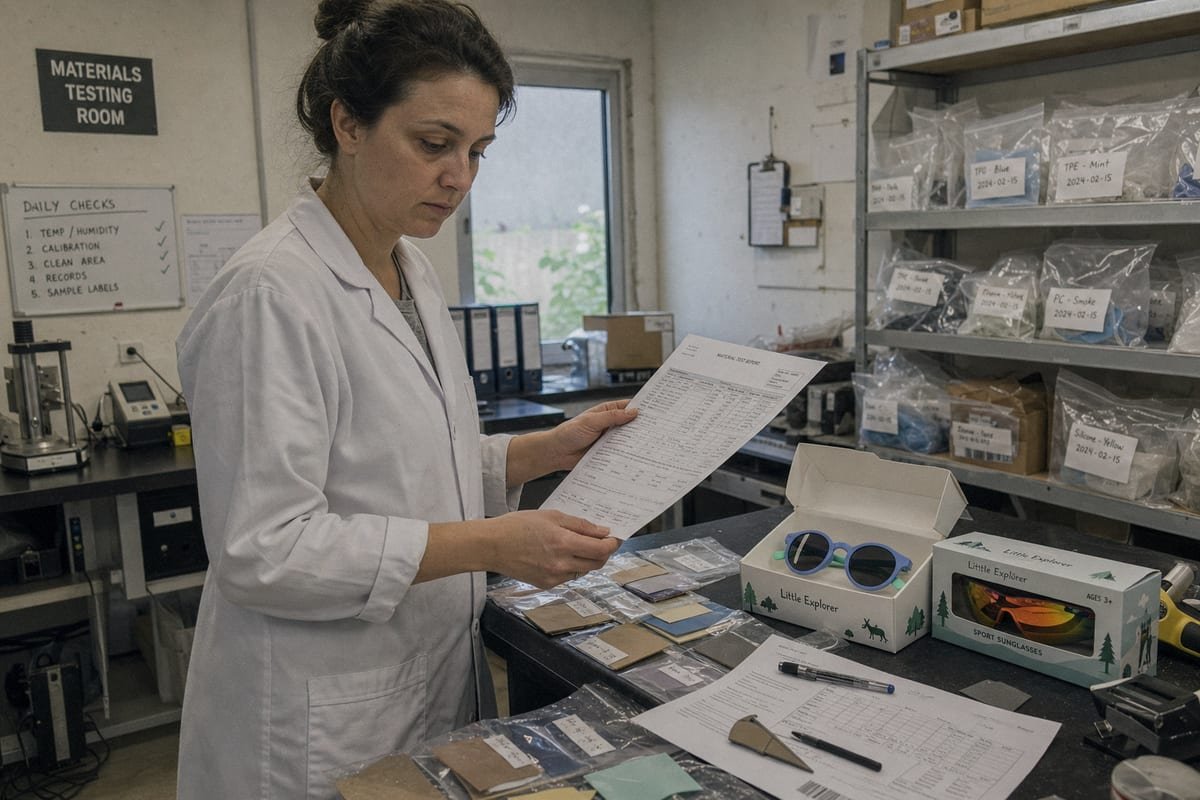
Compliance is a shared project between brand and factory. Here is how the responsibilities realistically split, based on our experience shipping children's eyewear to buyers in more than 20 countries.
What a Capable Factory Should Provide
First, documentation. Your manufacturer should maintain a technical file: product descriptions, applicable standards, risk assessments, third-party test reports, declarations of conformity, labeling samples, and instructions. When our clients sell into the EU, we align packaging artwork with that technical file so nothing on the box contradicts the paperwork.
Second, testing coordination. For the U.S., the factory should arrange lead and phthalates testing and lens impact testing at accepted labs, and support the CPC process. For the EU and UK, testing against ISO 12312-1 standards and PPE requirements should be routine, not a surprise request.
Third, artwork review. Full OEM/ODM support means more than printing your logo. Our packaging team pre-blocks zones for the CE mark, age grading, batch tracking labels, and recycling symbols before brand graphics are placed. This compliance-first layout workflow prevents the classic failure: beautiful packaging with no room left for mandatory marks.
What Stays on the Brand's Side
You own market registration duties — FDA establishment registration 8 and device listing for the U.S. importer of record, EPR packaging registrations in the EU and UK, and any local recycling fee reporting. You also own final claims. If your marketing adds a UV or polarization claim beyond the test data, that risk is yours.
Questions to Ask Before You Commit
- Can you share recent third-party test reports for children’s sunglasses?
- How do you apply batch tracking labels to product and packaging?
- Have you shipped children's eyewear to my specific market before?
- Will your team review my packaging artwork against compliance requirements?
- How do you handle non-conforming batches during QC?
A factory that answers these confidently — with documents, not promises — is a partner. One that hesitates is a risk you will pay for later.
Conclusion
Non-compliant packaging can block shipments, trigger recalls, and damage trust. Map required marks first, verify materials, and partner with a factory that treats compliance as part of design.
Footnotes
1. Authoritative EU guide on CE marking requirements and placement for products sold in the European Economic Area. ↩︎
2. CPSC guidance on the Children’s Product Certificate (CPC) required for all children’s products imported into the U.S. ↩︎
3. Technical overview of how polarized lenses work to reduce glare and improve visual safety. ↩︎
4. Official EU business portal for technical documentation and CE compliance. ↩︎
5. Official CPSC resource explaining the Consumer Product Safety Improvement Act requirements for children’s products in the U.S. ↩︎
6. CPSC rules regarding mandatory third-party testing for lead and phthalates in children’s products. ↩︎
7. Reference for understanding choking hazards and the safety standards used to protect children from small product parts. ↩︎
More Articles You Might Like

August 1, 2026
Should Factory Handle Kids Sunglasses Packaging & Labeling, or Use a Designated Supplier?

August 1, 2026
Own Warehouse vs Supplier Direct Fulfillment: Which Cuts Return Costs for Kids Sunglasses Brands?

August 1, 2026
Direct-to-Port Warehouse or Overseas Staging: Which Saves More on Kids Sunglasses Shipping?
Looking for a Reliable Kids Eyewear Partner?
Explore 800+ ready styles and full OEM/ODM support tailored to your brand.
Get in Touch English
  Español de México
  Deutsch
  Français
  日本語
日本語  العربية
  Português do Brasil