Why Do Parents Repurchase TR90 & TPEE Kids Optical Frames, and How Should Retailers Plan Their Mix?
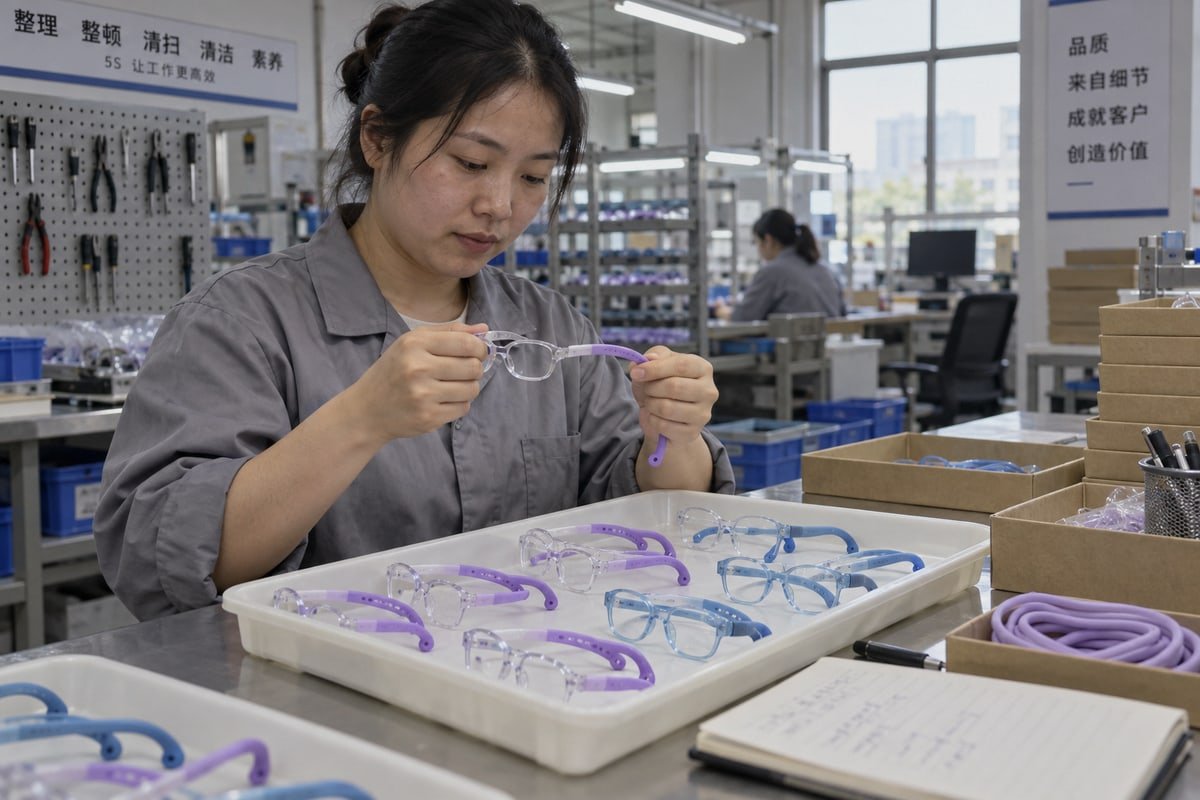
Parents buy TR90 & TPEE kids optical frames once, then come back. On our Taizhou production line, I see why: snapped frames waste money and trust, flexible ones survive.
Parents repurchase TR90 & TPEE kids optical frames because they bend instead of snapping, weigh very little, and stay comfortable through growth spurts. Retailers should plan a segmented mix: TPEE for toddlers, TR90 for school-age kids, and a smaller fashion-led premium layer for differentiation.
Repurchase is not luck. It comes from solving a real problem and then keeping the child happy with how the glasses look. Below, I break down the material logic, the age mix, the safety checks, and the supply side. Each part matters if you want a second order, not just a first one.
What makes TR90 and TPEE frames comfortable enough for parents to buy again?
Before any batch leaves our 5S workshop 1 in Taizhou, a QC colleague twists a few TPEE temples by hand and lets them spring back. That small test explains repurchase.
TR90 and TPEE frames are comfortable because both materials are extremely lightweight, flexible memory plastics that bend without snapping. They put little pressure on a child's nose bridge and ears, resist sweat and skin irritation, and keep their shape after rough handling, so children wear them all day.
Grilamid material properties in plain terms
TR90 is a nylon-based thermoplastic 2 from the Grilamid family. The Grilamid material properties that matter for kids are low density, high flexibility, and good resistance to sweat and skin oils. In practice, this means a full frame that weighs very little and springs back after a twist. A child feels less pressure on the developing nose bridge and behind the ears. So the glasses stay on the face instead of in the schoolbag.
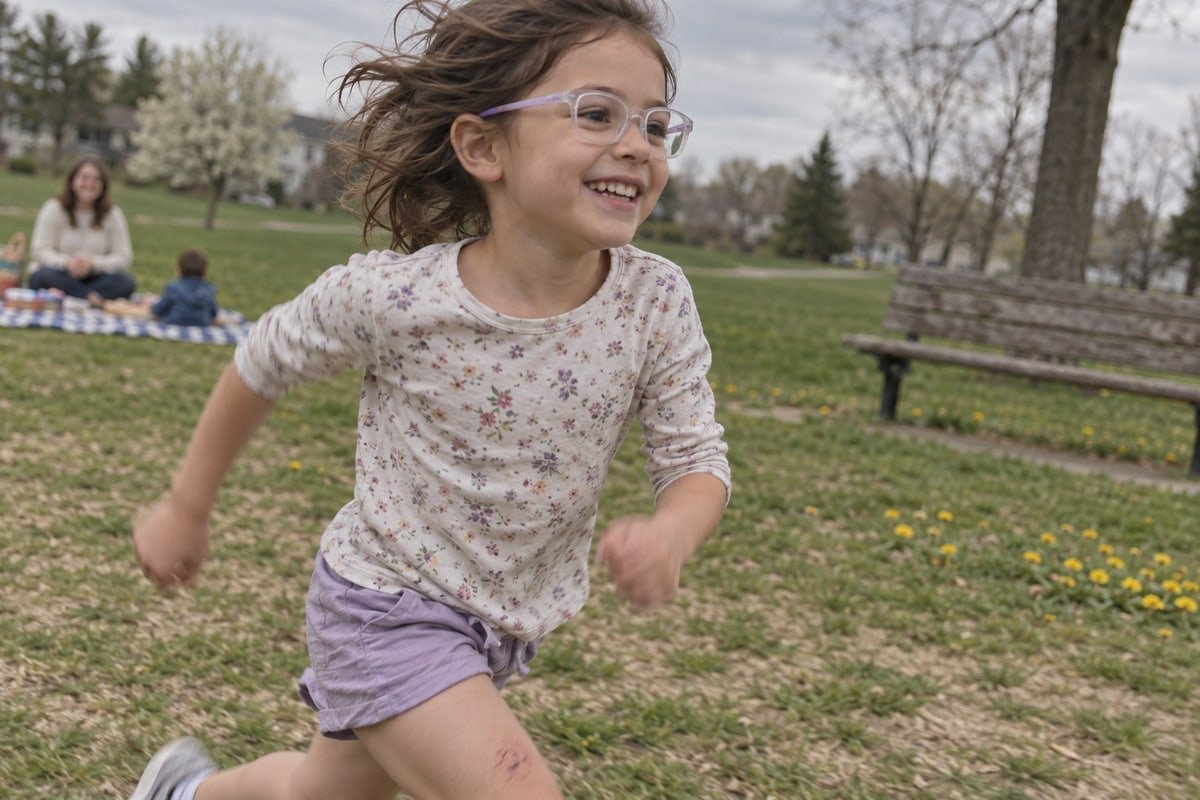
TPEE is a thermoplastic polyester elastomer. It is softer and more rubber-like than TR90. It bends further before it stresses, and it feels gentle on skin. We use TPEE for full toddler frames and for the temples on our TR90-front hybrids. Our translucent crystal front with gradient purple TPEE temples is a good example. The front holds the lens firmly. The temples wrap around the ear with looped hooks, and small perforated dots along the arm add extra give. That is the comfort story behind TR90 & TPEE kids optical frames in one product.
| Property | TR90 | TPEE |
|---|---|---|
| Feel | Light, smooth, structured | Soft, rubber-like, very flexible |
| Shape retention | High; returns to form after bending | Very high flex; slightly less rigid at the eyewire |
| Typical age fit | School age to tweens | Babies, toddlers, preschoolers |
| Common use in our range | Full frames and frame fronts | Full toddler frames and hybrid temples |
| Skin contact | Hypoallergenic grades available | Hypoallergenic grades available |
| Cost versus acetate or titanium | Lower | Lower |
Memory plastic durability and the cost of ownership
Both materials behave like memory plastics. Memory plastic durability means the frame remembers its shape. A child sits on it, and it flattens. Then it comes back. This impact resistance 3 is the single biggest reason parents return. They stop fearing the next drop. The long-term cost of ownership falls, because one pair lasts until the child outgrows it, not until the first accident. Lower manufacturing cost than acetate or titanium also means a value-driven price. So replacing a frame after a growth spurt does not hurt the family budget.
Hypoallergenic eyewear and BPA-free construction
Comfort is also about skin. Buyers in Europe, Japan, and Australia ask us about hypoallergenic eyewear before they ask about color. Both TPEE and TR90 can be supplied in BPA-free construction and non-toxic grades. We source environmentally friendly material and keep raw material documentation ready for our B2B customers. When a frame does not leave red marks or cause itching, the child keeps wearing it. Then the parent buys the same material family again.
How do I decide the right style and material mix for my kids' optical range?
Every season I weigh the same trade-off with buyers: soft TPEE that survives a toddler's tantrum, or structured TR90 that a ten-year-old will actually agree to wear.
Decide your kids' optical mix by age, activity, style, and price tier rather than by one material. Overweight TPEE for toddlers and preschoolers, balance both for early school age, overweight TR90 for tweens, add flexible sports frames, and keep a visible fashion-led layer.
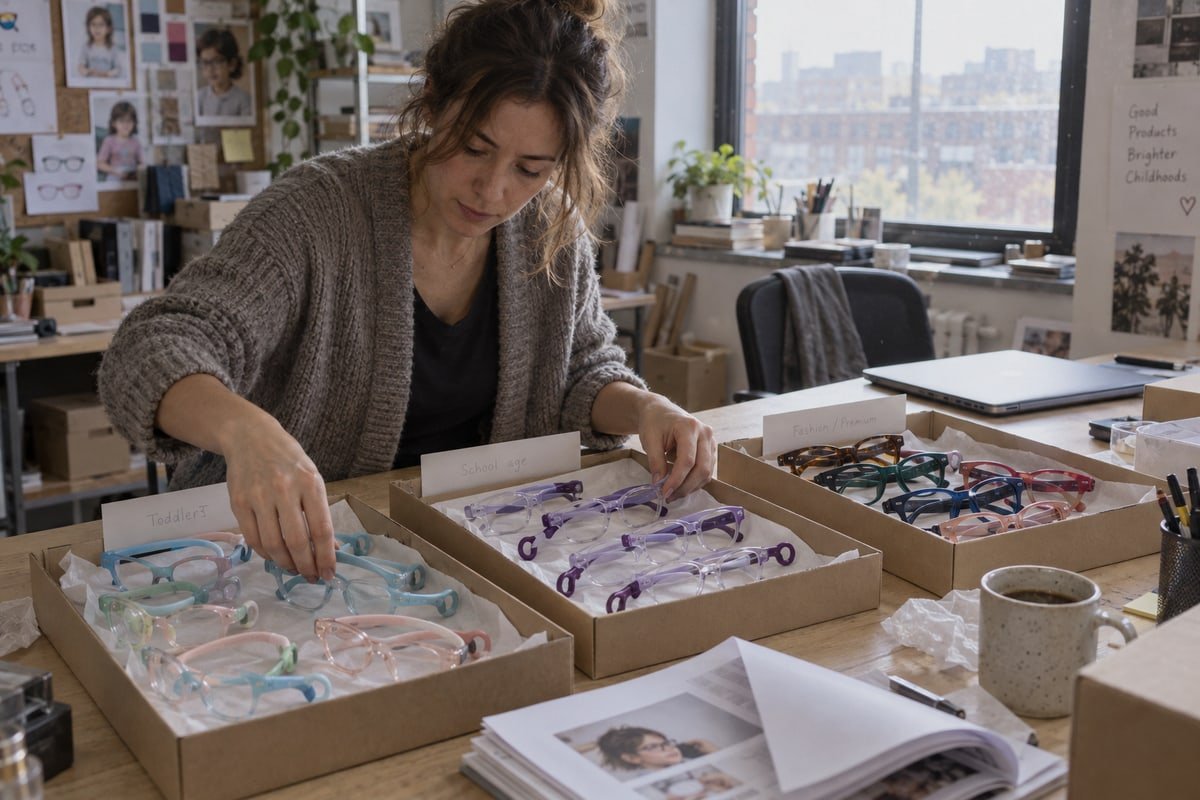
The fastest way to plan a range is to stop asking "TR90 or TPEE?" and start asking "who wears it and where?" Here is the segmented mix I recommend to brands building TR90 & TPEE kids optical frames ranges from our style library.
| Segment | Lead material | Silhouette and features | Share of range |
|---|---|---|---|
| Toddlers and preschoolers | TPEE | Rounded shapes, soft full frames, head straps, simple colors | Overweight |
| Early school age | TPEE and TR90 balanced | Hybrid TR90 front with TPEE temples, easy lens fitting | Balanced |
| School-age kids and tweens | TR90 | Structured rectangular or modern-classic shapes, more color choice | Overweight |
| Sports and active use | Flexible TR90 or TPEE | Secure wrap fit, looped ear hooks, high impact resistance | Steady core |
| Fashion-led | TR90 | Mini-me styling, translucent and gradient colors | Small but visible |
Pediatric frame sizing comes before color
Children outgrow frames fast. So pediatric frame sizing should drive your SKU list before you pick a palette. Bridge width, lens width, and temple length all step up with age. Because our roughly 800 existing styles are already graded across these sizes, a brand can cover toddlers through tweens without cutting a new mold. That lowers the risk of a first launch. You test the market with stock shapes, then invest in custom molds only where a size or style proves itself.
The objection: durability alone does not sell the re-buy
Some buyers tell me durability is enough. I disagree, and the market backs me up. Trade commentary describes flexible TR90 as a highly competitive commodity market, while the high-growth segment sits in specialized tech such as myopia and blue-light products. If you compete on material alone, you compete on price. Style breaks the tie. Older children reject anything that looks babyish. The mini-me trend means kids' frames now borrow modern-classic lines from adult eyewear. Our translucent light blue front with matte solid blue temples sells to this group because it looks like a smaller adult frame, not a toy. High color retention and easy moldability in TR90 make these trend colors possible, and that secures the child's emotional buy-in.
Build a good-better-best ladder
- Good: TPEE entry durability, rounded shapes, simple colorways.
- Better: TR90 mainstream volume, structured styling, hybrid TPEE temples.
- Best: a premium and fashion layer with blue-light lens options, anti-scratch coatings, and adjustable fit elements.
This ladder keeps volume in the middle. It also gives your sales team a story beyond "unbreakable."
What quality and safety standards should I check before repurchasing these frames?
A procurement manager from a Japanese baby brand once sent me a rival's frame with a loose hinge screw and asked one question: could a child swallow this?
Before repurchasing, check that the material is BPA-free, hypoallergenic, and non-toxic with supplier documentation, that frames pass flex and impact resistance checks, that hinges and nose pads have no loose small parts, and that rim depth suits thicker prescription or myopia-management lenses.
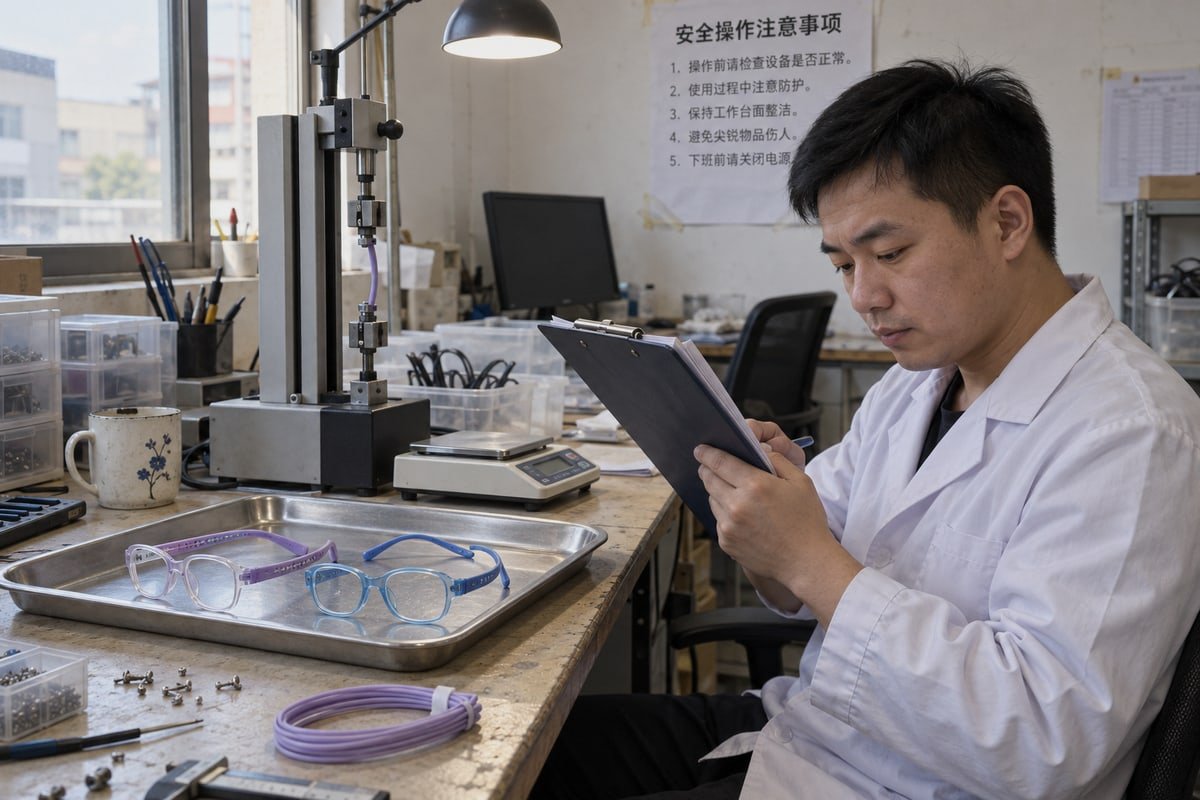
That question changed how I present quality to buyers. Certificates matter, but the real test is what a frame does on a real face for a year. Here is the checking order I use with our own production and suggest to our partners.
A six-step repurchase check
- Material documentation. Ask for the raw material supplier's data showing BPA-free construction and hypoallergenic, non-toxic grades. This is the primary driver for parents who prioritize skin health. Do not accept a vague "eco material" label.
- Flex and impact resistance. Twist the temples, press the bridge, and drop a sample. A good TR90 or TPEE frame returns to shape without whitening or cracking.
- Hinge design. Flexible screwless hinges remove the loose-screw risk that worried my Japanese buyer. Where screw hinges are used, check thread locking and screw length.
- Fit hardware. Adjustable silicone nose pads and rubberized or looped ear tips should be firmly bonded. Pull on them. They must not slide off in a child's hand.
- Rim depth and thickness. Modern myopia-management lenses 4 are thicker at the edge. Choose rim depths that conceal that edge, or the glasses look clumsy and the child refuses them.
- Finish. No sharp edges, no flash from molding, and consistent color across a batch.
| Checkpoint | What to look for | Why parents notice |
|---|---|---|
| Material grade | BPA-free, hypoallergenic, non-toxic documentation | Red marks or itching end daily wear |
| Flex test | Temples bend past flat and return | Broken frames mean another purchase |
| Hinges | Flexible screwless hinges or secured screws | Loose screws are a choking hazard |
| Nose pads and tips | Adjustable silicone nose pads bonded firmly | Slipping glasses are pushed up constantly |
| Rim depth | Deep enough to hide lens edge thickness | Thick edges look heavy and unfashionable |
The optician's objection about lens stability
Some opticians prefer a more structured frame for older children. They worry that a very soft eyewire lets the lens shift and hurts alignment. It is a fair point. Parents will trade up to a firmer frame if fit and lens performance are better, even if it is less "unbreakable." Our answer is the hybrid: a TR90 front for lens stability, TPEE only in the temples where flex protects the child. Our 5S-managed workshop also checks eyewire dimensions so lenses seat correctly. Structure where it counts, softness where it counts.
How can I work with a manufacturer to keep my repurchase rates high and my inventory balanced?
Fifteen years of eyewear production taught me one thing: repurchase rates fall apart when a retailer's best-selling color is out of stock for three months.
Keep repurchase rates high by choosing a factory with a wide existing style library, so you can test the market without mold costs, then lock in core SKUs for steady reorders, add small seasonal drops, and use OEM support for colors, logos, and retail-ready packaging.
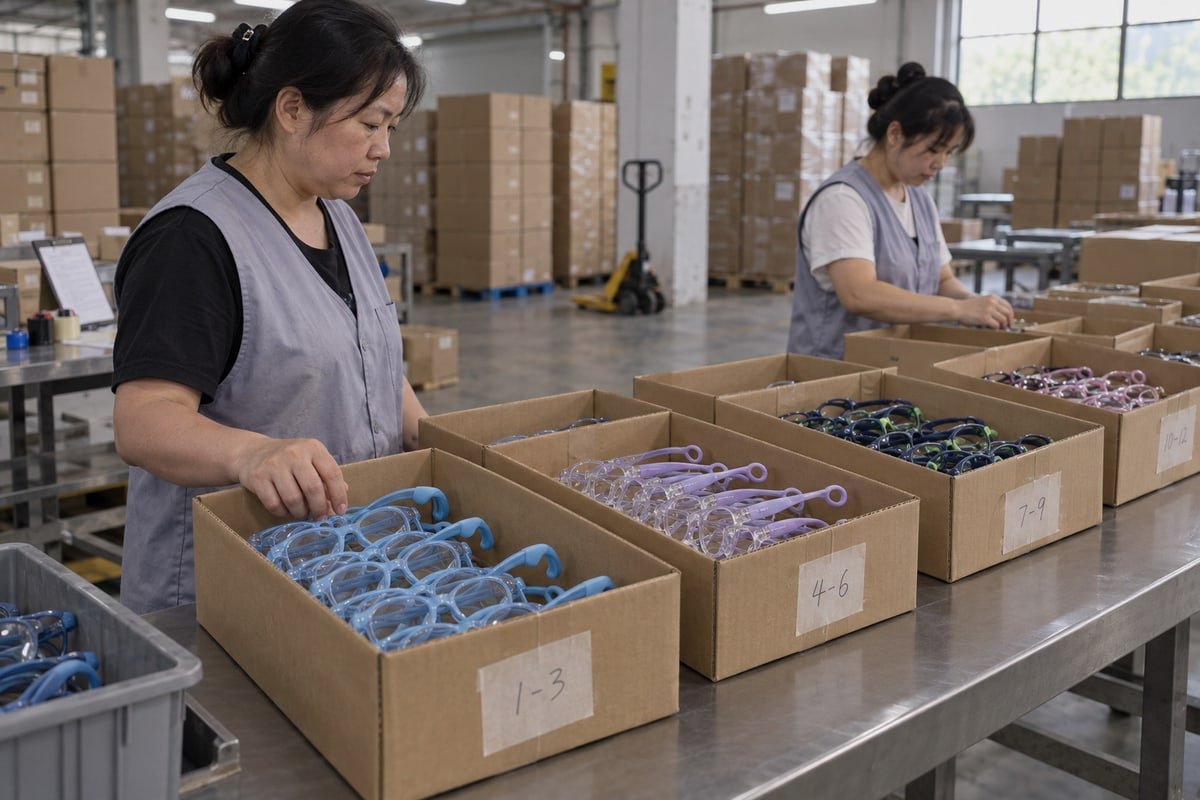
A parent who returns for the same frame expects to find it. A retailer who cannot supply it loses the sale and the trust. So the supply side is part of the repurchase story, not a back-office detail.
Start from an existing style library
New brands often want a fully custom frame on day one. I usually advise against it. With around 800 existing styles across TPEE full frames, TR90 fronts with TPEE temples, and TR90 optical frames, a brand can pick sizes and shapes, choose colors, add a logo, and sample within weeks. Our factory runs about 120 workers, so we can hold sampling and production in the same 5S-managed space. You learn which SKUs sell before you pay for a mold. That is lower-risk wholesale eyewear procurement.
Inventory turnover optimization with a core-and-drop model
| Layer | Purpose | Reorder rhythm | Material lead |
|---|---|---|---|
| Core SKUs | Repurchase anchors by age and size | Fixed, repeating cycle | TPEE for toddlers, TR90 for school age |
| Seasonal drops | Freshness and trend colors | Two to three times a year | TR90 in translucent and gradient colors |
| Fashion or licensed tests | Differentiation and kid appeal | Small runs, reviewed after each sell-through | TR90 mini-me shapes |
Inventory turnover optimization works when core SKUs never run dry and trend items never pile up. We agree color splits and reorder points with partners so the gradient purple or matte blue temple that sold out last quarter is back before parents notice. Consistent color matching between batches is part of our QC, because a repurchasing parent will compare the new pair with the old one.
Circular loyalty and modular parts
Two newer ideas help both repurchase and sustainability. First, circular loyalty programs offer parents a discount when they return an outgrown frame. Eco-conscious Gen Alpha parents respond well, and our environmentally friendly materials support that message. Second, modular components such as interchangeable temples and bridges let parents do a quick repair or a color refresh without buying a whole frame. Our hybrid design already separates the TPEE temple from the TR90 front, so stocking spare temples is straightforward. Some optical retailers also add in-store 3D facial scanning to match bridge anatomy to specific SKUs. This solves the fixed-fit limitation of molded frames, and we can supply per-SKU sizing data to feed that system.
Treat it as a partnership
Custom colors, logos, UV400 or blue-light lens options, and branded packaging are all standard OEM/ODM work for us. What buyers in 20-plus countries value more is clear communication and delivery dates that hold. That is what keeps their shelves full and their repurchase rates steady.
Conclusion
Broken frames cost parents money and cost you trust. Flexible TR90 & TPEE kids optical frames fix that problem, and a segmented, well-supplied mix turns one sale into repeat orders.
Interested in sourcing the products mentioned in this article? See details and request a quote here:
Footnotes
1. Explains the 5S lean manufacturing methodology used to maintain quality in the production facility. ↩︎
2. Official product page for Grilamid TR90, the primary material discussed in the article. ↩︎
3. ISO standard for testing impact properties of plastics, ensuring frame durability and safety. ↩︎
4. Global optometry authority providing standards for myopia management, relevant to specialized lens compatibility. ↩︎
More Articles You Might Like

Looking for a Reliable Kids Eyewear Partner?
Explore 800+ ready styles and full OEM/ODM support tailored to your brand.
Get in Touch English
 Español de México
 Deutsch
 Français
 日本語
 العربية
 Português do Brasil