Why Is TR90 Material Ideal for Flexible, Durable Kids Optical Frames?
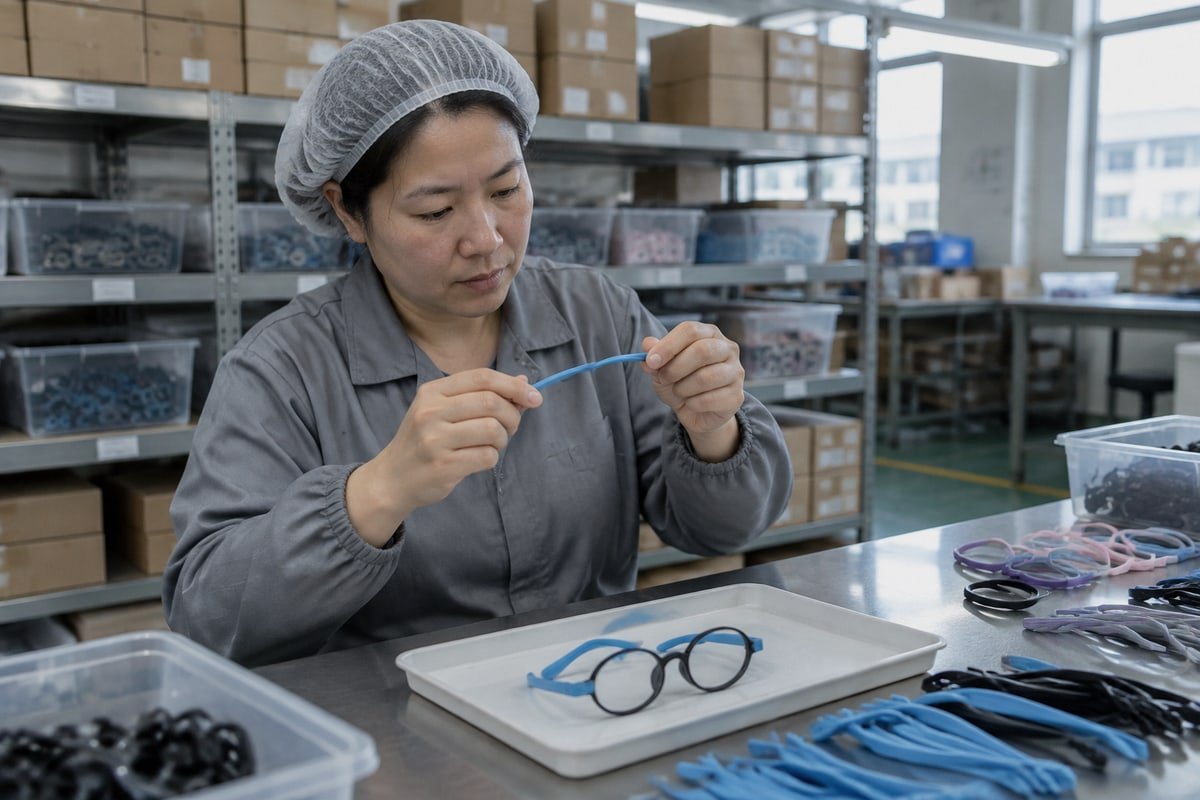
Our Taizhou production line has seen countless cheap kids frames snap at the bridge. Broken plastic means returns and worried parents. TR90 material for kids optical frames changes that.
TR90 material is ideal for flexible, durable kids optical frames because it is a lightweight thermoplastic polyamide with shape memory. It bends under stress and returns to shape, resists impact and heat, and is hypoallergenic and BPA-free, so frames survive rough play while staying comfortable all day.
Below, I will explain what TR90 actually is. Then I will show how it protects children, how it performs in testing, and when TPEE may be the better choice for your collection.
What Makes TR90 Different from Regular Plastic Frames for Kids?
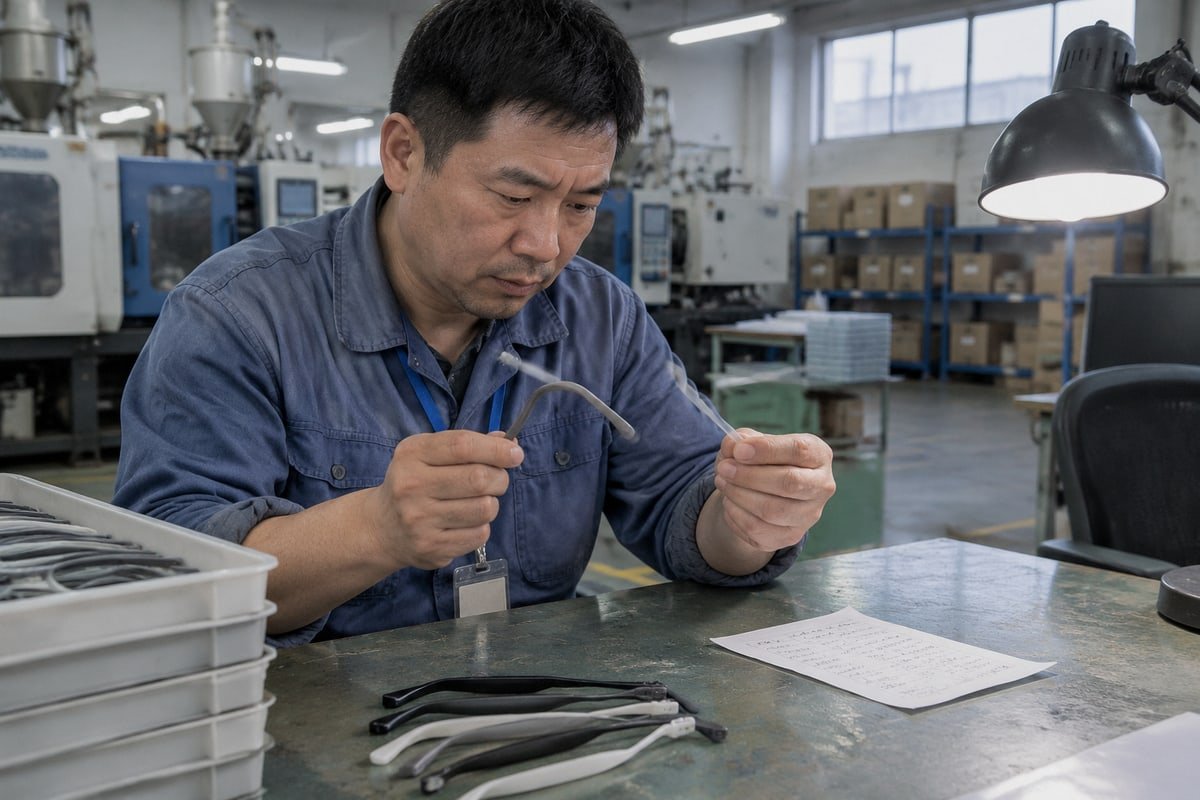
During an incoming-material check last spring, one of our QC staff bent a standard injected plastic temple and a TR90 temple side by side. Only one came back straight.
TR90 differs from regular plastic frames because it is a Swiss-developed thermoplastic polyamide, Grilamid TR-90, with shape memory. Regular molded plastics crack or stay bent under stress. TR90 flexes, springs back, weighs less, and resists heat, sweat, and cracking far better.
The name TR90 gets used loosely in the eyewear trade. Some suppliers apply it to any flexible-looking plastic. That is a problem for buyers. So let me define it clearly.
A Thermoplastic Polyamide Built on Swiss Technology
TR90 is a thermoplastic polyamide. The original grade, Grilamid TR-90 1, was developed in Switzerland by EMS-Grivory. It is processed by injection molding 2, just like cheaper plastics. The difference is what happens after the part leaves the mold. TR90 keeps a stable, tough structure. Cheap polystyrene or generic polycarbonate blends often turn brittle over time, especially in sunlight.
Shape Memory Plastic in Plain Terms
People call TR90 a shape memory plastic. That sounds fancy, but the idea is simple. When a child twists the frame, the molecules stretch and slide. When the child lets go, they pull back to their original position. The frame returns to shape instead of staying warped. Regular plastic does not do this well. It either cracks or holds a permanent bend.
Here is how the materials compare in practice:
| Property | TR90 | Regular injected plastic | Acetate |
|---|---|---|---|
| Behavior under twisting | Bends and springs back | Cracks or stays bent | Stiff, may snap |
| Weight (vendor claims) | 30–35% lighter than polycarbonate; up to 25% lighter than acetate or metal | Medium to heavy | Heavy |
| Heat resistance | Stable in heat and cold | Warps in hot cars | Softens in heat |
| Skin contact | Hypoallergenic, BPA-free 3 | Varies by grade | Generally fine |
| Adjustability | Limited heat reshaping | Limited | Easy with heat |
One supplier source puts a typical TR90 optical frame at 18–22 grams. Treat that as a vendor estimate, not a standard. The exact weight depends on the design. Still, the direction is consistent across sources: TR90 delivers lightweight comfort that most regular plastics cannot match. That matters when we design kids optical frames that a child will wear from breakfast to bedtime.
How Does TR90's Flexibility Protect My Customers' Children During Daily Wear?
A procurement manager from Australia once asked me why her previous supplier's frames kept pinching behind the ears. The answer sat in the temple material, not the fit.
TR90's flexibility protects children because the frame bends instead of snapping when pulled, sat on, or dropped. There are no sharp shards near the eyes, less pressure on the nose and ears, and a lightweight fit that kids tolerate all day, so glasses stay on.
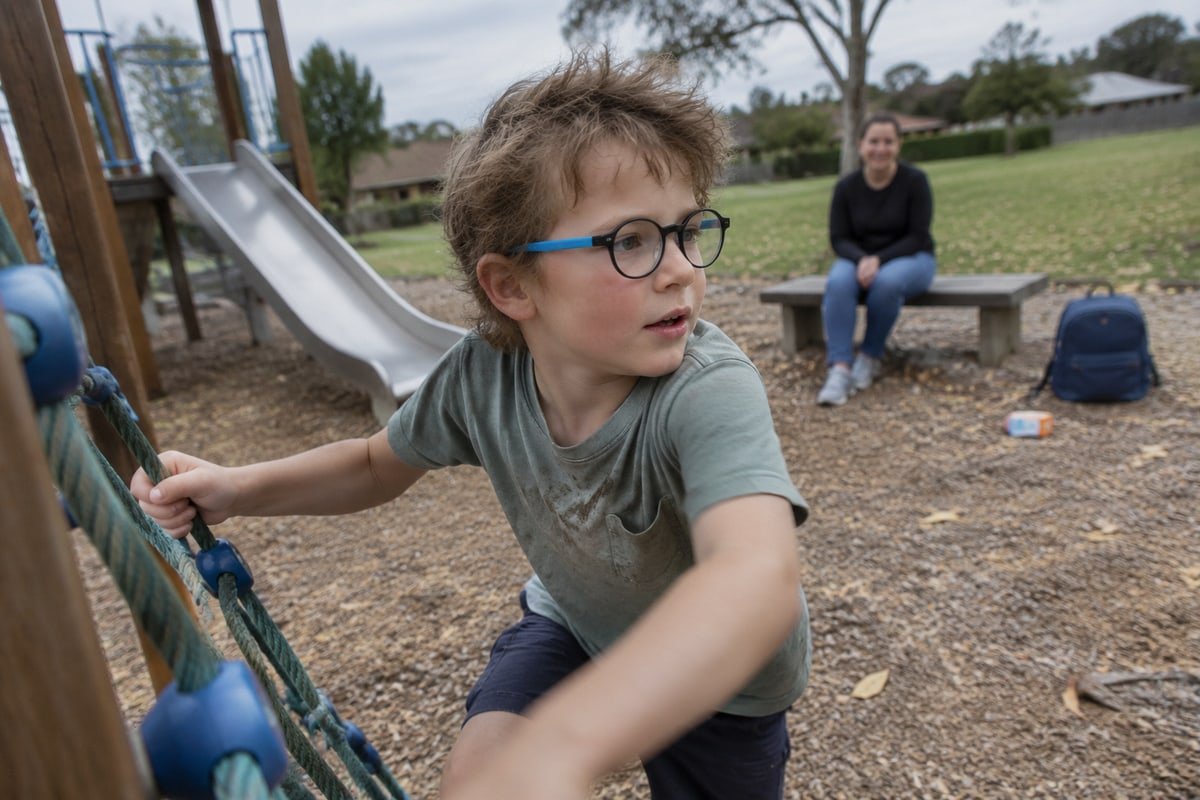
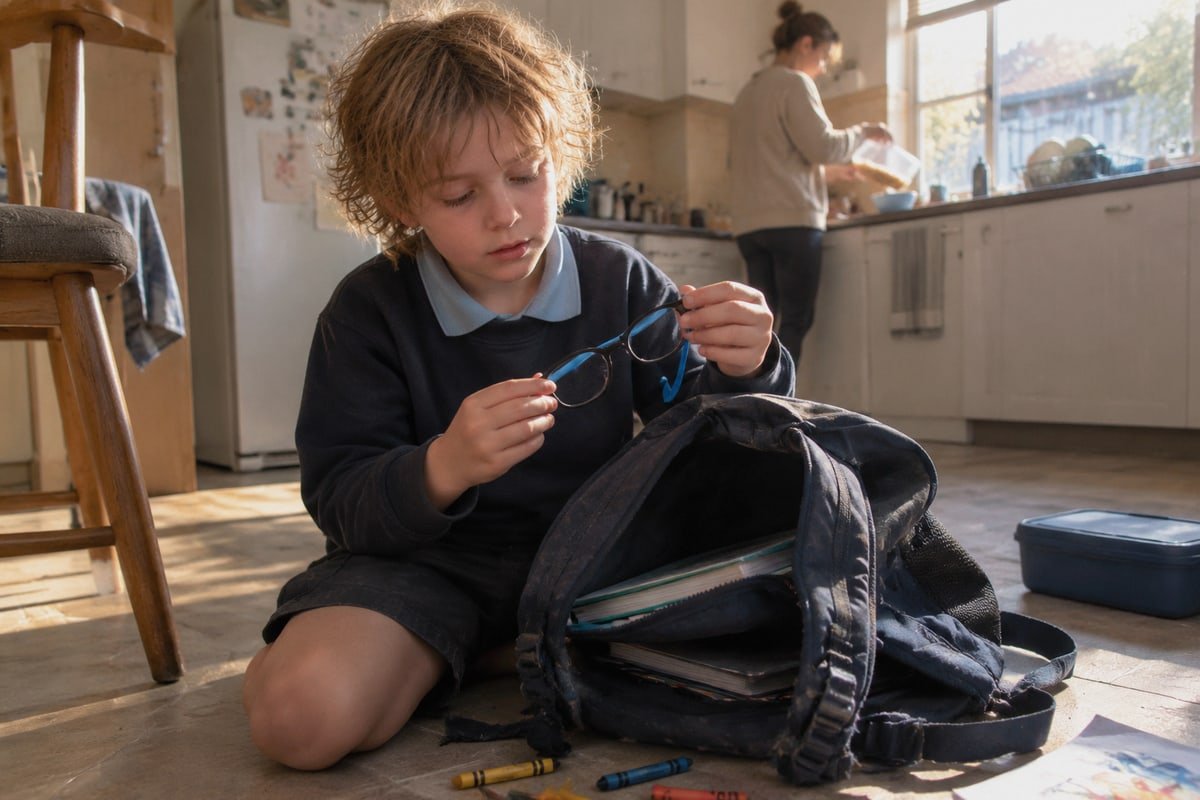
Kids do not treat glasses like adults do. In our factory, we design for the worst day, not the average day. Here are the daily situations we plan around:
- The backpack crush. Glasses get tossed in a bag and sat on. TR90 flexes flat and comes back.
- The playground fall. A child lands face first. A brittle frame can shatter into sharp pieces near the eye. TR90's impact resistance means it deforms rather than splinters.
- The sibling grab. A younger brother yanks the temples apart. Shape memory plastic returns to alignment.
- The hot car. Frames sit on a dashboard in summer. TR90's heat resistance keeps the shape stable, so lenses stay seated.
- The eight-hour school day. Weight on the nose adds up. A lighter frame leaves fewer red pressure marks.
Comfort Drives Compliance
This is the point many brands overlook. A child who is uncomfortable will take the glasses off. If the glasses come off, the vision correction does not work. Lighter frames and flexible temples reduce the nagging pressure that makes kids fidget. In our experience shipping to optical companies in Europe and Japan, comfort complaints drop sharply when we move a design from standard plastic to TR90.
Skin-Friendly for Long Hours
Children sweat during sports. They wear sunscreen. Some have eczema or metal allergies. TR90 is widely described as hypoallergenic eyewear material. It is BPA-free and resists skin oils, perspiration, and cosmetics. Its non-porous surface is also easier to wipe clean than porous plastics. For sports eyewear for children, this means the frame does not get sticky, discolored, or irritating after months of use.
We also build TR90 fronts with a rigid lens track. Softer elastomers can flex too much and let a lens pop out during hard play. TR90 holds the lens in place while the temples do the flexing.
Can TR90 Frames Withstand the Durability Tests My Brand Requires?
Every new style we tool for TR90 forces a choice between temple thickness and flex. Thicker feels sturdier in hand, but thinner often survives our bend cycles better.
Yes. TR90 frames typically pass brand durability tests for bending, impact, and temperature. Manufacturer data cited for Grilamid TR-90 shows no break in Charpy impact tests at room temperature and minus 30°C, and the material resists stress cracking and flexural fatigue from repeated flexing.
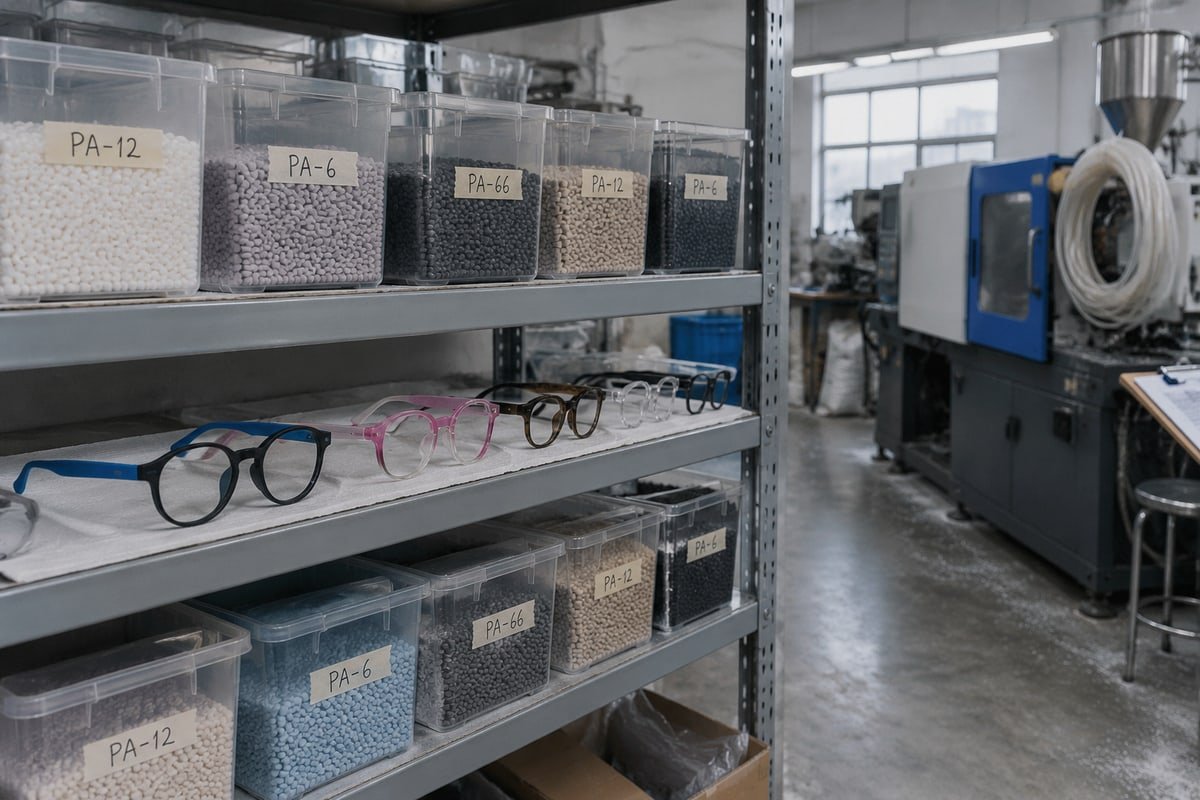
Most of our B2B buyers arrive with a test checklist from their retail partners. The list varies by country, but the categories are similar. Here is how TR90 behaves against each one, based on the consensus across material sources and what we see on our own line.
| Test category | What the test simulates | How TR90 responds |
|---|---|---|
| Temple flex cycling | Repeated opening and closing, twisting | High flexural fatigue strength; returns to shape |
| Impact / drop | Falls, balls, collisions | No-break results reported in Charpy testing at room temperature and minus 30°C |
| High-temperature storage | Hot car, direct sun | Retains shape; does not warp like ordinary plastics |
| Low-temperature impact | Winter play, ski trips | Stays tough rather than turning brittle |
| Sweat and cosmetic exposure | Sunscreen, lotion, perspiration | Resists surface degradation |
| Lens retention | Pressure on the front during play | Rigid lens track keeps lenses seated |
A Note on Numbers
You will find conflicting figures online. Some pages list one density value, others a very different one. Some claim heat tolerance up to hundreds of degrees. These numbers do not agree across sources, and some are marketing copy. I advise buyers not to lean on any single spec sheet. Ask your factory for its own test records and, when needed, third-party lab results on the finished frame. The material's tensile strength 4 matters less than how the finished frame performs with hinges, lenses, and coatings attached.
Where TR90 Has Limits
TR90 is resilient, not indestructible. Its spring-back nature makes it harder to reshape with heat than acetate. Opticians who like fine manual adjustments sometimes find it less cooperative. Hinge screws remain a weak point on any frame, which is why we also develop molded, screwless hinge designs that remove a choking hazard and a mechanical failure point at the same time. Being honest about these trade-offs builds more trust with your retail partners than claiming perfection.
Should I Choose TR90 or TPEE for My Next Kids Eyewear Collection?
Fifteen years of molding both materials taught us one thing: the question is rarely TR90 or TPEE. Most of our best-selling kids frames use both.
Choose TR90 when your collection needs a rigid lens track, precise optical alignment, and a slim look for school-age kids. Choose TPEE for ultra-soft, bend-anywhere frames for toddlers and babies. For many brands, TR90 fronts with TPEE temples offer the best balance.
Here is the quick comparison our product team uses when a brand asks this question:
| Factor | TR90 | TPEE | TR90 front + TPEE temples |
|---|---|---|---|
| Feel | Firm but flexible | Very soft, rubber-like | Firm front, soft temples |
| Lens alignment | Excellent, rigid track | Can shift under heavy flex | Excellent |
| Bend tolerance | High, springs back | Extreme, folds fully | High overall |
| Best age range | Roughly 4 and up | Babies and toddlers | Toddlers through pre-teens |
| Look | Slim, modern, matte or gloss | Chunky, sporty | Balanced, two-tone options |
| Typical use | School optical frames | Baby sunglasses, sport straps | Everyday optical and sun |
When TR90 Wins
If your buyer is an optical company, TR90 usually wins. Prescription lenses need a stable front. The two styles we photograph most often for e-commerce show this well. One is a matte black round front with glossy sky-blue temples and a keyhole bridge. The other is a translucent rounded-square front that fades from clear crystal to soft pink. Both rely on TR90 to hold thin, clean lines while staying light and flexible.
When TPEE Wins
For babies and very young toddlers, TPEE is the safer bet. It can be twisted almost flat, chewed on, and slept on. But it is too soft for precise optical alignment in larger sizes. That is why we rarely recommend all-TPEE for prescription frames above preschool age.
The Hybrid Option and Beyond
TR90 frames with TPEE temples give brands the rigid lens track of TR90 and the pressure-free ear fit of TPEE. This combination is one of our core strengths, and it is a big reason our ~800 existing styles let new brands launch without heavy mold investment. Buyers can pick a base style, then we handle custom colors, logos, lenses, packaging, and accessories through full OEM/ODM support.
One more option is worth watching. Bio-based TR90 variants derived from castor oil are emerging. They promise the same flexibility and durability with a lower carbon footprint. For eco-conscious parents in Europe and Australia, that story can be a real selling point on the shelf.
Conclusion
Broken frames cost brands trust and money. TR90 material gives kids optical frames flexibility, impact resistance, and lightweight comfort. Pair it with TPEE where needed, and test the finished product.
Interested in sourcing the products mentioned in this article? See details and request a quote here:
Footnotes
1. Official website of the Swiss manufacturer that developed the Grilamid TR-90 material grade. ↩︎
2. ISO provides international standards for manufacturing processes including injection molding and plastics testing. ↩︎
3. The FDA is the authoritative source for safety regulations regarding BPA-free materials in consumer products. ↩︎
4. Technical definition and background on tensile strength, a key mechanical property mentioned in the article. ↩︎
More Articles You Might Like

Looking for a Reliable Kids Eyewear Partner?
Explore 800+ ready styles and full OEM/ODM support tailored to your brand.
Get in Touch English
 Español de México
 Deutsch
 Français
 日本語
 العربية
 Português do Brasil