Why Does TR90 & TPEE Give Kids’ Optical Frames Better Impact Resistance Than Plastic?

Every season, buyers tell our Taizhou factory the same story: kids’ optical frames snap, returns pile up, parents lose trust. [TR90 and TPEE kids’ optical frames](https://okayeyewear.com/what-role-tpee-play-tr90-kids-optical-frames-vs-soft-rubber-silicone/) fix that.
TR90 and TPEE kids’ optical frames resist impact better than ordinary plastic because both materials flex and recover instead of cracking. TR90 is a nylon-based memory resin; TPEE is a rubber-like polyester elastomer. They absorb shock, spread force across the frame, and return to shape after bending.
That is the short answer. The longer answer matters if you are building a children’s optical line. Below, I explain how to verify the safety claim, what happens inside the material during an impact, what it costs, and how to pick a factory that gets the details right.
How can I confirm TR90 and TPEE frames are actually safer for my kids' optical line before I place an order?
Last month our QC team bent a batch of TR90 temples back and forth on the line before packing. Not one whitened or cracked. That test builds buyer confidence.
Confirm safety by requesting material data sheets, physical samples, and simple bend, drop, and twist tests before ordering. Check that TR90 and TPEE frames recover shape, show no stress whitening, contain no BPA, and pair with impact-rated lenses. Ask the factory to demonstrate on video.

You do not need a materials lab to check the core claim. You need a clear process and a supplier who will show you, not just tell you. Here is the process we walk new buyers through.
Start with the material paperwork
Ask for the resin data sheet, not a marketing brochure. For TR90, the sheet should list impact values. Published figures for TR90 formulations sit around 600–750 J/m in Izod notched impact testing 1, and some lab-style Charpy tests report no breakage at all. Compare that with the standard injected plastic your current supplier uses. The gap is usually obvious on paper. For TPEE, look for elongation and recovery data, because a thermoplastic polyester elastomer 2 is judged on how far it stretches and how fully it returns. Both sheets should confirm BPA-free materials 3 and no toxic plasticizers. That matters over time, because plasticizers that leach out leave a frame brittle after a year of use.
Run three tests on the samples
- Bend test. Fold the temples outward past 90 degrees. TR90 should spring back with no white stress lines. TPEE temples often open close to 180 degrees.
- Drop test. Drop the frame lens-down onto a hard floor from desk height. Check the bridge and hinge areas for cracks.
- Twist test. Hold each temple and twist the front like wringing a cloth. A brittle frame will snap at the bridge. A memory resin recovers.
| Checkpoint | What to ask the factory | Pass signal |
|---|---|---|
| Resin data sheet | Impact value, BPA status, plasticizer content | Numbers listed, BPA-free stated |
| Bend recovery | Video of temple folded past 90° | Returns flat, no whitening |
| Drop and twist | Sample tested on camera | No cracks at bridge or hinge |
| Lens rating | Lens material and impact spec | Impact-rated lens confirmed separately |
Separate frame safety from lens safety
One objection I hear often: "If the frame is flexible, the glasses are safe." That is only half true. A TR90 front can flex around a demo lens, but the lens itself needs its own shatterproof properties. Frame material and lens material are two decisions. Make both before you sign the purchase order.
What makes TR90 and TPEE more flexible and impact-resistant than standard plastic frames?
Stiffness versus give is the trade-off we weigh on every new mold. A stiffer frame holds lenses tightly, but a frame with the right give survives being sat on.
TR90 is a thermoplastic polyamide with shape memory and high fatigue resistance. TPEE is a thermoplastic polyester elastomer with rubber-like elasticity and strong damping. Both deform under impact, spread energy across the frame, and spring back, while rigid plastics concentrate stress and crack suddenly.

The best way to understand the difference is to put the materials side by side.
| Material | Type | Response to impact | Weight | Heat and cold behavior | Kids' frame fit |
|---|---|---|---|---|---|
| TR90 | Nylon-based memory resin | Flexes, recovers shape, high fatigue resistance | Very light, often cited as 30–40% lighter than traditional frame materials | Stable in hot cars and summer sun | Excellent |
| TPEE | Thermoplastic polyester elastomer | Rubber-like elasticity, absorbs and damps shock | Light | Stays ductile in sub-zero cold, resists heat and oils | Excellent |
| Standard injected plastic | Rigid commodity polymer | Brittle, cracks at stress points | Moderate | Softens in heat, brittle in cold | Poor to fair |
| Acetate | Cellulose-based | Can crack; higher density | Heavier | Can warp with heat | Fair |
| Polycarbonate | Rigid engineering plastic | Very high shatter resistance, little recovery after bending | Moderate | Good heat stability | Good for sports shields |
Flex before failure
Impact energy has to go somewhere. A rigid frame with a high flexural modulus 4 refuses to bend, so the energy concentrates at one point, usually a hinge or the bridge. A crack starts there. TR90 has a lower flexural modulus. The temple bends, the energy spreads along the whole arm, and the shape memory pulls it back. TPEE goes further. Its molecular structure damps vibration and converts impact force into small movements across the frame. That is why TPEE temples can open to 180 degrees without damage.
Two more effects help. First, lower density means less mass. A lighter frame carries less momentum when it hits the floor, so the impact is smaller from the start. Second, TR90 shows exceptional fatigue resistance. A child flexes glasses thousands of times a year. Standard plastics develop microscopic stress fractures from that cycling, then fail suddenly. TR90 does not.
Why "plastic" is too broad a label
Not every plastic is weak. Acetate, injected commodity polymers, and lower-grade blends behave differently. The frames that fail most in children's use are cheap rigid injected plastics. They soften in a hot car, turn brittle in winter because they pass their glass transition point, and suffer environmental stress cracking 5 after months of sunscreen and skin oil exposure. TR90 and TPEE resist all three. Their thermal stability keeps the polymer chains aligned, so the impact-resistant tension holds after heat, and TPEE stays ductile in the cold.
The polycarbonate objection
Some buyers push back: "Polycarbonate is more shatter-resistant than TR90." In raw shatter tests, that can be true. But a kid's frame is not judged by one test. It is judged by bend recovery, weight, comfort, and fatigue life. Polycarbonate does not spring back after a hard bend the way a memory resin does. For a rigid sports shield, polycarbonate wins. For an everyday optical frame a child will sit on, TR90 and TPEE deliver the better overall balance, and their elasticity allows integrated or screwless hinge designs that remove metal failure points.
Will switching to TR90 and TPEE frames affect my production costs and lead times?
A procurement manager from Australia once asked me whether flexible materials would double her unit cost. Her real worry was margin, so we walked through the numbers together.
Switching raises raw material cost modestly, since TR90 and TPEE are engineering polymers, but injection molding cycles stay efficient and existing molds avoid tooling fees. Lead times depend more on customization than material. Lower breakage and returns usually offset the higher unit price.
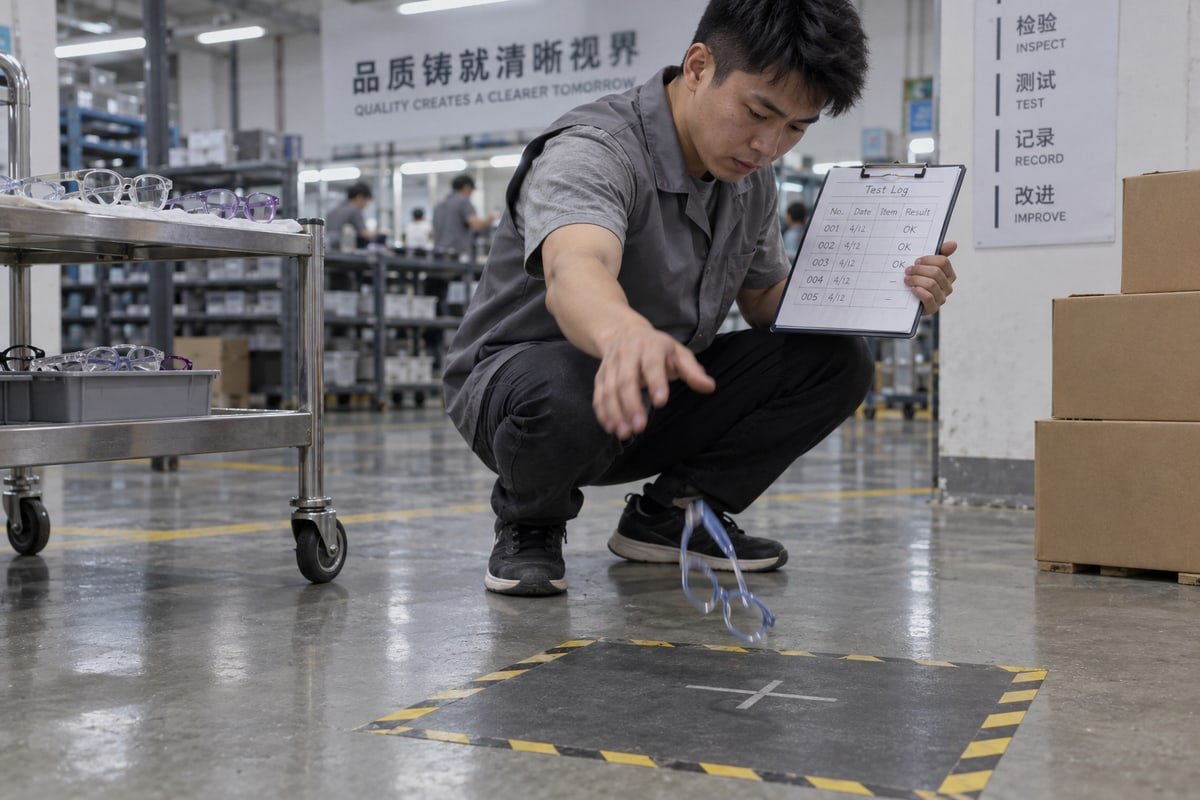
Cost is the question behind almost every material conversation. Let me break it into the parts that actually move.
Where the cost actually moves
| Cost factor | Standard injected plastic | TR90 / TPEE | Notes |
|---|---|---|---|
| Resin price per kilogram | Lower | Higher | Engineering polymers cost more than commodity plastic |
| Material per frame | Higher mass | Lower mass | Lighter frames use less resin, which narrows the gap |
| Tooling | Needed for new shapes | Needed for new shapes | Same either way; existing molds remove this line |
| Injection molding cycle | Standard | Standard | Both run on normal injection lines |
| Rejects and returns | Higher breakage | Lower breakage | The hidden saving most buyers underestimate |
The resin itself is the main increase. But a TR90 frame weighs less than a rigid plastic frame of the same size, so each unit consumes less material. The gap on the finished product is smaller than the gap on the resin price list. TPEE temples paired with a TR90 front use the elastomer only where flexibility matters most, which also keeps cost in check.
Two paths to launch
The biggest cost decision is not material. It is whether you open a new mold. We keep around 800 existing styles in TR90 and TPEE, from crystal-clear fronts with gradient purple temples to translucent light-blue rectangular frames with matte blue arms. A brand can pick from that library, add its own colors and logo, and launch without heavy mold investment. That lowers risk while you test the market. If a signature shape is essential to your brand, a custom mold is the second path, and it adds both tooling cost and development time.
What drives lead time
In our production planning, the material rarely sets the schedule. These factors do:
- Sample approval. Custom colors and logo placement need a confirmed sample before mass production.
- Lens options. Demo lenses ship fastest. UV400 or polarized lens specs add a step.
- Packaging and accessories. Retail-ready boxes, cases, and cloths need artwork approval.
- Order size. Larger runs need longer molding and assembly windows.
Plan the customization scope early, and TR90 and TPEE will not slow you down. Then count the return rate you avoid. A frame that survives the school year protects your margin more than a cheaper resin ever could.
How do I choose the right supplier to source durable TR90 and TPEE optical frames for my brand?
Fifteen years in eyewear taught us one lesson: the material label on a spec sheet means little if the workshop behind it is careless. Process matters as much as polymer.
Choose a real factory with proven flexible-material experience, not a trading company. Verify workshop management, wall thickness and hinge design, sample quality, and OEM/ODM depth. Look for a wide existing style library, clear communication, consistent quality control, and retail-ready packaging support for children's eyewear.
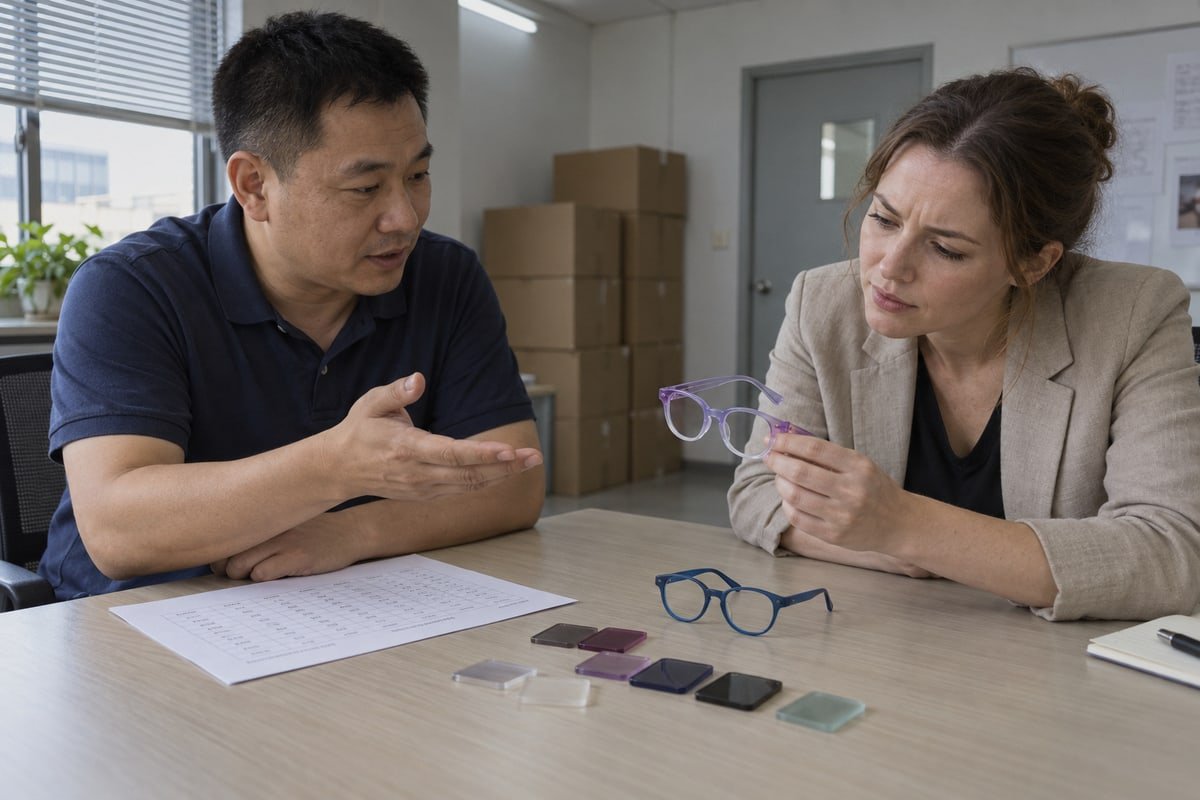
A material only performs as well as the frame built from it. A poorly molded TR90 frame can fail before a well-engineered conventional one. So the supplier question is really a design and process question.
Factory or trading company?
Ask who owns the molding machines. A trading company relays your request to an unknown workshop and cannot control wall thickness, cycle settings, or tolerances. A factory can. Our workshop runs about 120 workers under 5S management, and our engineers make material decisions on the line, not by email. Ask for a video walk-through of the molding and assembly areas. A real factory will show you.
Design details that matter more than the label
- Wall thickness at the bridge. Too thin, and even a memory resin cracks. Too thick, and the frame loses its give.
- Hinge construction. Integrated or screwless hinges remove small metal parts that can fail or scratch a child. When metal hinges are used, the mounting area needs reinforcement.
- Temple design. Perforated dot patterns along a TPEE temple increase flexibility without weakening the arm. Looped ear hooks and rubberized tips keep frames on active kids.
- Rounded silhouette. No sharp angles anywhere. This is a safety point, not a styling point.
- Skin contact. Hypoallergenic eyewear materials matter for kids who wear frames all day.
Supplier evaluation checklist
| Criterion | What to verify | Why it matters |
|---|---|---|
| Real factory | Machines, workers, workshop video | Direct control of quality |
| Flexible-material expertise | Years working with TR90 and TPEE | Tensile strength and recovery depend on molding know-how |
| Style library | Number of ready styles | Faster launch, lower mold risk |
| OEM/ODM depth | Colors, logos, lenses, packaging, accessories | One partner for a retail-ready product |
| Quality control | Bend, drop, and inspection routine per batch | Consistent frames, fewer returns |
| Communication | Response time, clear English, honest timelines | Fewer surprises before delivery |
Questions to ask on the first call
- Which resin grades do you mold, and can I see the data sheets?
- How many existing children's styles can I customize without a new mold?
- What in-line tests do you run on every batch?
- Can you handle lenses, packaging, and accessories under one order?
- Which markets do you already ship to? We serve buyers in 20+ countries, and that experience shapes how we document and pack orders.
Choose a partner who treats your children's line as a long-term product, not a one-time price quote.
Conclusion
Broken frames cost brands trust. TR90 and TPEE flex, absorb shock, and recover, so kids' optical frames survive real life. Pair the right material with a careful factory.
Interested in sourcing the products mentioned in this article? See details and request a quote here:
Footnotes
1. ISO 180 is the international standard for determining the Izod impact strength of rigid plastic materials. ↩︎
2. Wikipedia explains the chemical structure and elastic properties of thermoplastic elastomers used in high-performance manufacturing. ↩︎
3. The FDA provides safety information and regulatory oversight for bisphenol A (BPA) in consumer plastic products. ↩︎
4. NIST conducts research and provides technical standards for the mechanical properties and performance of engineering polymers. ↩︎
5. Wikipedia describes environmental stress cracking, a common cause of unexpected brittle failure in thermoplastic polymers. ↩︎
More Articles You Might Like


Looking for a Reliable Kids Eyewear Partner?
Explore 800+ ready styles and full OEM/ODM support tailored to your brand.
Get in Touch English
 Español de México
 Deutsch
 Français
 日本語
 العربية
 Português do Brasil