Private Label Kids Sunglasses: Manufacturer or Importer for FDA Registration?
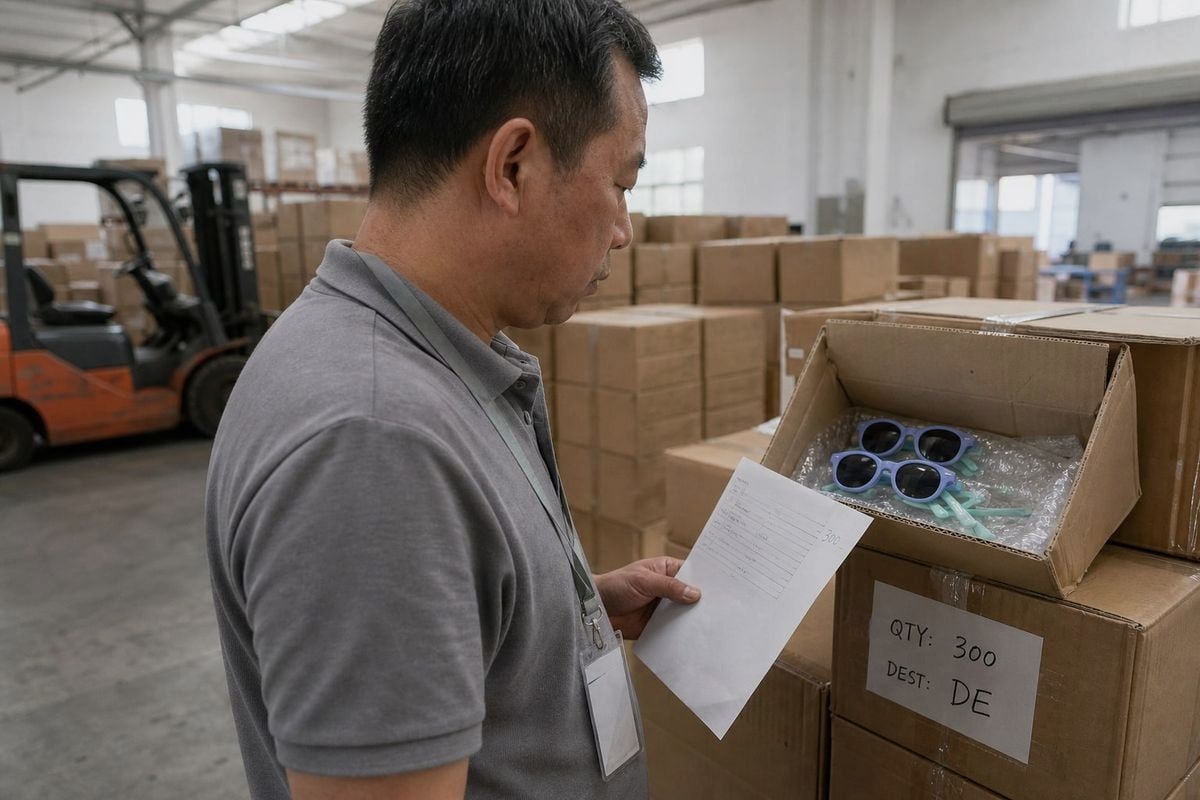
Private label kids sunglasses look simple until FDA registration comes up. I have watched buyers freeze at that question, worried a wrong answer means a shipment stuck at a US port. After fifteen years running our children’s eyewear factory in Taizhou, I can tell you the answer is clearer than it seems.
For private label kids sunglasses, responsibility depends on role, not brand ownership. The foreign manufacturer must complete FDA establishment registration, appoint a U.S. Agent, and list the device. The initial U.S. importer must also register its own establishment. A brand that only resells generally does not register.
That short answer hides a lot of practical detail. Let me walk you through how each role works, what documents you need, and how to pick a factory that makes compliance simple.
How do I know whether the manufacturer or importer is responsible for FDA registration on my private label order?
A few years back, one of our US buyers assumed "private label" meant the FDA question belonged entirely to us, the factory. We had to sit down together and map out who actually did what in the supply chain. That mapping exercise is exactly how you find your answer.
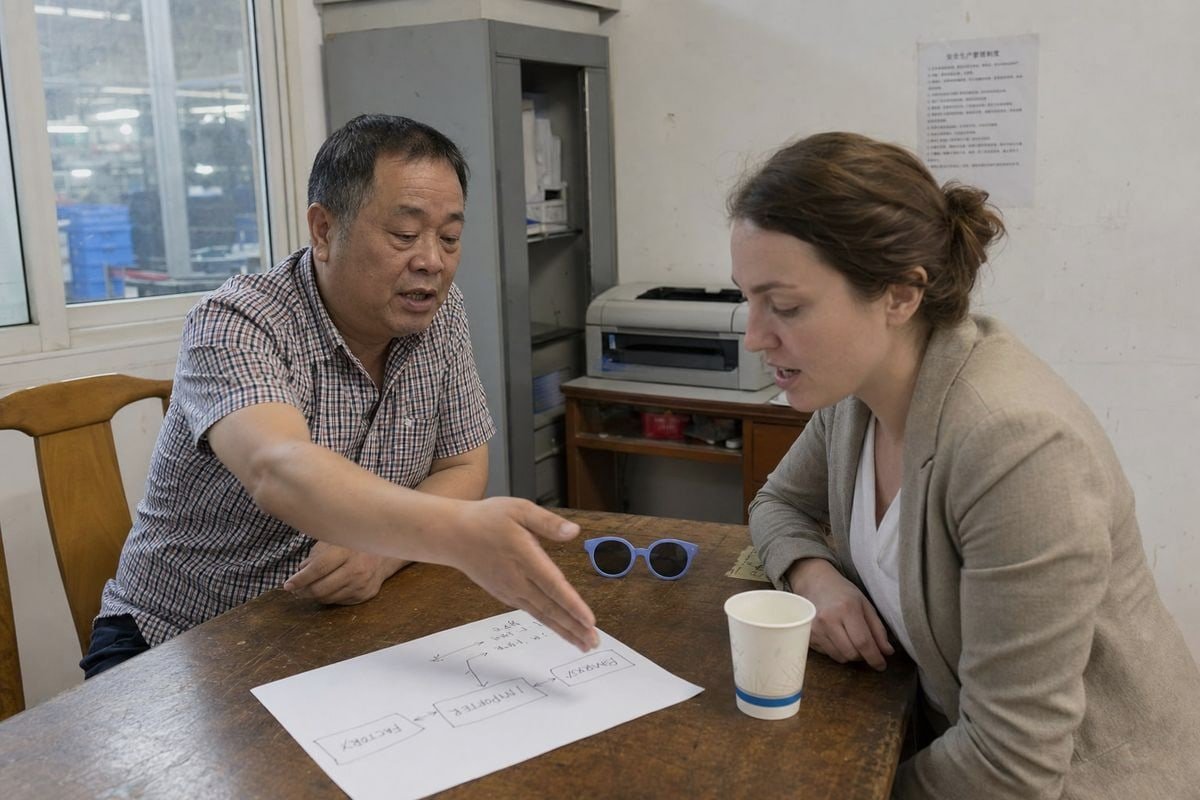
Identify who performs each regulated activity. The foreign manufacturer registers its establishment, names a U.S. Agent, and handles Device Listing. The company acting as initial importer registers separately. If your brand is the first entity bringing sunglasses into the US, you are the initial importer and must register.
The FDA classifies all non-prescription sunglasses, including children's styles, as Medical Device Class I 1 products under CFR Title 21. They are exempt from 510(k) premarket notification 2. But "exempt" does not mean "unregulated." That shorthand misleads many first-time buyers. Registration, listing, quality requirements, and impact resistance testing all still apply.
Map your role first
The question is never "whose brand is on the temple arm?" The question is "who does what?" Here is how the roles break down in a typical private label arrangement:
| Rolle | Who it usually is | FDA duty |
|---|---|---|
| Ausländischer Hersteller | The factory (like ours in Taizhou) | Establishment Registration, U.S. Agent, Device Listing |
| Initial Importer | The first US company receiving goods | Establishment Registration (annual) |
| Specification developer | A brand that designs and controls the device | Registration and listing under its own identity |
| Reseller / retailer | Shops buying from a US distributor | Generally no registration |
Notice the nuance with private labelers. If you simply put your brand on our existing design and a US distributor imports it, you may carry no registration duty at all. But if your company imports directly from us, you become the initial importer, and you must register your establishment and pay the annual medical device user fee. Some brands even choose to register as a "Specification Developer" to control the Device Listing while keeping the factory identity confidential in public databases. That is a legitimate strategy, but it adds obligations, so decide deliberately.
The listing itself sits with the manufacturer. Our sunglasses are listed under the FDA product code HQY for non-prescription sunglasses. Importers register but do not normally list devices they merely distribute.
Can working with an experienced factory make FDA compliance easier for my kids sunglasses brand?
There is a trade-off I discuss with almost every new buyer: a slightly cheaper quote from a factory that has never shipped to the US, versus a partner who already holds an active Establishment Registration. In our experience exporting to twenty-plus countries, the cheaper quote usually costs more at customs.
Yes. An experienced factory already maintains FDA establishment registration, a U.S. Agent, and correct Device Listing under product code HQY. It supplies drop ball test certificates, CPSIA test reports, and consistent labeling, which prevents customs detentions and removes most compliance work from the brand's shoulders.
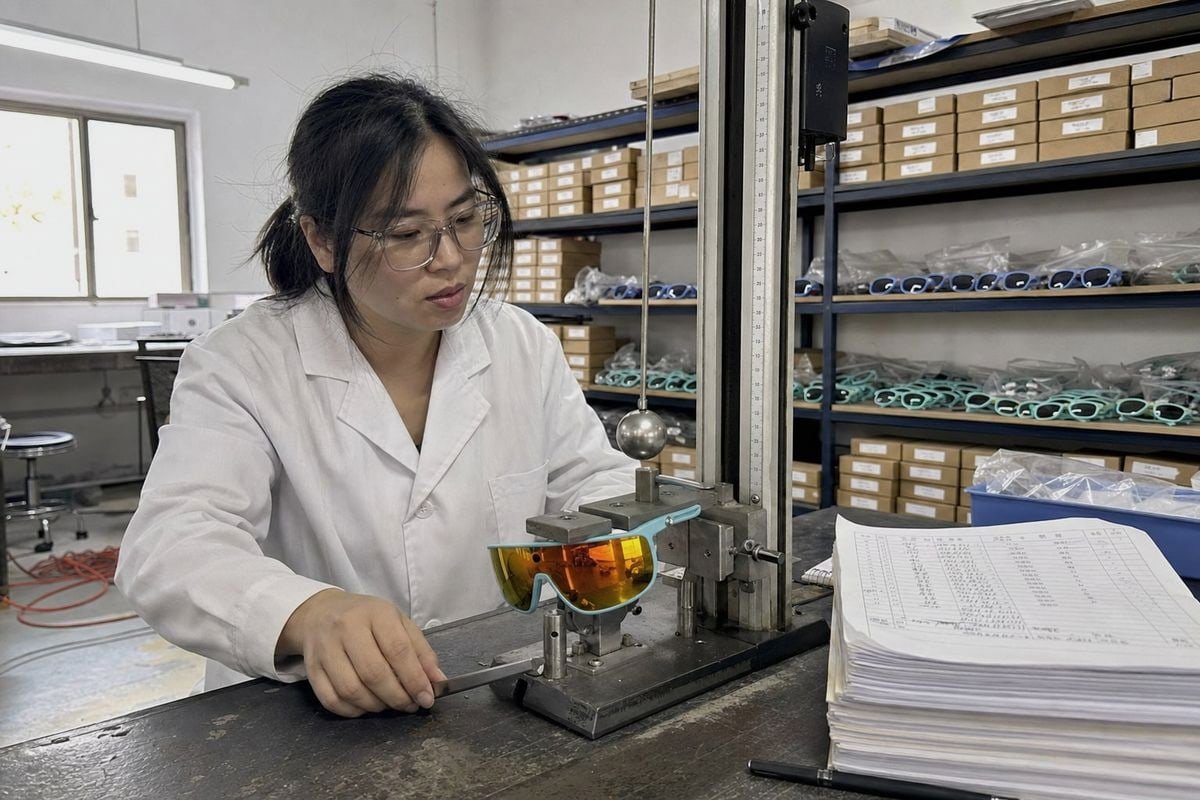
When we first registered our establishment years ago, the process taught us something important: compliance is not a one-time event. Registration renews annually. Listings must stay accurate. Impact resistance testing must be documented lot by lot. A factory that treats these as routine tasks protects every brand it supplies.
What an experienced partner handles for you
Here is what buyers gain when the factory side is already in order:
- Active registration and U.S. Agent. You can verify our status in the FDA database before you place a deposit. No guessing.
- Correct Device Listing. Our sunglasses are listed under the manufacturer identity, so your private label shipment cross-references cleanly.
- Impact resistance testing. Every lens type we ship, from UV400 4 tinted lenses to polarized options, is certified under the drop ball test in 21 CFR 801.410.
- CPSIA compliance for children. Kids sunglasses are also children's products under US law. That means third-party testing for lead content, phthalates 5, and small-parts hazards. Our TPEE and TR90 materials are chosen partly because they pass these tests reliably.
- Material safety documentation. As more buyers ask for recycled or bio-based plastics, biocompatibility questions come up. We keep material data on hand so novel frame materials do not become a surprise skin-contact issue.
There is also a practical benefit specific to private label. Because we already have around 800 existing styles, a new brand can launch without opening molds. Every one of those styles has been through our internal QC and safety documentation flow. You are not testing an unproven design against FDA and CPSIA requirements. You are labeling a product with an existing compliance history.
One caution: an experienced factory reduces your workload, but it cannot register your establishment for you. If you are the initial importer, that registration remains your legal duty. A good partner will remind you of that instead of letting you discover it at the port.
What documents should I request from my manufacturer to support FDA registration and customs clearance?
A procurement manager from Australia once emailed me a one-line question: "What paperwork do I actually need for the US?" I replied with a checklist we now attach to every US-bound order, because the answer surprised her by how specific it was.
Request the factory's FDA establishment registration number, U.S. Agent details, Device Listing confirmation under product code HQY, drop ball impact resistance certification per 21 CFR 801.410, CPSIA third-party test reports, UV400 protection test data, and labeling files showing brand name and country of origin.
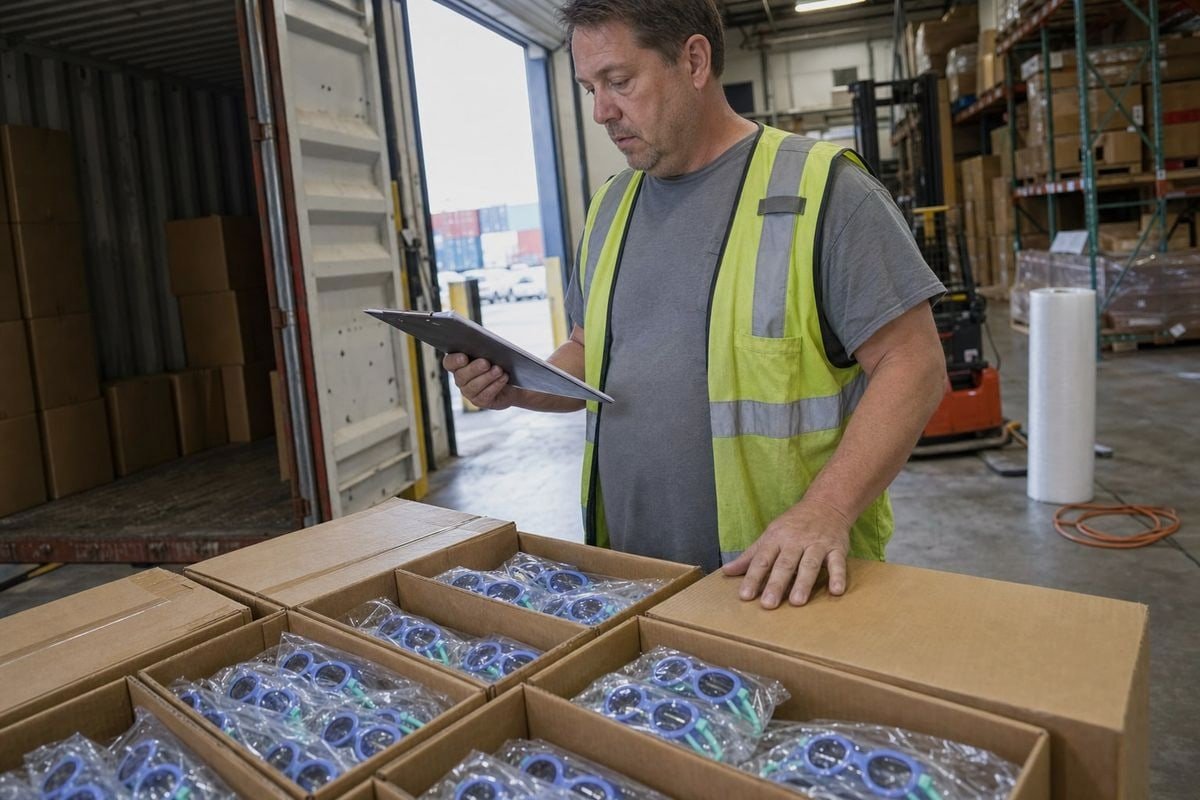
Documents are where good factories separate themselves from cheap ones. Anyone can quote a low price. Not everyone can produce a clean, verifiable paper trail on request. Here is the full set I recommend collecting before your first shipment leaves the port.
The pre-import document checklist
| Dokument | Why customs and FDA care | Who provides it |
|---|---|---|
| Establishment Registration number | Proves the foreign factory is registered with FDA | Hersteller |
| U.S. Agent confirmation | Required for all foreign manufacturers | Hersteller |
| Device Listing (HQY code) | Links the product to a listed Class I device | Hersteller |
| Drop ball test certificate | Confirms impact resistance testing per 21 CFR 801.410 | Manufacturer / lab |
| CPSIA test reports 6 | Lead, phthalates, small parts safety for children's products | Third-party lab |
| UV protection test data | Supports UV400 or ANSI Z80.3 7 performance claims | Manufacturer / lab |
| Labeling artwork files | Verifies product labeling requirements are met | Both parties |
| Handelsrechnung und Packliste | Standard-Zollanmeldungsdokumente | Hersteller |
A few notes from our side of the table. First, the impact resistance certification matters on every shipment, not just the first one. US Customs can ask for it at entry, and missing paperwork is a common cause of detention. Second, CPSIA testing must come from a CPSC-accepted third-party lab. Factory self-testing is not enough for children's products. Third, if your marketing mentions specific optical performance, keep ANSI Z80.3 test data on file so your claims match your evidence.
Some of our buyers now go further and add QR codes on packaging that link to a digital record of test reports and registration details. This kind of digital product passport approach makes verification instant for customs brokers and retail partners alike. We support it on request during packaging development.
How can I choose a private label partner who understands both safety standards and FDA requirements?
The hardest lesson we learned early on was that buyers cannot see quality from a quotation sheet. Two factories can quote the same wraparound sports style, one in glossy black with a mirrored gradient lens, and only one of them can hand you a complete compliance file the same day you ask.
Choose a partner with verifiable FDA establishment registration, documented impact resistance and CPSIA testing, child-safe flexible materials like TPEE and TR90, a real factory audit trail, and OEM/ODM support for compliant labeling and packaging. Verify every claim in the FDA database before ordering.
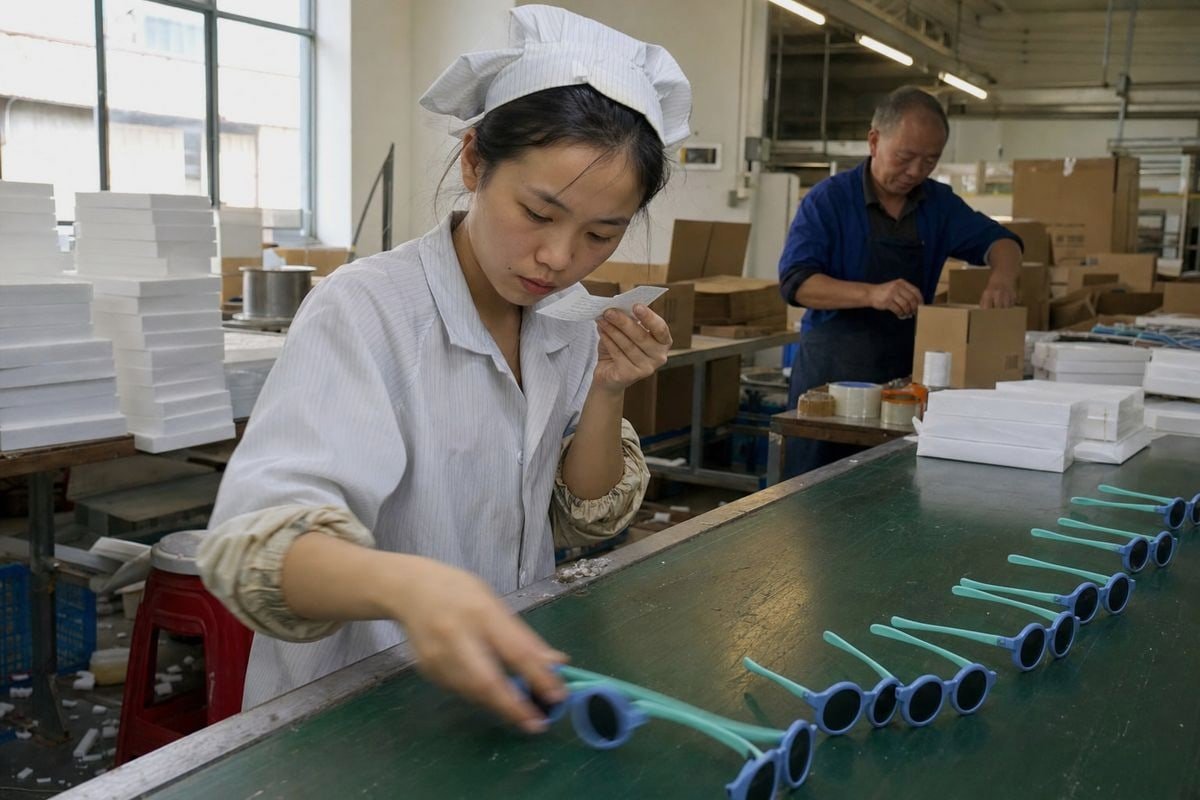
Safety standards and regulatory knowledge are two different skills, and a kids eyewear partner needs both. A factory can build a durable frame yet know nothing about Device Listing. Another can file paperwork perfectly yet use rigid plastics that snap into sharp edges on a playground. You want the overlap.
Questions that reveal the overlap
Ask these before you commit, and listen for specific answers rather than reassurance:
- Can I see your FDA registration number today? A real registrant answers in minutes. You can verify it yourself in the public database.
- Who is your U.S. Agent? Hesitation here is a red flag for any foreign factory.
- How do you test lenses? The answer should mention drop ball impact testing and UV400 protection verification, not just "good quality lenses."
- What materials do you use for children? Our own answer is TPEE and TR90, chosen for flexibility and safe failure behavior. Flexible temples bend instead of breaking when a toddler sits on them. That design philosophy matters as much as any certificate.
- How do you handle labeling? Product labeling requirements cover brand name, country of origin, and accurate claims. A partner offering full OEM/ODM support should manage artwork checks as part of packaging development.
- What claims are safe to make? This one matters more than buyers expect. If you market kids sunglasses with therapeutic promises like myopia control 8, the FDA may treat the product very differently, potentially pushing it out of the simple Class I pathway. A knowledgeable partner will steer you away from risky claims.
Also weigh structural signals. A factory with its own workshop, a stable workforce, and organized production management can maintain document consistency across repeat orders. In our 5S-managed workshop, test reports, lot records, and artwork approvals follow a fixed flow, so the file we hand a buyer in year three matches the one from year one. Traders reselling from multiple unknown workshops usually cannot promise that continuity, and continuity is what keeps every future shipment clearing smoothly.
Schlussfolgerung
FDA duties follow roles, not brands. The factory registers, lists, and tests; the initial importer registers too. Pick a partner who proves all of it on paper, and your private label kids sunglasses clear customs without drama.
Fußnoten
1. Official FDA classification reference for Class I medical devices like sunglasses. ↩︎
2. FDA source explaining the 510(k) exemption referenced for sunglasses. ↩︎
3. Official regulation text for impact resistance testing of sunglass lenses. ↩︎
4. Background on UV protection standards referenced for sunglasses lenses. ↩︎
5. CD
Weitere Artikel, die Ihnen gefallen könnten

August 2026
Sollte die Fabrik die Verpackung und Kennzeichnung von Kinder-Sonnenbrillen übernehmen oder einen bestimmten Lieferanten nutzen?

August 2026
Eigenes Lager vs. Direktlieferung durch den Lieferanten: Was senkt die Retourenkosten für Marken von Kinder-Sonnenbrillen?

August 2026
Direkt zum Lagerhafen oder Lagerung in Übersee: Was spart mehr bei den Versandkosten für Kinder-Sonnenbrillen?
Auf der Suche nach einem zuverlässigen Partner für Kinderbrillen?
Entdecken Sie über 800 sofort verfügbare Modelle und umfassenden OEM/ODM-Support, der auf Ihre Marke zugeschnitten ist.
Kontakt aufnehmen English
  Español de México
  Deutsch
  Français
  日本語
日本語  العربية
  Português do Brasil