Own Warehouse vs Supplier Direct Fulfillment: Which Cuts Return Costs for Kids Sunglasses Brands?
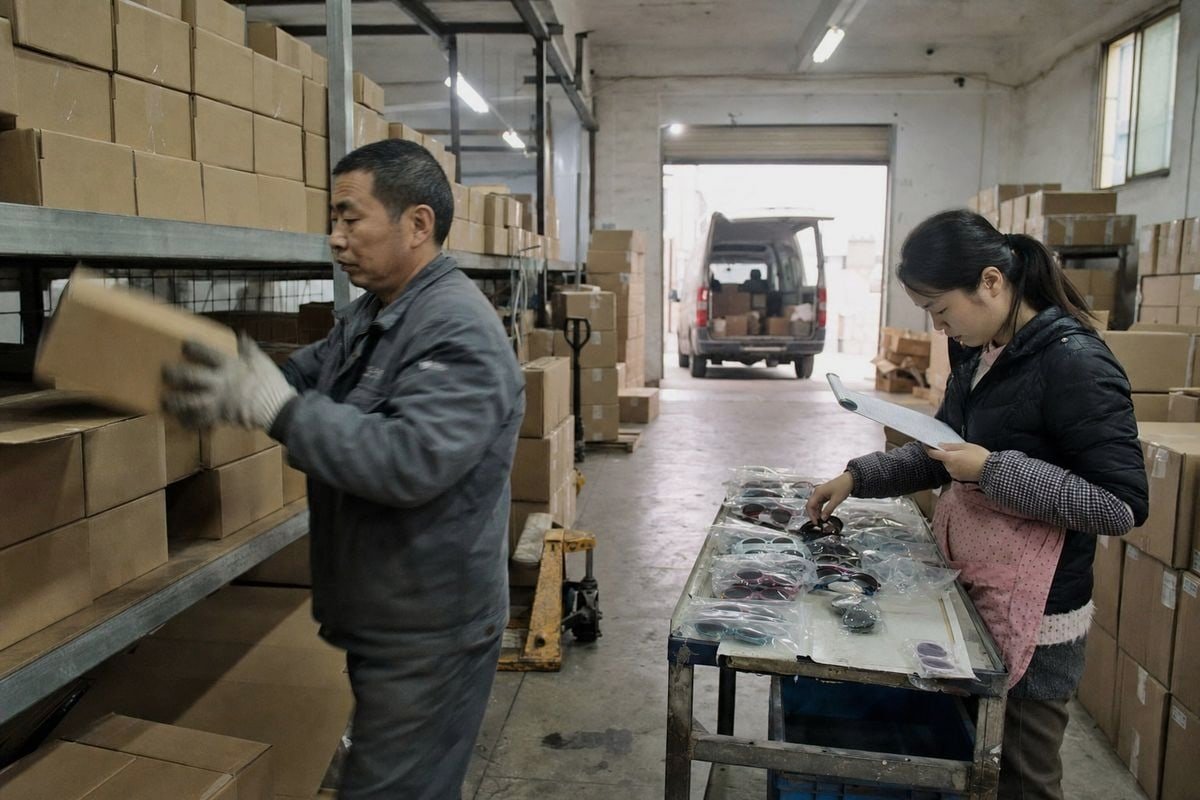
Return costs for kids sunglasses brands quietly erase profit. On our Taizhou production line, we see daily how the own warehouse vs supplier direct fulfillment choice decides who pays.
For most kids sunglasses brands, an own warehouse cuts return costs more than supplier direct fulfillment once return volume becomes meaningful, because domestic inspection, faster restocking, and shorter reverse logistics reduce net loss per return. Supplier direct fulfillment wins only with very low return rates and local return processing.
That is the short answer. But the real decision depends on your return rate, your markets, and your margins. Let me break it down piece by piece, starting with the cheapest fix of all: stopping returns before they happen.
How can I reduce return costs from broken or warped kids sunglasses frames before they reach my customers?
Last summer our QC team pulled a batch of wraparound kids sunglasses because the hinge screws sat loose. That one-hour stop saved a customer months of breakage returns.
You reduce return costs by preventing damage at the source: specify flexible TPEE or TR90 frames, require drop and torsion testing, use protective retail-ready packaging, and add a pre-shipment product inspection. Prevention costs cents per unit, while each broken-frame return costs several dollars in reverse logistics.
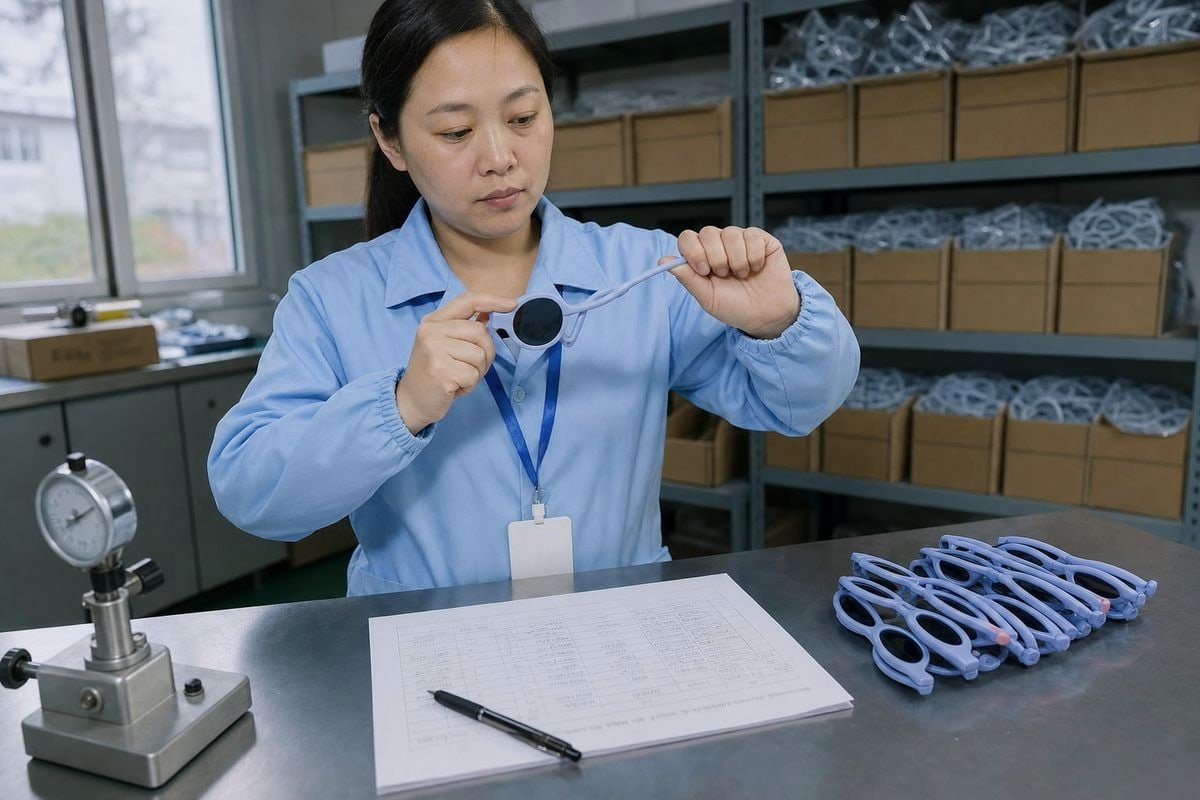
The cheapest return is the one that never happens. In children's eyewear, breakage and warping are the two defect types that trigger the most avoidable returns. Kids twist frames, sit on them, and drop them. Frames also warp in hot shipping containers or delivery vans. Both problems start long before your customer opens the box.
Material choice is your first line of defense
Rigid injection plastics crack at the hinge and the nose bridge. Flexible materials bend and recover. This is why our factory builds most children's styles in TPEE and TR90 1 — often TR90 fronts with TPEE temples. A frame that can twist 180 degrees and spring back is not a gimmick. It is a logistics hedge. Every breakage return you prevent at the design stage is a return you never pay to ship, inspect, or write off. This matters even more under supplier direct fulfillment, where processing a remote return is expensive and slow.
Match the failure to the fix
| Common failure | Root cause | Prevention step |
|---|---|---|
| Snapped temple arm | Brittle plastic, weak hinge zone | Specify TPEE temples; torsion testing |
| Warped frame front | Heat exposure in transit | TR90 heat-resistant fronts; ventilated packing |
| Loose or lost screws | No torque check at assembly | In-line hinge torque quality control |
| Scratched lenses | Loose packing, no sleeves | Individual poly sleeves, molded inserts |
| Crushed cases | Thin cartons, no test | Carton compression testing before shipment |
Packaging deserves equal attention. We pack kids sunglasses in individual sleeves inside divided cartons because a scratched mirrored lens — like the orange-gradient shield lenses on our sport wraparound styles — is instantly visible to a parent and almost always returned.
Should I hold my own warehouse stock or rely on my supplier to ship directly to reduce shipping and return delays?
We weigh this trade-off with buyers constantly: lower fixed overhead from supplier direct shipping, or tighter return control from holding stock. The right answer depends on your return volume.
Hold your own warehouse stock once returns become regular. Domestic returns cost roughly $3–$10 to process, while supplier direct returns can consume up to 60% of item value through cross-border shipping and fees. Rely on supplier direct only at very low volume with local return processing.
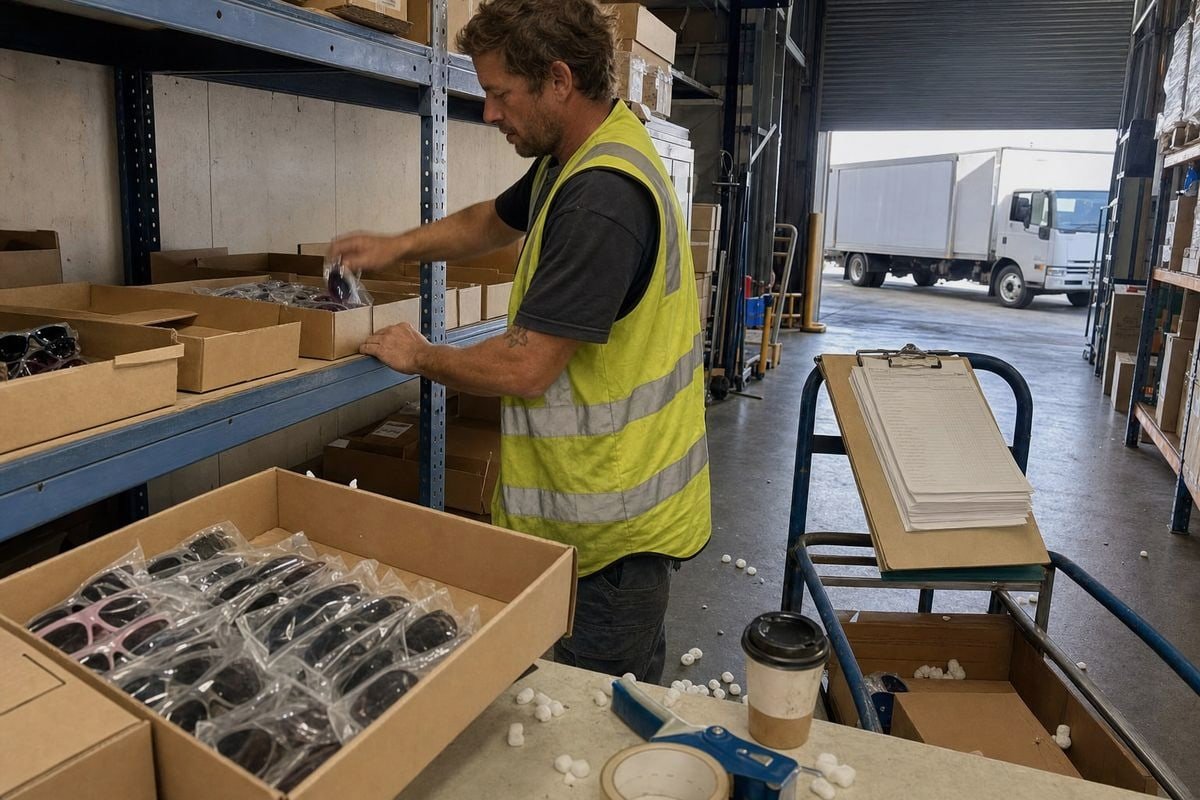
Here is the side-by-side view most buyers ask us for:
| Faktor | Own warehouse | Supplier direct fulfillment |
|---|---|---|
| Outbound shipping speed | Fast, domestic | Slower, often cross-border |
| Return distance | Short, local | Long, sometimes back to origin |
| Return processing cost | Roughly $3–$10 per unit internally | $7–$15 per unit with full handling, plus fees |
| Return shipping add-on | Local rates, consolidated | $3–$8 or more per individual return |
| Restocking fees | None — internal labor | Often charged by supplier or 3PL |
| Control over disposition | Full: restock, kit, liquidate | Weak: supplier decides, disputes possible |
| Fixed overhead | Higher | Lower |
The pattern is clear. Supplier direct fulfillment shrinks your fixed shipping overhead, but it stretches your reverse logistics 2. A common objection I hear from new brands is that skipping the warehouse "saves money." It saves money on outbound orders. On returns, it usually loses. When a $12 pair of kids sunglasses must travel back across a border, pass a supplier’s return merchandise authorization process, and wait for a condition dispute, the net loss per return can exceed the product's entire margin.
An own warehouse — or a domestic third-party logistics 3 (3PL) partner acting like one — flips this. Returns travel a short distance. Your team inspects them the same week. Resellable units go back on the shelf within the same peak summer season, before styles depreciate. You can also consolidate local returns into bulk shipments, cutting the last-mile freight cost that makes individual supplier direct returns so expensive. Good inventory management then keeps those recovered units flowing back into sales instead of sitting as dead stock.
A brand buyer from Australia once asked me which single QC step cuts defect returns fastest. My answer surprised her: it is the hinge torque check, not the lens test.
Request incoming material checks, in-process hinge and torsion testing, UV400 lens verification, a defined AQL pre-shipment inspection, drop tests from child-height, and packaging compression tests. Ask for written inspection reports per batch so defect-related returns are caught at the factory, not at your customer's door.
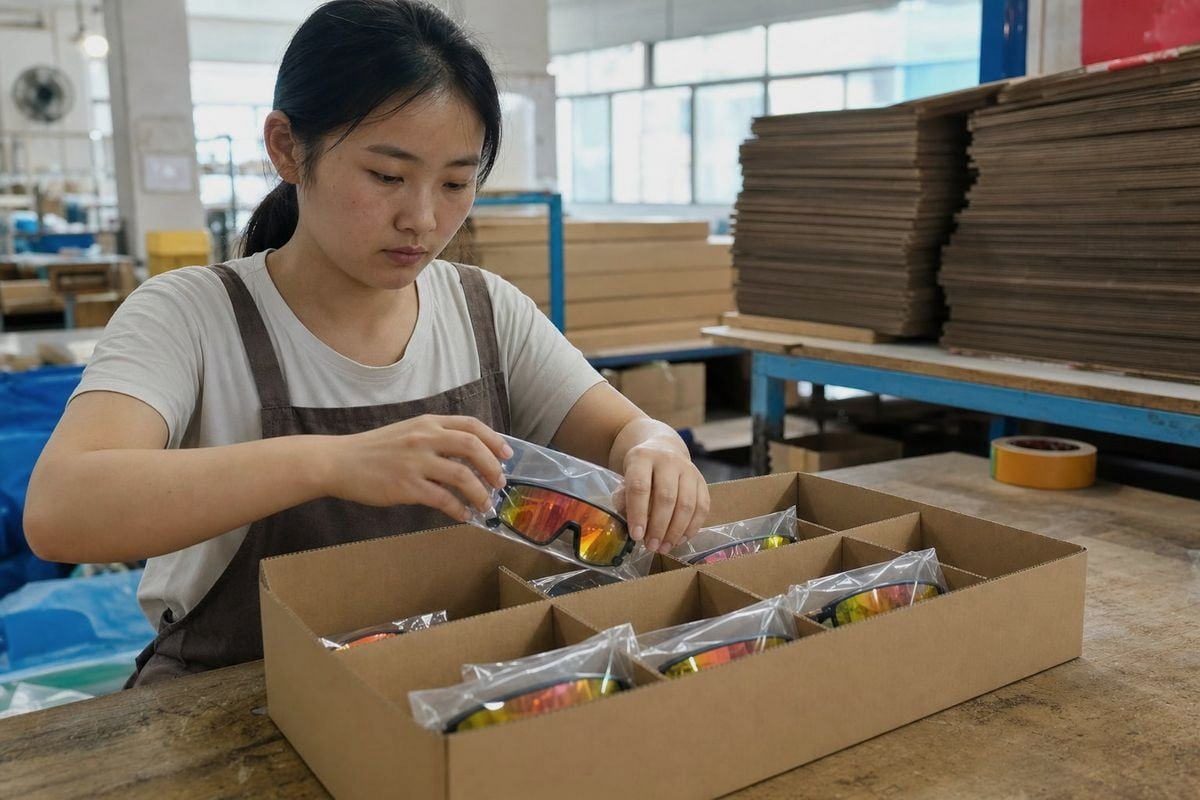
You have every right to ask your factory for a documented quality control plan. A serious eyewear factory will not be offended. In our 5S-managed workshop, we run these checks as standard, and I recommend buyers request them explicitly in their purchase agreements.
The six checkpoints worth writing into your contract
- Incoming material verification. Confirm the resin is genuine TPEE or TR90, not a cheaper substitute. Substituted material is the hidden cause behind many "random" breakage waves.
- In-process hinge and torsion testing. Operators flex temples through repeated open-close cycles and twist frames to a defined angle. Weak hinges fail here, not in a customer's hands.
- UV400 lens verification. Spot-check lenses with a UV meter every batch. For kids eyewear, a UV protection failure is a safety issue, not just a return. UV400 4
- Drop testing from child-height. Frames should survive falls onto hard flooring from roughly a meter, since that is real-world use.
- AQL pre-shipment product inspection. Agree on an acceptance quality limit 5 and sampling size before production. Insist on photos and a signed report for each shipment.
- Packaging and carton compression tests. The best frame still returns if it arrives scratched or crushed.
One more practical tip: ask for a small defect allowance of replacement units shipped free with each order. It lets you resolve customer complaints with an inst
Fußnoten
1. Wikipedia background on TR90 material referenced repeatedly as frame material. ↩︎
2. Wikipedia explains the reverse logistics concept central to the return cost discussion. ↩︎
3. Wikipedia clarifies 3PL concept used as an alternative to owning a warehouse. ↩︎
4. FDA guidance supports UV protection verification standards mentioned for children’s eyewear safety. ↩︎
5. Comprehensive definition of AQL sampling standards in manufacturing quality control. ↩︎
Weitere Artikel, die Ihnen gefallen könnten
August 2026
Sollte die Fabrik die Verpackung und Kennzeichnung von Kinder-Sonnenbrillen übernehmen oder einen bestimmten Lieferanten nutzen?
August 2026
Direkt zum Lagerhafen oder Lagerung in Übersee: Was spart mehr bei den Versandkosten für Kinder-Sonnenbrillen?
August 2026
How Does MOQ Vs. Small-Batch Surcharge Affect Landed Cost for Kids Sunglasses?
Auf der Suche nach einem zuverlässigen Partner für Kinderbrillen?
Entdecken Sie über 800 sofort verfügbare Modelle und umfassenden OEM/ODM-Support, der auf Ihre Marke zugeschnitten ist.
Kontakt aufnehmen English
  Español de México
  Deutsch
  Français
  日本語
日本語  العربية
  Português do Brasil