Should Factory Handle Kids Sunglasses Packaging & Labeling, or Use a Designated Supplier?
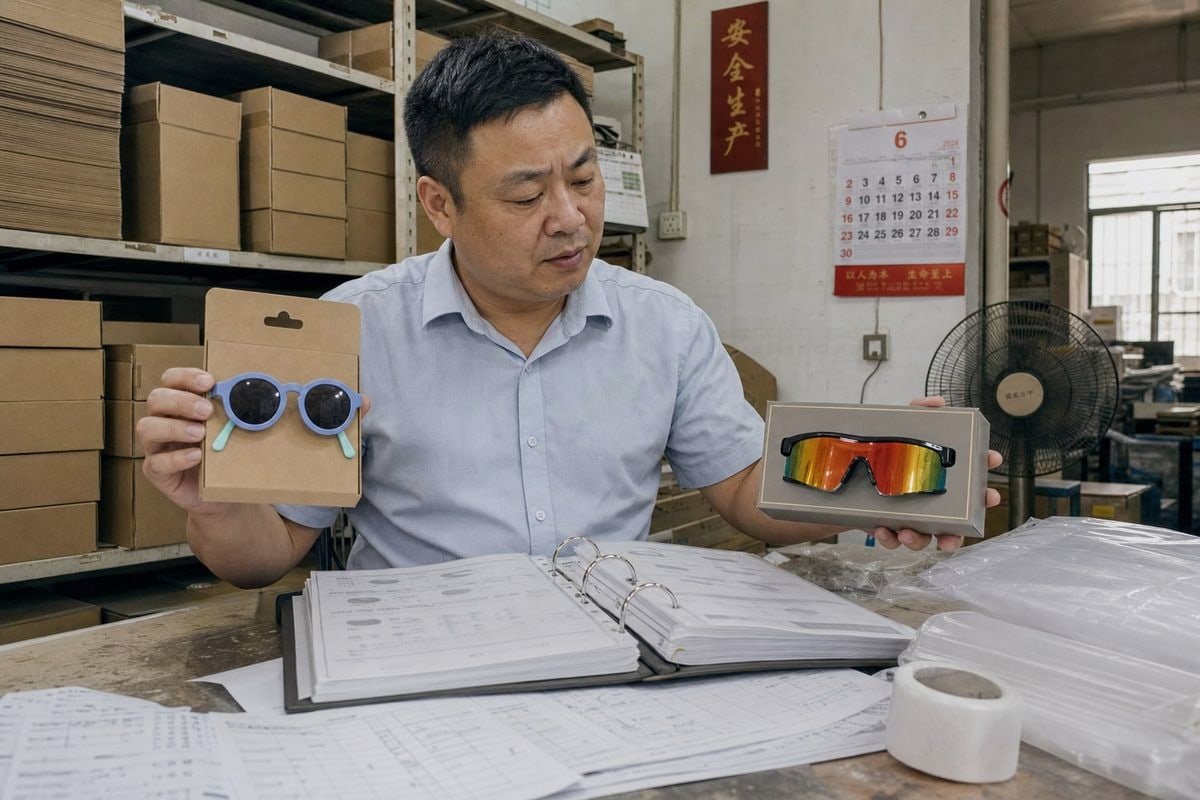
Kids sunglasses packaging and labeling looks simple until a shipment gets stuck. On our production line in Taizhou, I have seen one wrong barcode delay an entire retail launch.
For kids sunglasses packaging and labeling, let the factory handle execution if you have simple SKUs and clear specs. Use a designated packaging supplier when you need strict CPSIA compliance, premium retail packaging, or multi-market labeling. A hybrid model, where you own the master spec, is often safest.
That short answer hides real trade-offs. Below, I break down both models, the compliance rules, and a decision framework you can actually use.
What Are the Pros and Cons of Letting My Factory Handle Packaging In-House?
Last spring, our team packed a full order of flexible TPEE-Sonnenbrillen 1 — pouches, hang tags, carton marks — in one run. It worked because the buyer sent flawless artwork files early.
Factory-handled packaging offers one point of accountability, faster turnaround, lower coordination costs, and no double-shipping fees. The downsides are weaker regulatory expertise, reliance on generic templates, limited premium print techniques, and the risk of packaging errors being discovered only after production is finished.
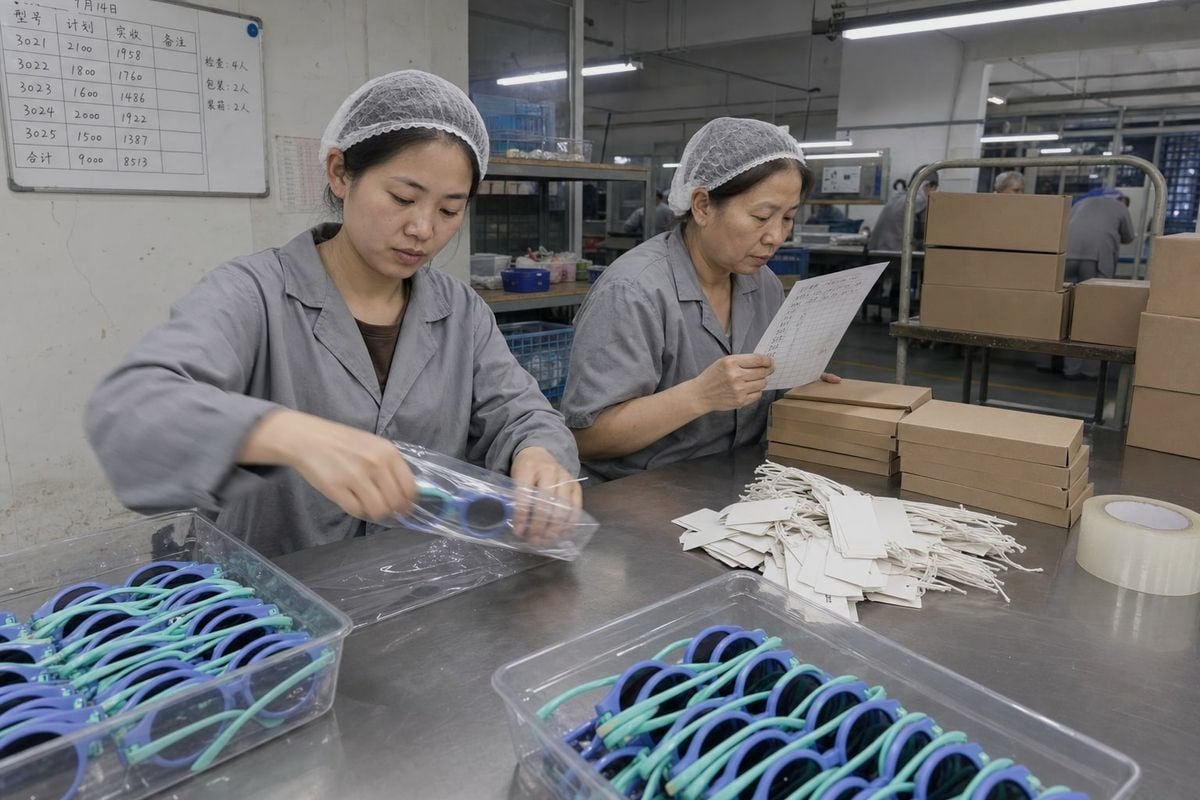
The core appeal of in-house packaging is simplicity. When we bundle packaging with the production run, the frames never leave our facility until they ship. That eliminates the double-shipping cost of moving finished goods to a secondary packing site. It also compresses lead time, because packing starts the moment quality control inspection clears the goods.
But I want to be honest about the limits. A factory's core skill is the product itself. Ours is flexible TPEE and TR90 eyewear 2 that stays safe and comfortable on children's faces. Print execution is something we manage well for standard formats, but high-precision techniques like foil stamping or spot UV usually come from specialist print partners, not the eyewear line itself.
A Quick Comparison
| Faktor | Factory In-House | What to Watch |
|---|---|---|
| Lieferzeit | Shorter, bundled with production | Confirm packing is scheduled, not an afterthought |
| Unit production cost | Lower, no extra freight leg | Generic materials may cap perceived value |
| Compliance detail | Varies by factory experience | Verify CPSIA and market-specific knowledge |
| Print quality | Good for standard boxes and tags | Premium finishes may be outsourced anyway |
| Accountability | Single point of contact | One party owns both product and pack errors |
Where In-House Packaging Fails
Quality control silos are the biggest hidden risk. In some factories, packaging is treated as a secondary priority. Barcode placement drifts. SKU labels get swapped between colorways. Inserts are assembled by hand with no verification step. If nobody checks the pack-out against an approved sample, errors surface at the customs desk or the retailer's dock — the worst possible moment.
How Do I Know If My Kids Sunglasses Labels Meet Import Compliance Requirements?
A buyer in Australia once asked me why her US shipment needed a tracking label when her EU one did not. That question opens up the whole compliance picture for children's eyewear.
Kids sunglasses labels meet import compliance when they include third-party testing under CPSIA, a Children's Product Certificate, a permanent tracking label, country-of-origin marking, the company name and address, and a Manufactured for or Distributed by statement where the named firm is not the actual maker.
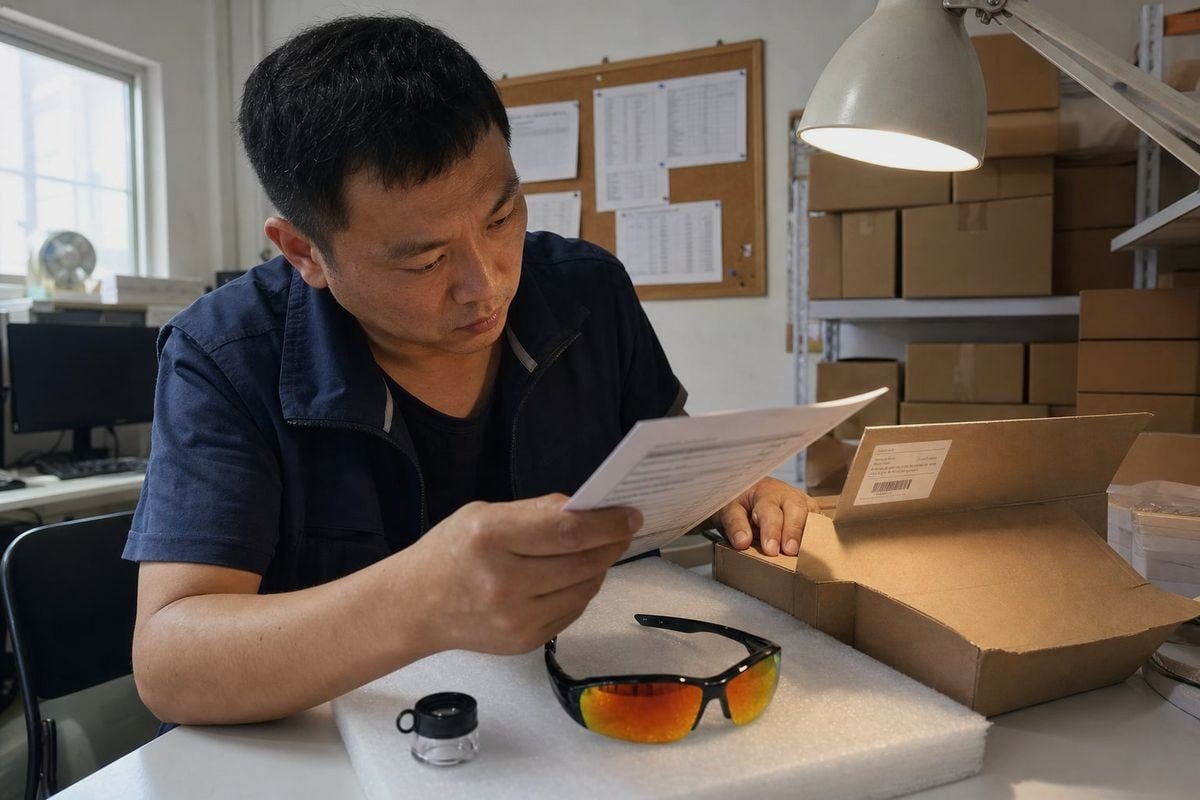
Children's sunglasses sit under two rule sets at once. They are eyewear, so they face optical and UV-related product safety standards 3. They are also a children's product, which triggers CPSIA compliance in the United States: third-party testing at an accepted lab, a Children's Product Certificate, and a permanent tracking label on the product or packaging.
There is another distinction many buyers miss. Regulators separate the label from the broader concept of labeling. The label is what appears on the box. Labeling includes inserts, wrappers, warning cards, and any material that accompanies the product. Every piece must be consistent and non-misleading. A UV400 claim on the box must match the tested lens performance 4, or you have a compliance gap.
Core Label Elements Checklist
| Element | . Schlagfestigkeitsprüfungen sind eine separate Verpflichtung von CPSIA-Prüfungen. Viele Importeure müssen sich auch bei der FDA als Erstimporteur registrieren und das Produkt als medizinische Klasse-I-Gerät auflisten, um eine Beschlagnahmung der Sendung an der Grenze zu vermeiden. | Common Mistake |
|---|---|---|
| Tracking label | Permanent, on product or packaging | Printed only on a removable sticker |
| Company identity | Name and business location | Missing the Distributed by statement |
| Country of origin | Conspicuous marking | Hidden under an insert flap |
| Product identity | Clear intended-use language | Vague or exaggerated claims |
| UV category | Accurate lens classification | Copying claims from another SKU |
Who Should Own This
In our experience exporting to buyers in more than 20 countries, the brand should own the master label spec. We execute it, and we flag obvious gaps, but supply chain transparency 5 works best when one named person on the buyer's side approves final artwork. Some brands now add scannable QR codes linking to their digital CPC, which builds trust at the shelf and simplifies customs questions.
Can I Trust a Factory to Manage Custom Branding and Packaging for My Kids Eyewear Line?
The trade-off I weigh most often with new clients is speed versus polish. Our OEM/ODM service covers logos, custom colors, and retail-ready packs, but trust should be earned through samples, not promised in emails.
You can trust a factory with custom branding when it offers genuine private label manufacturing, provides pre-production packaging samples, follows a documented approval process, and passes an independent quality control inspection. Trust breaks down when a factory only resells generic templates without artwork verification.
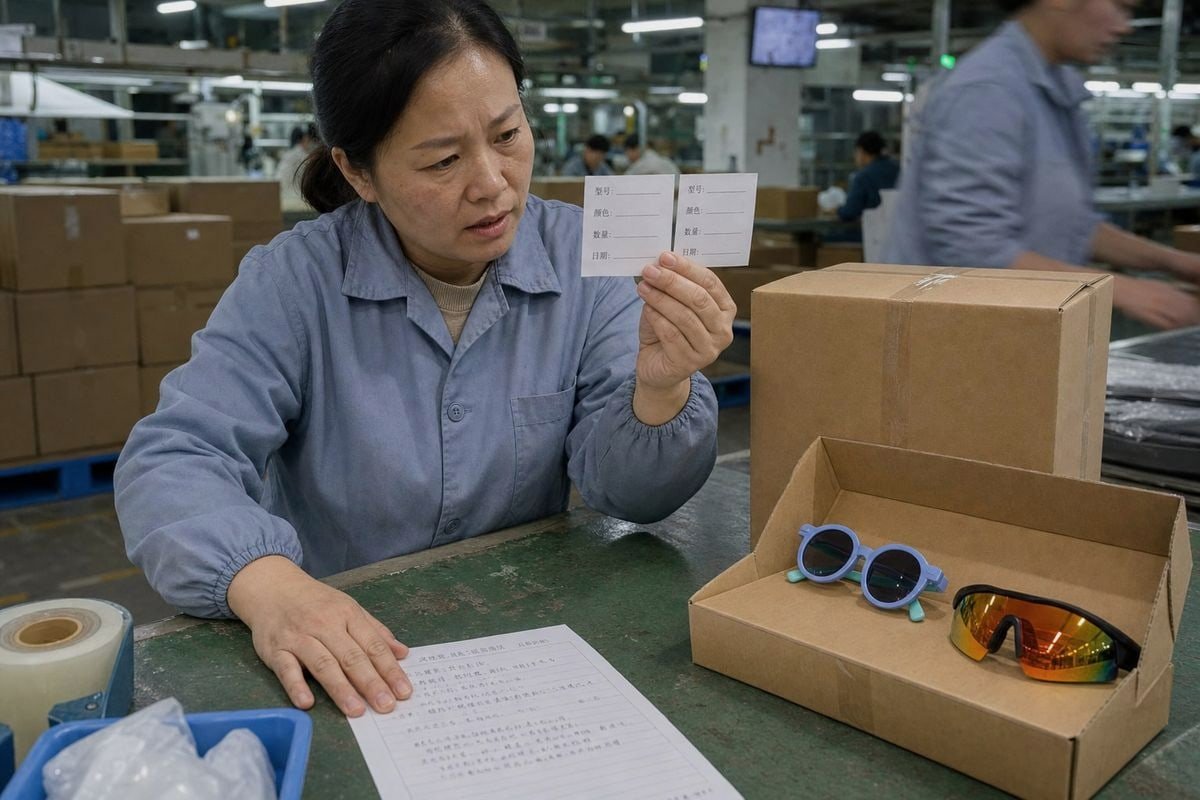
Private label manufacturing 6 is now a standard offering in eyewear sourcing. The trend toward one-stop factories is real, and it genuinely helps smaller brands. At our workshop, a startup can pick from around 800 existing styles, add a logo, choose a pouch or hard case, and launch without heavy mold investment. That lowers risk for a market test.
But brand identity consistency is where the model gets tested. Kids' frames come in unusual shapes. A wrap-around shield style, like the sport visor designs we produce, will not sit safely in a standard slim case built for round optical frames. A flexible TPEE frame can twist inside a loose box and arrive looking crushed, even if undamaged. Packaging must match the physical product, not just the logo file.
A Trust-Verification Process
- Send your complete artwork package with dielines, Pantone codes, and barcode files.
- Request a physical pre-production packaging sample, not just a photo.
- Test-fit your actual frame model inside the case or box.
- Approve a golden sample in writing and reference it in the purchase order.
- Require an inline and final quality control inspection that covers packaging, not only frames.
Where a Specialist Still Wins
If your unboxing experience is central to your brand story — foil stamping, spot UV, dual-use packaging that converts into a toy or storage box — a specialist packaging partner will usually outperform a factory print shop. Digital printing also enables micro-batch seasonal labels without plate costs. For those projects, we happily execute pack-out while a designated supplier produces the premium components.
Will Using a Designated Packaging Supplier Cause Delays or Quality Issues for My Order?
A lesson I learned early: the risk of a second supplier is not the supplier itself. It is the unmanaged handoff between two production schedules and two spec versions.
A designated packaging supplier only causes delays or quality issues when handoffs are unmanaged. With aligned schedules, a shared master spec, early dieline confirmation, and a single approval owner, specialist suppliers often improve print quality, compliance discipline, and lower MOQs for multi-SKU custom retail packaging.
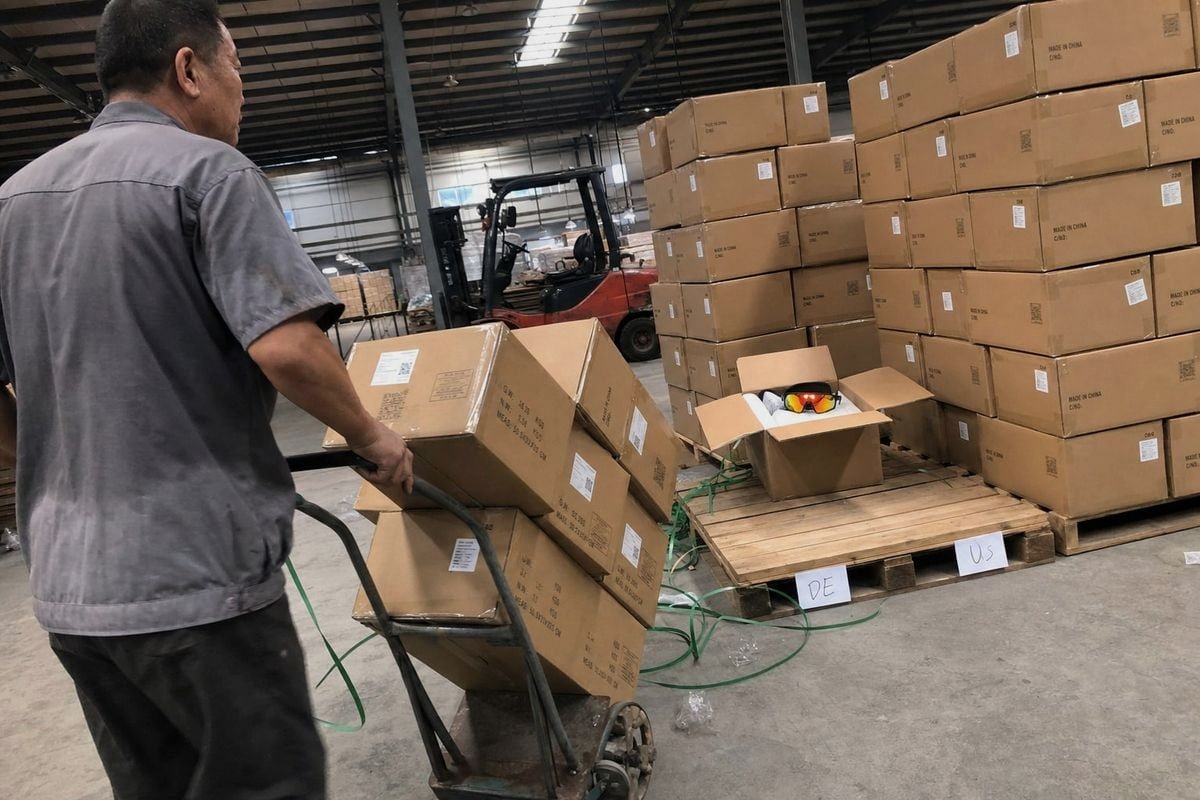
Let me be direct about the objection many buyers raise: more vendors means more handoffs, and handoffs create spec drift. That is true — if nobody manages it. The frames get updated to a new colorway, but the packaging supplier still prints the old SKU code. Or the packaging arrives at our dock two weeks after production finishes, and the goods sit idle. Every idle day erodes your lead time optimization.
The fix is process, not avoidance. When a buyer uses a designated supplier with us, we ask for the packaging delivery date in the purchase order. We confirm dielines against our actual frame dimensions before printing starts. We photograph the first assembled pack and get written sign-off before the line runs. Handled this way, the specialist route often raises quality, because packaging is that supplier's core competency, not a side task.
Risk and Mitigation Map
| Risiko | Cause | Abmilderung |
|---|---|---|
| Spec drift | Two vendors, two file versions | One master spec, version-controlled |
| Schedule gaps | Packaging arrives late to factory | Delivery date written into the PO |
| Blame gaps | Unclear responsibility for defects | Define ownership per component in contract |
| Fit failures | Dieline never tested on real frame | Physical test-fit before mass print |
Specialist suppliers also bring options a factory rarely offers: lower MOQs for mixed multi-SKU custom boxes, frustration-free or letterbox-friendly formats that cut last-mile costs, and third-party fulfillment-ready pack-outs. For compliance-heavy or branding-heavy launches, those benefits usually outweigh the coordination effort.
Schlussfolgerung
Getting kids sunglasses packaging and labeling wrong risks customs holds 7, retail rejections, and recalls. Choose factory execution for simple launches, a designated supplier for complex ones — and always own the master spec yourself.
Fußnoten
1. Wikipedia entry explaining the properties of TPEE, a common material for flexible children’s eyewear. ↩︎
2. Official brand page for TR90, a high-performance thermoplastic used in durable eyewear frames. ↩︎
3. ISO standard for sunglasses and related eyewear, covering optical and safety requirements. ↩︎
4. General overview of sunglasses standards, including UV protection levels and labeling terminology. ↩︎
5. Academic insight into the importance of transparency and accountability within global supply chains. ↩︎
6. Definition and components of private label manufacturing, relevant for custom eyewear branding. ↩︎
7. U.S. Customs and Border Protection guide on basic importing processes and compliance requirements. ↩︎
Weitere Artikel, die Ihnen gefallen könnten
August 2026
Eigenes Lager vs. Direktlieferung durch den Lieferanten: Was senkt die Retourenkosten für Marken von Kinder-Sonnenbrillen?
August 2026
Direkt zum Lagerhafen oder Lagerung in Übersee: Was spart mehr bei den Versandkosten für Kinder-Sonnenbrillen?
August 2026
How Does MOQ Vs. Small-Batch Surcharge Affect Landed Cost for Kids Sunglasses?
Auf der Suche nach einem zuverlässigen Partner für Kinderbrillen?
Entdecken Sie über 800 sofort verfügbare Modelle und umfassenden OEM/ODM-Support, der auf Ihre Marke zugeschnitten ist.
Kontakt aufnehmen English
  Español de México
  Deutsch
  Français
  日本語
日本語  العربية
  Português do Brasil