How to List Manufacturer and Distributor Info on Private Label Kids Sunglasses?
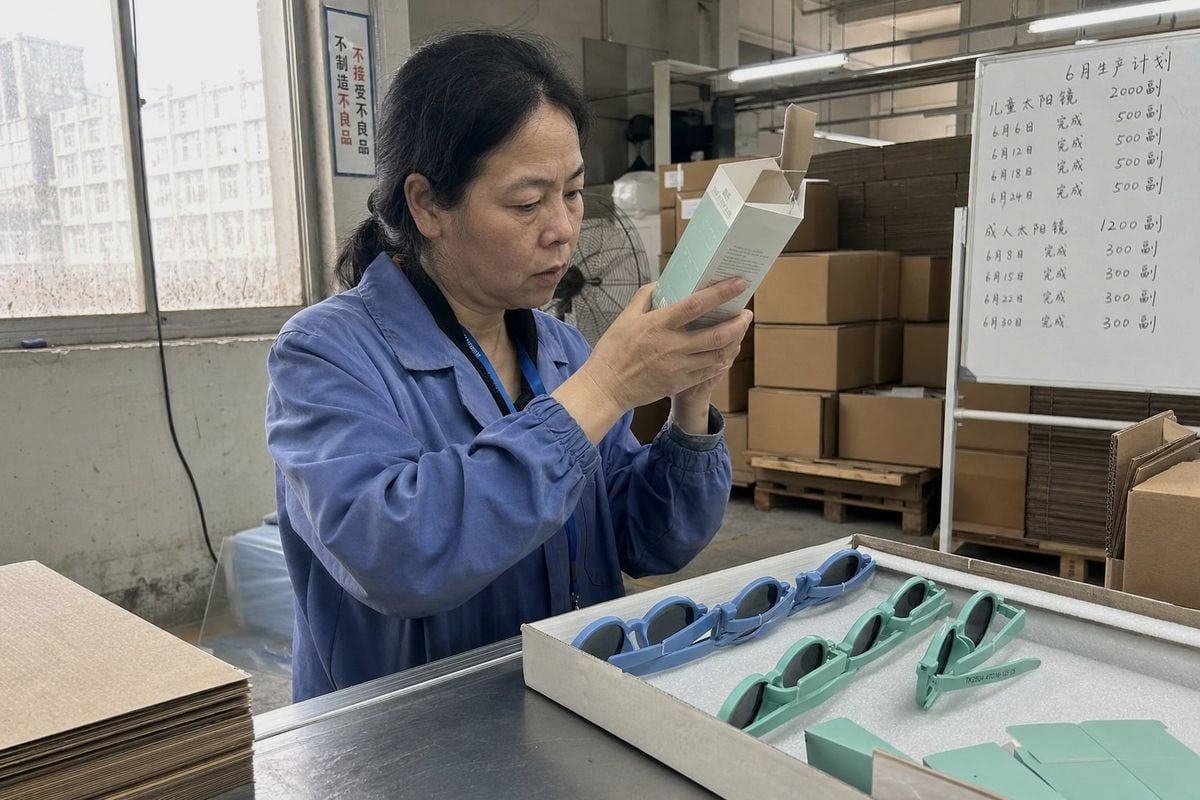
Listing manufacturer and distributor info on private label kids sunglasses trips up many new brands. On our production line 1 in Taizhou, I have seen artwork rejected at customs, listings suspended, and retail orders delayed — all because a label named the wrong company or hid the real relationship. One mislabeled shipment can cost a young brand months of momentum and buyer trust.
To list manufacturer and distributor info on private label kids sunglasses, print your brand’s legal name and full business address on the packaging, prefixed by “Manufactured for” or “Distributed by,” add country of origin marking, a CPSIA tracking label with batch number, and keep every detail matching your Children’s Product Certificate.
That is the short answer. Now let me walk you through each requirement, how to coordinate with your factory, and how the rules shift by country.
What Information Do I Need to Include on My Private Label Kids Sunglasses for Legal Compliance?
Last spring, a buyer from Australia sent us artwork with only a logo and a website. We had to send it back, because kids' eyewear needs far more than branding to clear compliance.
For legal compliance, private label kids sunglasses need the responsible company's name and full address, a relationship phrase like "Manufactured for [Brand]," country of origin marking, a CPSIA tracking label with production date and batch identification numbers, and UV protection claims that match verified test results.
The biggest confusion I see is between the brand owner and the manufacturer. They are not the same thing, and the label must tell the truth about who did what. Your brand can absolutely appear as the named company. But if your company did not make the sunglasses, the wording must reveal the connection.
The Core Elements Checklist
Here is what we ask every private label client to confirm before we approve Verpackungsdesign:
| Element | What It Must Show | Where It Goes |
|---|---|---|
| Verantwortliche Partei | Legal company name + street, city, state, ZIP | Retail packaging panel |
| Relationship phrase | "Manufactured for" or "Distributed by" | Directly before the company name |
| Country of origin | "Made in China" or equivalent | Product and packaging |
| CPSIA tracking label | Private labeler name, production date, city/country of manufacture, batch number | Product and packaging (dual labeling) |
| UV-Angabe | UV400 protection standards backed by lens test data | Packaging or hang tag |
Why Dual Labeling Matters for Kids' Products
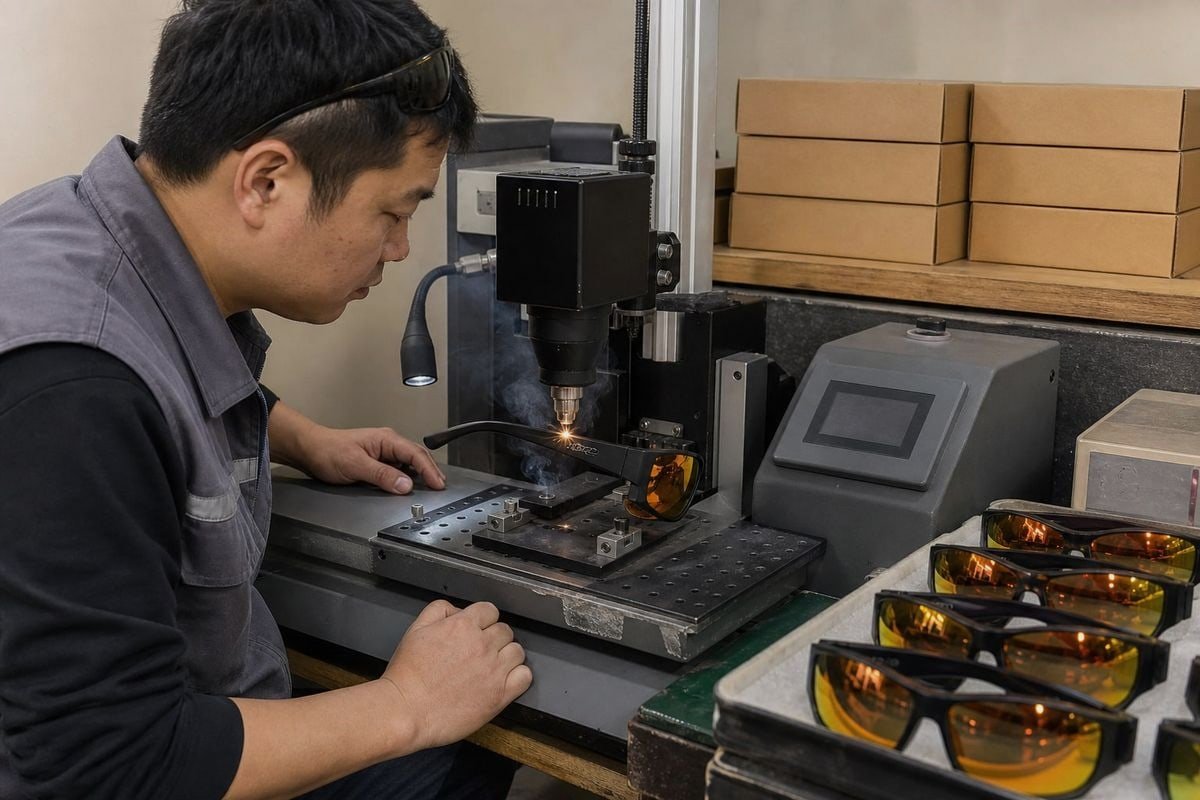
CPSC safety regulations expect tracking information 2 on both the product itself and the primary retail packaging. Packaging gets thrown away. The sunglasses stay in a child's hands for years. That is why we pad-print or laser-engrave tracking data on the inner temple, so it lasts the useful life of the product — a sticker does not count as permanent.
One more point on the address. The street address can sometimes be omitted if it appears in a widely available public directory. But my honest advice, after fifteen years shipping children's eyewear to twenty-plus countries: print the full address. It removes all doubt at inspection.
How Do I Work with My Manufacturer to Print Accurate Distributor Details on the Packaging?
A procurement manager from Japan once emailed me three different versions of her company address across artwork, invoice, and Amazon listing. Catching that early saved her a customs headache.
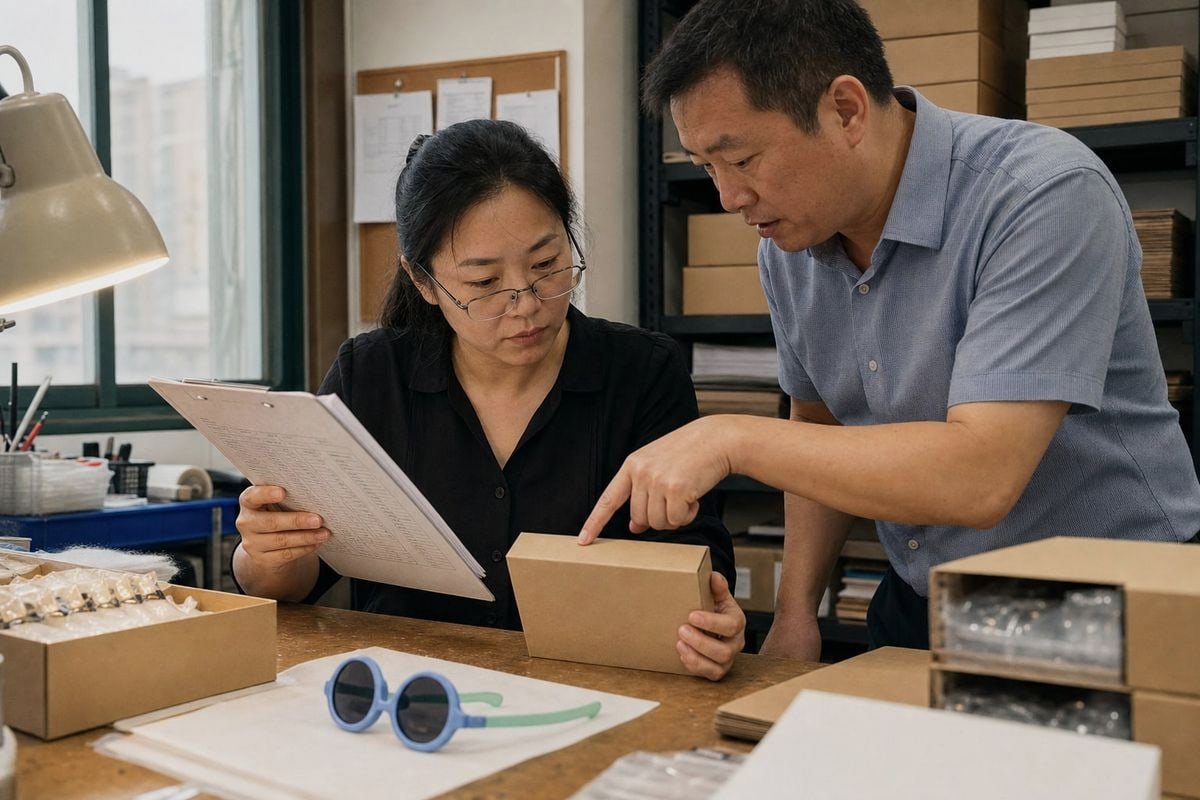
Send your factory a single approved "label data sheet" with your exact legal name, full address, relationship phrase, and batch format. Review a digital proof, then a physical pre-production sample, and confirm every detail matches your Children's Product Certificate before mass printing begins.
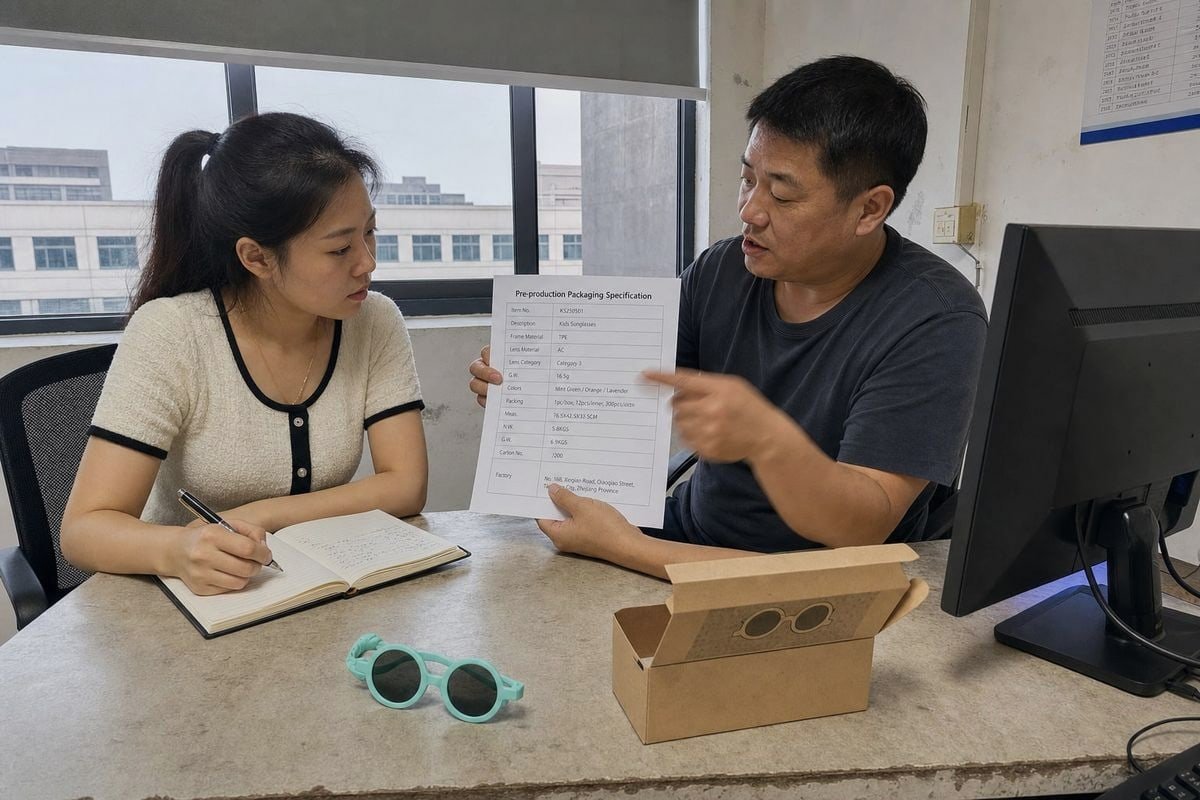
Accuracy here is a workflow problem, not a legal mystery. Mistakes happen when information passes through too many hands with no single source of truth. So we built a simple process with our OEM/ODM clients, and I recommend every brand adopt something like it.
A Five-Step Artwork Approval Workflow
- Create one master data sheet. It lists your legal entity name, full address, relationship phrase, country of origin, and batch number format. Everything else references this sheet.
- Send it with your artwork brief. We drop the data into packaging dies, hang tags, inserts, and temple printing specifications at the same time, so nothing drifts apart.
- Review the digital proof. Check spelling, ZIP code, and the relationship phrase character by character. This is where most errors hide.
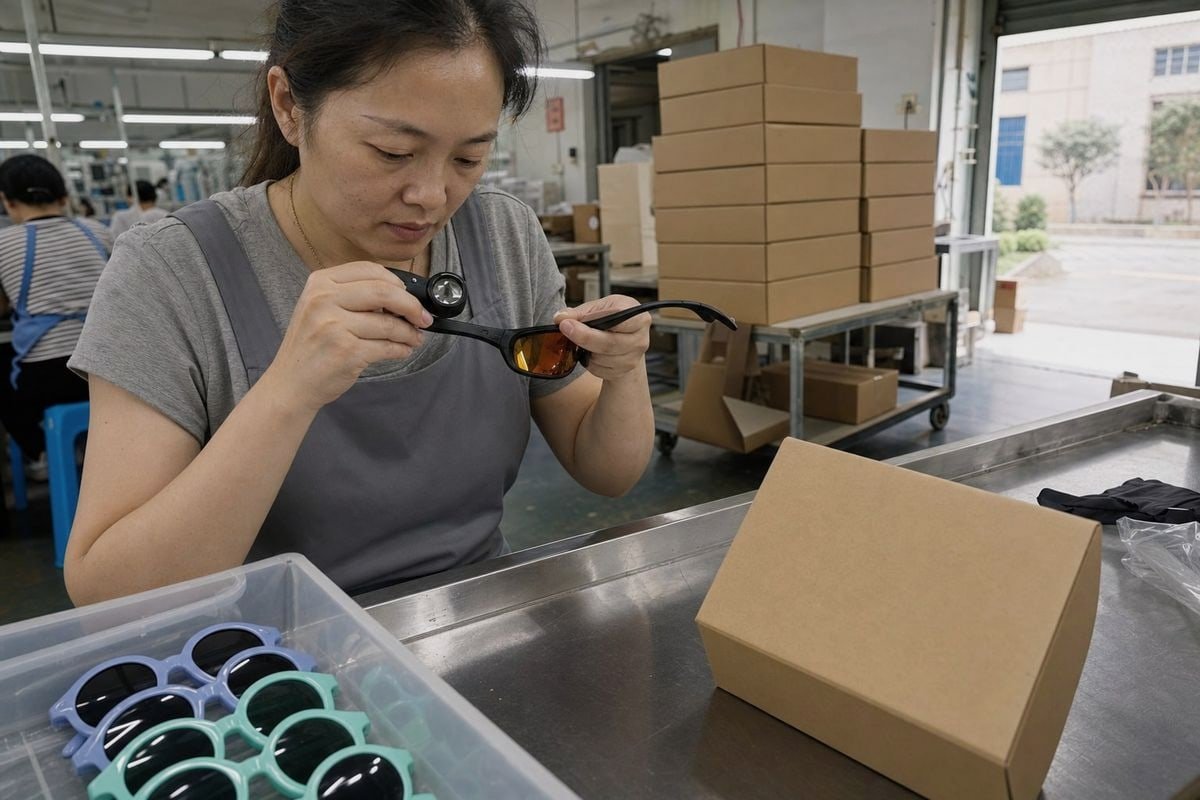
- Approve a physical pre-production sample. Print rubs, ink adhesion, and legibility at small font sizes only show up on a real sample. Our QC team checks pad-print durability with tape and rub tests before we release production.
- Lock the files. Any change after this point requires a new written approval. No verbal edits.
Printing Methods We Recommend for Kids' Frames
For temple marking on flexible TPEE 3 and TR90 frames, we usually suggest laser engraving. It is inkless, so there is no worry about lead-based or phthalate-heavy inks 4 on a frame a toddler might chew. Pad printing works too, but the ink must pass the same chemical testing 5 as the frame material. Some of our clients also add a QR code on packaging linking to batch-specific test reports and lens transmittance data — a smart move for building parent trust.
Can I Use My Own Brand Name While Still Listing the Factory as Manufacturer of Record?
This is the question I answer most often on sales calls. New private label brands worry that using their own name somehow misrepresents who made the product. It does not — if you phrase it correctly.
Yes. Your brand name can appear as the named responsible company on private label kids sunglasses, as long as a qualifying phrase such as "Manufactured for [Your Brand]" or "Distributed by [Your Brand]" honestly discloses that your company is not the actual factory.
The label does not have to broadcast the factory's name to consumers in most cases. What it must do is avoid pretending your company physically made the product when it did not. The qualifying phrase does that work. Meanwhile, the factory's identity still lives in your supply chain records — your invoices, your Children's Product Certificate, and your import documents.
Choosing the Right Phrase for Your Business Setup
| Your Role | Correct Phrasing | . Beispiel |
|---|---|---|
| Brand owner only, factory makes everything | "Manufactured for [Brand]" | Manufactured for Bright Kids Eyewear, New York, NY 10001 |
| Brand owner who also imports and distributes | "Distributed by [Brand]" | Distributed by Bright Kids Eyewear, 123 Main St, Austin, TX 78701 |
| Company that actually manufactures | Corporate name + address, no qualifier | [Actual corporate name], [principal business address] |
The Marketplace Gray Area
Here is an objection I hear often: "Amazon let me enter my brand as the manufacturer, so the label can say the same." I understand the logic, but I push back on it. Platform data fields and regulatory label text are related, not identical. A marketplace may accept the brand owner in its manufacturer field. That convention does not rewrite labeling law. The defensible approach is to make your listing, your invoices, and your physical label tell one consistent, truthful story. When those three sources conflict, that is when platforms freeze listings and customs officers ask hard questions.
One practical note for U.S. sellers: because sunglasses fall under FDA oversight as Class I devices 6, the actual factory typically handles FDA medical device registration and impact-resistance records, while your brand handles the consumer-facing responsible-party text. Ask your supplier to confirm this early — we handle these conversations weekly with clients launching in the American market.
Do Labeling Requirements Differ by Country When I Import Private Label Kids Sunglasses?
Shipping to twenty-plus countries has taught our export team one lesson the hard way: a label that clears U.S. customs perfectly can still be rejected in the EU, and vice versa.
Yes, requirements differ significantly. The U.S. demands CPSIA tracking labels and responsible-party addresses; the EU's GPSR requires the manufacturer's name, postal and electronic address, plus an EU responsible person; and countries like Australia and Japan apply their own sunglass lens category and origin marking rules.
You cannot design one label and assume it works everywhere. But you can design a master label system with regional variations. That is what our experienced multi-market clients do, and it keeps their artwork library manageable.
Key Differences at a Glance
| Region | Named Party | Distinctive Requirements |
|---|---|---|
| Vereinigte Staaten | Manufacturer, packer, or distributor + full address | CPSIA compliance requirements, tracking label, Children's Product Certificate, FDA device rules for sunglasses |
| Europäische Union | Manufacturer name, postal address, electronic address 7 | EU responsible person contact details, product identifier, GPSR traceability |
| Australia | Supplier identification | Mandatory sunglass lens categories under the national standard |
| Japan | Importer of record details | Origin marking and importer traceability on documentation |
The EU Placement Hierarchy
The EU approach deserves special attention because it emphasizes contactability, not just identity. Under GPSR-style rules, information should appear on the product first, then the packaging, then accompanying documents — in that order of preference. The EU also wants an electronic address, which U.S. rules do not demand. If you sell into Europe without an EU establishment, you need a responsible person there, and their contact details join the label.
One Source of Truth Across Markets
Whatever markets you serve, standardize one master record for your name, address, and role. Then apply it consistently across label artwork, cartons, inserts, online listings, and your Children's Product Certificate. When we onboard a new brand at our workshop, this master record is the first document we request — before colors, before logos, before lens options. It prevents the mismatches that cause the vast majority of import delays we have witnessed over fifteen years.
Weitere Artikel, die Ihnen gefallen könnten
August 2026
Sollte die Fabrik die Verpackung und Kennzeichnung von Kinder-Sonnenbrillen übernehmen oder einen bestimmten Lieferanten nutzen?
August 2026
Eigenes Lager vs. Direktlieferung durch den Lieferanten: Was senkt die Retourenkosten für Marken von Kinder-Sonnenbrillen?
August 2026
Direkt zum Lagerhafen oder Lagerung in Übersee: Was spart mehr bei den Versandkosten für Kinder-Sonnenbrillen?
Auf der Suche nach einem zuverlässigen Partner für Kinderbrillen?
Entdecken Sie über 800 sofort verfügbare Modelle und umfassenden OEM/ODM-Support, der auf Ihre Marke zugeschnitten ist.
Kontakt aufnehmen English
  Español de México
  Deutsch
  Français
  日本語
日本語  العربية
  Português do Brasil