Why Do Kids’ Eyewear Frames Deform Easily, and Which Designs Last Longer?
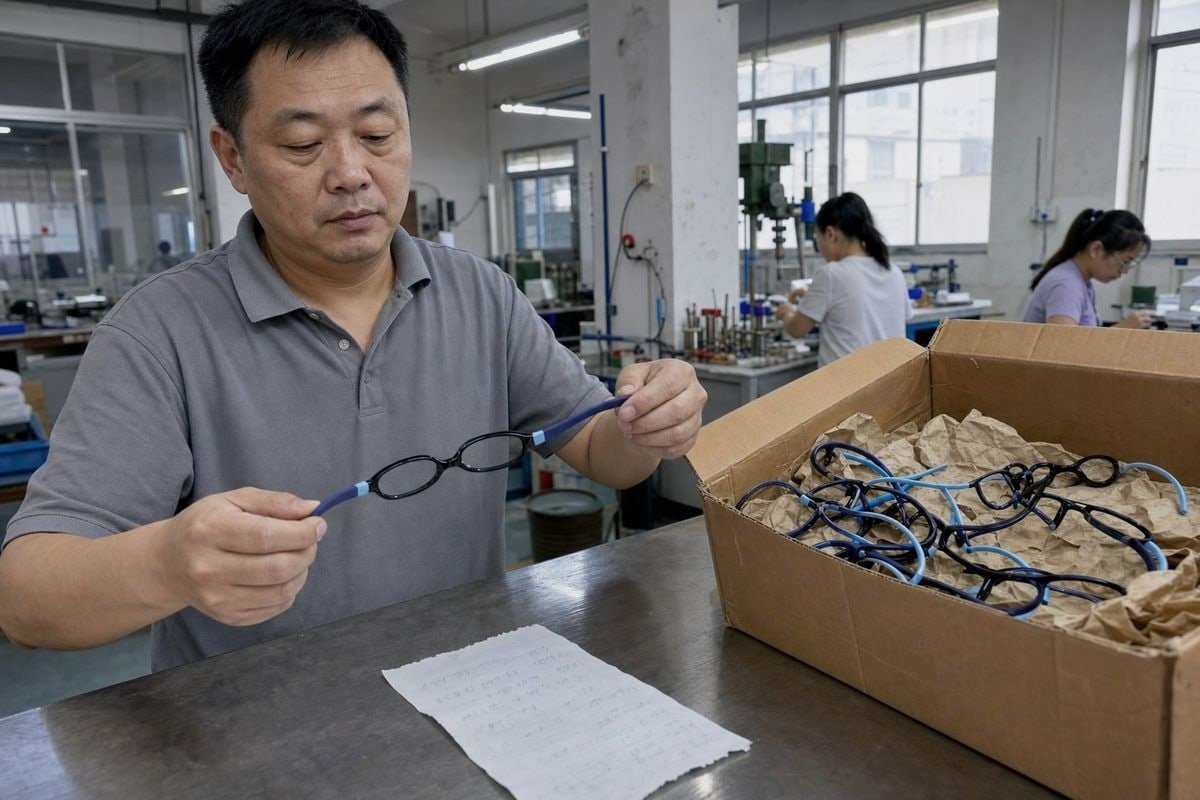
Kids’ eyewear frames come back bent, twisted, or crooked far too often. On our production line in Taizhou, we hear this complaint from buyers in over 20 countries.
Kids’ eyewear frames deform easily because children combine rough handling, one-handed removal, and high-impact play with facial proportions that adult-style frames do not fit. The longest-lasting designs pair proper pediatric sizing with controlled-flex materials like TR90 and TPEE, plus reinforced hinges and bridges.
That answer covers the basics. But the details matter if you are sourcing frames for a brand. Let me walk you through the causes, the materials, and the design features that actually work.
What Causes My Kids' Eyewear Frames to Bend or Lose Shape So Quickly?
A procurement manager from Australia once sent us a box of failed frames from her previous supplier. Every single one had bowed temples. The pattern told us everything.
Kids' frames bend quickly because children pull glasses off with one hand, sit on them, drop them during play, and store them loose in backpacks. Poor bridge fit makes it worse, forcing constant adjustments that fatigue the material at the hinges and bridge.
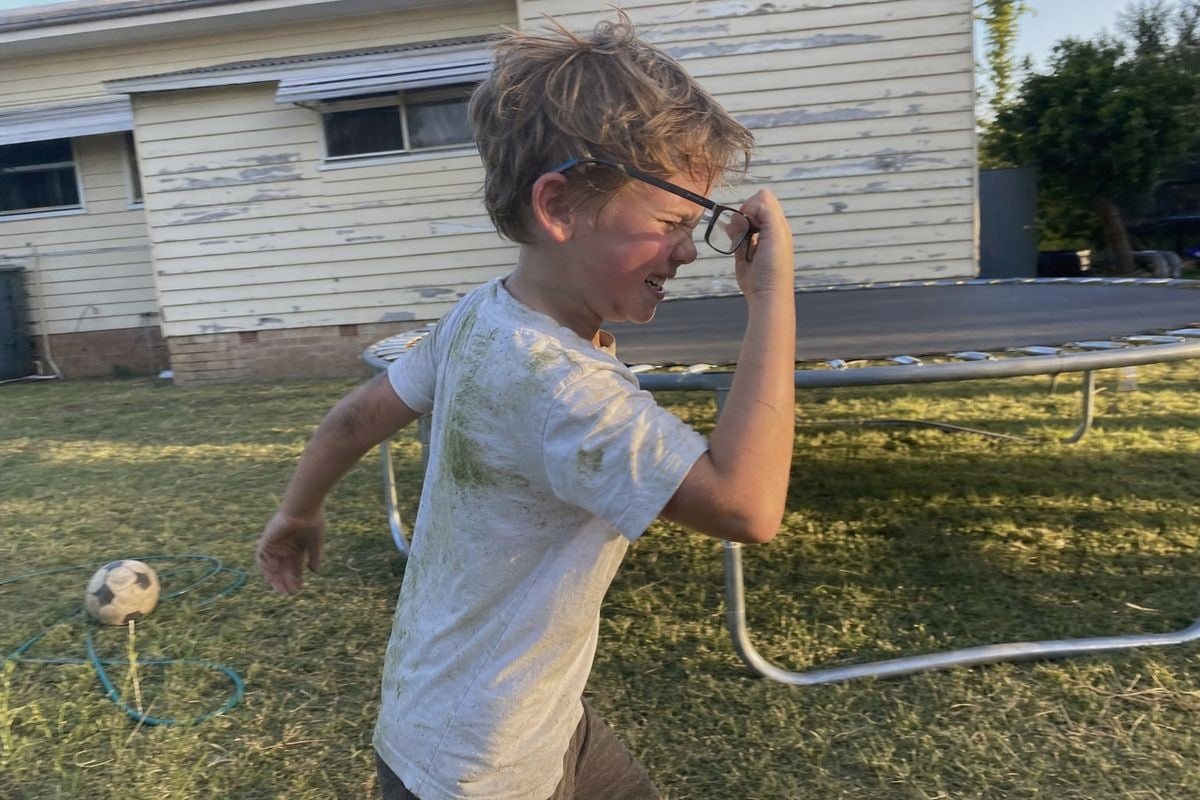
When we examined those returned frames, we found that almost none had failed from a manufacturing defect. They had failed from predictable, repeated stress. Understanding those stress patterns is the first step to buying frames that survive them.
The Big Four Stress Sources
In our experience testing frames for export, four forces do most of the damage:
| Stress Source | What Happens | Where It Fails |
|---|---|---|
| One-handed removal | Asymmetrical leverage bows one temple outward | Temple arms and hinge |
| Sitting or stepping on frames | Crushing load flattens the frame front | Bridge and lens rims |
| Drops during sports and play | Sharp impact shocks rigid joints | Hinges and bridge |
| Backpack and pocket storage | Slow, constant pressure warps the shape | Whole frame alignment |
One-handed removal deserves special attention. Adults do it too, but children do it dozens of times a day. Each pull twists the frame slightly. Over weeks, that twist becomes a permanent bow. The temples splay outward, the frame slides down, and the child pushes it back up. That pushing adds even more stress at the bridge.
Fit Failures Become Structural Failures
Here is the point many buyers miss. A large share of "broken" kids' glasses are really fit failures first. Children have lower nose bridges and smaller, still-developing facial structures. A frame simply scaled down from an adult design sits crooked or slides constantly. The child then adjusts it, removes it, and fiddles with it far more often. Every extra touch is an extra stress cycle. Heat makes things worse. A frame left on a car dashboard in summer can warp in minutes, especially cheap injection-molded plastic with low heat resistance.
Why Do TR90 and TPEE Materials Resist Deformation Better Than Standard Plastic?
Fifteen years ago, our factory ran mostly standard acetate and injection-molded plastic. Switching our children's lines to TR90 and TPEE changed our return rates more than any other single decision.
TR90 and TPEE resist deformation because they have elastic memory. When bent or twisted, their polymer structure stores the energy and springs back to the original shape instead of taking a permanent set or snapping. Standard rigid plastic deforms permanently or cracks under the same load.
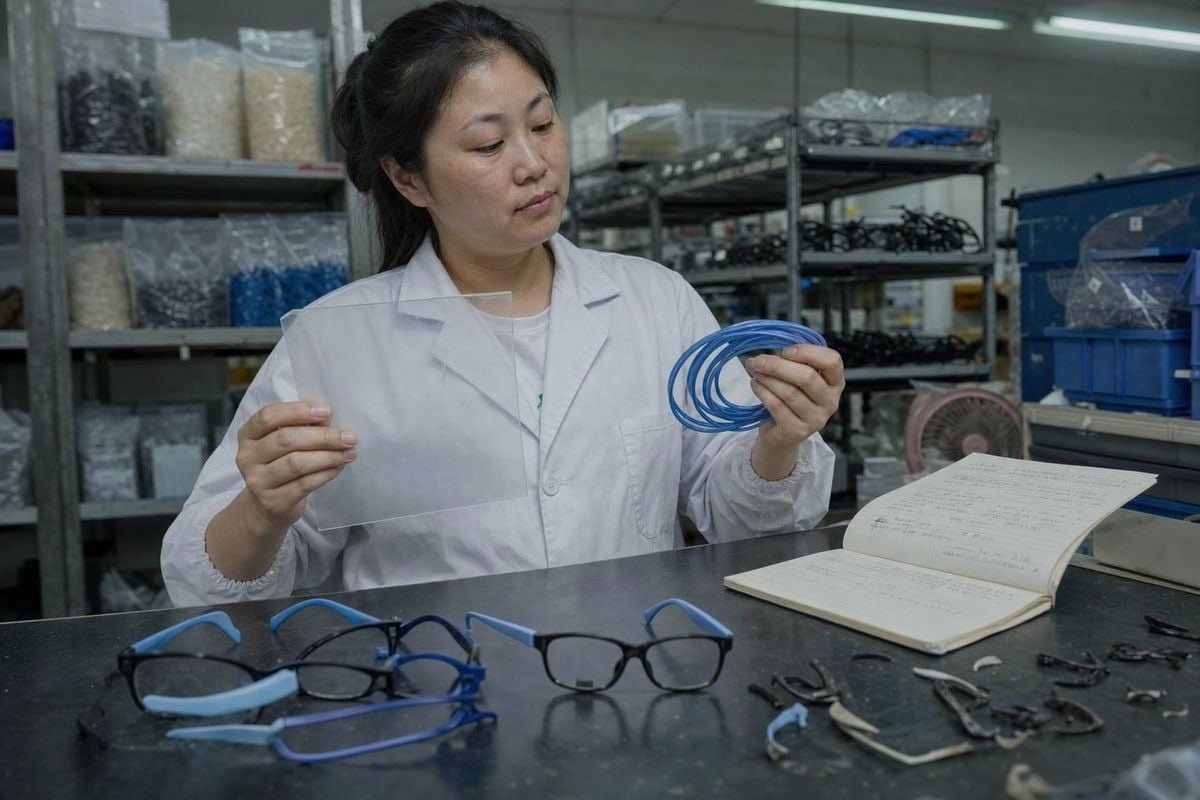
The science here is simple, and it explains why we build almost all of our roughly 800 kids' styles around these two polymers. TR90 memory plastic is a thermoplastic material with a long, flexible molecular chain. Bend it, and it bends. Release it, and it returns. TPEE goes even further on the flexibility scale, which is why we often pair a TR90 front with TPEE temples. The front stays dimensionally stable so the lenses hold their optical position. The temples absorb the twisting and pulling.
Material Comparison by Failure Mode
The smartest way to compare materials is not by label, but by how they fail:
| Material | Failure Mode | Impact Resistance | Weight | Best Use for Kids |
|---|---|---|---|---|
| Standard injection plastic | Snaps or takes permanent bends | Low | Medium | Not recommended |
| Acetate | Cracks at hinges, warps in heat | Medium | Heavy | Fashion-focused older kids |
| Ordinary metal | Bends permanently, screws loosen | Medium | Light | Limited pediatric use |
| Flexible titanium frames 1 / memory metal | Springs back, rarely fails | High | Very light | Premium optical lines |
| TR90 memory plastic | Flexes and recovers, very hard to snap | High | Very light | Everyday optical frames |
| TPEE | Extreme flex and recovery | Very high | Very light | Toddlers, temples, sports styles |
The Objection: Is Flexible Always Better?
Some buyers push back here, and they are right to. Flexible does not automatically mean durable. Uncontrolled flexibility lets the frame warp, lets lenses drift out of alignment, and makes glasses feel unstable on the face. That is why we say the goal is controlled flex, not maximum bendability. A good pediatric frame flexes at the temples while the front stays rigid enough to hold polycarbonate lenses 2 in their correct optical position. Emerging bio-based polymers 3 derived from castor oil push this further, offering strong creep resistance so the frame holds its shape year after year. TR90 itself has bio-based variants, which fits our commitment to environmentally friendly materials.
Which Frame Design Features Should I Look for to Ensure Long-Lasting Durability?
There is a trade-off we weigh on every new style we develop: every added flex feature costs a little stability, and every added rigidity feature costs a little safety. The best designs balance both.
Look for spring hinges or 180-degree hinges, a reinforced or one-piece bridge, controlled-flex temples, a low pediatric bridge fit, and lightweight construction under 20 grams. These features spread stress across the frame instead of concentrating it at weak points.
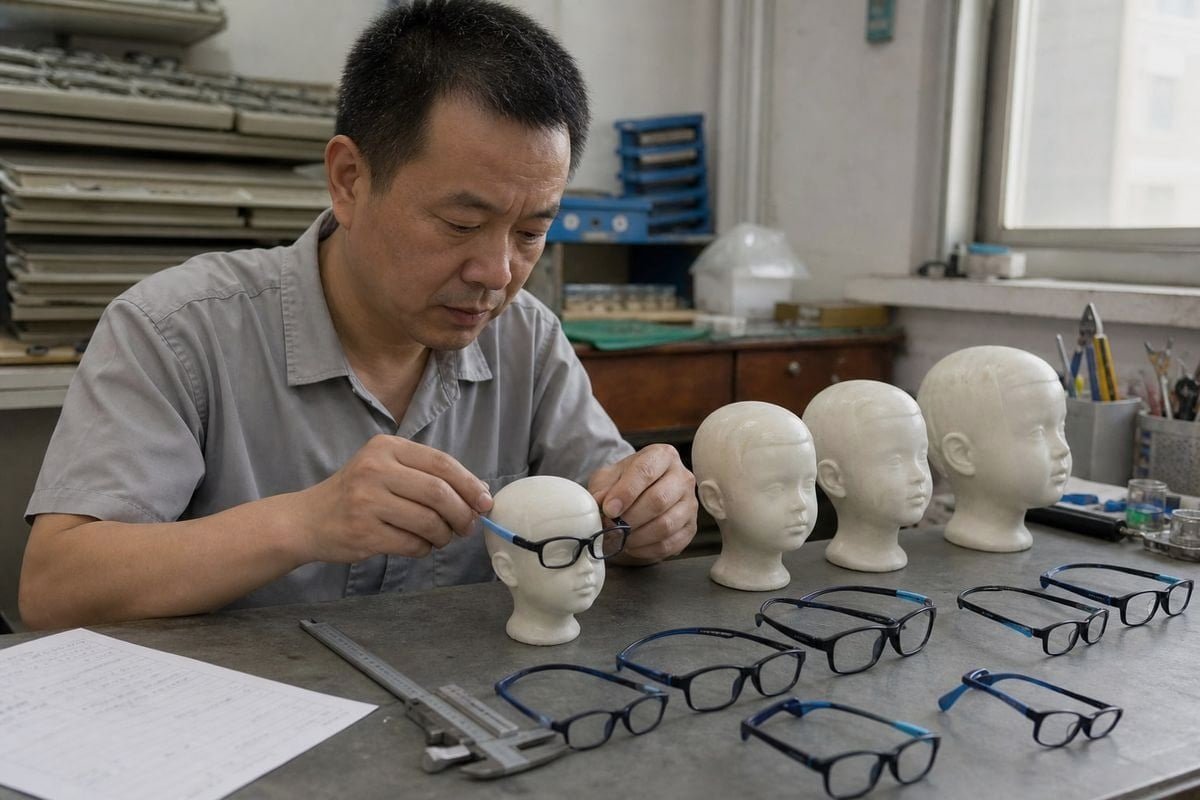
Design matters as much as material. Two frames made from identical TR90 can have very different lifespans depending on how the hinges, bridge, and temples are engineered. When our team reviews a new mold, we check each of these features against a simple question: where will the stress go when a child mishandles this frame?
The Durability Checklist
- Spring hinges. These provide a buffer zone that absorbs the shock when temples are stretched beyond their normal range. When a child yanks the glasses off one-handed, the spring gives instead of the frame.
- 180-degree hinges. These let the temples fold flat outward without damage. They are our first choice for toddler styles because they survive the "pull it apart" phase.
- Screwless frame design. Traditional screw-based hinges act as rigid stress concentrators, and tiny screws loosen and fall out. Integrated screwless joints remove that failure point entirely, which is why many of our baby styles use them.
- Reinforced or one-piece bridge. Rigid frames most often snap at the bridge. A thicker, molded one-piece bridge distributes crushing loads.
- Proper pediatric bridge fit. A bridge shaped for a child's lower nose, sometimes with hypoallergenic silicone pads, stops sliding at the source and cuts the number of daily stress cycles.
- Cable temples or grippy temple tips. For toddlers and sports use, cable temples wrap behind the ear and hold the frame steady, so the child adjusts it less.
- Polycarbonate lenses. Lighter lenses reduce the downward pull that gradually spreads temples and slides frames down the nose. Polycarbonate also adds impact resistance for active play.
Match the Design to the Child
| Age / Lifestyle | Priority Features | Why |
|---|---|---|
| Toddlers (1–4) | TPEE full-flex frame, screwless design, cable temples or strap | Survives pulling, chewing, and sleeping in glasses |
| School-age (5–10) | TR90 front with TPEE temples, spring hinges, silicone nose pads | Balances daily durability with proper optical stability |
| Sports-heavy kids | Wraparound shield styles, polycarbonate lenses, rubberized temple grip | Absorbs impacts and stays put during fast movement |
Advanced concepts are emerging too. Internal lattice-core temple engineering, borrowed from aerospace design 4, keeps torsional rigidity high while allowing safe flex. Modular snap-on components let a parent replace just a deformed temple instead of discarding the whole frame. And 3D-printed frames matched to a facial scan 5 eliminate leverage stress entirely, though at a cost most kids' brands cannot yet retail profitably.
How Can I Choose a Manufacturer That Guarantees Consistent Frame Quality Over Time?
A lesson we learned early in our 15 years: a beautiful sample means nothing if the ten-thousandth piece off the line does not match it. Consistency is a system, not a promise.
Choose a factory, not a trader, with documented QC processes, material traceability for TR90 and TPEE, an organized workshop system like 5S, real flex and hinge testing, and a track record with international kids' brands. Verify with factory audits, batch samples, and clear communication.
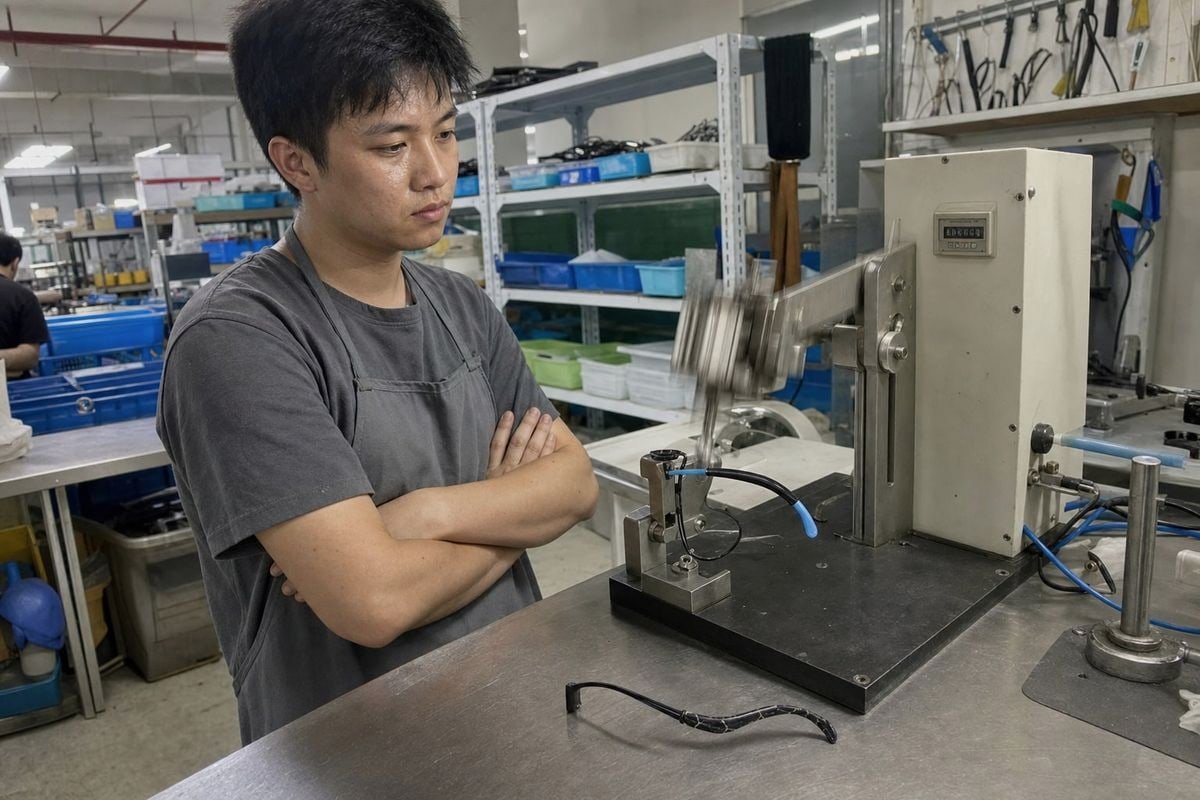
For B2B buyers, frame durability is ultimately a supplier question. The same design can be molded well or molded badly. Cheap TR90 blends exist, and they do not have the same elastic memory 6 as the genuine material. Here is how I would evaluate a supplier if I were sitting in your chair.
Six Things to Verify Before You Order
- Factory or trader? A trader cannot control resin quality or molding parameters. Our workshop runs about 120 workers under 5S management 7, and buyers are welcome to audit it. Ask any supplier for the same access.
- Material honesty. Ask for material certificates on the TR90 memory plastic and TPEE used in your order. Genuine flexible polymers cost more than blended substitutes, and the price difference shows up in returns a year later.
- Real durability testing. Ask how they test. Hinges should survive thousands of open-close cycles. Temples should twist and recover. Frames should pass drop and flex checks, not just look good in photos.
- Existing style depth. A supplier with a deep catalog, like our roughly 800 existing styles, lets you launch without heavy mold investment and test your market at lower risk. That depth also signals years of accumulated pediatric fit data.
- OEM/ODM capability. Custom colors, logos, lens options like UV400 and polarized UV400 rating 8, and retail-ready packaging should be standard offerings, with consistent color matching batch after batch.
- Communication and delivery record. Consistent quality over time requires a partner who answers questions clearly, flags issues early, and ships on schedule. Ask for references from brands in your region.
The buyers we keep for years, in Australia, Japan, and across Europe, all did some version of this checklist before their first order. The ones who bought on price alone usually came to us after their first wave of warranty returns.
Conclusion
Kids' eyewear frames deform when rough use meets poor fit and rigid materials. Choose controlled-flex TR90 and TPEE designs, reinforced hinges, pediatric sizing, and a factory partner who proves consistency.
More Articles You Might Like
Looking for a Reliable Kids Eyewear Partner?
Explore 800+ ready styles and full OEM/ODM support tailored to your brand.
Get in Touch English
  Español de México
  Deutsch
  Français
  日本語
日本語  العربية
  Português do Brasil