How to Store Kids’ Eyewear and Choose the Right Glasses Case?
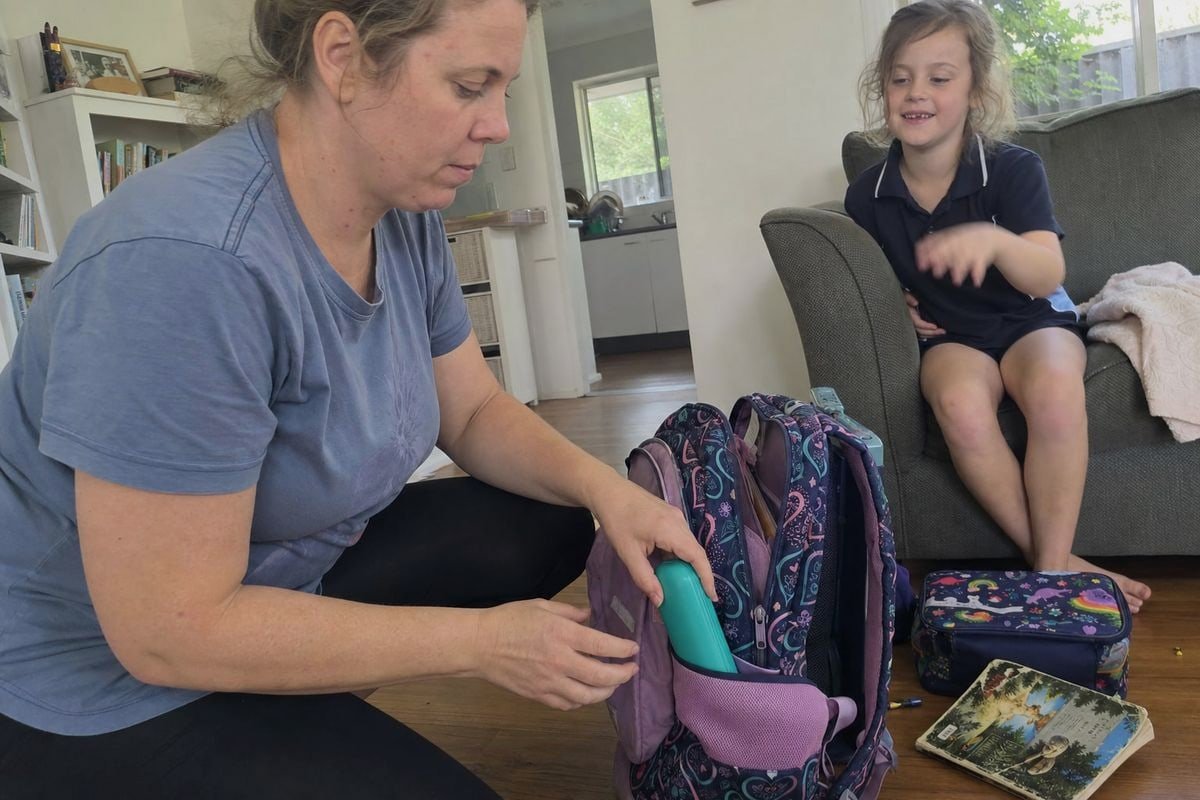
Kids’ eyewear storage is where most brands lose money quietly OEM/ODM programs 1. On our production line in Taizhou, we build flexible TR90 frames tough enough for children — yet returns still happen. Why? Broken glasses rarely break on a child’s face; they break in backpacks, on couches, and under shoes. The fix is not a stronger frame alone. It is smarter storage and the right glasses case.
Store kids’ eyewear in a hard-shell case whenever it is not being worn, keep the case in one fixed location, place lenses facing upward, and avoid heat. Choose a lightweight, easy-open, brightly colored case sized to fit the frame without pressure.
That is the short answer. Below, I will break down each part — case types, storage habits, retail presentation, and what to ask your eyewear manufacturer for. Let’s start with protection.
What Type of Glasses Case Best Protects My Kids' Eyewear Collection?
A buyer from Australia once asked me why her kids' sunglasses line had a higher return rate than her adult line. The frames were identical quality. The difference was the flimsy pouch she shipped them in.
A hard-shell clamshell case with a soft inner lining protects kids' eyewear best. It resists crushing inside school backpacks, survives drops, and prevents lens scratches. Soft pouches only stop dust and light scuffs, so treat them as a backup option, never the primary storage.
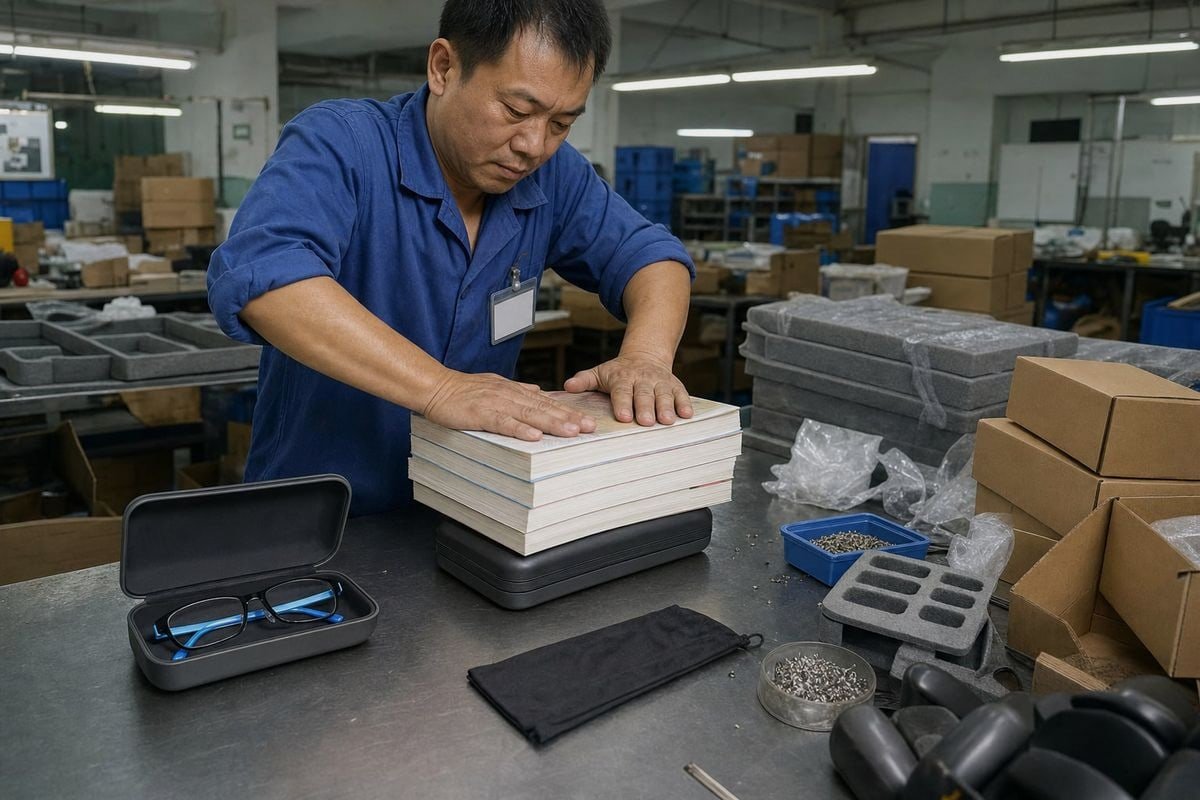
Children treat their belongings differently than adults do. A backpack gets thrown on the floor. A pencil case, a water bottle, and three textbooks land on top of the glasses. So hard shell protection is not a luxury for kids' eyewear — it is the baseline. In our 15 years of making children's frames, we have seen that even the most impact-resistant materials, like TR90 and TPEE 2, cannot survive being crushed flat under a full school bag if they are stored loose or in a thin fabric sleeve.
Comparing the Main Case Options
Here is how the common options stack up for children:
| Option | Best For | Main Tradeoff |
|---|---|---|
| Hard-shell clamshell case | School bags, travel, younger kids, sports bags | Bulkier and heavier |
| Soft portable travel pouch | Backup storage, low-risk settings, sunglasses at home | Weak crush protection |
| Eyeglass neck strap or lanyard | Very active kids who remove glasses often | Not storage; a complement only |
| Bedside holder or tray | Nighttime home routine | Useless outside the home |
A soft pouch still has a role. It works as a secondary layer inside the hard case, and it doubles as a microfiber cleaning cloth 3 in many designs. But some buyers ask me whether a pouch alone is enough to cut packaging costs. My honest answer: it is a fallback, not a solution. The pouch protects against dust and light scratching. It does nothing when a child sits on the bag. For a children's product, the crush scenario is the one that matters most.
What the Inside of the Case Should Look Like
The interior matters as much as the shell. Look for a soft inner lining that cradles the frame, enough depth so the lenses never press against the shell, and a shape that lets lenses face upward. A case that forces the frame closed under tension will slowly bend the temples — the opposite of protection.
How Should I Store Kids' Sunglasses and Optical Frames to Prevent Damage?
The lesson that shaped our QC process came from heat, not impact. Years ago, a distributor left sample sunglasses on a car dashboard during a trade trip. The frames arrived at his meeting visibly warped.
Store kids' glasses in their case with lenses facing up, in one consistent spot at home and school. Keep them away from heat sources like cars, direct sun, and vents. Never place them face-down, loose in bags, on floors, or on beds.
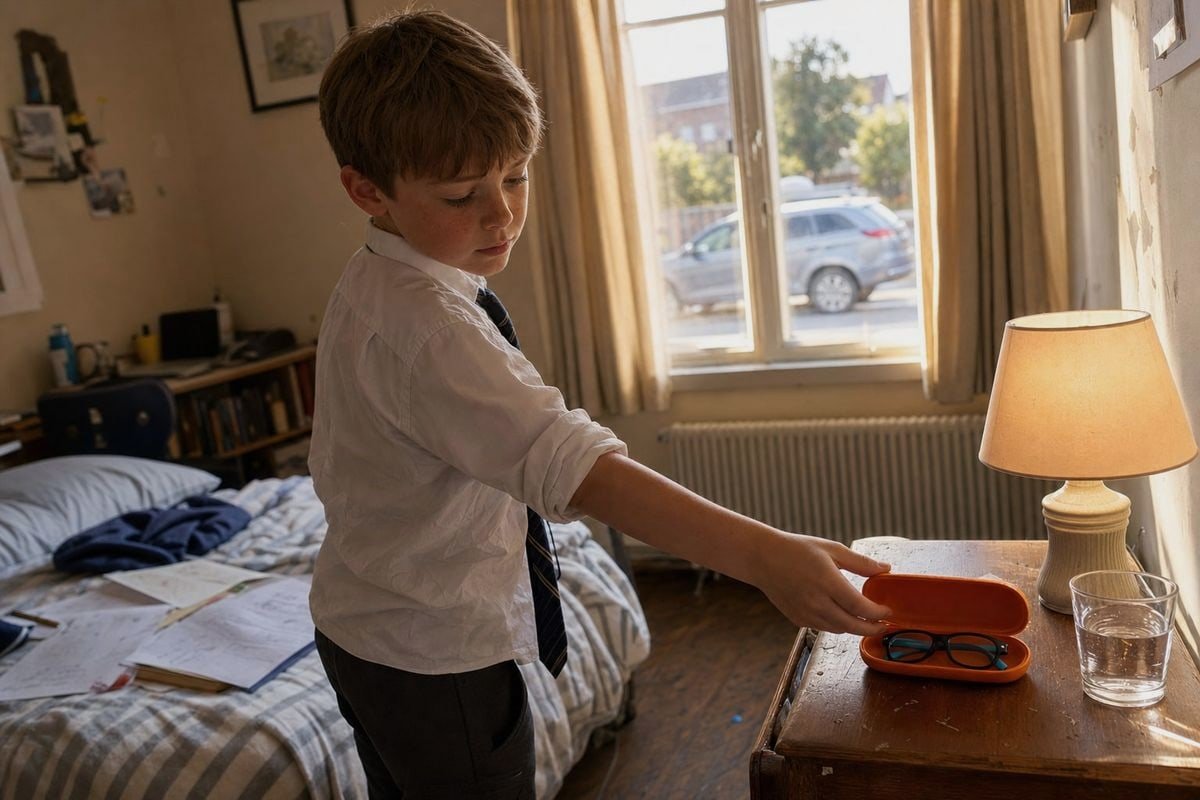
Good storage is really behavior design. The rule we suggest brands print inside their packaging is simple: if it's not on your face, it's in the case. Children do not remember instructions; they remember routines. So the storage location must never change. One backpack pocket. One bedside spot. One drawer at grandma's house. When the location is fixed, returning the glasses becomes automatic instead of a decision.
The Habits That Actually Prevent Damage
Scratch prevention tips only work if they become habits. These are the ones that matter most:
- Lenses up, always. Face-down placement grinds coatings against the surface. This applies on desks and inside the case.
- Two-handed removal. Pulling glasses off with one hand twists the frame and stresses the hinges. Spring hinge durability helps here, but technique helps more.
- Clean before storing. A quick wipe with a microfiber cleaning cloth 4 removes grit that would otherwise rub against the lining.
- Nightly routine. Tie storage to bedtime. Glasses go in the case, case goes on the nightstand, every single night.
- Backup locations. Keep a second case at school or a caregiver's home. Avoid the car as a permanent spot because of heat swings.
What Not to Do
The damage patterns we see in warranty claims are remarkably consistent:
| Common Mistake | What It Causes |
|---|---|
| Face-down on desks or counters | Lens scratches, coating wear |
| Loose in a backpack with keys and toys | Scratches, bent temples, cracked lenses |
| Worn on top of the head | Stretched frame, poor fit over time |
| Left in hot cars or near vents | Warped frames, delaminated lens coatings |
| Set on beds, sofas, or floors | Crushed or stepped-on frames |
Pediatric frame maintenance also means checking fit. A frame that slips gets pushed up constantly, which loosens screws and misaligns the temples. Careful storage plus a monthly fit check keeps a child's glasses working the way our engineers intended.
Can the Right Case Design Improve My Brand's Retail Presentation and Perceived Value?
There is a trade-off I discuss with almost every new brand we onboard: spend the packaging budget on a prettier box, or on a better case? My answer surprises many of them — the case wins, because it stays with the customer for years.
Yes. A well-designed case elevates unboxing, justifies a higher retail price, and keeps your logo in the customer's hands daily for years. Bright colors, custom shapes, name labels, and coordinated accessories turn a protective item into a lasting brand touchpoint.
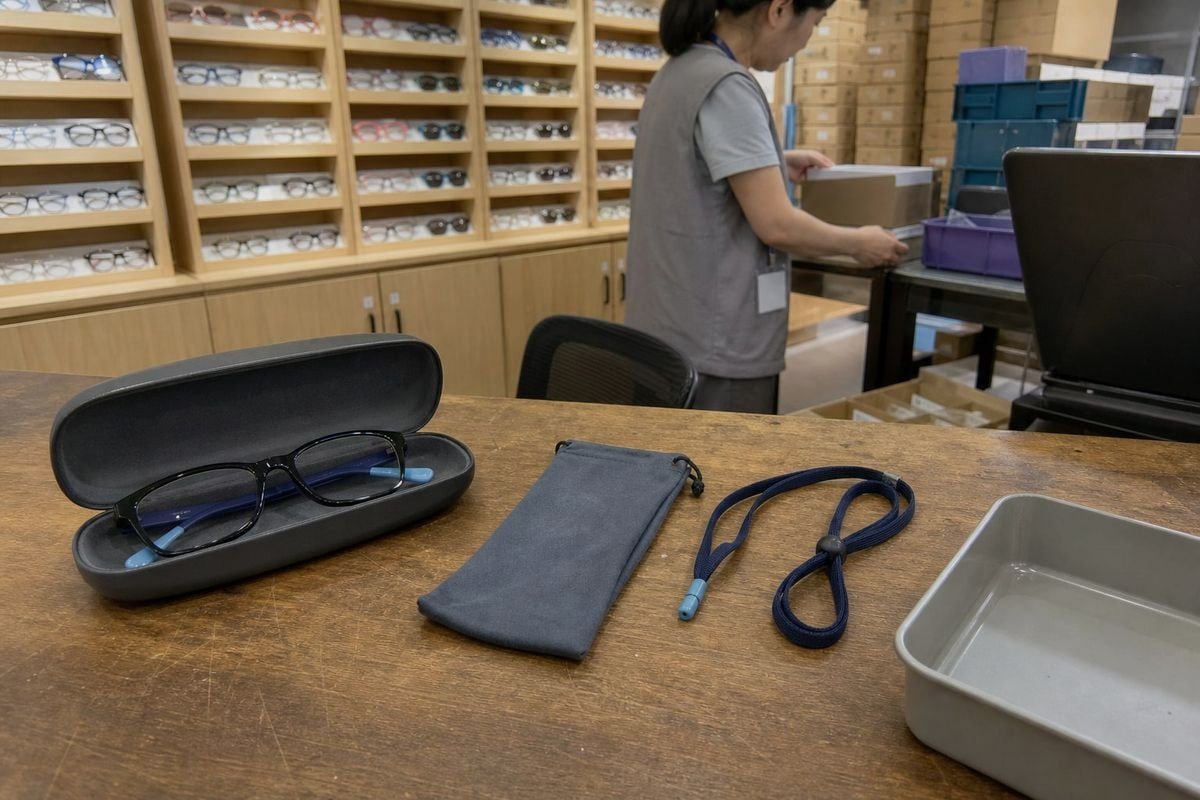
Think about the lifecycle of your packaging. The retail box is discarded within a day. The case is opened and closed thousands of times. When we develop OEM/ODM programs 5 for children's brands in Europe and Japan, we treat the case as the single highest-leverage branding surface in the whole product. A parent who sees your logo every morning during the school routine remembers your brand at reorder time.
Design Elements That Raise Perceived Value
Small design choices compound. A bright color or a fun animal shape makes the case easy for a child to spot — and easy for a parent to photograph and share. A name label area signals that you understand school and daycare life. A silent magnetic closure or soft-touch silicone exterior helps children with sensory sensitivities who dislike loud hinge snaps. A carabiner clip 6 lets the case hang on a backpack instead of sinking to the bottom of it. None of these features costs much at factory level, but together they move a product from generic to considered.
Matching Cases to Product Lines
Different frames in your collection deserve different case logic. A classic black optical frame with playful two-tone temples suits a compact clamshell in a matching accent color. Pastel round sunglasses call for a soft-palette case that keeps the shelf story coherent. A sport wraparound shield with a mirrored gradient lens needs a larger, semi-rigid case sized for the oversized lens — and it signals performance if the case looks technical too. Coordinated optical accessories, like a matching microfiber cloth and pouch, complete the retail-ready feel and support a premium price point without raising the frame cost at all.
What Storage and Packaging Options Should I Request From My Eyewear Manufacturer?
Procurement managers often send us a spec sheet covering the frame in exact detail — then write "standard case" for packaging. In our experience exporting to buyers in more than 20 countries, that single vague line causes more launch delays and quality complaints than any frame issue.
Request a hard-shell case sized to your exact frame, a soft inner lining, custom logo printing, a microfiber cloth, and retail-ready packaging. Confirm case drop-test and crush-test standards, child-safe closures, and coordinated colors before approving pre-production samples.
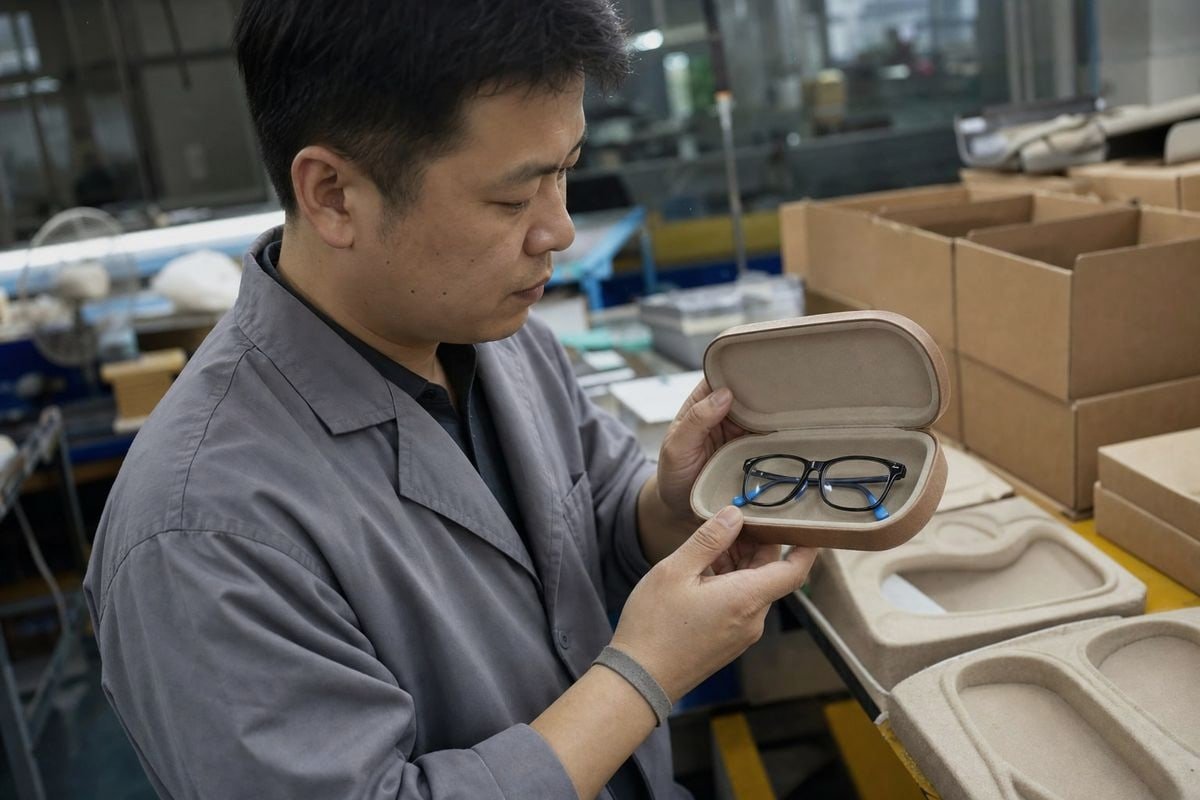
A capable factory should treat the case as part of the product, not an afterthought. At our workshop, packaging development runs in parallel with frame development, because case fit depends on final frame dimensions. A sport shield frame will not close inside a standard optical case. A toddler frame rattles around in an adult-sized one. Both situations cause damage in transit — which becomes your customer's first impression.
A Practical Checklist for Your Next RFQ
Use this table when briefing your supplier:
| What to Request | Why It Matters |
|---|---|
| Case sized to your specific frames | Prevents pressure damage and rattling in transit |
| Hard shell with soft inner lining | Crush protection plus scratch prevention |
| Easy-open closure a child can operate | Kids abandon cases they cannot open |
| Custom logo, color, and finish | Turns the case into a daily brand touchpoint |
| Included microfiber cleaning cloth | Completes the care routine and adds value |
| Optional eyeglass neck strap or clip | Serves active kids and outdoor product lines |
| Retail-ready box and insert design | Cuts your downstream packing costs |
| Sample approval before mass production | Catches fit and print issues early |
Questions Worth Asking Before You Commit
Ask whether the factory offers existing case molds you can customize — this avoids tooling costs, the same way choosing from our roughly 800 existing frame styles 7 lets brands launch without heavy mold investment. Ask how cases are packed for shipping, because a crushed case protects nothing. Ask whether the closure has been tested by actual children, not just adults. And confirm lead times for printed cases separately from frames; printing and drying add days that surprise first-time buyers. A supplier who answers these questions in detail is telling you something about how they will handle everything else.
Conclusion
Kids break glasses off their faces, not on them. Pair durable frames with a hard-shell case, a fixed storage routine, and a manufacturer who treats packaging as product.
Footnotes
1. Defines OEM/ODM manufacturing models referenced when discussing branded eyewear programs. ↩︎
2. Explains thermoplastic properties behind TR90 and TPEE frame materials used in kids’ eyewear. ↩︎
3. Explains the microfiber material used in cleaning cloths that protect eyewear coatings. ↩︎
4. Background on microfiber material explains why it safely cleans lenses without scratching. ↩︎
5. Background on the OEM/ODM manufacturing model referenced for eyewear brand development. ↩︎
6. Background on carabiner clips, the hardware used to attach cases to backpacks. ↩︎
7. Alibaba is a major B2B sourcing platform where buyers select existing eyewear frame styles. ↩︎
More Articles You Might Like

Looking for a Reliable Kids Eyewear Partner?
Explore 800+ ready styles and full OEM/ODM support tailored to your brand.
Get in Touch English
  Español de México
  Deutsch
  Français
  日本語
日本語  العربية
  Português do Brasil