How to Request and Verify a Pre-Shipment Inspection Report for Kids’ Optical Frames?
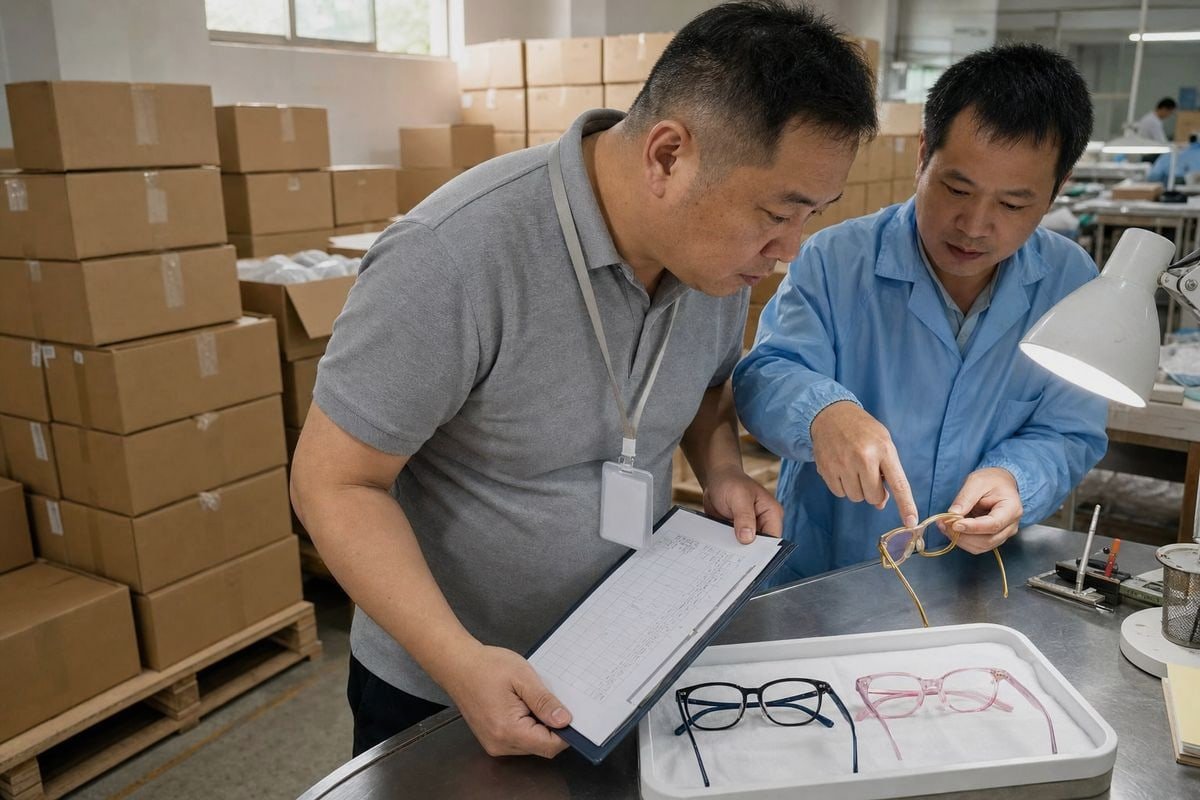
A pre-shipment inspection report for kids’ optical frames can look official yet hide gaps REACH 1. On our production line, I have seen weak reports cost buyers entire seasons. It does not have to be that way.
Request a pre-shipment inspection report by opening an inspection order with a third-party inspection agency after 80% of production is complete, specifying AQL levels and eyewear checks. Verify it by matching the PO number, photos, inspector signature, and unique report ID against your original order.
That is the short answer. Now let me walk you through each step in detail, from the first request to what you should do when a report reveals problems.
What Should I Include When Requesting a Pre-Shipment Inspection for Kids' Optical Frames?
Last year, a buyer from Australia asked our team to prepare for a third-party inspection with only one line: "Please arrange QC." That vague request delayed her shipment by two weeks.
Include your PO number, model numbers, order quantity, a signed golden sample reference, an AQL-based batch sampling plan, an eyewear-specific quality control checklist, required safety tests, packaging specifications, and the inspection date booked at least 48 hours in advance, after 80% of production is complete.

A pre-shipment inspection is only as good as the instructions behind it. The inspector cannot guess what matters to your brand. So your request must open the inspection file properly. In our experience exporting TR90 and TPEE frames to buyers in more than 20 countries, the clearest requests always come as a structured document, not an email one-liner.
Timing and Booking
Book the inspection only when at least 80% of the order is finished and packed. If you inspect too early, the inspector cannot pull a valid random sample. Most agencies also ask for a minimum of 48 hours' notice, and busy seasons need more. We always tell buyers to confirm the factory is inspection-ready first. Product specs, packaging details, and approved samples should be waiting for the inspector on arrival.
Documents and Data to Provide
Here is what a complete inspection request package should contain:
| Item | Why It Matters |
|---|---|
| PO number, model/SKU, quantity | Ties the report to your exact order |
| Golden sample or approved photos | Gives the inspector a comparison benchmark |
| AQL levels (e.g., 1.0 critical, 2.5 major) | Defines the pass/fail statistics |
| Eyewear-specific checklist | Covers hinges, finish, lens fit, sizing |
| Packaging and carton marking specs | Prevents retail-ready presentation errors |
| Safety test requirements (CPSIA, EN 71 2) | Confirms compliance for children's use |
| Invoice and packing list | Lets the inspector cross-check shipment data |
Define the Sampling Plan Clearly
State the Acceptable Quality Level in writing. For children's frames, we recommend AQL 1.0 for critical defects and 2.5 for major defects under the ANSI/ASQ Z1.4 standard 3. Also state the defect classification method. Without this, two inspectors could judge the same batch differently, and you would never know which result to trust.
How Do I Verify That an Inspection Report Is Accurate and Not Fabricated?
A European importer once forwarded me a "passed" report from another supplier and asked my opinion. The photos showed adult sunglasses. The order was for kids' optical frames. That told us everything.
Verify a report by matching the PO number, model, quantity, and factory address to your order, checking the inspector's name, signature, and date, confirming time-stamped defect photos match your product, and validating the unique report ID or Certificate of Conformity on the issuing agency's official portal.
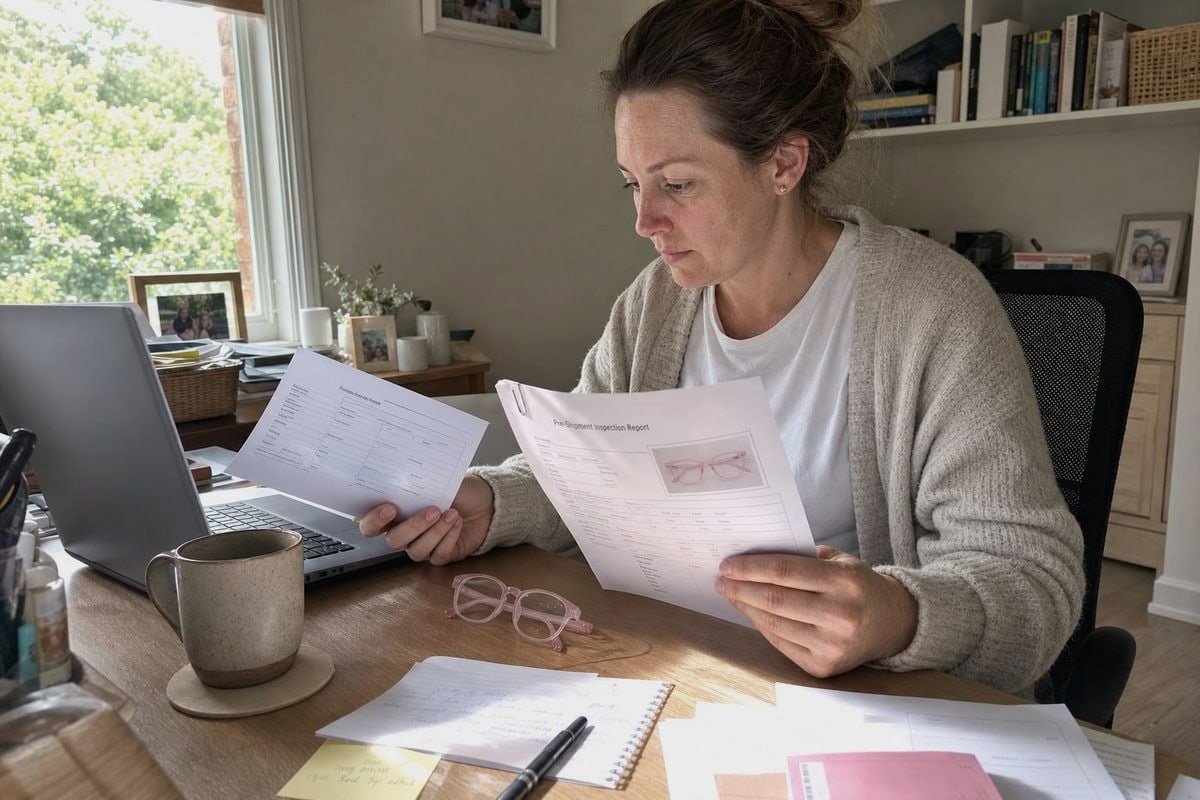
Trust the document only after you have tested it. A fabricated or recycled report usually fails on small details, so verification is mostly careful cross-referencing. When our own factory hosts third-party inspectors, we see how a genuine report is built: page by page, photo by photo, on-site. A fake one skips those layers.
Cross-Reference the Identifiers
Start with the order data. The PO number, style number, carton count, and inspected quantity must match your purchase order exactly. Then check the factory name and address. If the report names a different facility, the goods may not come from the workshop you audited. That is a serious red flag for any children's product brand.
Validate the Report at Its Source
Never rely on a standalone PDF from email. Ask for the unique report ID or certificate number, and validate it directly through the third-party inspection agency’s portal. Some trade systems even let importers download and validate pre-shipment inspection certificates from an official government platform, which is far stronger proof than a scan. Also check the laboratory accreditation behind any lab tests, such as CNAS or ILAC-MRA marks 4, on the lab's own site.
Judge the Evidence Quality
Strong reports carry dynamic evidence. Look for GPS-stamped, time-stamped metadata on defect photos, which proves the inspector was physically present during the scheduled window. Compare the photos to your golden sample: colorway, logo placement, hinge design, and packaging must all match.
| Verification Check | Genuine Report | Suspicious Report |
|---|---|---|
| PO and model numbers | Match your order exactly | Missing, wrong, or generic |
| Photos | Time-stamped, show your product | Stock-like, no metadata, wrong item |
| Inspector details | Name, signature, date, location | Anonymous or unsigned |
| Report ID | Validates on official portal | Cannot be traced anywhere |
| Result | Explicit pass/fail with defect counts | Vague "OK" with no numbers |
Which Safety and Quality Checks Matter Most for Children's Optical Frames Before Shipment?
There is a trade-off we weigh on every kids' order: adding more test points raises inspection time and cost, but children's eyewear is exactly the category where cutting checks backfires hardest.
Prioritize mechanical tests under the ISO 12870 standard and ISO 8624, EN 71 small parts and sharp edge tests, lead and phthalates testing under CPSIA, hinge and temple function, memory retention for flexible TR90 and TPEE frames, sizing consistency, and packaging integrity.
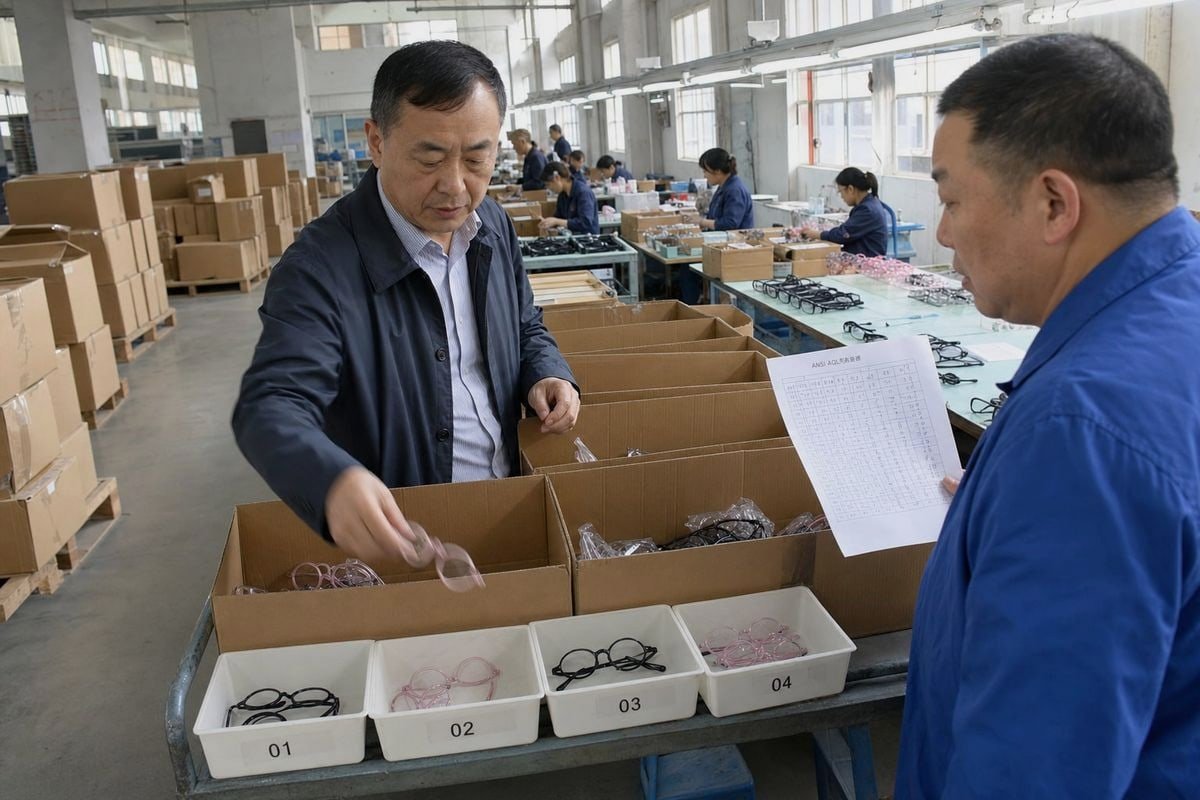
Children's frames are not generic consumer goods, so the quality control checklist must reflect real pediatric risks. A child chews temple tips, sits on frames, and pulls them off with one hand. Our engineers design TPEE temples and silicone hinge connectors precisely for that abuse, and the inspection has to prove those features actually work batch-wide.
Physical Safety Comes First
Small parts and sharp edge tests under EN 71 address choking and laceration risks for younger wearers. Inspectors should probe nose pads, hinge screws, and temple tips. Any burr, sharp mold flash, or loose component on a child's frame is a critical defect, not a cosmetic one. Chemical safety sits alongside this: lead, phthalates, and nickel release testing under CPSIA compliance 5 for the US, or REACH for the EU, protects children from toxic exposure through skin contact or mouthing. For frames sold as medical devices in the US, confirm the supplier's FDA registration status 6 too, and align everything with your market's product safety standards.
Mechanical and Optical Performance
| Check | Method | Target |
|---|---|---|
| Bridge deformation | ISO 12870 mechanical stability | No permanent deformation |
| Temple pull-out strength | Tension test on hinge joint | Temples stay secured |
| Memory retention (TR90/TPEE) | 180° stress bend on temples | Return to shape within ~2 seconds |
| Sizing consistency | Measure against ISO 8624 markings | Within stated tolerance batch-wide |
| Ergonomic fit | Age-graded 3D-printed head forms | Correct bridge contact and temple tension |
| Vertex distance stability | Vibration check for myopia lenses | Alignment held within 1mm |
The head-form check deserves emphasis. Age-graded 3D-printed head forms let the inspector verify bridge contact and wrap-around temple tension for specific pediatric development stages, not just "small adult" assumptions. For frames intended for myopia management lenses, vertex distance stability under vibration matters, because those lenses only work when optical alignment holds.
Finish, Labeling, and Packaging
Finally, inspectors compare production units side-by-side with the golden sample for colorway, logo placement, and material finish. They also verify labeling accuracy, model codes, demo lens retention, carton markings, and shipping protection. A perfect frame in a mislabeled box still fails at retail.
What Should I Do If the Inspection Report Reveals Defects or Non-Conformities?
Early in my career at our Taizhou workshop, a failed hinge-strength result on one batch taught me a lasting lesson: a failed report handled well builds more trust than a lucky pass.
Hold the shipment immediately, classify defects by severity against your AQL limits, request the supplier's corrective action plan with root-cause analysis, then require sorting, rework, or replacement followed by a paid re-inspection. Never release payment or approve export until a clean re-inspection report is issued.
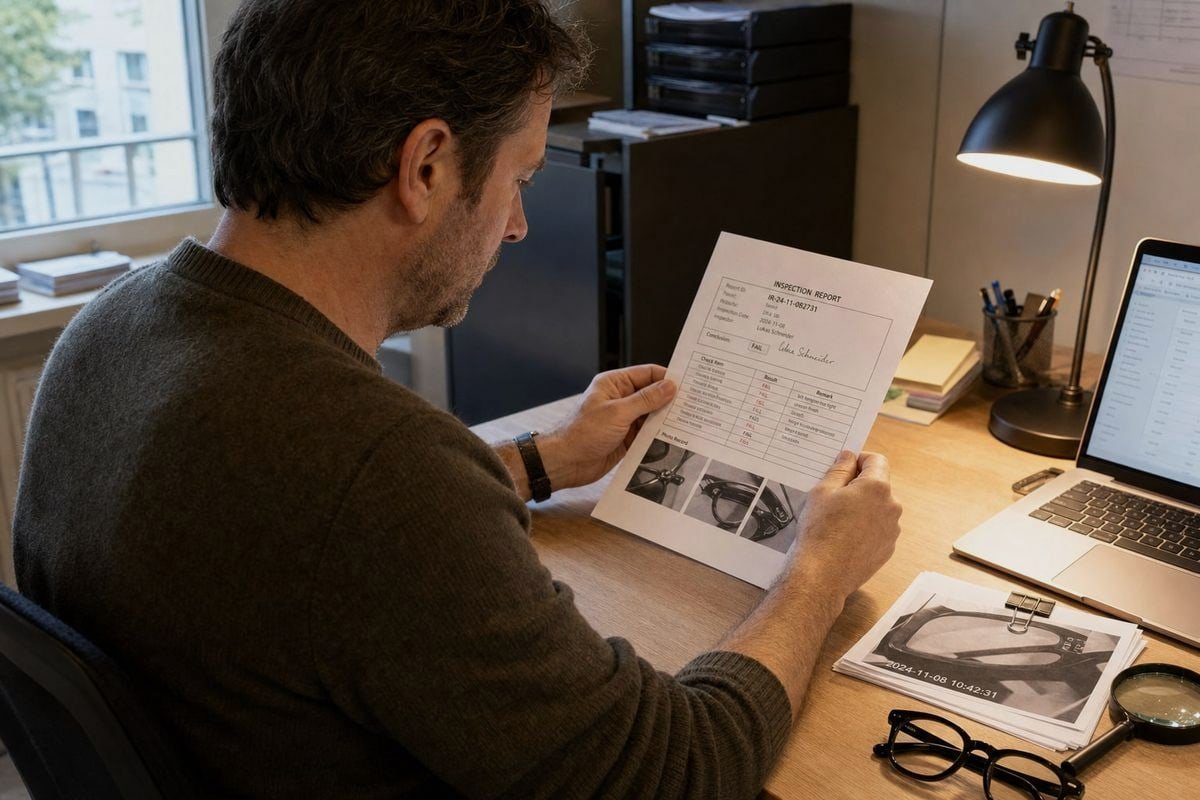
A failed or conditional report is a decision point, not a disaster. The worst response is silence followed by quiet shipment approval under deadline pressure. The best response is a structured process that both sides agree on before the order is even placed. We write re-inspection terms into our OEM agreements for exactly this reason.
A Step-by-Step Response Process
- Freeze the shipment. Instruct the factory in writing not to load goods. Your PSI report is a shipment-release document; a fail means no release.
- Read the defect summary carefully. Separate critical defects (safety risks like sharp edges or failed lead and phthalates testing) from major and minor cosmetic issues. Critical defects on children's frames should trigger zero tolerance.
- Demand a corrective action plan. Ask the supplier for root cause, not excuses. A cracked hinge batch might trace to a mold temperature issue; a labeling error might be a packing-line mix-up. The fix differs completely.
- Choose the remedy. Options are 100% sorting, rework, partial replacement, or full re-production. For flexible TPEE or TR90 parts, rework is often impossible, so replacement is usually safer.
- Book a re-inspection. Use the same third-party inspection agency and the same batch sampling plan so results are comparable. The supplier normally bears the re-inspection cost when the failure was theirs.
- Document everything. Keep the failed report, the corrective action plan, and the passing re-inspection together. This file protects you if a Certificate of Conformity 7 is later questioned by customs or a retailer.
Know When to Walk Away
One caution I share honestly with buyers: repeated failures on safety-critical points signal a systemic problem, not bad luck. Factory-internal QC alone is faster and cheaper, but it is not independent. If a supplier resists third-party re-inspection or pressures you to ship anyway, that behavior tells you more than any report ever will.
Conclusion
A weak inspection report puts children and your brand at risk. Request it with clear AQL terms and eyewear checks, verify every identifier and photo, and never ship without a clean, traceable result.
Footnotes
1. Official ECHA explanation of the EU chemical safety regulation mentioned. ↩︎
2. Background on the European toy and children’s product safety standard referenced. ↩︎
3. Explains statistical sampling standard used for AQL-based defect classification. ↩︎
4. Official ILAC page explaining the Mutual Recognition Arrangement
More Articles You Might Like

August 5, 2026
Bio-Based vs Regular Cellulose Acetate: What's the Difference for Kids' Frames?

August 5, 2026
How Recyclable Are Kids' Optical Frame Materials, and What Eco-Friendly Alternatives Exist?
August 5, 2026
Do Kids Optical Frames Whiten or Age in Storage, and How to Control Warehouse Conditions?
Looking for a Reliable Kids Eyewear Partner?
Explore 800+ ready styles and full OEM/ODM support tailored to your brand.
Get in Touch English
  Español de México
  Deutsch
  Français
  日本語
日本語  العربية
  Português do Brasil