How to Verify a Supplier’s Test Report Is Genuine for Kids’ Sunglasses?

Knowing how to verify a supplier’s test report is genuine for kids’ sunglasses protects your brand from fakes CPSC-accepted laboratory lists 1. On our production line in Taizhou, I’ve seen buyers burned by polished PDFs that covered a completely different product — and by then, the goods were already on the water. One recalled shipment can destroy years of brand trust.
To verify a supplier’s test report is genuine for kids’ sunglasses, confirm the report number directly with the issuing lab, check the lab’s accreditation for the cited standard, and match the product model, batch, dates, and applicant name against your actual order.
That is the short answer. Now let me walk you through the full verification workflow, step by step, so you can apply it before your next purchase order.
What details should I check first to confirm a test report matches my exact product?
A buyer from Australia once forwarded me a competitor's report to ask if it looked right notified body registers 2. It was a real report — issued for adult fashion sunglasses, not the kids' model she was buying. Real, but useless.
First, check that the report's product model, SKU, photos, materials, and colorway match your exact sunglasses. Then confirm the applicant name matches your supplier, the cited standard fits your destination market, and the test dates align with the current production run.
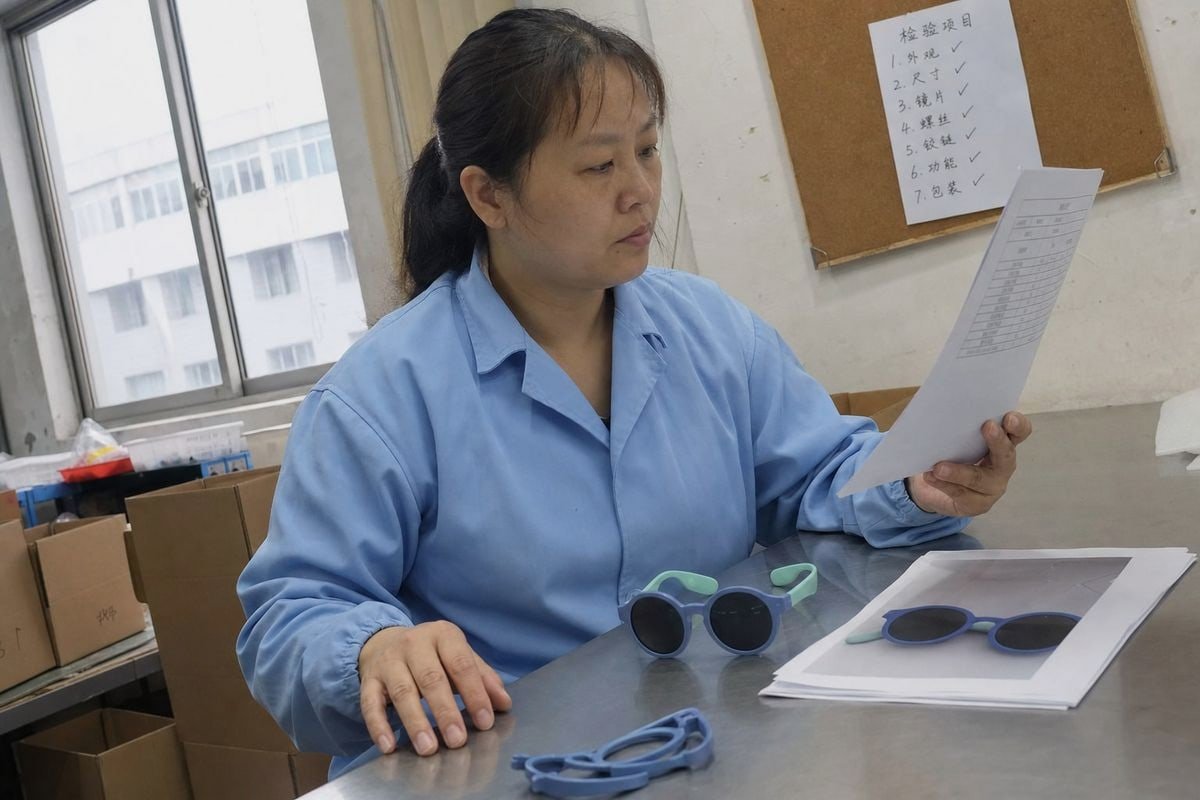
In my fifteen years making children's eyewear, the most common problem is not forgery. It is mismatch. A report can be completely authentic and still fail to cover the product you are actually importing. So your first job is a product-match check, not a fraud hunt.
The anatomy of a credible report
A proper lab report follows ISO/IEC 17025 reporting expectations. It should contain a unique lab report tracking number, the lab's name and contact details, the test method, a clear sample description with photos, the sample receipt date, the test dates, the issue date, results with units, and an authorized signatory. If several of these are missing, treat the document with suspicion and verify harder.
What to compare, line by line
Put the report next to your purchase order and your physical sample. Then work through this table:
| Report Field | What It Must Match | Why It Matters |
|---|---|---|
| Product model / SKU | Your PO and sample | A "kids' sunglasses" label alone proves nothing |
| Sample photos | Frame shape, lens type, color | Wraparound shield lenses test differently than round frames |
| Materials listed | Frame substrate and lens material (e.g., TR90, TPEE, PC lens) | Different materials mean different chemical and impact results |
| Applicant / client name | Supplier's business license or invoice | An unexplained third-party applicant is a red flag |
| Standard cited | Your destination market's requirement | ISO 12312-1 standard 3 for the EU differs from US rules |
| Test and issue dates | Current production timeline | Old reports may not reflect today's materials |
One more point from our workshop experience: coatings matter. A vibrant mirrored gradient lens — like the orange-to-teal shield styles we produce — uses surface coatings that need component-level testing. The report should cover the lens, the frame substrate, and the coatings separately, because hidden toxins often live in paint and finish layers, not the base plastic.
How can I verify the testing lab is accredited and the certificate isn't fabricated?
When we send our TR90 and TPEE frames out for testing, we choose labs our buyers can independently confirm. If your supplier resists giving you the lab's contact details, that alone tells you something.
Verify the lab through official accreditation directories — CPSC-accepted laboratory lists for the US, CNAS/CMA marks for China, or notified body registers for Europe. Then enter the report number into the lab's online verification portal, or email the lab directly to confirm the report exists.
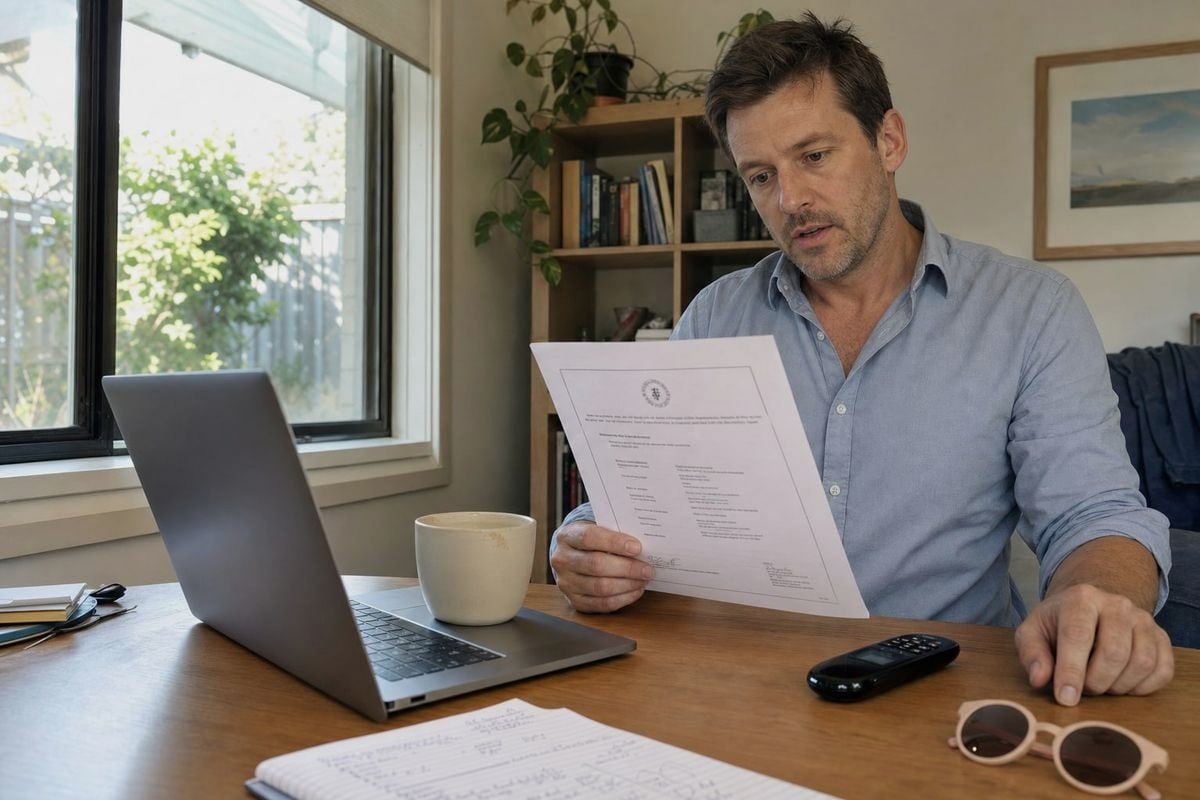
The core principle is simple: the supplier should never be your only source of truth. Independent confirmation from the lab itself is what turns a claim into evidence. Here is the sequence I recommend to every new buyer.
A five-step lab verification process
- Ask for the original PDF file, not a screenshot, scan, JPG, or DOC. Altered documents hide better in low-quality images. If the PDF has a digital signature, validate it in your PDF software to confirm the encrypted certificate is intact.
- Record the essentials: report number, lab name, standard tested, test dates, and product model.
- Check the lab's scope of accreditation. Accreditation is not generic. A lab may be accredited for chemical testing but not for optical testing under the ISO 12312-1 standard, or for an older version of the standard. For US children's products, confirm the lab appears on the CPSC-accepted laboratory list, because CPSIA compliance 4 requires accredited third-party testing before you can issue a Children's Product Certificate.
- Search the lab's verification portal. Most large testing companies let you enter the lab report tracking number online. If the system cannot identify the number at all, the report was likely never issued by that lab.
- Compare the verified version to the supplier's copy. Some suppliers alter valid reports — changing the model number or date — to make them appear relevant. Any difference between the lab's version and the supplier's version is disqualifying.
Market-specific verification points
| Destination Market | Key Requirement | How to Verify |
|---|---|---|
| United States | CPSIA compliance, Children's Product Certificate | CPSC-accepted laboratory list; check lead and phthalates testing 5 coverage |
| European Union | ISO 12312-1 standard, EN 71 where applicable | Notified body and accreditation registers |
| China origin testing | CNAS / CMA legal marks | CNAS accreditation directory |
| Impact claims | Drop ball test 6 or equivalent | Confirm test method appears in the lab's accredited scope |
One nuance buyers sometimes miss: an FDA registration number relates to US regulatory registration for impact-resistant eyewear pathways, but it is not proof of UV performance or chemical safety. Do not let a supplier present one document type as a substitute for another.
What red flags suggest a supplier's test report might be fake or outdated?
Over the years I have reviewed hundreds of competitor documents that buyers forwarded to us for a second opinion. The fakes usually give themselves away in small, consistent ways — if you know where to look.
Major red flags include reports that only exist as scans or images, distorted logos, inconsistent fonts, unrealistic testing timelines, report numbers missing from the lab's database, old test dates untied to current production, and suppliers who refuse to share the original file or lab contacts.
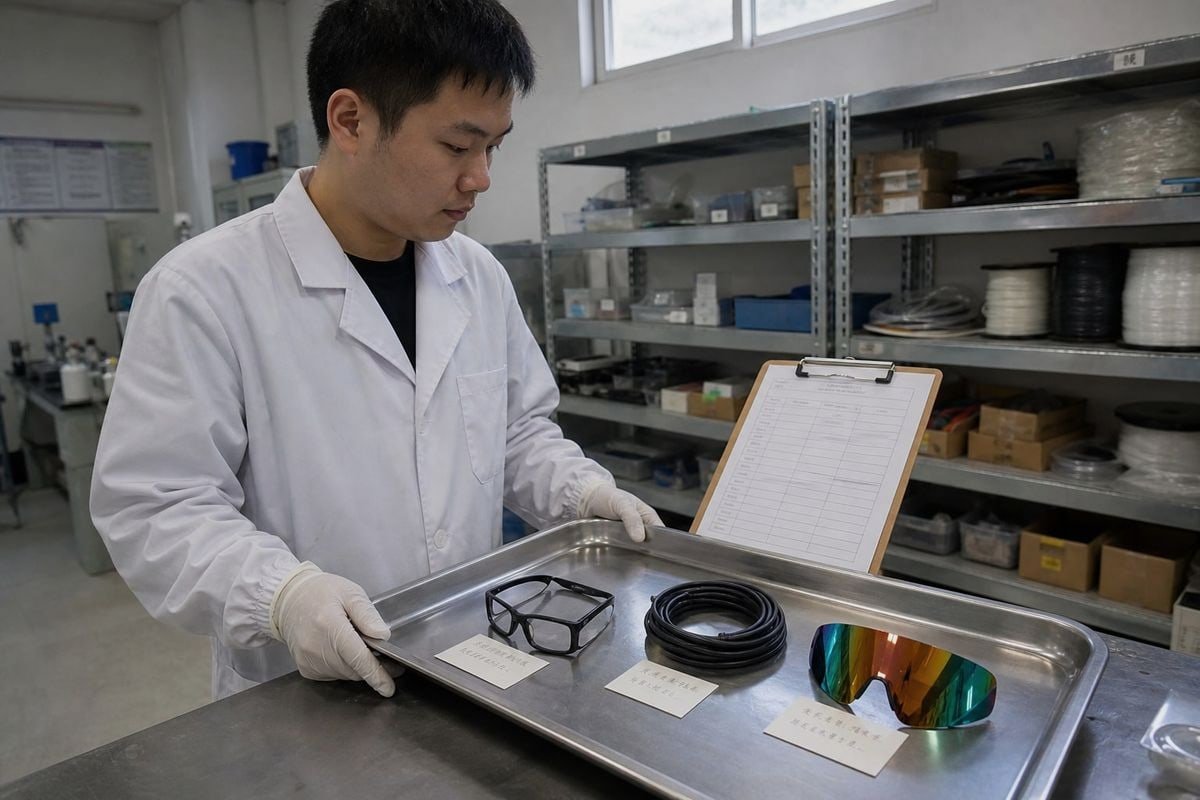
Fraudsters rely on buyers skimming. Slow down and inspect the document like an auditor would. Industry guidance from testing bodies highlights the same recurring patterns, and they map neatly onto three layers: document, timeline, and behavior.
Document-level warning signs
Look at the file itself before you read a single result. Watch for blurry or stretched logos, fonts that change mid-page, abrupt shifts in language style, signatures that look copied and pasted, and branding that does not match the lab's real templates. Also check internal consistency — the model number on page one should match the model number on page four. Fabricated reports often drift because the forger edited only the visible fields.
Timeline and behavior warning signs
| Red Flag | What It Suggests | Your Response |
|---|---|---|
| Report exists only as a JPG or scan | Original may have been altered | Demand the original PDF from the lab |
| "Sample received" and "issue" dates only one day apart | Testing duration unrealistic for full safety checks | Ask the lab to confirm the timeline |
| Report is several years old | May not reflect current materials or standard versions | Request batch-specific retesting |
| Supplier stalls when asked for lab contacts | Supplier fears independent verification | Escalate or walk away |
| Applicant name is an unknown third company | Possible borrowed or recycled report | Ask for a documented subcontractor explanation |
Timeline logic deserves special attention. Full children's eyewear testing — UV transmission, lead and phthalates testing on coatings, mechanical checks — takes real lab time. A complex report allegedly completed overnight is almost certainly recycled or fabricated. Likewise, a UV400 protection rating 7 printed on a hangtag is marketing language, not evidence; only the lab data behind it counts. And remember that even an old genuine report is a problem. Materials, coating suppliers, and standard versions change. A report tied to a production run from three years ago cannot vouch for the batch shipping to you next month.
Should I request independent third-party retesting before placing a bulk order?
Here is a trade-off we discuss openly with buyers choosing from our roughly 800 existing styles: retesting costs a few hundred dollars and about two weeks, while a failed customs inspection or recall costs the entire order plus your brand's reputation. We always encourage the retest.
Yes — for any high-value or first-time order of kids' sunglasses, commission independent third-party retesting on samples from your actual production batch. Supplier reports are claims to be verified, not proof, and batch-specific testing eliminates the risk of reused or recycled documents.

There are two camps on this question. One camp says a report from a known lab is sufficient, and retesting wastes money. The stricter camp says no report should be trusted until the lab confirms it and the product details match — and even then, batch testing is worth it for children's products. I side firmly with the stricter camp, and I say that as the factory being tested. Children's eyewear carries consumer safety exposure and import compliance exposure at the same time. Both depend on the exact product shipped, not on how official a document looks.
When retesting is clearly worth it
Retesting makes obvious sense in these situations: your first order with a new supplier, any order large enough that a rejection would hurt, any product where the supplier could not fully confirm report authenticity, and any children's product entering a strictly regulated market. For US-bound goods, you need accredited third-party testing 8 at a CPSC-accepted laboratory anyway to back your Children's Product Certificate — so build it into your critical path rather than treating it as an extra.
How to run the retest properly
Pull samples from the actual production batch, not from the supplier's golden samples. Send them to a lab you select and pay directly, so the supplier has no channel to influence results. Specify the exact standard and version for your destination market. Include physical validation where it matters: spectrometer measurement is the only definitive way to verify UV protection claims, and a drop ball test or equivalent impact check confirms the lenses can survive an active child's daily abuse. Sunglasses and paperwork can both look perfect; only measurement proves performance.
Finally, structure your payment terms around verification. Release final payment or the shipment only after either the lab confirms the supplier's report in writing or your independent retest passes. In my experience, serious factories never object to this. We build flexible TPEE and TR90 frames precisely so they pass these tests — a supplier confident in its product welcomes scrutiny.
Conclusion
Fake or mismatched reports put children at risk and brands in legal trouble. Verify the document, verify the lab, match the product, and retest your batch — treat every supplier report as a claim, never as proof.
Footnotes
1. Official US government database to verify accredited laboratories for children’s products. ↩︎
2. EU database for verifying organizations authorized to assess product compliance. ↩︎
3. The international standard for sunglasses and related eyewear protection. ↩︎
4. Official overview of the Consumer Product Safety Improvement Act. ↩︎
5. Official safety requirements for chemical limits in children’s consumer goods. ↩︎
6. FDA regulation detailing the impact resistance test for eyewear lenses. ↩︎
7. Wikipedia entry explaining the technical meaning of UV protection categories. ↩︎
8. CPSC requirements for third-party testing of children’s products by accredited labs. ↩︎
More Articles You Might Like

Looking for a Reliable Kids Eyewear Partner?
Explore 800+ ready styles and full OEM/ODM support tailored to your brand.
Get in Touch English
  Español de México
  Deutsch
  Français
  日本語
日本語  العربية
  Português do Brasil