How to Prevent Suppliers From Reselling Your Kids’ Sunglasses Designs?
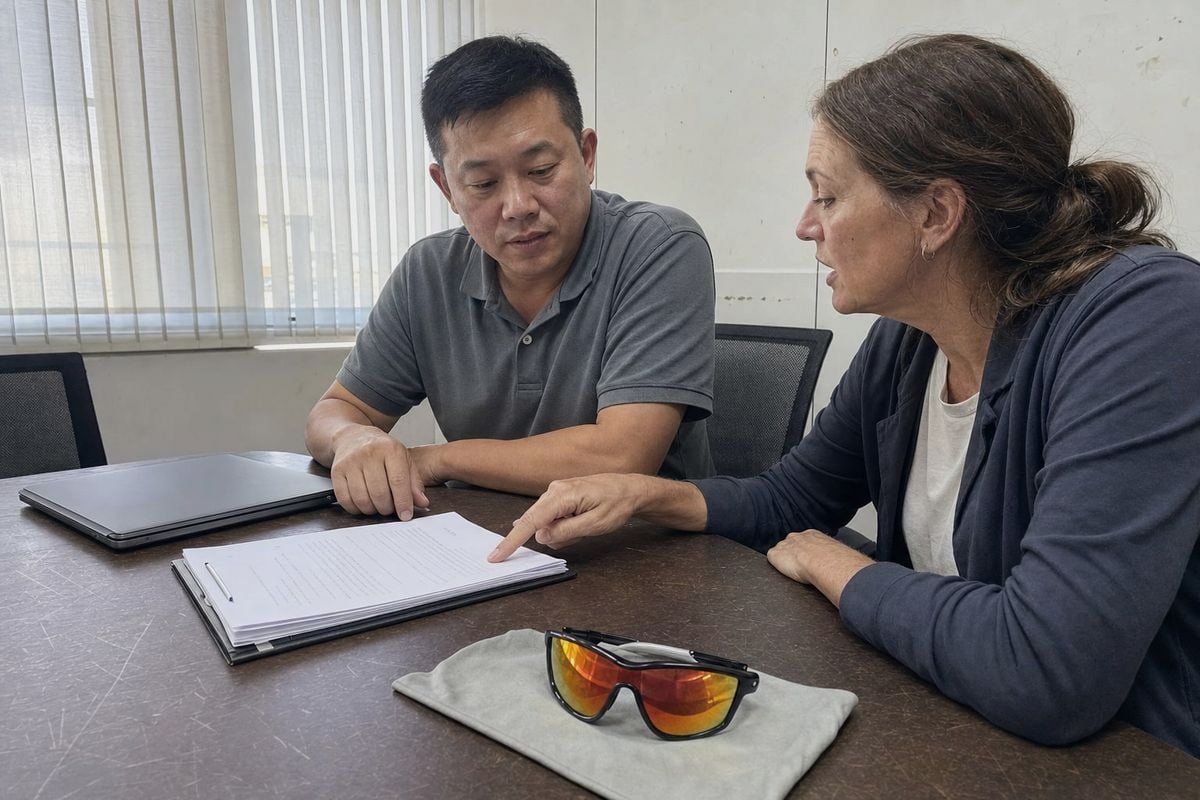
To prevent suppliers from reselling your kids’ sunglasses designs, you need more than trust EN 71 1. I’ve watched buyers lose exclusive styles because they relied on a handshake and a hopeful email.
To prevent suppliers from reselling your kids’ sunglasses designs, use layered protection: sign an enforceable NNN Agreement, register design patents and trademarks in the manufacturing country, add mold ownership and non-circumvention clauses to contracts, limit file sharing, and monitor marketplaces for unauthorized listings.
No single document solves this problem. Below, I break the solution into four practical steps, based on what actually works between brands and factories.
How can I legally protect my custom kids' sunglasses design before sharing it with a manufacturer?
A buyer from Australia once emailed me full CAD files before we had signed anything. I stopped her and asked for an agreement first. That protects both sides, and it sets the tone.
Before sharing your design, sign an NNN Agreement enforceable in the supplier's country, file a design patent and trademark registration in the manufacturing country first, and document every file transfer with dates. Registered rights plus a local-jurisdiction contract give you real legal standing, not just paper comfort.
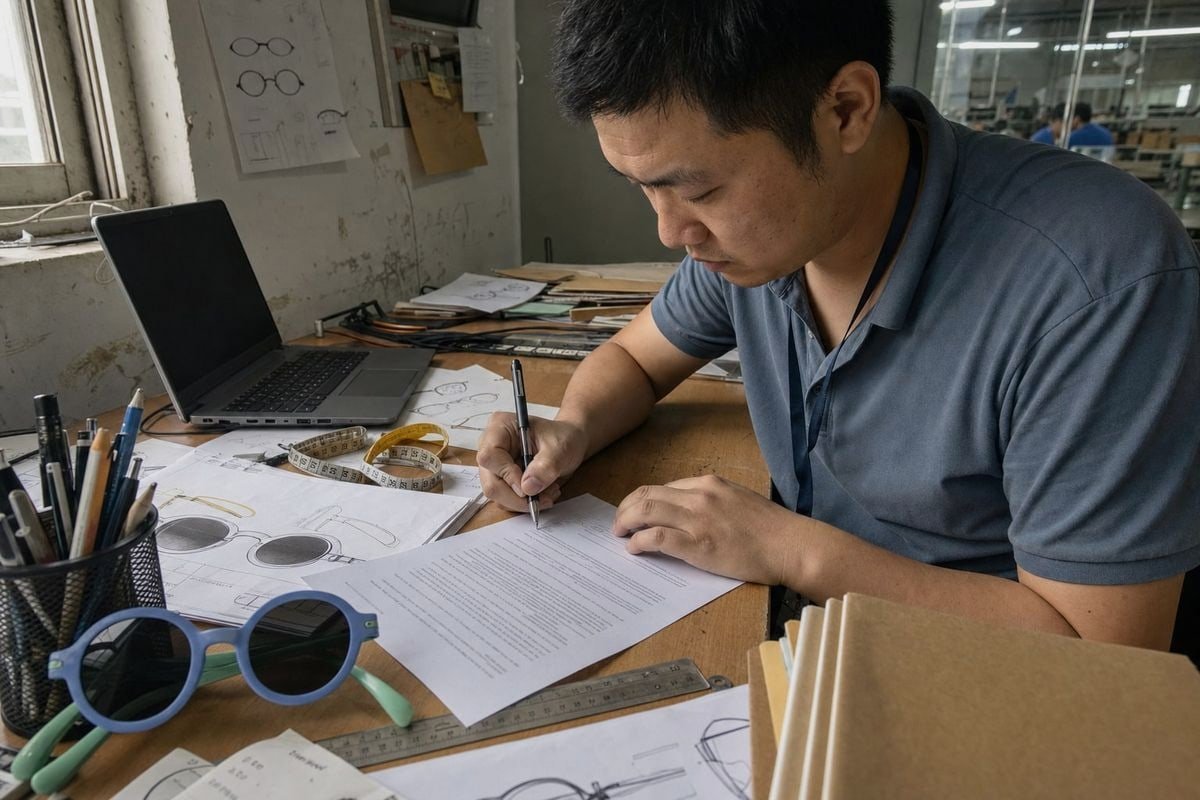
Legal protection works best when it happens before the first sample, not after the first copy. Once your frame shape, lens gradient, or packaging concept leaves your hands, you cannot un-share it. So the order of operations matters.
Step 1: Register rights in the manufacturing country
Many buyers register a design patent 2 or trademark only in their home market. That is a mistake. China, like several manufacturing hubs, runs on a first-to-file system. If someone files your brand name or frame design there before you do, they own it locally — and they can even block your own shipments at the port. In my fifteen years in eyewear, I have seen this happen to brands that waited. File your trademark registration and design application in the country of production, then in your key sales markets.
Step 2: Use an NNN Agreement, not a standard NDA
A Western-style NDA often fails abroad because it only covers disclosure. An NNN Agreement 3 covers three risks: non-disclosure, non-use, and non-circumvention. It should be written in the local language, governed by local law, and enforceable in a local court. When a buyer sends us an NNN before sampling, we take it as a sign of a serious, long-term partner.
Step 3: Control what you disclose
| Protection tool | What it stops | When to put it in place |
|---|---|---|
| Design patent | Third parties copying the frame shape | Before sending CAD files or tech packs |
| Trademark registration | Counterfeit branding and gray-market claims | Before sampling in the factory's country |
| NNN Agreement | Supplier using or reselling your design | Before any design disclosure |
| Copyright on artwork | Copied packaging and print graphics | Before sharing packaging files |
Also keep an evidence trail. Timestamp your sketches, save email threads, and log every version of your tech pack. If a dispute ever reaches a lawyer, that trail proves the design was yours first.
What contract terms should I include to stop my supplier from reselling my exclusive designs?
The strongest supplier relationships I've built over 15 years all started with a clear Manufacturing Service Agreement. Vague contracts create arguments. Specific ones prevent them — for the factory and the brand alike.
Your contract should broadly define confidential information, ban the supplier from using or selling your design to anyone, include a non-circumvention clause covering your customers, state mold ownership and return obligations, restrict resale channels, and set liquidated damages payable in local currency for any breach.
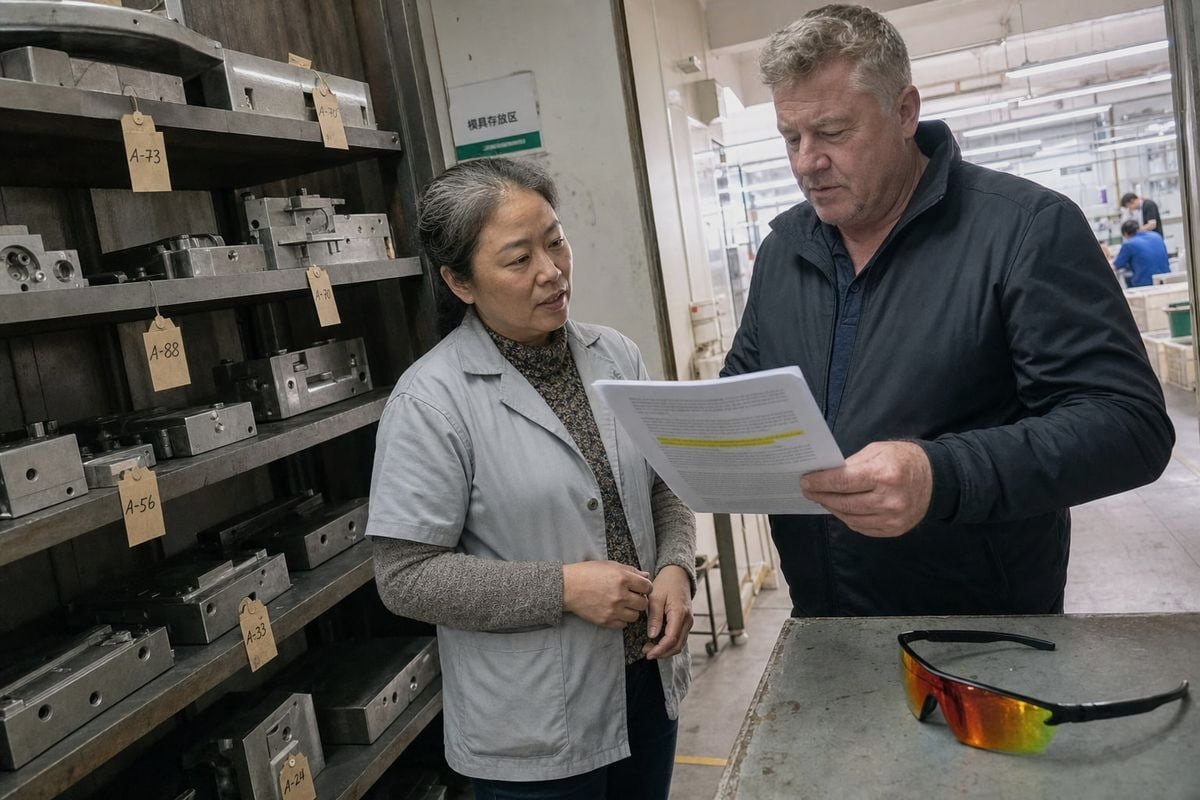
A good contract does two jobs. It deters bad behavior, and it gives you leverage if bad behavior happens anyway. Here are the clauses that matter most, in plain language.
Define confidential information broadly
Do not just say "designs." Cover sketches, CAD files, samples, molds, tooling, lens specifications, colorways, packaging artwork, pricing, and customer lists. If it isn't listed, a supplier's lawyer may argue it wasn't protected.
Lock down non-use and non-circumvention
A non-use clause says the factory cannot produce your design for itself or any third party. A non-circumvention clause 4 stops the supplier from going around you — selling directly to your distributors, your retailers, or your marketplace channels. Together, these two clauses cover both lookalike copies and diverted genuine stock.
Claim the tooling with a mold ownership clause
If you paid for a custom injection mold 5, the contract should say you own it. A proper mold ownership clause includes marking the mold with your name, a return obligation on demand, a ban on liens, and a daily penalty for non-return. At our workshop in Taizhou, buyer-owned molds are labeled and stored separately, and we consider that normal professional practice.
| Clause | Plain-English purpose |
|---|---|
| Confidentiality definition | Covers every file, sample, and spec you share |
| Non-use | Factory cannot make your design for anyone else |
| Non-circumvention clause | Factory cannot bypass you to reach your buyers |
| Mold ownership clause | Your tooling stays yours and comes back on request |
| Channel restriction | No sales of your product to unauthorized third parties |
| Return and destruction | Files and samples returned or destroyed at contract end |
| Liquidated damages | A pre-agreed penalty that makes breach expensive |
Liquidated damages deserve special attention. Courts in manufacturing countries move faster when the penalty amount is already agreed. It changes the supplier's math: copying you becomes a costly gamble instead of easy money.
How do I choose a trustworthy OEM/ODM factory that won't copy my brand's eyewear designs?
When new buyers visit our 5S-managed workshop, I encourage them to ask hard questions. How we handle other brands' molds tells them exactly how we would handle theirs.
Choose a factory that signs an NNN Agreement without resistance, shows clear IP-handling procedures, separates client tooling, holds relevant safety compliance, welcomes audits, and earns most revenue from OEM manufacturing for brands — not from selling its own competing lines on marketplaces.
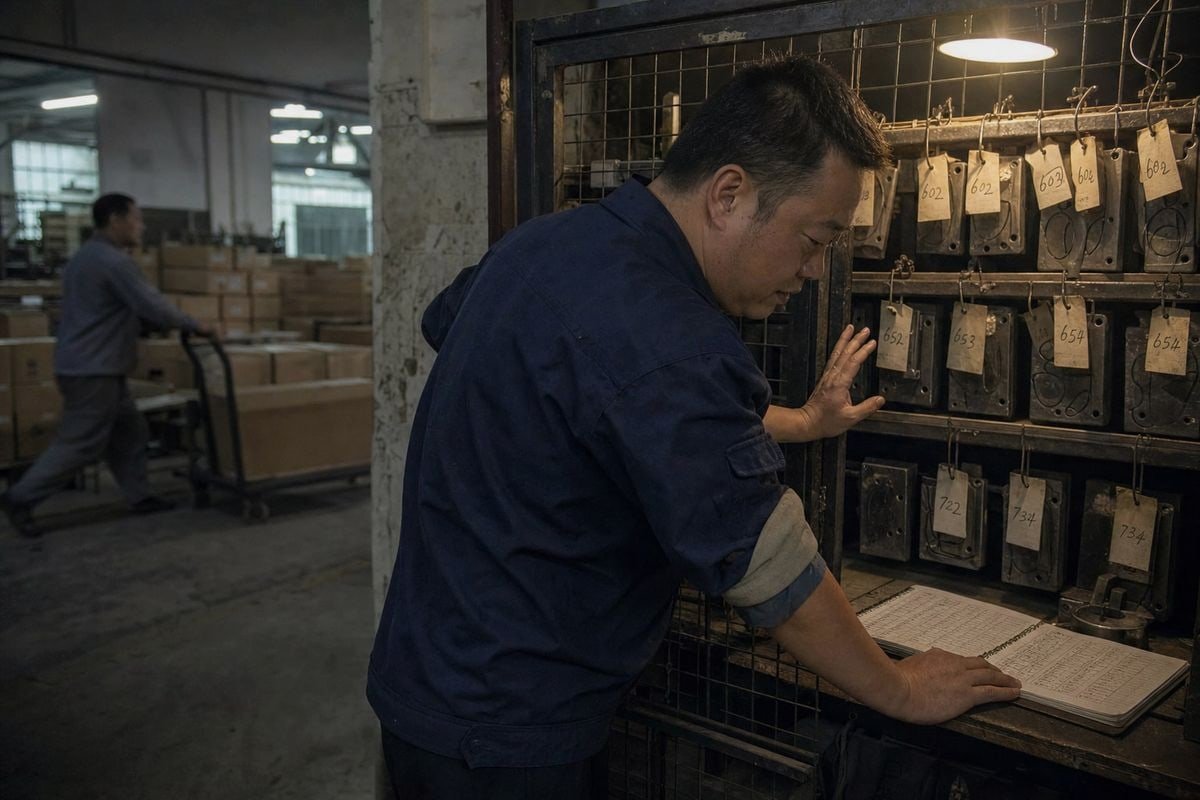
Due diligence beats damage control. A trustworthy partner is cheaper than a lawsuit, so invest time upfront. Here is the vetting process I recommend to every brand, whether they work with us or not.
A five-step vetting process
- Verify the business identity. Confirm you are dealing with a real factory, not a trading company that will subcontract your files to an unknown workshop. Ask for the business license, factory address, and photos or a video tour of the production floor.
- Test their attitude toward IP. Send your NNN Agreement early. A professional factory signs it or negotiates reasonable edits. A factory that dismisses it, delays it, or calls it unnecessary is telling you something.
- Check their client design handling. Ask how they store other brands' molds and tech packs. In our experience exporting to 20+ countries, serious buyers always ask this — and the answer should include physical separation and access limits.
- Review compliance depth. A factory that takes CPSIA compliance 6, EN 71, and UV400 lens standards seriously usually takes contracts seriously too. Sloppy paperwork in one area predicts sloppy behavior in another. For children's eyewear, this also protects you from safety recalls, not just design theft.
- Ask about existing catalogs. A factory with a large open catalog — we maintain roughly 800 existing styles — has less incentive to steal your custom design, because its business model is serving brands, not competing with them. You can even launch from open styles with custom colors and logos first, then invest in exclusive tooling once trust is built.
One more filter: check how the factory sells online. If it aggressively retails finished branded products on consumer marketplaces, ask who owns those designs. The answer will be revealing.
What red flags should I watch for to avoid working with a supplier who resells client designs?
A distributor once showed me a competitor's quotation that included another brand's exclusive frame — offered openly as a "hot style." That single PDF told us everything about that supplier's ethics.
Watch for suppliers who refuse NNN terms, offer other clients' exclusive designs in their catalog, resist mold marking or audits, quote suspiciously low prices, dodge questions about overrun disposal, or list products resembling client designs on B2B marketplaces under their own name.
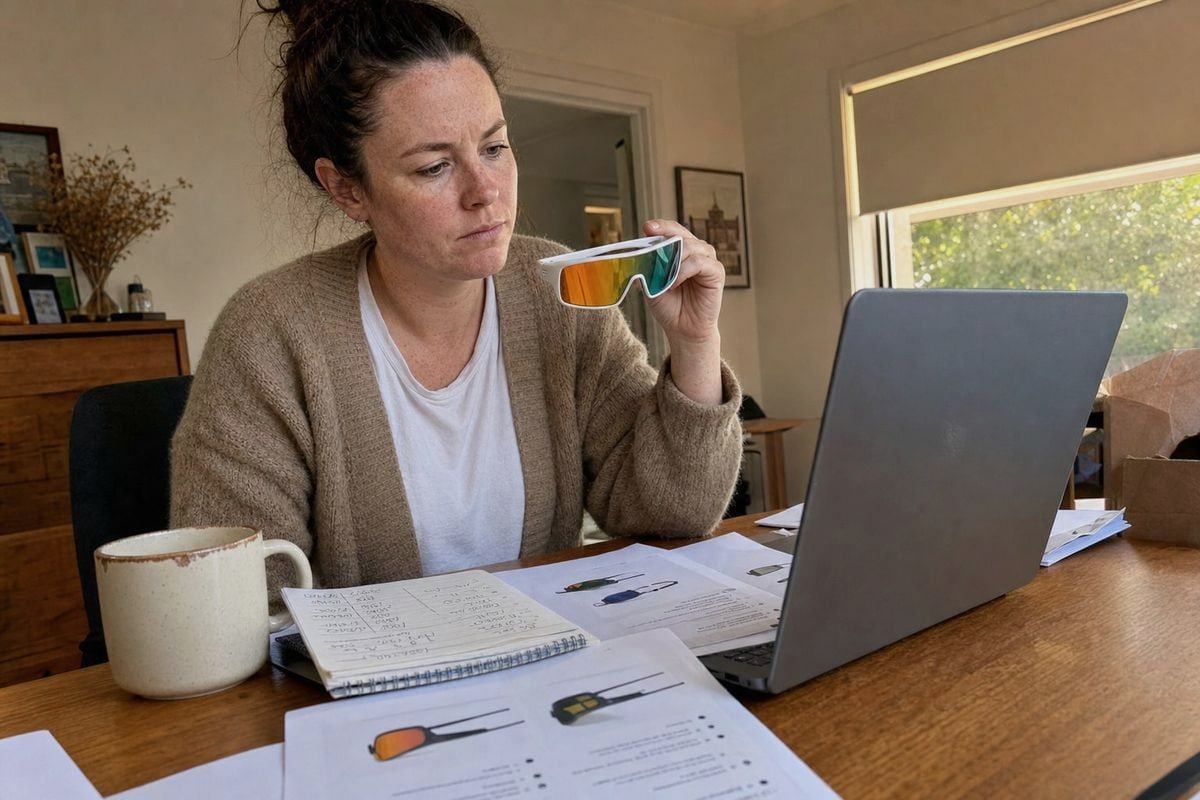
Most design leaks announce themselves early, if you know where to look. Intellectual property infringement rarely comes out of nowhere; it follows a pattern of small warning signs that buyers ignore because the price is attractive.
Red flags before you sign
| Red flag | What it usually means |
|---|---|
| Refuses or stalls on the NNN Agreement | Plans to keep the option of using your design |
| Shows you another brand's "exclusive" style | Will show your style to the next buyer too |
| Price far below market | May recover margin through unauthorized overruns |
| Won't allow factory audits or inspections | Something on the floor shouldn't be seen |
| Vague about subcontracting | Your files may travel to factories you never vetted |
| Resists mold marking or return terms | Sees your tooling as their asset |
Red flags after production starts
Watch order behavior, not just words. Material purchases that exceed your order quantity suggest a possible "ghost shift" — an unauthorized extra run after your inspection ends. Defect rates that don't match returned reject counts hint that "failed" units are being resold. And your own design appearing on a B2B listing, even with a different color, is direct evidence worth screenshotting immediately.
Operational habits that shrink the risk
Reduce what any one party can leak. Send only the minimum files needed at each stage, and use time-limited access for 3D files where possible. Some brands compartmentalize sourcing — lenses, frames, and hardware from separate vendors — though this adds coordination cost and can complicate quality control 7 for children's products. Others add covert markings, like discreet inner-temple codes, so authorized units are distinguishable from back-door stock. Engraving your trademark into the frame mold is one of the simplest defenses: branded units are hard for a factory to resell quietly. Finally, run unannounced third-party inspections and reconcile quantities each run. Supply chain security is not one dramatic action; it is a set of boring habits that make leakage difficult and detection fast.
Conclusion
Layered protection — registered IP, enforceable contracts, controlled disclosure, careful supplier vetting, and ongoing monitoring — keeps your kids' sunglasses designs yours. Prevention costs little; enforcement after a leak costs everything.
Footnotes
1. Official European Commission page detailing safety standards for toys and children’s products in the EU. ↩︎
2. Provides a legal definition and overview of design patent protections for unique product appearances. ↩︎
3. Official government guidance on protecting intellectual property in China using NNN agreements. ↩︎
4. Explains the legal purpose of non-circumvention agreements in protecting business relationships and designs. ↩︎
5. Technical overview of the injection molding process used in manufacturing plastic eyewear frames. ↩︎
6. Official US government resource explaining the safety requirements for children’s products under CPSIA. ↩︎
7. Comprehensive overview of quality control methodologies used in manufacturing to ensure product standards. ↩︎
More Articles You Might Like
Looking for a Reliable Kids Eyewear Partner?
Explore 800+ ready styles and full OEM/ODM support tailored to your brand.
Get in Touch English
  Español de México
  Deutsch
  Français
  日本語
日本語  العربية
  Português do Brasil