How to Choose the Right Kids Eyewear Size for Head and Face Shape?
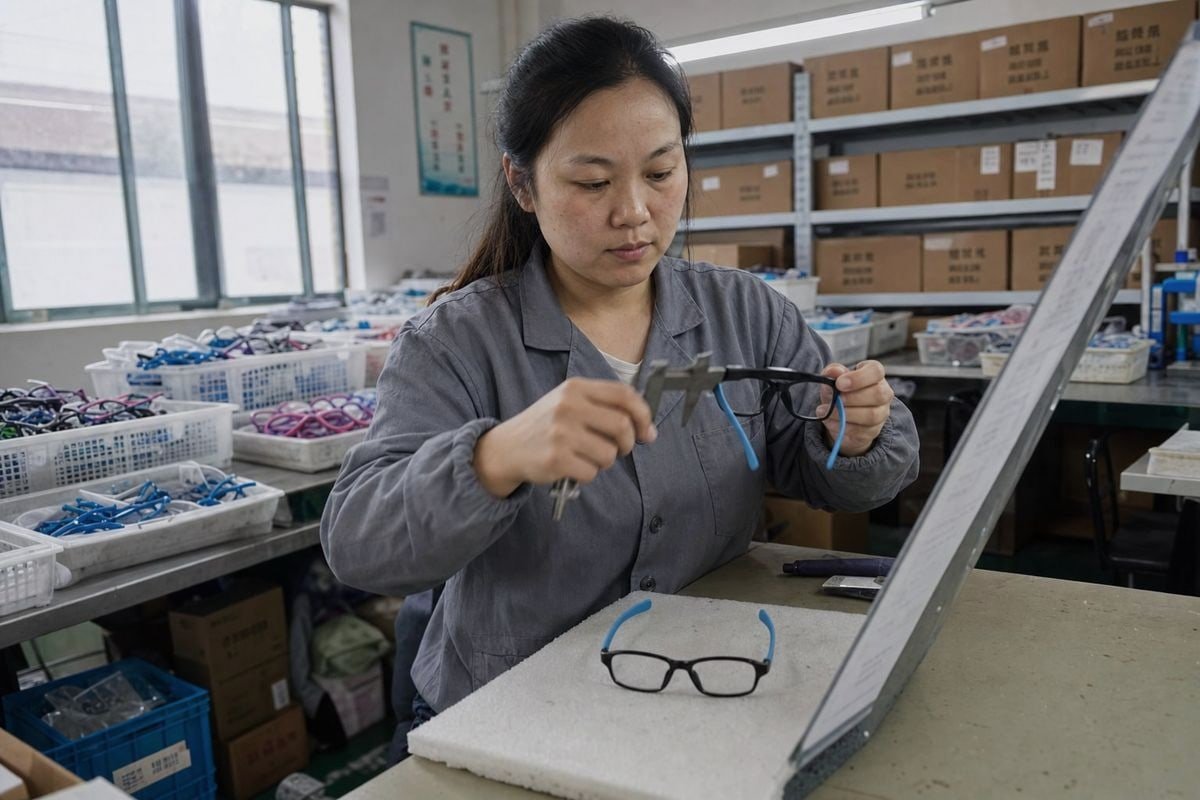
Choosing the right kids eyewear size is the question our factory hears most from new brands. Get it wrong, and returns pile up, reviews suffer, and children simply refuse to wear the glasses.
To choose the right kids eyewear size, match three measurements to the child’s face: lens width, bridge width, and temple length. The frame should roughly match face width, center the pupils in the lenses, rest without pinching, and stay put during movement. Face shape guides style only after fit is secured.
That answer sounds simple, but each measurement hides real detail. Below, I will walk you through how we approach sizing at our Taizhou workshop, and how you can apply it to your own kids eyewear line.
How do I measure my child's head and face shape before choosing eyewear?
A buyer from Australia once sent us a photo of her daughter wearing adult frames cut down by a local shop. That photo taught me how badly parents need clear eye size measurement steps.
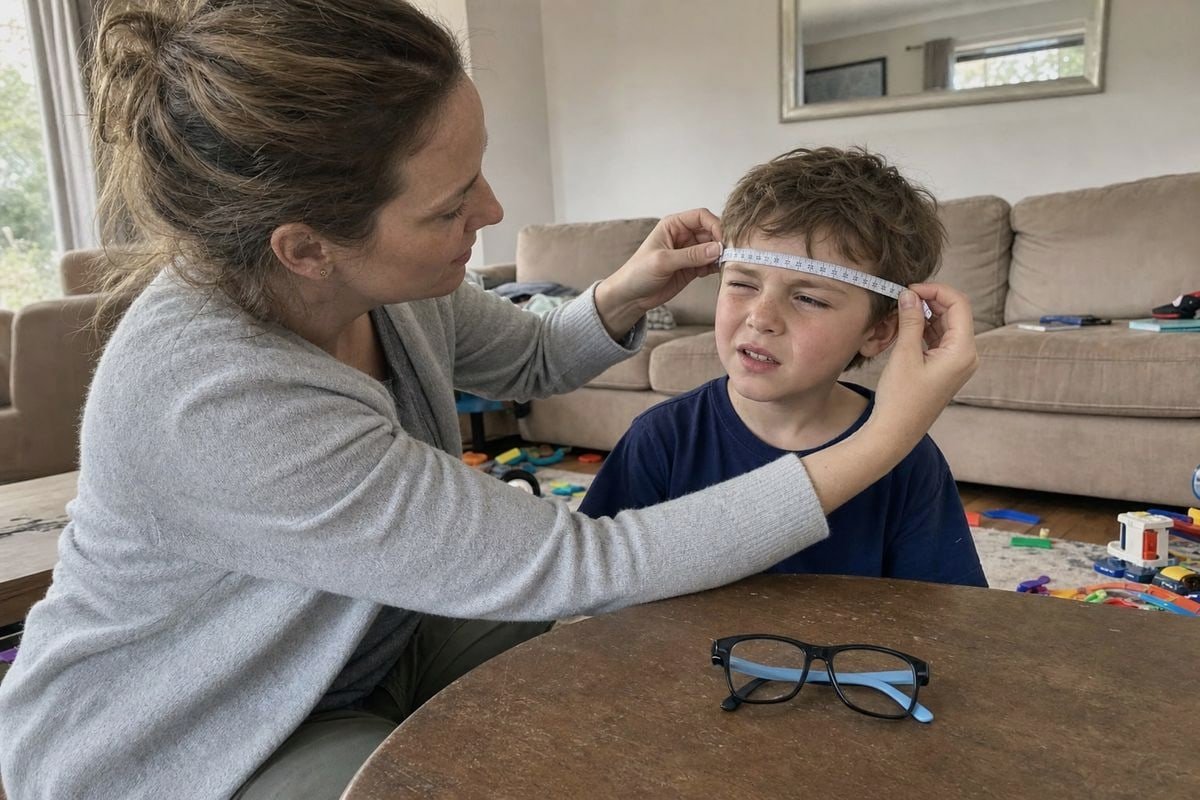
Measure the face width at the temples, the distance across the nose bridge, and the distance from the frame front to just past the top of the ear. Compare these to the frame dimensions printed inside the temple arm: lens width, bridge width, and temple length.
Every frame carries a standard three-number code, usually stamped inside one temple arm. It reads something like 44-15-125. That means a 44 mm lens width, a 15 mm bridge width, and a 125 mm temple length. Parents and product managers can use these frame dimensions as a shared language. In our sample rooms, we teach visiting buyers to read this code first, before touching any style.
The three home measurements
Use a soft tape or a ruler and a mirror. Measure three things:
- Face width — from temple to temple across the front of the face.
- Bridge fit — the width and slope of the nose where the frame will rest.
- Eye-to-ear distance — from the corner of the eye back to the top of the ear.
Then check pupil position. When the child looks straight ahead, the pupils should sit centered in each lens, both horizontally and vertically. This matters because pupillary distance 1 drives where the optical center of a prescription lens must sit. A frame that pushes the pupils toward the inner or outer edge of the lens will distort vision, even if the prescription is correct. A pediatric optician can confirm pupillary distance precisely, but a straight-on photo gives parents a useful first check at home.
Typical size ranges by age
Age charts are a starting point, never a final rule. Children of the same age vary widely in head size and nasal bridge shape. Still, the ranges below help you shortlist.
| Age group | Lens width | Bridge width | Temple length |
|---|---|---|---|
| 0–1 years | 35–37 mm | 12–14 mm | 105–115 mm |
| 2–5 years | 38–43 mm | 13–15 mm | 115–120 mm |
| 6–9 years | 44–46 mm | 14–16 mm | 120–130 mm |
| 10–16 years | 47–52 mm | 15–17 mm | 125–135 mm |
For a typical six-year-old, that works out to a frame front around 110–125 mm wide, a bridge width of 12–17 mm, and a temple length of 120–130 mm. If the child already wears glasses that fit well, keep the new lens width within about 1 mm of the old pair.
What kids eyewear sizing options should I look for as a growing brand?
Trade-offs come up in every sourcing call we take. A brand wants one universal size to simplify inventory, but children's faces refuse to cooperate. Here is how I frame the decision.
A growing brand should stock at least two or three size bands per style, covering toddler, school-age, and preteen ranges. Look for youth-specific bridge designs, adjustable nose pads on optical frames, and a supplier catalog deep enough to test sizes without new mold investment.
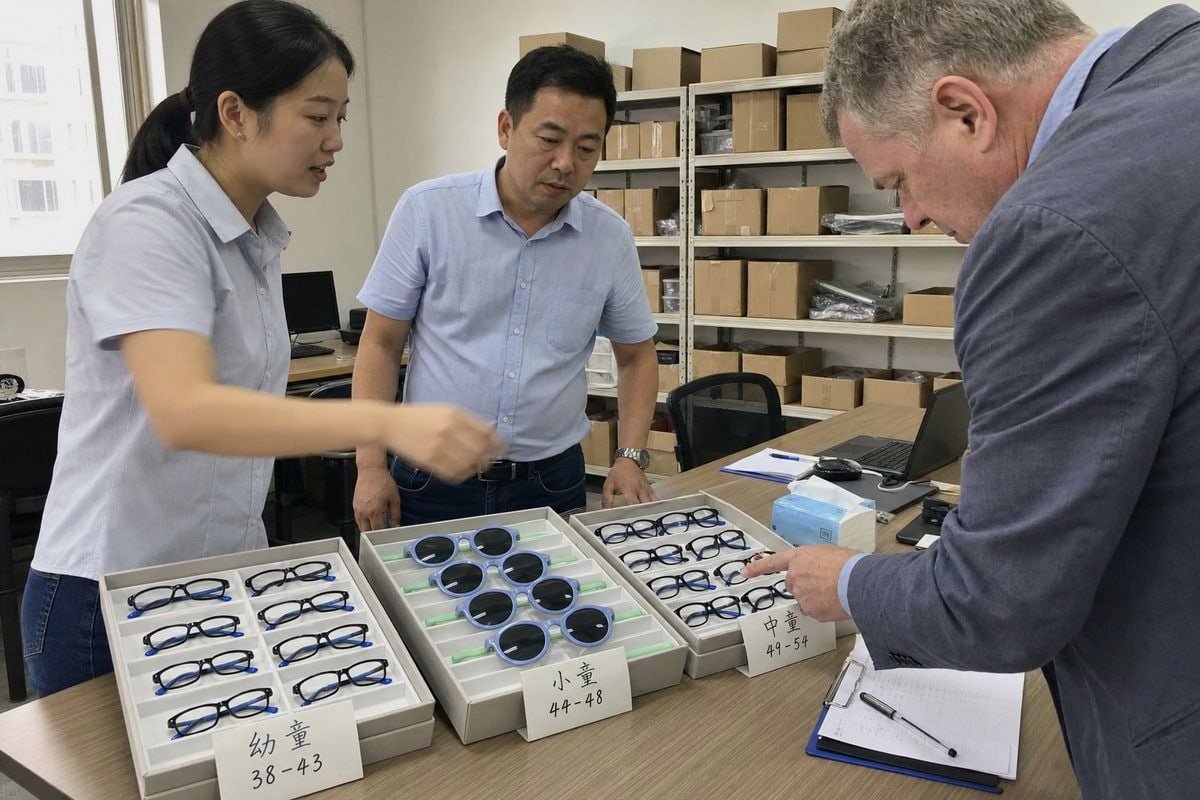
One size never fits all in children's eyewear. When we developed our current catalog of roughly 800 existing styles, we deliberately built size ladders into the popular silhouettes. That way, an importer in Japan or a baby brand in Europe can order the same design language across three age bands, and parents can move up a size without changing the look their child likes.
Match sizing depth to your product strategy
Think about which fit features each age band actually needs. Toddlers need soft, flat bridges and shorter temple length options. School-age kids need durable hinges and growth headroom in the range you stock. Preteens want styles that look closer to adult fashion but keep youth frame dimensions.
| Segment | Priority fit feature | Recommended options to stock |
|---|---|---|
| Toddler (0–3) | Flat, wide bridge contact; ultra-light weight | Flexible one-piece frames, strap-compatible temples |
| School-age (4–9) | Stable temple grip; impact resistance | Spring hinges 2 or flexible temples, two lens widths |
| Preteen (10+) | Near-adult styling with youth proportions | Adjustable nose pads, longer temple length runs |
Raising a common objection: should you size up for growth?
Many buyers ask us to recommend oversized frames so children can "grow into" them. I push back on this every time. Frames chosen with too much room slide down the nose, shift the pupils away from the lens centers, and cause children to peer over the top rim. That defeats the prescription and frustrates the parent. The better strategy is a frame that fits perfectly at purchase, plus a size ladder in your range so replacement is easy. Slight adjustability — through adjustable nose pads or flexible temples — gives sensible headroom. Sizing up two bands does not.
How can flexible TPEE and TR90 frames help me fit different face shapes safely?
Our engineers once bent a TPEE temple arm 180 degrees in front of a skeptical distributor. The arm sprang back with no crease. That demonstration explains our material choice better than any datasheet.
Flexible frame materials like TPEE and TR90 conform to different face widths and bridge shapes, absorb impacts without snapping, and return to shape after twisting. This lets one well-designed frame fit a wider range of head shapes safely and comfortably.
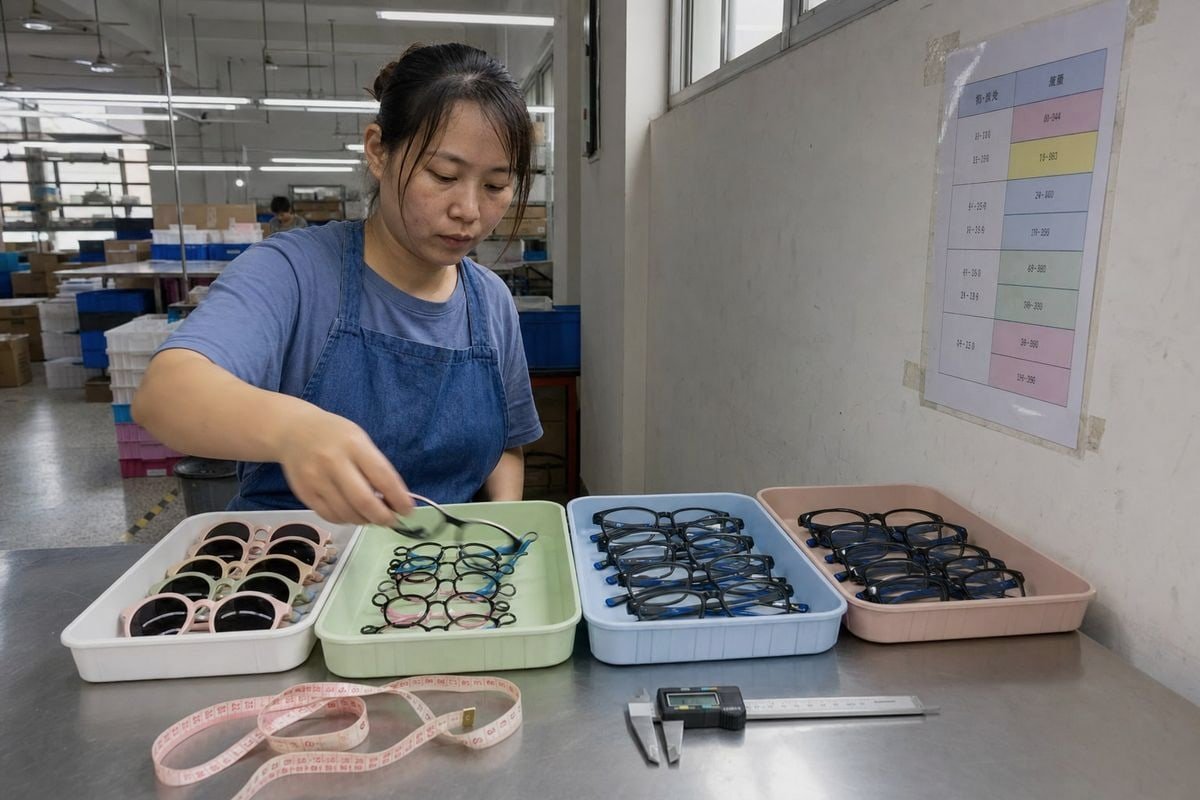
Rigid frames force a binary outcome: they fit or they fail. Flexible frame materials change that equation. TR90 3, a thermoplastic memory material, is lightweight, durable, and slightly springy. TPEE goes further — it is soft enough to twist, environmentally friendly, and gentle against a child's skin. In our workshop, many best-selling styles combine a TR90 front with TPEE temples. The front holds the lenses stable, while the temples flex around wider or narrower heads.
Why flexibility solves face-shape problems
Children's faces differ in more ways than width. Many kids have flatter nasal bridges, so the frame's bridge surface area must match the slope of the nose — sometimes called the nasal flare angle 4 — to distribute weight evenly. Ears sit at slightly different heights on many children, too. Flexible temples with an adjustable core let a fitter level the glasses on an asymmetric face. Spring hinges add another layer of forgiveness, letting the temple arms splay outward when a child pulls the glasses off with one hand, then snap back.
Safety is the non-negotiable layer
Safety drives every material decision we make for children. A snapped acetate frame 5 leaves sharp edges near a child's eye. A TPEE frame simply bends. For active kids — the ones climbing, running, and falling — that difference matters more than any styling choice. Flexibility also protects fit over time. Rigid frames slowly bow outward after a growth spurt and lose their grip. Flexible temples keep tension against the head far longer, and a quick temple splay check every six months tells you when the next size is due.
Why should I work with a manufacturer offering multiple sizes and styles for my kids eyewear line?
A lesson from fifteen years of eyewear production: brands rarely fail on design taste. They fail on fit coverage, mold costs, and slow iteration. The right partner removes all three risks.
A manufacturer with deep size and style ranges lets you launch a complete kids eyewear line without mold investment, test multiple age bands with low order risk, and refine your assortment based on real sales data — all under one quality-controlled roof.
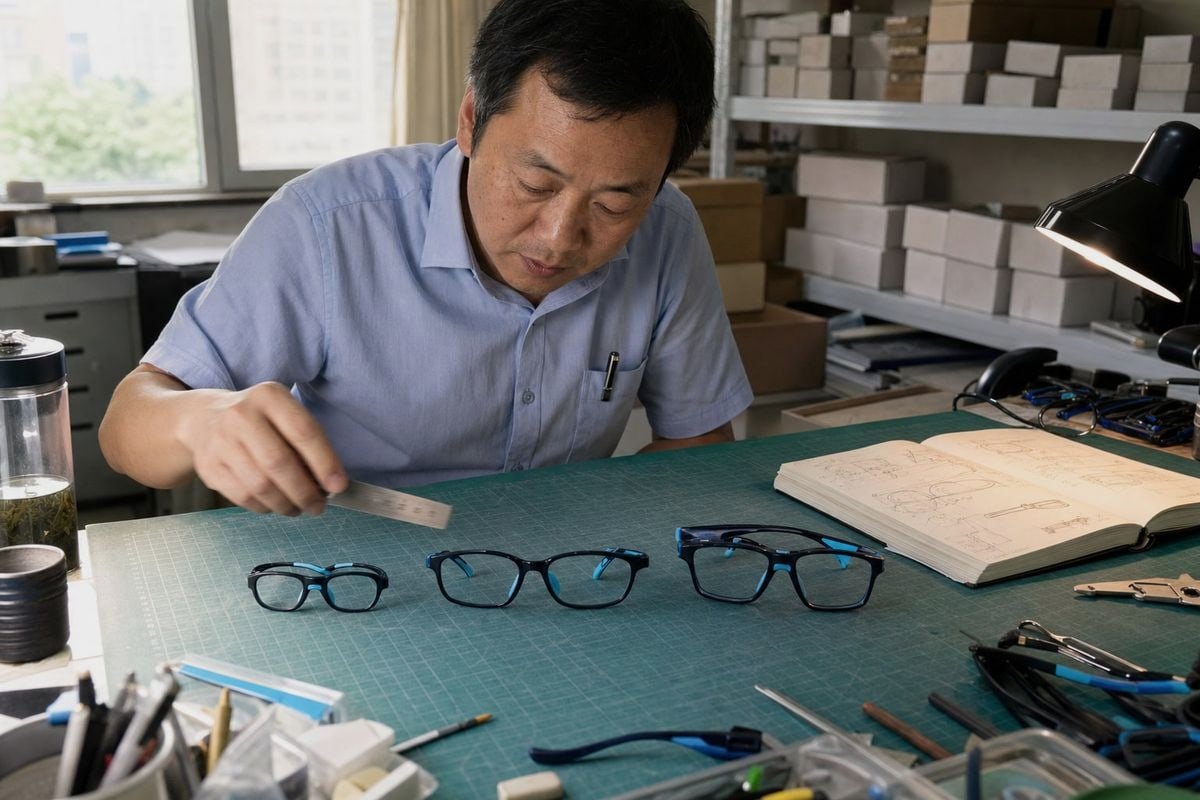
New kids eyewear brands face a chicken-and-egg problem. You need a range of sizes and shapes to serve real children, but tooling each frame from scratch costs serious money before you have sold a single pair. That is exactly why we built a catalog of around 800 existing styles at our Taizhou factory. A founder can pick a rectangular optical frame for school-age kids, a soft round sunglass for toddlers, and a wraparound sport shield for preteens — then brand all three with custom colors, logos, lenses, and retail-ready packaging.
What a deep catalog actually gives you
| Buyer need | With a limited supplier | With a multi-size, multi-style factory |
|---|---|---|
| Launch cost | New molds per style and size | Zero mold cost on existing styles |
| Age coverage | One or two sizes, gaps in range | Toddler to preteen size ladders |
| Market testing | Large minimums per SKU | Mixed assortments, lower risk |
| Fit expertise | Generic adult-derived shapes | Youth bridges, flexible temples, kid-safe edges |
| Brand identity | Off-the-shelf look | OEM/ODM colors, logos, lenses, packaging |
Consistency is the hidden value
Sizing only works when production is consistent. A bridge width that drifts 2 mm between batches ruins the sizing chart you publish for parents. Our 5S-managed workshop 6 and roughly 120 workers exist to hold those tolerances lot after lot, on optical frames and UV400 7 or polarized sunglasses alike. We also handle the details buyers rarely see up front: lens options, hinge screws that stay tight, and packaging that survives international freight. When your customers in twenty different markets order a size 44-15-125, they should receive exactly that — every time. That reliability is what turns a first order into a long-term partnership.
Conclusion
Wrong sizes lose customers fast. Right sizes build loyal ones. Measure first, style second, and partner with our factory to build a kids eyewear line that truly fits.
Footnotes
1. Explains the optical measurement concept referenced for correct lens centering. ↩︎
2. General optical eyewear background relevant to hinge mechanisms discussed for kids frames. ↩︎
3. Background on the thermoplastic memory material used in flexible frame construction. ↩︎
4. Authoritative NIH/PMC study defining nasal anthropometric measurements and angles for facial analysis. ↩︎
5. Background on the rigid frame material contrasted with flexible TPEE in safety discussion. ↩︎
6. Explains the manufacturing quality methodology referenced for production consistency. ↩︎
7. FDA guidance on UV protection standards relevant to UV400 sunglasses mentioned in article. ↩︎
More Articles You Might Like


Looking for a Reliable Kids Eyewear Partner?
Explore 800+ ready styles and full OEM/ODM support tailored to your brand.
Get in Touch English
  Español de México
  Deutsch
  Français
  日本語
日本語  العربية
  Português do Brasil