How to Choose Between Existing Styles or Custom Development for Kids’ Optical Frames?
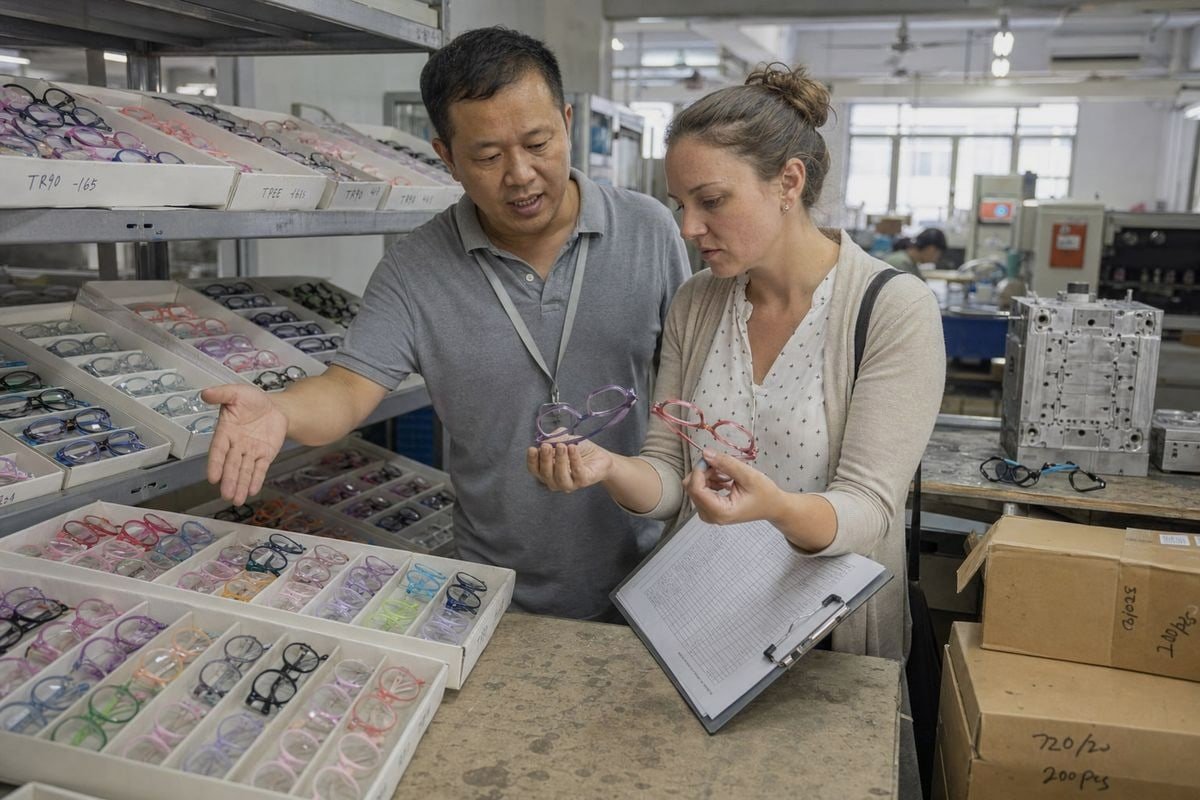
Choosing between existing styles or custom development for kids’ optical frames stalls many brand launches TPEE temples 1. I see buyers freeze at this decision every month on our production floor, worried a wrong choice wastes budget — or worse, delivers frames children refuse to wear. The fix is a clear decision framework, which I share below.
Choose existing styles when you need low MOQs, fast launch, and proven pediatric fit; choose custom development when standard frames cannot deliver the bridge fit, sensory comfort, or proprietary design your brand requires. Most kids’ eyewear brands should start with existing styles, then invest in tooling once sales data justifies it.
That is the short answer. But the real value is knowing exactly when each path solves your problem best. Let me walk you through the four questions buyers ask us most often.
How do I know if an existing style can meet my brand's needs without custom tooling?
A buyer from Australia once sent me a hand-drawn sketch, convinced she needed a full custom mold. We matched her sketch against our catalog and found a TR90 frame within two millimeters of her spec. She launched in six weeks instead of six months.
An existing style meets your needs if it matches your target pediatric frame sizing, uses safe flexible materials like TR90 or TPEE, passes your market's certification requirements, and can carry your logo and colors. If fit, safety, and branding boxes are all checked, custom tooling adds cost without adding value.
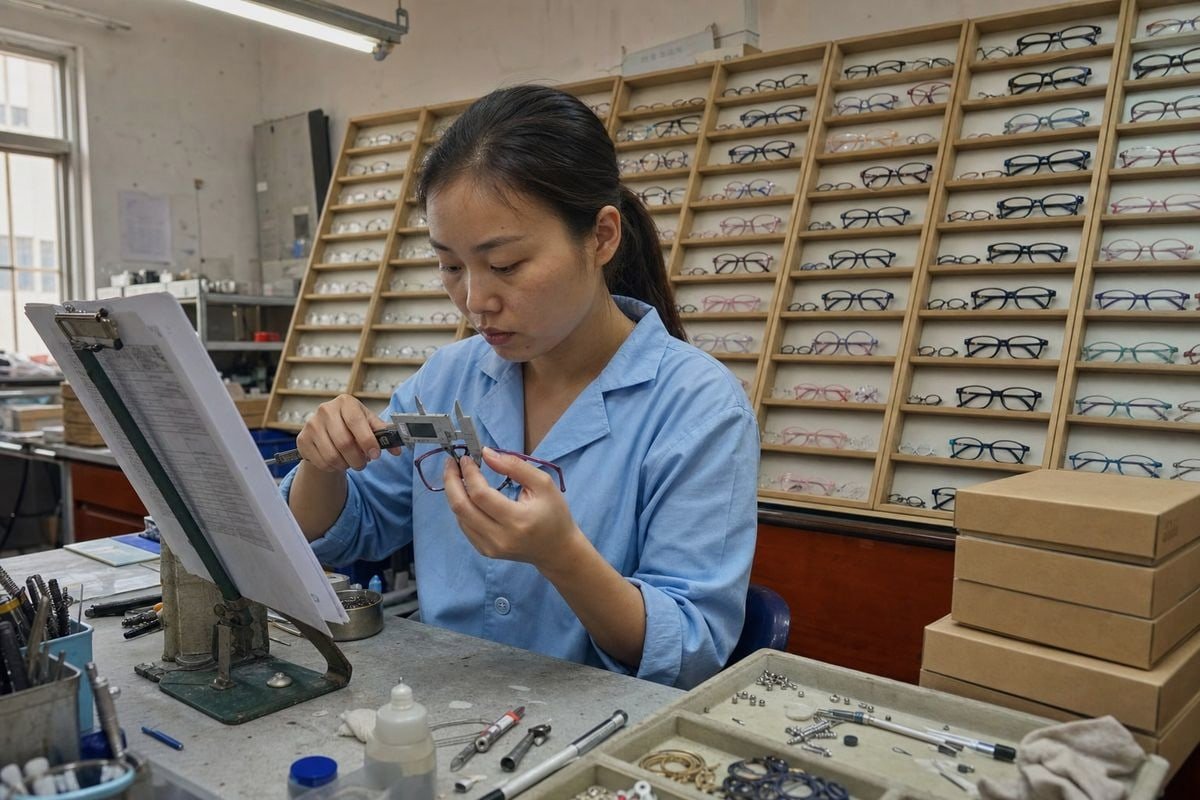
The starting point is always fit, not fashion. Children's glasses must sit correctly on a small, still-developing nose, stay stable during play, and survive rough handling. Industry guidance consistently points to the same core features: flexible materials, spring or integrated flexible hinges, child-specific bridge geometry, and impact-resistant lenses 2. A well-built catalog already engineers all of this in. Our own library holds roughly 800 existing styles, and each one was developed around pediatric fit data rather than shrunk-down adult shapes.
A quick self-audit before you request a mold quote
Run through these questions honestly:
- Does the catalog offer your target age band's bridge sizes? A DBL in the 14–17 mm range suits many children, so check the spec sheet, not just the photo.
- Are the materials right? TR90 material 3 fronts with TPEE temples deliver flexibility and hypoallergenic contact with skin — critical for all-day wear.
- Can the factory meet compliance? Ask about FDA and CE certification 4 support for your destination market before discussing design at all.
- Can branding be applied? Custom colors, temple logos, and retail-ready packaging turn a stock frame into private label eyewear 5 that looks fully yours.
When the answer is no
If children in your market repeatedly report slipping frames, pressure marks, or lenses sitting too low, and no catalog option resolves it after trial fitting, that is your first genuine signal toward custom development. Fit failure — not aesthetic preference — is the strongest justification.
What are the real cost and lead time differences between choosing a ready-made style and developing a custom frame?
Cost conversations are where I have to deliver uncomfortable news most often. Buyers frequently underestimate tooling and mold costs by half, and underestimate the calendar by even more. After fifteen years running eyewear production in Taizhou, the numbers below reflect what actually happens, not what brochures promise.
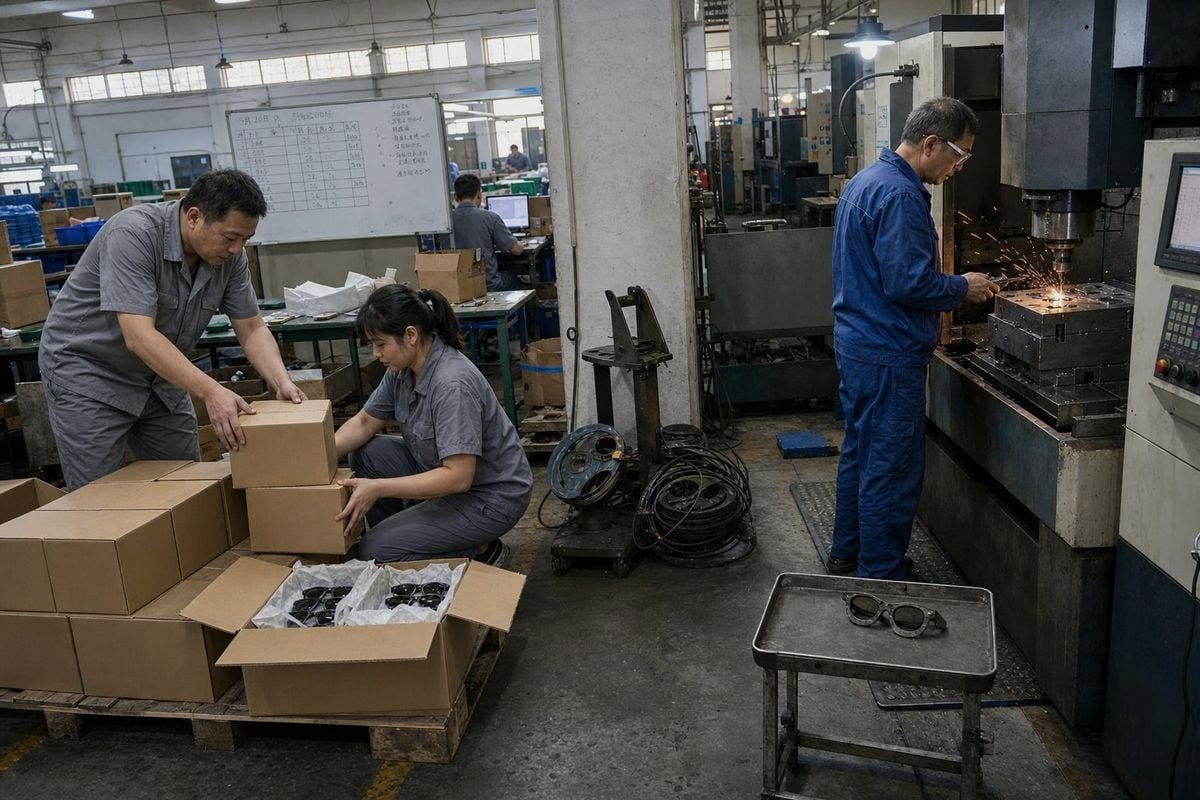
Ready-made styles typically ship in four to eight weeks with low minimum order quantities and zero tooling investment. Custom development usually requires four to six months, covering design, mold fabrication, prototype development, and fit testing, plus mold costs that only pay back at meaningful sales volume.
The gap is not just money. It is risk exposure over time. Here is the comparison we walk every new buyer through:
| Factor | Existing styles | Custom development |
|---|---|---|
| Upfront investment | Sampling cost only | Design fees plus tooling and mold costs |
| Minimum order quantity | Low, often per color | Higher, to amortize the mold |
| Lead time for production | Roughly 4–8 weeks | Roughly 4–6 months including prototyping |
| Design risk | Low — fit already proven | Must be validated through fit iterations |
| Replacement as kids grow | Easy and cheap to reorder | Riskier if sized too precisely |
| Price comparison exposure | Higher — others may sell similar shapes | None — the design is yours |
| Best fit for | Market entry, testing, fast restock | Established demand, unique fit or brand needs |
The hidden costs people miss
Custom projects carry costs beyond the mold invoice. Each prototype development round takes two to four weeks. Fit testing on real children adds more time. If the first sample reveals a temple that presses behind the ear, you revise and wait again. We build two to three iteration rounds into every custom timeline, because skipping them is how bad frames reach shelves.
The hidden costs of stock frames
Fairness demands the other side too. A white-label style can appear in a competitor's line, inviting direct price comparison. And a stock frame close to your ideal spec is still a compromise. For most launches, that compromise is acceptable. For a brand built on a distinctive silhouette, it eventually is not.
When does it make sense to invest in custom development instead of sourcing from existing collections?
The trade-off I weigh with buyers is always the same: precision now versus flexibility later. Kids grow fast, so a perfectly tailored frame can become obsolete in months. Yet some fit and brand problems simply cannot be solved from a catalog, no matter how deep it is.
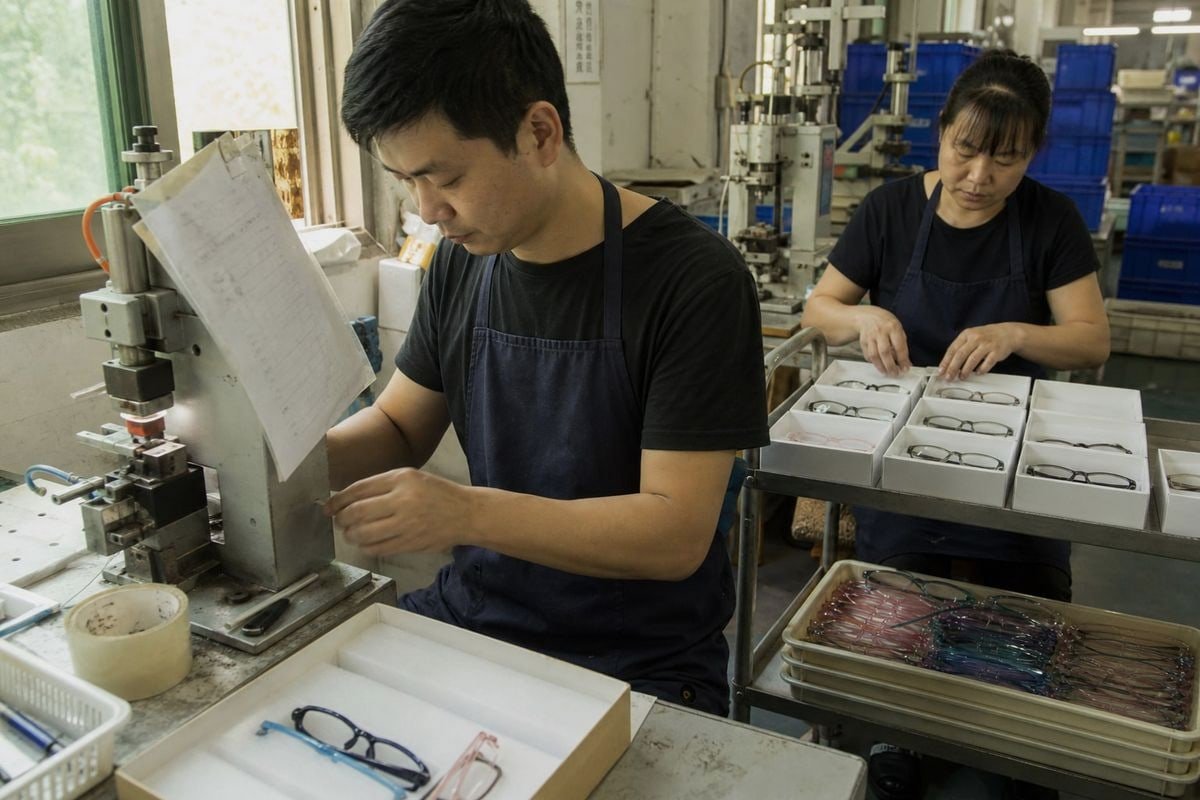
Custom development makes sense when children repeatedly experience fit failure with stock frames, when you serve special sensory or craniofacial needs, when your brand requires a proprietary design language, or when validated sales volume makes tooling costs a sound investment rather than a gamble.
Some buyers push back here: "If existing styles work for most kids, why would anyone tool up?" That objection is fair, and I raise it myself in early calls. But "most kids" is not "all kids," and "a good frame" is not "a defensible brand." Custom earns its cost in four specific situations.
Fit problems that catalogs cannot solve
Some children need a boxed center distance 6 close to their PD, a near-zero pantoscopic angle, or unusual temple lengths that fall outside standard ranges. Moving beyond age-based sizing toward biometric clusters — fits built from aggregated facial data — lets a brand serve children with non-standard craniofacial development whom mass-market frames consistently fail.
Sensory and medical requirements
Children with tactile sensitivities or neurodivergent needs may reject frames over a seam they can feel or a hinge that clicks. Custom work can prioritize sensory-neutral features: integrated seamless hinges, ultra-matte textures, and fully hypoallergenic materials 7 at every skin contact point. We have built temples in soft TPEE specifically because a buyer's end customers could not tolerate hard acetate edges.
Brand and business-model goals
Custom tooling also unlocks structural advantages:
- Material mapping — placing high-performance or bio-based polymers exactly in high-stress zones for durability beyond stock builds.
- Modular architecture — interchangeable temples and bridges that support a repair-not-replace model and build long-term loyalty.
- Digital alignment — high-fidelity 3D digital twins created during design, so physical frames match virtual try-on tools and returns drop.
Volume justification
Finally, math. If your validated monthly sales can absorb the tooling amortization within a reasonable horizon, custom stops being a risk and becomes an asset competitors cannot copy.
Can I combine existing frame designs with custom branding to save time and reduce risk?
The most successful launch I have supported took exactly this hybrid path. A European kids' brand selected three frames from our catalog, specified Pantone-matched colors, added a laser-engraved temple logo, and shipped in branded retail boxes. Customers never suspected the frames were not tooled from scratch.
Yes — combining existing frame designs with custom colors, logos, lenses, and packaging is the lowest-risk launch strategy. This OEM approach delivers a fully branded product in weeks, lets you validate shape and color preferences with real sales, and defers tooling investment until data supports it.
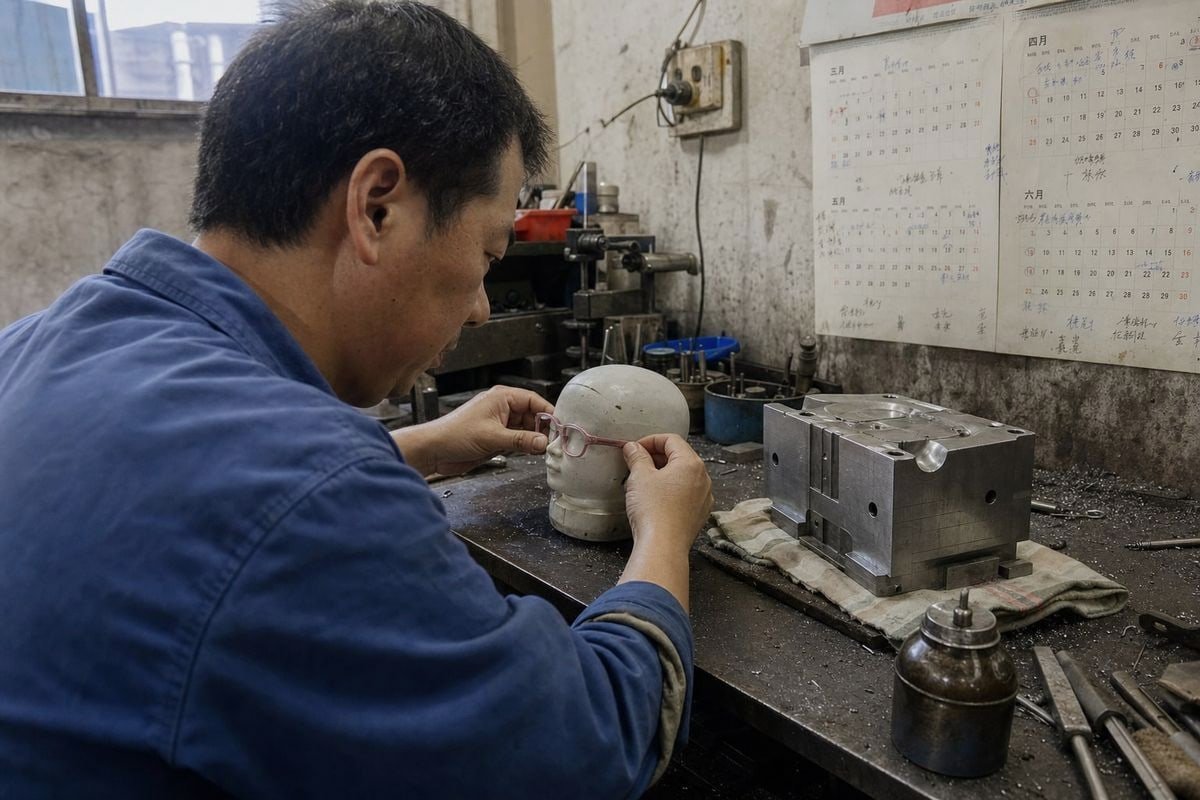
This hybrid model sits at the practical middle of the OEM vs ODM manufacturing spectrum. You are not buying a generic product, and you are not funding a mold. You are customizing a proven platform. Here is what can typically be changed on a stock frame without any new tooling:
| Element | Customizable without tooling? | Typical impact |
|---|---|---|
| Frame and temple colors | Yes, Pantone-matched | Strong shelf differentiation |
| Logo (print, engrave, metal inlay) | Yes | Brand ownership perception |
| Lens type (UV400, polarized, demo) | Yes | Function and positioning |
| Packaging, case, cloth, hang tags | Yes | Retail-ready presentation |
| Bridge geometry, frame shape | No — requires a mold | Reserved for true custom |
| Temple length beyond stock range | No — requires a mold | Reserved for true custom |
Using stock styles as market research
The strategic value goes beyond speed. Every reorder tells you which shapes, sizes, and colors your market actually buys. After two or three seasons, that sales data becomes your custom design brief. Instead of guessing which silhouette to tool, you invest in the shape that already proved itself — with your own refinements to bridge fit, materials, or modularity layered on top.
What to verify before committing
Ask your factory three things: the MOQ per custom color, whether logo application is done in-house or outsourced, and whether packaging can meet your retailer's compliance labeling. On our line, all three stay under one roof with 5S-managed quality control, which is exactly what keeps hybrid timelines short and consistent.
Conclusion
Guessing wrong between existing styles or custom development for kids' optical frames wastes months and capital. Start with proven catalog styles, brand them fully, and tool up only when fit failures or validated volume demand it.
Footnotes
1. Wikipedia background on thermoplastic elastomers such as TPEE used in flexible eyewear temples. ↩︎
2. ISO sets international safety standards for impact-resistant lenses used in children’s eyewear. ↩︎
3. Background on thermoplastics like TR90 commonly used in flexible children’s eyewear frames. ↩︎
4. Authoritative FDA overview of medical device classification and the regulatory requirements for market certification. ↩︎
5. Alibaba is a leading sourcing platform for private label eyewear manufacturing and branding. ↩︎
6. Wikipedia explains pupillary distance measurement essential for precise custom optical fitting. ↩︎
7. NIH resource on skin allergic reactions relevant to selecting hypoallergenic frame materials for children. ↩︎
More Articles You Might Like

Looking for a Reliable Kids Eyewear Partner?
Explore 800+ ready styles and full OEM/ODM support tailored to your brand.
Get in Touch English
  Español de México
  Deutsch
  Français
  日本語
日本語  العربية
  Português do Brasil