How to Choose Between Elastic Strap, Ear Hook, and Straight Temple Kids Sunglasses?
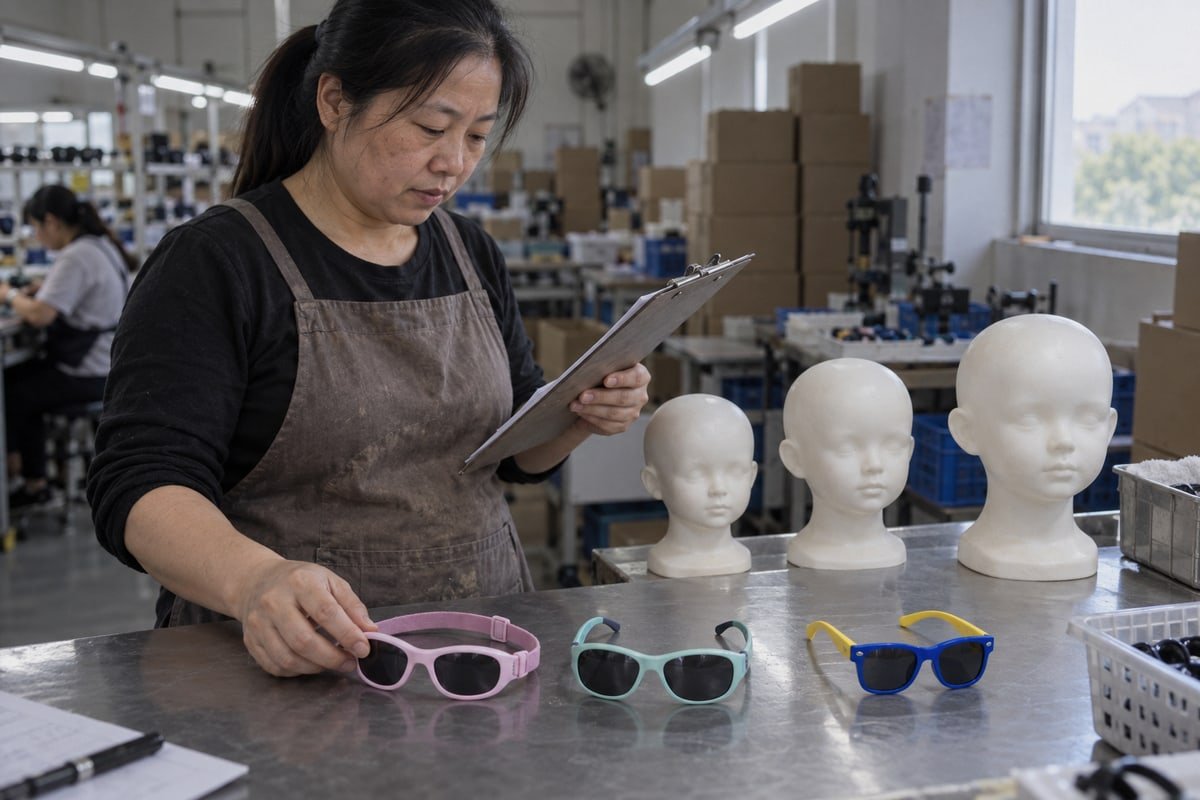
[Elastic strap](https://okayeyewear.com/what-difference-between-infant-toddler-children-sunglasses-the/), ear hook, and straight temple kids sunglasses each promise to stay on. Many still slip off fast, and parents blame your brand. Our Taizhou production line learned why.
Choose elastic strap kids sunglasses for babies and toddlers under 4, ear hook or grip-tip styles for active children aged 4 to 7, and straight temples for kids 7 and older with well-fitted frames. Match retention style to age, face shape, and activity level, never to parent preference alone.
This is not a ranking of which style is “best.” It is a fit-and-use-case decision. Below, I will walk through age, activity, safety, and sourcing, one step at a time, so you can build a range that actually stays on small faces.
Which style is best suited for my target age group, from babies to older kids?
During a QC round last season, one of our inspectors held a toddler frame with straight temples 1 up against a baby head form. It slid straight down.
Elastic straps suit babies and toddlers aged 0 to 3, whose low nasal bridges and low-set ears cannot hold temples. Ear hooks or grip tips suit preschoolers aged 4 to 7. Straight temples suit children 7 and older with developed facial structure and good frame fit.
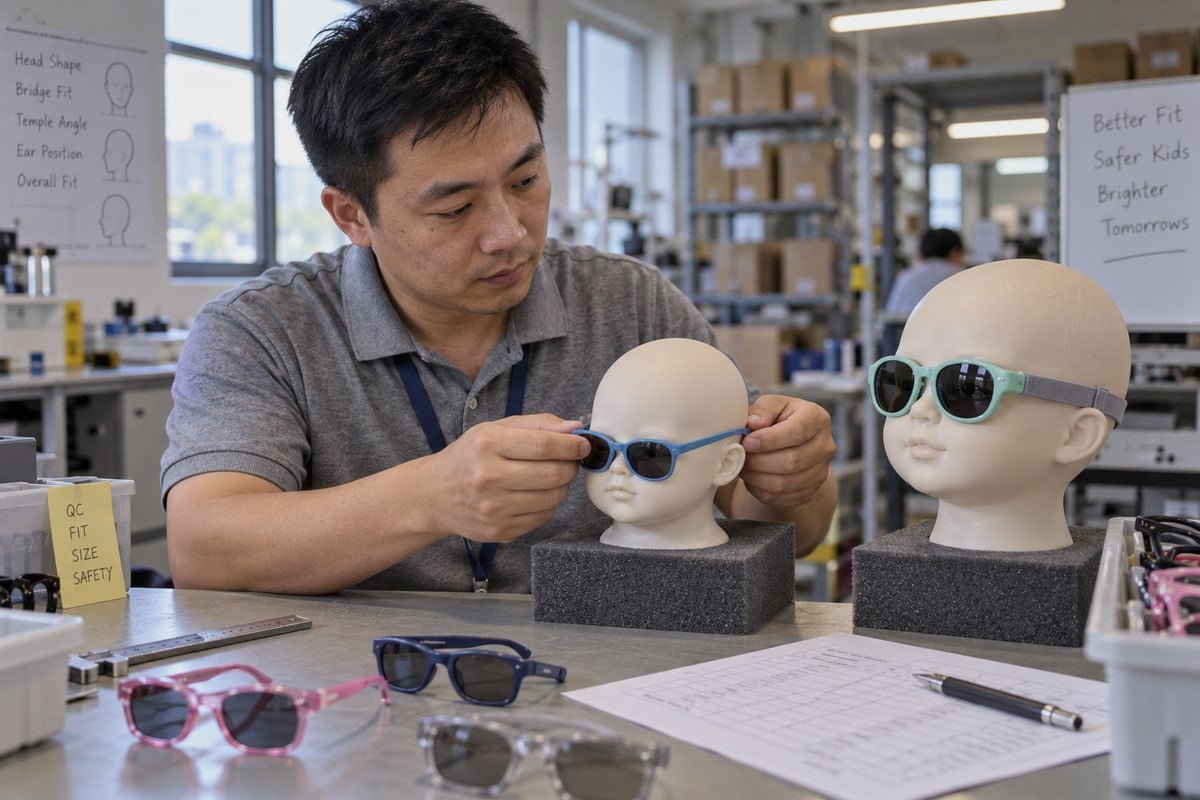
That head-form moment explains the whole age question. A baby's face is not a small adult face. The nasal bridge is flat and underdeveloped. The ears sit low. There is simply nothing for a straight temple to rest on. So the frame has to be held by something else, and that something is a strap around the back of the head.
Age bands at a glance
| Age band | Recommended retention | Why it works | What to avoid |
|---|---|---|---|
| 0–3 years | Elastic strap or adjustable headband | Flat nasal bridge and low-set ears cannot support temples; children remove eyewear constantly | Hard clips, dangling ends, rigid temples |
| 4–7 years | Ear hook, grip tip, or flexible temple with optional strap | Facial structure is forming; kids are very active but often dislike full straps | Oversized frames "fixed" with a strap |
| 7+ years | Straight temple with non-slip grip tips | Nose and ears can hold a frame naturally; style and comfort start to matter | Babyish straps that kids refuse to wear |
Why the 0–3 group needs the most hold
In our experience developing toddler eyewear sizing, the smallest frames need the widest safety margin. Toddlers grab, pull, and throw. Straps keep the frame from hitting the ground, and they also keep it from ending up in the mouth. That is why we pair TPEE flexible frames 2 with soft straps for this group. The frame bends instead of snapping, and the strap holds without pinching. BPA-free materials 3 matter here too, because babies will chew on whatever is near their face.
There is a second, less obvious reason. If your range includes optical sunglasses with heavier prescription lenses, a strap distributes that weight across the head. It keeps the lenses aligned in front of the eyes instead of sliding down the nose. A straight temple cannot do that on a small face.
The 4–7 transition
This is the hardest group to design for. Many preschoolers hate the feel of a strap. But they also run, climb, and fall more than any other age. The middle ground is an ear hook or a grip temple tip. It adds friction behind the ear without wrapping the head. Our blush-pink round frame is a good example. It has slim, tapered temples that hug the side of the head, and we can fit soft grip tips for kids who still slip out of frames.
When to move to straight temples
By about 7, most children have enough nose and ear structure to hold a frame naturally. At this age, style becomes a real purchase driver. The lavender cat-eye and the royal blue and yellow square frame in our line are both straight-temple designs, and buyers choose them for exactly that reason. The frame fits, so the child keeps it on because it looks good, not because it is tied on.
How do I match strap, hook, or temple designs to my customers' activity levels and lifestyle?
A kids' outdoor brand buyer from Australia asked us for a single frame that would survive both a stroller nap and a beach afternoon. We had to explain the trade-off.
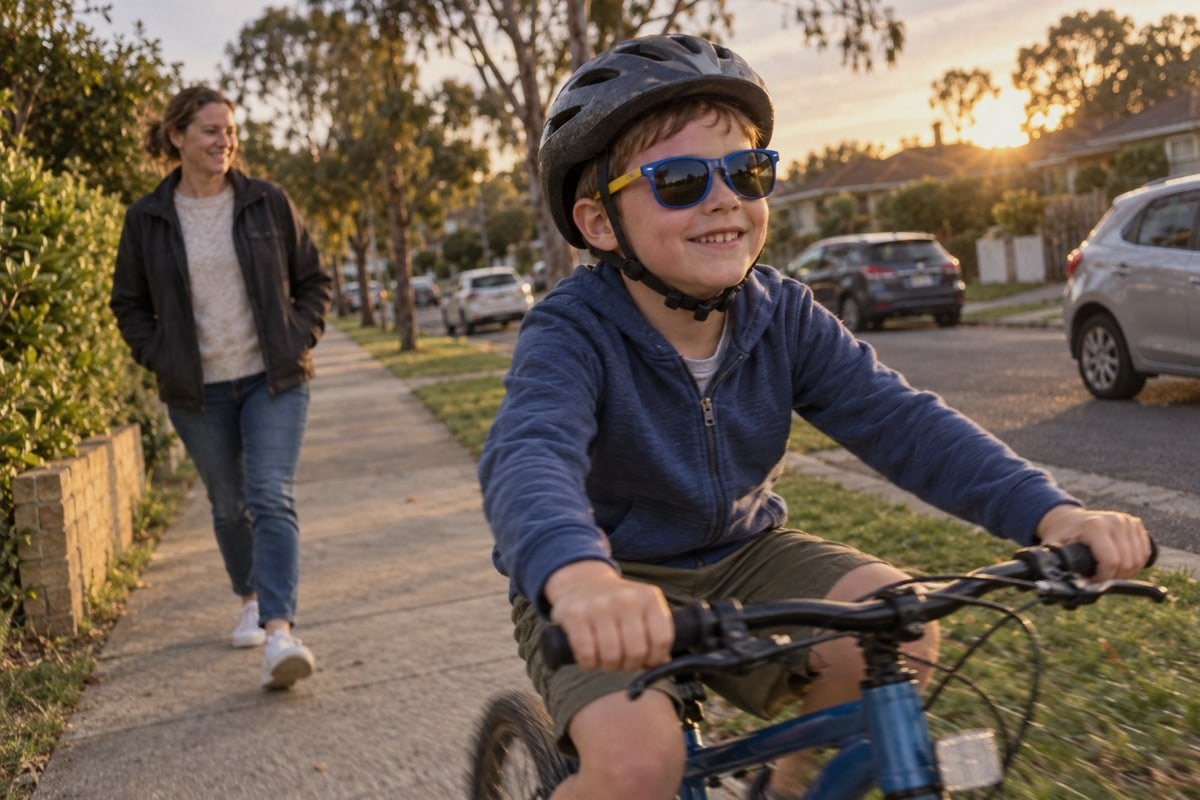
Use elastic straps for high-impact sports, water play, bike rides, and stroller or daycare use where loss is likely. Use ear hooks or grip tips for moderate playground activity and travel. Use straight temples for school, daily wear, and children who wear helmets often.
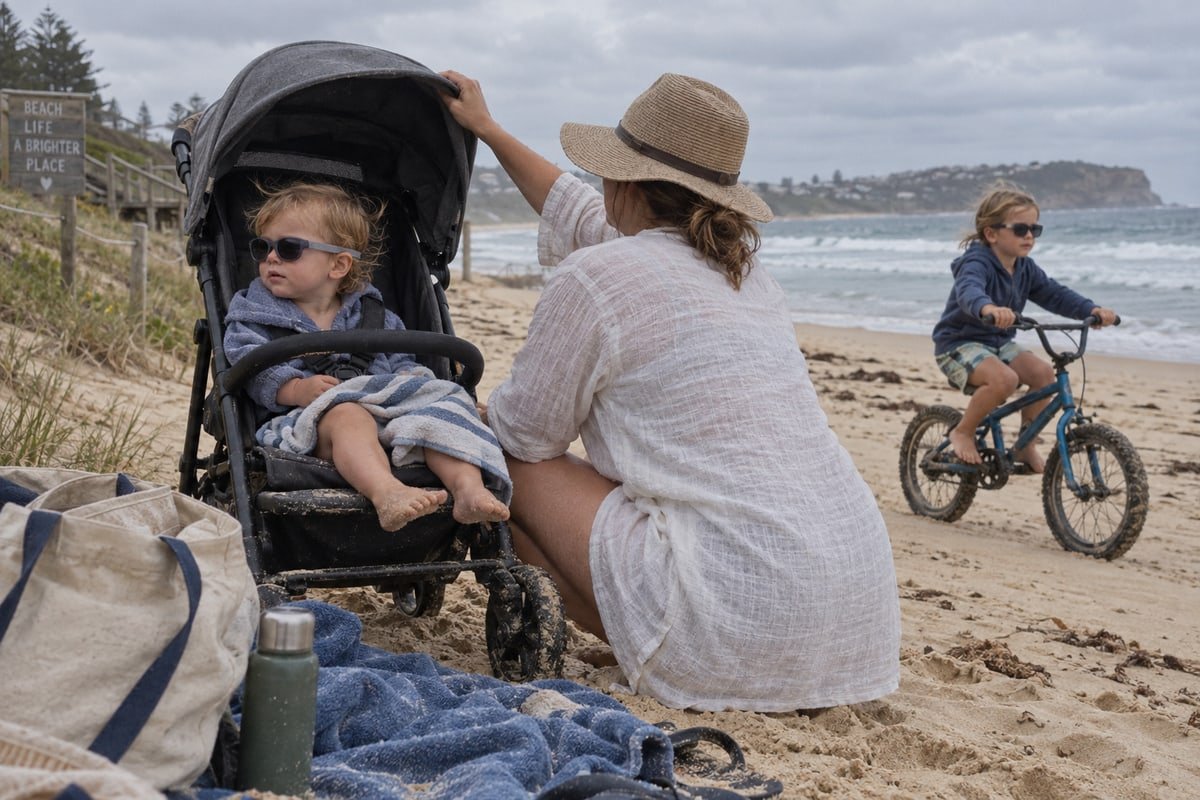
That buyer's request is common. Parents want "one pair for everything." Some buyers push back on our advice and say a strap is essential no matter what, because style means nothing if the glasses fall off. Others say straight temples only, because straps are fussy and hot. Both are half right. The honest answer is that retention needs change with the activity, and a good kids' range reflects that instead of pretending one design covers everything.
Activity map
| Activity or setting | Best retention | Reason |
|---|---|---|
| Stroller, car seat, outdoor daycare | Elastic strap | Frequent removal by the child; caregiver cannot always re-seat the frame |
| Beach, pool, water play | Elastic strap with wrap-around design | Water and splashing; polarized lenses cut glare off the surface |
| Bike rides, scooters, trampolines | Elastic strap or firm ear hook | Sudden movement and vibration shake loose frames off |
| Playground, park, travel | Ear hook or grip tips | Moderate motion; discreet hold without full-strap bulk |
| School, daily wear, errands | Straight temple with non-slip grip | Long wear periods; comfort and style win |
| Multi-sport helmets (bike, ski, skate) | Straight temple | Straps and hooks press against the skull under a helmet |
Where ear hooks are underused
I think ear hooks are the most overlooked option in this category. Buyers tend to jump from "strap" to "no strap." But a well-shaped hook, or a cable temple that curls behind the ear, solves most playground slipping problems without the bulk of a headband. It also looks like a normal pair of sunglasses, which matters to a six-year-old. The weak spot is intense movement. On a trampoline, a hook alone may not stop a loss. That is where I steer buyers back to a strap, or to a frame that accepts a detachable one.
The helmet exception
One point often surprises product managers. For children who wear helmets a lot, straight temples are actually the safest and most comfortable choice. A helmet strap already wraps the head. Adding an elastic band or a thick hook under it creates pressure points that hurt within minutes. Slim, flexible TPEE temples slide under the helmet padding 4 and disappear. This is one reason we keep straight-temple sport styles in the line even for younger kids.
Building a small range instead of one hero product
When I help a brand plan an assortment, I usually suggest at least two retention styles across the range. A strapped toddler frame and a straight-temple frame with grip tips for older kids cover most of the market. An ear-hook option fills the gap in the middle. All three can share the same UV400 protection and shatterproof polycarbonate lenses, so the message to parents stays consistent while the fit changes with the child.
What safety and comfort factors should I weigh when comparing these three fitting styles?
Every time we spec a strap, we weigh hold against pressure. A tighter band stays on longer, but it leaves marks, and a child who hurts takes the glasses off.
Straps must be soft, smooth, and snug without leaving marks or snag points. Ear hooks must not bend temples or interfere with hearing aids. Straight temples need correct frame width and non-slip tips. A retention system should stabilize a well-sized frame, never fix an oversized one.
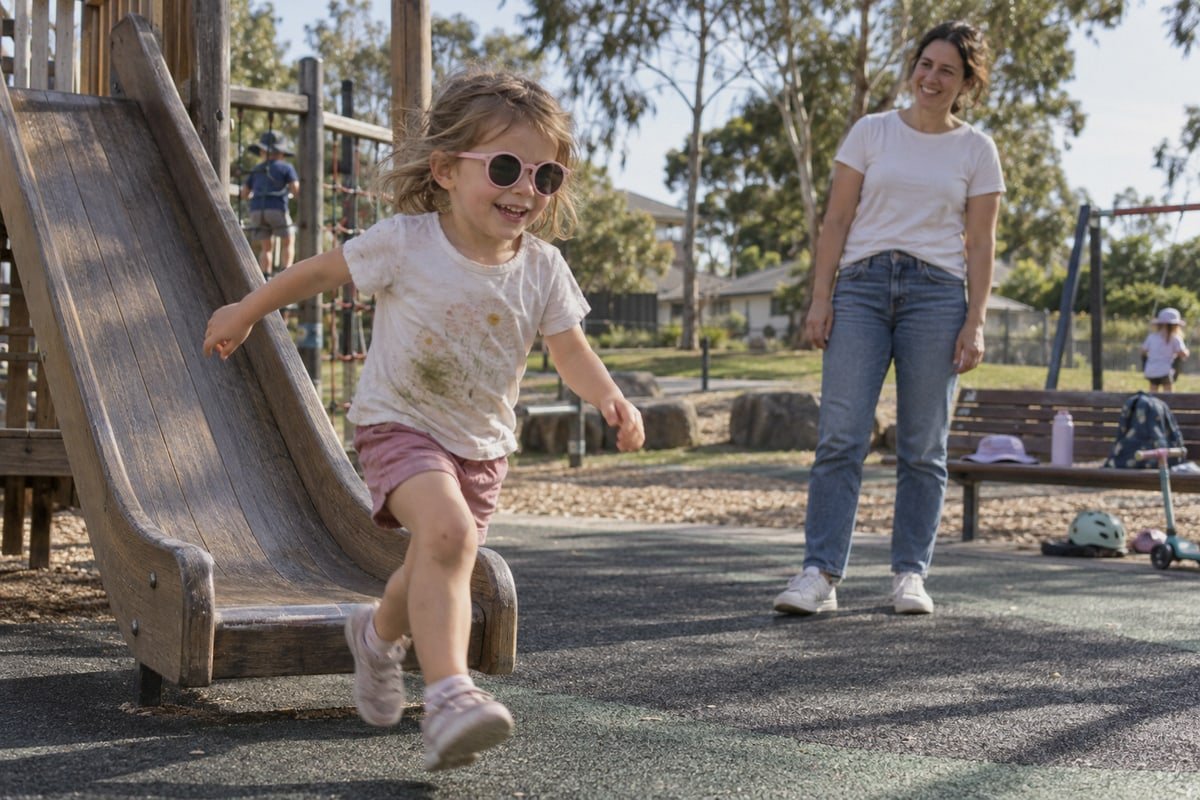
That last sentence is the most important thing in this section. I see it every month: a buyer picks a frame that is too wide for the target age, then asks for a strap to "hold it on." The strap does hold it on. But the temples flare out, the lenses sit crooked, and the child gets pressure on the cheeks. A retention system is a stabilizer for a correct fit. It is not a repair for a wrong one.
Fit checks before you pick a retention style
- Frame width matches head width. Too narrow squeezes the temples. Too wide slides.
- Temples sit flat at the sides without digging in behind the ears.
- The frame does not rest on the cheeks and does not pinch the nose.
- The child can shake the head, bend over, and stand up without the frame moving.
- Any strap or hook feels snug but leaves no red marks after a few minutes.
We run these motions on every new sample at our factory. If a straight-temple frame passes all five on the right head size, it usually does not need a strap at all.
Safety and comfort comparison
| Factor | Elastic strap | Ear hook / grip tip | Straight temple |
|---|---|---|---|
| Hold | Highest | Medium | Depends on fit |
| Long-wear comfort | Can feel warm or restrictive | Good if tip shape matches ear | Best when fit is correct |
| Snag risk | Present if clips or ends dangle | Low | Very low |
| Hinge stress | Strap must not pull on hinges | Hook must not bend the temple | None added |
| Look | Can read as "babyish" | Discreet | Easiest to style |
| Special needs | Helps sensory-seeking kids and photophobia | Avoid with behind-the-ear hearing aids 5 | Best under helmets |
Special situations worth designing for
A few cases change the answer. Children with behind-the-ear hearing aids or cochlear implants should not use ear hooks. The hook competes for the same space and can knock the device loose. A soft strap or a slim straight temple works better. Children with photophobia benefit from a strap, because it pulls the frame close and creates a goggle-like seal against peripheral light, especially with a wrap-around design. And some children with sensory processing differences actually like the steady pressure of a strap. It gives calming proprioceptive input, and they wear the glasses longer because of it.
Material choices behind comfort
Comfort is not only shape. It is also material. TPEE flexible frames bend under a fall and return to shape, which gives impact resistance 6 without hard edges. TR90 fronts with TPEE temples give the same benefit with a crisper look for older kids. We keep straps smooth and low-profile, with no hard buckles near the neck, and we check that BPA-free materials are used throughout for the toddler range. If a child hates the feel, no retention system will save the sale.
Can I source and customize all three options from one manufacturer without raising my MOQ or costs?
We learned early that a brand which needs three retention styles should not need three suppliers. Splitting orders raised MOQs and slowed everything down for our buyers.
Yes. A factory with a large existing style library can offer elastic strap, ear hook, and straight temple kids sunglasses from shared frame bases, so you customize colors, logos, lenses, and accessories without new molds. Mixing retention styles across one order usually keeps MOQ and unit costs stable.
The lesson behind that opening was expensive for one of our early partners, not for us. They sourced strapped toddler frames from one supplier and straight-temple frames from another. Lens tints did not match. Packaging did not match. Two sets of QC standards meant two sets of problems. When they consolidated with us, the range finally looked like one brand.
How we handle three styles in one order
- Start from the existing library. We have roughly 800 styles on hand, so most brands find a toddler frame, a preschool frame, and an older-kid frame without opening a single mold.
- Choose the retention approach per frame. A toddler round frame gets a detachable elastic strap or adjustable headband. A preschool frame gets non-slip grip tips or cable temples. An older-kid frame keeps straight TPEE temples.
- Unify the lens spec. UV400 protection is standard. Polarized lenses can be added across all three styles for a beach or outdoor positioning.
- Apply brand elements. Custom colors, a logo on the temple, a printed strap, and retail-ready packaging.
- Run one QC process. Our 5S-managed workshop checks fit, hinge action, strap attachment, and lens integrity on the same line, with the same inspectors.
What customization affects cost and what does not
| Customization | Effect on MOQ or cost | Notes |
|---|---|---|
| Choosing existing frame shapes | None | Mold already exists; you only select |
| Custom frame color | Minimal | Color matching on TR90 and TPEE is routine |
| Logo on temple or strap | Minimal | Pad print or laser mark |
| Detachable strap or grip tips as accessory | Minimal | Added as an accessory, not a new frame |
| Polarized lens upgrade | Moderate per unit | Applies evenly across all retention styles |
| Custom packaging | Depends on complexity | Shared across the range to spread cost |
| New frame mold | Significant | Only needed for a truly unique silhouette |
Why shared frame bases matter
The key is that retention is mostly an accessory decision, not a mold decision. The royal blue and yellow square frame in our line ships with straight temples, but the same front can accept a strap for a younger version. The blush-pink round frame works with plain temples for a calm toddler or grip tips for an active preschooler. Because the frame does not change, your quantity stays pooled under one style, and the MOQ math does not get worse when you add a second retention option.
What a real factory brings to this
With around 120 workers and 15 years in eyewear, our team in Taizhou has built the flexible-material know-how that makes this work. TPEE temples that bend but still grip. Strap anchors that do not stress the hinge. Shatterproof polycarbonate lenses fitted to frames sized for small faces. We ship to buyers in more than 20 countries, and the brands that grow with us are the ones that treat us as a long-term partner rather than a price quote. We are not the cheapest option. We are the one that keeps the toddler strap, the preschool hook, and the older-kid temple looking and performing like one family.
Conclusion
Slipping sunglasses lose sales. Match strap, hook, or temple to age, activity, and fit, then source all three from one flexible-material factory to launch faster.
Interested in sourcing the products mentioned in this article? See details and request a quote here:
Footnotes
1. General technical overview of eyeglass components, including temple styles and frame construction. ↩︎
2. Technical properties of thermoplastic elastomers used in the manufacturing of flexible eyewear frames. ↩︎
3. FDA guidance on the safety of bisphenol A and materials used in products for children. ↩︎
4. Government safety guidelines for protective headgear and helmet component safety standards. ↩︎
5. Public health information regarding the types and physical fit of pediatric hearing devices. ↩︎
6. International standards for testing and certifying impact resistance in optical products and materials. ↩︎
More Articles You Might Like


Looking for a Reliable Kids Eyewear Partner?
Explore 800+ ready styles and full OEM/ODM support tailored to your brand.
Get in Touch English
 Español de México
 Deutsch
 Français
 日本語
 العربية
 Português do Brasil