Strap vs Temple-Style Kids’ Sunglasses: Which Age Groups Suit Best?
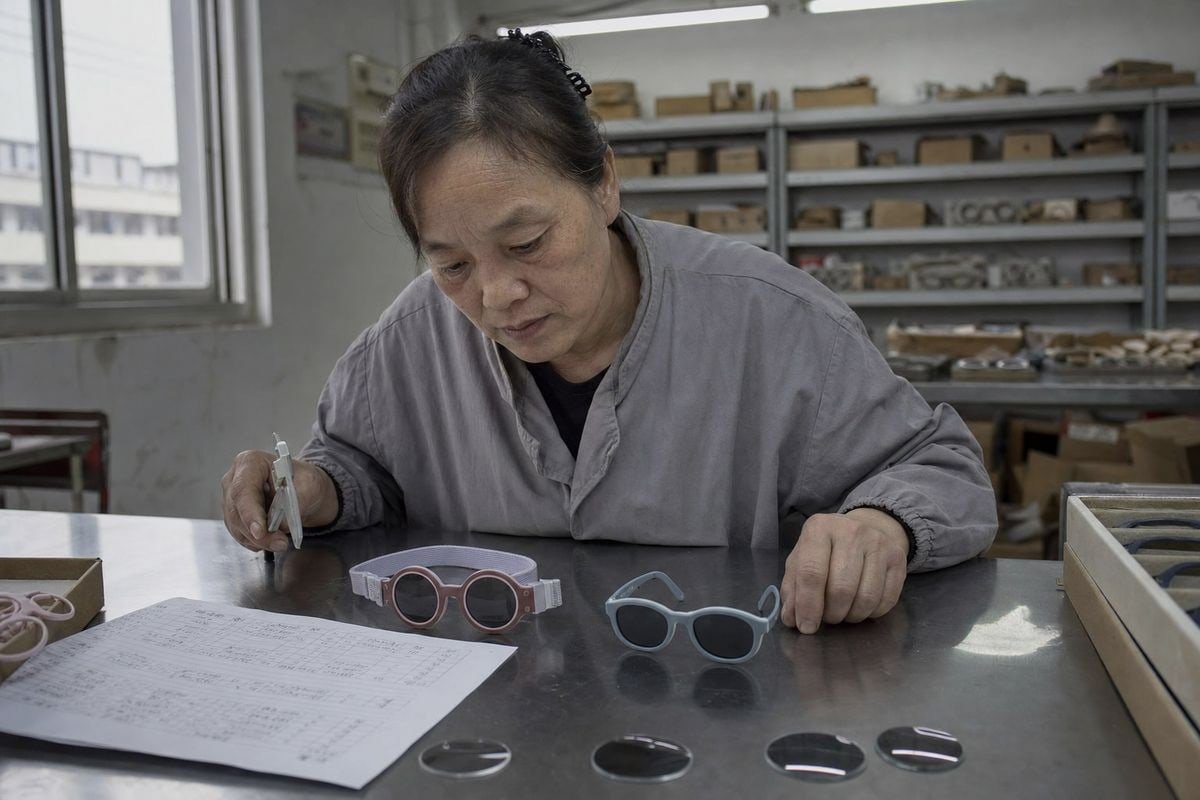
Strap vs temple-style kids’ sunglasses is the question I hear most from buyers visiting our Taizhou factory. Choose wrong, and glasses get thrown, lost, or never worn. Here is our answer.
Strap-style kids’ sunglasses suit babies and toddlers aged 0–3 best, because straps maximize retention on small heads. Temple-style sunglasses suit children aged 4 and up, once facial structure, motor skills, and tolerance for temple arms have matured enough for a secure fit.
That is the short version. But the real dividing line is development, not birthdays. Below, I break down each age band, the transition window, and what this means for your product line.
How do I know if my baby needs strap sunglasses instead of temple frames?
A buyer from Australia once returned samples because temple frames kept sliding off infant models during her photo shoot. Our team sees this pattern constantly, and the reason is anatomical.
Babies aged 0–2 need strap sunglasses because their flat, underdeveloped nose bridges and small ears cannot hold temple arms in place. An adjustable neoprene strap wraps the head, keeps lenses positioned over the eyes, and survives the grab-and-throw phase that defeats standard frames.
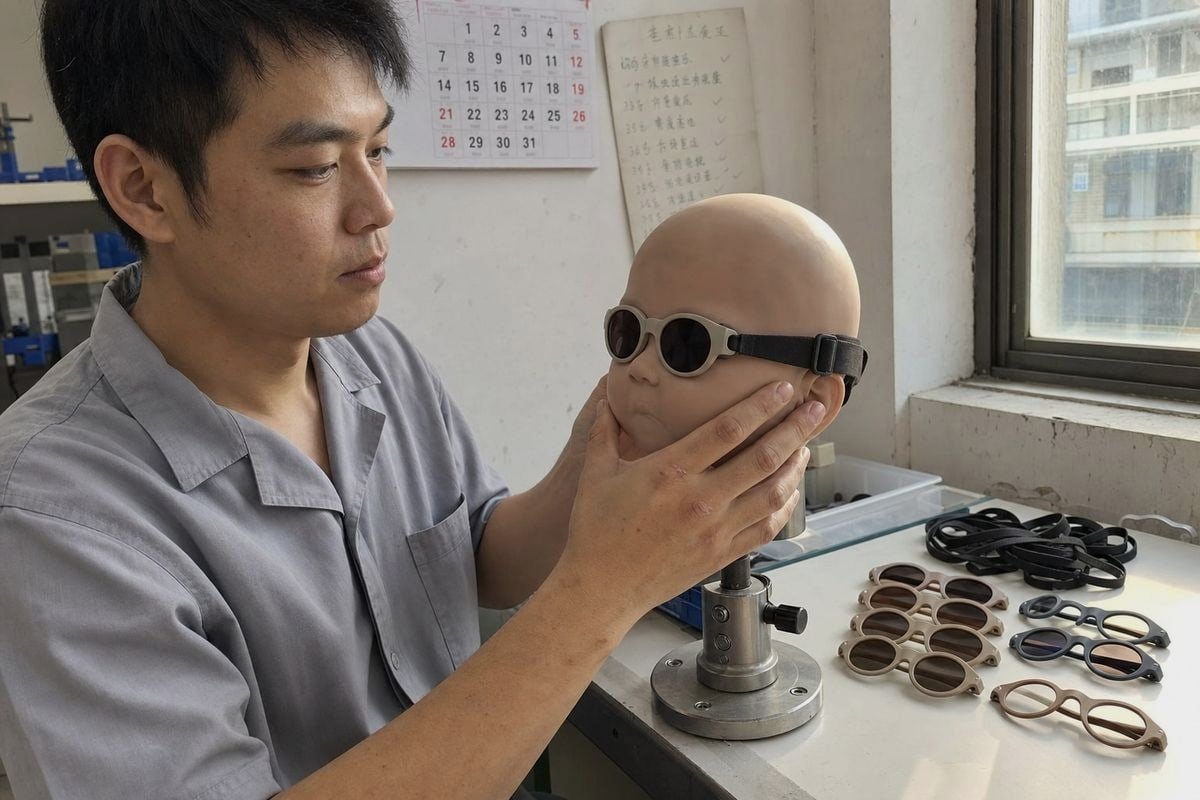
Infant eye health is the core issue here. A baby's ocular lens cannot filter most UVA rays 1 the way an adult lens can. So sunglasses that slip down or sit crooked are not a minor annoyance. They leave young eyes exposed at exactly the age when protection matters most. That is why retention, not style, drives the design of everything we build for the 0–2 band.
Why temple arms fail on infant faces
An infant's nose bridge is nearly flat. There is no structural shelf for the frame to rest on. Ears are small and soft, so temple tips have nothing firm to hook behind. Add the grab-and-throw developmental phase, and a temple frame becomes a toy that lands in the grass within seconds.
What a good strap system looks like
In our sampling room, we check four things on every strap-style design before it ships:
| Feature | What to look for | Why it matters |
|---|---|---|
| Strap material | Soft, adjustable neoprene or elastic | Adjusts as the head grows; no pinching |
| Frame material | Flexible TPEE frames, hinge-free | Bends without snapping; safe if baby chews or falls |
| Lens spec | 100% UVA/UVB protection, shatter-resistant lenses | Full coverage for developing eyes |
| Coverage | Wrap-around design | Blocks peripheral light leakage on small faces |
One honest caveat: babies under 6 months should mostly stay in shade. Sunglasses are a supplement to toddler sun safety 2, not a replacement for hats and stroller canopies. Also watch rear buckles. A hard plastic clasp can press against a car seat headrest, so we position closures flat and off-center on our infant styles. All materials should be BPA-free, because at this age, glasses will end up in the mouth.
At what age can I safely switch my child from strap to temple-style sunglasses?
The trade-off we weigh in every product meeting is retention versus independence. Straps hold better; temples let a child manage glasses alone. The switch point is where those lines cross.
Most children can switch from strap to temple-style sunglasses between ages 3 and 4, once the nose bridge sharpens and they can keep frames on unassisted. Cable-temple or wrap-temple designs make an ideal bridge during this transition, before straight temples at age 5–6.
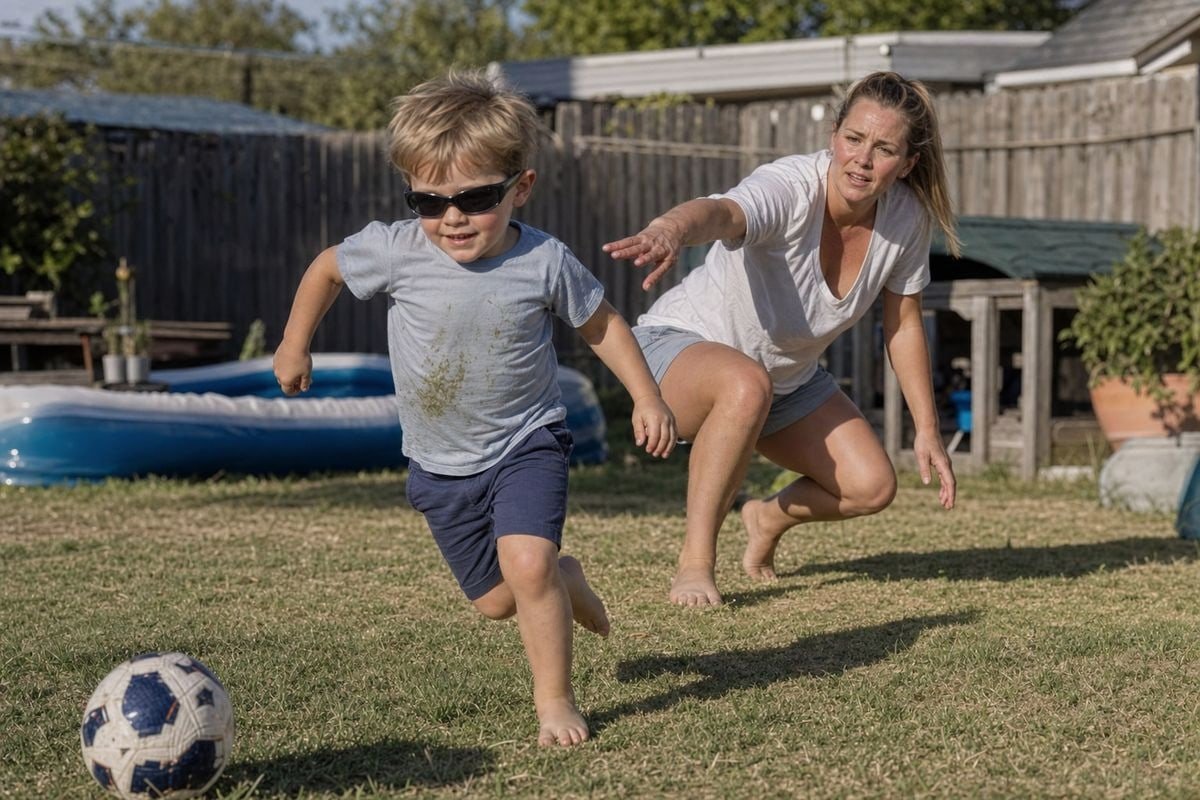
Over fifteen years of building children's frames, we have learned that age labels are rough guides at best. Some 3-year-olds handle temple frames beautifully. Some 5-year-olds still fling them across the playground. So instead of a fixed birthday, I recommend a readiness checklist plus a staged transition.
The transition ladder, step by step
- Full strap stage (0–3). Maximum retention. The child cannot yet be trusted to keep glasses on.
- Detachable strap stage (2–4). A temple frame that ships with a removable strap. Use the strap outdoors, remove it as tolerance grows. Many of our buyers order this configuration precisely because it stretches across two age bands.
- Cable or wrap-temple stage (3–6). Temple arms curve behind the ear for extra grip. This is the middle category most parents do not know exists.
- Straight temple stage (5+). Standard construction, sized for a child’s head width and temple length.
Readiness signals to check
| Signal | Ready for temples? |
|---|---|
| Keeps glasses on for 15+ minutes unprompted | Yes |
| Nose bridge visibly supports the frame without sliding | Yes |
| Still pulls glasses off within seconds | Not yet |
| Complains about pressure behind the ears | Try cable temples first |
Material matters during this phase, too. Flexible TPEE frames, or TR90 fronts with TPEE temples, forgive the twisting and sitting-on that transition-age kids inflict. Impact resistance is not optional at this stage; it is the difference between a product that lasts a season and one that generates returns.
Which style, strap or temple, will actually stay on my active toddler's face?
During a drop-and-flex test last spring, our QC team timed how long different retention systems survived a toddler-simulation rig. The results matched what parents already know from the playground.
For active toddlers under 4, strap-style sunglasses stay on best because the strap circles the whole head and cannot be shaken loose. For active kids 4 and older, a wrap-around design with rubberized cable temples holds nearly as well while allowing independent wear.
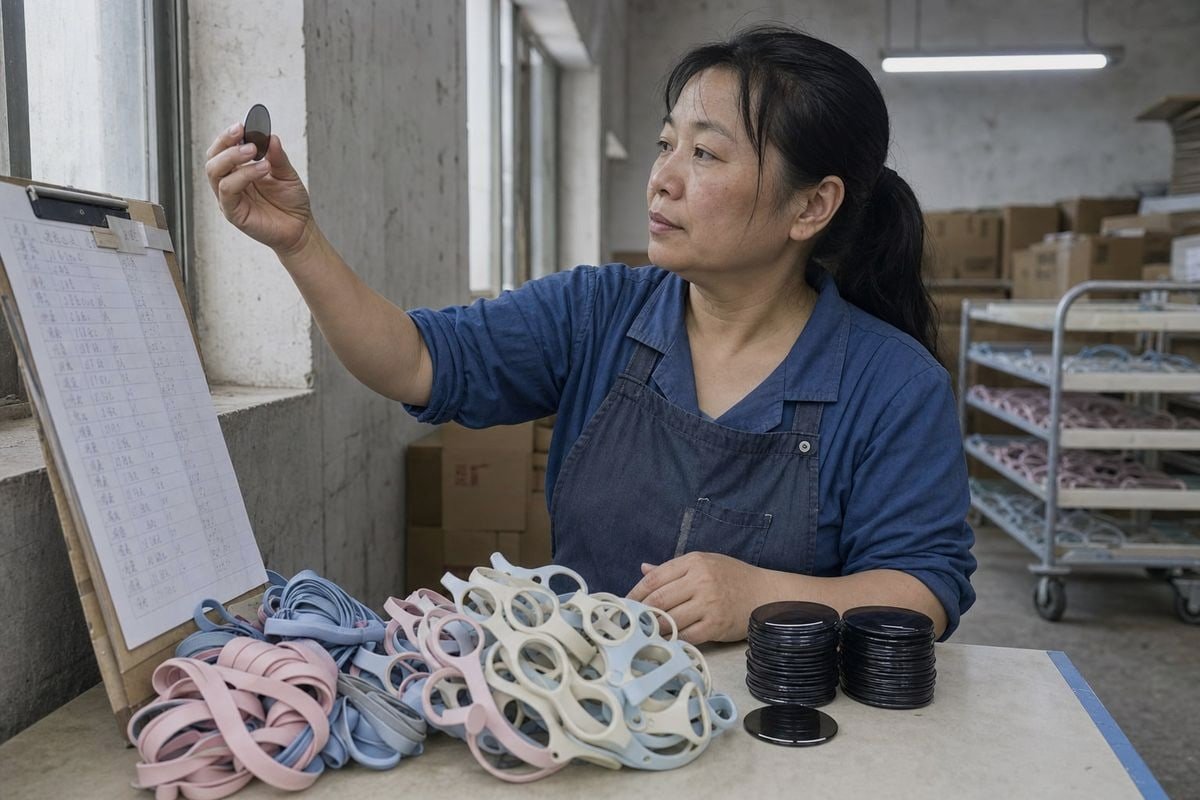
Activity level changes the math. A calm toddler in a stroller might tolerate a light temple frame. A sprinting, climbing, sand-throwing toddler will defeat anything that relies on the nose and ears alone. So the honest answer depends on how your customer's child actually plays.
Retention by activity type
| Scenario | Best choice | Why |
|---|---|---|
| Stroller rides, car trips | Low-profile strap, flat closure | Avoids pressure against headrests |
| Playground and beach | Full strap with wrap-around design | Survives running, digging, falls |
| Swim and splash play | Snug strap, vented frame | Prevents loss in water; venting limits fogging |
| Preschool sports (4+) | Cable-temple wrap frame with rubber grips | Retention plus independence |
| School-age cycling | Sport shield frame with grippy temple tips | Wind coverage, secure at speed |
The fine print on straps
Straps are not perfect. A high-tension strap can seal a micro-climate around the eyes, which raises fogging and heat-rash risk in humid climates. Our export clients in Southeast Asia specifically request vented frames for this reason. Fit the strap snug, never tight.
One more retention detail buyers often miss: lens choice does not change retention needs. Polarized lenses 3 for kids cut glare beautifully off water and sand, but a polarized lens in a frame that falls off protects nobody. And for children wearing behind-the-ear hearing aids 4, temple arms can crowd the device and cause feedback, making a low-profile strap system the practical choice regardless of age. Shatter-resistant lenses remain non-negotiable across every scenario above.
Can I offer both strap and temple options in my kids' eyewear collection without added complexity?
A distributor in Japan asked me this exact question last year, worried that two retention systems meant double the SKUs, molds, and headaches. The answer surprised her.
Yes. Brands can offer both styles efficiently by using shared frame platforms with detachable straps, selecting from existing tooled designs instead of new molds, and organizing the range into clear age bands such as 0–2, 3–5, and 6–12 with consistent lens and material specs.
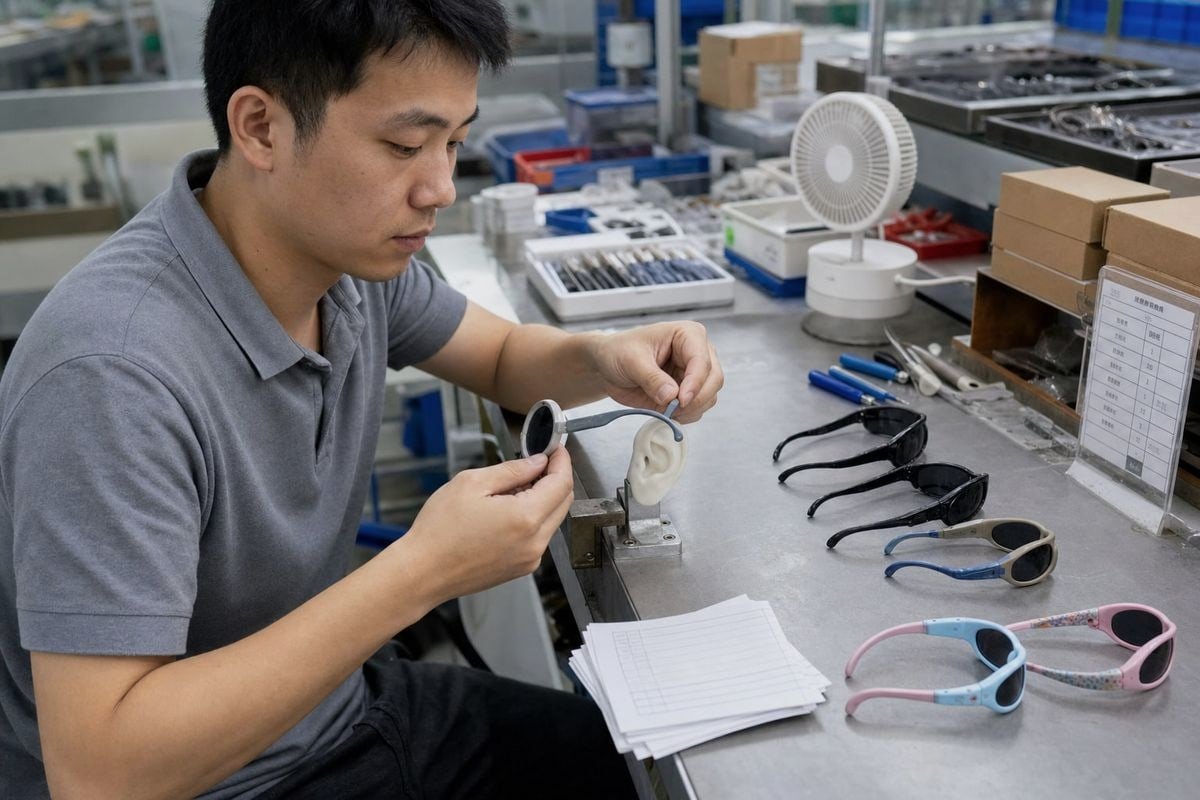
Complexity comes from tooling, not from variety. That distinction changes everything for a growing brand. At our factory, roughly 800 existing styles are already tooled, so a buyer can assemble a strap-plus-temple range without investing in a single new mold. That lowers launch risk dramatically, and it lets a brand test which retention style its market actually prefers before committing to custom development.
Three ways to keep the range simple
Use detachable straps as a bridge SKU. One frame with a removable adjustable neoprene strap 5 covers both the late-strap and early-temple stages. One product, two age bands, one inventory line.
Standardize the spec sheet. Keep 100% UVA/UVB protection, BPA-free materials 6, and impact resistance identical across every model. Then only the retention system and size change between age bands. Your packaging, compliance documents, and marketing claims stay uniform.
Let age bands drive merchandising, not engineering. A clean shelf structure might look like: strap goggle styles for 0–2, detachable-strap and cable-temple styles for 3–5, and temple-style frames for 6–12, with sportier shield shapes for the older, style-conscious end. School-age kids often reject anything that looks babyish, so the older band should look deliberately grown-up, like the wraparound shield styles with mirrored lenses that our sport line uses.
Through OEM/ODM support, custom colors, logos, lens tints, and retail-ready packaging can then unify the whole range under one brand identity. The result reads as one coherent collection, not two separate product lines.
Conclusion
Strap styles win retention for ages 0–3; temple styles win independence from age 4 up. Match the design to development, standardize the safety spec, and both can live in one clean collection.
Footnotes
1. WHO explains UV radiation risks, supporting claim about infants’ limited UVA filtering ability. ↩︎
2. CDC guidance on sun protection backs the article’s advice on supplementing sunglasses with shade. ↩︎
3. Background reference explaining polarization, relevant to the lens technology discussed. ↩︎
4. NIH source on hearing aids supports the note about temple arms interfering with devices. ↩︎
5. Wikipedia background on neoprene material used in infant sunglasses straps. ↩︎
6. FDA resource on BPA safety supports the recommendation for BPA-free children’s products. ↩︎
More Articles You Might Like



Looking for a Reliable Kids Eyewear Partner?
Explore 800+ ready styles and full OEM/ODM support tailored to your brand.
Get in Touch English
  Español de México
  Deutsch
  Français
  日本語
日本語  العربية
  Português do Brasil