Wire Transfer vs Letter of Credit: Which to Choose When Sourcing Kids Sunglasses from China?
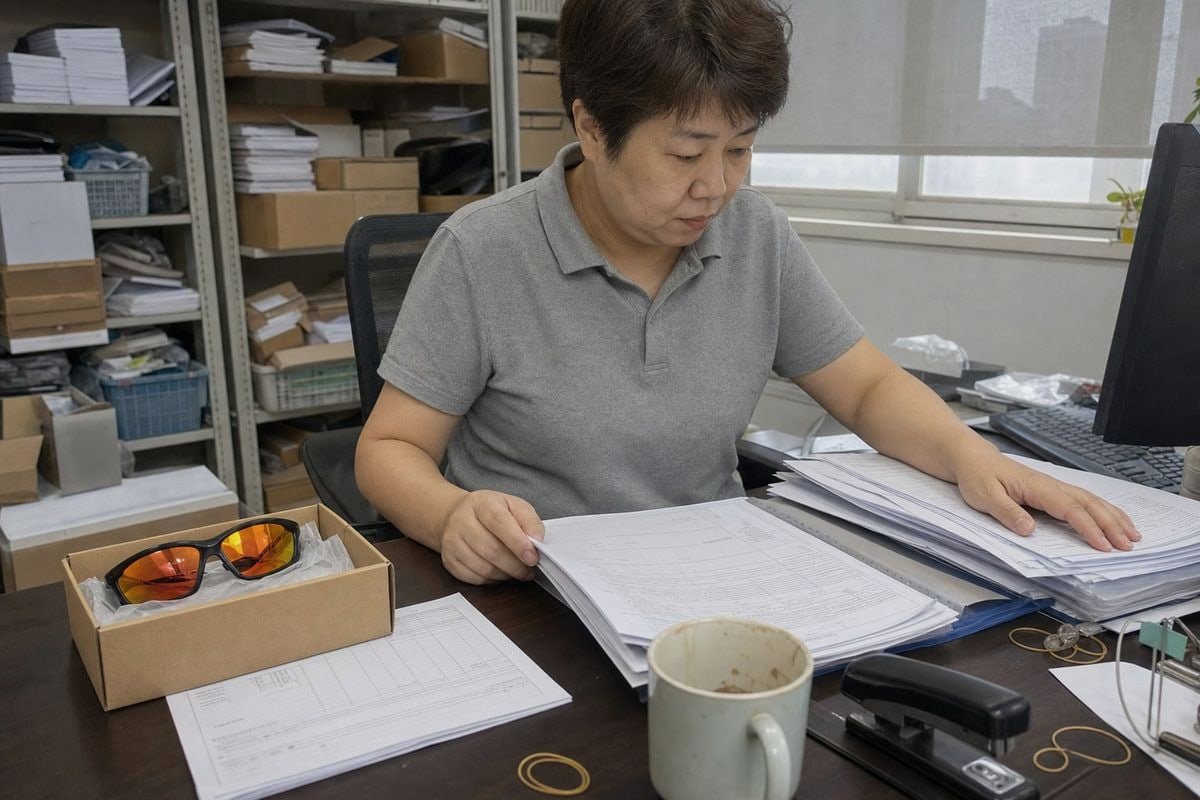
Wire transfer 1 vs Akkreditiv 2 is a question our export team answers weekly. Buyers fear losing money to unknown factories, and one wrong payment choice can freeze an entire launch.
Choose wire transfer (T/T) for small or repeat kids sunglasses orders with verified suppliers, because it is fast and cheap. Choose a letter of credit (L/C) for large first-time orders above roughly $50,000, where bank-controlled document checks justify the extra fees.
The right answer depends on your order size, your trust level, and your risk tolerance escrow service 3. Below, I break down each factor so you can decide with confidence.
How do I know if wire transfer or letter of credit is safer when paying a Chinese sunglasses factory?
A few seasons ago, a European buyer told me she almost wired a deposit to a personal bank account posing as a factory EN-Standards 4. That near miss shaped how we explain payment safety to every new client at our Taizhou facility.
A letter of credit is structurally safer because banks release payment only after compliant shipping documents are presented. A wire transfer offers no built-in protection once funds leave your account, so its safety depends entirely on supplier verification, inspections, and contract terms.

Safety is not one single thing. It has layers. Let me break them apart so you can see where each method actually protects you — and where it does not.
What each method really protects
An L/C protects the payment event. Your bank holds your money and only releases it when the factory presents documents that match the L/C terms exactly: commercial invoice, packing list, Frachtbrief 5, and sometimes inspection certificates. If the paperwork does not match, the bank does not pay. That is real leverage.
A T/T wire transfer protects nothing by itself. Once the money is sent, it is gone. The standard China sourcing structure — 30% deposit before production, 70% balance before shipment — reduces exposure, but it does not eliminate it. If the goods fail inspection, your deposit is still at risk unless your contract covers rework or refunds.
Where neither method protects you
Here is the part many buyers miss: neither method guarantees product quality. An L/C pays against documents, not against good sunglasses. A factory can present a perfect bill of lading for a container of poorly fitted frames. For children's eyewear, where UV400 performance and impact safety matter, you still need a pre-shipment inspection regardless of payment method.
| Risiko | T/T Wire Transfer | Letter of Credit |
|---|---|---|
| Supplier disappears with deposit | High exposure | Low exposure |
| Goods shipped but defective | Moderate (balance leverage) | Moderate (docs can still comply) |
| Payment to fraudulent account | High if unverified | Low (bank-verified beneficiary) |
| Document errors delaying payment | Selten | Common if terms are strict |
| Quality below kids' safety standards | Needs inspection | Needs inspection |
In our experience exporting to buyers in 20+ countries, the safest deals combine a sensible payment method with verification. Confirm the beneficiary is a registered company account, not an individual. Ask for a business license. Visit the factory or commission an audit. We welcome all three, and any legitimate factory should.
What are the real costs and bank fees involved in wire transfer versus letter of credit payments?
Cost conversations come up constantly when I quote buyers on our ~800 existing kids sunglasses styles. A payment method that eats 3% of a low-margin accessory order is not a detail — it changes the whole deal economics.
A T/T wire transfer typically costs $25–$75 in flat bank fees. A letter of credit costs 1–3% of transaction value, often $200–$2,000+ in total charges, plus 3–10 extra days of processing. On small kids sunglasses orders, L/C fees can erase margin.
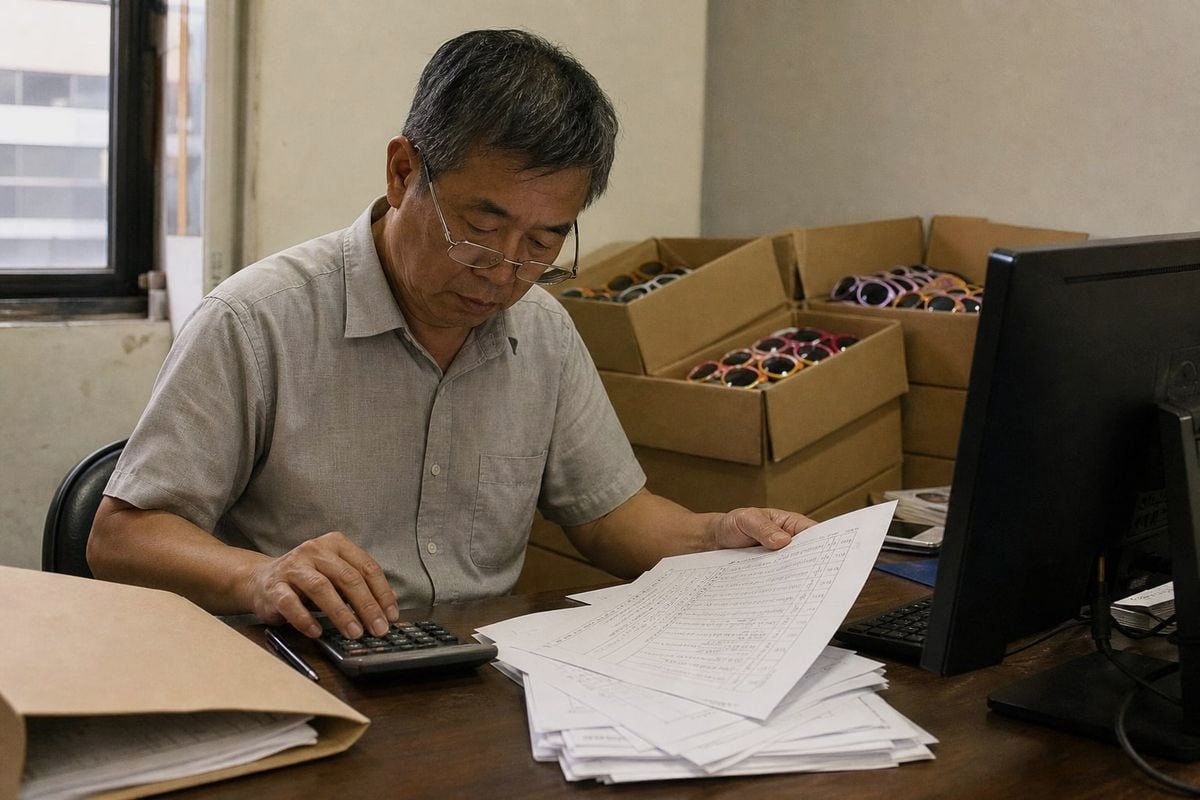
Kids sunglasses are a low-ticket, fast-turn product. That single fact drives the cost math more than anything else. Let me show you why.
The fee breakdown
| Cost Item | T/T Wire Transfer | Letter of Credit |
|---|---|---|
| Bank transfer / issuance fee | $25–$75 flat | $200–$500+ issuance |
| Amendment fees | Selten | $50–$150 per change |
| Document examination fees | Keine | Often $100–$300 |
| Confirmation fees (if added) | Keine | Extra % of value |
| Typical total on $15,000 order | ~$50 (0.3%) | $400–$1,000+ (3–7%) |
| Typical total on $80,000 order | ~$50 (0.06%) | $800–$2,400 (1–3%) |
Look at the percentages, not the dollar figures. On a typical $5,000–$20,000 kids sunglasses order, L/C fees can consume more margin than a mid-season price increase would. On an $80,000 custom program, the same fees shrink to a reasonable insurance premium.
The hidden costs beyond fees
Fees are only half the story. An L/C also costs time. Opening one takes days. Settlement adds more. If your order targets the pre-summer retail window, a 10-day banking delay can push your container past the season’s sweet spot. We have seen buyers lose shelf placement over exactly this.
There is also currency exposure. Sunglasses production typically runs 30–45 days, and RMB/USD movement during that window can erode margins by 2–5%. That risk exists under both methods, so consider forward contracts or a multi-currency account regardless of which payment route you choose.
Finally, factor in your own admin time. L/C documents must match perfectly. One typo in a product description can block payment and trigger amendment fees. T/T requires almost no paperwork beyond the proforma invoice.
Should I use a letter of credit for my first order with a new kids sunglasses supplier?
Not long after we launched our TR90 frames with TPEE temples, a first-time Australian buyer asked us to accept an L/C for a $9,000 trial order. We ran the numbers together — and both of us agreed it made no sense at that size.
Usually no. Most first kids sunglasses orders fall in the $5,000–$20,000 range, where L/C fees and delays outweigh the protection. Instead, use escrow or Alibaba Trade Assurance, a 30/70 T/T split, and a mandatory pre-shipment inspection. Reserve L/Cs for first orders above $50,000.
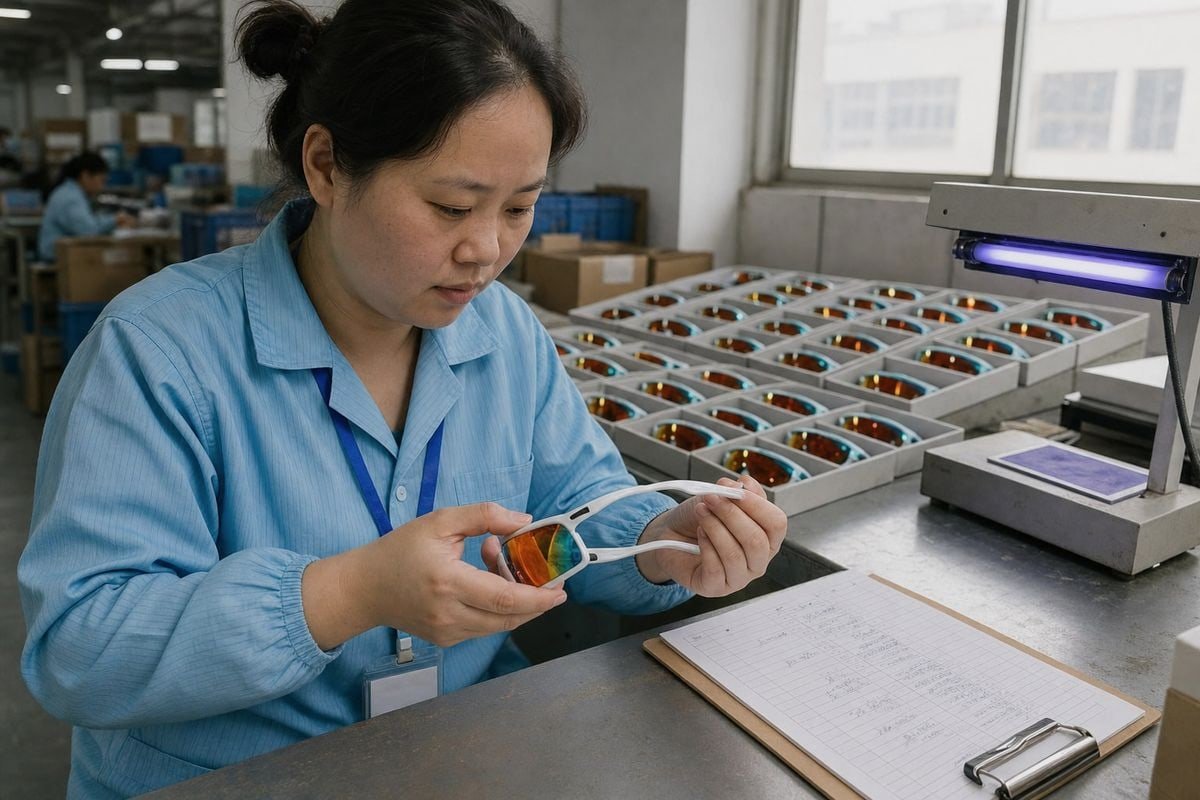
First orders feel risky, and that fear pushes buyers toward the most protective instrument available. But protection should be proportional to the money at stake. Here is a practical way to think it through.
Match the tool to the order size
- Under $20,000: Verwenden Sie Trade Assurance 6 or an escrow service if the supplier is on a platform that supports it. You get real buyer protection without L/C complexity or fees. Pair it with a third-party inspection before the balance is released.
- $20,000–$50,000: Use staged T/T with tighter controls. Split payments 30/40/30, tying the middle payment to passed inspection. Verify the company bank account matches the business license.
- Above $50,000, new supplier: An L/C starts to earn its cost. The fees become a small percentage, and the documentary discipline protects a sum worth protecting.
Why trial orders exist in the first place
One reason we maintain roughly 800 existing styles is precisely so new brands can start small. A buyer can pick proven frames, add a logo and custom packaging, and test the market without heavy mold investment. A modest trial order caps your financial exposure far more effectively than any banking instrument. If a supplier insists on a large minimum first order and 100% upfront payment, that is a bigger red flag than any payment-method debate.
For children's eyewear specifically, tie your payment milestones to safety checkpoints, not just production dates. Ask for UV400 test evidence and relevant compliance documentation (such as Die erste Frage ist immer die Klassifizierung. Sind Ihre Sonnenbrillen wirklich ein Kinderprodukt? Betrachten Sie die Größe, das Marketing, die Verpackung und den beabsichtigten Benutzer. Unsere kompakten runden Rahmen in Periwinkle-Blau mit mint-türkisen Bügeln sind eindeutig für kleine Gesichter konzipiert. Niemand würde argumentieren, dass es sich um Produkte für den allgemeinen Gebrauch handelt. Diese Klassifizierung löst den gesamten Satz von 7 for the US or EN standards for Europe) before releasing the balance. Documents about child safety matter more than documents about shipping.
How do I negotiate payment terms with my China eyewear factory to protect my order?
The trade-off I weigh most often when agreeing terms with a new buyer is cash flow versus trust-building. Our 120-person factory needs deposits to buy TPEE and TR90 materials, but I also know a rigid stance kills long-term partnerships before they start.
Negotiate a 30% deposit and 70% balance after a passed pre-shipment inspection, paid to a verified company account. Put quality standards, UV400 and safety compliance, tolerances, and remedy terms in a written contract. Ask for better terms only after two or three successful orders.
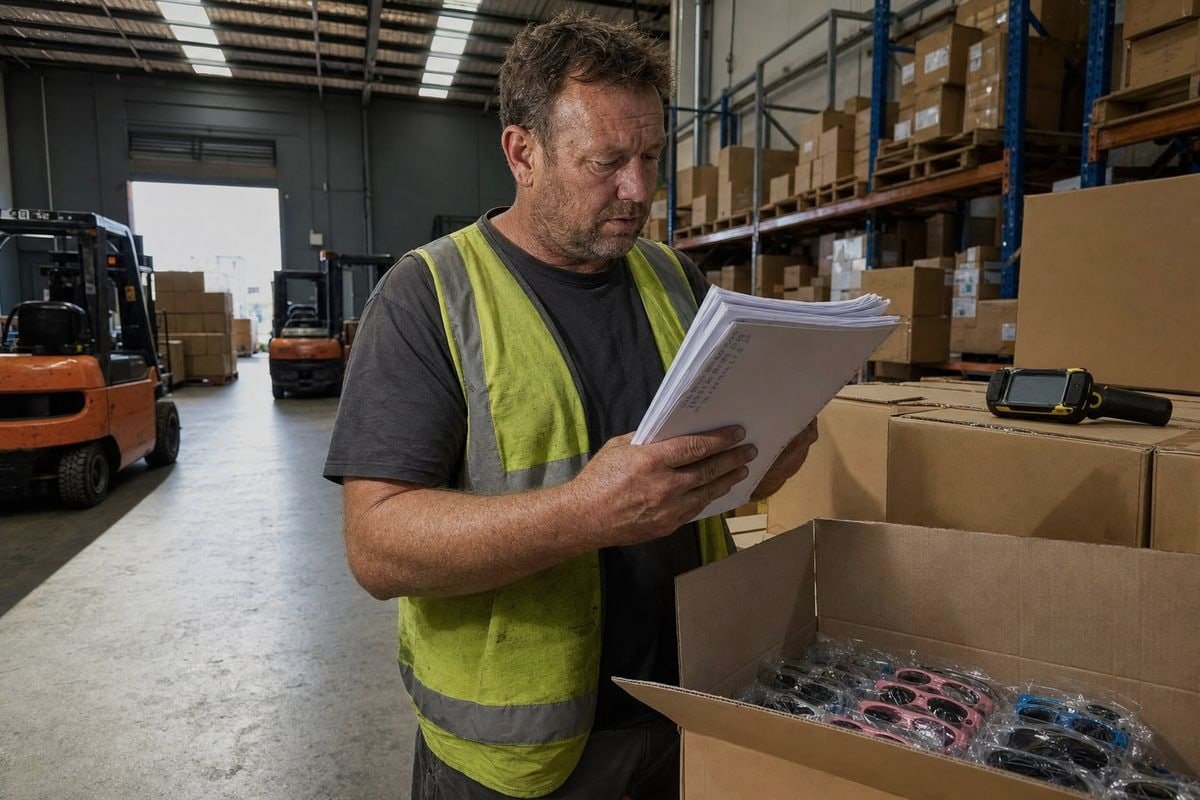
Good negotiation is not about squeezing the factory. It is about aligning incentives so both sides are protected. From our side of the table, here is what reasonable, professional negotiation looks like.
Terms most factories will accept
| Hier ist, wie die drei Bedingungen für eine typische Kinder-Sonnenbrillenbestellung verglichen werden: | Typical Factory Position | Realistic Buyer Ask |
|---|---|---|
| . Anzahlung | 30% before production | 30% (standard, fair) |
| Balance timing | Before shipment | After passed pre-shipment inspection |
| Inspection | Buyer's cost, factory cooperates | AQL-based third-party inspection written into PO |
| Payment account | Company account | Verified against business license |
| Defect remedy | Case by case | Rework, replacement, or credit terms defined upfront |
| Repeat-order terms | Same as first | Balance against B/L copy after trust is built |
Anchor payments to safety milestones
Kids sunglasses face stricter scrutiny than adult eyewear, and rightly so. In our workshop, lens UV performance and frame flexibility checks happen at defined stages, and smart buyers link money to those stages. Release the balance only after the inspection report confirms lens compliance, hinge durability, and packaging accuracy. This turns your payment structure into a quality-control tool, not just a transaction.
Build terms over time
Payment terms are a relationship, not a one-time contract. After two or three smooth orders, most factories — ours included — will discuss releasing goods against a bill of lading copy, or even partial open-account terms for established partners. Buyers who communicate clearly, pay on schedule, and inspect professionally earn flexibility fast. Buyers who demand extreme terms on order one usually just signal inexperience, and pricing tends to reflect that.
One last practical point: avoid "soft terms" traps in either direction. An L/C drafted with impossible document conditions will make a factory refuse it or price in the risk. A contract with vague quality language will make disputes unresolvable. Precision protects both sides.
Schlussfolgerung
Payment fear should not stall your kids sunglasses launch. Match the method to the deal: T/T for small or repeat orders, L/C above $50,000, escrow in between — always with inspection.
Fußnoten
1. Provides background on how wire transfers function as a payment mechanism between banks. ↩︎
2. Explains the banking mechanism and background concept referenced throughout the payment comparison. ↩︎
3. Background reference explaining how escrow arrangements protect buyer funds during transactions. ↩︎
4. European standardization body overseeing EN compliance requirements mentioned for eyewear exports. ↩︎
5. Defines this key shipping document referenced as required paperwork under letter of credit terms. ↩︎
6. Official Alibaba program offering buyer protection, directly relevant to sourcing payment alternatives. ↩︎
7. Official US consumer safety statute governing children’s product compliance including eyewear. ↩︎
Weitere Artikel, die Ihnen gefallen könnten

August 2026
Sollte die Fabrik die Verpackung und Kennzeichnung von Kinder-Sonnenbrillen übernehmen oder einen bestimmten Lieferanten nutzen?

August 2026
Eigenes Lager vs. Direktlieferung durch den Lieferanten: Was senkt die Retourenkosten für Marken von Kinder-Sonnenbrillen?

August 2026
Direkt zum Lagerhafen oder Lagerung in Übersee: Was spart mehr bei den Versandkosten für Kinder-Sonnenbrillen?
Auf der Suche nach einem zuverlässigen Partner für Kinderbrillen?
Entdecken Sie über 800 sofort verfügbare Modelle und umfassenden OEM/ODM-Support, der auf Ihre Marke zugeschnitten ist.
Kontakt aufnehmen English
  Español de México
  Deutsch
  Français
  日本語
日本語  العربية
  Português do Brasil