How to Verify a Supplier’s Production Capacity When Sourcing Kids’ Sunglasses from China?
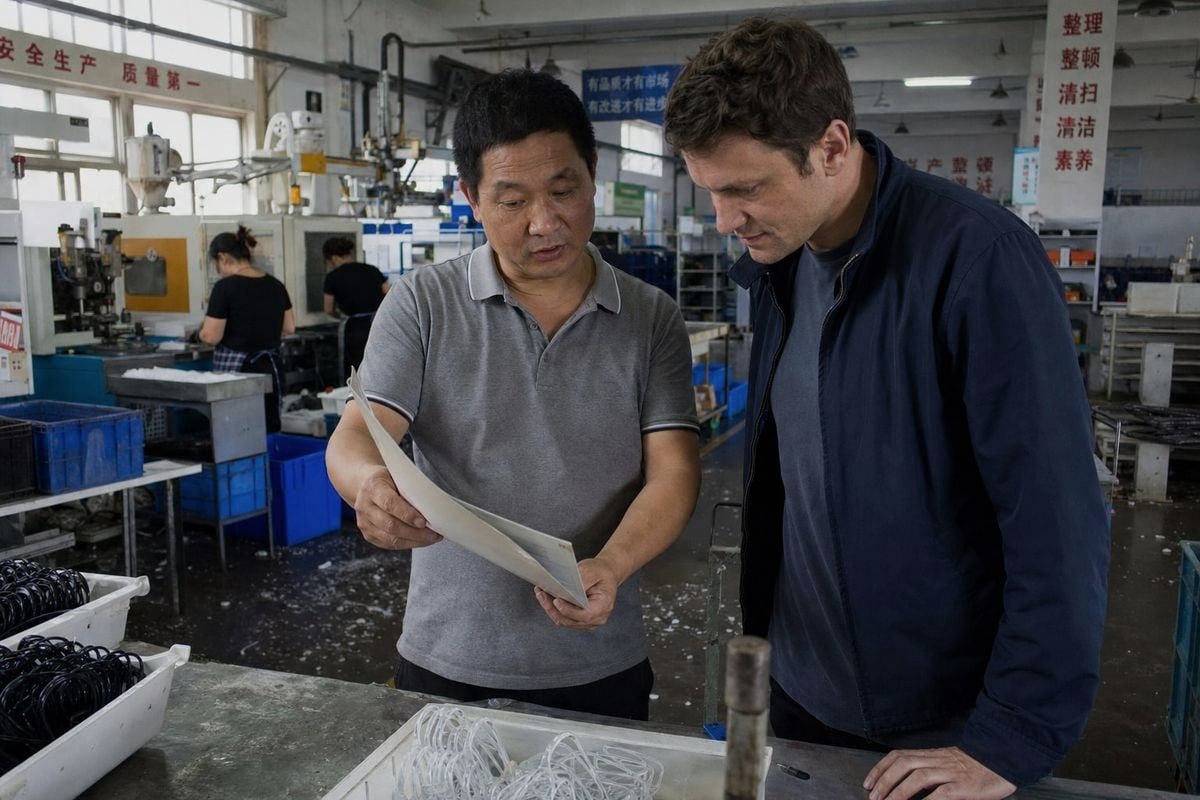
Learning how to verify a supplier’s production capacity almost always starts with a bad experience. I have watched buyers tour our Taizhou workshop after being burned by a “factory” that turned out to be three desks and a showroom. Their orders arrived late, quality drifted, and their retail launch slipped a full season. The fix is simple but rarely applied: stop trusting a stated monthly number, and start demanding layered evidence — licenses, machines, workers, order books, and a real trial run on the actual line.
To verify a supplier’s production capacity for kids’ sunglasses, check the business license against the factory address, conduct a live or on-site audit, count machines and workers, cross-check claimed monthly output with production logs, confirm kids-specific experience and certifications, then validate everything with a small pilot order.
That is the short version. Below, I will walk through each check step by step, using what happens on our own production floor as the reference point.
What Should I Look for During a Factory Audit or Video Call?
Last spring, a procurement manager from Australia asked me to walk her through our workshop on a video call before she would even discuss pricing. I respected that. It is exactly the right instinct.
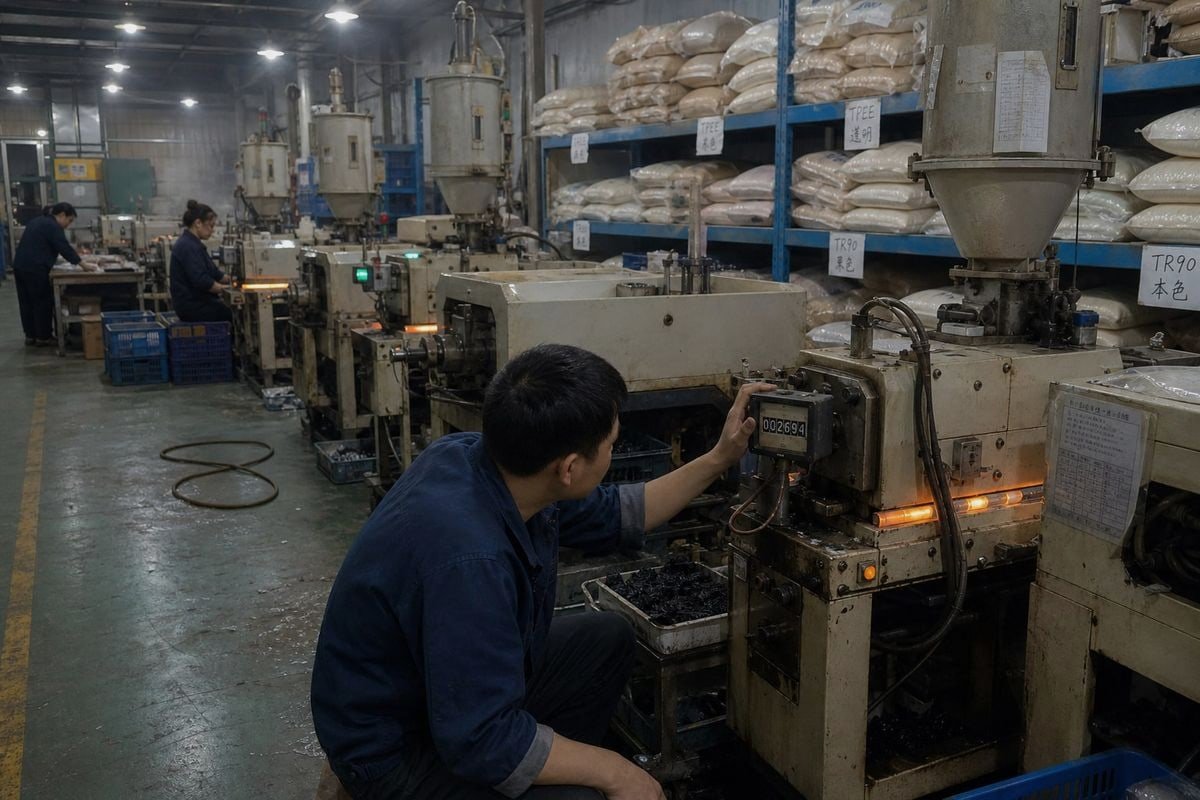
During a factory audit or video call, look for active injection molding machines, assembly benches with workers present, lens tinting and coating areas, QC stations, raw material storage, and a floor layout that matches the claimed scale. Ask for a live, unedited walk-through — never accept pre-recorded marketing footage.
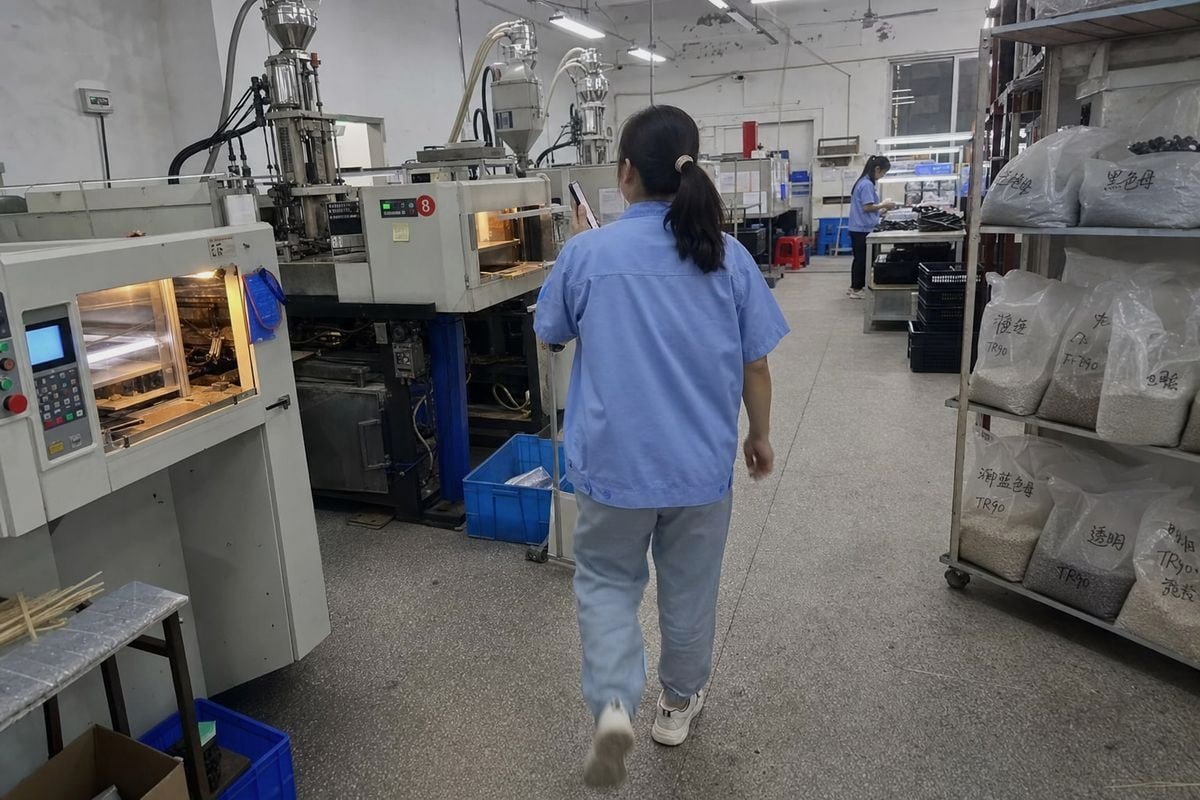
A good audit — whether in person or over video — follows a route, not a highlight reel. When buyers visit us, I take them from raw material intake to the shipping dock, because capacity lives in the flow between stations, not in any single machine.
The Route You Should Insist On
Ask the supplier to walk the camera through the process in production order. For kids' sunglasses made from TR90 or TPEE, that route should include:
- Raw material storage — sealed pellet bags with material labels, and clear material segregation so child-safe resins never mix with industrial-grade plastics.
- Injection molding 1 — machines actually running, with visible mold changeovers and cycle counters.
- Frame finishing — polishing, tumbling, and spray or coating booths.
- Lens cutting and fitting — including UV400 or polarized lens matching stations.
- Assembly benches — where temples, hinges, and lenses come together.
- QC tables — with pull-force testers and measurement jigs sized for children's frames.
- Packaging — retail-ready packing lines, not just bulk poly bags.
What Each Observation Tells You
| What You See | Was es beweist | Rote Flagge, wenn fehlend |
|---|---|---|
| Running injection machines | In-house molding, not outsourced | Frames may come from a subcontractor you never vetted |
| Workers at assembly benches | Real labor capacity, active shifts | Empty benches suggest a showroom, not a factory |
| Dedicated QC tables and jigs | Quality control protocols 2 exist | Inspection may be sampling-only or skipped |
| Labeled material storage | Material traceability for kids' products | Cross-contamination risk with non-safe resins |
| Packaging line | Retail-ready fulfillment ability | Packaging is outsourced, adding lead time risk |
One more tip from our side of the camera: ask the person filming to zoom in on machine nameplates and turn corners you choose, not corners they choose. A genuine factory has nothing to hide. In our 5S-managed workshop, an unplanned detour looks the same as a planned one — and that consistency is exactly what you are testing for.
How Can I Confirm Real Monthly Output and Workforce Capacity?
There is a trade-off I discuss openly with new buyers: our roughly 120 workers give us stable, repeatable output, but we will never quote the inflated monthly numbers some suppliers throw around to win orders. Honest capacity math matters more.
Confirm real monthly output by cross-checking the claimed number against machine count, worker headcount, shifts per day, and current order load. Request three months of production logs, ask for kids-specific output separately, and apply the formula: actual output equals machines times operating hours times efficiency rate.
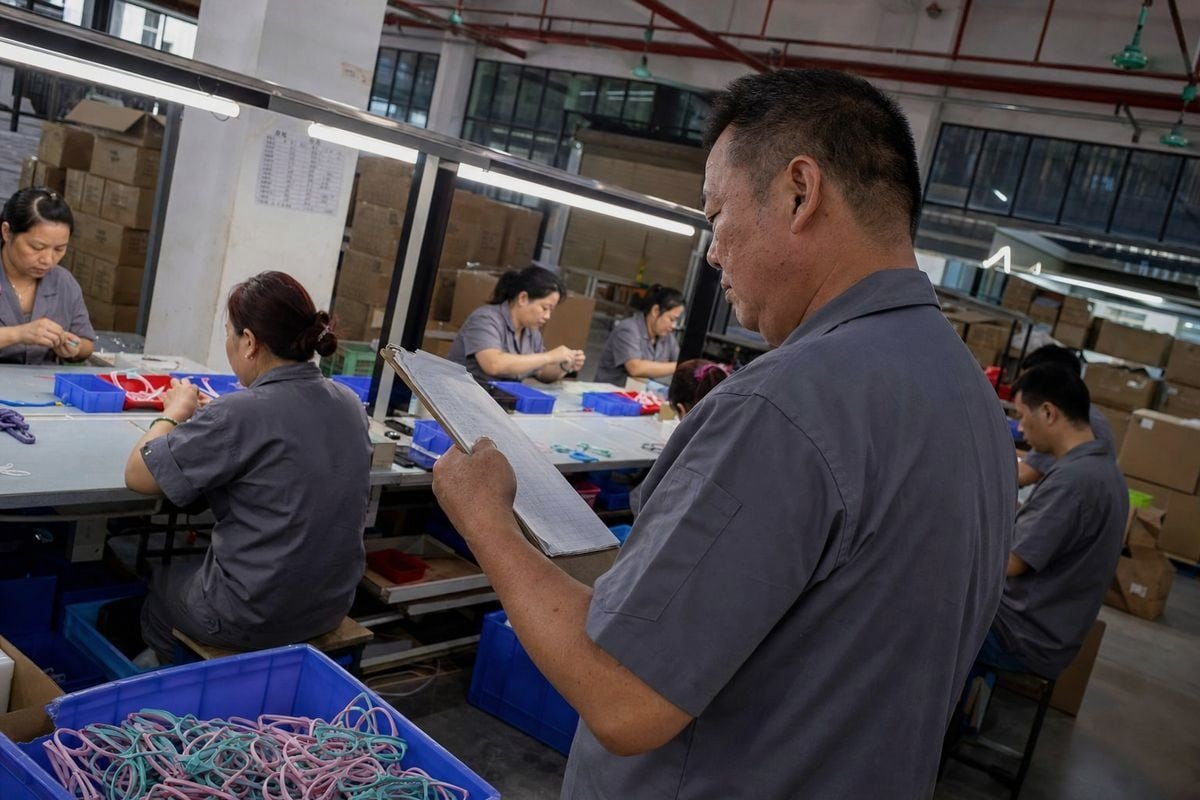
A stated monthly production output is only a marketing figure until you test it against physical reality. Here is how I recommend buyers break the claim down, because this is the same math we use internally to schedule orders.
Do the Capacity Math Yourself
Start with the formula: Actual Output = Number of Machines × Operating Hours × Efficiency Rate. If a supplier claims 500,000 pairs per month but shows you six injection machines running one shift, the numbers will not close. TPEE and TR90 have different cycle times than cheap commodity plastics, so ask specifically how many machines are dedicated to those high-performance elastomers. A supplier who cannot answer that question probably does not mold them in-house.
Ask Capacity Questions in This Order
- What is your monthly output for kids' sunglasses specifically — not all eyewear combined?
- How many production lines and shifts run daily?
- How many workers sit in each department: molding, assembly, QC, packaging?
- What is your confirmed order load for the next production window?
- Which steps — molding, polishing, lens installation, packaging — are done in-house?
Cross-Check Claims Against Evidence
| Claim to Verify | Evidence to Request | What Realistic Looks Like |
|---|---|---|
| Monthly output | Production logs, last 3 months | Logs match invoices and shipping records |
| Machine capability | Machine list or purchase invoices | Machine count supports the output math |
| Workforce scale | Department headcounts | QC staff ratio stays stable at high volume |
| Utilization | Utility bills | Power usage aligns with claimed output |
| Available capacity | Current order book | Your order fits without impossible promises |
Also pressure-test manufacturing lead times. If a supplier promises 20 days while claiming a full order book, one of those statements is false. In our experience exporting to buyers in 20+ countries, realistic lead times quoted against a visible schedule beat optimistic ones every single time — because a missed retail season costs a kids' brand far more than two extra weeks of honest planning.
Which Certifications and Quality Checks Prove Reliable Production Standards?
A lesson we learned early in our 15 years of eyewear work: certificates open doors, but the daily quality checks behind them keep doors open. Buyers should verify both layers.
Look for ISO 9001 certification, social audits like BSCI or SEDEX, and product-level compliance such as CPSIA for the US and EN standards for Europe. Then verify daily practice: in-house pull-force and torque testing, UV400 lens verification, material traceability, and documented quality control protocols.
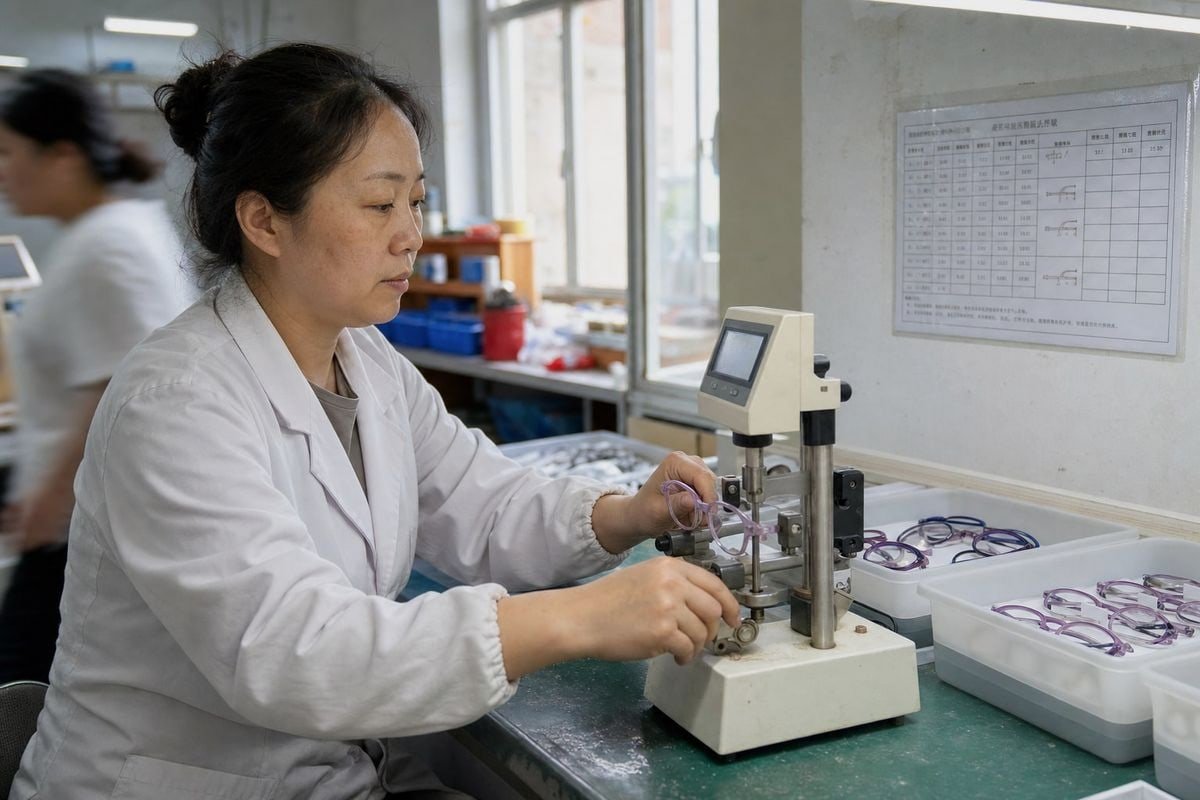
Certifications answer two different questions, and buyers often blur them. System certifications tell you the factory is managed consistently. Product compliance tells you the sunglasses themselves are safe for children in your market. You need both, and you need to verify rather than just collect PDFs.
Two Layers of Proof
| Schicht | Beispiele | Was es beweist | How to Verify |
|---|---|---|---|
| Management systems | ISO 9001 certification, BSCI, SEDEX | Consistent processes and ethical operations | Check certificate number with the issuing body; confirm the certified entity name matches the business license |
| Product compliance | CPSIA compliance (US), EN 71 / ISO 12312-1 style standards, UV400 test reports | The actual product is child-safe in your market | Request recent third-party lab reports for the same materials and construction you will order |
A common trick is showing a test report from years ago, for a different frame model, or even borrowed from another factory. Always check the report date, the tested model, and the applicant’s company name.
The Checks That Matter Most for Kids' Eyewear
For children's sunglasses, I tell buyers to audit four specific capabilities in-house:
- Mechanical safety testing — pull-force and torque equipment that verifies small parts safety testing standards 3 like hinge screws and temple tips will not detach in a child's hands.
- Lens verification — instruments that confirm UV400-Schutz 4 and polarization on every batch, not just the golden sample.
- Miniature measurement jigs — QC fixtures calibrated for children's smaller frame dimensions and pupillary distances, which prevent assembly errors that adult-frame jigs would miss.
- Material segregation — documented protocols keeping child-safe, environmentally friendly resins physically separated from industrial-grade pellets.
When third-party inspection services 5 visit our floor, these are the stations they photograph first. If order size justifies the cost, commission a firm like SGS, Bureau Veritas 6, or QIMA for a Inspektion vor dem Versand or a full factory audit report. For a first order of children's products, I consider that money well spent — and any factory confident in its quality control protocols will welcome the visit rather than resist it.
How Do I Avoid Trading Companies Posing as Kids' Sunglasses Manufacturers?
A buyer from Japan once told me she had "visited her factory" twice — until an audit revealed the real production site was a subcontractor two cities away that she had never seen. Intermediaries hide in plain sight.
Avoid disguised trading companies by verifying the business license through China's National Enterprise Credit Information System, confirming the registered scope says manufacturing, matching the license address to the production site, demanding a live floor tour, and testing technical depth with product-specific questions traders cannot answer.
To be fair, trading companies are not inherently bad. Some add real value in consolidation and communication. The problem is deception: paying factory-direct expectations for trader-level control, with no visibility into who actually molds your frames or what quality control protocols exist. For children's products, that blind spot is unacceptable.
Run These Five Checks in Sequence
- Business license verification. Look up the exact Chinese company name in the National Enterprise Credit Information System 7. Check the registered business scope — a real factory lists manufacturing, not just "trading" or "import and export." Note the registered capital and address.
- Match the address. The production site should match the license, or the supplier should clearly explain a legitimate subsidiary or branch arrangement. Vague answers here end the conversation.
- Test technical depth. Ask which injection machines run TPEE versus TR90, what the cycle time difference is, and how they handle temple flexibility tolerances. On our line, any sales engineer answers these instantly. A trader stalls or emails you back a day later.
- Probe OEM/ODM capabilities. A genuine factory can show mold rooms, discuss custom colors and logo methods in detail, explain minimum order quantity by design, color, lens type, and packaging option, and quote realistic tooling costs. Traders quote suspiciously round numbers for everything.
- Request a small trial run on the actual line. This is the ultimate filter. A factory can schedule a pilot batch of 10% to 20% of stated monthly capacity and show you the line producing it. A trader must beg a real factory for line time, which shows up as delays, excuses, and refusals.
Also check export records and customs data 8 where available. A supplier with a history of shipping children's eyewear to regulated markets like the EU, Australia, or Japan has already navigated the compliance hurdles your order will face. And review their catalog depth: a factory that has developed hundreds of its own kids' styles — we maintain around 800 — clearly owns the design and molding capability behind them, which is something a middleman simply cannot fake.
Schlussfolgerung
Verifying production capacity protects your brand, your timeline, and the children wearing your product. Check licenses, audit the floor, do the math, demand evidence, and always confirm with a pilot order.
Fußnoten
1. Core manufacturing process referenced for verifying eyewear frame production. ↩︎
2. Wikipedia provides a reliable, high-authority overview of ISO 9001 standards for quality management. ↩︎
3. Wikipedia’s toy safety section provides authoritative context for mechanical and physical testing requirements. ↩︎
4. Background reference explaining UV radiation relevant to lens protection claims. ↩︎
5. Leading
Weitere Artikel, die Ihnen gefallen könnten

August 2026
Sollte die Fabrik die Verpackung und Kennzeichnung von Kinder-Sonnenbrillen übernehmen oder einen bestimmten Lieferanten nutzen?

August 2026
Eigenes Lager vs. Direktlieferung durch den Lieferanten: Was senkt die Retourenkosten für Marken von Kinder-Sonnenbrillen?

August 2026
Direkt zum Lagerhafen oder Lagerung in Übersee: Was spart mehr bei den Versandkosten für Kinder-Sonnenbrillen?
Auf der Suche nach einem zuverlässigen Partner für Kinderbrillen?
Entdecken Sie über 800 sofort verfügbare Modelle und umfassenden OEM/ODM-Support, der auf Ihre Marke zugeschnitten ist.
Kontakt aufnehmen English
  Español de México
  Deutsch
  Français
  日本語
日本語  العربية
  Português do Brasil