What Age Should Kids Start Wearing Sunglasses & For How Long Daily?
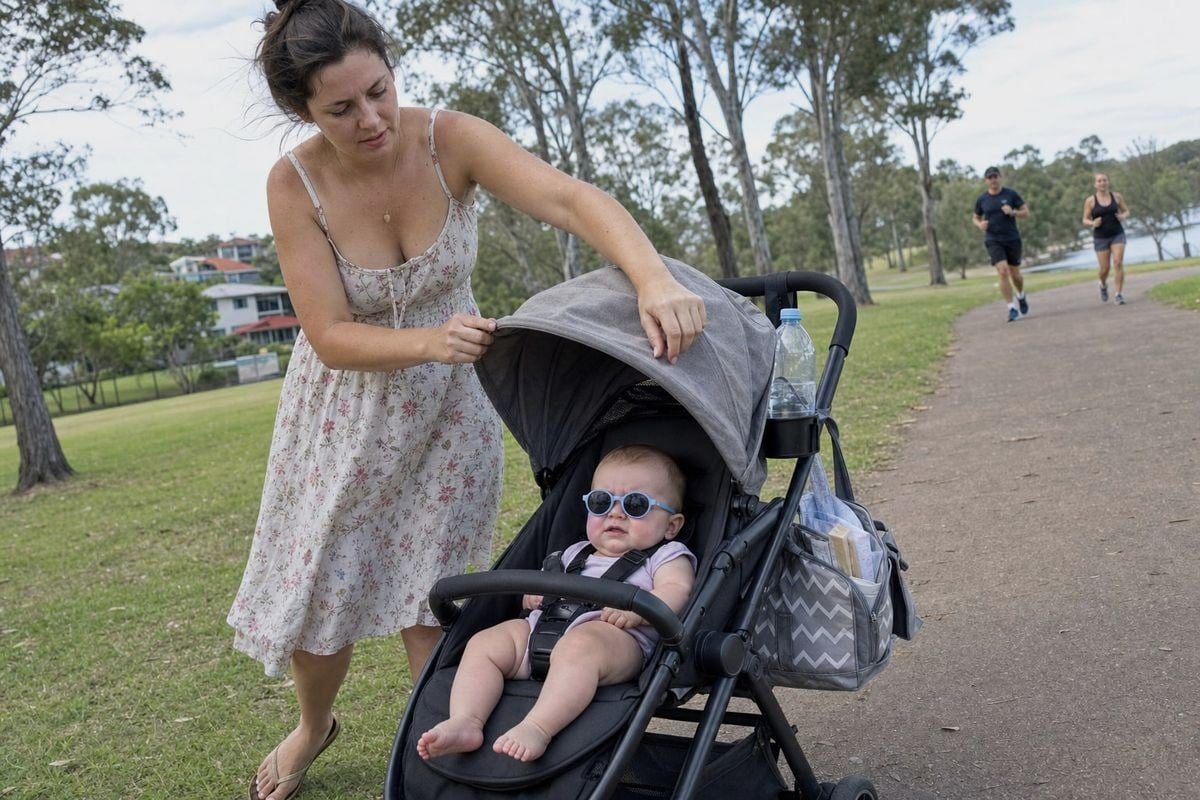
Parents ask us constantly what age kids should start wearing sunglasses UVA/UVB protection 1. After fifteen years running our children’s eyewear factory in Taizhou, I’ve seen how much confusion — and risk — surrounds this simple question.
Kids can start wearing sunglasses at around 6 months old, and they should wear them for the entire duration of any outdoor time in bright sunlight. There is no fixed daily limit — the rule is based on UV exposure, not minutes on a clock.
That’s the short answer. But there are important details behind it. Let me walk you through the age question, the daily duration question, and how to choose and use kids’ sunglasses properly.
What Age Is Safe for My Child to Start Wearing Sunglasses?
A buyer from Australia once asked me why our smallest TPEE frames are sized for babies around six months peak UV hours 2. The answer comes straight from pediatric eye-care guidance, and it shaped how we design our infant line.
Around 6 months old is the safe and practical age for kids to start wearing sunglasses. Babies younger than 6 months should be kept out of direct sun entirely, protected with shade, brimmed hats, and stroller canopies instead of relying on sunglasses.
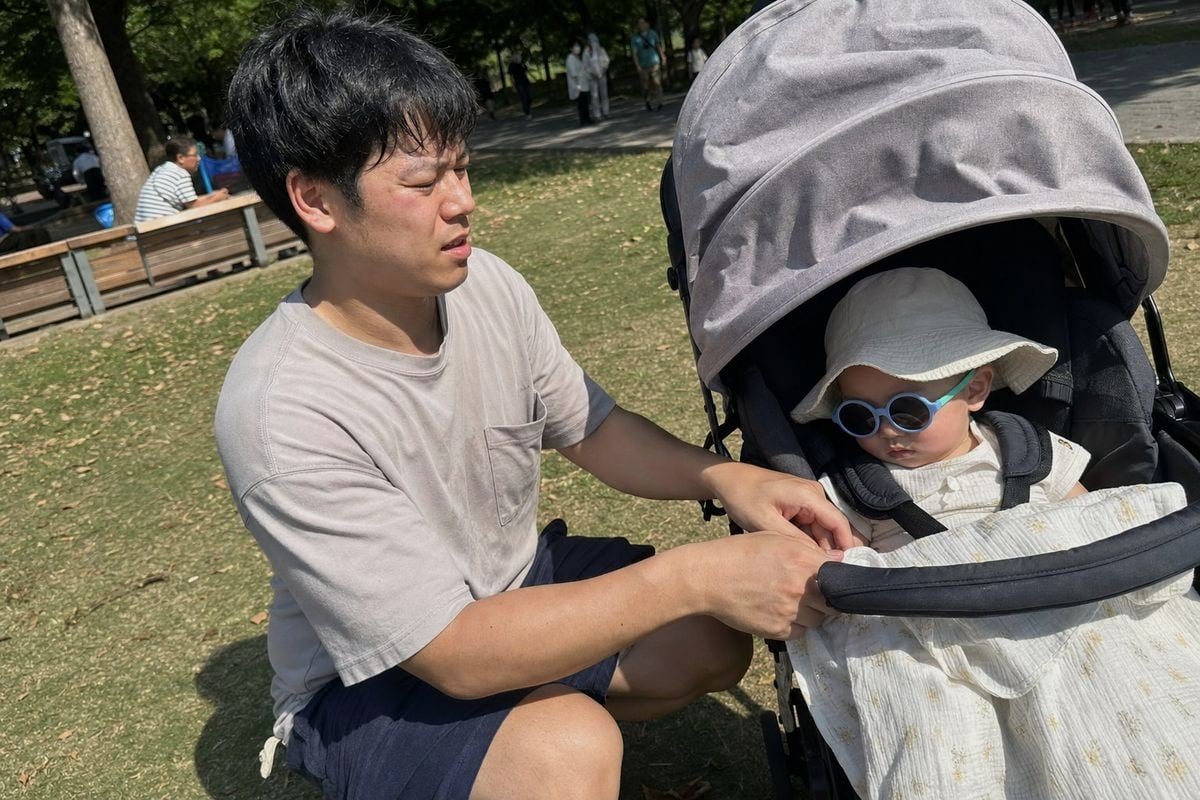
The 6-month mark is the most widely cited starting point across pediatric and eye-care sources Polycarbonatgläser 3. But it is worth understanding why, and where experts disagree.
Why 6 Months Is the Benchmark
Babies under 6 months have extremely sensitive skin and eyes 4. The standard medical advice is to keep them out of direct sunlight altogether. So sunglasses are not the first line of defense at that age — shade is. Once a baby passes 6 months, they spend more time outdoors, sit upright in strollers, and face real UV exposure. That is when sunglasses become a genuinely useful tool.
Where Experts Differ
Not every clinician draws the line in the same place. Here is the honest range of opinion:
| Viewpoint | Recommended Starting Age | Key Condition |
|---|---|---|
| Mainstream pediatric guidance | About 6 months | Combine with hats and shade |
| Some ophthalmology sources | Under 1 year is fine | Glasses must meet ANSI Z80.3 5 safety standards |
| Conservative clinicians | Around 3 years | Limit total sun exposure before age 3 |
For most families, the 6-month answer is the defensible middle ground. In our experience exporting infant eyewear to brands in Japan and Europe, the products that succeed are the ones built for that 6-to-36-month window: soft, flexible frames that cannot hurt a baby who tumbles face-first onto the grass.
Why Young Eyes Need Protection More Than Adult Eyes
Children's eyes are not miniature adult eyes. The ist klarer als die eines Erwachsenen, sodass im Kindesalter deutlich mehr UV-Strahlung auf die Netzhaut trifft. Okulare Sonnenschäden sind kumulativ – Katarakte, Pterygium und Netzhautveränderungen lassen sich auf lebenslange Exposition zurückführen, die in den frühesten Jahren beginnt. Deshalb verwenden wir standardmäßig UV400-Linsen für unser gesamtes Kindersortiment, auch für CE-konforme Bestellungen, bei denen 380 nm rechtlich ausreichen würden. 6 inside a child's eye is not fully formed before roughly age 12. A young lens is clearer, so it filters less UV and lets more radiation reach the retina. That makes childhood a critical window. Early protection is not cosmetic — it is a long-term health investment. And starting early builds the habit, which pays off for years.
How Many Hours a Day Should My Kids Wear Sunglasses for UV Protection?
There is a trade-off I discuss with brand buyers all the time: parents want a simple number of hours, but eye health does not work on a timer. Our product guides had to reflect the real rule, not an invented one.
There is no fixed number of hours per day. Kids should wear sunglasses for the entire time they are outdoors in daylight, especially during peak UV hours between 10 a.m. and 4 p.m., and even on cloudy days and in winter.
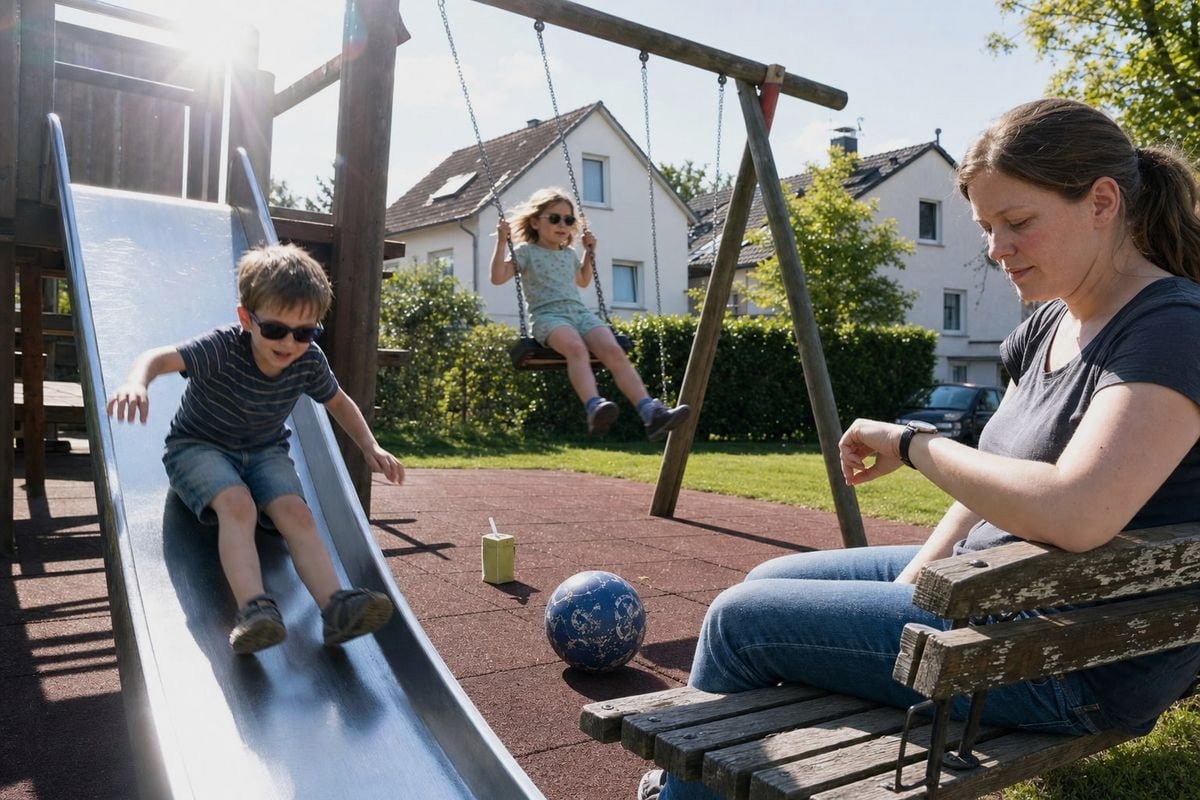
The question "how many hours daily?" is understandable, but it frames the issue backwards. Sunglasses are not medicine with a dosage. They are a shield, and a shield only works while the threat exists.
Think in Exposure, Not Minutes
No credible pediatric or ophthalmology source sets a daily limit like "20 minutes" or "2 hours maximum." Equally, none sets a minimum. The guidance is exposure-based: if your child is outside in UV-heavy conditions, the sunglasses should be on. If they are indoors, they come off. A 15-minute walk to school at 8 a.m. in winter is low exposure. A 3-hour beach afternoon in July is extreme exposure. The clock time is the same category of question, but the answer differs enormously.
High-Exposure Situations That Demand Sunglasses
Some environments multiply UV exposure because surfaces reflect light back into the eyes. Snow and water can reflect a large share of UV rays, effectively doubling the dose.
| Situation | UV Risk Level | Warum |
|---|---|---|
| Beach or pool day | Sehr hoch | Direct sun plus strong water and sand reflection |
| Snow play or skiing | Sehr hoch | Snow reflects most UV, even in cold weather |
| Midday park time (10 a.m.–4 p.m.) | Hoch | Peak solar intensity hours |
| Long stroller walks | Mittel bis hoch | Extended cumulative exposure |
| Cloudy days | Mäßig | Most UV penetrates cloud cover |
| High-altitude trips | Hoch | Thinner atmosphere filters less UV |
The Cumulative Exposure Argument
Childhood sun exposure adds up. Much of a person's lifetime UV dose accumulates before adulthood, which is why consistency matters more than any single day. One skipped afternoon will not harm your child. But years of unprotected midday play will accumulate. When we develop polarized and UV400 lens options for our export lines, this is the logic behind them: consistent, comfortable, all-outing protection — not occasional use.
What Should I Look for in Sunglasses for Toddlers vs Older Kids?
During a quality-control check last spring, our team rejected a batch of temple tips that were a fraction of a millimeter too stiff for our toddler line — fine for a 10-year-old, wrong for a 2-year-old. That difference is exactly what parents should understand when shopping.
For toddlers, prioritize flexible, unbreakable frames, shatterproof polycarbonate lenses, wraparound coverage, and an optional strap. For older kids, prioritize proper fit, impact resistance, and styles they actually like. For every age, demand 99–100% UVA/UVB protection.
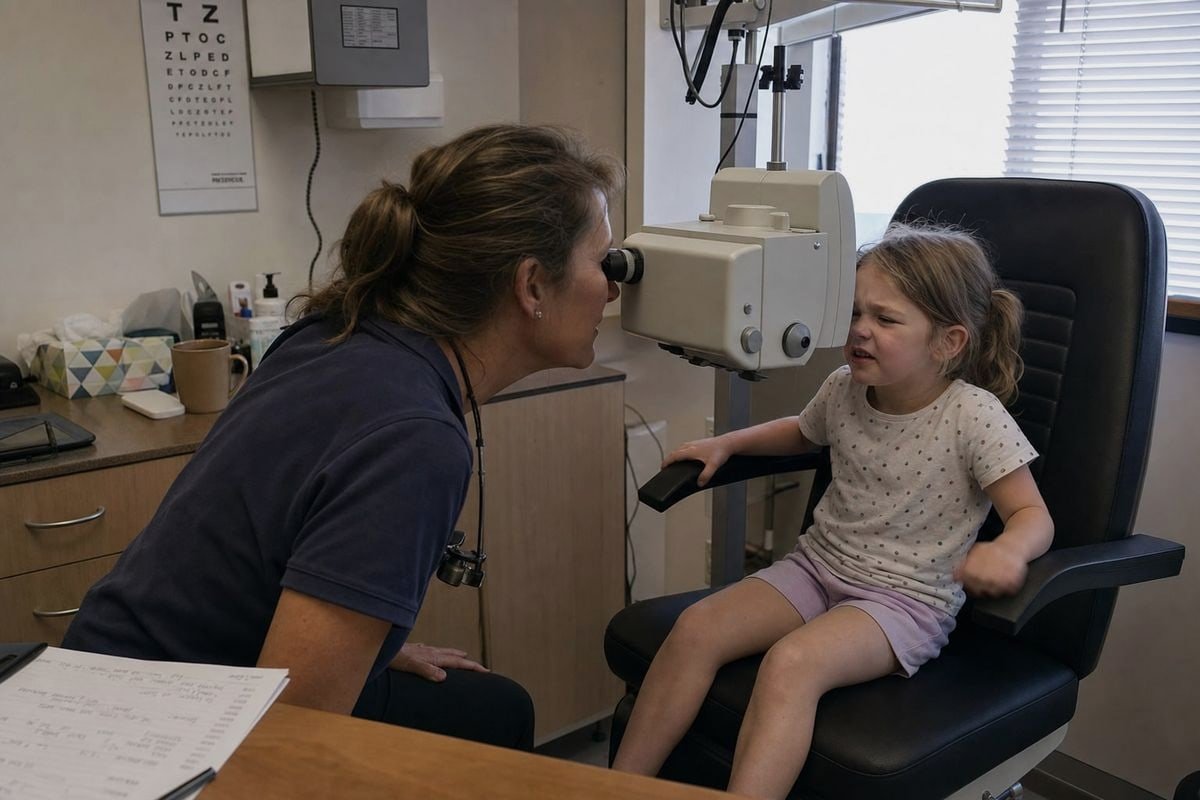
UV protection is the non-negotiable baseline. Lens darkness, lens color, and price tell you nothing about UV blocking. A cheap toy from a checkout aisle may have dark lenses with zero UV filtration — which is worse than no glasses at all, because dark lenses make pupils dilate and let more UV in.
Toddler vs Older Kid: A Side-by-Side Guide
| Merkmal | Toddlers (6 months–4 years) | Older Kids (5–12 years) |
|---|---|---|
| Rahmenmaterial | Soft, flexible TPEE or similar; bends without snapping | TR90 8 or durable lightweight plastic |
| Glasmaterial | Polycarbonat, bruchsicher | Polycarbonat oder Trivex |
| UV-Schutz | 99–100% UVA/UVB (UV400) | 99–100% UVA/UVB (UV400) |
| Fit features | Strap or band, no hard hinges near skin | Adjustable, close-fitting temples |
| Coverage | Wraparound or large close-fitting lenses | Wraparound for sports; larger lenses for daily wear |
| Safety standard | ANSI Z80.3 impact and UV compliance | ANSI Z80.3 impact and UV compliance |
Why Material Matters So Much for Small Children
Toddlers fall. They chew things. They yank glasses off and throw them. This is why our factory specializes in flexible materials — TPEE temples on TR90 fronts, for example — that can be twisted and bent without creating sharp break points near a child's face. Rigid, brittle frames are a genuine injury risk for the under-4 crowd. For older kids, the priority shifts toward durability and fit, because a frame that slips down the nose leaves a gap where peripheral UV sneaks in around the edges.
What Not to Buy
- Novelty or toy sunglasses with no UV rating
- Dark lenses without a stated 99–100% UV block
- Glass lenses of any kind for children
- Adult frames "sized down" that gap at the sides
- Frames with exposed metal hinges near a toddler's temples
One more practical point: replace kids’ sunglasses every one to two years. Children's faces grow fast, and a frame that fit at age 3 leaves coverage gaps at age 5, even if the lenses look perfect.
How Can I Get My Child to Wear Sunglasses Consistently Every Day?
A lesson I learned early in this business: the best-tested lens in the world protects nothing if it lives at the bottom of a diaper bag. Compliance is a design problem and a habit problem, and we treat it as seriously as UV specs.
Start early, make sunglasses part of the going-outside routine, let your child pick a style they love, model the behavior yourself, and choose comfortable, flexible frames. Consistency comes from habit and comfort, not from daily negotiation.
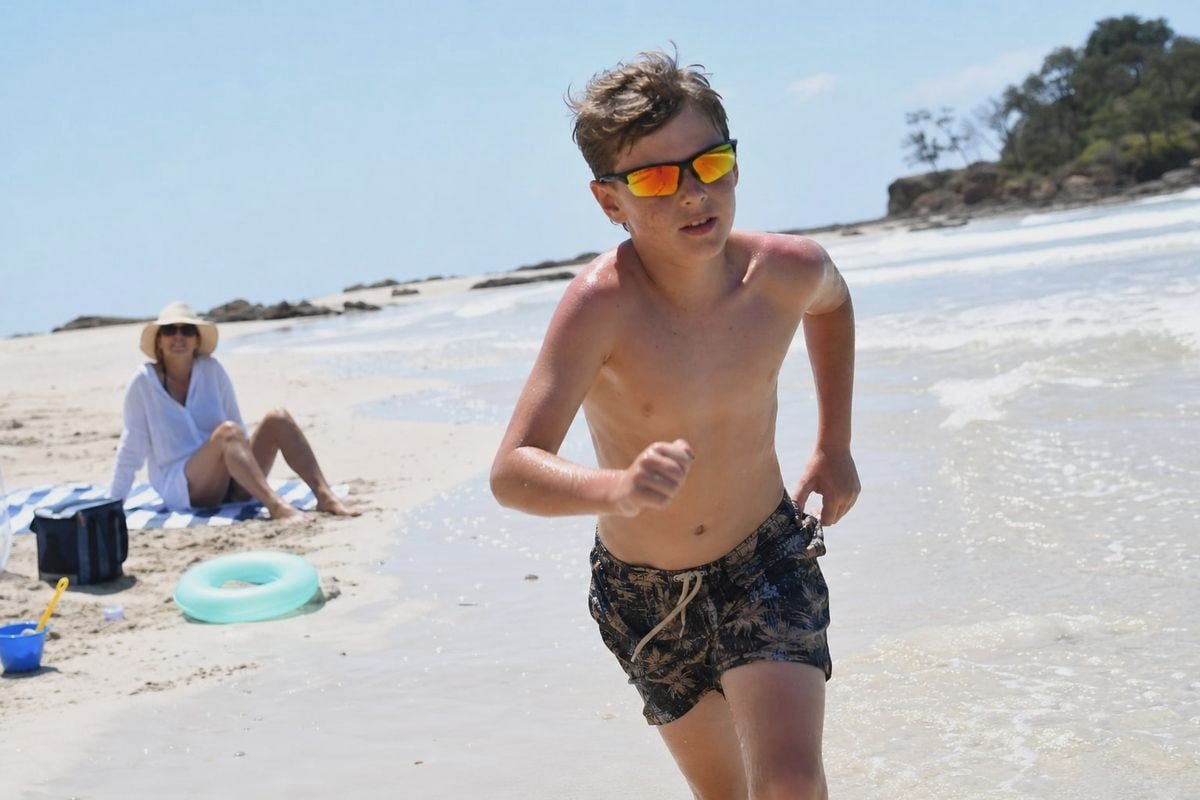
Getting a child to wear sunglasses is much like getting them to wear a bike helmet or brush their teeth. The earlier and more routinely you start, the less resistance you face. Here is a practical sequence that works for most families.
A Step-by-Step Habit-Building Plan
- Start at stroller age. Babies introduced to sunglasses around 6 months rarely fight them at age 3, because the glasses have always been part of going outside.
- Anchor it to a routine. Pair sunglasses with sunscreen and hats: shoes on, sunscreen on, hat on, glasses on. The sequence becomes automatic, like brushing teeth.
- Give them ownership. Let your child choose the color or style. In our export catalog of roughly 800 styles, the playful two-tone designs — a periwinkle-blue front with mint-teal temples, for instance — consistently outsell plain frames, because kids want to wear them.
- Model it yourself. Children copy parents. If you wear your sunglasses every time you step outside, your child will treat it as normal adult behavior worth imitating.
- Solve comfort complaints immediately. If a child says the glasses pinch or slide, believe them. An uncomfortable frame guarantees resistance. Flexible temples and soft, lightweight materials remove the physical excuse.
- Praise, don't punish. Notice and praise when the glasses stay on. Avoid turning eye protection into a battle, which teaches the child that removal gets attention.
- Keep a backup pair. Lost glasses break the habit chain. A spare pair in the car or stroller keeps the routine unbroken.
When a Child Still Refuses
Gradual habituation beats force. Try short, positive sessions: glasses on for a fun activity, off before they protest. Sport-style wraparound shields with bold mirrored lenses often win over reluctant older kids, because they look like "big kid" or athlete gear rather than a parental rule. Style, in this case, is a safety feature.
Schlussfolgerung
Unprotected childhood sun exposure quietly accumulates into lifelong eye risk. The fix is simple: start sunglasses around 6 months, wear them for every outdoor outing, and build the habit early.
At our factory, we've spent fifteen years engineering flexible TPEE and TR90 frames precisely because protection only works when a child will actually wear it. Choose 99–100% UV-blocking, shatterproof, well-fitting sunglasses, replace them as your child grows, and pair them with hats, shade, and sunscreen. Your child's eyes will thank you for decades.
Fußnoten
1. EPA resource explaining UV radiation types and protective measures relevant to sunglasses standards. ↩︎
2. EPA guidance on peak UV exposure times supports the article’s recommendation for sunglasses timing. ↩︎
3. Explains the shatterproof lens material recommended for toddlers’ sunglasses safety. ↩︎
4. CDC resource on protecting children’s health, relevant to sun exposure precautions for infants. ↩︎
5. Background on sunglasses safety standards referenced multiple times in the article’s comparisons. ↩︎
6. Provides background on the eye lens structure discussed in relation to childhood UV filtering. ↩︎
7. Supports the medical claim about children’s undeveloped eye lens and UV sensitivity. ↩︎
8. Background on thermoplastic materials used in durable, flexible eyewear frames for children. ↩︎
Weitere Artikel, die Ihnen gefallen könnten

August 2026
Sollte die Fabrik die Verpackung und Kennzeichnung von Kinder-Sonnenbrillen übernehmen oder einen bestimmten Lieferanten nutzen?

August 2026
Eigenes Lager vs. Direktlieferung durch den Lieferanten: Was senkt die Retourenkosten für Marken von Kinder-Sonnenbrillen?

August 2026
Direkt zum Lagerhafen oder Lagerung in Übersee: Was spart mehr bei den Versandkosten für Kinder-Sonnenbrillen?
Auf der Suche nach einem zuverlässigen Partner für Kinderbrillen?
Entdecken Sie über 800 sofort verfügbare Modelle und umfassenden OEM/ODM-Support, der auf Ihre Marke zugeschnitten ist.
Kontakt aufnehmen English
  Español de México
  Deutsch
  Français
  日本語
日本語  العربية
  Português do Brasil