Are Substandard Kids’ Sunglasses More Dangerous Than Wearing None?
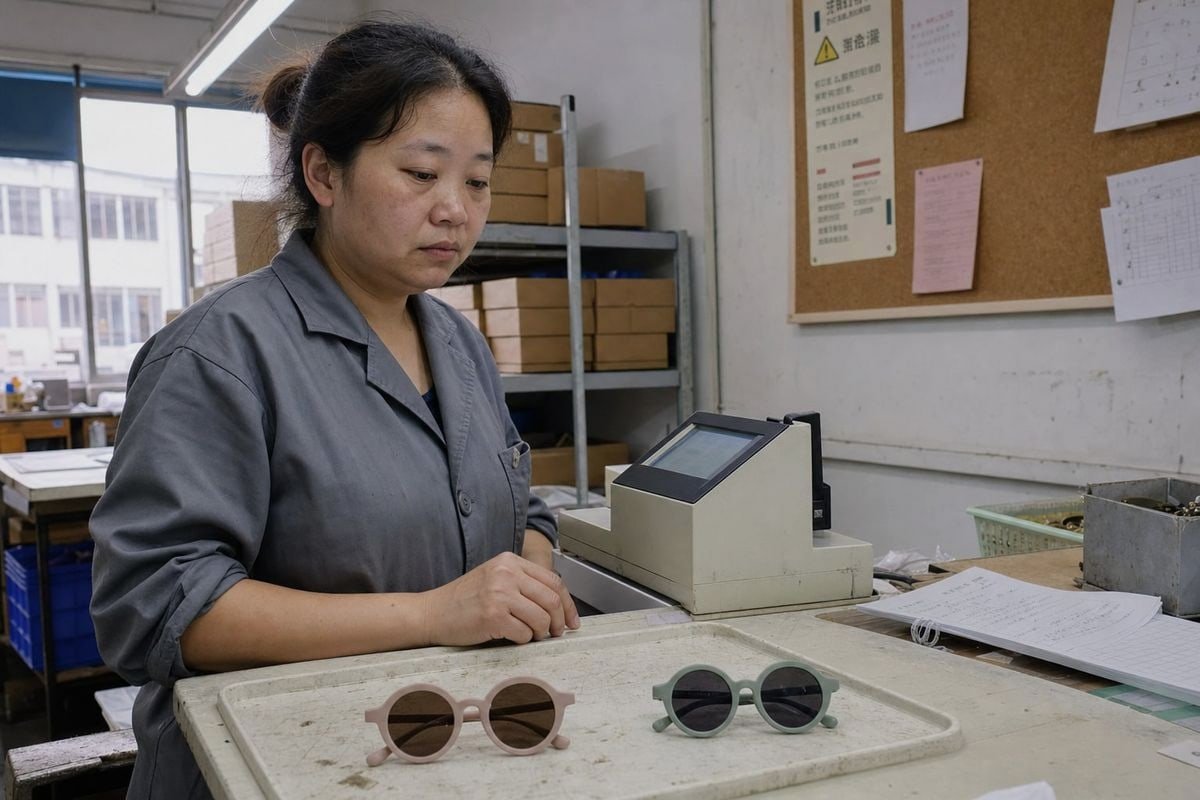
Substandard kids’ sunglasses cross my desk almost weekly lifetime UV exposure 1. Buyers send us samples from online marketplaces, asking why they look fine but fail our lab checks. The truth behind those dark lenses worries me.
Yes, substandard kids’ sunglasses can be more dangerous than wearing none. Dark lenses without real UV filtering cause a child’s pupils to dilate, letting more harmful UVA and UVB rays reach the retina. Certified UV400 sunglasses protect; uncertified dark lenses can quietly increase exposure.
This sounds counterintuitive, so let me walk you through it. Below, I explain the science, the sourcing risks, the standards you should demand, and how to pick a partner who gets this right.
How can I tell if kids' sunglasses lack proper UV400 protection before I order?
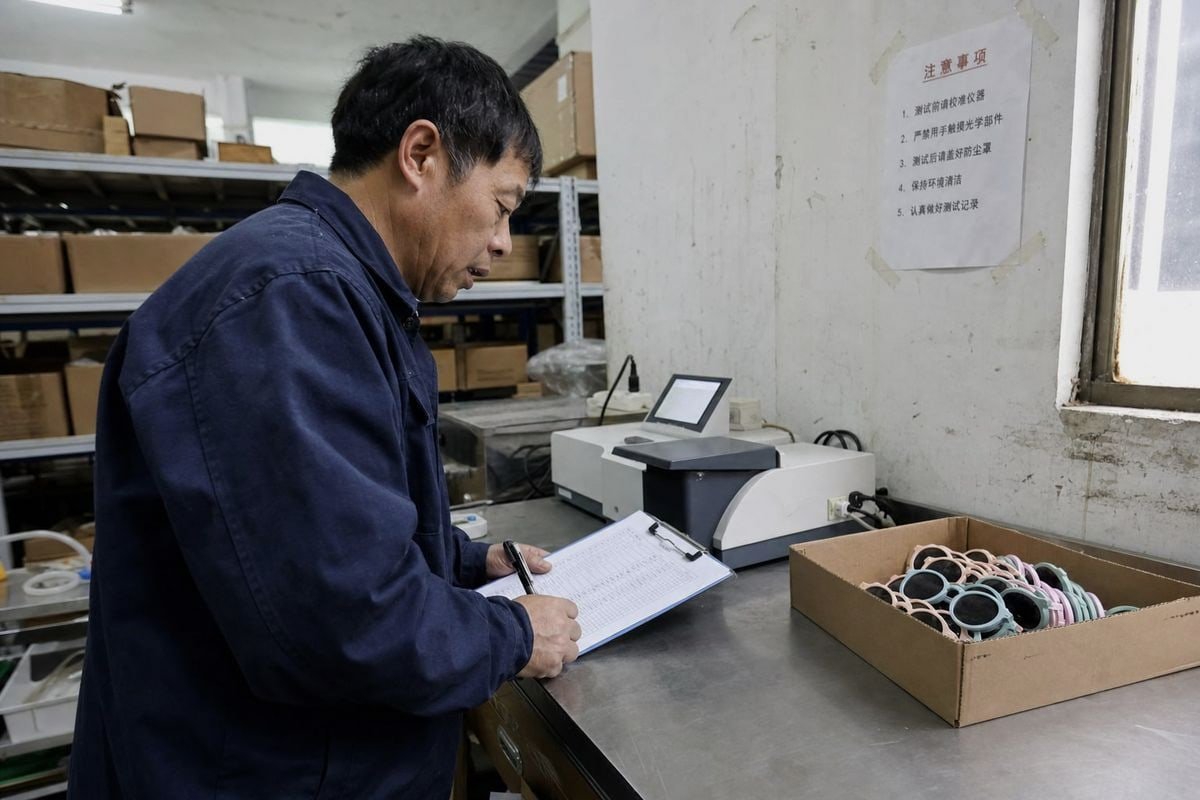
A buyer from Australia once mailed me three competitor samples with lenses darker than ours. Our UV transmittance meter told a different story: two of them leaked significant UV.
You cannot judge UV protection by tint darkness. Before ordering, request UV transmittance test reports, verify UV400 or 100% UV claims with third-party lab data, check for CE, UKCA, or equivalent markings, and test random samples yourself with a UV spectrophotometer or through an independent laboratory.
Tint and UV protection are two completely different things. The tint controls visible light 2. The UV filter controls invisible radiation. A lens can be almost black and still let UV pass straight through. That is the core trap. Recent consumer testing in the UK found that roughly one in three children's sunglasses bought from online marketplaces failed UV-protection checks, and many lacked the legally required markings altogether.
Why appearance tells you nothing
The pupil responds to visible light only. When a dark lens dims the world, the pupil opens wider. If the lens blocks UV, that is fine. If it does not, the wider pupil becomes an open door for UV-Strahlung 3. This is the mechanism that makes a bad pair worse than no pair at all.
Practical verification steps for buyers
Here is the process I recommend to every new client before they place a bulk order:
| Schritt | Was zu überprüfen ist | Was gut aussieht |
|---|---|---|
| 1. Documentation | UV transmittance test report | Blocks wavelengths up to 400nm |
| 2. Markings | CE, UKCA, or regional equivalent | Present, correct, and traceable |
| 3. Sample testing | Independent lab or UV meter check | Results match supplier claims |
| 4. Batch consistency | Random pulls from production | Every lens performs, not just the golden sample |
| 5. Lens sourcing | Ask where lenses come from | Named, audited lens supplier |
When we run incoming inspection on lens batches at our workshop in Taizhou, we check UV transmittance before those lenses ever reach assembly. A supplier who cannot show you this kind of process is asking you to trust the tint. Do not.
What risks am I exposing children to if I source cheap, uncertified sunglasses?
Early in my fifteen years in eyewear, I saw a returned shipment where novelty frames had snapped at the hinge, leaving sharp edges. That container taught me cheap eyewear carries more than one hazard.
Cheap, uncertified kids' sunglasses expose children to increased UV reaching the retina, raising long-term risks of cataracts and macular degeneration, plus acute photokeratitis in bright environments. They also add physical hazards: sharp broken edges, fragile frames, lens distortion, and uncomfortable materials that children refuse to wear.
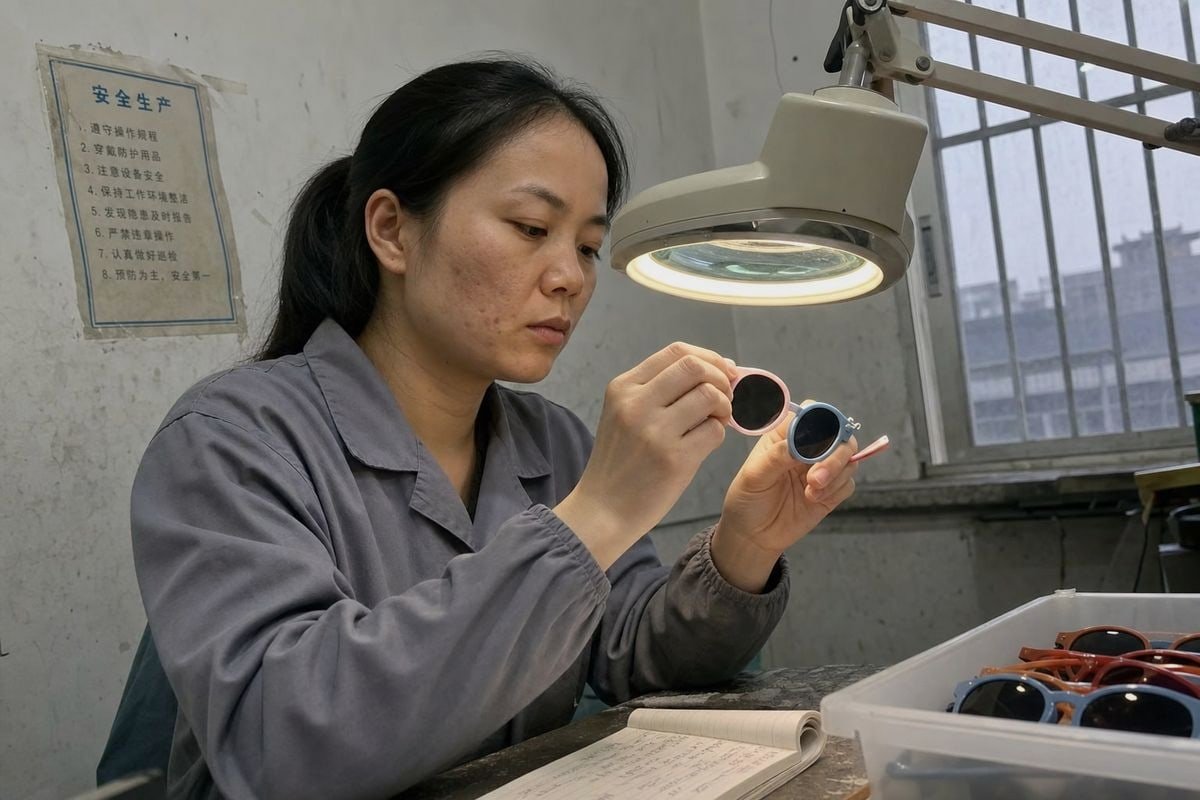
Children are not small adults when it comes to eyes. Their natural lenses are clearer, so more UV passes through to the retina. Their outdoor time is longer. Research suggests a large share of lifetime UV exposure 4 — often cited as up to 80% — happens before age 18. That means the eyewear a child uses now shapes their eye health decades later.
The UV risk, spelled out
Repeated UV exposure over time raises the risk of serious eye disease. I deliberately avoid the sensational claim that bad sunglasses cause blindness directly. The defensible statement is this: defective sunglasses increase cumulative UV dose while giving parents a false sense of protection. In high-reflection environments — snow, sand, water — the risk sharpens. Photokeratitis, essentially a sunburn of the cornea, can hit a child within hours on a beach if their dark, non-filtering lenses have widened their pupils.
The physical risks nobody talks about
UV is only half the story. Australian testing of toy and children's sunglasses found widespread failures not just in UV transmission, but in frame safety too. Here is how the risks stack up:
| Risk Category | Cause in Cheap Products | Consequence for the Child |
|---|---|---|
| UV leakage | No real UV filter behind dark tint | Higher retinal UV dose than bare eyes |
| Lens distortion | Poor optical-grade molding | Eye strain, headaches, visual discomfort |
| Frame breakage | Brittle recycled plastics | Sharp edges near eyes and skin |
| Uneven protection | Inconsistent lens coating | Some zones of the lens leak UV |
| Poor fit | Rigid, adult-scaled geometry | Child removes glasses, zero protection |
That last row matters commercially too. A frame that pinches gets thrown in a bag. This is exactly why we build most of our children's frames in flexible TPEE and TR90. A frame that bends instead of snapping protects the child twice: no sharp fragments, and comfort that keeps the glasses on the face.
Which safety and quality standards should I require from my eyewear manufacturer?
Every trade-off in eyewear sourcing eventually comes down to one question I ask buyers: do you want the cheapest quote, or a product you can legally and confidently sell? Standards are where those two paths split.
Require UV400 lens performance verified by test reports, compliance with your market's sunglasses standard — CE marking under EN ISO 12312-1 in Europe, UKCA in the UK, ANSI Z80.3 in the US, AS/NZS 1067 in Australia — plus impact resistance, optical clarity checks, and safe, child-appropriate materials.
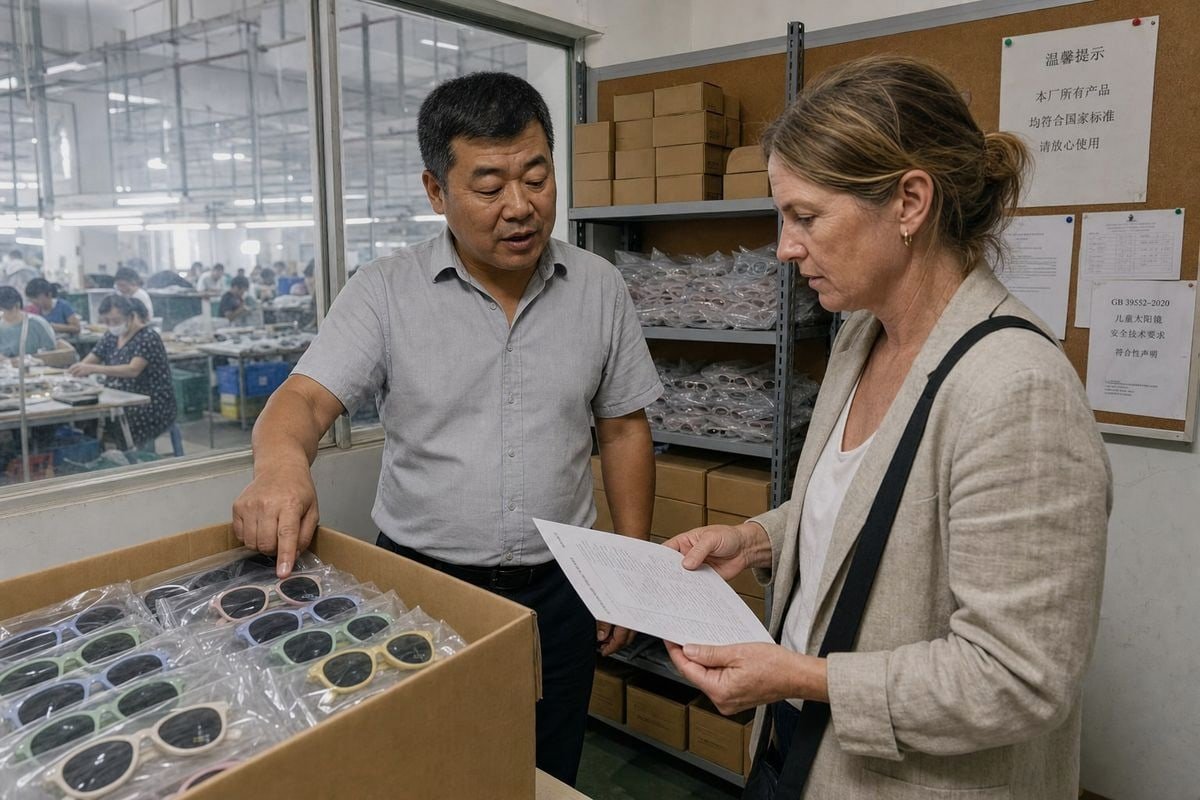
Standards are not paperwork for its own sake. They exist because children's sunglasses failed in exactly the ways I described above. When Which? tested marketplace pairs, every one lacked the required UK marking — making them illegal to sell there, regardless of how they performed.
The standards map, market by market
Different regions, same underlying goals. Here is the reference table I share with new clients:
| Markt | Key Standard / Marking | Was es abdeckt |
|---|---|---|
| Europäische Union | CE (EN ISO 12312-1) | UV filtering, lens categories, optical quality, robustness |
| Vereinigtes Königreich | UKCA marking | Equivalent requirements post-Brexit |
| Vereinigte Staaten | ANSI Z80.3 / FDA impact rules | UV, optics, impact resistance |
| Australien / Neuseeland | AS/NZS 1067 | UV transmission, lens categories, frame safety |
| Japan | JIS T 7333 alignment | UV and optical performance |
Beyond the lens: what else to demand
Standards mostly govern the lens. Your quality specification should go further. Ask about material safety — is the frame plastic free of harmful substances and suitable for skin contact? Ask about small parts and hinge design for younger age groups. Ask about durability: flex cycles on temples, drop tests, coating adhesion. In our 5S-verwalteten Werkstatt 5, these checks are part of routine QC, not a special request. That is the difference between a supplier who assembles sunglasses and one who engineers children's eyewear. Also insist on batch-level documentation. A single certificate from three years ago tells you nothing about the container arriving next month. Tie test reports to production lots, and reserve the right to Inspektion durch Dritte 6. A confident factory will agree without hesitation.
How can I choose a reliable OEM/ODM partner to avoid substandard kids' sunglasses?
A procurement manager from a European baby brand recently told me her shortlist had twelve suppliers, and eleven quoted before asking a single question about her market's regulations. That silence told her everything.
Choose a factory, not a trader, with proven children's eyewear specialization: verifiable UV400 and compliance documentation, flexible child-safe materials like TPEE and TR90, in-house QC, existing style libraries to reduce mold risk, full OEM/ODM support, and transparent communication about testing, tolerances, and lead times.
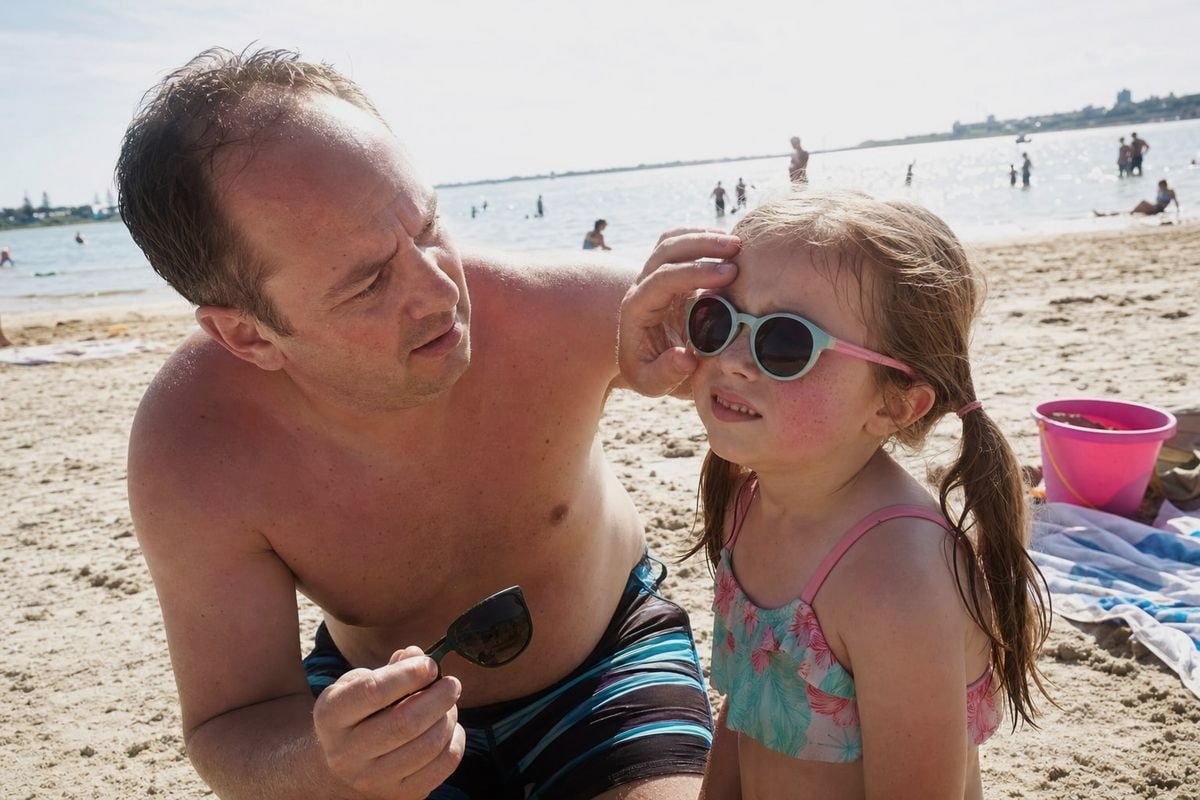
Avoiding substandard kids' sunglasses starts long before production. It starts with who you partner with and what questions you ask them. After fifteen years and clients across more than twenty countries, I can tell you the reliable partners share a recognizable profile.
A practical vetting sequence
- Confirm they are the actual factory. Traders add margin and remove accountability. Ask for workshop photos, worker counts, and a video call from the production floor. Our team of roughly 120 workers is happy to show the line; that openness is itself a signal.
- Test their compliance knowledge. Ask which standard applies in your market and listen. A real partner answers precisely and asks about your target age group.
- Order samples and test them independently. Send them to a lab for UV transmittance. Compare the report against claims.
- Evaluate material expertise. Kids' frames should bend, not snap. Flexible TPEE temples 7 on TR90 fronts survive being sat on, chewed, and thrown into schoolbags. Ask what happens when the frame is twisted 180 degrees.
- Check their style library. A deep catalog — we maintain around 800 existing styles — lets you launch without heavy mold investment and test your market at lower risk. That flexibility matters most for new brands.
- Review OEM/ODM depth. Custom colors, logos, lens options, packaging, and accessories should be one integrated service, delivering a retail-ready product, not a bag of parts.
- Assess communication. Slow, vague answers at the quoting stage become disasters at the shipping stage.
A cheap quote that produces unsellable, non-compliant stock is the most expensive purchase you will ever make. Judge partners on documentation, materials, and process — not price per piece.
Schlussfolgerung
Dark lenses without real UV filtering can harm the children they claim to protect. Demand UV400 proof, market compliance, safe flexible materials, and a transparent factory partner — and that danger disappears.
Fußnoten
1. WHO fact sheet documents cumulative UV exposure risks and childhood sun damage relevant to this claim. ↩︎
2. Background concept clarifying why tint darkness relates to visible light, not UV filtering. ↩︎
3. WHO explains health risks of UV radiation exposure, supporting the pupil-dilation danger described. ↩︎
4. CDC data on cumulative childhood UV exposure supports the article’s 80%-before-18 claim. ↩︎
5. Explains the 5S lean manufacturing methodology referenced for workshop quality control. ↩︎
6. ISO oversees standards and inspection frameworks underlying independent product verification. ↩︎
7. Explains the flexible polymer material used for durable, child-safe sunglasses temples. ↩︎
Weitere Artikel, die Ihnen gefallen könnten
August 2026
Sollte die Fabrik die Verpackung und Kennzeichnung von Kinder-Sonnenbrillen übernehmen oder einen bestimmten Lieferanten nutzen?
August 2026
Eigenes Lager vs. Direktlieferung durch den Lieferanten: Was senkt die Retourenkosten für Marken von Kinder-Sonnenbrillen?
August 2026
Direkt zum Lagerhafen oder Lagerung in Übersee: Was spart mehr bei den Versandkosten für Kinder-Sonnenbrillen?
Auf der Suche nach einem zuverlässigen Partner für Kinderbrillen?
Entdecken Sie über 800 sofort verfügbare Modelle und umfassenden OEM/ODM-Support, der auf Ihre Marke zugeschnitten ist.
Kontakt aufnehmen English
  Español de México
  Deutsch
  Français
  日本語
日本語  العربية
  Português do Brasil