Do Kids Sunglasses Come with a Warranty for Scratched Lenses or Broken Temples?
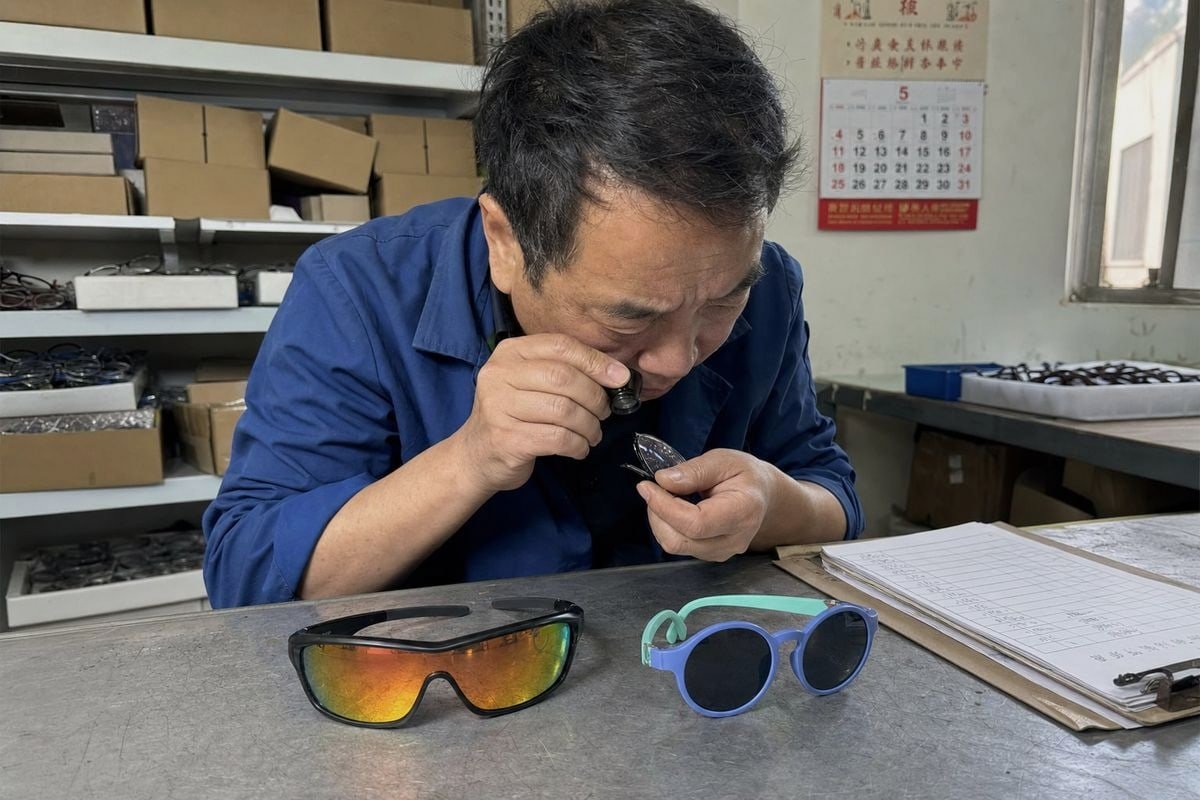
Kids sunglasses 1 warranty questions land in my inbox every week. Buyers assume coverage is standard. It is not. On our production line, we see exactly where warranties end and problems begin.
Most kids sunglasses do not come with a warranty covering scratched lenses or broken temples. Standard manufacturer warranties cover only defects in materials or workmanship. Scratches and accidental breaks count as wear and tear, unless a separate protection plan or kids-specific guarantee is purchased.
That short answer hides a lot of detail. If you sell children’s eyewear, you need to know where the lines are drawn. Let me walk you through it, factory-side first.
What Kind of Warranty Terms Should I Expect When Sourcing Kids Sunglasses from a Manufacturer?
A buyer from Australia once asked me to guarantee her order against "any damage for two years." We had a long, honest talk. Here is what I told her, and what our factory in Taizhou actually offers.
Expect a manufacturer warranty covering defects in materials and workmanship only, typically for 30 to 90 days after delivery. Scratched lenses, bent temples, chewing damage, and drops are excluded as accidental damage. Broader coverage requires a negotiated protection plan or a defect-rate allowance in your contract.

The word "warranty" means different things at different points in the supply chain. When you source kids sunglasses from a factory like ours, you are not buying a consumer warranty. You are buying a B2B quality agreement. That agreement usually covers three things: defective hinges, faulty lens bonding, and workmanship errors present at delivery. It does not cover what a four-year-old does to the glasses in week three.
The Typical Coverage Landscape
Research across the market shows a consistent pattern. Standard warranties exclude scratches. Broken temples are covered only when the break traces back to a defect, such as a badly molded hinge barrel or brittle material. Here is how the main coverage types compare:
| Coverage type | Scratched lenses | Broken temples | Typical duration |
|---|---|---|---|
| Standard manufacturer warranty | Not covered | Only if defect-related | 30–90 days |
| Retailer protection plan | Often covered | Often covered | Usually 1 year |
| Kids-specific accidental damage program | Sometimes covered | Sometimes covered | 1 year, often one-time |
| B2B defect-rate agreement | Not covered | Covered as batch defects | Per contract |
What to Negotiate at the Factory Level
In our experience exporting to buyers in more than 20 countries, the smartest brands negotiate a defect-rate allowance instead of chasing an impossible blanket warranty. For example, agree that any defect rate above a set percentage triggers replacements or a credit. Also agree on a claim window, usually 30 days after goods arrive, with photo evidence. This protects you against genuine factory faults without pretending that a child's rock-climbing adventure is our workmanship problem. Clear terms upfront prevent nearly every warranty dispute we have seen in 15 years.
How Can I Reduce Scratched Lens and Broken Temple Claims Before They Happen?
The cheapest claim is the one that never happens. Our engineers redesigned a temple hinge three times for one European brand until flex testing stopped producing failures. Prevention starts long before packaging.
Reduce claims by specifying flexible TR90 frames with TPEE temples, hard-coated polycarbonate lenses, and screwless or reinforced hinges. Add protective cases and care cards to every unit, and flex-test samples before mass production. Material choice prevents most breakage; hard coatings and cases prevent most scratches.
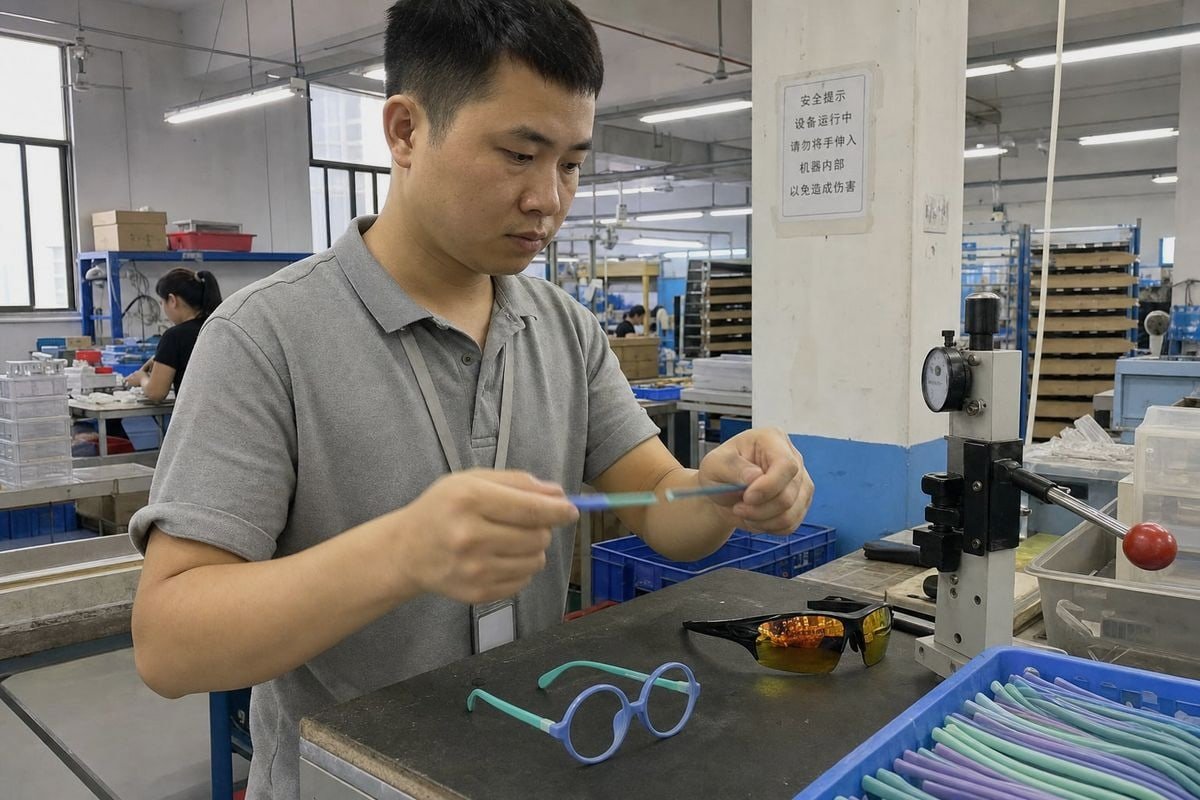
Children do not treat sunglasses gently. They sit on them, twist them, drop them in sand, and chew the temple tips. So the honest question is not "how do I get better warranty terms?" It is "how do I make claims rare?" From the factory floor, here is what actually works.
Choose Materials That Bend Instead of Break
Rigid frames snap. Flexible ones survive. This is why we build most of our children's styles in TR90 with TPEE temples 2. TPEE bends far past the point where standard plastic cracks, then returns to shape. A temple that flexes 180 degrees rarely generates a breakage claim. It also cannot form sharp edges near a child's face when stressed, which matters for safety-conscious brands.
Attack Scratches at the Lens Spec
Polycarbonat 3 is the right lens material for kids. It resists impact extremely well. But it scratches easily without treatment. The fix is simple: specify a hard coating on both lens surfaces. It adds a small cost per unit and removes a large share of future complaints.
Practical Steps That Cut Claims
- Specify TR90 frames with TPEE temples for maximum flexibility.
- Require hard-coated polycarbonate UV400 lenses on every SKU.
- Include a hard or semi-hard case with each pair, not just a pouch.
- Add a printed care card telling parents how to clean and store the glasses.
- Run flex, drop, and salt-spray tests 4 on pre-production samples.
- Avoid tiny hinge screws where a screwless or reinforced design fits the style.
Each step shifts cost from reactive replacements to proactive design. In our experience, that trade always favors the brand.
What Should I Look for in a Factory's Quality Control Process to Avoid Warranty Issues?
There is a real difference between a supplier who ships boxes and one who owns the outcome. Our 5S-verwalteten Werkstatt 5 exists because sloppy floors produce sloppy hinges, and sloppy hinges produce warranty emails.
Look for incoming material inspection, in-process checks at molding and assembly, hinge torque and temple flex testing, lens coating verification, and a final AQL-based inspection before packing. A factory should show you written QC records and let you audit or send a third-party inspector.

Warranty issues are usually quality issues in disguise. A scratched lens straight out of the box is not wear and tear. It is a packing failure. A temple that cracks in the first week is often a molding flaw or bad material batch. Strong QC catches these before they become your customer's problem.
The Checkpoints That Matter Most
When you evaluate a factory, ask what happens at each production stage. Vague answers are a warning sign. Here is what a serious kids' eyewear factory should be able to show you:
| QC stage | What is checked | Why it prevents claims |
|---|---|---|
| Incoming materials | TR90/TPEE batch quality, lens blanks | Bad raw material causes brittle temples |
| Injection molding | Flash, sink marks, weld lines at hinges | Weld-line flaws are where temples snap |
| Lens processing | Hard coating adhesion, UV400 verification | Uncoated lenses generate scratch complaints |
| Assembly | Hinge tension, screw torque, alignment | Loose hinges lead to "broken temple" reports |
| Endkontrolle | AQL sampling, cosmetic check, packing | Stops scratched-at-source units shipping |
Ask for Evidence, Not Promises
Any factory can say "we have strict QC." Fewer can hand you inspection records, defect-rate logs, and test reports for your specific order. At our facility, we keep batch records precisely so that if a claim ever arises, we can trace it to a production lot and answer honestly. Also confirm the factory welcomes third-party inspections 6. A supplier who resists an SGS or buyer-appointed check before shipment is telling you something. Fifteen years of eyewear production has taught us that transparency at this stage is the single best predictor of a calm, low-claim business relationship.
How Do I Set Up a Fair Return or Replacement Policy for My Retail Customers?
One lesson I have learned supporting kids' brands across Europe and Japan: a generous, clearly-worded policy sells more sunglasses than a legally airtight one. Parents buy confidence, not fine print.
Offer a 30-day return window for defects, a 12-month warranty against manufacturing faults, and a clearly separate optional protection plan or one-time replacement for accidental damage like scratches and broken temples. State exclusions plainly, require proof of purchase, and keep the claim process to one photo and one email.

Your retail policy is a marketing tool as much as a legal document. Parents know their kids destroy things. If your policy acknowledges that reality honestly, you win trust. If it hides exclusions in dense text, you win one-star reviews.
Separate the Three Layers Clearly
Confusion happens when brands blur returns, warranties, and protection plans into one paragraph. Keep them distinct:
| Policy layer | Was es abdeckt | Suggested window |
|---|---|---|
| Satisfaction return | Any reason, unused condition | 30 Tage |
| Defect warranty | Manufacturing faults only | 6–12 months |
| Accidental damage plan | Scratches, broken temples, drops | 12 months, one replacement |
Make the Kid-Proof Promise Work Financially
A one-time "kid-proof" replacement is the emerging market trend, and it works because of simple math. If your landed cost per unit 7 is modest — which is exactly why brands source from existing catalog styles rather than paying for new molds — a single replacement still leaves healthy margin on a full-price sale. Some brands charge a small fee for the accidental replacement; others build it into pricing as a headline benefit. Either model works if your defect rate from the factory is low.
Keep Claims Frictionless
Require just three things: proof of purchase, a photo of the damage, and the order number. Encourage product registration if you want cleaner data, but never make it a barrier. Then close claims within 48 hours. Fast resolution turns a broken temple into a repeat customer. Slow resolution turns it into a public complaint. We design our packaging and spare-part support around exactly this kind of retail promise, because our brand customers' policies only work when the product underneath them is consistent.
Schlussfolgerung
Kids sunglasses rarely carry warranties for scratches or broken temples. That gap creates risk — and opportunity. Source flexible, well-tested frames, demand real QC, and build a clear, kid-proof retail policy.
Fußnoten
1. CPSC oversees safety standards relevant to children’s products like sunglasses. ↩︎
2. Explains thermoplastic elastomer properties that let TPEE temples flex without breaking. ↩︎
3. Background on polycarbonate’s impact resistance and scratch tendency for kids’ lenses. ↩︎
4. ASTM sets standardized salt-spray corrosion testing methods used in product durability checks. ↩︎
5. Background on the 5S workplace organization methodology referenced for factory quality. ↩︎
6. ISO defines quality standards underlying independent factory inspection practices. ↩︎
7. Official trade resource explaining landed cost calculations relevant to sourcing decisions. ↩︎
Weitere Artikel, die Ihnen gefallen könnten
August 2026
Sollte die Fabrik die Verpackung und Kennzeichnung von Kinder-Sonnenbrillen übernehmen oder einen bestimmten Lieferanten nutzen?
August 2026
Eigenes Lager vs. Direktlieferung durch den Lieferanten: Was senkt die Retourenkosten für Marken von Kinder-Sonnenbrillen?

August 2026
Direkt zum Lagerhafen oder Lagerung in Übersee: Was spart mehr bei den Versandkosten für Kinder-Sonnenbrillen?
Auf der Suche nach einem zuverlässigen Partner für Kinderbrillen?
Entdecken Sie über 800 sofort verfügbare Modelle und umfassenden OEM/ODM-Support, der auf Ihre Marke zugeschnitten ist.
Kontakt aufnehmen English
  Español de México
  Deutsch
  Français
  日本語
日本語  العربية
  Português do Brasil