Can Scratched Kids’ Sunglasses Lenses Still Be Worn Safely? Any Fixes?
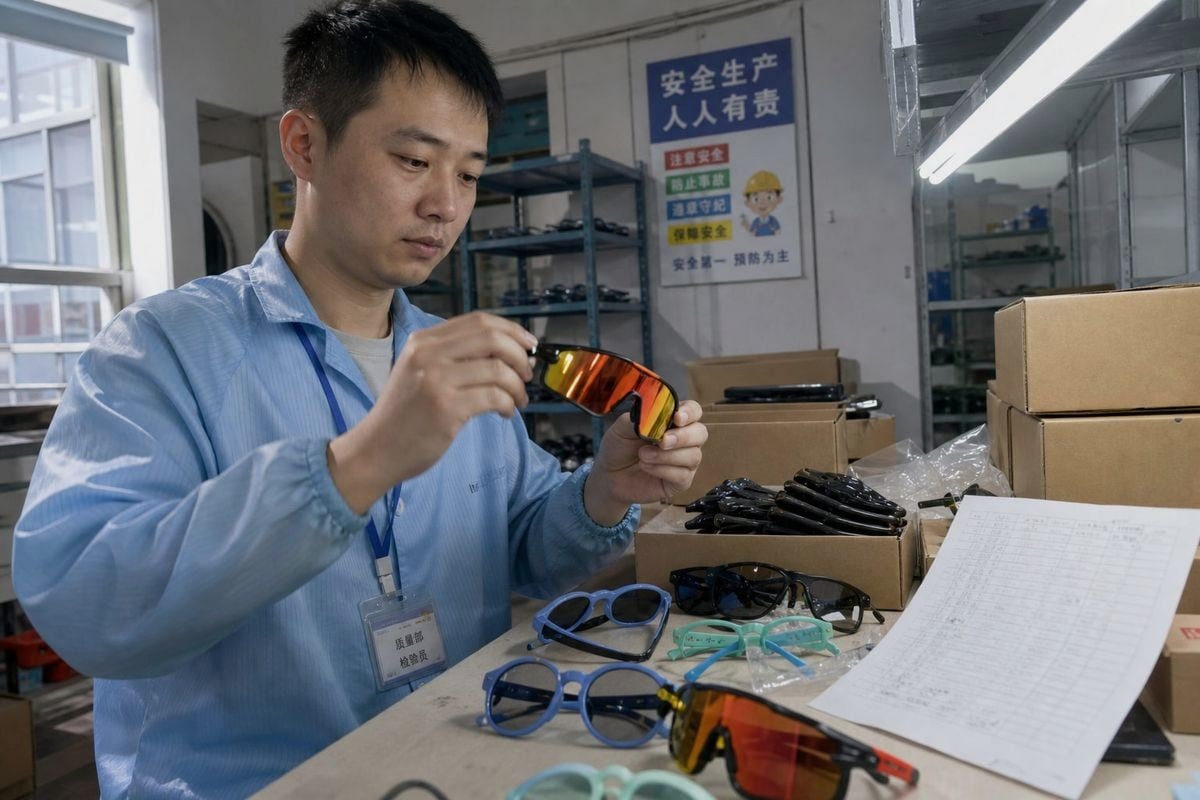
Scratched kids’ sunglasses lenses land on my QC desk in Taizhou every month. Parents worry, brands get returns, and nobody knows whether a scratch means “toss it” or “keep it.” Let me clear this up.
Scratched kids’ sunglasses lenses are usually still safe to wear if the scratches are shallow, off-center, and do not blur or distort vision. Deep scratches, cracks, peeling coatings, or scratches in the line of sight mean the lenses should be replaced, not repaired.
That is the short answer. But the details matter. Below, I walk through how to judge a scratch, why home fixes usually fail, why kids’ lenses scratch so fast, and how buyers can source tougher lenses from the start.
How do I know if a scratch on my child's sunglasses lens is actually dangerous?
A buyer from Australia once sent our team photos of returned sunglasses, asking which pairs were "still fine." We sorted them in ten minutes using a simple checklist I will share here.
A scratch is dangerous when it sits in the direct line of sight, causes blur, glare, or halos, penetrates deep into the lens material, or comes with cracks or peeling coating. A tiny, shallow scuff near the lens edge that does not affect vision is generally safe.
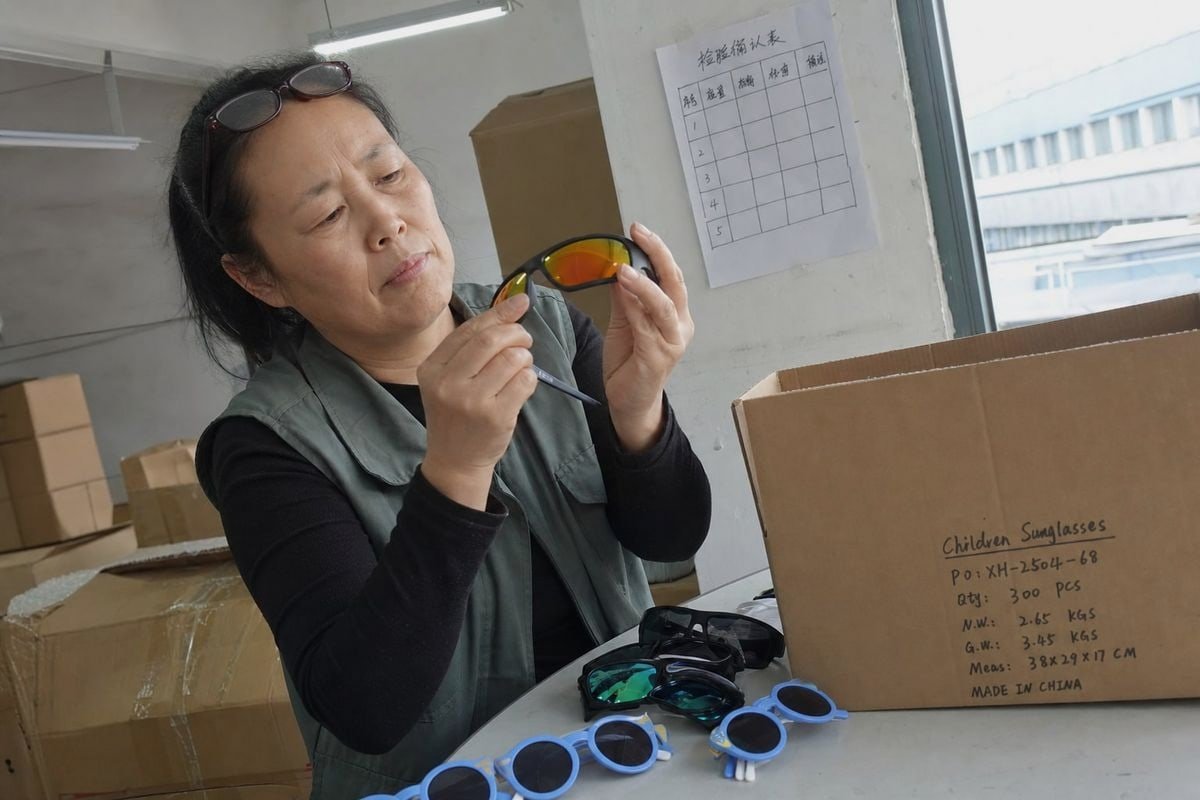
The main risk from a scratched lens is not usually eye injury. It is degraded vision. Scratches scatter light. That scatter creates glare, halos 1, and dimmer, fuzzier vision. For an adult, this is annoying. For a child, it can cause squinting, eye strain, and headaches — and here is the problem: most kids will not tell you. They just adapt, rub their eyes, or quietly stop wearing the sunglasses.
The five-point safety check
Hold the sunglasses up to a bright light and check these points:
| Check | Safe to keep wearing | Time to replace |
|---|---|---|
| Location | Edge or corner of lens | Center, in line of sight |
| Depth | Fingernail glides over it | Fingernail catches in the groove |
| Density | One or two isolated marks | Web of fine scratches across the lens |
| Coating | Intact, no flaking | Peeling, bubbling, or cloudy patches |
| Child's behavior | No complaints, no squinting | Squinting, headaches, rubbing eyes, refusing to wear them |
What about UV protection?
This is the question I get most from brand buyers. On modern Polycarbonat 2 and quality injected lenses — the kind we fit as standard UV400-Gläser 3 — the UV protection is built into the lens material itself. A surface scratch does not remove it. But on cheap lenses that rely on a thin sprayed-on UV coating, a deep scratch can create small unprotected spots. Since children's pupils dilate wider than adults' and their eyes are still developing, any UV leakage matters more for them. If you are unsure how the lens was made, treat a deep scratch as a replacement trigger.
Also watch for hairline cracks. A cracked lens on an active child is a physical hazard, not just an optical one. Replace it immediately.
Can I repair scratched kids' sunglasses lenses myself, or should I replace them?
Years ago, I tested every popular scratch "hack" on sample lenses in our workshop — toothpaste, baking soda, polishing paste, the lot. The results convinced me to always advise replacement over repair.
There is no safe, permanent DIY fix for scratched kids' sunglasses lenses. Toothpaste, baking soda, and polishing pastes strip coatings and create hazy distortion. If a scratch affects vision, comfort, or the coating, replacing the lenses or the sunglasses is the only reliable answer.
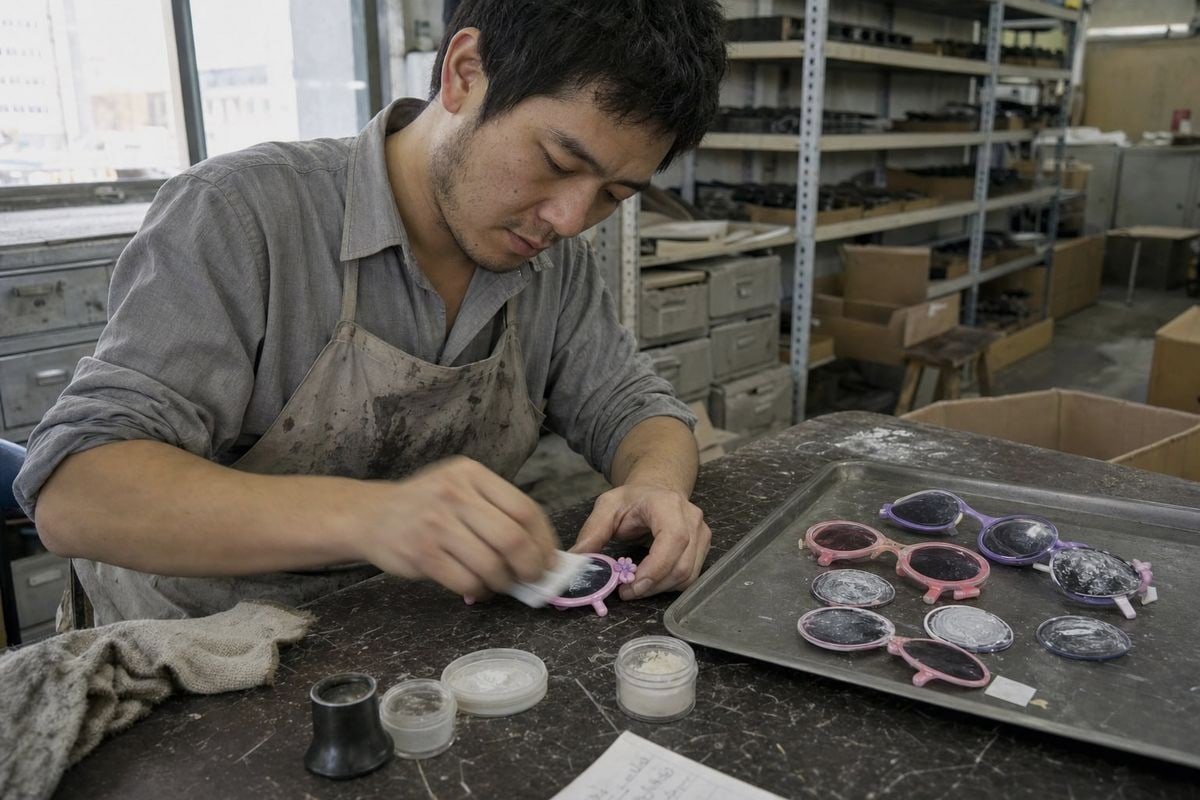
Here is why the popular hacks fail. A scratch is a groove cut into the lens surface. To truly remove it, you must grind the surrounding surface down to the same depth. Doing that by hand, with an abrasive like toothpaste, does two things. First, it removes the anti-scratch and anti-reflective coatings around the scratch, leaving a cloudy patch. Second, it changes the lens curvature unevenly, which creates optical distortion — often worse for a child's vision than the original scratch.
Common home remedies, honestly rated
| Methode | What actually happens | My verdict |
|---|---|---|
| Toothpaste rub | Abrasive strips the coating, leaves haze | Avoid |
| Baking soda paste | Same abrasion problem, milder but still damaging | Avoid |
| Car or brass polish | Fills the groove briefly, then washes out; chemicals may attack the coating | Avoid |
| Scratch-filler wax products | Temporary cosmetic fill, adds smearing and glare | Avoid for kids |
| Furniture polish spray | Cosmetic shine only, residue attracts dust | Avoid |
Mirrored and coated lenses — like the mirrored gradient shield lenses on our sport wraparound styles — are the riskiest to "fix." The mirror finish is a thin coating layer. Any abrasive touch destroys it visibly and permanently.
When replacement is clearly the right call
Replace the lenses or the whole pair if the scratch is centered, if your child squints or complains, if the coating is flaking, or if the lens is cracked. For kids' sunglasses specifically, whole-pair replacement is often cheaper and safer than lens repair. Children outgrow frames quickly anyway, so a fresh, correctly fitting pair is usually the smarter spend.
Why do my children's sunglasses lenses scratch so easily in the first place?
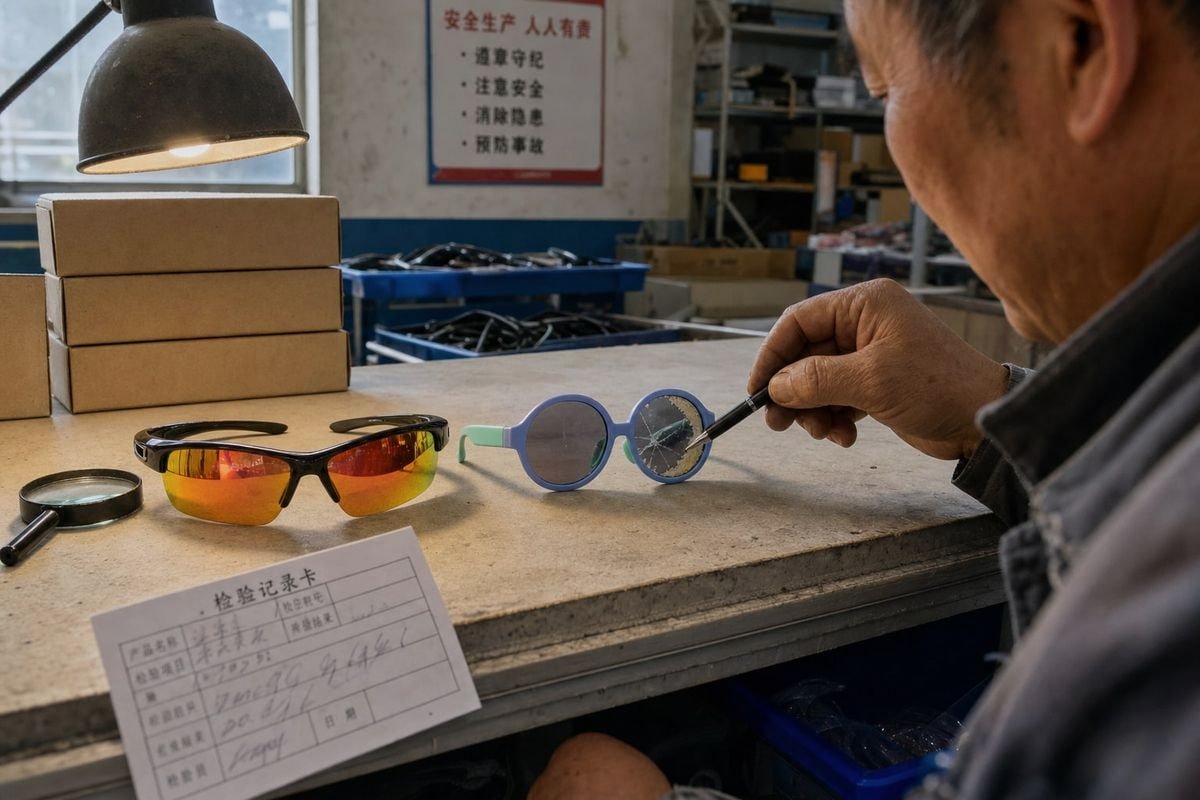
Watch how a six-year-old handles sunglasses for one afternoon and you will understand. During product testing at our facility, we simulate exactly that: lenses dropped face-down, shoved into sandy bags, wiped with shirt hems.
Kids' sunglasses lenses scratch easily because children drop them lens-down, store them loose with toys and sand, and wipe them with clothing. Soft plastic lenses without hardened anti-scratch coatings, common on budget sunglasses, make this everyday abuse far worse.
Let us break this into the two real causes: the material and the behavior.
The material side
Almost all kids' sunglasses use plastic lenses 4 — polycarbonate, PC, or acrylic — because glass is dangerous on a child's face. Plastic is impact-safe but naturally softer than glass, so it scratches more readily. The fix is a hardened anti-scratch coating applied over the lens. Good lenses have it. Bargain-bin lenses often skip it to save cost, and those are the pairs that come back looking sandblasted after one beach holiday.
The behavior side
Children create a scratch environment adults never do:
- They take sunglasses off and put them lens-down on concrete, sand, or playground surfaces.
- They toss them loose into backpacks with keys, toys, and grit.
- They wipe smudges with sleeves, tissues, or paper towels — all of which drag abrasive particles across the lens.
- They rarely use a case unless the case is fun and easy.
Prevention that actually works with kids
Rinse lenses under lukewarm water before any wiping, so grit floats off instead of grinding in. Clean with mild dish soap and dry with a clean microfiber cloth only. Give every pair a hard case, and build a monthly habit: inspect the lenses under bright light yourself, because your child will not report a problem. We supply hard cases and microfiber pouches as standard accessories to our brand clients for exactly this reason — packaging is not decoration, it is scratch prevention.
How can I choose scratch-resistant lenses when sourcing kids' sunglasses from a manufacturer?
A procurement manager from Japan once asked me a sharp question: "Why did your samples survive our abrasion test when the previous supplier's failed?" The answer came down to three specification choices anyone can request.
To source scratch-resistant kids' sunglasses lenses, specify polycarbonate lenses with a factory-applied hard anti-scratch coating, UV400 protection embedded in the lens material, and require abrasion and coating-adhesion testing on pre-production samples. Confirm hard cases and microfiber cloths are included.
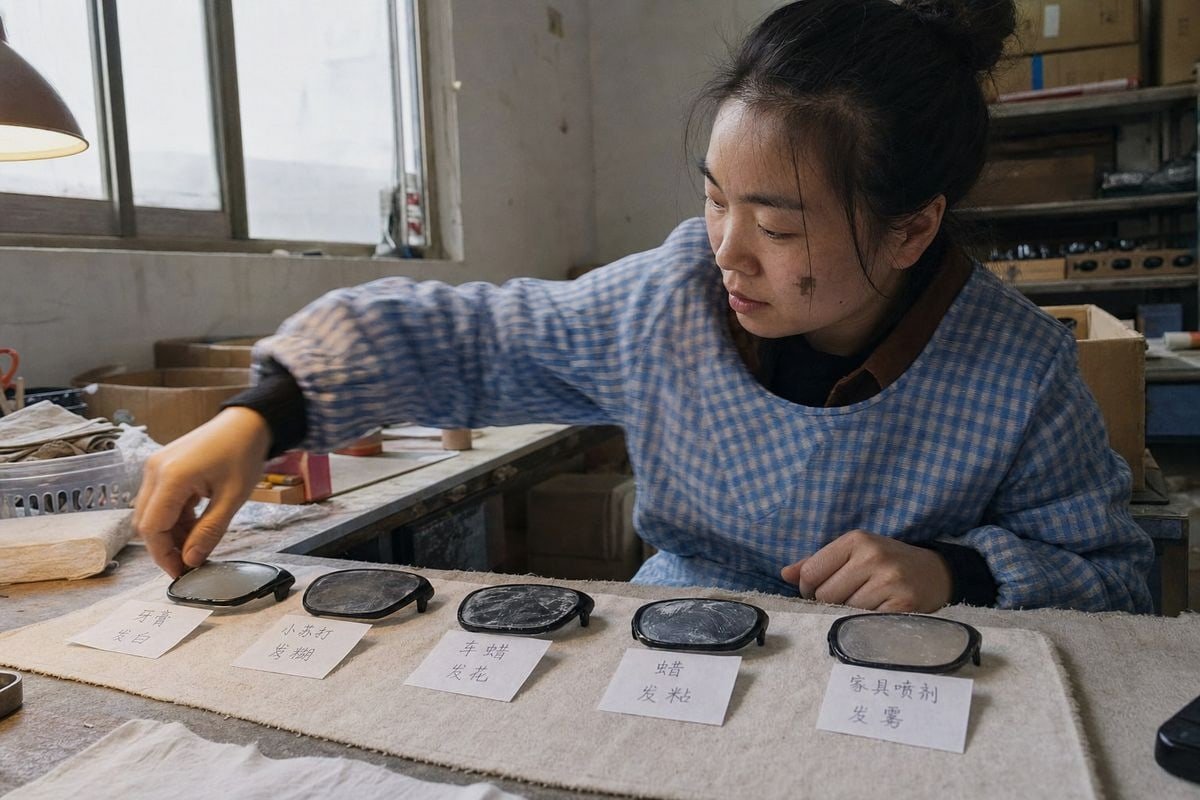
Sourcing decisions made at the spec stage determine your return rate two seasons later. Here is how I advise buyers to think it through.
The specification checklist
| Specification | What to ask your supplier | Warum es für Kinder wichtig ist |
|---|---|---|
| Glasmaterial | Polycarbonate or quality PC | Impact-safe and UV-blocking through the material itself |
| Anti-scratch coating | Hard coating applied and cured, both sides | The single biggest factor in scratch resistance |
| UV-Schutz | UV400 embedded, not surface-sprayed | Protection survives surface wear |
| Mirror/color coatings | Coating adhesion 5 test results | Mirrored lenses show wear fastest without proper adhesion |
| Rahmenmaterial | Flexible TPEE or TR90 6 | Flexible frames absorb drops, so lenses hit the ground less hard |
| Accessories | Hard case and microfiber cloth included | Prevention starts with packaging |
Frame flexibility protects lenses too
This point gets overlooked. A rigid frame transfers drop impact straight into the lens. The flexible TPEE and TR90 constructions we build — including TR90 fronts 7 with TPEE temples — flex on impact and spring back. Less impact energy reaches the lens, which means fewer chips and deep gouges over the product's life. Safety and durability come from the whole design, not the lens alone.
Practical sourcing advice
Test before you commit. Ask for pre-production samples and run your own abuse test: wipe with a gritty cloth, drop lens-down, check coating adhesion with tape. A factory confident in its lenses will welcome this. With around 800 existing styles available — from playful two-tone round frames to mirrored sport shields — buyers can also test the market without heavy mold investment, then customize colors, logos, lenses, and packaging once a style proves itself. For kids' products, where pairs get lost, outgrown, and abused, building scratch resistance into the spec is far cheaper than handling returns later.
Schlussfolgerung
Minor, off-center scratches on kids' sunglasses are usually tolerable. Vision-distorting damage is not, and no home fix works. Judge honestly, replace when needed, and source scratch-resistant lenses from the start.
Fußnoten
1. NIH eye institute guidance on glare and sun-related eye protection for children. ↩︎
2. Background on the plastic lens material widely used in children’s sunglasses. ↩︎
3. WHO reference explaining UV radiation risks relevant to UV400 lens protection claims. ↩︎
4. Background reference explaining why polycarbonate plastic is impact-resistant yet softer than glass. ↩︎
5. ASTM standard test method commonly used to verify coating adhesion durability via tape testing. ↩︎
6. Background on the flexible thermoplastic frame material mentioned for impact absorption. ↩︎
7. Reference on polyamide materials explains flexibility properties behind TR90 frame construction. ↩︎
Weitere Artikel, die Ihnen gefallen könnten

August 2026
Sollte die Fabrik die Verpackung und Kennzeichnung von Kinder-Sonnenbrillen übernehmen oder einen bestimmten Lieferanten nutzen?
August 2026
Eigenes Lager vs. Direktlieferung durch den Lieferanten: Was senkt die Retourenkosten für Marken von Kinder-Sonnenbrillen?

August 2026
Direkt zum Lagerhafen oder Lagerung in Übersee: Was spart mehr bei den Versandkosten für Kinder-Sonnenbrillen?
Auf der Suche nach einem zuverlässigen Partner für Kinderbrillen?
Entdecken Sie über 800 sofort verfügbare Modelle und umfassenden OEM/ODM-Support, der auf Ihre Marke zugeschnitten ist.
Kontakt aufnehmen English
  Español de México
  Deutsch
  Français
  日本語
日本語  العربية
  Português do Brasil