How to Use 2-Week Sales Data to Reorder or Discontinue Kids Optical Frames Colors?
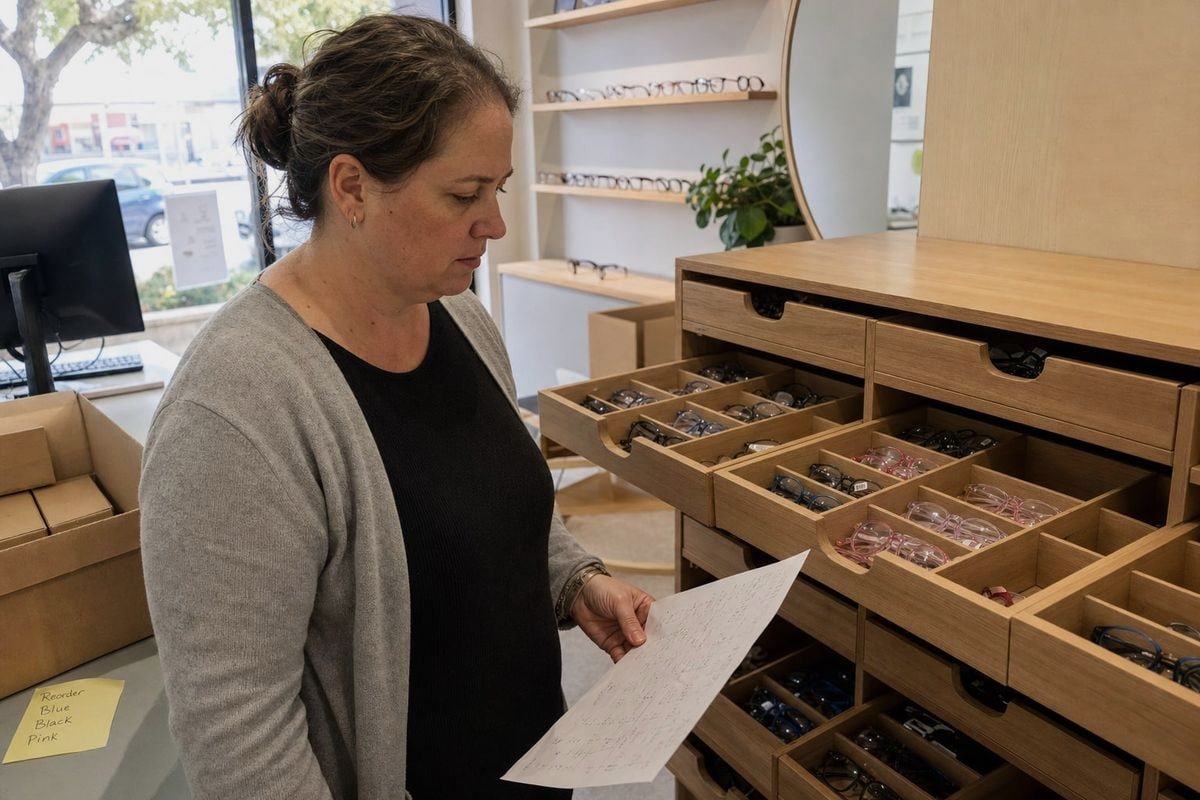
Using 2-week sales data to reorder or discontinue kids optical frames 1 colors sounds risky. On our production line in Taizhou, I watch buyers agonize over this exact decision, tying up cash in colors nobody wanted while their winning pink or navy frames sit out of stock for months.
Use 2-week sales data as a directional signal: reorder kids optical frame colors with high sell-through and low remaining stock, hold colors with mixed or thin data, and flag colors with zero movement for a discontinuation review — never a permanent delisting after only 14 days.
That is the short answer. Below, I will break down which data points matter, how much to trust them, and how to work with your factory on fast reorders.
How do I know which color data points actually matter in my first 2 weeks of sales?
A buyer from Australia once sent me a spreadsheet showing "black sold 12, pink sold 4" and asked me to double her black order. I asked one question first: how many of each did you stock?
The data points that matter most are sell-through rate by color, remaining stock depth, sales velocity per day, and age or gender segment attachment. Raw unit sales alone mislead you, because a color that sold 4 of 5 units outperforms one that sold 12 of 40.
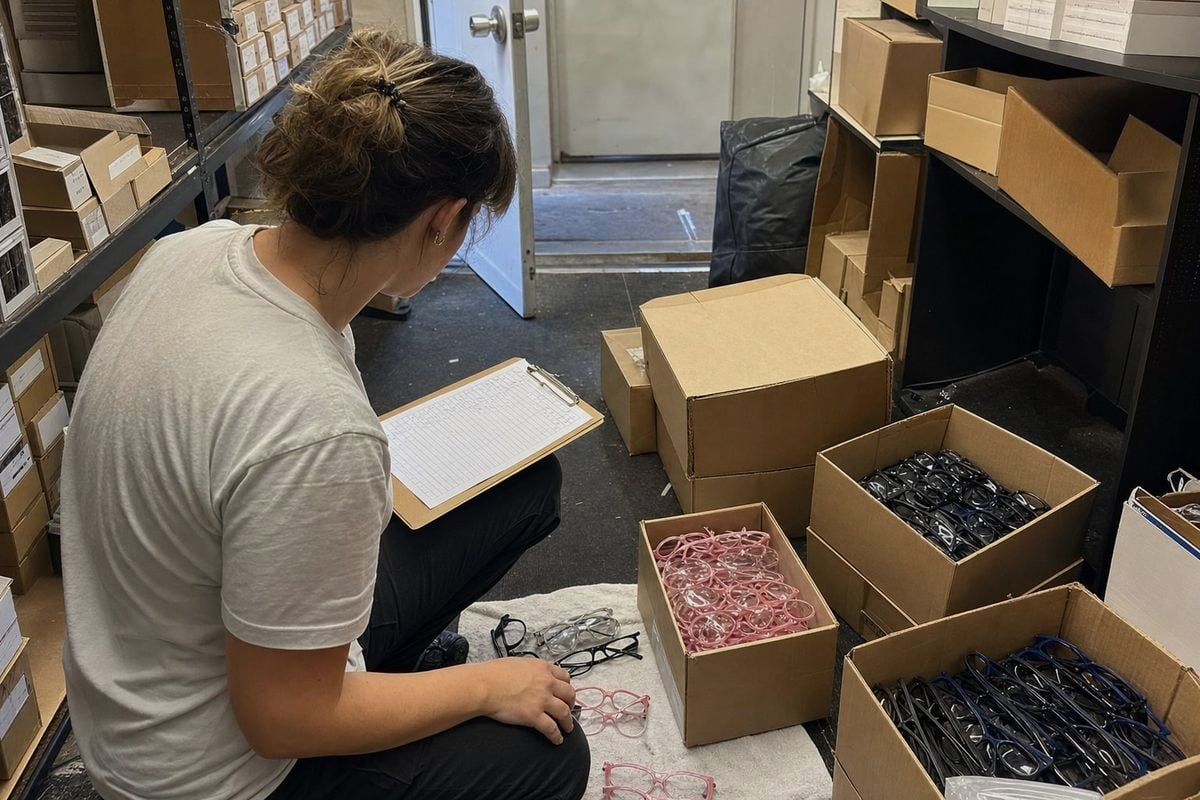
In our fifteen years supplying children's eyewear brands across 20+ countries, the buyers who reorder well are the ones who track SKU performance at the color level, not just the style level. Granular tracking is the foundation. If your system lumps our glossy black TR90 frame and its translucent pink sibling into one SKU, your retail analytics will hide the real story.
The four metrics to pull first
Start with these numbers for each color, in each style:
| Metric | How to calculate it | What it tells you |
|---|---|---|
| Sell-through rate 2 | Units sold ÷ units stocked | True demand relative to your buy |
| Sales velocity 3 | Units sold ÷ 14 days | Speed, useful for reorder point setting |
| Remaining stock | Units on hand today | How urgent a reorder is |
| Segment attachment | Sales split by age/gender | Who is actually buying the color |
Sell-through is the king metric. Take one of our two-tone styles — a black front with navy-and-blue flexible TPEE temples. If you stocked 6 units and sold 4, that is 67% sell-through in two weeks. That color is screaming for a reorder. Meanwhile, a color with 12 units sold from a stock of 40 sits at 30%. Decent, but not urgent.
Do not skip the segment split
Children's eyewear demand is heavily segmented. One market report notes darker tones like blue, black, and grey dominate around 55% of boys' frame choices, while a 20/20 Magazine survey found 63% of respondents rated broad color range a major consideration for children's eyewear. Split your 14-day report by toddler, child, tween, and teen. A pastel pink acetate frame might look weak overall but be a clear winner in the 5–8 girls' band. That distinction changes your reorder quantity and your assortment, not your yes/no decision.
Can I trust early sell-through numbers to decide which frame colors to reorder?
The trade-off I weigh with every buyer is speed versus certainty. Move at day 14 and you might overreact to noise. Wait until day 60 and your winning color is stocked out for the entire season while our factory could have shipped a repeat batch weeks earlier.
Yes, with conditions. Trust 2-week sell-through for reorder decisions when store traffic was normal, the color had fair display exposure, and you sold enough units to see a pattern. Treat it as a screening tool, not a final verdict on your product assortment.
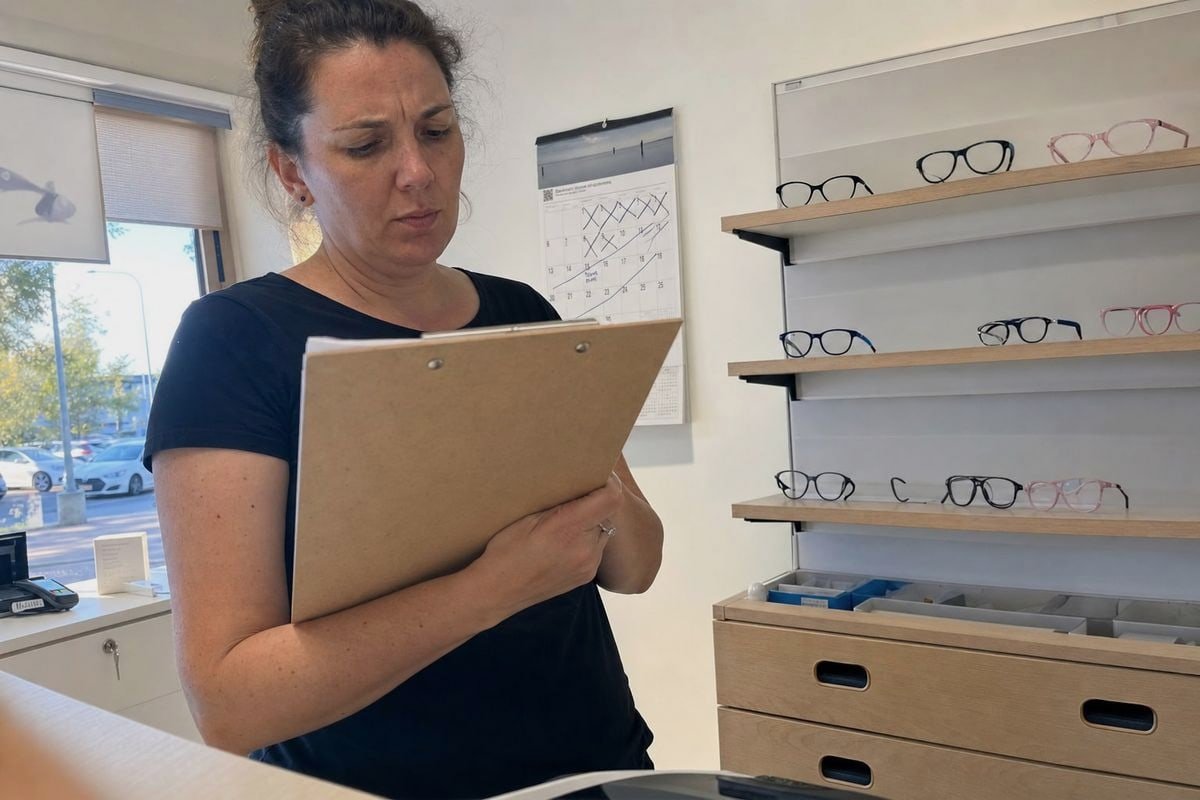
Let me address the skeptic's objection head-on, because I hear it often: "Two weeks is too short to decide anything." That view is half right. Fourteen days is genuinely too short to define your long-term eyewear merchandising strategy or predict where a color sits in its product lifecycle. But it is long enough to make a directional inventory decision — which is a different, smaller decision. You are not deciding whether pink belongs in kids eyewear forever. You are deciding whether to buy more pink now.
When the numbers are trustworthy — and when they are not
| Situation | Trust level | What to do |
|---|---|---|
| Normal traffic, color displayed at eye level, 5+ units moved | Hoch | Act on the data |
| A school holiday, promotion, or back-to-school rush hit during the window | Mittel | Adjust for the distortion before deciding |
| Low-traffic practice with only 1–3 total kids' sales | Niedrig | Extend the window to 3–4 weeks |
| Color was buried on a bottom row or never presented by staff | Niedrig | Fix the merchandising first, then re-measure |
Separate demand from stock depth
One pattern trips up even experienced buyers. A color looks "slow" simply because you stocked it shallow and it went out of stock on day 5. Its sell-through was actually 100% — it just ran out of runway. Before you judge any color, check whether it had inventory available for the full 14 days. This is why we encourage our brand customers to launch new colors in small, even test batches — essentially A/B testing across colors — so every option gets an equal chance and the demand forecasting 4 signal stays clean.
The kids eyewear market was valued at over USD 12 billion in 2024 with roughly 6.5% projected annual growth. Demand exists. Your job is reading which colors capture it in your store, and early sell-through, read carefully, does that job well.
What should I do with slow-moving colors before I write them off completely?
Early in my time at our Taizhou workshop, we developed a translucent olive-green frame that a European distributor nearly cut after two flat weeks. It turned out the color sat on the bottom row of a poorly lit board. Moved to eye level, it started selling within days.
Before discontinuing, diagnose why the color is slow: check display placement, staff presentation, stock depth, and age-segment fit. Move it, restyle it, or reposition it for another two weeks. Only cut colors that stay dead after fair exposure and normal traffic.
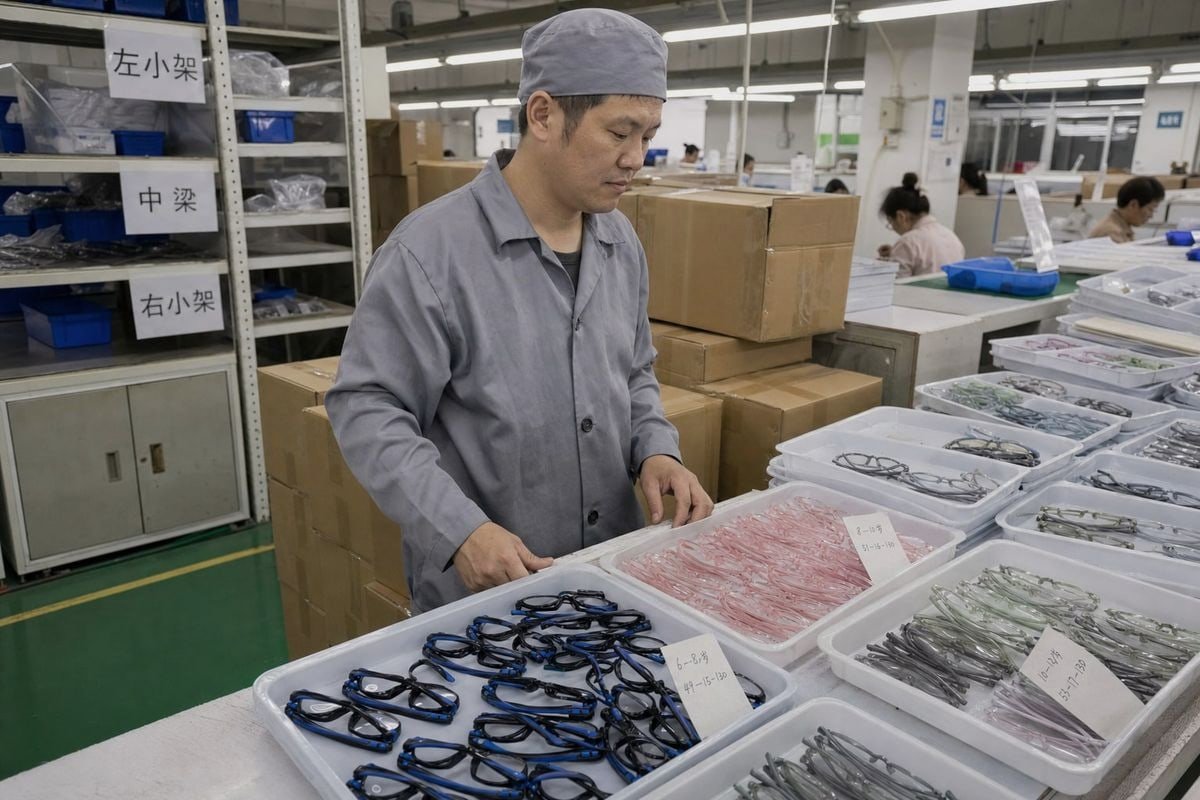
Slow-moving inventory in kids optical is expensive. It ties up cash, occupies board space, and blocks better colors from entering your product assortment. But cutting too fast is expensive too, because color breadth itself drives children's eyewear purchases — remember, 63% of surveyed buyers called a wide color range a major factor, and another 36% called it somewhat important. So the goal is not to slash variety. It is to curate it.
A simple diagnostic sequence
Work through these steps in order before any discontinuation:
- Check exposure. Was the color visible, well lit, and at child eye level? If not, fix placement and re-test for 14 more days.
- Check staff behavior. Ask your dispensers whether they ever showed the color. Unfamiliar shades often need an introduction.
- Check the style effect. Is the color slow in one frame shape but fine in another? The shape may be the problem, not the color.
- Check the segment. A muted grey may bore 6-year-olds but suit teens. Wrong board section, not wrong color.
- Check seasonality. A bright multicolor frame launched in a quiet post-holiday fortnight deserves a second window.
Distinguish temporary from structural underperformance
Temporary underperformance means the color is new, poorly displayed, or launched into weak traffic. Structural underperformance means it lags across multiple styles, multiple age groups, and a fair exposure period. Only the second type earns a discontinue decision. Even then, we usually suggest a soft exit: stop reordering, let stock sell down naturally, and use the freed board space to test a fresh accent color. This keeps your inventory turnover 5 healthy without creating markdown pressure, and it fits how a color lifecycle actually works in children's eyewear trends — colors fade in and out rather than fail absolutely.
How do I work with my manufacturer to reorder winning colors quickly without excess MOQ risk?
A Japanese kids' brand we supply once identified a winning blush-pink acetate colorway on day 11 of their launch. Because we had already agreed on a repeat-order plan, their replenishment left our factory before their first stock ran out. That kind of speed is a partnership outcome, not luck.
Share your 14-day sell-through data with your manufacturer, reorder winning colors in smaller repeat batches from existing styles and molds, and negotiate color-split MOQs upfront. Choosing a factory with a broad existing style library removes most mold cost and quantity risk.

This is where your supplier choice directly shapes your inventory risk. At OKAY EYEWEAR, we maintain roughly 800 existing styles in flexible TPEE and TR90 materials 6, which means a brand can test six or eight colorways without investing in new molds. When your 2-week data crowns a winner, the reorder is a color run on tooling that already exists — dramatically faster and lower-MOQ than a fresh development.
Practical ways to cut reorder friction
| Tactic | How it reduces risk | What to ask your supplier |
|---|---|---|
| Color-split MOQ | One total order quantity spread across colors | "Can I split 1,200 units across 4 colors?" |
| Existing-style testing | No mold investment for the trial phase | "Which of your ~800 styles fit my brand?" |
| Pre-agreed repeat terms | Faster confirmation when data comes in | "What is lead time on a color repeat?" |
| Staggered shipments | Winners ship first, testers follow | "Can you hold part of production two weeks?" |
| Custom color matching | Winners become brand-exclusive shades | "Can you match this Pantone in TR90?" |
Set data-driven reorder points together
Turn your velocity numbers into a reorder point. If a navy TR90 frame with flexible TPEE temples sells 0.5 units per day and your combined production and shipping lead time is 45 days, you need roughly 23 units of cover plus safety stock. Share this math with your factory contact. In our experience exporting to buyers in Australia, Japan, and Europe, the brands that send us their sell-through reports get better planning from us in return: we can slot their repeat runs into production earlier and advise on which colors are trending across our other markets. Some customers even feed historical 2-week windows into simple predictive analytics to anticipate back-to-school surges. Your manufacturer should be part of that demand forecasting loop, not just the last stop in it.
Schlussfolgerung
Two weeks of sales data will not write your whole assortment strategy, but it will tell you which kids frame colors deserve more inventory, more time, or a graceful exit.
Measure sell-through, not raw units. Diagnose slow colors before cutting them. Then bring your data to your factory partner. That is how you turn a short sales window into confident reorders — and how we at OKAY EYEWEAR help brands keep their winning colors on the board and their cash off the losers.
Fußnoten
1. Provides market size and growth forecast for kids eyewear. ↩︎
2. Explains sell-through rate, its calculation, and importance in retail. ↩︎
3. Found an authoritative and comprehensive article on sales velocity. ↩︎
4. Provides a definition of demand forecasting and its role in supply chain operations. ↩︎
5. Defines inventory turnover ratio, its calculation, and significance for businesses. ↩︎
6. Explains TR90 as a durable, flexible, and lightweight thermoplastic material for eyewear. ↩︎
Weitere Artikel, die Ihnen gefallen könnten
August 2026
Bio-Based vs Regular Cellulose Acetate: What's the Difference for Kids' Frames?

August 2026
How Recyclable Are Kids' Optical Frame Materials, and What Eco-Friendly Alternatives Exist?
August 2026
Bleichen Kinderbrillengestelle im Lager aus oder altern sie, und wie kontrolliert man die Lagerbedingungen?
Auf der Suche nach einem zuverlässigen Partner für Kinderbrillen?
Entdecken Sie über 800 sofort verfügbare Modelle und umfassenden OEM/ODM-Support, der auf Ihre Marke zugeschnitten ist.
Kontakt aufnehmen English
  Español de México
  Deutsch
  Français
  日本語
日本語  العربية
  Português do Brasil