How Recyclable Are Kids’ Optical Frame Materials, and What Eco-Friendly Alternatives Exist?
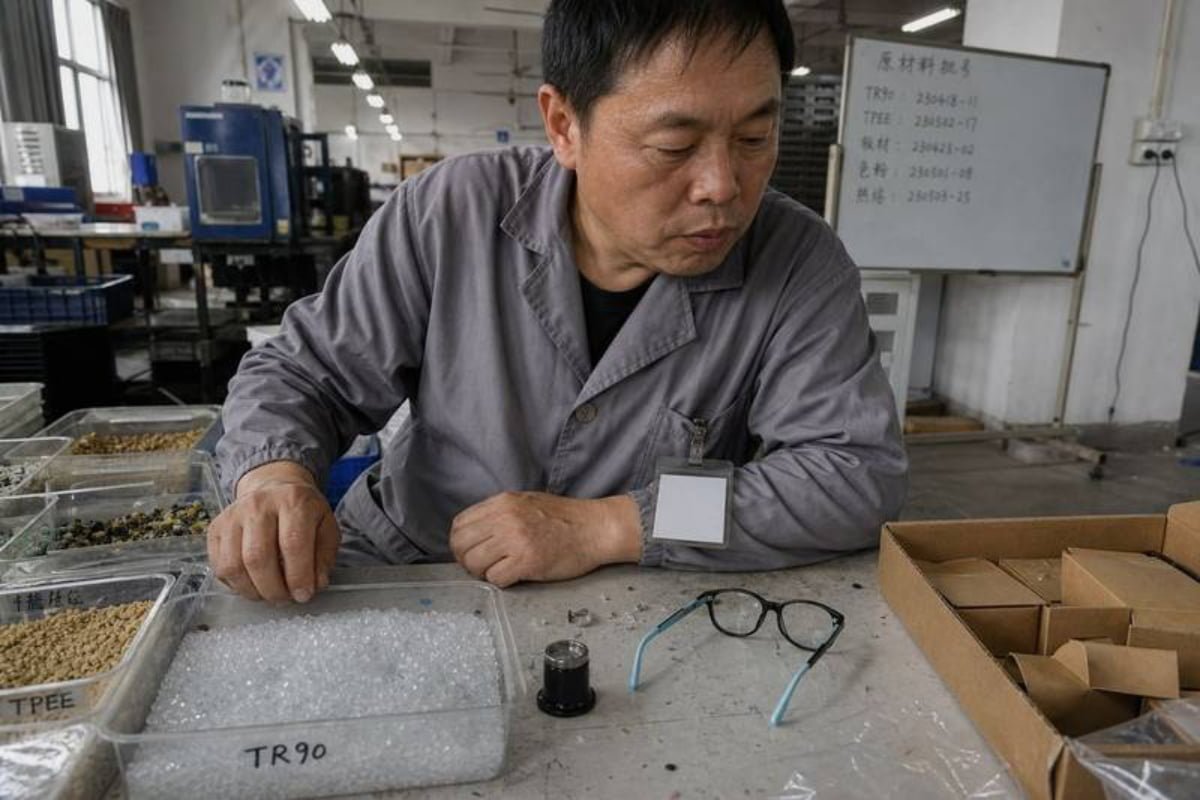
Buyers keep asking me how recyclable kids’ optical frame materials really are ocean plastics 1. Vague answers from suppliers create risky sustainability claims. After 15 years running our Taizhou factory, I can give you the honest picture.
Kids’ optical frame materials are only partly recyclable. TR90, TPEE, and acetate need specialized industrial recycling, not curbside bins. The best eco-friendly alternatives are recycled nylon, bio-acetate, recycled metals, and mono-material designs paired with take-back programs that manage end-of-life recovery.
That short answer hides a lot of nuance. Recycled content, recyclability, and biodegradability are three different things. Let me break each one down so your brand can make claims that hold up.
How can I verify if TR90 and TPEE materials are truly recyclable for my brand's sustainability claims?
A procurement manager from Australia once asked me to put “fully recyclable” on her packaging. I had to slow her down, because our TR90 frames deserve a more careful claim than that.
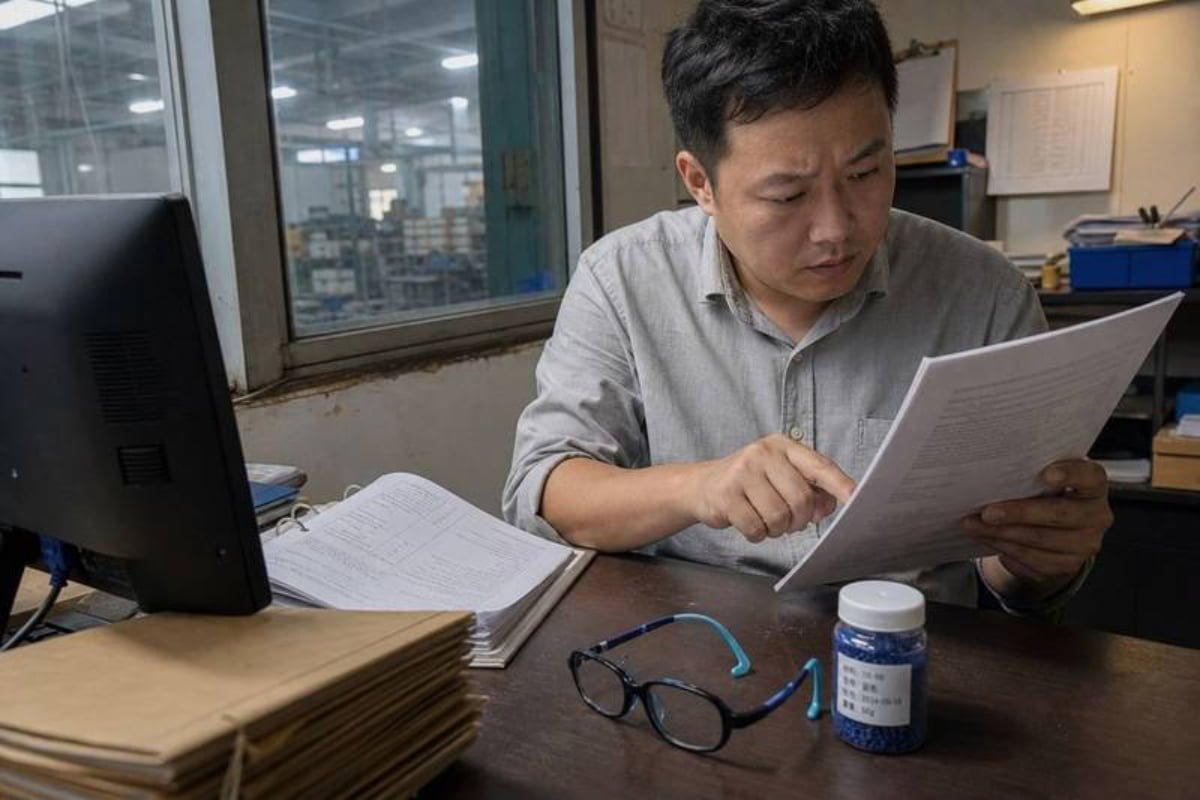
TR90 and TPEE are technically recyclable thermoplastics, but they require specialized industrial recycling and are rarely accepted by municipal systems. Verify claims by requesting material data sheets, checking for certifications like GRS 4.0, and confirming whether a real collection pathway exists.
Here is the honest technical picture. TR90 is a memory nylon. TPEE is a flexible thermoplastic elastomer. Both are thermoplastics, which means they can be melted and reprocessed in theory. In our own workshop, we regrind clean TR90 production scrap and feed a controlled percentage back into injection molding. That is genuine in-factory recycling, and it is a fair claim to make.
Post-consumer recycling is a different story. TR90 is favored for its almost unbreakable memory-plastic properties, but it requires specialized industrial recycling and is rarely processed by municipal waste systems. A finished frame also carries hinges, coatings, demo lenses, and often two polymers bonded together. Curbside sorting lines cannot separate any of that.
Three claims, three very different meanings
Before you print anything on a hangtag, know which claim you are actually making:
| Claim | Was es bedeutet | Can you verify it? |
|---|---|---|
| Recycled content | The frame contains reclaimed input material | Yes — via GRS 4.0 certificates and supplier documentation |
| Recyclable | The frame can realistically be recycled after use | Only if a collection and processing pathway exists |
| Biodegradable | The material breaks down naturally | Rarely true for TR90/TPEE; usually needs industrial conditions |
One optical brand certifies frames under GRS 4.0 (Global Recycled Standard 2) using 100% recycled single-use plastic converted into PCTG. That is the level of documentation you should demand from any supplier, including us.
Eine praktische Verifizierungs-Checkliste
- Request the resin's material data sheet and origin documentation.
- Ask whether recycled content is post-consumer or post-industrial.
- Prüfen Sie auf GRS 4.0 or equivalent third-party certification.
- Confirm whether a take-back or specialty recycling route actually exists in your market.
- Watch for functional pigments — UV-reactive or glow-in-the-dark finishes act as contaminants that hinder mechanical recycling of the base polymer.
That last point surprises many buyers. Kid-centric color effects are popular, but they can quietly undermine the recyclability story you want to tell.
What eco-friendly alternatives should I consider if my current frame materials aren't recyclable enough?
When we developed our first bio-based sample series, the trade-off list on my desk was longer than the material list. Every green option gives something and takes something.
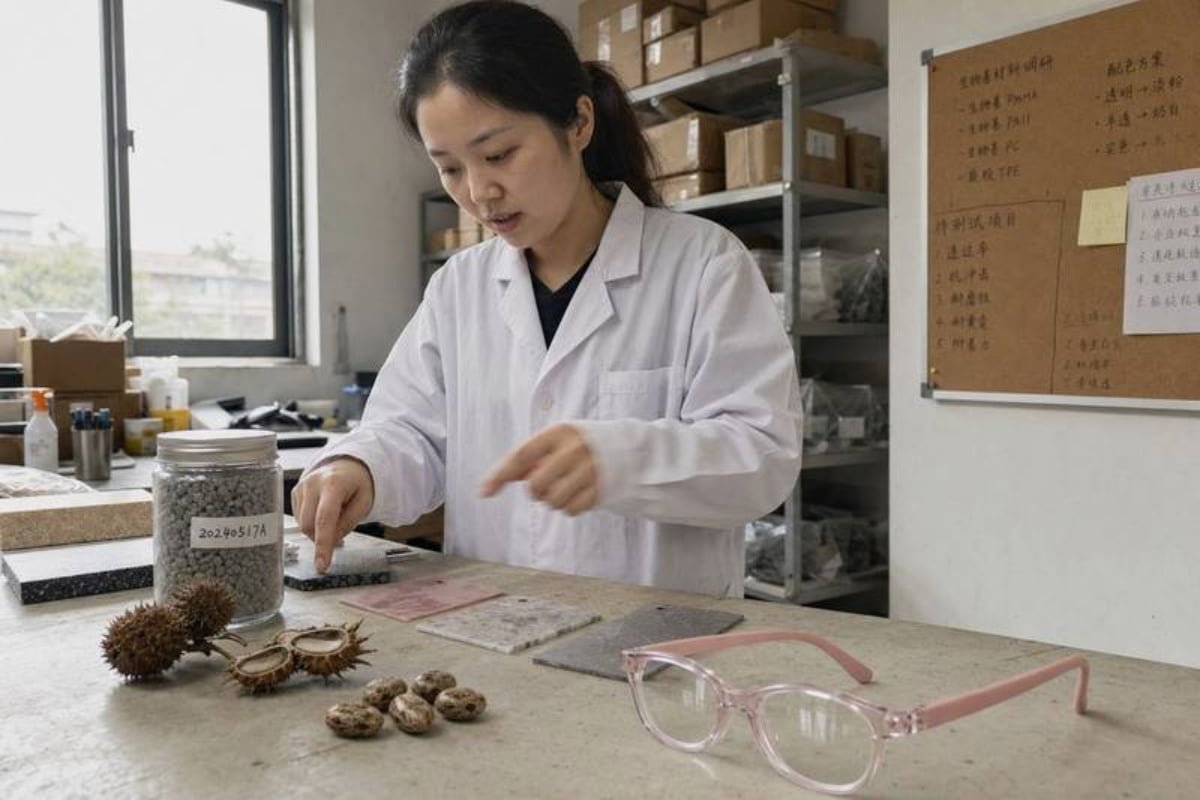
The strongest eco-friendly alternatives for kids’ frames are recycled nylon from ocean plastics, bio-acetate with plant-based plasticizers, castor-derived bio-nylon like PA11, and recycled stainless steel or titanium. Each reduces virgin plastic use, though end-of-life recyclability still varies.
The eyewear industry generates roughly 100,000 tons of waste annually, and traditional petroleum-based plastics like standard acetate and nylon are non-biodegradable. That is the problem your material choice needs to answer. Here is how the main alternatives compare:
| Material | Eco benefit | Recycled/bio content examples | Best fit for kids? |
|---|---|---|---|
| Recycled nylon | Sourced from discarded fishing nets and recycled ocean plastic | At least 50% recycled content in some lines | Excellent — flexible and durable |
| Bio-based acetate | Plant-based plasticizers from wood pulp and cotton | 60%+ bio-content achievable | Good — stylish, needs quality control |
| Recycled acetate | Reuses cellulose acetate offcuts | Around 27% recycled content in some frames | Good for fashion styles |
| Bio-nylon (PA11) | Made from castor seed oil frames feedstock | Renewable, non-food crop | Very good — tough and light |
| Recycled metals | Infinitely recyclable Edelstahl 3 or titanium | High recovery rates | Besser für ältere Kinder |
| Bamboo / wood / cork | Low-plastic, renewable | Natural material | Limited — less flexible for active kids |
The alternatives I recommend most for children
Recycled nylon leads my list. It keeps the flexibility and impact resistance that active children need, while diverting fishing nets from the ocean. Bio-based acetate comes second. It preserves the candy-colored translucent look — like the pale pink acetate style in our catalog — while replacing petroleum plasticizers with plant-based resins.
One caution I always share: bio-based does not mean home compostable. Most biodegradable eyewear materials require specific industrial temperatures and microbial conditions to degrade. Some sustainable lines reach 95% reclaimed and recycled materials, which is impressive, but the honest framing is lower-impact production, not zero-waste disposal.
Also worth watching: additive manufacturing. 3D printing with bio-resins like PA11 reduces raw material waste 4 by up to 80% compared to traditional subtractive acetate sheet cutting. We are following this closely for future development.
How do I balance eco-friendly material choices with the safety and durability my young customers need?
Our QC team runs a simple test on every new kids’ frame: twist the temples 180 degrees and release. Any eco material that fails that test never leaves our sample room.
Balance sustainability with safety by prioritizing durability first — a frame that survives three years of active use beats a greener frame replaced twice. Choose flexible, hypoallergenic, BPA-free materials like recycled nylon or TPEE, and treat longevity itself as an eco benefit.
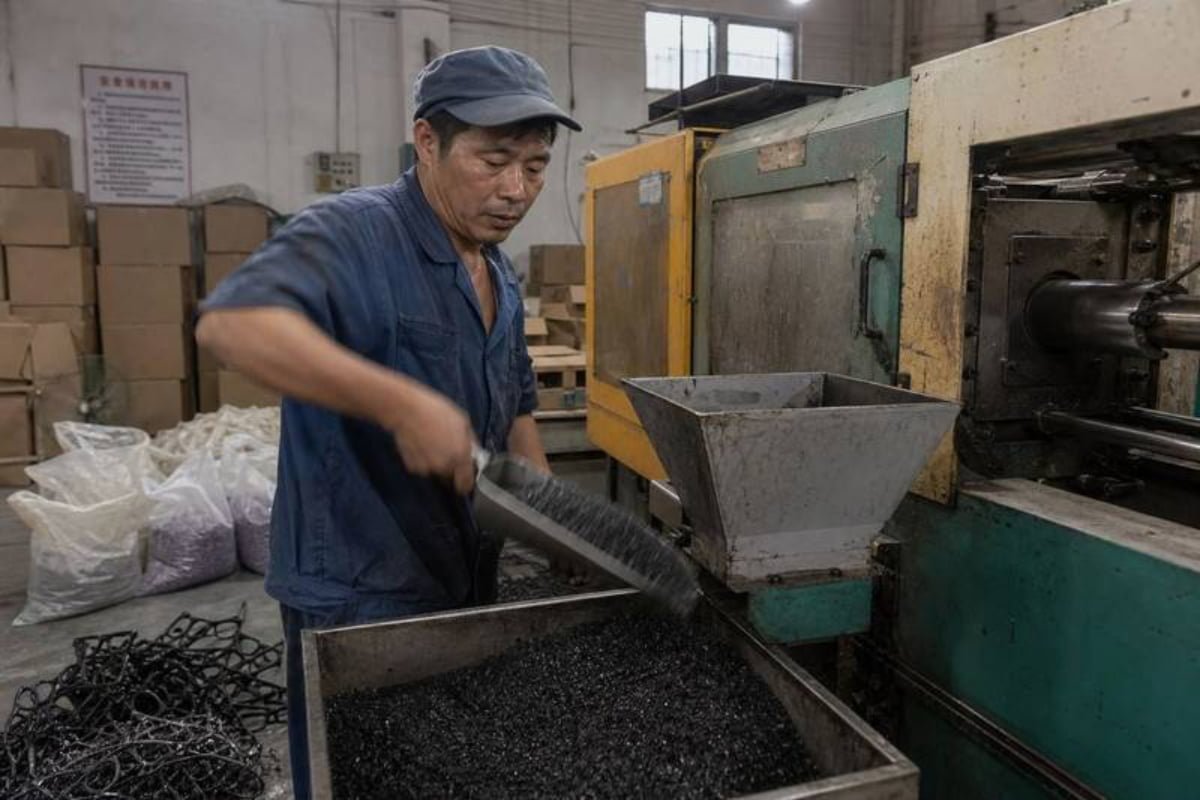
Here is the framing I share with every brand we work with: the greenest frame is often the one that lasts longest and can be repaired or passed on. Children outgrow, drop, sit on, and lose their glasses. If an eco material doubles the replacement rate, it may create more total waste than a durable conventional frame.
Safety requirements that cannot be compromised
Eco-friendly glasses for children still have to meet the same non-negotiables as any kids' frame. In our production line, these come before any sustainability feature:
- Flexibility. Frames must bend without snapping into sharp fragments. This is why we build most kids' styles in TR90 with TPEE temples — the combination flexes safely on impact.
- Hautverträglichkeit. Hypoallergenic frame materials matter because children wear glasses all day against sensitive skin. All our materials are BPA-free plastic formulations.
- Weight. Heavy frames slide down small noses and cause pressure marks. Bio-nylon and recycled nylon stay light.
- No small detachable parts. Nose pads and temple tips must stay firmly attached.
Ranking the trade-offs honestly
| Priorität | Recycled nylon | Bio-acetate | Recycled metal | Bamboo/wood |
|---|---|---|---|---|
| Schlagsicherheit | Ausgezeichnet | Gut | Mäßig | Schwach |
| Flexibilität | Ausgezeichnet | Mäßig | Niedrig | Niedrig |
| Gewicht | Sehr leicht | Leicht | Mäßig | Leicht |
| Longevity | Hoch | Mäßig | Sehr hoch | Variabel |
| Eco story | Starkes | Starkes | Starkes | Starkes |
Natural materials look great in sustainability marketing, but wood and bamboo lack the flex that toddlers and school-age kids demand. Metals such as stainless steel and titanium are highly sustainable for older children because they are infinitely recyclable and outlast plastic, but I rarely recommend them under age eight. For that age group, recycled nylon or a TR90/TPEE combination remains the safest path — and durability quietly does most of the environmental work.
Can I request recycled or bio-based materials when working with an OEM manufacturer like OKAY EYEWEAR?
Last year a European baby-brand buyer emailed Alan on our sales team asking exactly this. Six weeks later she had bio-based samples in hand, molded from our existing tooling.
Yes. A capable OEM/ODM partner can source recycled nylon, bio-acetate, or bio-based resins and run them on existing molds. Request material certificates, recycled-content documentation, sample validation, and sustainable packaging options as part of your standard development brief.
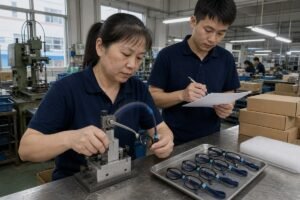
Sustainable eyewear manufacturing is not a separate factory — it is a set of decisions inside a normal OEM/ODM workflow. At our facility in Taizhou, with around 120 workers and a 5S-managed workshop, the process for an eco material request looks like this:
- Material sourcing and verification. We identify recycled or bio-based resin suppliers and collect documentation on recycled content and safety compliance. You should always ask for this paperwork — it is the foundation of any claim you print.
- Mold compatibility check. With roughly 800 existing styles, most buyers can test an eco material without investing in new tooling. This lowers the risk of trialing bio-based acetate or recycled nylon in your market.
- Sampling and safety testing. Eco resins can behave differently in injection molding. We validate flexibility, hinge strength, and finish quality before approving production.
- Design for recyclability. Where possible, we discuss mono-material design — engineering hinges and components from the same polymer as the frame. This eliminates manual disassembly and significantly increases automated recycling success rates. It supports a genuine circular economy in optics rather than a marketing slogan.
- Packaging alignment. Sustainability claims fall flat if frames arrive in virgin plastic. We offer recycled paper boxes and rPET pouch options so the whole retail presentation matches the story.
One more idea worth raising with your OEM partner: a Pediatric Growth Loop program. Because children outgrow frames quickly, a trade-in model — where outgrown frames return for refurbishment or professional recycling — directly addresses optical frame waste management at its weakest point: collection. We can design frames and packaging to support exactly that kind of program.
Schlussfolgerung
Kids’ optical frame materials are only partly recyclable, so honest claims matter. Choose recycled nylon, bio-acetate, or metals wisely, prioritize durability, and partner with a factory that documents everything.
Fußnoten
1. Government resource explaining the impact and management of plastic pollution in marine environments. ↩︎
2. Official certification body for verifying recycled content and environmental practices in manufacturing. ↩︎
3. International industry body providing technical data on the sustainability and recyclability of stainless steel. ↩︎
4. Federal agency guidelines on reducing waste at the source through improved manufacturing efficiency. ↩︎
Weitere Artikel, die Ihnen gefallen könnten
August 2026
Überprüfung von Lieferanten für Kinder-Optikrahmen: Interne oder externe Inspektion?
August 2026
Wie stellt man sicher, dass Kinder-Optikrahmen-Giveaways frei von Erstickungsgefahren sind?

August 2026
Vor-Ort- vs. Drittanbieter-Audits: Wie unterscheiden sie sich in der Abdeckung für Lieferanten von Kinderbrillen?
Auf der Suche nach einem zuverlässigen Partner für Kinderbrillen?
Entdecken Sie über 800 sofort verfügbare Modelle und umfassenden OEM/ODM-Support, der auf Ihre Marke zugeschnitten ist.
Kontakt aufnehmen English
  Español de México
  Deutsch
  Français
  日本語
日本語  العربية
  Português do Brasil