How to Control Inventory Turnover and Slow-Moving Stock for Kids Optical Frames?
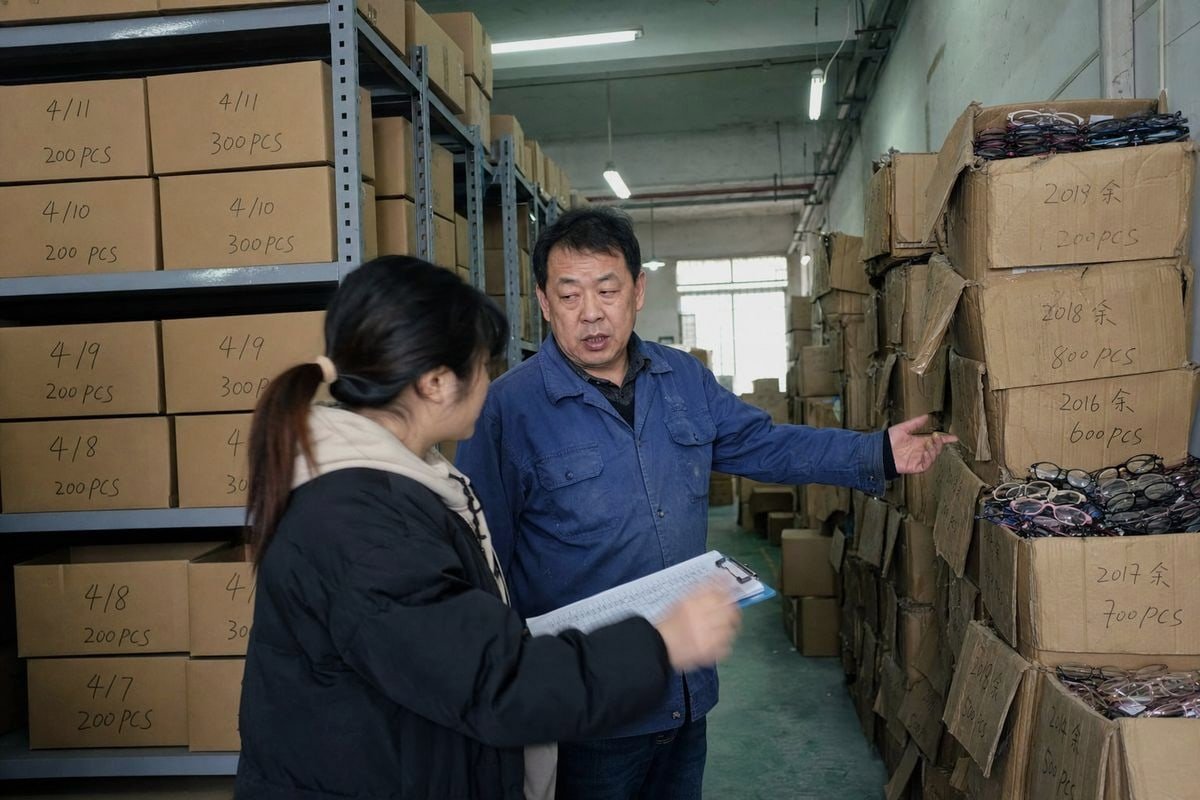
Inventory turnover 1 for kids optical frames keeps our buyers awake at night. On our production line in Taizhou, I hear the same worry from importers: dead stock kills cash flow 2 fast.
Control inventory turnover for kids optical frames by targeting 3–4 turns per year, ordering smaller quantities more often, flagging styles with no sales in 90+ days, testing designs from proven existing style libraries, and using OEM/ODM supplier support like low MOQs and data-backed style selection.
That is the short answer. Below, I break down each part into a practical system you can apply before your next purchase order.
How can I use OKAY EYEWEAR's ~800 existing styles to avoid overstocking new kids optical frame designs?
A buyer from Australia once told me she had a warehouse full of frames nobody wanted. Our style library, built over 15 years, exists to prevent exactly that.
Use a proven style library to test demand before committing deep. Pick 5–10 existing styles across sizes, colors, and price points, order small trial quantities, measure sell-through for 60–90 days, then reorder only winners. This avoids mold investment and cuts overstock risk dramatically.
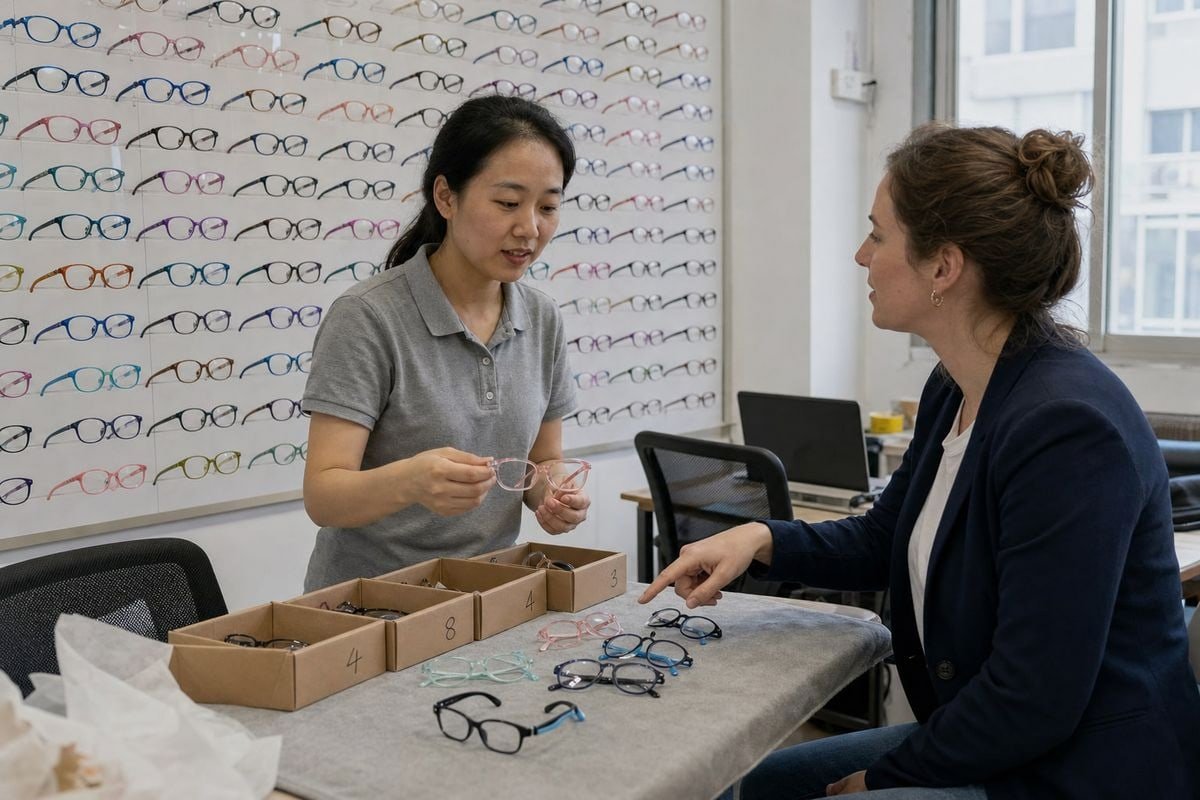
The biggest cause of slow-moving stock in children's eyewear is guessing. Brands see a trendy shape at a trade show, order 2,000 units, and then discover their local market prefers something else. An existing style library flips that risk. Instead of betting big on one unproven design, you spread a small budget across several tested frames and let real sales data decide.
Our ~800 styles cover TR90 kids optical frames 3, TR90 frames with TPEE temples, and flexible silicone-detail designs like our black frame with royal blue temple tips. Because these styles already exist, there is no mold cost. That changes the math completely for a new brand or importer.
A simple test-and-scale process
- Shortlist styles that match your market's children's eyewear trends — shapes, colors, and sizes your customers already buy.
- Order trial quantities of each shortlisted style.
- Track sell-through with SKU tracking optical tools or basic optical inventory software.
- After 60–90 days, reorder the top performers in depth.
- Drop or discount the rest before they age.
Why this beats custom-first buying
| Ansatz | Upfront cost | Time to market | Overstock risk |
|---|---|---|---|
| Custom mold, one big design bet | High (mold + deep MOQ) | 3–6 months | Hoch |
| Existing styles, trial quantities | Low (no mold) | 4–8 Wochen | Niedrig |
| Existing styles, then customize winners | Mäßig | Staged | Controlled |
The third row is what most of our long-term buyers do. They test from the library, find winners, then add custom colors, logos, and retail-ready packaging. Demand forecasting 4 optical decisions become far easier when they rest on your own sell-through data, not on assumptions.
How do I identify which kids optical frame styles are likely to become slow-moving stock before I order?
In our 5S-managed workshop, we track which of our styles reorder well across 20+ countries. That data reveals clear early-warning patterns for slow movers.
Identify likely slow movers before ordering by checking size fit against your patient or customer base, avoiding near-duplicate colors and shapes, comparing styles against local sales history, and flagging trend-driven designs with no proven reorder record. Extreme shapes and off-market price points age fastest.
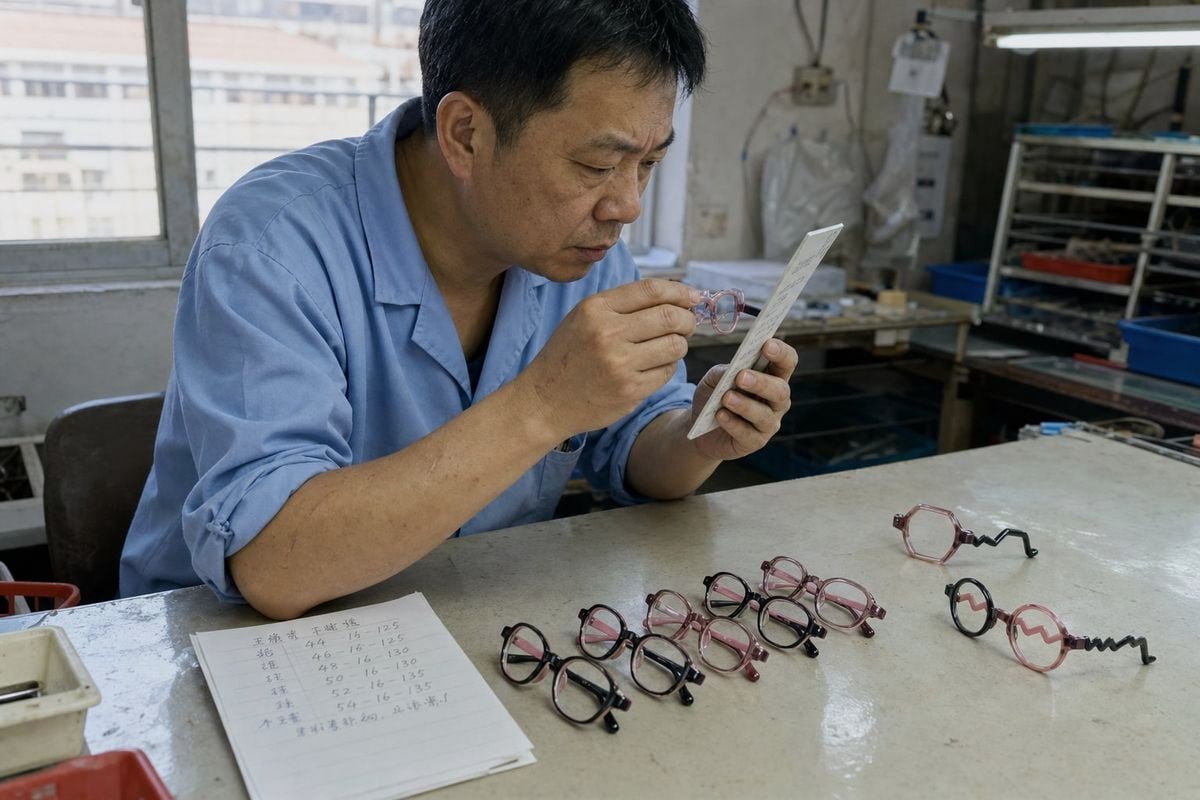
Slow-moving stock rarely appears by accident. In my experience exporting children's eyewear, most dead stock was predictable at the purchase-order stage. The warning signs sit in four areas: size, similarity, style extremity, and price.
Kids frames are a low-forgiveness category. Demand is concentrated in a narrow band of sizes and durable, comfortable designs. A frame that is slightly too wide for a six-year-old face will sit on the board for years. Parents also compare options quickly and show little brand loyalty, so a style that misses on comfort or durability loses the sale immediately.
Pre-order red flags to check
| Rote Fahne | Why it becomes dead stock | What to do instead |
|---|---|---|
| Sizes outside your core age group | Fit failure kills conversion instantly | Match sizing to your actual customer age mix |
| Three similar pinks or blacks | Customers pick one; the rest age | Spread colors across distinct families |
| Extreme trend shapes | Trends fade before stock clears | Limit trend styles to small test buys |
| Price point above local ceiling | Parents are price-sensitive on kids frames | Anchor to your proven price bands |
| Rigid, fragile materials | Returns and breakage damage sell-through | Choose flexible TR90 or TPEE constructions |
Use data, not intuition
Review your own history by style, size, color, and price point. Underperformance often hides inside a subset — one color of an otherwise strong style, for example. Eyewear market trends reports and even virtual try-on data can add signal, but your local sell-through is the strongest predictor. When buyers share this data with us, we can cross-check it against which of our frames reorder consistently in similar markets, which sharpens demand forecasting optical accuracy on both sides.
What MOQ and reorder strategies can help me keep kids optical frame inventory balanced with actual demand?
One trade-off I weigh constantly with buyers is order size versus unit price. A deeper order looks cheaper per frame — until half of it stops moving.
Balance kids frame inventory by ordering smaller quantities more frequently, setting reorder points from actual monthly sell-through, keeping roughly 2–3 months of sales in stock, and targeting 3–4 inventory turns per year. Tier safety stock higher for proven sellers and minimal for unproven styles.
The optical literature generally points to about 3 turns per year as a healthy floor, with stronger operations pushing 4 or more. Some practices report 1.5–2.5 turns and still run soundly, so do not treat a single number as gospel. Higher is not always better either — in kids frames, cutting the assortment too thin costs you fit options and lost sales. The real goal is healthy turns without sacrificing size coverage and choice.
Turnover is simple to calculate: frames sold in a period divided by average frames in stock. Run it monthly or quarterly, per line, not just for the whole board. Frame board management improves fast once you see turns at the style level.
Reorder rules that keep stock balanced
- Order small, order often. Replacing one bulk order every six months with smaller monthly or bi-monthly orders is the single most repeated recommendation in optical inventory optimization strategies 5.
- Set reorder points from real usage. Use last month's sell-through, adjusted for back-to-school and seasonal peaks, plus supplier lead time.
- Tier your safety stock. Proven sellers earn deeper safety stock; unproven or seasonal styles get minimal cover.
- Apply ABC prioritization. A-items get automated reordering system 6s attention; C-items get cleared or discontinued.
- Count everything. Backstock hidden in drawers distorts turn calculations and suppresses reorders of true winners.
Key metrics to track monthly
| Metric | Healthy target | Review frequency |
|---|---|---|
| Inventory turns | 3–4 per year (2–6 acceptable range) | Monthly or quarterly |
| Months of supply | 2–3 months of sales | Monthly |
| Dead stock (90+ days, no sales) | Trending toward zero | Monthly |
| Age buckets | Action at 12, 18, 24 months | Vierteljährlich |
| Sell-through by SKU | Rising for A-items | Monthly |
Our MOQs are set to make this cadence workable. Because we stock validated styles, buyers can reorder proven frames quickly instead of committing to huge speculative volumes, which directly supports cash flow optimization.
How can working with an experienced OEM/ODM factory help me reduce the risk of slow-moving kids optical frame stock?
Fifteen years of eyewear production taught our team a hard lesson: a buyer's dead stock eventually becomes the factory's lost customer. So we treat inventory risk as a shared problem.
An experienced OEM/ODM factory reduces slow-stock risk through low-risk style testing, data-informed design guidance, flexible reorder support with reliable lead times, consistent quality that prevents returns, and retail-ready customization that improves sell-through. Reliable partners also discuss exchange terms for genuinely stagnant styles.
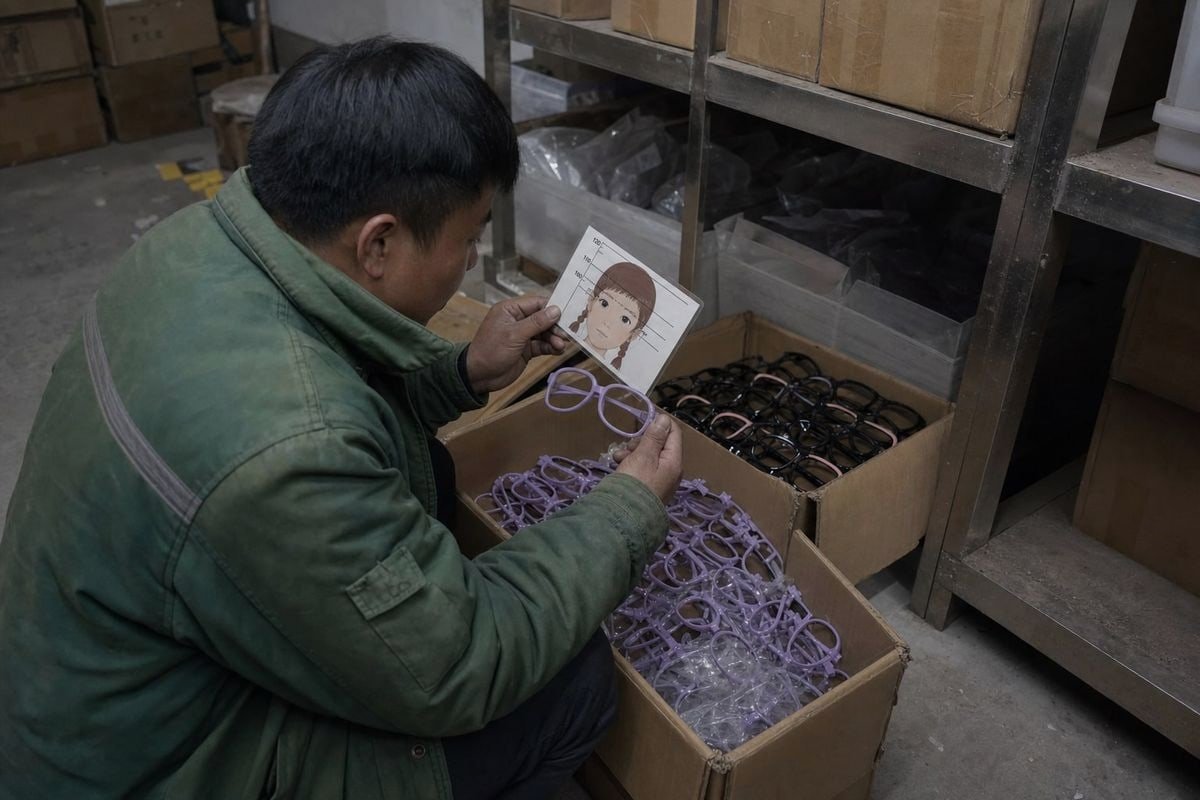
A factory partner shapes your inventory risk long before frames reach your shelf. The first lever is quality consistency. A kids frame that snaps at the hinge generates returns, damages your brand, and turns an entire SKU into unsellable stock. Our focus on flexible TPEE and TR90 materials — like TR90 fronts paired with soft TPEE temples — exists because durability directly protects sell-through. Comfortable, safe frames get worn, recommended, and reordered.
The second lever is speed. Slow, unpredictable lead times force you to over-order as insurance. When a factory of around 120 workers runs a disciplined 5S workshop 7 and ships on schedule, you can hold 2–3 months of supply instead of six, and your reorder points actually work. Reliable lead times are the quiet foundation of every automated reordering system.
The third lever is exit support. Ask your supplier about return-to-vendor policies or exchange terms before you order. Not every situation qualifies, but a long-term partner would rather swap a stagnant style for a mover than watch your capital freeze. We have this conversation openly with buyers, because their optical retail profitability determines whether they reorder next season.
Finally, ODM guidance matters. When a buyer asks us to customize colors, logos, lenses, or packaging, we flag choices that historically underperform in their region. Professional, branded, retail-ready presentation lifts perceived value and sell-through — which is the most pleasant slow-moving stock solution of all: stock that simply is not slow.
Schlussfolgerung
Slow-moving kids frames quietly drain cash. Test from proven styles, order small and often, flag 90-day non-movers, and partner with a factory that shares your inventory risk.
Fußnoten
1. Explains the definition, formula, and importance of inventory turnover for business efficiency. ↩︎
2. Defines cash flow, its components, and its critical role in business financial health. ↩︎
3. Details the benefits of TR90 material, including its lightweight, flexible, and durable properties for eyewear. ↩︎
4. Explains demand forecasting as a supply chain process using historical data to anticipate future customer demand. ↩︎
5. Discusses how monitoring inventory turnover supports smarter decisions in purchasing and demand planning. ↩︎
6. Comprehensive guide on automatic replenishment systems, including benefits and how-to. ↩︎
7. Explains the 5S methodology as a lean manufacturing tool for organizing and optimizing workspaces. ↩︎
Weitere Artikel, die Ihnen gefallen könnten
August 2026
Bio-Based vs Regular Cellulose Acetate: What's the Difference for Kids' Frames?
August 2026
How Recyclable Are Kids' Optical Frame Materials, and What Eco-Friendly Alternatives Exist?
August 2026
Bleichen Kinderbrillengestelle im Lager aus oder altern sie, und wie kontrolliert man die Lagerbedingungen?
Auf der Suche nach einem zuverlässigen Partner für Kinderbrillen?
Entdecken Sie über 800 sofort verfügbare Modelle und umfassenden OEM/ODM-Support, der auf Ihre Marke zugeschnitten ist.
Kontakt aufnehmen English
  Español de México
  Deutsch
  Français
  日本語
日本語  العربية
  Português do Brasil