Wie fordere ich AS/NZS ISO 12870 Prüfberichte für Kinder-Optikfassungen aus China an?
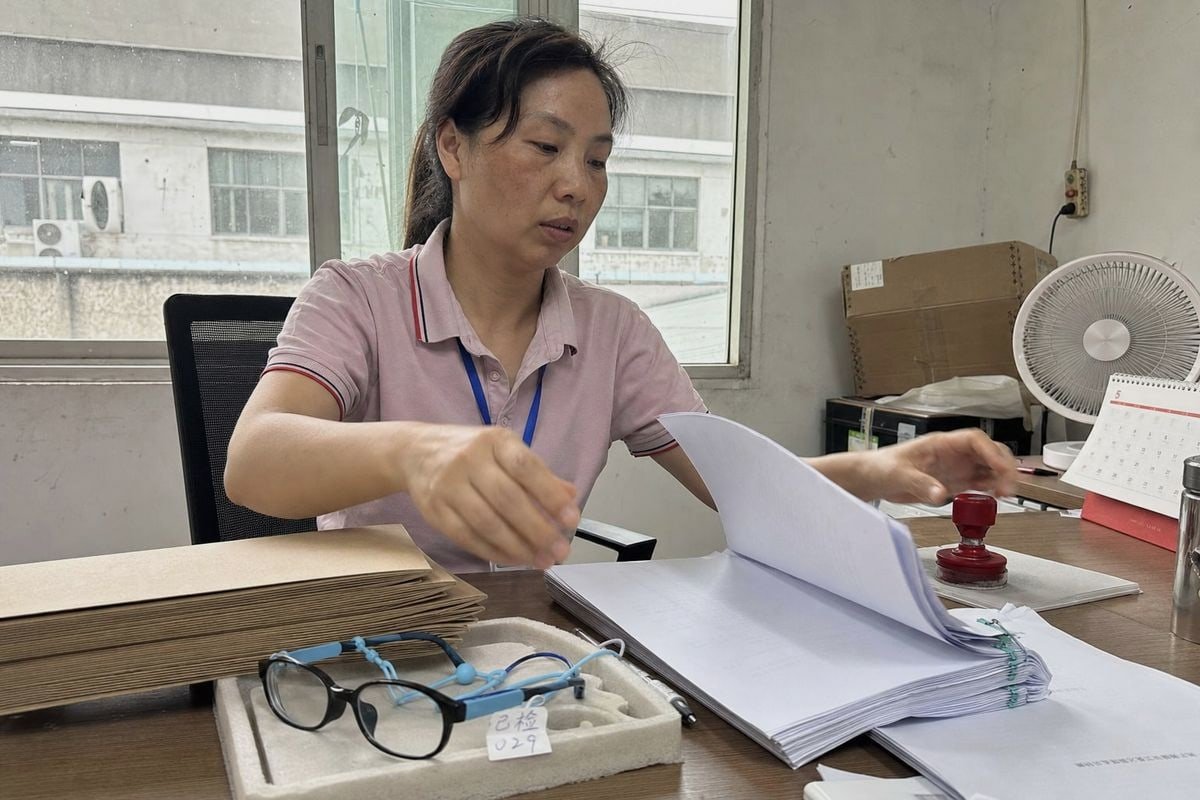
Anforderung AS/NZS ISO 12870 1 Prüfberichte klingen einfach, bis ein Lieferant Ihnen ein verschwommenes PDF für eine andere Fassung schickt. An unserer Produktionslinie in Taizhou sehen wir, warum Käufer verbrannt werden.
Um AS/NZS ISO 12870-Prüfberichte aus China anzufordern, bitten Sie Ihren Lieferanten um den vollständigen Bericht des Drittlabors für Ihr exaktes Rahmenmodell, der die Standardausgabe, den Namen des akkreditierten Labors, die Berichtsnummer, den Prüfumfang, die Musterfotos und die bestandenen Ergebnisse bestätigt, bevor Sie die Bestellung aufgeben.
Dieser eine Satz verbirgt viele Details. In diesem Leitfaden führe ich Sie genau durch, was Sie verlangen müssen, wie Sie es überprüfen und was Sie tun, wenn die Papiere nicht ausreichen.
Welche Dokumente sollte ich meinen chinesischen Hersteller bitten, die Einhaltung von AS/NZS ISO 12870 nachzuweisen?
Ein Käufer aus Melbourne bat mich einmal um "das Zertifikat" für eine unserer TR90 Kinder-Optikfassungen Sicherheitsansprüche für Kinderbrillen 2. Ich schickte ihr etwas Besseres – den vollständigen Prüfbericht – und erklärte, warum der Unterschied wichtig ist.
Fordern Sie von Ihrem chinesischen Hersteller den vollständigen AS/NZS ISO 12870 Prüfbericht an, nicht nur ein Zertifikat. Er sollte die Standardausgabe, Angaben zum akkreditierten Labor, die Berichtsnummer, die Probenidentifikation mit Fotos, Materialerklärungen, den vollständigen Prüfumfang, datierte Bestanden/Nicht bestanden-Ergebnisse und Unterschriften auf jeder Seite enthalten.
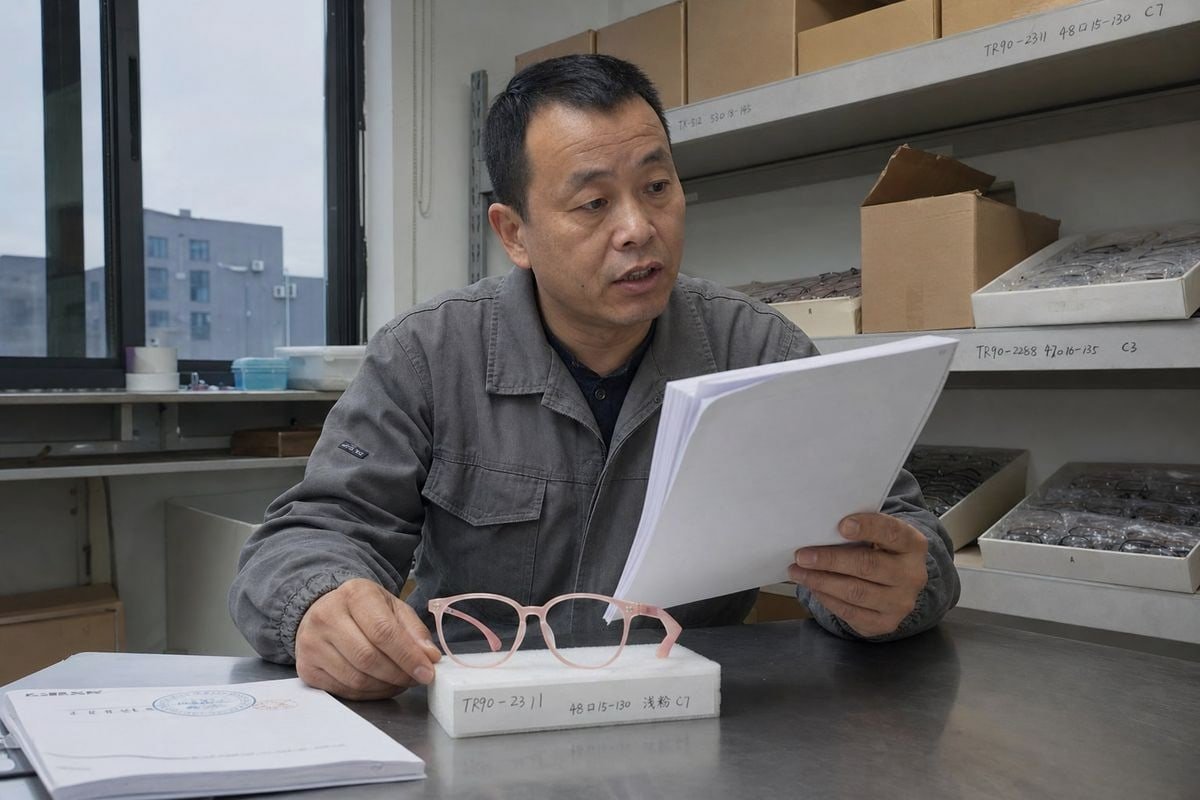
Ein Zertifikat ist eine einseitige Zusammenfassung. Ein Prüfbericht ist der Beweis dafür. Für die Konformität von Optikfassungen benötigen Sie den Beweis. Wenn unsere Fabrik Dokumente für Käufer in Australien oder Europa vorbereitet, bündeln wir immer den Bericht mit unterstützenden Dateien, da die Importbestimmungen, denen australische Käufer gegenüberstehen, streng sind und Einzelhändler oft die Unterlagen prüfen, bevor sie ein Produkt listen.
Das Dokumentenpaket, das Sie anfordern sollten
Hier ist, was ein seriöser Lieferant vorlegen können sollte:
| Dokument | Was es beweist | Rotes Flagge, wenn fehlend |
|---|---|---|
| Vollständiger Prüfbericht | Tatsächliche Testergebnisse gegen AS/NZS ISO 12870 | Lieferant bietet nur ein "Zertifikat" an" |
| Standardausgabenreferenz | Ob AS/NZS ISO 12870:2012 oder ISO 12870:2024 verwendet wurde | Bericht sagt nur "ISO 12870" ohne Jahreszahl |
| Laborakkreditierungsinformationen | Das Labor ist ISO 17025 akkreditiert und unabhängig | Selbst ausgestellter Werks-"Prüfbericht" |
| Musterfotos und Modellcode | Die getestete Fassung entspricht Ihrer SKU | Nur generische Beschreibung der Fassung |
| Materialdeklaration | Materialien der Fassung und der Bügel entsprechen der getesteten Probe | Vage Begriffe wie "Kunststoffrahmen" |
| Ergebnisse der Nickelabscheidungsprüfung | Metallteile sind sicher für Kinderhaut | Keine Erwähnung von Metallkomponenten überhaupt |
Warum die Standardausgabe wichtig ist
AS/NZS ISO 12870:2012 ist die australische und neuseeländische Übernahme des internationalen Standards, während ISO 12870:2024 die aktuelle internationale Ausgabe ist. Ein Lieferant, der generisch "ISO 12870" zitiert, hält möglicherweise einen Bericht, der gegen eine veraltete Version getestet wurde. Fragen Sie, welche Ausgabe getestet wurde, und bestätigen Sie, dass sie Ihre Einzelhandels- oder Ausschreibungsanforderung erfüllt. Nach unserer Erfahrung im Export in über 20 Länder vermeiden Käufer, die die Ausgabe im Voraus festlegen, schmerzhafte Nachtests.
Fragen Sie auch nach Dokumenten zu gefährlichen Stoffen
AS/NZS ISO 12870 deckt physiologische Kompatibilität 3, ab, aber viele Käufer kombinieren es mit Tests auf gefährliche Stoffe und Nachweisen der Materialrückverfolgbarkeit. Wenn eine Fassung als hypoallergen oder metallfrei vermarktet wird, sollten die Papiere dies belegen. Wir liefern Materialdeklarationen für unsere TPEE und TR90-Rahmen 4 als Standardpraxis, da Sicherheitsansprüche für Kinderbrillen durch Dokumente und nicht durch Marketingtexte untermauert werden müssen.
Welche Labortests fordert AS/NZS ISO 12870 für optische Kinderbrillenfassungen und wie überprüfe ich sie?
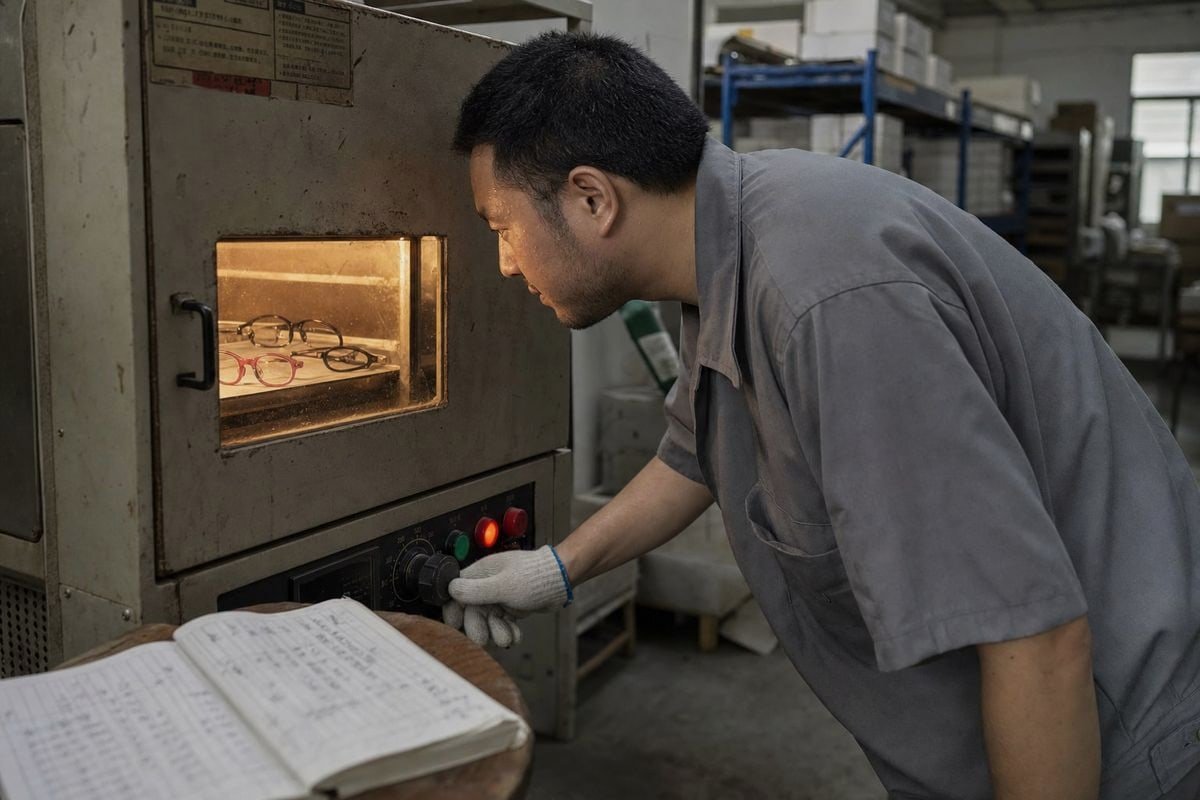
Kleine Fassungen versagen auf spezifische Weise. Unsere Ingenieure lernten dies vor Jahren, als ein winziges Brücken-Design während der Zyklustests vor der Produktion unter Hitze deformiert wurde – ein Problem, das eine Erwachsenengröße nie zeigte.
AS/NZS ISO 12870 erfordert Prüfungen auf physiologische Verträglichkeit, Maßtoleranzen, Gewinde, Dimensionsstabilität bei erhöhter Temperatur, Beständigkeit gegen Schweiß, mechanische Stabilität einschließlich Brückenverformung und Dauerhaltbarkeit, Beständigkeit gegen Entzündung und optische Strahlung. Überprüfen Sie diese, indem Sie prüfen, ob jedes Ergebnis mit gemessenen Werten im Bericht aufgeführt ist.
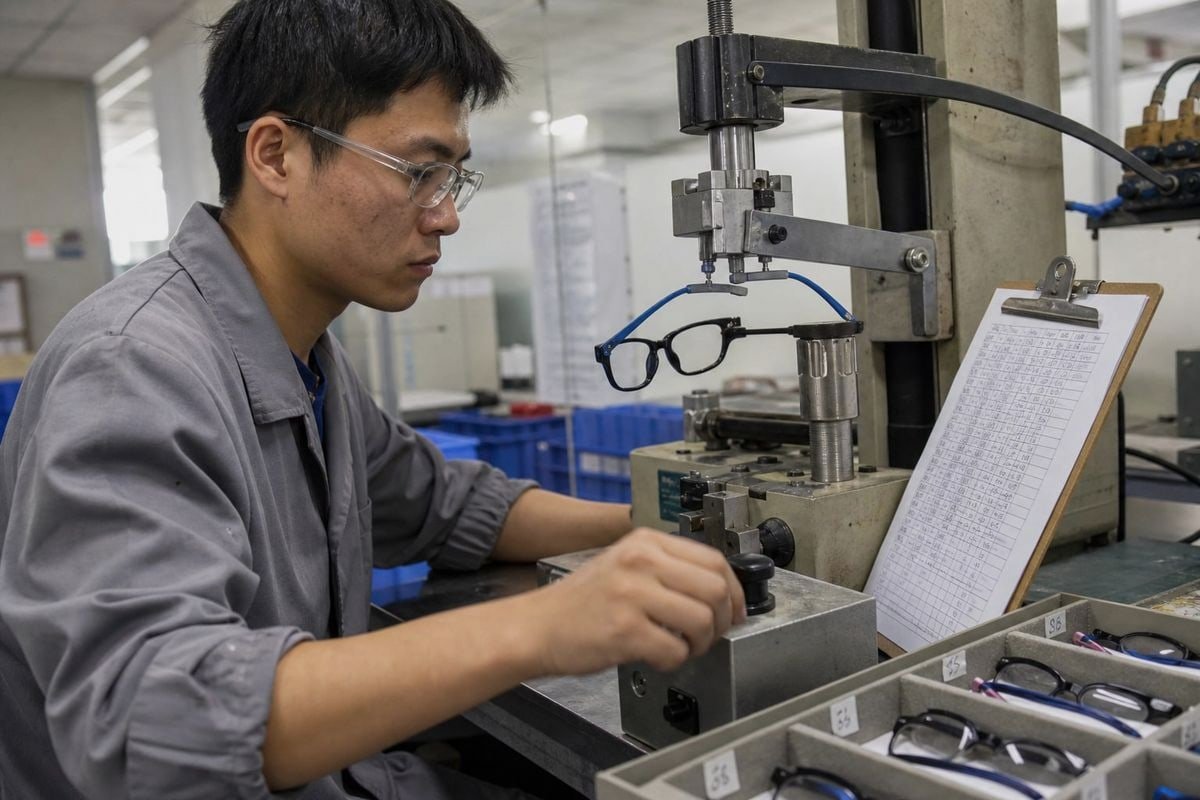
Der Standard gilt für unglasierte Brillenfassungen zum Zeitpunkt des Verkaufs vom Hersteller oder Lieferanten an den Einzelhändler. Das bedeutet, dass die Fassung selbst – bevor Gläser eingesetzt werden – bestehen muss. Bei Kinderfassungen ist dies umso wichtiger, da Kleinteile, dünne Bügel und flexible Scharniere durch den täglichen Gebrauch durch Kinder härteren Belastungen ausgesetzt sind.
Die wichtigsten Testbereiche erklärt
| Testbereich | Was es prüft | Warum es für Kinder wichtig ist |
|---|---|---|
| Physiologische Kompatibilität | Materials touching the skin, including nickel release testing on metal parts | Children's skin is more sensitive to allergens |
| Dimensional stability at elevated temperature | Frame keeps its shape when warm | Kids leave glasses in hot cars and sunny spots |
| Resistance to perspiration | No corrosion or coating failure from sweat | Active kids sweat far more during play |
| Mechanical stability | Bridge deformation, lens retention, temple endurance cycling | Frames get bent, dropped, and sat on |
| Resistance to ignition | Frame does not sustain a flame | A basic safety floor for any children's product |
| Screw threads and tolerances | Hardware meets dimensional specs | Loose screws become small-part hazards |
How to verify each test was actually run
Do not just check the front page. Open the report and confirm every applicable clause has a recorded result. A credible third-party lab testing report lists each requirement, the method used, the measured value, and the verdict. If the report only tested three clauses out of the full scope, ask why. Some labs offer partial testing packages, and suppliers sometimes buy the cheapest one.
Also ask whether additional child-focused abuse tests were done. Many of our brand customers layer on small-parts checks, sharp-edge inspection, and drop testing referencing toy-safety thinking 5, even though AS/NZS ISO 12870 itself does not demand them. For frames combining rigid fronts with flexible silicone temple tips — like our TR90 frames with TPEE temples — mechanical stability frames testing on the actual material combination is the part I would never skip.
Wie kann ich bestätigen, dass ein Testbericht echt ist und genau dem Rahmenstil entspricht, den ich bestelle?
Trust, then verify. When we send test reports to new buyers, I actually encourage them to contact the lab directly — because a confident factory has nothing to hide, and I want that habit to protect them from less honest suppliers.
Bestätigen Sie die Echtheit, indem Sie das ausstellende Labor unter Angabe der Berichtsnummer kontaktieren, den Akkreditierungsstatus des Labors online überprüfen und die Beispielbilder, den Modellcode, die Materialien und die Farbgebung des Berichts mit der von Ihnen bestellten SKU abgleichen. Jede Abweichung in der Konstruktion oder Variante bedeutet, dass der Bericht Ihr Produkt nicht abdeckt.

A convincing-looking PDF proves nothing on its own. Report fraud in eyewear manufacturing China sourcing is not rare, and the most common trick is not forgery — it is borrowing. A supplier shows you a genuine report that belongs to a different frame, a different variant, or even a different factory.
A step-by-step verification process
- Check the lab. Look up the laboratory's name and confirm it holds ISO 17025 accreditation 6 for spectacle frame testing. Recognized commercial labs openly advertise ISO 12870 and AS/NZS ISO 12870 testing services.
- Verify the report number. Email or call the lab and ask them to confirm the report number, issue date, and applicant name. Legitimate labs answer these requests routinely.
- Match the sample identification. Compare the report's photos and model code to your order. Check frame shape, hinge type, temple material, and nose pad construction — not just the model number.
- Check variant coverage. If your frame comes in multiple colors or hinge options, ask which variant was tested. A translucent pink acetate frame and a black TR90 frame with rubber temples are different products, even under one style family.
- Inspect page continuity. Genuine reports have consistent page numbering, signatures, and formatting. Cut-and-paste edits often break these details.
- Check the date. An old report may reference a superseded edition. For current-market optical frame compliance, freshness matters.
The golden sample habit
One practice we push with every OEM customer: keep a golden sample. When a frame passes testing, both the buyer and our factory retain a sealed reference sample. Every future production run gets compared against it. This closes the gap between "the tested frame" and "the shipped frame" — which is where most supplier quality assurance failures actually happen. Combine that with material traceability records, and you have a defensible compliance file, not just a PDF in a folder.
Was sollte ich tun, wenn mein Lieferant keinen gültigen AS/NZS ISO 12870 Prüfbericht vorlegen kann?
There is a trade-off I discuss with buyers every month: pay for fresh third-party testing now, or gamble on undocumented frames and risk a blocked shipment or retailer rejection later. The math almost always favors testing.
Wenn Ihr Lieferant keinen gültigen Bericht vorlegen kann, verlangen Sie vor der Produktion neue Labortests von Drittanbietern für Ihr exaktes Modell zu vereinbarten Kostenteilungsbedingungen. Wenn er sich weigert, Widerstand leistet oder zögert, betrachten Sie dies als ernstes Risikosignal und wechseln Sie zu einem Hersteller mit nachgewiesener Erfahrung mit AS/NZS-Standards.
A missing report is not automatically a dealbreaker. Many perfectly capable factories simply have not tested a specific style yet, because testing is done per model and costs money. What matters is how the supplier responds when you ask.
Reading the supplier's response
| Supplier response | Was es normalerweise bedeutet | Your move |
|---|---|---|
| "We'll arrange testing at an accredited lab" | Capable factory, normal situation | Agree on cost split, timeline, and lab choice |
| "Here's a report for a similar frame" | They hope you won't check details | Politely decline; insist on model-specific testing |
| "Testing isn't necessary for kids' frames" | They don't understand children's eyewear safety requirements | Walk away — this gap won't close |
| "We have a certificate, no report exists" | Documentation is thin or borrowed | Verify with the lab; assume the worst until confirmed |
| Silence or repeated delays | They cannot pass, or won't invest | Move to a supplier with a compliance track record |
Structuring the testing arrangement
If you commission new testing, put it in writing. Specify the exact model, colorway, and material combination to be tested. Name the standard edition. Agree who pays — a common arrangement is that the buyer covers testing for a small first order, and the factory absorbs it once volumes commit. Add a failure analysis clause: if the frame fails any test, the manufacturer must provide root cause analysis and corrective action, then re-test at their cost.
We follow this playbook ourselves. With around 800 existing styles, we can often propose a frame that already has recent test history, which lets a new brand launch without heavy mold investment or long testing queues. When a buyer needs a custom OEM design instead, we build product certification into the development timeline from day one, so the report is ready before mass production — not scrambled together after the goods are packed.
Schlussfolgerung
Weak paperwork sinks good products. Demand model-specific AS/NZS ISO 12870 test reports, verify them with the lab, and partner with factories that treat compliance as standard practice — not an afterthought.
Fußnoten
1. Official source for the international standard for spectacle frames, including requirements and test methods. ↩︎
2. Provides guidance on children’s eyewear care and safety, emphasizing protection and proper use. ↩︎
3. Explains physiological compatibility as a key requirement within the ISO 12870 standard for spectacle frames. ↩︎
4. Explains TR90 material properties, benefits, and its suitability for eyewear frames. ↩︎
5. Provides comprehensive business guidance on toy safety from the Consumer Product Safety Commission. ↩︎
6. Provides official information on ISO/IEC 17025 standard for testing and calibration laboratories. ↩︎
Weitere Artikel, die Ihnen gefallen könnten
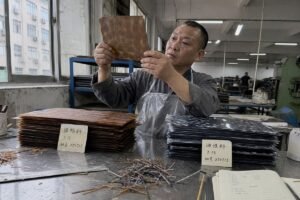
August 2026
Bio-Based vs Regular Cellulose Acetate: What's the Difference for Kids' Frames?
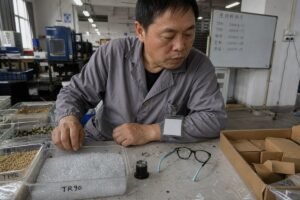
August 2026
How Recyclable Are Kids' Optical Frame Materials, and What Eco-Friendly Alternatives Exist?
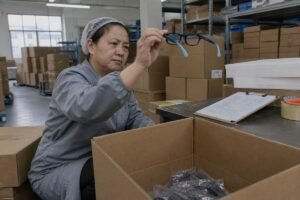
August 2026
Bleichen Kinderbrillengestelle im Lager aus oder altern sie, und wie kontrolliert man die Lagerbedingungen?
Auf der Suche nach einem zuverlässigen Partner für Kinderbrillen?
Entdecken Sie über 800 sofort verfügbare Modelle und umfassenden OEM/ODM-Support, der auf Ihre Marke zugeschnitten ist.
Kontakt aufnehmen English
  Español de México
  Deutsch
  Français
  日本語
日本語  العربية
  Português do Brasil