How to Label Traceability on Kids Optical Frames Imported from China Under Your Brand?
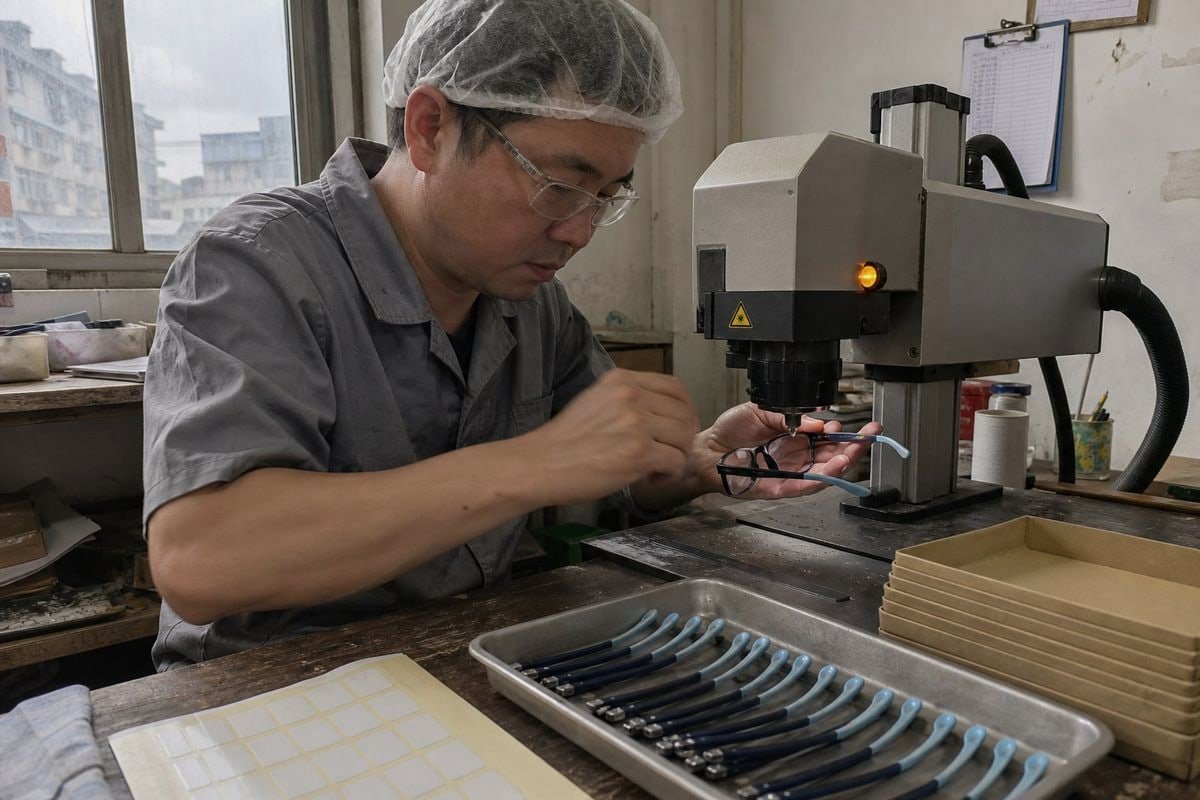
Labeling traceability on kids optical frames imported from China trips up more brands than pricing ever does permanent country of origin mark 1. At our Taizhou factory, we have watched shipments stall over a missing temple mark. One bad label can freeze your launch.
To label traceability on kids optical frames imported from China, print a permanent country of origin mark on the temple or temple tip, add a CPSIA tracking label with your brand name, production date, location, and batch code, and keep internal records that decode every code back to the factory.
That is the short answer. But the details matter, because kids’ frames are small and the rules come from two different systems. Let me walk you through how we help brands get this right before the goods ever leave China.
How Do I Choose the Right Traceability Information to Include on My Branded Frames?
A buyer from Australia once asked me why "Made in China" on the temple was not enough for her kids' line. That single question opens up the whole traceability topic, so let me answer it properly here.
Include five data points: your brand or private labeler name, the country of origin marking, the production date, the production location, and a batch or lot code. Together these satisfy customs marking rules and CPSIA compliance for children's products sold under a private label in the US.
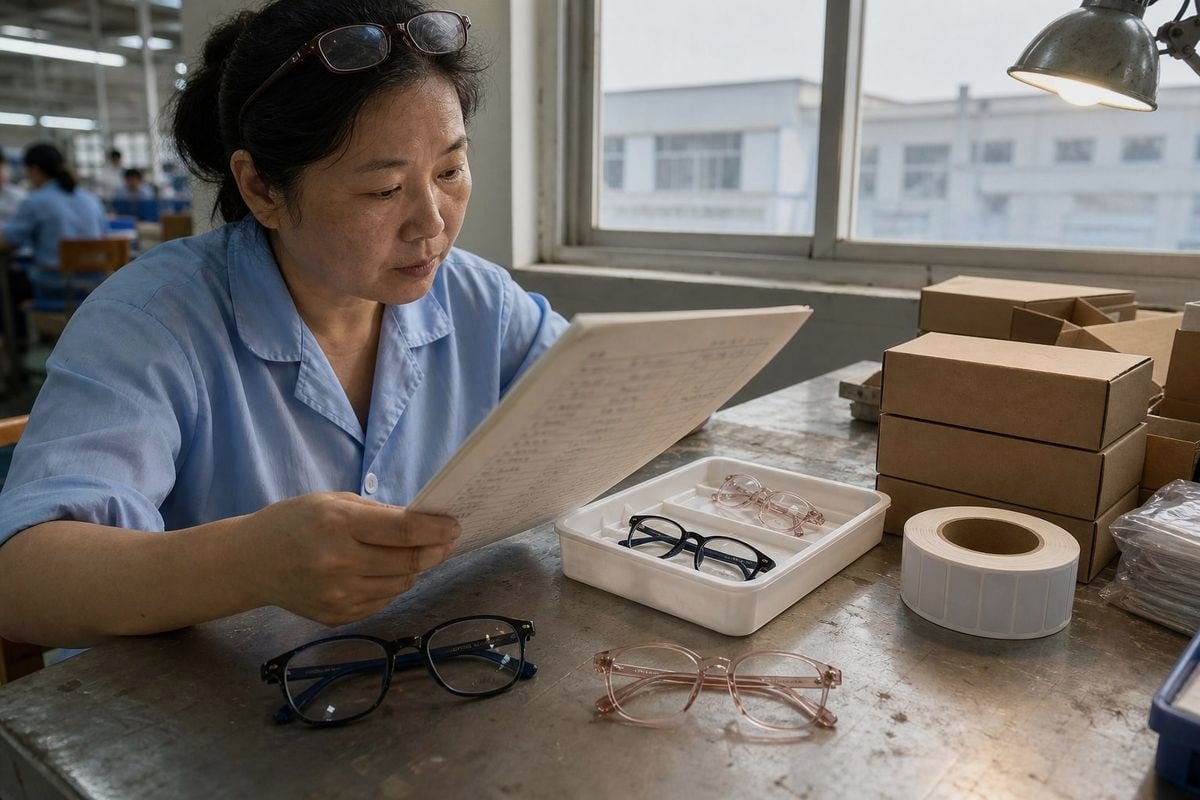
The first thing to understand is that you are dealing with two separate labeling systems, not one. US customs requires a country of origin marking that reaches the final buyer. Separately, if the frame is designed for children 12 and under, CPSIA requires a tracking label that supports recalls. A generic "Made in China" stamp covers the first system only. It does nothing for the second.
Here is how the two systems compare:
| . Schlagfestigkeitsprüfungen sind eine separate Verpflichtung von CPSIA-Prüfungen. Viele Importeure müssen sich auch bei der FDA als Erstimporteur registrieren und das Produkt als medizinische Klasse-I-Gerät auflisten, um eine Beschlagnahmung der Sendung an der Grenze zu vermeiden. | Customs Origin Marking | CPSIA Tracking Label |
|---|---|---|
| UV-Transmissionsbericht (akkreditiertes Labor) | Tell the buyer where the frame was made | Trace the product back to a factory, date, and batch during a recall |
| What it says | "Made in China" or "Frame China" | Brand/private labeler, date, location, batch or lot code |
| Placement | Temple or temple tip, per eyewear industry guidance | On the product and packaging, to the extent practicable |
| Format rules | Legible, indelible, conspicuous, permanent | Flexible; codes allowed if you can decode them internally |
| Who is responsible | Importer of record 2 | Importer or private labeler |
Your Brand Name Can Be the Identifier
Good news for private label compliance: your brand name on the frame can serve as the manufacturer identifier. You do not need to print our factory name on your product. But your internal records must connect your brand, your batch codes, and our factory. If a recall happens, you need to show regulators exactly which production run is affected within hours, not weeks.
Keep the Code Simple but Decodable
We often suggest a compact code like "AK-2607-14" — brand initials, date reference, lot number. It looks clean on a small temple and it decodes fully in your purchase and QC records. That is the balance you want: minimal on the frame, complete in the file.
What Labeling Requirements Should I Follow for Kids Optical Frames Sold in My Country?
In fifteen years of exporting children's eyewear to 20+ countries, our team has learned that every market draws the compliance line a little differently. The US, EU, and Australia each expect something specific from your labels and documents.
Follow your destination market's rules: in the US, apply country of origin marking, a CPSIA tracking label, and a Children's Product Certificate backed by accredited lab testing; in the EU, maintain a technical file and meet CE marking requirements; always verify labels before the goods leave China.
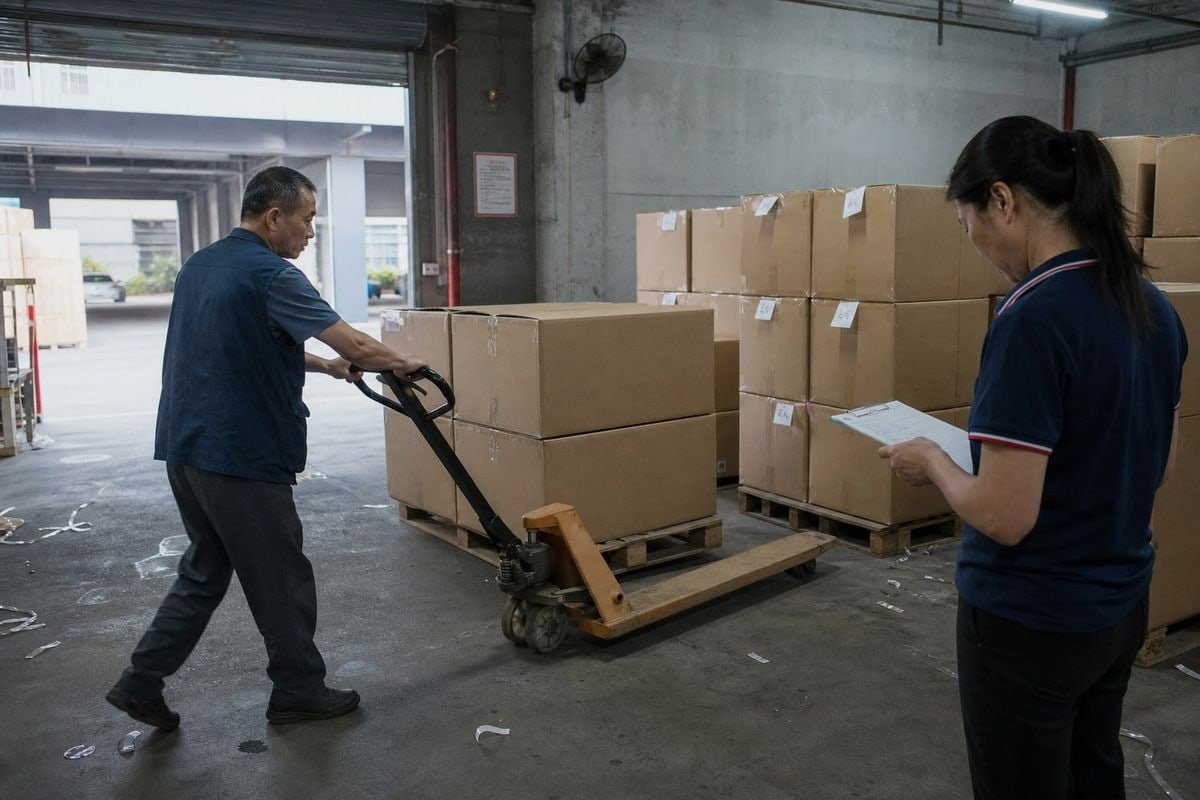
Let me break this down by market, because this is where importers most often get surprised.
| Markt | Key Labeling Duties | Supporting Documents |
|---|---|---|
| Vereinigte Staaten | Origin mark on temple/tip; CPSIA tracking label; FDA eyewear regulations on impact resistance testing for lenses | Kinderproduktionszertifikat 3, third-party test reports for lead and phthalates limits, drop-ball or equivalent lens documentation |
| Europäische Union | CE marking requirements 4 where applicable; importer name and address; traceable batch identification | Technical file with risk assessment, test reports, declaration of conformity |
| Australia / UK / Japan | Origin and supplier identification; local optical frame safety standards | Test reports aligned to recognized eyewear standards, import records |
The Importer of Record Carries the Legal Weight
This is a point some buyers resist at first: your Chinese supplier is not the legally responsible party in your market. You are. The importer of record answers for labeling, safety testing, and documentation. What a good factory does is make that responsibility easy to carry. On our side, that means supplying material declarations, arranging samples for CPSC-accepted lab testing, and printing your approved label artwork exactly as specified.
Verify Before Shipment, Not After Arrival
We photograph temple markings, packaging labels, and batch codes during pre-shipment inspection and send them to the buyer for sign-off. Fixing a label in Taizhou costs a day. Fixing it in a bonded warehouse after a customs hold costs weeks and real money. Build label verification into your QC checklist, or ask your inspection agent to include it. It is the cheapest insurance in this whole process.
Do Not Forget the Certificate Trail
A Children's Product Certificate is not a label, but it is what makes your labels defensible. It ties your batch codes to actual test results for lead, phthalates, and mechanical safety 5. lead and phthalates limits 6 Keep the CPC, the test reports, and the batch records together in one file per production run.
Can My Manufacturer Help Me Add Batch Codes or QR Traceability to Each Frame?
There is a trade-off we weigh on almost every OEM project: how much traceability data can physically fit on a child-sized temple without ruining the look. The answer shapes which marking method we recommend.
Yes — an experienced factory can pad-print, laser-engrave, or mold batch codes directly onto temples during production, and add QR codes to temple tips, packaging, or hangtags that link to your production, material, and certification data for full supply chain transparency.

At our workshop, batch marking is part of the production plan, not an afterthought. Here is the process we typically run for private label buyers:
- Assign the code before production starts. You or we generate a batch code tied to the purchase order, production line, material lot, and planned date.
- Choose the marking method for the material. TR90 and TPEE behave differently under laser and pad-printing, so we test the mark on your actual frame material first.
- Apply the mark during assembly. The code goes on the inner temple where it stays legible but discreet.
- Record everything. Our QC file links the code to material lots, lens batches, and inspection results.
- Verify at final inspection. We check permanence with rub tests and photograph the marks for your approval.
Which Marking Method Fits Your Frame?
| Methode | Durability | Am besten geeignet für | Notes |
|---|---|---|---|
| Lasergravur | Ausgezeichnet | TR90 temples, permanent codes | No ink to rub off; subtle appearance |
| Tampondruck | Gut | Contrasting brand marks and origin text | Must pass rub and wear testing |
| In-mold marking | Ausgezeichnet | High-volume runs from your own mold | Set at tooling stage; cannot change per batch |
| QR on tip or packaging | Variiert | Digital traceability, recall lookup, brand storytelling | Pair with a database you control |
QR Codes Open a Second Door
Batch tracking labels solve the legal problem. QR traceability solves a marketing problem too. A scannable code on the packaging can show parents your test reports, your materials story, and your factory standards. Several of our brand clients now use QR links as a trust signal at retail — the same data that protects you in a recall becomes proof of quality for the parent holding the box. Flexible TPEE temples and rigid TR90 fronts each carry different material declarations, and a QR landing page is a tidy place to present all of it.
How Do I Make Sure Traceability Labeling Doesn't Compromise My Brand's Packaging Design?
One lesson our design team learned early: a compliance label added at the last minute always looks like a compliance label added at the last minute. The brands that get this right plan the marks into the artwork from day one.
Design traceability into the layout from the start: place required marks on the inner temple where they stay discreet, reserve a defined zone on packaging for batch and origin data, and use laser engraving or tone-on-tone printing so compliance text never competes with your brand identity.

The tension here is real, and I will not pretend otherwise. Minimalist branding pulls one way. Legal permanence pulls the other. A children's frame temple might be barely wide enough for your logo, let alone "Made in China" plus a lot code. But the conflict is solvable with smart placement and a clear split between what goes on the frame and what goes on the box.
Split the Load Between Frame and Packaging
Customs marking must live on the frame itself — the temple or temple tip. That part is not negotiable. But CPSIA guidance allows tracking information to be spread across multiple permanent labels when the product is small, as long as everything stays visible, legible, and traceable. So a practical split looks like this: brand name and origin mark on the frame, full tracking data repeated on the packaging, and the complete decode record in your files. The frame stays clean. The box carries the detail. Nothing is lost.
Make Compliance Marks Part of the Aesthetic
Laser engraving on the inner temple is nearly invisible when the glasses are worn. Tone-on-tone printing — dark grey on black, blush on pink — keeps required text legible up close without shouting across the room. On our translucent acetate styles, we position engraved text on the inner temple arm where light passes through it softly. Parents never notice it. Inspectors always find it. That is exactly the outcome you want.
Never Trade Permanence for Prettiness
One caution: stickers and hangtags alone do not satisfy origin marking or tracking label permanence. They fall off. A mark that disappears during normal use by an active seven-year-old is a mark that fails a customs or CPSC review. Whatever design choice you make, it must survive rub tests, sweat, and daily handling before we approve it for shipment.
Schlussfolgerung
Traceability labeling on kids optical frames protects your brand, not just your customs clearance. Plan the marks early, code every batch, verify before shipment — and your private label ships with confidence.
Fußnoten
1. Explains U.S. Customs and Border Protection requirements for country of origin marking on imported goods. ↩︎
2. Defines the legal entity responsible for customs compliance and imported goods. ↩︎
3. Explains the importance and requirements of this document for children’s product compliance. ↩︎
4. Outlines the mandatory conformity mark for products sold in the European Union. ↩︎
5. Details CPSC limits on lead, phthalates, and mechanical hazards in children’s items. ↩︎
6. Summarizes the restrictions on lead and phthalates in children’s products under CPSIA. ↩︎
Weitere Artikel, die Ihnen gefallen könnten
August 2026
Bio-Based vs Regular Cellulose Acetate: What's the Difference for Kids' Frames?

August 2026
How Recyclable Are Kids' Optical Frame Materials, and What Eco-Friendly Alternatives Exist?
August 2026
Bleichen Kinderbrillengestelle im Lager aus oder altern sie, und wie kontrolliert man die Lagerbedingungen?
Auf der Suche nach einem zuverlässigen Partner für Kinderbrillen?
Entdecken Sie über 800 sofort verfügbare Modelle und umfassenden OEM/ODM-Support, der auf Ihre Marke zugeschnitten ist.
Kontakt aufnehmen English
  Español de México
  Deutsch
  Français
  日本語
日本語  العربية
  Português do Brasil