How Do Kids Optical Frame Specs Differ: Optometry Stores Vs Eyewear Retailers?

Kids optical frame specs confuse many of our B2B buyers. Two channels, one child’s face — yet our Taizhou factory builds noticeably different spec sheets for each. Get it wrong, and returns pile up fast.
Kids optical frame specs differ mainly in fitting precision, lens compatibility, and testing depth. Optometry stores demand exact pediatric frame measurements, tight centration tolerances, and stricter durability standards. Eyewear retailers prioritize broad sizing, style variety, and competitive pricing, accepting looser fit tolerances in exchange for selection and convenience.
The frames may look almost identical on a shelf. The specifications behind them are not. Below, I break down exactly where the two channels diverge, and how to source correctly for each.
What specs should I prioritize when sourcing kids optical frames for optometry stores versus retail chains?
A procurement manager from Australia once asked me why her optometry clients rejected frames her retail chains loved. The answer sat entirely in the spec sheet, not the styling.
For optometry stores, prioritize precise eye-to-bridge ratios, adjustable temple length sizing, stable bridge fit, and small lens openings for strong prescriptions. For retail chains, prioritize versatile sizing ranges, color variety, durable impact-resistant materials, and attractive price tiers that support volume selling.

When we quote a project at our factory, the first question is always the channel. Optometry-led buyers and retail chains read the same spec sheet in completely different ways. Here is a scannable comparison we use internally:
| Spec Priority | Optometry Stores | Eyewear Retailers |
|---|---|---|
| Frame width | Exact match to face width, narrow tolerance | Broader sizing bands per SKU |
| Bridge fit | Lower-set bridge for a child's flatter nasal profile | Standard bridge, fewer variants |
| Temple length | Precise sizing, often adjustable cable temples | Fixed lengths, growth allowance |
| Lens opening | Smaller, to reduce lens thickness for high Rx | Larger, style-driven shapes |
| Material spec | Trivex 1-ready, medical-grade polymers | Polycarbonate lenses, TR90, cost-balanced |
| Hinges | 180-degree spring hinges preferred | Standard hinges acceptable |
Why the eye-to-bridge ratio matters most
Optometry buyers reject what the trade calls "shrunken adult" geometry — an adult frame simply scaled down. Children have flatter nasal profiles and wider-set proportions relative to head size. So optometry-grade frames need engineered eye-to-bridge ratios, not proportional shrinking. Retail chains tolerate this less strictly because a professional optician consultation is not always part of their sale.
Where retail specs still demand rigor
Do not assume retail means low quality. Retail buyers push us hard on frame durability standards 2, color consistency across batches, and packaging presentation. Their spec priorities simply shift from fit precision toward shelf appeal and survivability. In our experience exporting to 20+ countries, retail chains also care deeply about impact-resistant materials, because breakage drives their return rates just as much as poor fit drives optometry complaints.
How do lens compatibility and fitting requirements differ between optometry-grade and retail eyewear frames?
The trade-off I weigh most often at the design stage is lens opening size versus style appeal. A bold, oversized shape sells at retail — but it can ruin a strong prescription.
Optometry-grade frames must hold lenses with the optical center aligned to the child's visual axis, support smaller openings for high prescriptions, and meet tight centration tolerances for myopia management lenses. Retail frames accept standard polycarbonate lenses with looser alignment expectations and larger, style-led shapes.

Our engineers learned early that lens compatibility is where optometry buyers scrutinize hardest. An optician measures pupillary distance in person, then aligns the optical center of each lens with the child's visual axis. If the frame geometry fights that alignment, the lens can induce unwanted prism — and the child sees poorly even with perfect prescription accuracy.
Centration tolerances are tightening
Here is a concrete shift worth noting: specialized clinics increasingly fit myopia management lenses 4, which carry strict centration tolerances. A frame that sits even slightly off-axis undermines the treatment zone of those lenses. When we develop TR90 kids optical frames for optometry channels, we now design for stable, repeatable positioning on the face — because the lens technology demands it.
Lens material expectations diverge too
Retailers typically standardize on polycarbonate lenses. They are impact-resistant and affordable. Optometry clinics more often specify Trivex, which offers superior optical clarity and lower weight — meaningful for a child wearing glasses ten hours a day. The frame must accept both without stressing the lens groove.
Some buyers raise a fair objection: once the prescription is fixed, lens fabrication is automated, so isn't the outcome standardized regardless of channel? For adults, that argument holds some weight. For children, it collapses. Small fit errors, bridge mismatch, and incorrect alignment cause discomfort, slippage, and degraded visual performance far faster in kids. The lens may be similar; the fitting risk profile is not. That is exactly why frame specs — not just lenses — must match the channel.
Fitting workflow comparison
- Optometry store: in-person pupillary distance measurement, frame trial on the child's face, optical frame adjustments at dispensing, follow-up visits.
- Retail chain: size-band selection, on-site optician if available, fewer adjustment touchpoints.
- Online retail: self-reported measurements, no hands-on fitting — the riskiest path for a child's first pair.
Can I use the same TR90 frame specs for both professional optical clients and general retail buyers?
A distributor in Japan once tried to run a single TR90 SKU across both his clinic network and his retail accounts. Six months later, he came back asking us to split the spec.
You can share the same TR90 base material and mold across both channels, but you cannot share the full spec. Optometry clients need tighter dimensional tolerances, adjustable temples, and Rx-friendly lens grooves. Retail buyers need broader size bands, more colorways, and cost-optimized components.
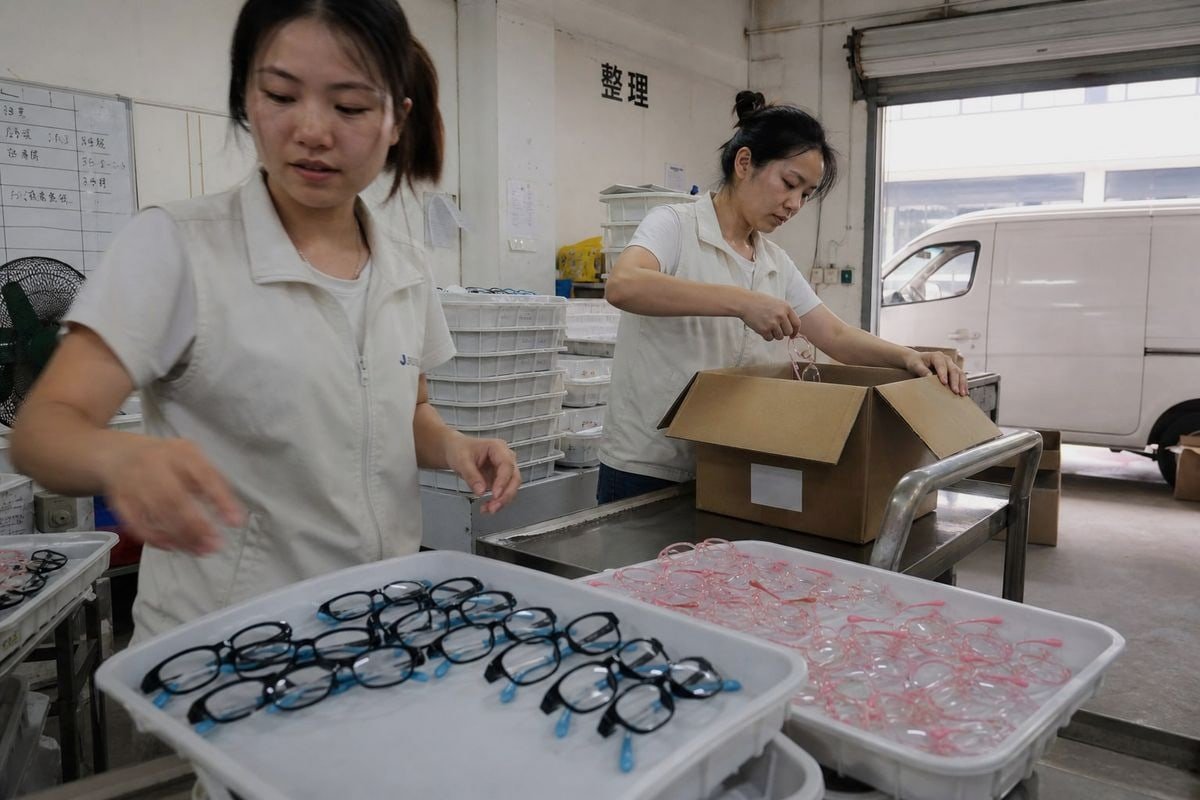
This question comes up in almost every OEM inquiry we handle, and the honest answer is "partially." TR90 itself is an excellent shared foundation. It is lightweight, flexible, and memory-retentive — ideal for active kids in either channel. At our factory we frequently pair TR90 fronts with soft TPEE temples, which adds grip and comfort at the ear hook. That combination works everywhere. What changes is the specification layer on top.
What can be shared
- The base mold and overall silhouette
- Core TR90 material grade and flexibility
- UV400 or polarized lens options for sun models
- Safety-relevant construction, like screwless or spring-hinge designs
What must be split
| Spec Element | Optometry Version | Retail Version |
|---|---|---|
| Dimensional tolerance | Tight, verified per batch | Standard commercial tolerance |
| Temple design | Adjustable, cable-temple options for retention | Fixed comfort-fit temples |
| Lens groove | Cut for Rx polycarbonate lenses and Trivex | Cut for demo or plano lenses |
| Size run | Multiple bridge and temple length sizing options | Two or three size bands |
| Colorways | Conservative, clinic-friendly palette | Wide, seasonal, trend-driven |
| Verpackung | Clinical, dispensing-ready | Retail-ready branded presentation |
The economics of a shared platform
Here is why this matters for a founder or procurement manager. Splitting specs on a shared mold avoids double tooling investment. With roughly 800 existing styles in our catalog, most buyers can select a proven base, then customize the optometry variant and retail variant separately — colors, logos, lens packages, and packaging. New brands test the market with lower risk, and neither channel receives a compromised product. One platform, two disciplined spec sheets. That is the model that survives.
Why do optometry stores demand stricter durability and safety testing than eyewear retailers?
Early in my export career, a clinic buyer returned a sample batch over a hinge that loosened after repeated flexing — a flaw our retail clients had never flagged. That lesson reshaped our QC protocol.
Optometry stores demand stricter testing because their frames carry medical-grade expectations: they hold prescription lenses on growing children, face high-frequency mechanical stress, and are backed by structured warranties. A frame failure is a clinical failure, not just a product return, so hinge cycling, material safety, and dimensional stability are tested harder.

The logic is straightforward once you see the frame through the clinic's eyes. When an optometry practice dispenses glasses, it takes professional responsibility for the child's vision correction. Frame warranties at optometry practices are specifically structured to cover high-frequency mechanical failure and lens scratching, because clinics know kids' frames take far more abuse than adult frames. Every failure costs the practice chair time, credibility, and often a free remake. Vision insurance coverage arrangements add another layer — dispensed frames must survive the coverage period without repeated claims.
The testing gap in practice
Our engineers run children's frames through repeated hinge-cycling and temple-flex checks in our 5S-managed workshop. For optometry-bound orders, we tighten pass criteria on three points: hinge retention after flexing, bridge fit and stability under torsion, and dimensional recovery after deformation. Frames with 180-degree spring hinges and flexible TPEE temples pass these tests far more consistently, which is exactly why clinics prefer them for active-wear retention.
Material safety is rising fast
There is an emerging shift toward medical-grade, BPA-free, and phthalate-free polymers, driven by concerns about skin irritation and chemical absorption in children. Optometry buyers now ask about polymer safety documentation as a matter of routine. Retail buyers are catching up, but clinics led this demand. Environmentally friendly, skin-safe materials are no longer a premium option in the optometry channel — they are the entry ticket.
Where the channels are converging
Retail is not standing still. Advanced concepts like 3D facial scanning for custom-printed frames, and even micro-sensors monitoring head posture and UV exposure, are appearing first in high-end optometry practices — but they signal where the whole pediatric market is heading. Buyers sourcing today should spec for tomorrow's baseline, not yesterday's.
Schlussfolgerung
Sourcing the wrong spec for the wrong channel drains margins and trust. Match fitting precision to optometry, versatility to retail — and both channels reward you with reorders.
Fußnoten
1. Technical overview of Trivex material properties and its use in high-quality ophthalmic lenses. ↩︎
2. FDA-recognized consensus standard (ISO 12870) for spectacle frame requirements and durability testing. ↩︎
3. Scientific definition of the optical axis and center used in lens alignment and centration. ↩︎
4. Authoritative clinical guidelines for myopia management from the American Optometric Association. ↩︎
Weitere Artikel, die Ihnen gefallen könnten

August 2026
Bio-Based vs Regular Cellulose Acetate: What's the Difference for Kids' Frames?

August 2026
How Recyclable Are Kids' Optical Frame Materials, and What Eco-Friendly Alternatives Exist?

August 2026
Bleichen Kinderbrillengestelle im Lager aus oder altern sie, und wie kontrolliert man die Lagerbedingungen?
Auf der Suche nach einem zuverlässigen Partner für Kinderbrillen?
Entdecken Sie über 800 sofort verfügbare Modelle und umfassenden OEM/ODM-Support, der auf Ihre Marke zugeschnitten ist.
Kontakt aufnehmen English
  Español de México
  Deutsch
  Français
  日本語
日本語  العربية
  Português do Brasil