How Do Free Returns Affect Per-Unit Costs When Sourcing Kids Optical Frames?
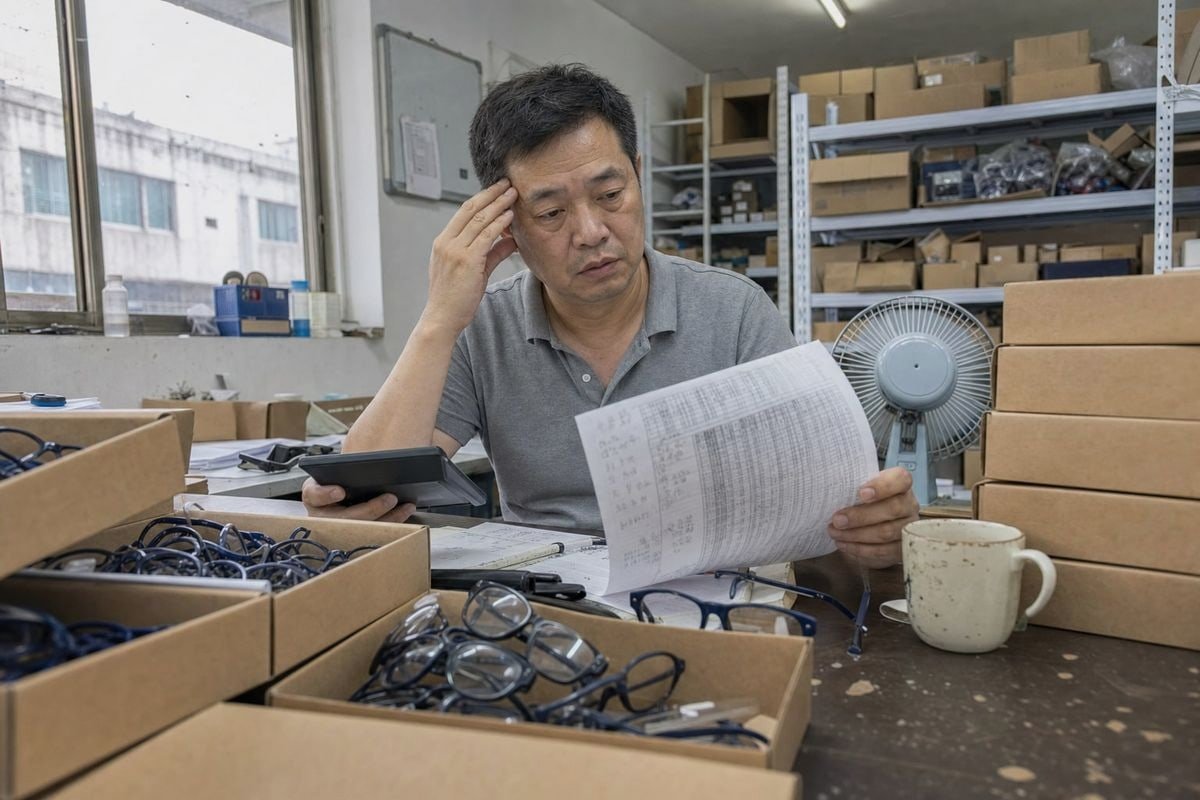
Free returns on kids optical frames look generous until the invoices arrive AQL inspection levels 1. In our Taizhou factory, I have watched buyers celebrate conversion gains, then panic when reverse logistics 2 quietly ate their profit margins. The fix starts with honest per-unit math.
Free returns raise the effective per-unit cost of kids optical frames because return shipping, inspection, repackaging, and resale losses get spread across every unit sold. At a 10–20% return rate and $12–$26 cost per return, expect roughly $1.20–$5.20 added to each frame’s true cost.
That number changes everything about sourcing decisions. Let me walk you through the math, the benchmarks, and the negotiation tactics we see work in real supplier relationships.
How can I calculate the true per-unit cost impact of offering free returns on kids optical frames?
One of our European brand clients once told me their frames were "profitable on paper but broke even in the bank account." When we sat down together, unallocated return costs were the missing line item in their landed cost model 3.
Calculate the per-unit return burden by multiplying your average all-in cost per return by your return rate, then adding that figure to your landed cost. For example, an $18 cost per return at a 15% return rate adds $2.70 to every kids frame sold — returned or not.
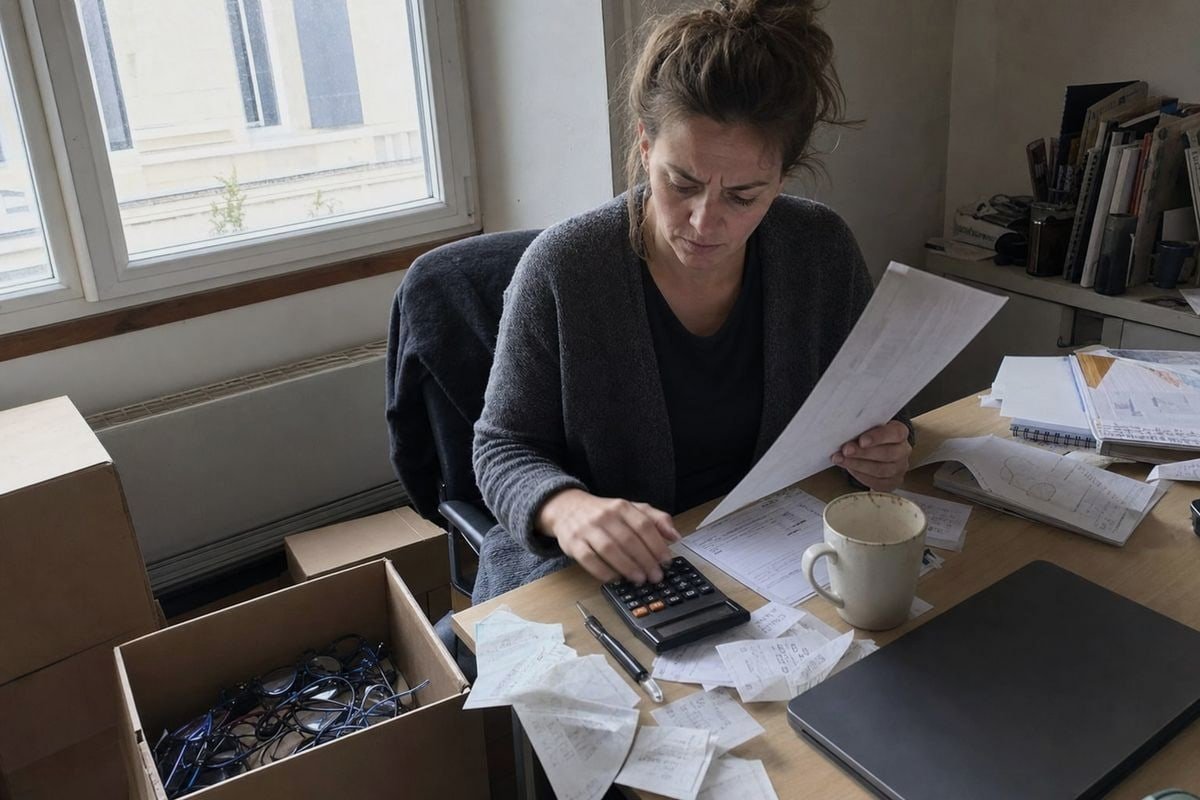
The formula is simple. The discipline is not. Most buyers I work with track outbound freight carefully but treat returns as an occasional annoyance. That is a mistake, because reverse logistics costs behave like a tax on every sale.
What counts in the true cost of a return
A return is never just a shipping label. Here is what actually stacks up:
- Return shipping paid by you
- Outbound shipping that becomes a sunk cost
- Pick, pack, and warehouse labor on both ends
- Inspection for scratches, hinge integrity, and lens condition
- Repackaging and replacing missing cases or cloths
- Payment processing fees 4 kept by the gateway after refund
- Customer service time and fraud screening
- Devaluation, markdown resale, or full write-off
Ecommerce research suggests the all-in cost of a return can reach 30% to 66% of the item's original price once you include handling and lost resale value. Optical frames are lightweight, which helps on freight. But they are not zero-touch products. A returned kids frame needs a careful check of hinges, temple flexibility, and packaging completeness before it can go back into inventory management as sellable stock.
A worked scenario for kids frames
Use scenarios, not one universal number. There is no published kids-frame-specific benchmark, so treat the figures below as modeled examples built on general ecommerce return-cost logic:
| Scenario | Landed Cost | Cost per Return | Return Rate | Added Burden per Unit | True Effective Cost |
|---|---|---|---|---|---|
| Low friction | $14.00 | $12.00 | 5% | $0.60 | $14.60 |
| Mäßig | $14.00 | $18.00 | 10% | $1.80 | $15.80 |
| High friction | $14.00 | $22.00 | 15% | $3.30 | $17.30 |
| Severe | $14.00 | $26.00 | 20% | $5.20 | $19.20 |
Notice the severe scenario. A $5.20 burden on a $14 landed cost is a 37% cost inflation before you touch overhead or profit. On a small-ticket item like a children's frame, that can consume most of your gross margin. This is why I tell buyers to model return burden into wholesale pricing strategies from day one, not after the first painful quarter.
What return rates should I expect when sourcing children's optical frames from an OEM supplier?
A procurement manager from Australia asked me this exact question last year during a factory visit. She had apparel benchmarks in her spreadsheet and assumed kids eyewear would behave the same way. It does not — but it is not immune either.
Kids optical frames typically see lower return rates than apparel, but fit uncertainty, style rejection by children, and damage claims still drive meaningful returns. Plan for roughly 5–15% in online channels, higher if you allow home try-on of multiple styles, lower for in-store fitting.
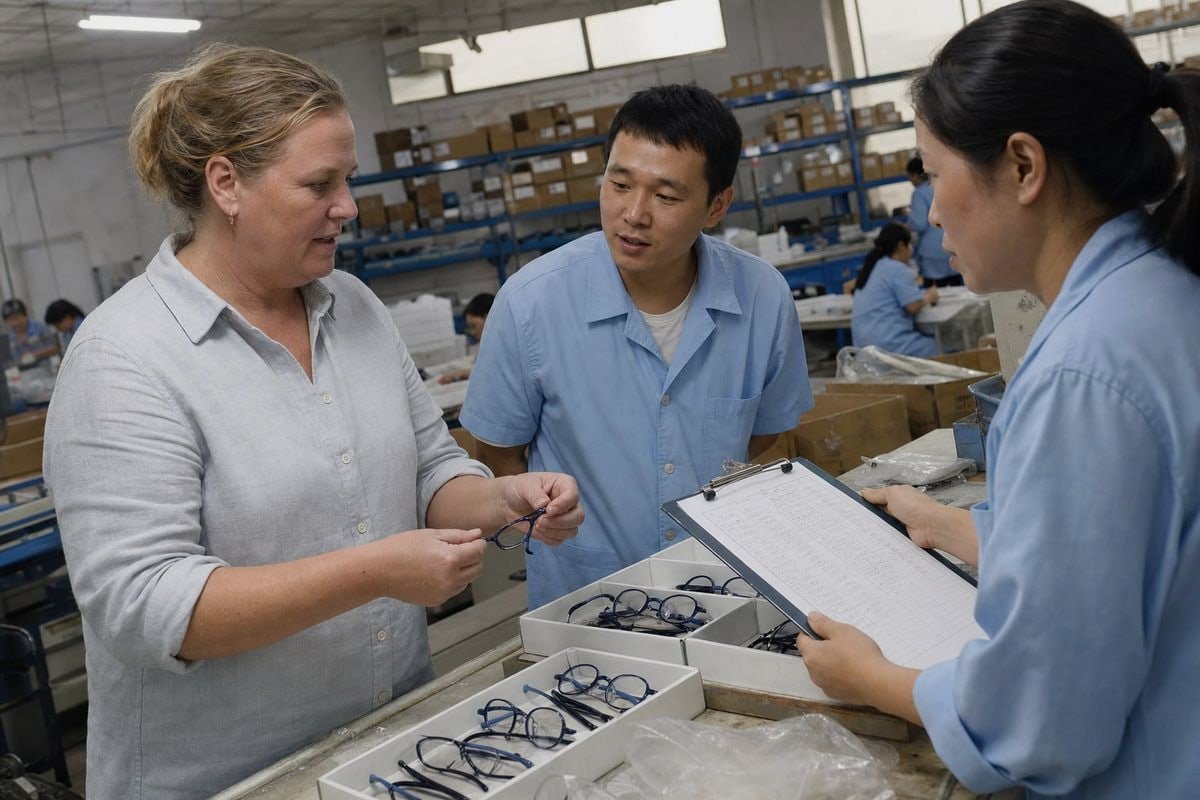
Return behavior in children's eyewear has its own personality. Parents cannot always judge bridge width or temple length from a photo. Kids reject frames for comfort or looks after the box arrives. And prescription coordination adds another layer: if lens expectations are unclear, dissatisfaction rises even when the frame itself is perfect.
The main return drivers we see
From fifteen years of producing children's frames for buyers in more than twenty countries, these are the patterns that repeat:
| Return Driver | Typical Cause | Who Can Fix It |
|---|---|---|
| Fit failure | Wrong bridge or temple size for the child's face | Better sizing guides, accurate specs |
| Style rejection | Child dislikes color or shape after delivery | Better product photos, home try-on limits |
| Damage claims | Broken hinges or snapped temples in use | Manufacturer quality control standards |
| Multi-buy behavior | Parents order several styles to compare | Policy design, exchange incentives |
| Lens mismatch | Prescription or coating expectations unclear | Clear product detail pages |
Why channel matters more than category averages
An optical shop fitting frames in person may see returns under 5%. A pure ecommerce brand offering free home try-on can see multi-style ordering behave like apparel "bracketing," where parents fully intend to send most frames back. Subscription-style try-before-you-buy models normalize even higher return volume and demand robust reverse logistics infrastructure to survive. Virtual try-on tools help, but their accuracy for diverse children's facial shapes is still limited, so fit-related returns persist despite the technology.
One more thing buyers rarely hear: in the optical industry, frame suppliers have historically built return expenses into wholesale pricing. So high return behavior does not only hurt the seller processing the return. It migrates upstream and inflates costs across the whole channel. When you negotiate with a supplier, you are partly negotiating over who absorbs that hidden burden.
Can better frame durability and fit reduce my return rate and protect my margins?
There is a trade-off I weigh on almost every new project: a slightly higher unit price for flexible TPEE temples versus a cheaper rigid plastic. Buyers focused only on landed cost pick the cheap option. Buyers focused on return rate optimization rarely do — and their margins usually thank them.
Yes. Durable flexible materials like TR90 and TPEE, plus accurate kid-specific sizing, directly cut defect claims and fit-related returns. Every percentage point of return rate you eliminate removes its full cost per return from your per-unit burden, protecting profit margins without raising retail prices.
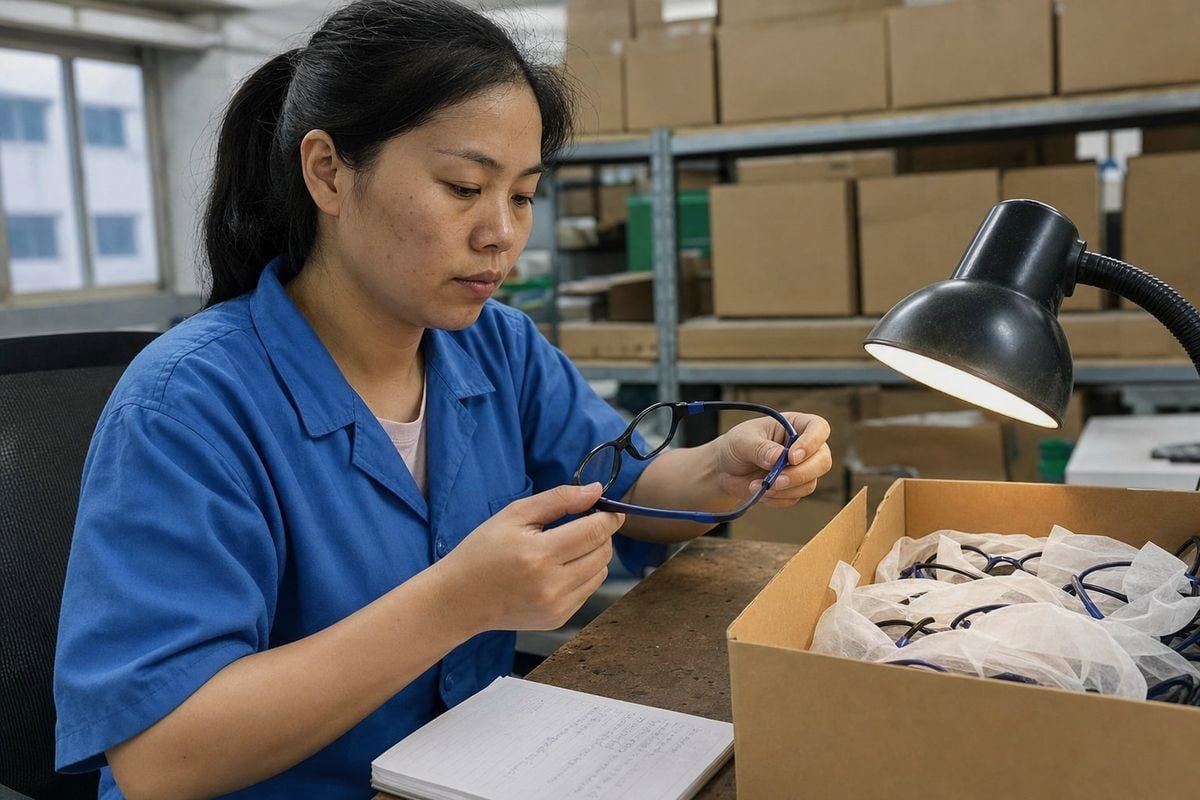
Run the math backward and the logic becomes obvious. If your cost per return is $18 and better durability drops your return rate from 12% to 7%, you just saved $0.90 on every single unit sold. Across a 10,000-unit order, that is $9,000 recovered — often more than the price difference between a budget frame and a properly engineered one.
How material choice changes return behavior
Children twist, drop, sit on, and generally abuse their glasses. Rigid low-cost frames snap at the hinge or bridge, and every snap becomes a "defective item" return plus an unhappy parent. Our engineers moved heavily into TR90 fronts with TPEE temples for exactly this reason. The materials flex instead of breaking, they are lightweight on small faces, and they hold up to active use. Take a design like our rounded rectangular black frame with navy flexible rubber temples and silicone cable-style ear hooks: the ear hooks keep the frame secure during play, and the bendable temples absorb the stress that destroys rigid frames. That is children's eyewear durability working as a margin-protection tool, not just a safety feature.
Fit accuracy is the other half
Durability fixes damage returns. Fit accuracy fixes sizing returns. Practical steps that work:
- Publish exact measurements — lens width, bridge, temple length — for every SKU.
- Offer age-band sizing guidance validated against real head measurements, not adult scaling.
- Use consistent sizing across your range so a repeat customer can reorder confidently.
- Photograph frames on children of the target age, not on mannequins.
- Apply analytics to your return data to spot which styles or batches drive returns, then adjust sourcing or product descriptions.
Fewer returns also protect something harder to measure: customer lifetime value 5. A parent whose child's first frames survive a school year comes back for the second pair. A parent processing a return for a snapped hinge often does not.
Early in my export career, I learned a lesson from a Japanese distributor who rejected a shipment over cosmetic packaging flaws. The frames were fine, but the experience taught me that return-related terms need to be written down before production starts, not argued about after a container lands.
Negotiate a defect allowance, clear quality control standards with agreed AQL inspection levels, replacement or credit terms for confirmed manufacturing defects, and documented supplier return policies before ordering. Separate defect-driven returns, which the factory should cover, from preference-driven returns, which remain your commercial cost.
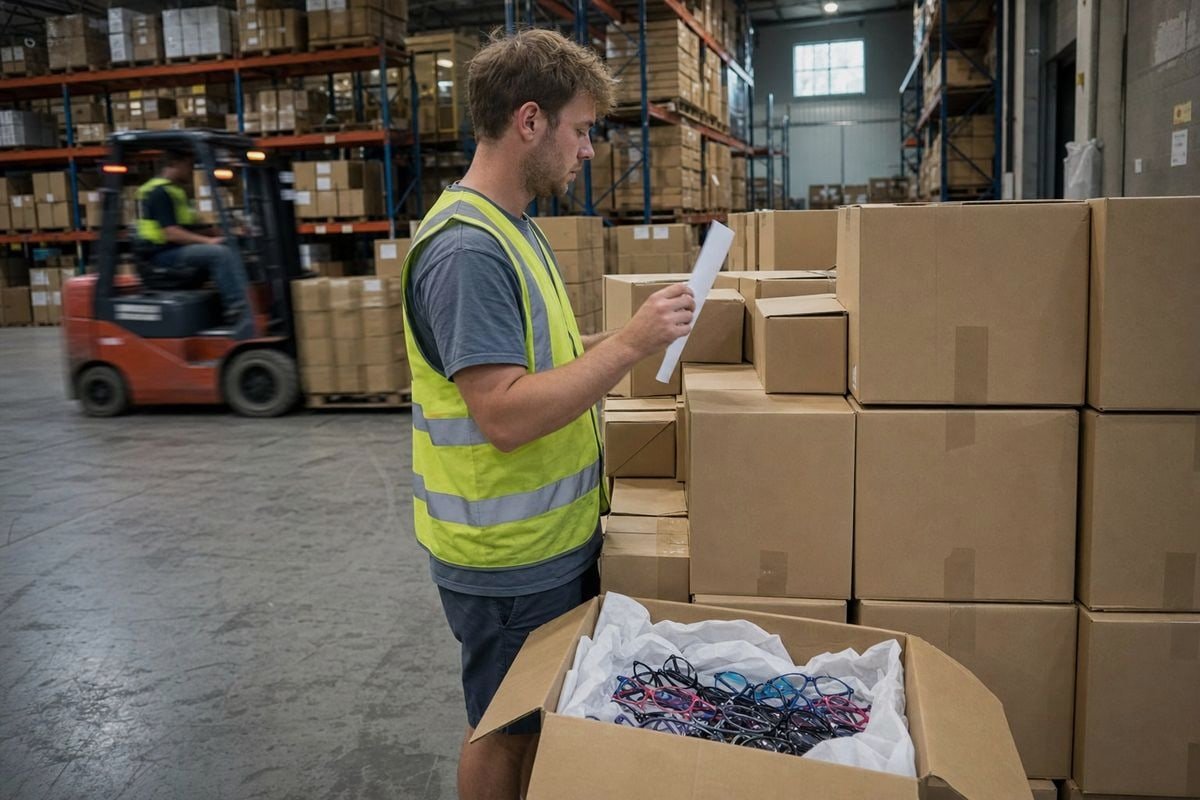
The single most important move is separating two categories of returns. Manufacturing defects — bad hinges, coating flaws, wrong colors — are the factory's responsibility. Preference returns — a child disliking the pink translucent frame she begged for — are yours. Mixing the two in negotiation leads to vague promises that help nobody.
What to put on paper
| Negotiation Item | What to Ask For | Why It Protects You |
|---|---|---|
| AQL inspection level | Agreed sampling standard pre-shipment | Catches defects before they become returns |
| Defect allowance | Credit or free replacements above a threshold | Factory shares the cost of quality failures |
| Spare parts | Extra temples, screws, cases with each order | Turns some returns into cheap repairs |
| Photo-based claims | Defect claims settled by photo, not return freight | Avoids paying reverse shipping on cheap items |
| Packaging spec | Retail-ready, drop-tested packaging | Cuts "arrived damaged" claims at the source |
| Batch traceability | Date and batch codes on cartons | Isolates problems without blanket write-offs |
How a good factory partner responds
A serious supplier will not flinch at these requests. In our own workshop, we run 5S management and inspect frames at multiple stages precisely so buyers do not discover problems after retail sale. We also encourage clients launching new lines to test from our existing catalog of roughly 800 styles before investing in custom molds. Lower mold risk means you can drop an underperforming, return-prone style quickly instead of pushing it to recover tooling costs. That is supply chain efficiency applied to return prevention.
One objection I hear: "Won't strict terms just push the factory to raise prices?" Sometimes slightly, yes. But remember that return costs are already hiding inside wholesale prices across the optical industry. Negotiating them explicitly makes the cost visible and controllable instead of silent and inflated. And consider the strategic upside honestly: research shows free returns can lift conversion by 20–40% in uncertain categories, and one study found free returns increased gross profit per order even as returned items rose. The policy is not automatically a margin destroyer. It becomes one only when defect rates are high, exchanges are rare, and nobody has modeled the burden. Fix quality upstream, steer refunds toward exchanges, and consider circular options like repair programs using spare parts — and free returns can stay a growth lever rather than a leak.
Schlussfolgerung
Free returns silently inflate the per-unit cost of kids optical frames. Model the burden, choose durable well-fitting frames, negotiate quality terms upfront, and segment your policy by channel and behavior.
Fußnoten
1. Explains AQL (Acceptable Quality Limit) and its use in quality control inspections. ↩︎
2. Explains the process of reverse logistics in supply chains. ↩︎
3. Defines landed cost and its components for accurate product pricing. ↩︎
4. Explains what payment processing fees are and how they are applied. ↩︎
5. Defines customer lifetime value and its importance for business growth. ↩︎
Weitere Artikel, die Ihnen gefallen könnten
August 2026
Bio-Based vs Regular Cellulose Acetate: What's the Difference for Kids' Frames?

August 2026
How Recyclable Are Kids' Optical Frame Materials, and What Eco-Friendly Alternatives Exist?
August 2026
Bleichen Kinderbrillengestelle im Lager aus oder altern sie, und wie kontrolliert man die Lagerbedingungen?
Auf der Suche nach einem zuverlässigen Partner für Kinderbrillen?
Entdecken Sie über 800 sofort verfügbare Modelle und umfassenden OEM/ODM-Support, der auf Ihre Marke zugeschnitten ist.
Kontakt aufnehmen English
  Español de México
  Deutsch
  Français
  日本語
日本語  العربية
  Português do Brasil