How to Fix Loose Screws on Kids’ Eyewear Permanently?
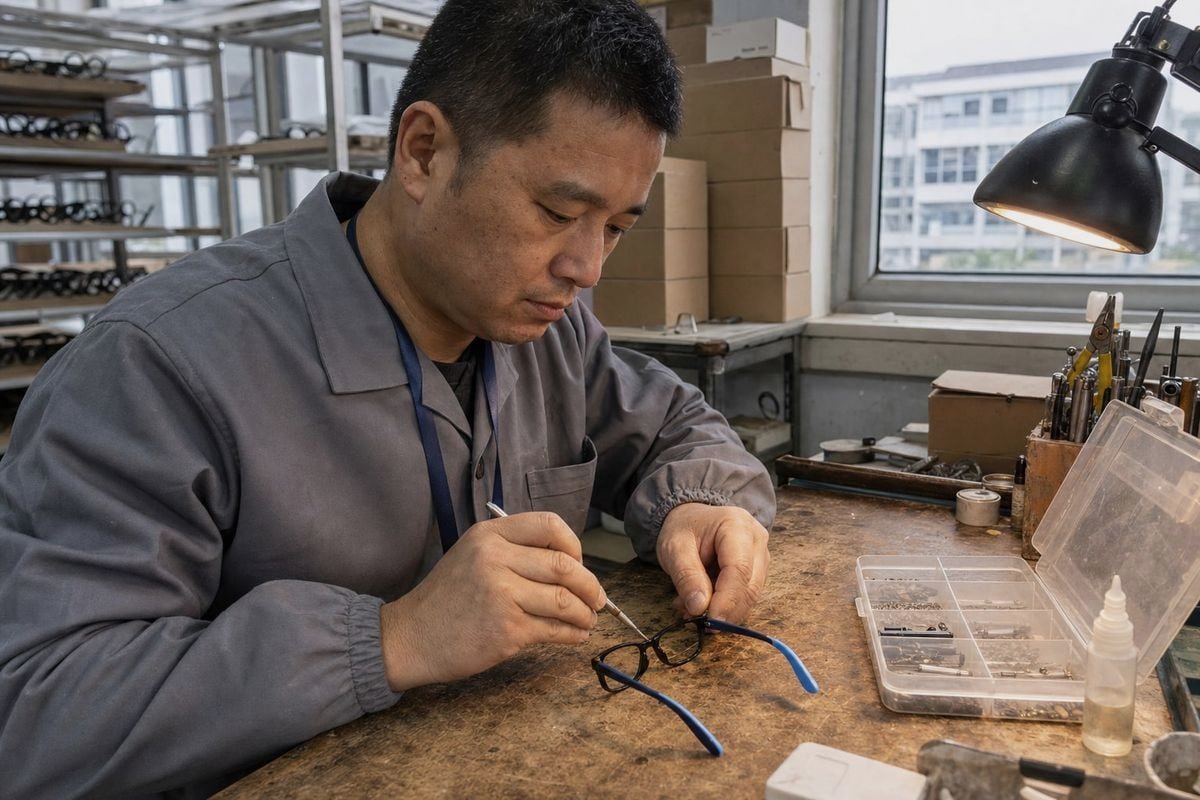
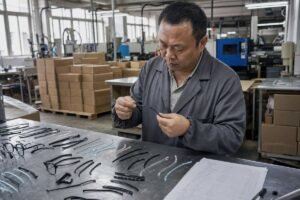
Loose screws on kids’ eyewear frustrate parents and damage brand reputations. On our production line in Taizhou, we see returned samples where one tiny screw ruined the whole wearing experience.
To fix loose screws on kids’ eyewear permanently, tighten the hinge screw with a precision optical screwdriver until snug, then apply a low-strength thread-locking adhesive or clear nail polish to the threads. If loosening repeats, replace the screw or choose screw-free flexible hinge designs.
That short answer works. But the full story matters more, especially if you buy or sell children’s frames. Let me walk you through it step by step.
What causes the screws on kids' glasses to keep loosening in the first place?
During QC checks at our factory, we cycle temple arms open and closed hundreds of times. Kids do the same thing at home, just far more roughly than any test machine.
Screws on kids' glasses loosen because children open and close temples far more often than adults, bend frames while playing, and drop them frequently. This constant micro-vibration loosening, plus sweat and skin oils acting as lubricants, gradually backs the hinge screw out of its barrel.

The root cause is mechanical stress, and children generate far more of it than adults. An adult might take glasses off five times a day. A child might yank them off thirty times, often by one temple, which twists the hinge sideways. Every twist puts uneven load on the screw threads.
There are four main forces at work. First, repeated opening and closing creates rotational friction on the screw. Second, impacts from drops and rough play send shock through the hinge barrel. Third, sweat and skin oil seep into the joint and reduce thread friction. Fourth, temperature swings — a hot car, then a cold classroom — make metal and plastic expand at different rates.
The hidden problem: worn hardware
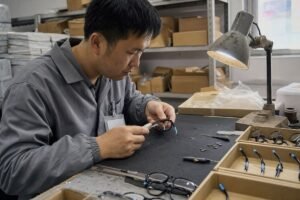
Sometimes the screw is not the real issue. If the threads inside the hinge barrel are worn, or the screw itself has stripped screw threads, no amount of tightening will hold. We inspect for this in our 5S-managed workshop because a worn barrel means the joint will fail again within weeks.
How kids' frames differ from adult frames
Smaller frames use smaller screws, usually M1.0 to M1.4 sizes. Smaller screws have less thread contact area, so they loosen faster under the same stress. Softer kid-friendly plastics 1 also flex more, which transfers extra movement into the hinge. That is exactly why our engineers moved most of our children's lines toward flexible TPEE and TR90 constructions in the first place.
How can I fix loose screws on my child's glasses without damaging the frame?
A buyer in Australia once asked us why her customers stripped so many screw heads during home repairs. The answer was simple: they were using kitchen-drawer screwdrivers on M1.2 optical screws.
Fix loose screws safely by using a precision optical screwdriver that matches the screw head exactly. Place the frame flat, tighten gently until finger-snug, then stop. To prevent repeat loosening, degrease the joint with isopropyl alcohol and add a tiny drop of clear nail polish or low-strength threadlocker.
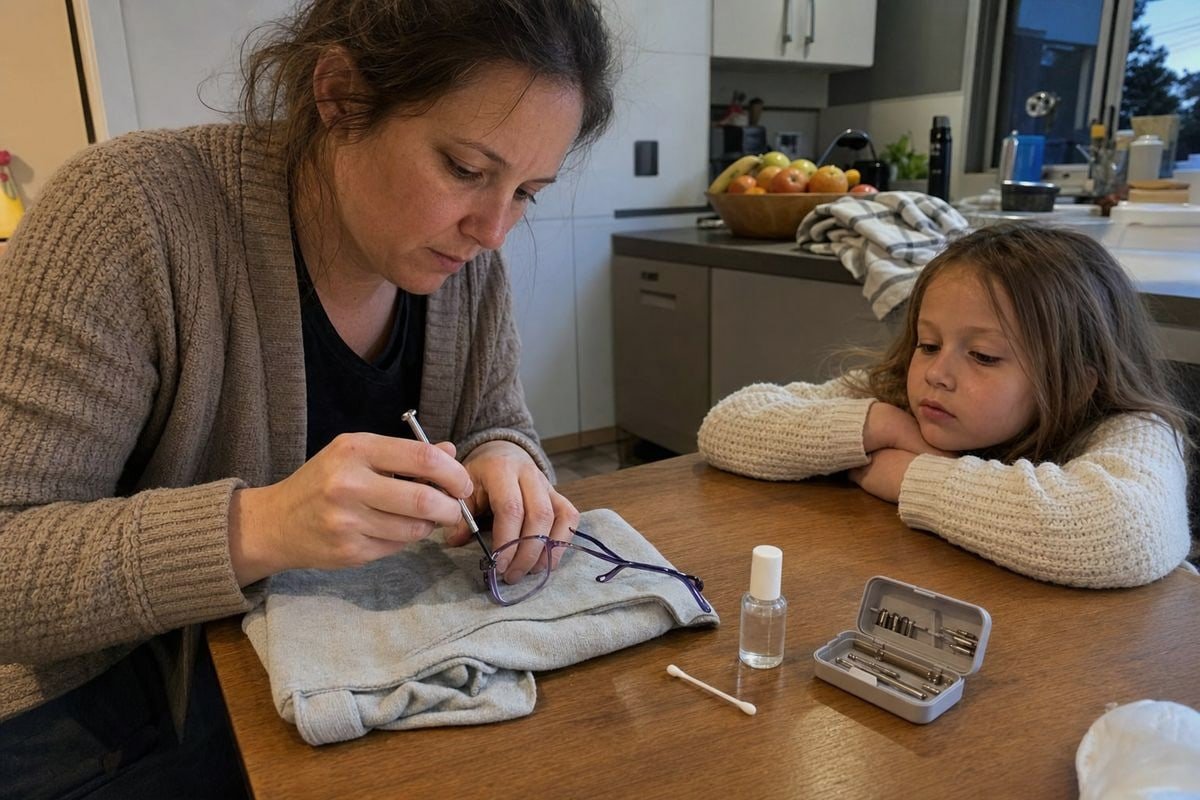
The safest repair follows a clear sequence. Do not skip steps, and do not improvise with strong glue. Here is the process we recommend to parents and to our brand partners' customer-service teams.
The five-step repair sequence
- Clean first. Wipe the screw and hinge area with 90% isopropyl alcohol 2 on a cotton swab. Grease blocks any thread-locking adhesive from bonding.
- Match the tool. Use a precision optical screwdriver 3 from a proper eyeglass repair kit. The tip must fit the slot snugly so it cannot slip and gouge the head.
- Tighten gently. Rest the frame on a flat surface. Turn until the joint is snug and the temple moves smoothly. Stop when resistance becomes firm. Finger-snug is enough.
- Stabilize the threads. If the screw has loosened before, back it out slightly, add one tiny drop of clear nail polish or purple low-strength threadlocker to the threads, then retighten. Let it cure before wearing.
- Replace if needed. A missing, bent, or stripped screw needs correct-size replacement eyewear screws, never an ill-fitting substitute.
Choosing the right stabilization method
| Method | Best for | Advantage | Risk |
|---|---|---|---|
| Tighten only | Slightly loose screw | Fast, free, safest | Won't last if threads are worn |
| Clear nail polish fix | Screw that loosens repeatedly | Cheap, removable later | Messy if over-applied |
| Low-strength threadlocker | Metal hinge screws that keep backing out | Vibration-resistant, durable | Too much makes removal hard |
| Replacement screw | Missing or stripped screw | Restores proper thread fit | Barrel may still be worn |
| Professional repair | Cracked hinge or repeated failures | Most reliable outcome | Costs more time and money |
Some guides prefer nail polish because it is a household item and easy to remove. Others insist on a purpose-made optical screw locker because it holds longer. Both are right for different cases: polish suits occasional loosening, while threadlocker suits chronic loosening on metal hinges. Either way, use a tiny amount. Excess adhesive can wick onto lens coatings or soften plastic parts. And never use super glue — it makes future hinge barrel adjustment nearly impossible.
For frames with spring hinges 4, be extra careful. Spring hinge repair needs the barrels perfectly centered before you insert the screw, and a tapered alignment pin helps. If the spring mechanism itself is damaged, DIY fixes rarely hold, and an optician is the better route.
Are there screw-free hinge designs that solve this problem permanently?
Here is the trade-off we weigh in every new development project: a traditional metal hinge allows fine adjustment, but a screw-free flexible hinge removes the failure point entirely. For children under eight, we almost always recommend the second option.
Yes. Screw-free designs include integrated flexible hinges molded from TPEE or TR90, snap-in pin hinges, and nylon-patch or staked screws that lock mechanically. One-piece flexible hinges are the true permanent solution for young children because there is no screw to loosen at all.
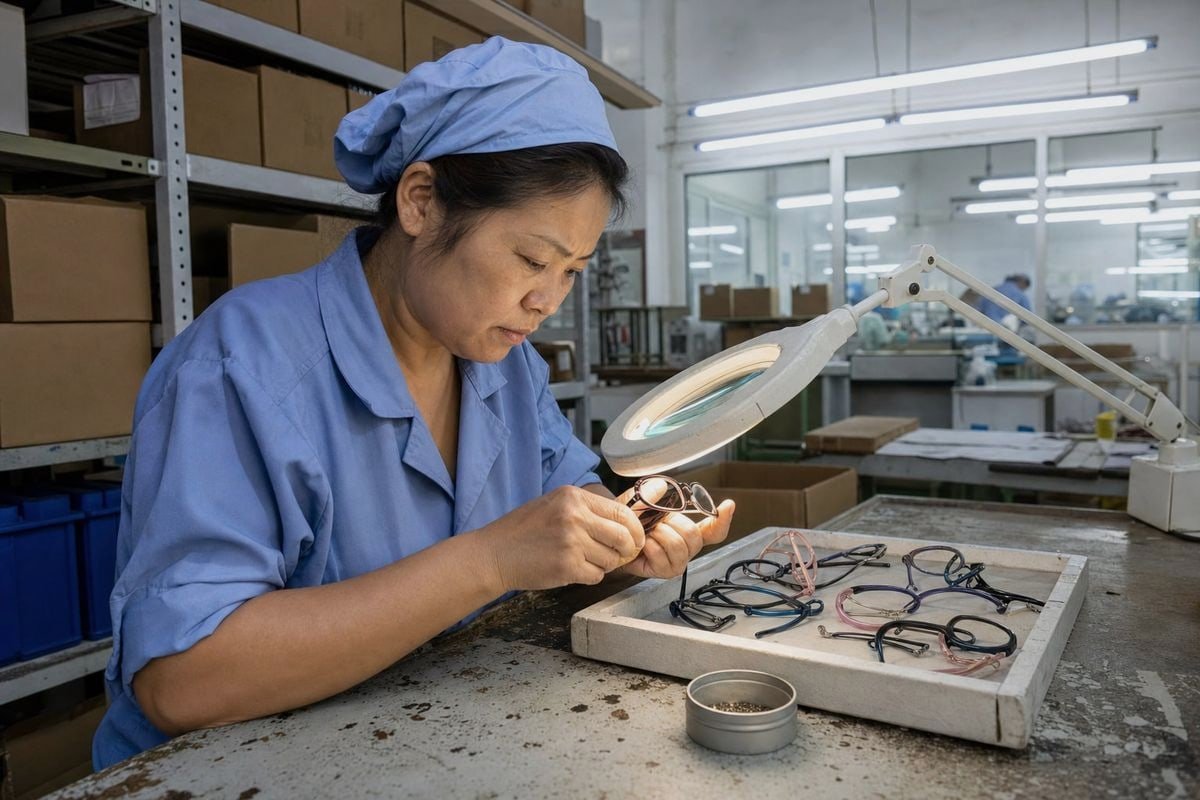
The eyewear industry has developed several answers to this problem, and they sit on a spectrum from "improved screw" to "no screw at all."
The spectrum of screw-alternative solutions
| Design approach | How it works | Permanence level |
|---|---|---|
| Nylon-patch screws | Pre-applied dry resin creates constant thread tension | High — no liquid glue mess |
| SnapIt-style screws | Breakaway feeder tab ensures perfect thread alignment | High — tighter initial fit |
| Staked screws | Screw tip is lightly flared with a punch to lock into the barrel | Very high — mechanical lock |
| Snap-in pin hinges | A pin clicks into the barrel instead of threading | Very high — nothing to unwind |
| One-piece flexible hinge | Temple and front are joined by molded flexible material | Permanent — no hardware exists |
The first three still use screws, just smarter ones. Staking is genuinely permanent, but it also means the hinge can never be serviced. Snap-in pins remove the unwinding problem while keeping some adjustability.
Why we build with flexible materials
When we were developing our TR90 frames 5 with TPEE temples, screw failure data from buyers shaped the design brief. TPEE bends far past 90 degrees and springs back, so the material itself absorbs the twisting forces that would normally loosen a screw. Many of our baby and toddler styles use fully integrated flex zones with zero metal hardware. There is nothing to fall out, nothing to swallow, and nothing sharp near a child's face. Temple arm stabilization comes from the material's memory, not from a fastener under constant stress.
For older kids who need adjustable optical frames, we pair metal hinges with factory-applied thread-locking adhesive 6 during assembly. That combination gives opticians room for hinge barrel adjustment while cutting warranty returns for loose screws.
How do I choose a manufacturer whose frames won't have this loose-screw issue at all?
A lesson we learned early in our fifteen years of eyewear production: buyers rarely ask about hinge assembly during sourcing, then discover it is the number-one cause of returns six months after launch. Ask about it upfront.
Choose a manufacturer that specializes in children's flexible materials like TPEE and TR90, applies thread-locking treatment during assembly, tests hinges through repeated open-close cycles, and offers screw-free integrated hinge options. Ask for their hinge QC process, cycle-test standards, and existing kid-specific style range before ordering.
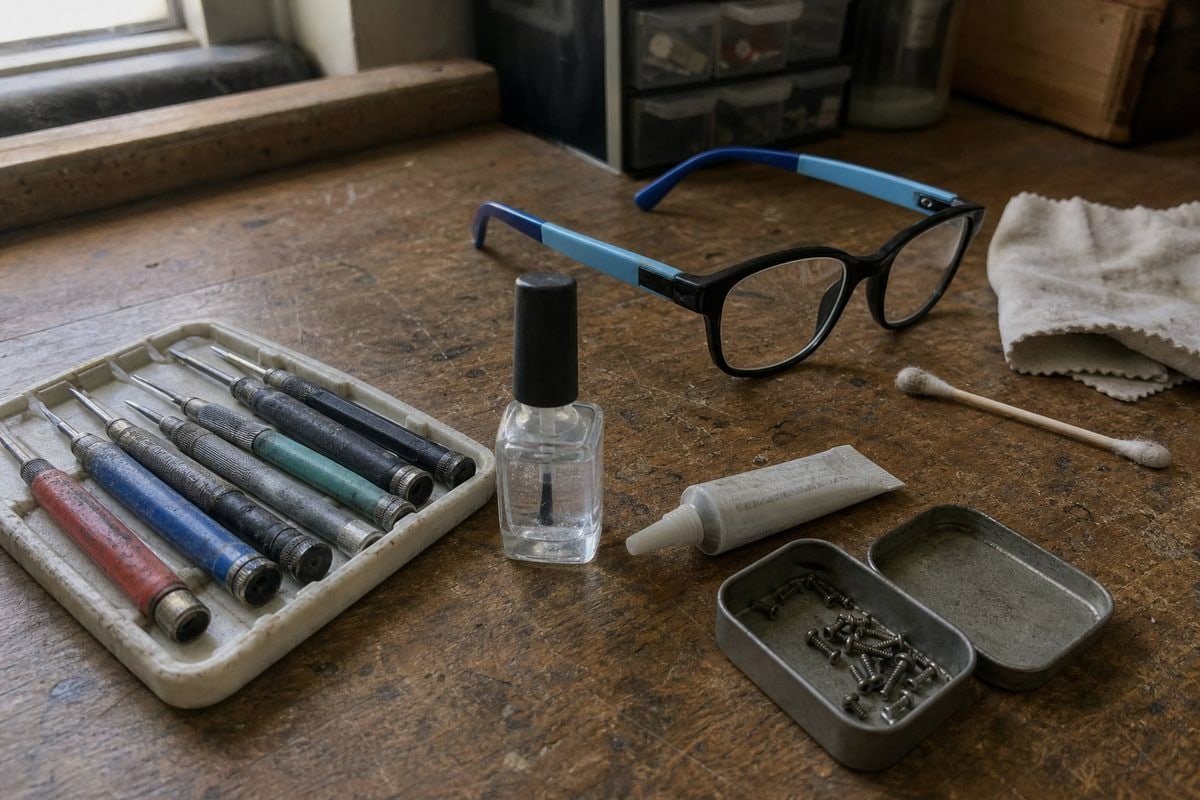
The loose-screw problem is really a sourcing problem. A frame that loses screws in the field was usually built without child-specific engineering. Here is what to evaluate before you place an order.
Questions to ask any potential supplier
- Do you cycle-test hinges, and to how many open-close repetitions?
- Is thread-locking adhesive applied on the line, or only on request?
- Do you offer screw-free flexible hinge constructions for younger age groups?
- What materials do you use for temples, and how flexible are they?
- Can I see your existing children's styles instead of adapted adult molds?
That last question matters more than buyers expect. Adult frames shrunk down for kids keep adult hinge geometry, which concentrates stress on undersized screws and often causes frame misalignment after a few weeks of wear. Purpose-built kids' frames distribute that stress into flexible zones instead.
Red flags versus green flags
| Red flag | Green flag |
|---|---|
| Adult molds resized for children | Dedicated children's design library |
| No mention of hinge testing | Documented open-close cycle testing |
| Rigid acetate or cheap PC temples | Flexible TPEE or TR90 constructions |
| Screws hand-tightened with no locking step | Factory-applied optical screw locker on every metal hinge |
| Trader with no factory visibility | Direct factory with organized workshop management |
On our side, we maintain roughly 800 existing children's styles, which lets a new brand test the market without heavy mold investment. Because we run our own workshop with about 120 workers under 5S management 7, we control hinge assembly directly rather than outsourcing it. For OEM/ODM projects, we adapt the hinge solution to the age group: fully integrated flex hinges for toddlers, treated metal hinges for school-age optical frames, and robust one-piece constructions for sport shield styles. Custom colors, logos, lenses, and retail-ready packaging sit on top of that engineering base, not instead of it. A supplier who leads with price and never mentions hinge durability is telling you where the corners were cut.
Conclusion
Loose screws frustrate families and drain brands. Tighten correctly, stabilize threads, replace worn hardware — or partner with a factory whose flexible, screw-smart designs prevent the problem entirely.
Footnotes
1. Authoritative Wikipedia entry for Thermoplastic Elastomers (TPE), the primary material used in flexible, kid-safe eyewear frames. ↩︎
2. Standard solvent for degreasing surfaces before applying adhesives or thread-lockers. ↩︎
3. Overview of specialized tools designed for small-scale mechanical fasteners. ↩︎
4. Explains the mechanism of hinges that use internal springs for flexibility. ↩︎
5. Technical details on the polyamide material commonly used in high-quality flexible eyewear. ↩︎
6. Authoritative Wikipedia entry explaining how thread-locking fluids prevent fasteners from loosening due to vibration and stress. ↩︎
7. Lean manufacturing methodology used to organize work spaces for efficiency and quality.
More Articles You Might Like

Looking for a Reliable Kids Eyewear Partner?
Explore 800+ ready styles and full OEM/ODM support tailored to your brand.
Get in Touch English
  Español de México
  Deutsch
  Français
  日本語
日本語  العربية
  Português do Brasil