Integrated Vs Adjustable Nose Pads On TR90 Kids Frames: Which Nose Bridge Fits?
Choosing between integrated vs adjustable nose pads on TR90 kids frames stumps many buyers who visit our Taizhou factory. Pick wrong, and glasses slip, pinch, or get abandoned in schoolbags. Our fifteen years building children’s eyewear taught us the right bridge design decides whether a frame gets worn at all.
Integrated nose pads on TR90 kids frames suit active children, sensitive skin, and simple daily wear because they spread weight evenly with no breakable parts. Adjustable nose pads fit better for flat nasal bridges, facial asymmetry, and high prescriptions that need precise optical alignment. Match the bridge to the child, not the trend.
That short answer covers the basics. But real sourcing decisions need more detail. Below, I break down fit, safety, durability, and the exact questions to ask your supplier before you commit to a product line.
How do I know if integrated or adjustable nose pads fit my kids' frames better?
A distributor from Japan once sent us return data showing most complaints traced back to bridge fit, not lens quality. That conversation changed how we present our ~800 styles to new buyers.
Check the child's bridge height first. If the frame sits flat and centered without sliding down, integrated pads work well. If the frame rests on the cheeks or tilts, adjustable pads let you narrow and lift the fit for flat or low nasal bridges.
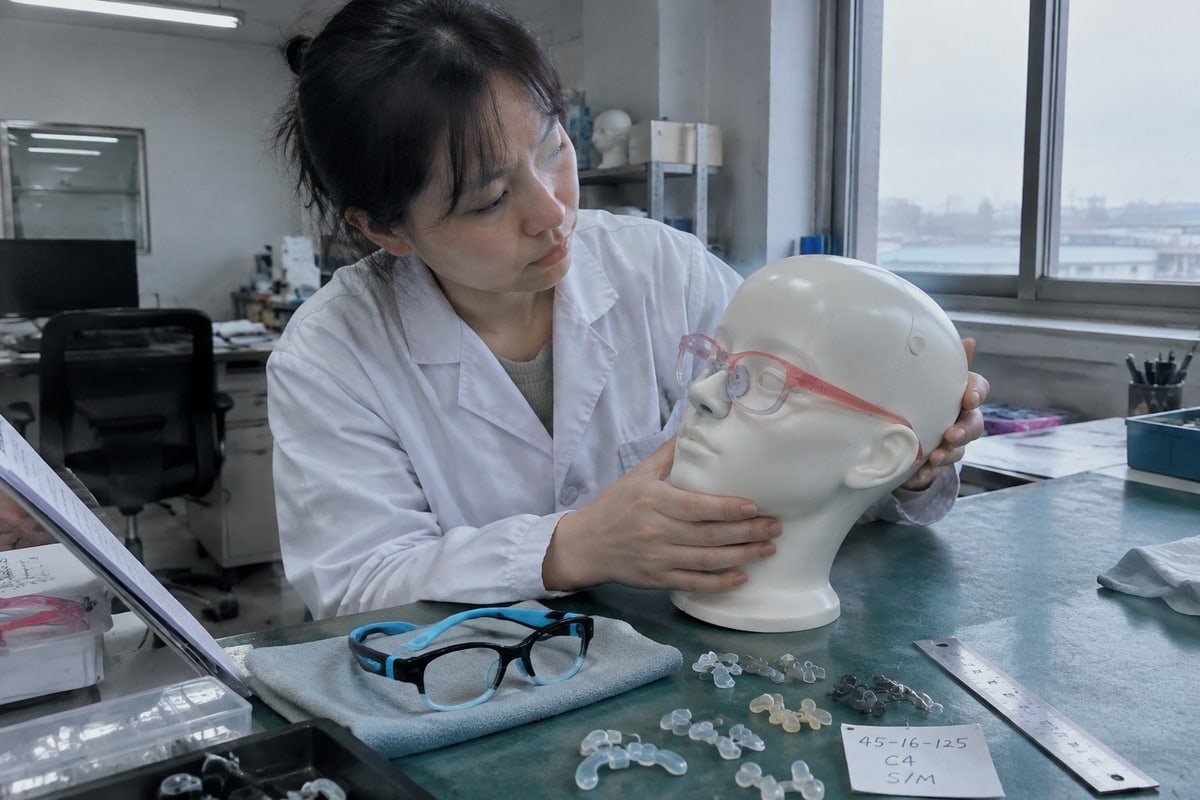
Here is the quick comparison I walk buyers through before we look at samples:
| Factor | Integrated (molded) nose pads | Adjustable nose pads |
|---|---|---|
| Best for | Standard bridge height, active kids | Flat nasal bridge 1, asymmetry |
| Weight distribution | Broad, even contact area | Two focused contact points |
| Fit precision | Fixed at molding | Can be tuned by an optician |
| Maintenance | None | Occasional re-adjustment |
| Breakage risk | Very low | Pad arms can bend or snap |
Start with bridge width measurement
Bridge fit is a measurement question before it is a style question. A proper bridge width measurement checks the distance between the two points where the frame touches the nose. Children's noses are smaller and softer than adult noses, so a few millimeters of error creates visible slipping. In our sampling process, we ask buyers for their target market's typical face data, because a frame that fits well in Northern Europe may sit too high in Japan or Southeast Asia.
Watch for the low-bridge signal
The clearest signal for adjustable pads is a flat nasal bridge. When the nose sits lower relative to the eyes, an integrated saddle bridge often rests on the cheeks instead of the nose. Every smile then pushes the glasses up. Adjustable pads can be narrowed and angled to lift the frame off the cheekbones. This is exactly why low-bridge and Asian-fit positioning has become so common in kids' eyewear listings. If your brand sells into markets where flat bridges are common, you should carry at least one adjustable-pad option, or an integrated design molded specifically with a lower, wider bridge seat.
Growth changes the answer
Kids grow. A frame fitted at age five may need repositioning within a year. Adjustable pads absorb some of that growth. Integrated pads cannot, so the frame simply gets replaced sooner. For toddler lines, we usually steer buyers toward molded nose pieces sized generously, because toddlers will not tolerate metal hardware near the eyes anyway.
Which nose pad style is safer and more comfortable for active children?
During drop and flex testing in our 5S-managed workshop 2, the first component that fails on hybrid frames is almost always the metal pad arm. That finding shapes every sports frame we develop.
Integrated nose pads are safer for active children because they have no protruding metal parts to snag, bend, or press into skin during impact. Adjustable silicone pads add comfort for stationary wear, but their pad arms create pressure points and injury risk during sports and rough play.
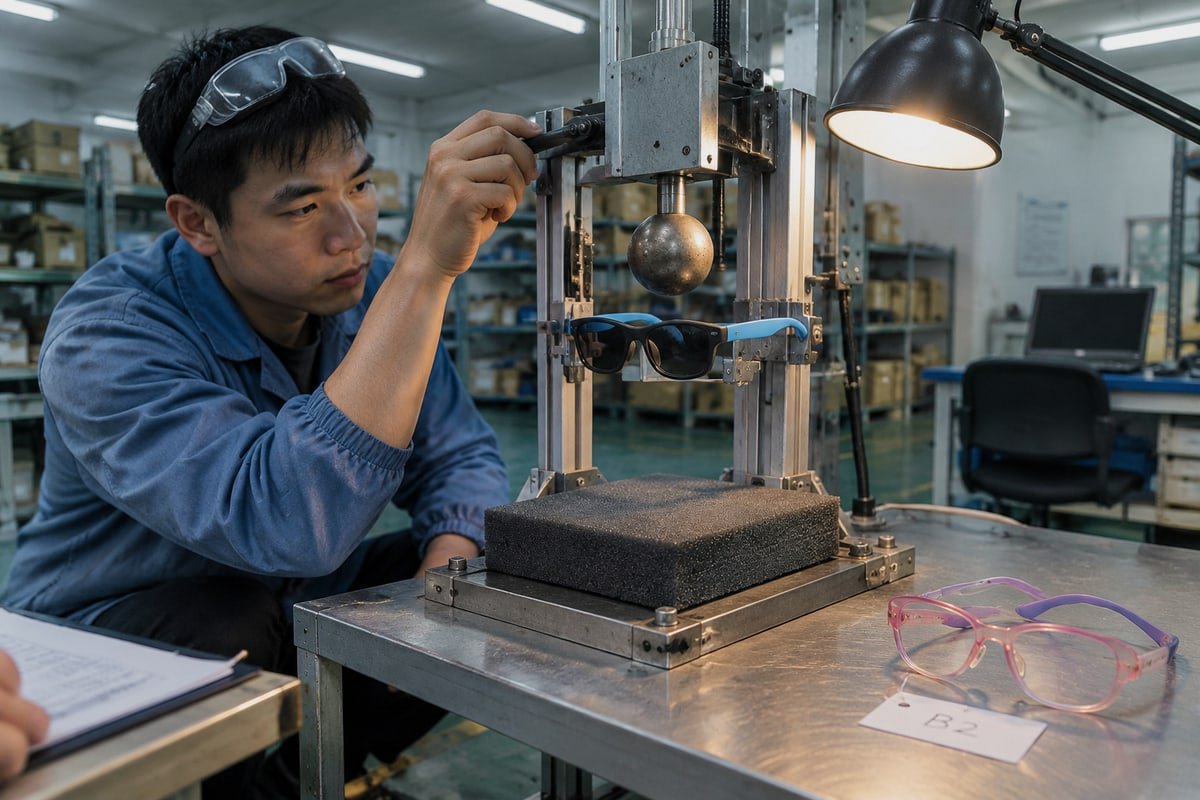
Safety and comfort are related but not identical. Let me separate them.
Impact safety on the playground
An integrated saddle bridge is one smooth, continuous surface. There is nothing to catch on a ball, a hand, or playground equipment. Adjustable pads sit on small arms, sometimes metal. During a fall or collision, those arms can bend inward and press against the nose. For younger children, whose nasal bridges are still primarily cartilage, high-pressure metal arms can even cause pitting or lasting skin indentations. That is a real product-liability concern for any children's brand, and it is why our sunglass and sports lines default to fully molded nose pieces in TR90 or TPEE.
Skin comfort and sensory needs
Comfort works differently. Integrated bridges distribute weight across a larger surface area, which prevents the red marks and localized pressure that separate pads sometimes cause. Children with sensory processing sensitivities often tolerate this broad, consistent tactile input better than the pinpoint sensation of two small pads. On the other side, hypoallergenic silicone pads are genuinely soft and skin-friendly, and they grip lightly to help with frame slippage prevention during calm, seated activities like reading or classroom work.
How TR90 helps retention
One point buyers often miss: TR90's lateral flexibility lets an integrated bridge rely on gentle wrap-around tension from the temples, rather than nose friction alone, to keep the frame in place. This memory polymer springs back to shape after flexing, so the frame hugs the head lightly and stays put during movement. Some of our lightest kids' frames come in around 12g, which reduces bridge pressure regardless of pad style. A quick rule set:
- Sports and outdoor play: integrated saddle bridge, snag-free.
- Toddlers and babies: molded nose pieces only, no metal hardware.
- School daywear with slipping issues: silicone adjustable pads.
- Sensitive or eczema-prone skin: integrated bridge or hypoallergenic silicone pads, never bare metal arms.
Will adjustable nose pads on TR90 frames affect durability or long-term wear?
The honest trade-off we weigh in every ODM project is this: adjustability adds fit precision, but every added part is a future failure point. Neither answer is free.
Yes, adjustable nose pads add potential failure points to TR90 frames. Pad arms can bend, screws can loosen, and pads can detach. Integrated bridges eliminate these parts entirely, making TR90 frames noticeably more durable for active children, though worn pads can at least be replaced.
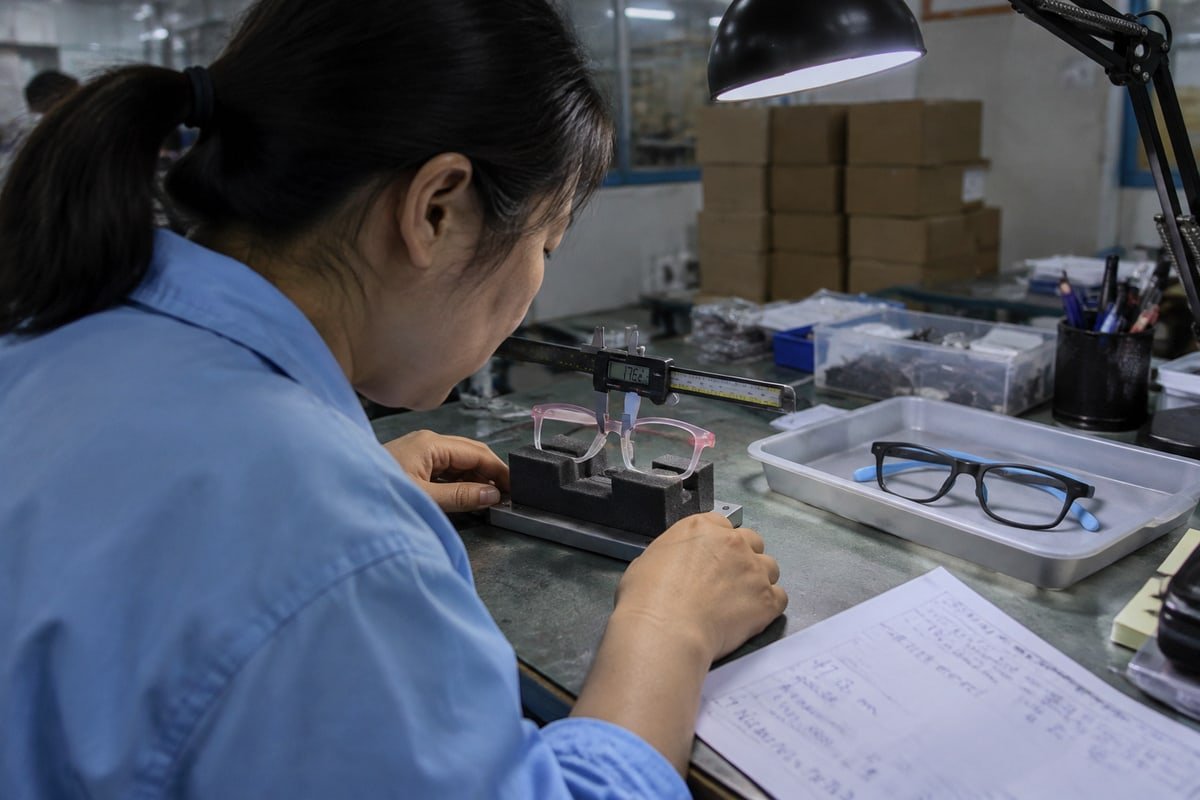
Why the material matters here
TR90 is a nylon-based thermoplastic, and its thermoplastic material properties 3 explain why it dominates kids' frame marketing. It is lightweight, flexible, and shatter-resistant. Its memory polymer durability means the frame returns to shape after twisting, which is exactly what daily abuse from a seven-year-old demands. But those benefits belong to the frame body. The moment you attach metal pad arms, you introduce a component with completely different mechanical behavior. The frame flexes; the metal arm does not. Over months of daily wear, that mismatch shows up as bent arms and lost pads.
Hardware types are not equal
Adjustable is not one design. In practice we see three hardware families, and their durability differs:
| Hardware type | How it works | Durability profile | Replaceable? |
|---|---|---|---|
| Screw-in pads | Silicone pad held by a tiny screw | Screws loosen over time | Yes, easily |
| Push-in / push-on pads | Pad snaps onto a post | Pads can pop off in play | Yes |
| Gooseneck arm adjustments | Flexible metal arm bends to position | Most precise, most bend-prone | Arm itself, harder |
| Multi-position molded seats | Frame offers 2–3 fixed pad heights | Near-integrated durability | N/A |
That last row is worth attention. Some children's brands now offer multiple nose-pad height positions molded into the frame instead of traditional metal bridge pads. This hybrid approach gives limited adjustability without the fragile hardware, and it works especially well for very young children.
Maintenance over the product's life
Integrated bridges need zero maintenance, which matters when your end customer is a busy parent, not an optician. Adjustable pads need periodic checks: retightening screws, replacing yellowed silicone, and re-bending arms after knocks. For a retail brand, that means either educating parents or accepting some fit drift. When we run quality control on adjustable-pad orders, we torque-check every screw before packing, because a loose pad discovered at unboxing damages the brand more than it damages the frame.
What should I ask my manufacturer before choosing a nose bridge design for my product line?
A procurement manager from Australia once arrived with only one question: which bridge is best? We spent the meeting replacing that question with ten better ones. Her line launched successfully because of it.
Ask about target-market bridge data, pad hardware type, silicone quality and hypoallergenic certification, replacement part availability, mold options for low-bridge fits, weight per frame, safety testing on pad arms, and whether existing styles can be customized before investing in new molds.
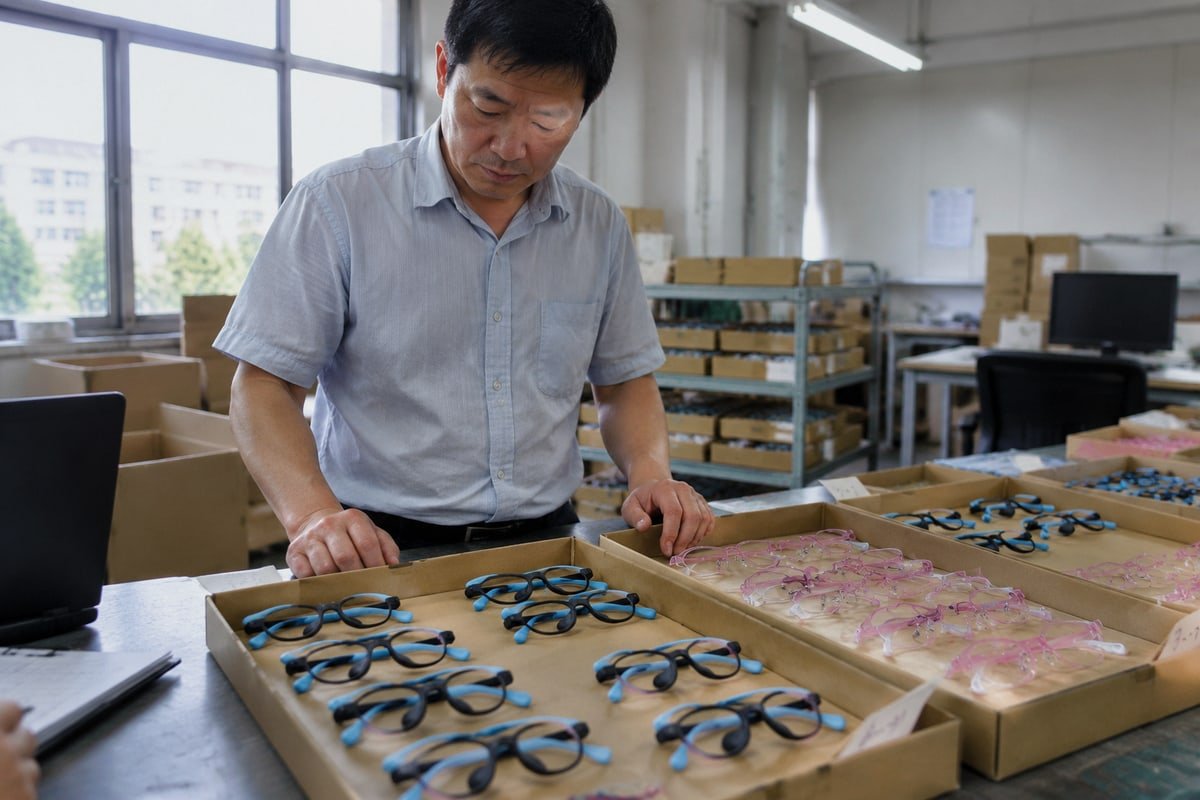
The checklist we wish every buyer brought
Bridge design is a supply-chain decision, not just a design one. Here is the question set I recommend, with why each matters:
| Question to ask | Why it matters |
|---|---|
| Which bridge fits my target market's face data? | Bridge geometry varies by region; flat nasal bridge markets need different seats |
| What pad hardware do you use: screw, push-in, or gooseneck? | Each has different durability, safety, and repair profiles |
| Are the pads hypoallergenic silicone, and can you document it? | Children's skin safety is a compliance and liability issue |
| Can I get spare pads for aftersales? | Replacement kits reduce returns and build customer trust |
| Can existing styles be adapted before opening a new mold? | Testing the market with stock tooling lowers launch risk dramatically |
| How do you QC pad attachment before packing? | Loose pads at unboxing are a preventable brand-damage event |
| Does the bridge design support my lens program? | High prescriptions and myopia-control lenses have positioning requirements |
Optical alignment questions for lens programs
If your line includes high-prescription lenses, adjustable pads earn their complexity. They allow precise positioning of the optical center so the child looks through the clearest part of the lens. This matters even more for myopia management 4. With designs like DIMS lenses, adjustable nose pads are critical for holding the exact 12mm vertex distance 5 the therapy needs to effectively slow eye growth. An integrated bridge locks that distance at molding, which is fine for plano sunglasses but risky for therapeutic optics. Ask your supplier whether the bridge design supports the vertex distance your lens partner specifies. Also ask about facial asymmetry: adjustable pads let an optician level glasses for children with uneven ear heights or a slightly deviated nasal bridge, which no fixed design can accommodate.
Reduce risk before tooling
Finally, ask what already exists. We keep roughly 800 styles on hand precisely so new brands can test integrated, adjustable, and multi-position bridges in real markets before spending on custom molds. Order small, gather fit feedback from your region, then invest in tooling for the winner. That sequence protects your budget and your brand.
Conclusion
Neither bridge wins outright. Integrated pads deliver safety, simplicity, and durability; adjustable pads deliver precision for flat bridges and high prescriptions. Match the design to your market, and partner with a factory that can prove both.
Interested in sourcing the products mentioned in this article? See details and request a quote here:
Footnotes
1. Anatomical definition of the nasal bridge, which is the critical contact point for determining proper eyewear bridge fit. ↩︎
2. Explains the 5S manufacturing methodology used to ensure quality control and safety in production environments. ↩︎
3. ISO 12870 provides the international standard for spectacle frames and the technical requirements for materials used in manufacturing. ↩︎
4. A clinical study published on PubMed detailing the effectiveness of DIMS lenses in controlling myopia progression in children. ↩︎
5. Authoritative source defining the optical measurement for lens placement. ↩︎
More Articles You Might Like



Looking for a Reliable Kids Eyewear Partner?
Explore 800+ ready styles and full OEM/ODM support tailored to your brand.
Get in Touch English
 Español de México
 Deutsch
 Français
 日本語
 العربية
 Português do Brasil