What Do Parents Look At First On Kids’ Sunglasses Packaging?
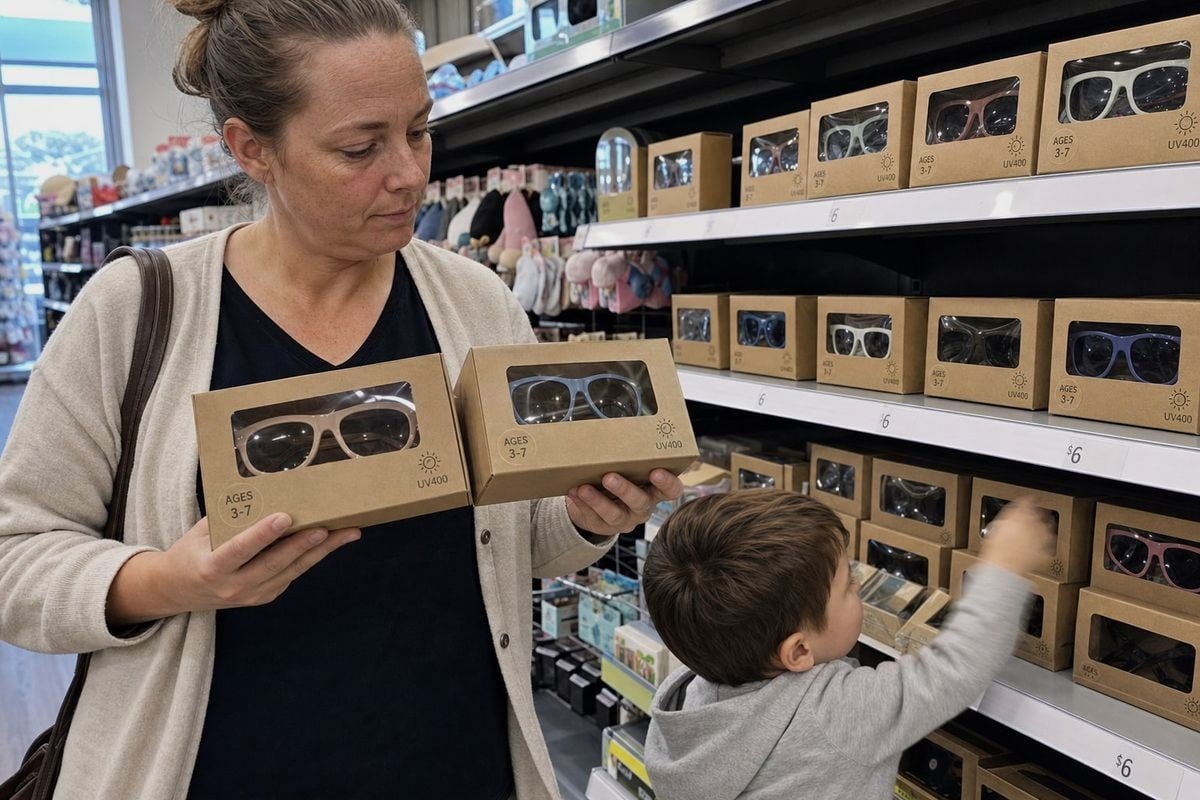
Kids’ sunglasses packaging often fails in three seconds. On our production line in Taizhou, I have watched great frames sit unsold because the box said nothing that mattered to parents.
Parents look at UV protection claims first on kids’ sunglasses packaging, scanning for UV400 or 100% UVA/UVB labels. Next they check fit and age guidance, then durability and material safety cues like BPA-free, impact resistance, and safety certification marks.
That order is remarkably consistent across markets. Below, I will break down each element parents scan, and show how to design packaging that answers their questions before they ask.
What safety and certification information should I highlight on the packaging label?
A buyer from Australia once returned our packaging proofs with one note: "Make the UV400 mark twice as big." She was right, and her sell-through numbers proved it.
Highlight UV400 or 100% UVA/UVB protection most prominently, followed by regional certification marks like CE certification for Europe. Add material safety callouts such as BPA-free and non-toxic, plus impact resistance claims for lenses, since parents treat these as pass-or-fail signals.
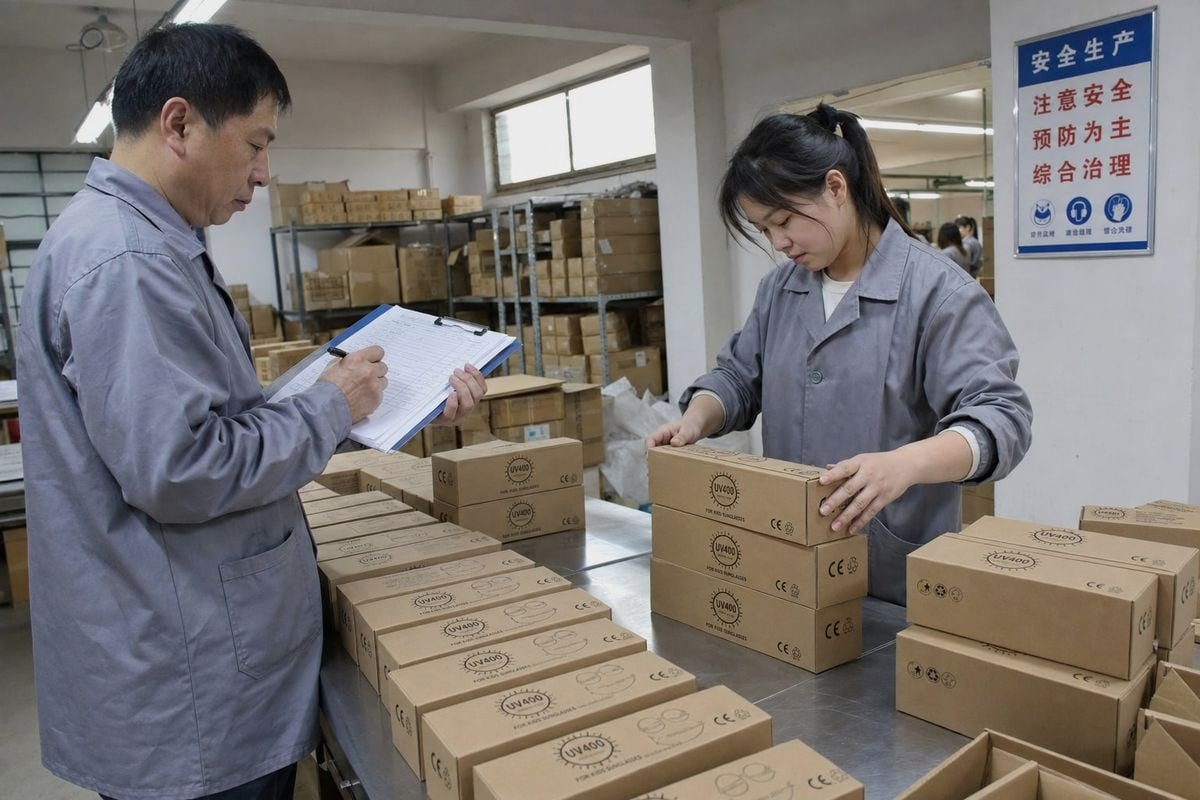
Safety information is the first filter parents apply. If the box does not answer "does this protect my child's eyes," nothing else on the packaging gets read. In our fifteen years making children's eyewear, we have seen this pattern hold whether the buyer is a Japanese baby brand or a European optical distributor.
The non-negotiable claims
UV400 protection is the anchor claim. It tells parents the lenses block wavelengths up to 400 nanometers 1, which covers both UVA and UVB rays. Children's eyes let in more UV than adult eyes, so parents treat this as a baseline, not a bonus. State it clearly. Do not bury it in small print on the back panel.
Certification marks come second. Different markets expect different marks, and your packaging should match the destination.
| Market | Key Mark or Standard | What Parents Read Into It |
|---|---|---|
| European Union | CE certification | Meets EU health and safety rules |
| United Kingdom | UKCA | Post-Brexit UK compliance |
| United States | FDA impact-resistance reference | Lenses tested against shattering |
| Australia/NZ | AS/NZS sunglass standard | Lens category and UV performance |
Material safety callouts
Parents of babies and toddlers know children chew on frames. Callouts like BPA-free materials 2, phthalate-free, and non-toxic finishes directly address that worry. Because we build most of our frames in TPEE and TR90 3, our OEM clients can back these claims with material documentation, which matters when a retailer or customs authority asks for proof. Never print a claim you cannot support with test reports. Vague phrases like "safe for kids" without specifics actually reduce trust.
How can my packaging design build instant trust with parents at first glance?
There is a real trade-off we weigh with every packaging project: a flashy box grabs the eye, but a cluttered box loses the parent. Restraint usually wins the sale.
Build instant trust with a clean visual hierarchy: put UV400 and safety marks at eye level, use a transparent window so parents see the actual frame, keep claims specific and verifiable, and choose simple recyclable materials that signal honesty rather than excess.
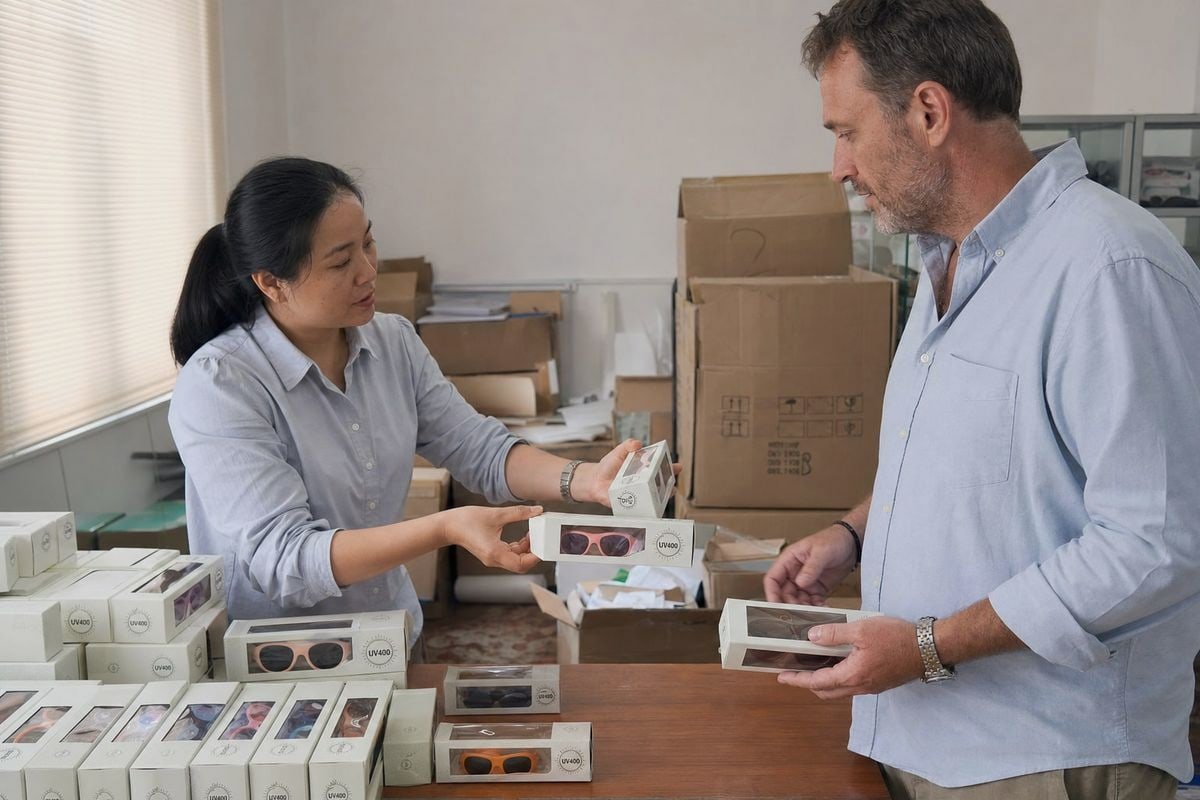
Trust is built in the first glance, and parents scan packaging in a predictable order. Their eyes go to the protection claim, then to the product itself, then to fit guidance, then to everything else. Your packaging design should follow that same sequence.
Design for the three-second scan
Visual hierarchy is the core tool here. The most important claim should be the largest and highest element after your brand name. When we prepare retail-ready packaging for OEM clients, we usually structure the front panel like this:
- Brand name and a short, warm tagline.
- UV400 protection badge, clearly visible.
- A window or strong product image showing the real frame color.
- Age range and one comfort claim, such as "flexible frames."
- Certification icons along the bottom edge.
A transparent window matters more than brands expect. Parents want to check the actual lens tint 4 and frame color, especially after being burned by products that looked different from the box art. A window also lets a sporty wraparound shield style or a playful two-tone round frame sell itself on the shelf.
Honest signals versus hollow signals
Parents distrust superlatives with no backing. "Best sunglasses ever" means nothing. "Shatter-resistant polycarbonate lenses, tested to impact standards 5" means something. Retail shelf appeal comes from clarity, not noise. Simple cardboard with sharp printing often outperforms glossy plastic clamshells, because the material itself sends a message: this brand respects your time, your child, and your recycling bin. Some brands now add QR codes linking to fit guides or even AR try-on tools, which extends trust beyond the shelf without cluttering the panel.
What material and comfort claims matter most to parents reading the box?
Early in my career at our factory, a distributor told me something I never forgot: "Parents don't buy sunglasses. They buy the hope their kid will keep them on."
Parents prioritize claims proving the sunglasses will be worn and will survive: lightweight, flexible frames that will not pinch, impact-resistant or shatterproof lenses, BPA-free materials safe for chewing, and durability wording like bendable or unbreakable that promises value.
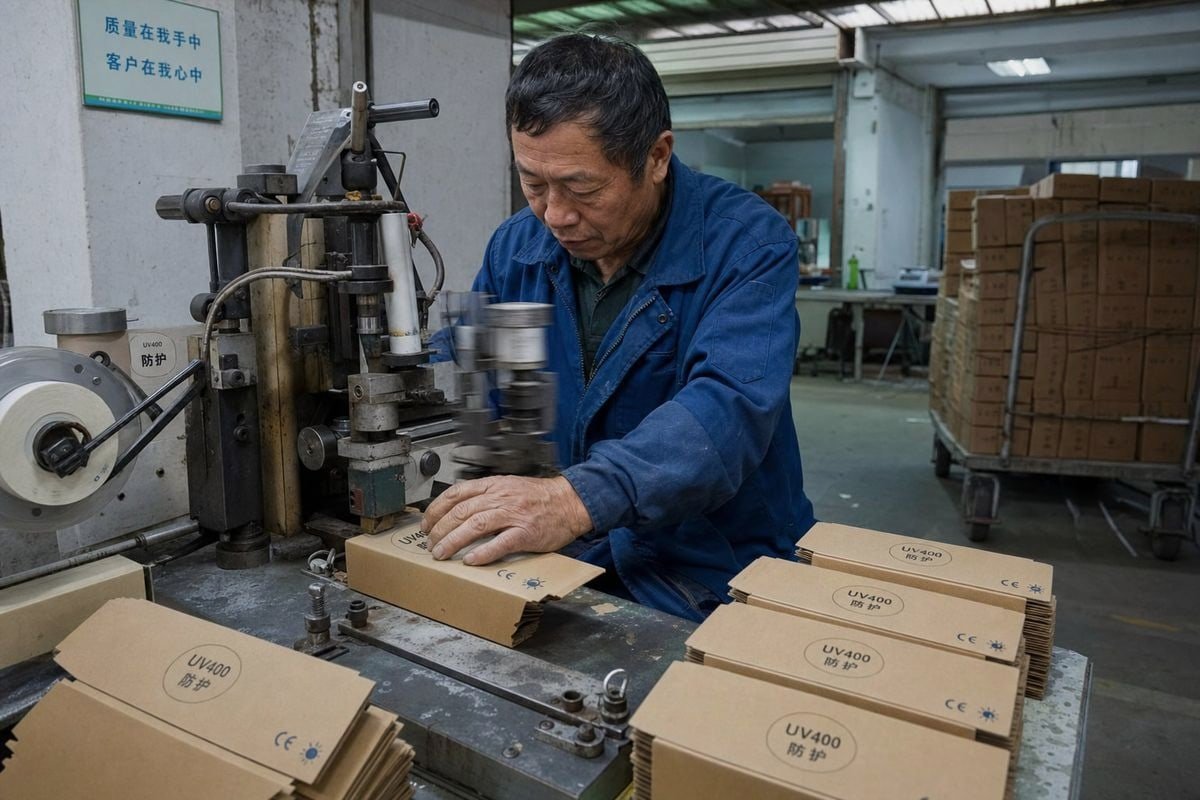
Comfort and durability claims answer the second and third questions in every parent's head: will my child actually wear these, and will they survive a week of real life? Packaging that speaks to both wins over packaging that only talks about style.
Comfort claims that convert
Fit failure is the number one reason kids' sunglasses end up in a drawer. Frames that slip, pinch behind the ears, or press on the nose get rejected by the child within minutes. This is exactly why we specialize in TPEE and TR90. These materials flex under pressure and return to shape, so a toddler can twist the temples without snapping them, and the frame stays gentle on soft skin.
| Claim on the Box | What It Tells the Parent | Material Behind It |
|---|---|---|
| Flexible frames | Won't snap when bent or sat on | TPEE, TR90 |
| Lightweight | Won't slide down or cause fatigue | TR90 frame construction |
| Impact-resistant lenses | Safe during falls and rough play | Polycarbonate |
| Scratch-resistant coating | Lenses stay clear over the season | Hard-coated lens surface |
| BPA-free materials | Safe if chewed or mouthed | Certified material sourcing |
Durability as a value story
Durability claims do double duty. They promise safety, and they promise the parent will not need to rebuy in two weeks. Wording like "bends, doesn't break" or "built for playground life" translates impact resistance into everyday language. If your lenses are polarized lenses 6 that cut glare for beach and snow days, say so plainly, because many parents associate polarization with premium adult eyewear and see it as an upgrade. A scratch-resistant coating claim also reassures parents who know kids drop glasses lens-down on concrete.
Should I include sizing or age guidance directly on the packaging?
One lesson our export experience taught us the hard way: a European client once skipped age labels to keep the box minimal, and returns spiked from parents guessing wrong sizes online and in-store.
Yes, always print age-appropriate sizing directly on the front of the packaging, using clear ranges like 0–2, 3–5, or 6–10 years. Age guidance removes guesswork, cuts returns, and is one of the first things parents scan after UV protection.
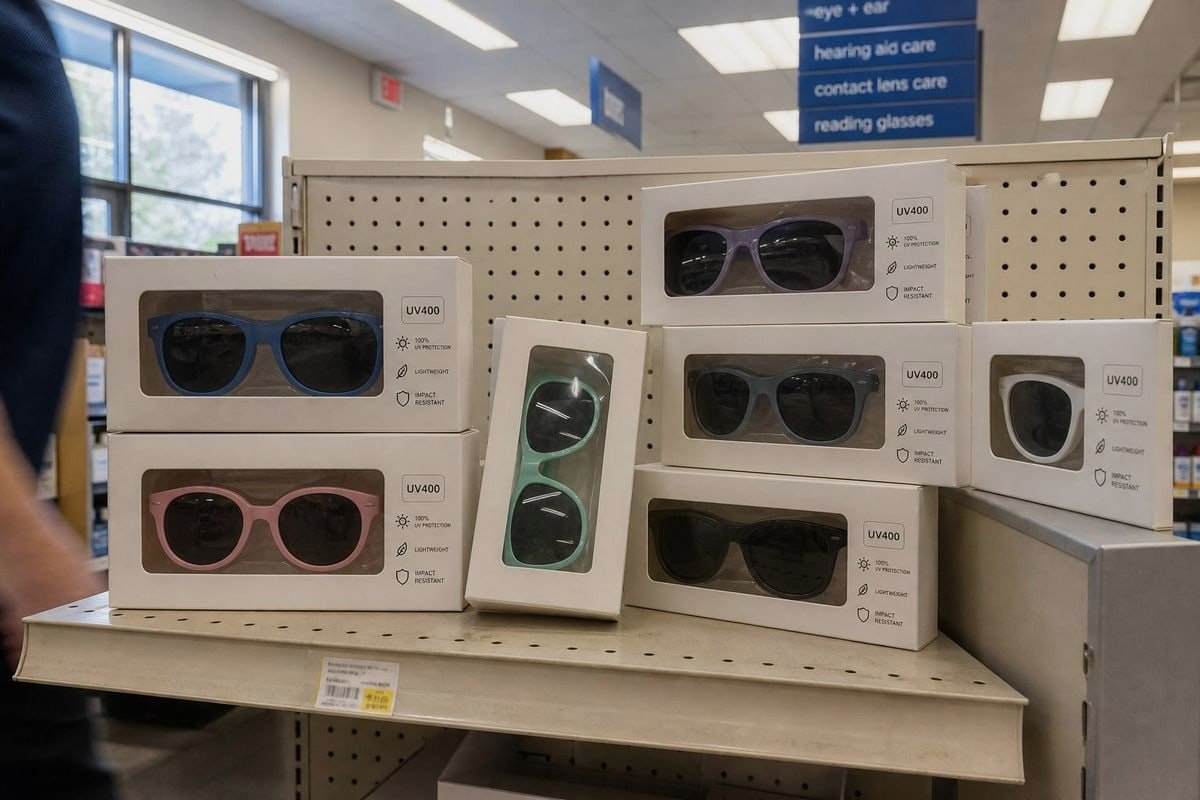
Age guidance is not optional decoration. It is a core decision tool. A parent standing in a store cannot measure their child's face, and an online shopper cannot try the frame on. The age range on the box does that work for them, and skipping it forces a guess that often ends in a return.
Match sizing cues to the age band
Different age groups need different packaging messages, because the buying logic changes as kids grow. Wraparound coverage and strap compatibility matter for babies. Style and self-expression matter more by age eight.
| Age Range | Frame Cues Parents Want | Packaging Message That Works |
|---|---|---|
| 0–2 years | Wraparound fit, strap included, ultra-soft | "Stays on, safe to chew, strap included" |
| 3–5 years | Flexible, lightweight, fun colors | "Bendable frames for busy little faces" |
| 6–10 years | Sportier shapes, shield lenses, cooler look | "Kid-approved style with real UV400 protection" |
Go beyond a bare number
Age ranges are a shortcut, not a science, since head sizes vary. The strongest packaging adds a simple support layer: a printed frame-width measurement, a small face-width diagram, or a QR code linking to a fit guide or AR try-on. When our clients pick from our roughly 800 existing styles, we help them map each frame to a realistic age band based on lens width 7, bridge size, and temple length, then print that guidance consistently across the line. Consistency matters because parents who trust your sizing on one purchase will rebuy the next size up without hesitation. Also list what is in the box, such as a case, pouch, or strap, right beside the age range. Parents read "what's included" as part of the fit-and-value picture.
Conclusion
Weak packaging wastes good eyewear. Parents scan for UV400, fit, and durability in seconds. Answer those three questions clearly, honestly, and simply, and your box earns the sale.
Footnotes
1. Authoritative health guidance from the WHO regarding UV radiation and eye protection standards. ↩︎
2. Official FDA information regarding the safety and regulation of BPA in consumer products. ↩︎
3. Technical background on the flexible thermoplastic materials used in high-quality children’s eyewear frames. ↩︎
4. Explains how different lens tints affect light transmission and visual clarity for the wearer. ↩︎
5. Provides a reliable, accessible overview of global sunglasses safety and impact standards (ISO, ANSI, and AS/NZS) mentioned in the article. ↩︎
6. Medical explanation from the American Academy of Ophthalmology on how polarized lenses reduce glare.
More Articles You Might Like

Looking for a Reliable Kids Eyewear Partner?
Explore 800+ ready styles and full OEM/ODM support tailored to your brand.
Get in Touch English
  Español de México
  Deutsch
  Français
  日本語
日本語  العربية
  Português do Brasil