PC vs Acrylic Lenses in Kids’ Sunglasses: What’s the Difference?
Choosing between PC and acrylic lenses in kids’ sunglasses trips up many buyers. On our production line in Taizhou, I see the wrong lens choice sink good products.
PC (polycarbonate) lenses are more impact-resistant, virtually shatterproof, and safer for kids’ sunglasses, making them the preferred choice for active children. Acrylic (PMMA) lenses cost less and offer good clarity, but they crack more easily under impact and suit lighter, budget-focused use.
Both materials are plastic, but they behave very differently on a child’s face. Let me walk you through what actually matters when you compare them.
How do I know if PC or acrylic lenses are safer for my kids' sunglasses line?
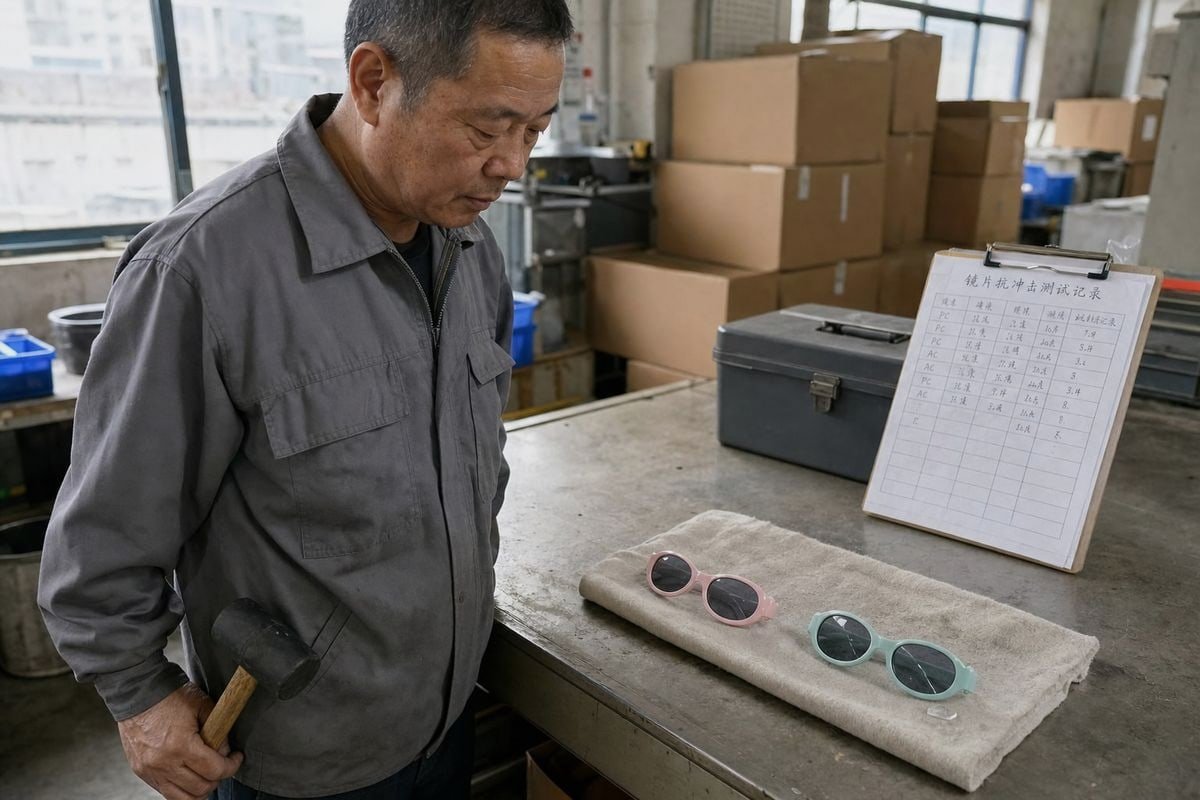
During a drop test in our 5S-managed workshop last year, an acrylic sample lens 1 cracked at the edge. The polycarbonate lens beside it just bounced. That moment says a lot.
Polycarbonate is the safer lens material for children's sunglasses. It absorbs impact without shattering into sharp fragments, which is why it is standard in sports eyewear and safety glasses. Acrylic can crack or splinter on hard impact, creating a real hazard near a child's eyes.
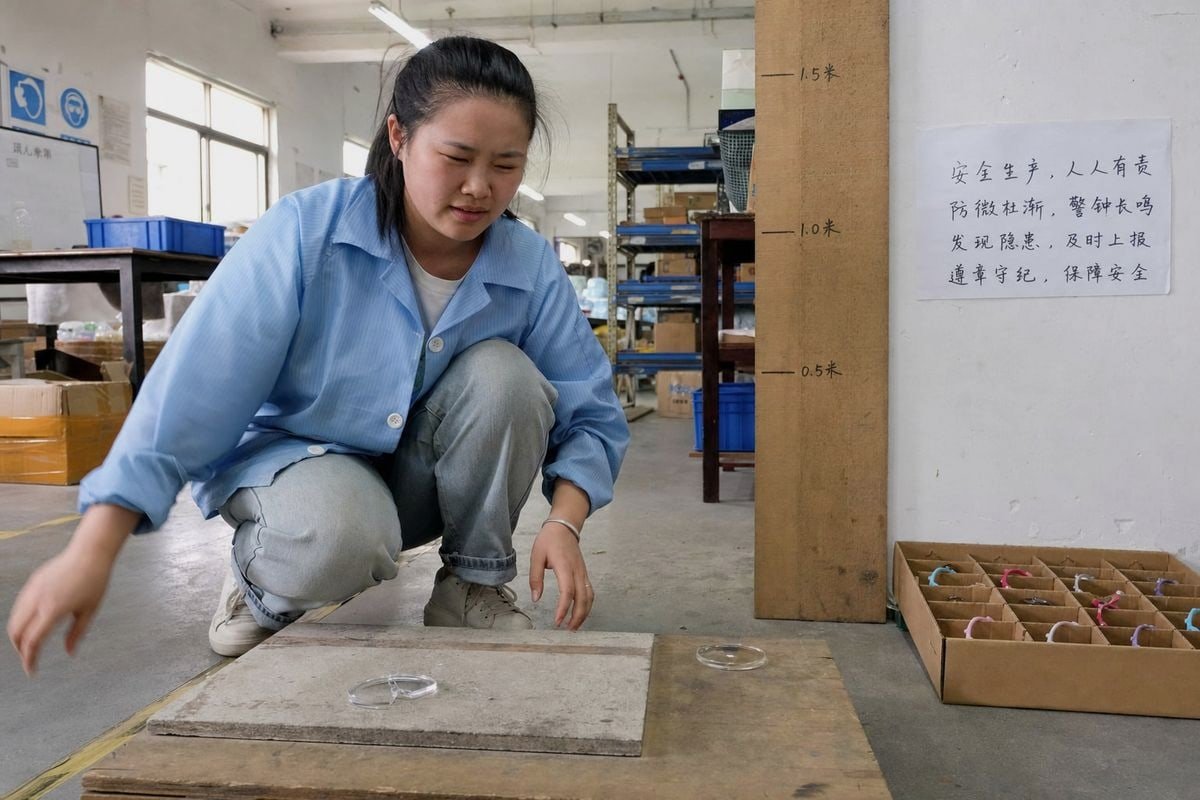
Safety is the first filter I apply when a brand asks us to develop a new kids' collection. Children do not treat sunglasses gently. They drop them on concrete. They sit on them. They wear them on bikes, scooters, and playgrounds. So the question is not whether the lens will take a hit. It is what happens when it does.
Why impact behavior matters more than the spec sheet
Polycarbonate is a thermoplastic engineered for toughness. Consumer guides often describe it as roughly ten times more impact-resistant than regular plastic or glass. When it takes a blow, it flexes and absorbs energy. Acrylic, also known as PMMA, is more rigid and brittle. Under a sharp impact, it is more likely to crack. Near a child's eye, that difference is not academic.
This is also why polycarbonate is the material referenced in most sports and safety eyewear built around ANSI safety standards, and why pediatric eyewear sources recommend it for children.
| Safety Factor | Polycarbonate (PC) | Acrylic (PMMA) |
|---|---|---|
| Impact resistance | Very high, virtually shatterproof | Low to moderate, can crack |
| Failure mode | Flexes and absorbs energy | May splinter into fragments |
| Sports/safety use | Yes, widely used | Rarely recommended |
| Suitability for active kids | Excellent | Limited |
How we pair lenses with frames
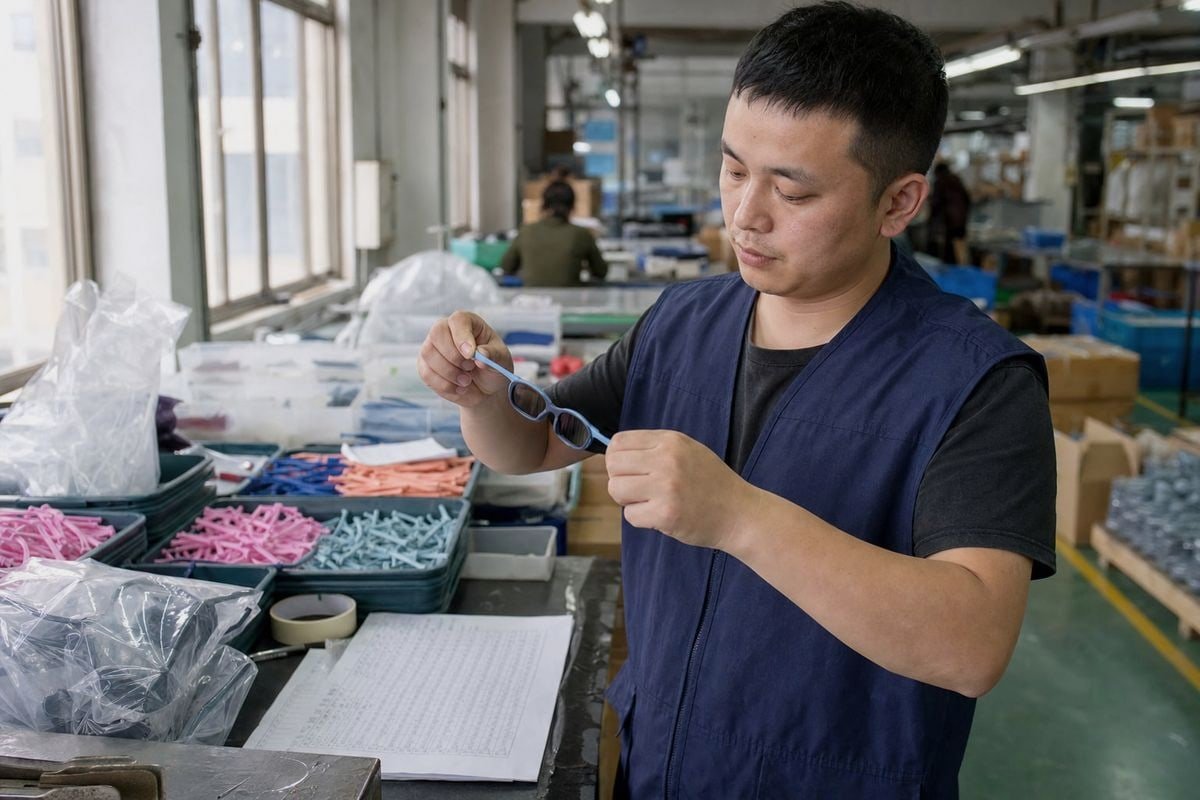
A safe lens still needs a safe frame. In our factory, we pair shatterproof lenses with TPEE flexible frames and TR90 constructions 2, so the whole product bends instead of breaking. If you audit a supplier, ask about both parts, not just the lens.
Which lens material offers better UV400 protection for children's eyewear?
A buyer from Australia once asked me why two lenses that look identical can protect so differently. The answer sits inside the material, not on its surface.
Polycarbonate offers more reliable UV400 protection because UV-blocking ability is built into the material itself and cannot rub off. Acrylic lenses usually depend on added UV coatings or treatments, which can degrade over time, so their long-term protection is less dependable for children.
Eye health for children is the reason kids' sunglasses exist at all. A child's lens and cornea transmit more UV light than an adult's, so early protection matters. That is why every kids' style we ship, from wraparound sport shields to soft round frames, must meet UV400 protection as a baseline, regardless of lens color.
Built-in protection vs applied coatings
Here is the key distinction. Polycarbonate naturally blocks UVA and UVB 3 as part of its chemistry. Even a clear, untinted PC lens filters UV. Acrylic can be made UV-stable, and quality acrylic lenses can be treated to reach UV400. But that protection often comes from an additive or coating rather than the base polymer. If the treatment is thin or poorly applied, protection can be inconsistent from batch to batch.
One more point trips up new buyers constantly: lens darkness 4 does not equal UV protection. A very dark acrylic lens with weak UV treatment is arguably worse than no sunglasses, because the pupil dilates behind the dark tint and lets more UV in.
What to verify with your supplier
- Ask for UV400 test reports on actual production lenses, not just samples.
- Confirm whether protection is inherent (PC) or coating-based (acrylic).
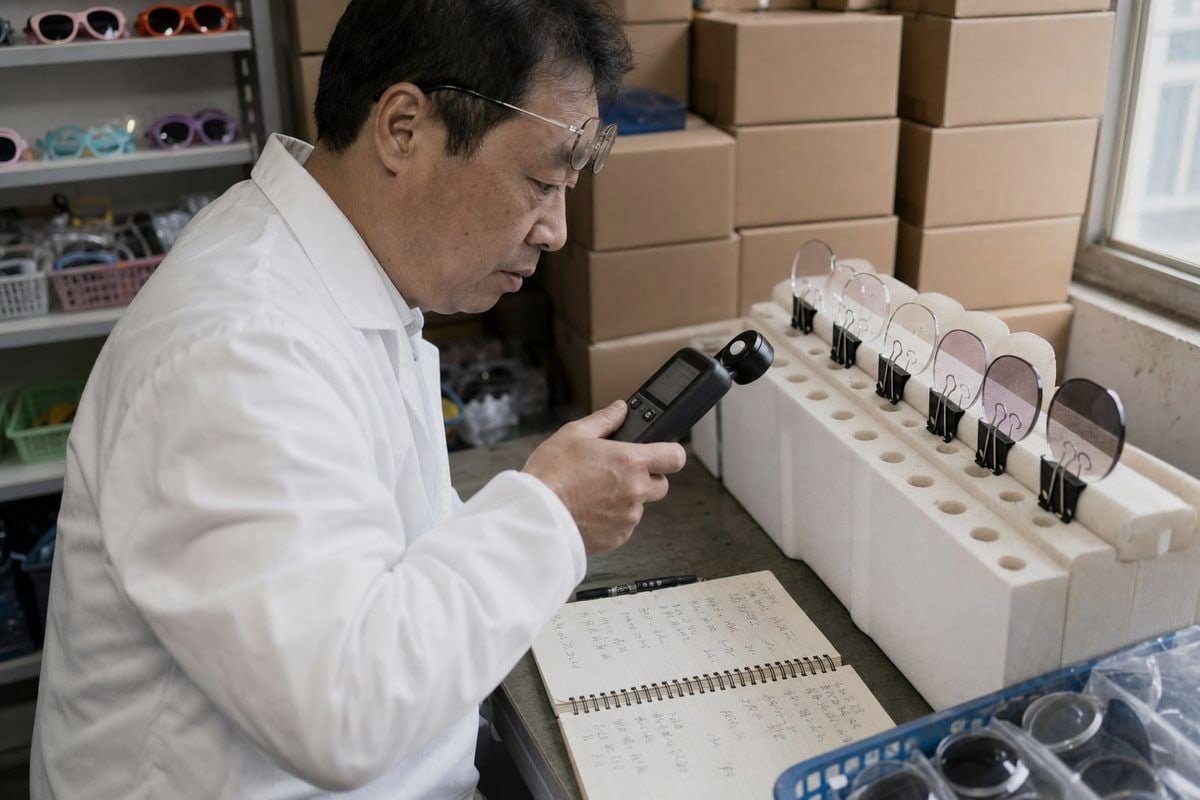
- Request batch-level QC checks with a UV meter during production.
- Consider polarized lenses for beach and water-focused product lines, since they cut glare on top of UV filtering.
We run UV checks on incoming lens batches precisely because paperwork alone has burned buyers before.
Can acrylic lenses withstand the same impact resistance as polycarbonate for active kids?
Honesty matters more than a quick sale in this business. When a promotional products client insists on acrylic for a sporty style, I tell them plainly what the trade-off is.
No. Acrylic lenses cannot match polycarbonate's impact resistance. PC absorbs hard blows and stays intact, while acrylic is brittle and may crack under the same force. For active kids in sports, cycling, or rough play, polycarbonate is the only responsible choice.
Let me be balanced here, because acrylic does have genuine strengths. It offers excellent optical clarity, with high light transmission and less edge distortion than polycarbonate. Its natural surface is also harder, so it resists everyday scratches better than uncoated PC. Neither material is naturally scratch-proof, which is why a scratch-resistant coating matters on any kids' lens, especially polycarbonate.
But impact performance is where the gap becomes a canyon. Some children's lens guides note that well-made PC lenses can be dramatically more impact-resistant than standard resin lenses 5 while also being noticeably lighter. Acrylic simply was not engineered for that job.
Heat and real-world durability
There is a second durability issue buyers often miss. Acrylic softens and can deform at relatively low temperatures, which matters for sunglasses left on a car dashboard in summer. Polycarbonate holds its shape under heat far better. For products sold into hot climates, this alone can decide the material.
| Durability Factor | Polycarbonate (PC) | Acrylic (PMMA) |
|---|---|---|
| Impact resistance | Excellent | Poor to fair |
| Heat resistance | High, resists warping | Can deform in hot cars |
| Surface hardness | Softer, needs hard coating | Naturally harder surface |
| Weight | Very light and thin | Light |
| Optical clarity | Good | Very good |
One caution on PC: it can react badly to certain chemicals, such as DEET-based insect repellents, so a quality hard coat also protects against chemical crazing. On sporty wraparound shields like the ones we produce with mirrored gradient lenses, we always specify hard-coated polycarbonate for exactly this reason.
Which lens option should I choose for a durable, cost-effective kids' sunglasses collection?
Fifteen years of building kids' eyewear has taught me one pricing lesson: the cheapest lens is rarely the cheapest decision once returns and reviews arrive.
Choose polycarbonate lenses with a scratch-resistant coating for a durable, brand-worthy kids' sunglasses collection. Reserve acrylic only for low-cost fashion or promotional lines with light, occasional use. The small per-unit saving on acrylic rarely offsets the safety and durability advantages of PC.
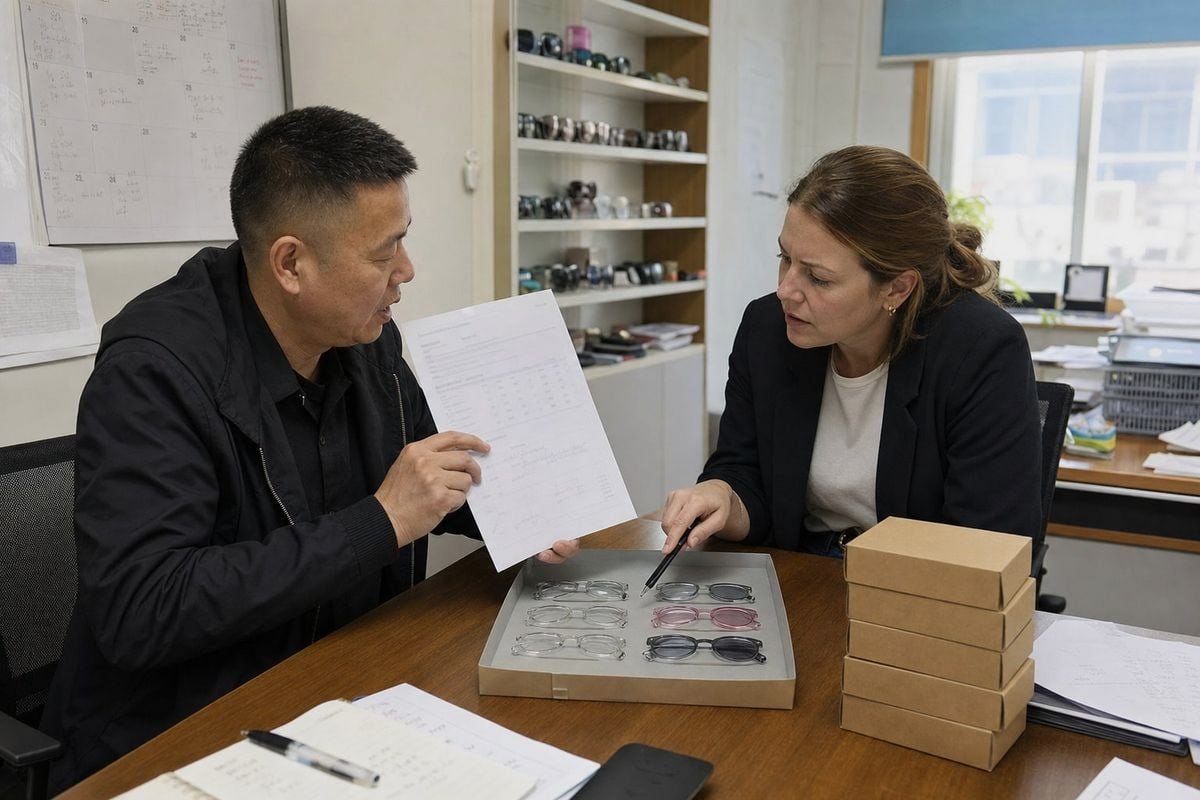
Cost is real, so let me frame it the way I do with procurement managers. Acrylic is cheaper to produce, which is why it dominates mass-market "toy" sunglasses. Polycarbonate costs more per lens. But the difference at factory pricing is modest compared to retail margins, and it buys you a stronger safety story, fewer breakage complaints, and a product parents trust.
A practical decision framework
| Your Product Goal | Recommended Lens | Why |
|---|---|---|
| Sport and outdoor kids' line | PC, hard-coated, UV400 | Impact safety, heat stability |
| Everyday kids' sunglasses brand | PC with scratch-resistant coating | Durability plus parent trust |
| Beach and water collection | PC with polarized lenses | Glare reduction plus safety |
| Budget promotional giveaway | Acrylic with verified UV400 | Lowest cost, light use only |
Matching lenses to age groups
Age changes the math too. Toddlers need the most forgiving combination: shatterproof PC lenses inside soft, lightweight frame materials that flex when grabbed or chewed. School-age kids need everyday toughness for backpacks and playgrounds. Sporty teens need wraparound coverage 6 and coatings that survive sweat, sunscreen, and gear bags. This is why we pair PC lenses with TR90 frames and TPEE temples across most of our roughly 800 existing styles, so brands can test a market segment without heavy mold investment.
My honest guidance: prioritize safety and UV first, comfort second, coatings third, and let price be the tiebreaker, never the driver.
Conclusion
Weak lenses create real risk for kids and real returns for brands. Polycarbonate solves both: shatterproof, UV-reliable, lightweight. Choose PC for active wear; save acrylic for casual budget lines.
Footnotes
1. Wikipedia entry for PMMA (acrylic) detailing its physical properties, brittleness, and common industrial applications. ↩︎
2. Authoritative Wikipedia section covering plastic frame materials including TR90 (Grilamid). ↩︎
3. EPA guide explaining the different types of ultraviolet radiation and the necessity of blocking them for health. ↩︎
4. American Academy of Ophthalmology article explaining that lens darkness is unrelated to actual UV protection levels. ↩︎
5. Wikipedia page for CR-39, the standard resin material used in traditional eyeglass lenses compared to polycarbonate. ↩︎
6. High-authority medical source from the AAO explaining why wraparound styles offer superior eye protection. ↩︎
More Articles You Might Like

Looking for a Reliable Kids Eyewear Partner?
Explore 800+ ready styles and full OEM/ODM support tailored to your brand.
Get in Touch English
  Español de México
  Deutsch
  Français
  日本語
日本語  العربية
  Português do Brasil