What Packaging Should I Request for Kids’ Sunglasses to Ease Store Distribution?
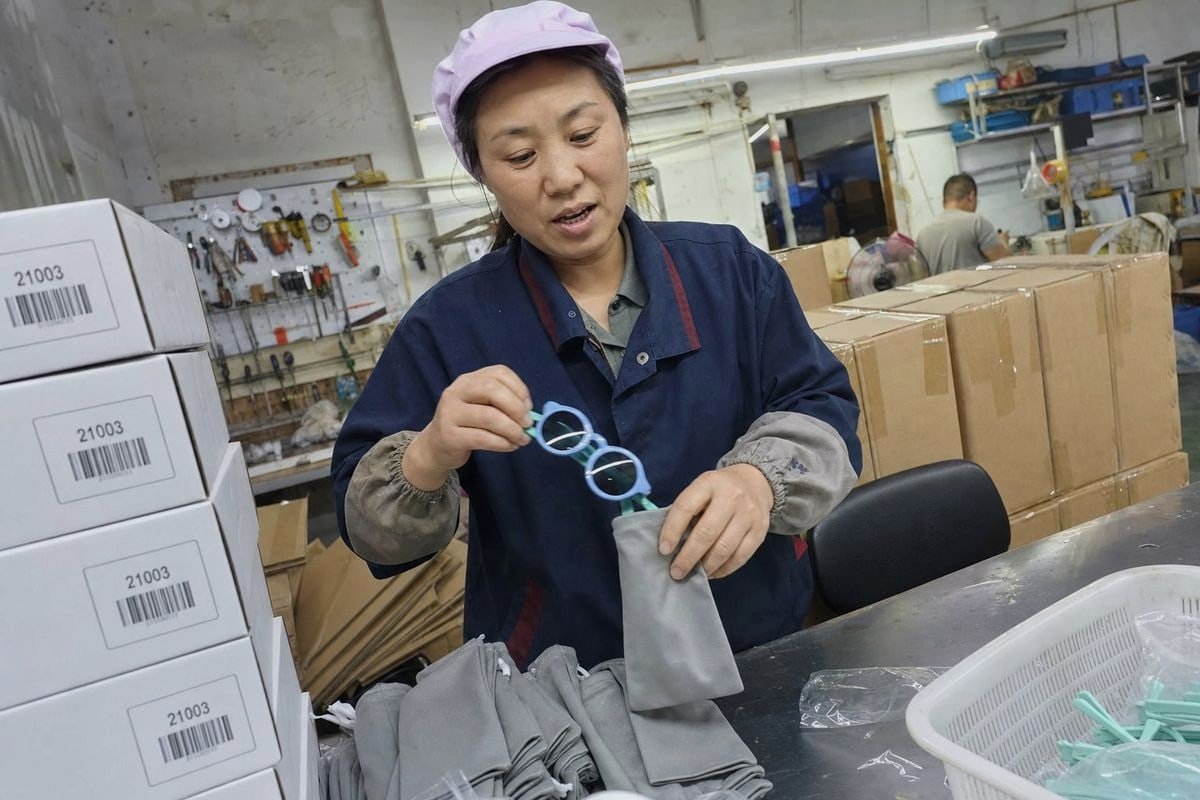
Choosing the right packaging for kids’ sunglasses can make or break store distribution. On our production line in Taizhou, I have seen great frames fail simply because the box was wrong.
For kids’ sunglasses, request a three-part system: a protective microfiber pouch or insert, a flat-packed retail carton with printed SKU and UPC barcode labeling, and a corrugated outer shipper. This combination protects lenses in transit, speeds store receiving, and keeps shelves display-ready.
That is the short answer. Below, I will break down each layer of this packaging system, explain what to confirm with your supplier, and show you how to avoid the most common mistakes buyers make.
What Packaging Options Work Best for Retail-Ready Kids' Sunglasses Display?
A buyer from Australia once told me her store staff spent two hours re-labeling every pair we shipped. That conversation changed how we quote packaging for kids' sunglasses today.
The best retail-ready options are flat-folding cartons with window cutouts for mass retail, pillow boxes for mid-range lines, and rigid or drawer boxes for premium collections. Each should include pegboard hang tabs, child-friendly graphics, and pre-applied barcodes so staff can shelve products immediately.
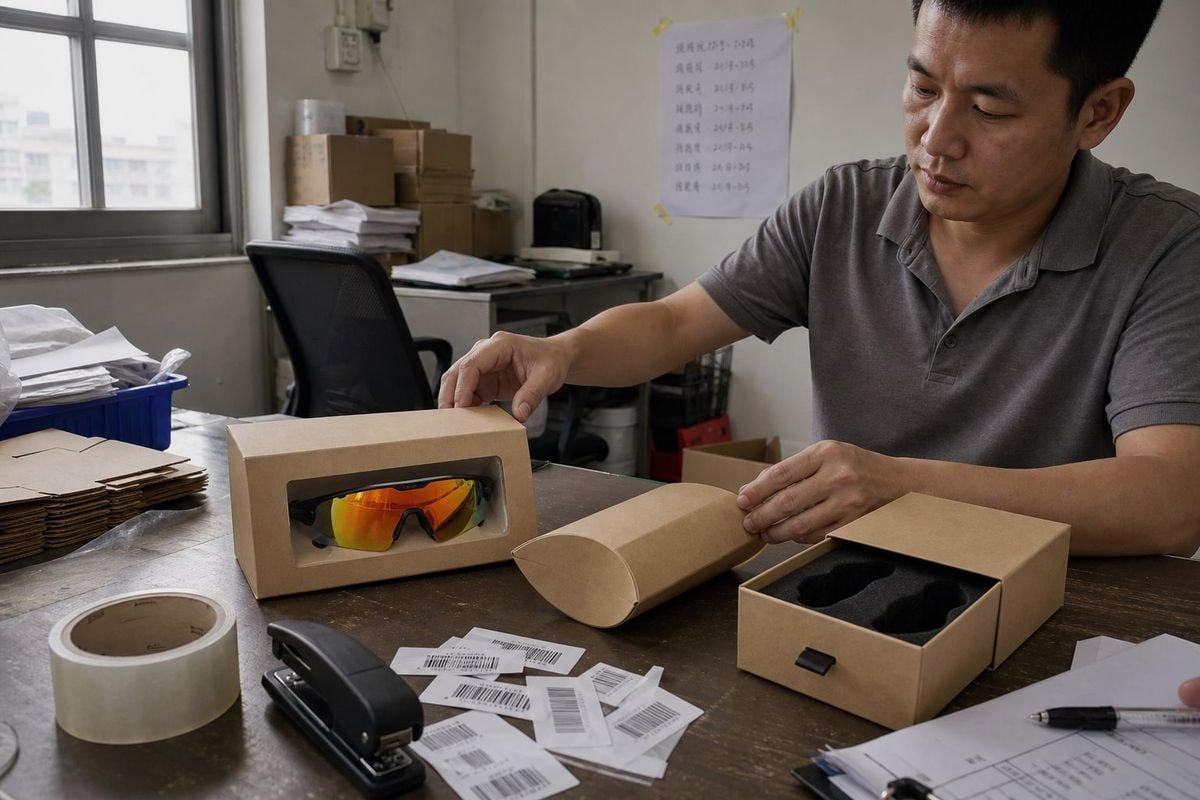
Retail-ready merchandising means the product goes from the shipping carton straight to the sales floor. No re-sticking labels. No hunting for hooks. When we develop packaging with our OEM clients, we always start with one question: where exactly will this sit in the store?
Match the Format to Your Price Point
Different price tiers need different packaging. A flexible TPEE frame 1 sold at a supermarket does not need the same box as a polarized TR90 style 2 sold in an optical shop. Here is the comparison we walk buyers through:
| Use Case | Best Packaging Request | Por Que Funciona |
|---|---|---|
| Low-cost mass retail | Flat-folding carton with inner pouch | Cheap to print, ships flat, saves warehouse space |
| Mid-range kids' line | Pillow box or carton with insert | Good shelf presence at moderate cost |
| Premium kids' collection | Rigid box or drawer box with molded insert | Gift-ready feel, strong crush protection |
| Store replenishment | Corrugated shipper with labeled inner units | Fast receiving, low damage risk |
| E-commerce plus retail | Retail carton inside corrugated mailer | One package serves both channels |
Display Features Worth Requesting
For kids' products, visibility sells. Parents want to see the frame; children want to see the colors. So ask for window cutouts or blister-card designs that show the actual frame. For our round two-tone styles, like a periwinkle-blue front with mint-teal temples, a clear window does more selling than any printed image could.
Also consider pegboard hang tags. Many kids' sunglasses hang on slatwall hooks rather than sit on shelves. A snap-in tray insert that works both hung and shelved gives the retailer flexibility. Some of our clients even request perforated master shippers that convert into countertop display units. The store cuts along the perforation, and the shipping box becomes a branded counter display in seconds.
How Can I Make Sure My Packaging Protects Lenses and Frames During Shipping?
The trade-off I weigh most often is protection versus cost. Every extra layer adds cents per unit, but one scratched shipment of mirrored gradient lenses erases that saving many times over.
Use layered protection: seal each pair in a protective microfiber pouch, place it in a snug carton with an insert to stop movement, then pack inner units into 5-ply or 7-ply corrugated master cartons with dividers, desiccant packs, and shock-absorbing fillers for long routes.
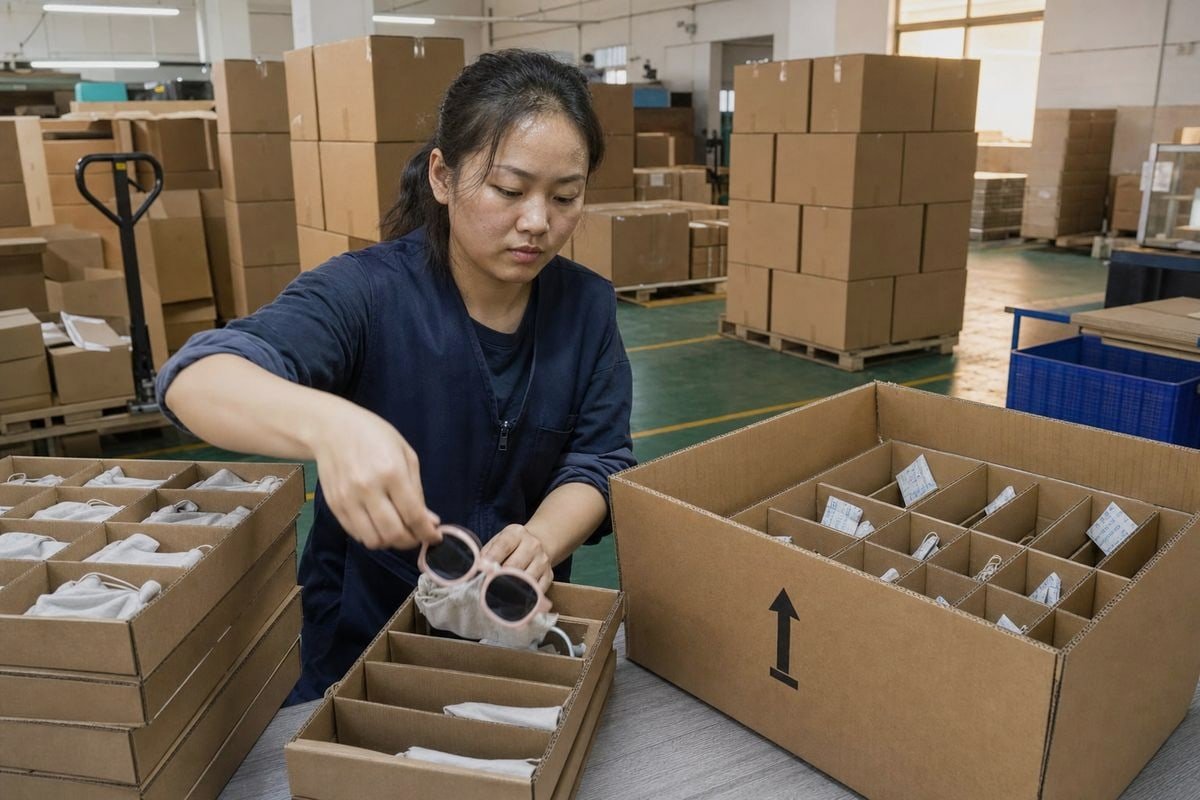
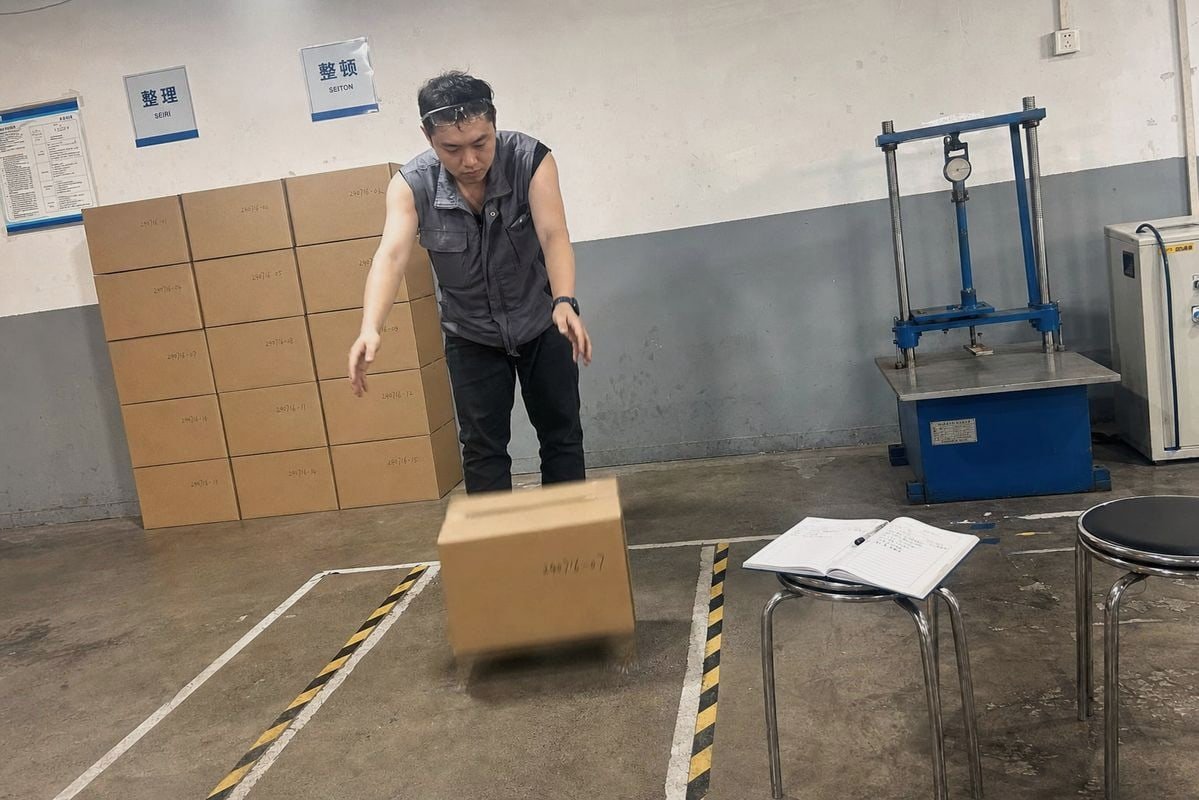
Kids' sunglasses are light, but they are not tough against friction. In our 5S-managed workshop, we test packed cartons by drop and compression before we approve a new packaging spec. Mirrored shield lenses, like the orange-to-yellow gradient sport styles we produce, scratch easily when pairs rub against each other. Flexible TPEE temples resist snapping, but a poorly packed carton can still warp a frame under sustained pressure.
The Three Layers of Protection
Think of protection as three jobs, each handled by a different layer:
| Camada | Componente | What It Prevents |
|---|---|---|
| Inner | Microfiber pouch or soft sleeve | Lens scratches, surface friction |
| Principal | Snug carton with insert | Frame bending, internal movement |
| Outer | 5-ply or 7-ply corrugated master carton | Crushing, impact, stacking damage |
Each layer only works if the fit is snug. A pouch inside an oversized box still lets the product bounce. When we calibrate inserts for a new style, we adjust for frame width, temple length, and lens curvature so the pair sits firmly without pressure points.
Extra Steps for Long or Humid Routes
Sea freight to Europe or Australia can take five weeks. Humidity inside a container can fog lens coatings and soften cardboard. For these routes, I recommend desiccant packs 3 in every master carton and moisture-resistant liners. Also confirm the ply rating. Export-style shipments should use 5-ply minimum; heavy pallet stacking justifies 7-ply. Dividers inside the master carton stop inner packs from shifting, which matters most during port handling, the roughest part of any journey.
Can I Customize Packaging with My Own Logo and Branding for Store Shelves?
Full custom branding is one of the most common OEM requests we handle. Over fifteen years of eyewear production, we have printed everything from minimalist Scandinavian designs to bright cartoon mascots.
Yes. Reputable OEM factories offer full packaging customization, including your logo, brand colors, child-friendly illustrations, care instructions, QR codes, and custom box structures. Minimum order quantities apply, but printed folding cartons are affordable even for first-time brands testing the market.
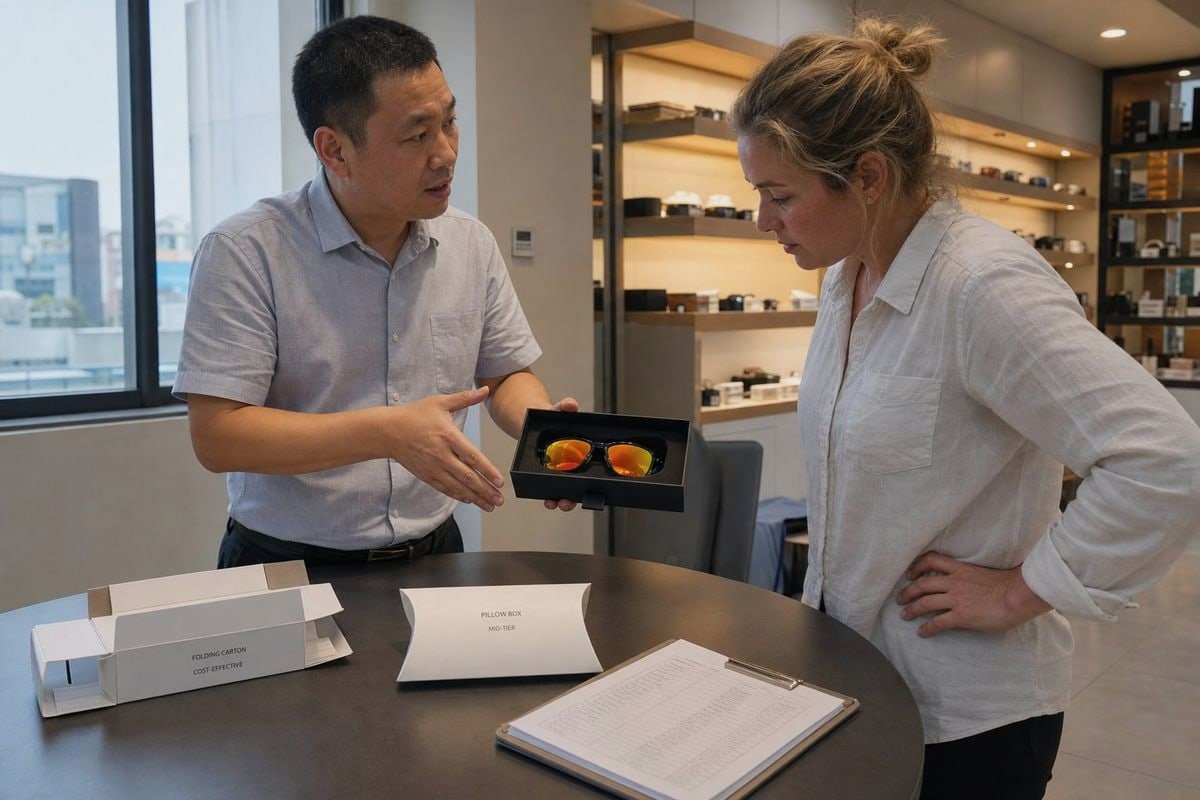
Custom packaging is no longer just a protective shell. For children's eyewear, it is a core branding tool. Parents make the purchase, but children make the choice. Your packaging has to speak to both at once.
What You Can Customize
Here is what our OEM/ODM clients typically brand:
- Logo and brand colors printed on the carton, pouch, and hang tag.
- Playful graphics such as characters, animals, or simple educational visuals that appeal to kids.
- Parent-facing information including age range, UV400 protection details 4, and material safety notes.
- QR codes linking to care guides, warranty registration, or a scan-to-restock page for store managers.
- Custom pouch colors so the protective microfiber pouches double as branded accessories parents keep.
Keep Claims Honest and Compliant
One rule I hold firm on: every claim printed on the packaging must match the actual product specification. If the box says UV400 or polarized, the lenses inside must test to that standard. For the US market, CPSIA compliance labeling requirements 5 also shape what must appear on children's product packaging, including tracking information. We flag this early in every packaging project because reprinting cartons after a compliance issue is far more expensive than getting the artwork right the first time.
Starting with one of our roughly 800 existing frame styles keeps your investment low. You skip mold costs entirely and put your budget into branded, retail-ready packaging instead. That is usually the smarter path for a new brand testing its first market.
What Packaging Details Should I Confirm Before Placing a Bulk Order?
Early in my career, I learned a hard lesson: a client's warehouse rejected a full shipment because the master carton dimensions did not fit their racking ISTA packaging test standards 6. Nobody had asked. Now we always ask.
Confirm master carton dimensions, inner pack quantities, UPC barcode labeling placement, carton ply strength, hang tag format, compliance markings, assortment logic, and a pre-production packaging sample. Written confirmation of these details prevents warehouse rejections, re-labeling costs, and store-level sorting delays.
Packaging problems rarely show up at the factory. They show up at the receiving dock, weeks later and thousands of miles away. That is why I push every buyer to lock down the details below before production starts, not after.
The Pre-Order Packaging Checklist
| Detail to Confirm | Por Que Importa |
|---|---|
| Master carton dimensions and weight | Must fit pallets, racking, and any automated sorting |
| Inner pack quantities | Should match how stores reorder, often 6 or 12 per inner |
| UPC barcode labeling | Pre-applied EAN/UPC codes eliminate manual labeling at intake |
| SKU and variant codes | Frame color, lens shade, and size printed for fast SKU inventory management |
| Carton ply rating | 5-ply or 7-ply for export stacking strength |
| Hang tag and price tag format | Must fit the retailer's pegboard or slatwall system |
| Compliance markings | Age grading, UV claims, CPSIA and country-of-origin labels |
| Pre-production sample | The only reliable way to verify everything above |
Think About Assortment Logic
Pre-sorted case packs save retailers real labor. If your range covers toddler round frames and older-kid sport shields, ask the factory to pack by age tier or color assortment. A store can then restock an entire category from one case without manual sorting. Some of our larger distribution clients also request RFID-enabled hang tags for touchless cycle counts, though for most first orders, clean barcodes and clear SKU printing deliver most of the benefit at a fraction of the cost.
Finally, always request a packed sample carton before mass production. Photos are not enough. Hold the box, check the barcode scans 7, and drop-test it. Ten minutes with a physical sample prevents ninety percent of distribution headaches.
Conclusão
Wrong packaging turns great kids' sunglasses into store-floor headaches. Request a protective inner pouch, a barcoded retail carton, and a strong corrugated shipper, and confirm every detail before bulk production.
Notas de rodapé
1. Explains the properties of TPEE, a durable material used for children’s eyewear frames. ↩︎
2. Provides technical background on TR90, a high-quality thermoplastic material used in premium eyewear. ↩︎
3. Explains how desiccants prevent moisture damage during long-distance sea freight shipping. ↩︎
4. Official FDA guidance on UV protection standards and safety regulations for non-prescription sunglasses. ↩︎
5. Government safety standards and labeling requirements for children’s products sold in the United States. ↩︎
6. Updated ISTA resource for international packaging and shipping performance testing. ↩︎
7. GS1 provides the global standards for barcodes and scanning technology used in retail and logistics. ↩︎
Mais Artigos que Você Pode Gostar
1 de agosto de 2026
A Fábrica Deve Lidar com a Embalagem e Rotulagem de Óculos de Sol Infantis, ou Usar um Fornecedor Designado?
1 de agosto de 2026
Armazém Próprio vs. Envio Direto do Fornecedor: Qual Reduz os Custos de Devolução para Marcas de Óculos de Sol Infantis?
1 de agosto de 2026
Armazém Direto ao Porto ou Estiva no Exterior: Qual Economiza Mais no Envio de Óculos de Sol Infantis?
Procurando um Parceiro Confiável em Óculos Infantis?
Explore mais de 800 estilos prontos e suporte completo OEM/ODM adaptado à sua marca.
Entre em Contato English
  Español de México
  Deutsch
  Français
  日本語
日本語  العربية
  Português do Brasil