How to Instruct Suppliers on Carton Markings and Barcode Labeling for Kids’ Sunglasses?
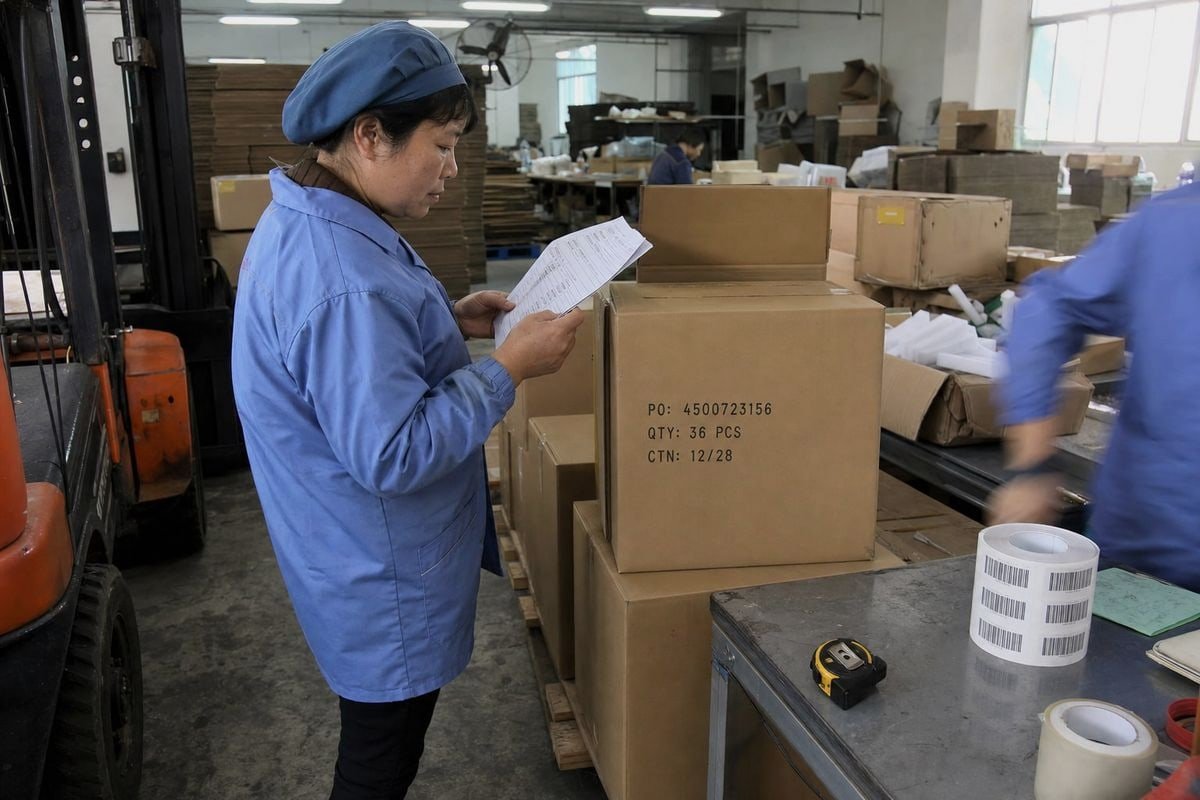
Carton markings and barcode 1 labeling for kids’ sunglasses sound simple until a shipment arrives unscannable. I have watched buyers lose weeks fixing cartons our industry could have labeled right the first time.
Instruct suppliers with a written carton specification: exact fields to print (SKU, PO, quantity, carton number, country of origin), the required barcode symbology (GS1-128 or ITF-14), precise label placement, handling symbols, and a pre-shipment scan verification step before mass production.
Below, I break this into four practical parts. Each section gives you wording, tables, and checks you can copy straight into your supplier instructions.
What Carton Marking Details Should I Include for Kids' Sunglasses Shipments?
A buyer from Australia once sent our team a one-line request: "just mark the cartons normally." We sent back a full template instead, because "normally" means something different in every warehouse.
Include a main mark (PO number, consignee, SKU, style/color, quantity, carton sequence) and a side mark (gross and net weight, dimensions, country of origin, batch number, handling symbols). Every field must be printed clearly and match your packing list exactly.
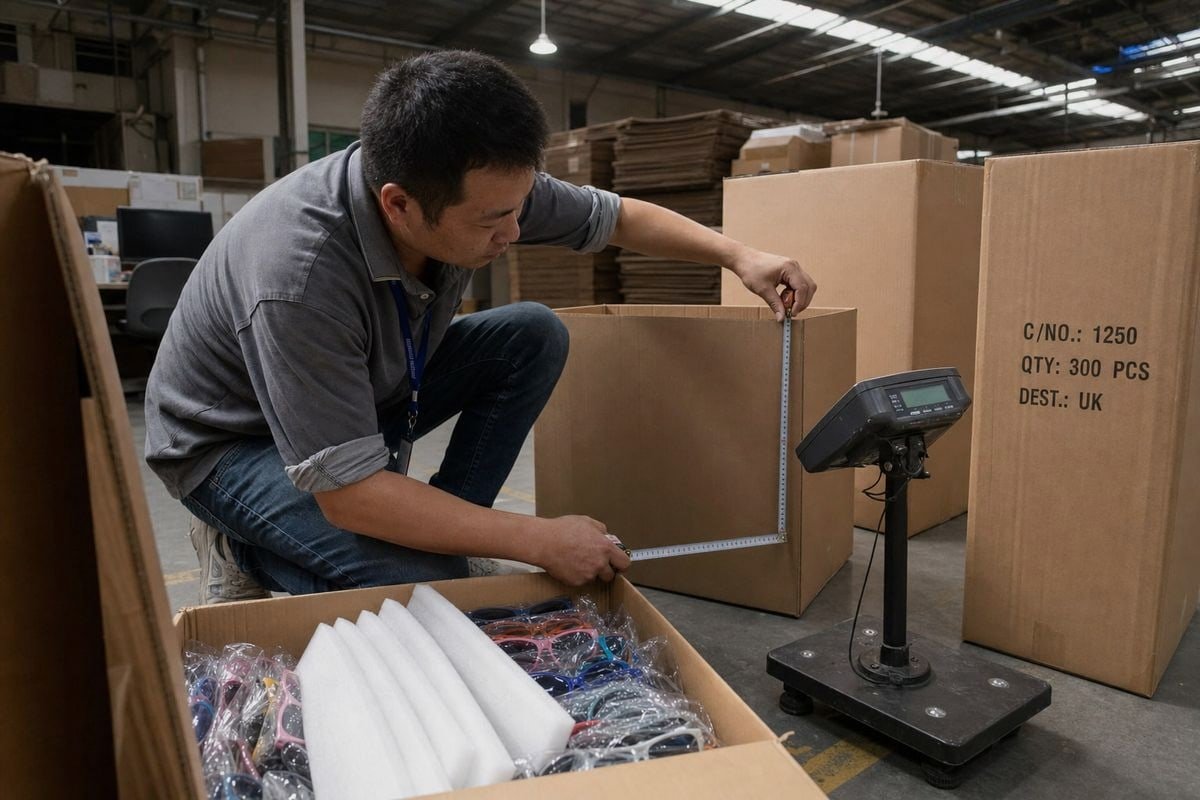
Shipping marks exist for one reason: the receiving team must identify a carton instantly, without opening it. For kids' sunglasses, that matters even more than usual. Sunglasses ship in style, color, and size assortments. One vague carton can send a pastel round frame into the wrong retail flow while a sport shield style sits unaccounted for.
At our Taizhou factory, we split master carton specifications into two zones. The main mark goes on the long face. The side mark goes on the short face. This mirrors how forklifts and shelving present cartons in most distribution centers.
Fields for the Main Mark and Side Mark
| Mark Zone | Campo | Por Que Importa |
|---|---|---|
| Main mark | PO number | Links the carton to your order for receiving |
| Main mark | Consignee name | Confirms the correct destination |
| Main mark | SKU / item number | Drives putaway and SKU management |
| Main mark | Style, color, pack type | Prevents assortment mix-ups |
| Main mark | Quantity per carton | Enables count verification without opening |
| Main mark | Carton number (e.g., 5 of 40) | Flags missing cartons fast |
| Side mark | Gross and net weight | Required for freight and safe handling |
| Side mark | Carton dimensions | Supports pallet and storage planning |
| Side mark | Country of origin | Customs clearance requirement |
| Side mark | Batch number | Supports batch number tracking and recalls |
Handling Symbols
Children's sunglasses are lightweight but not indestructible. We recommend printing standard handling symbols: fragile, this-side-up, and keep-dry. They cost nothing to add and reduce crushed inner boxes. For our TR90 and TPEE frames, crush damage is rare, but retail packaging can still dent, and dented packaging gets rejected at retail-ready inspection.
One more detail we always tell buyers: keep human-readable text large. A 6 mm font disappears under warehouse lighting. We print key fields at 12 mm or larger.
How Do I Set Up Barcode Labeling Requirements for My Retail-Ready Products?
During a pre-production meeting last year, a European buyer asked why we needed to know his retailer before printing labels. The answer is simple: barcode symbology is not interchangeable.
Specify three levels: an EAN-13 or UPC-A on each retail unit, an ITF-14 or GS1-128 on each master carton, and an FNSKU if selling through Amazon FBA. Define exact placement, then require a scan verification test on pre-production samples.
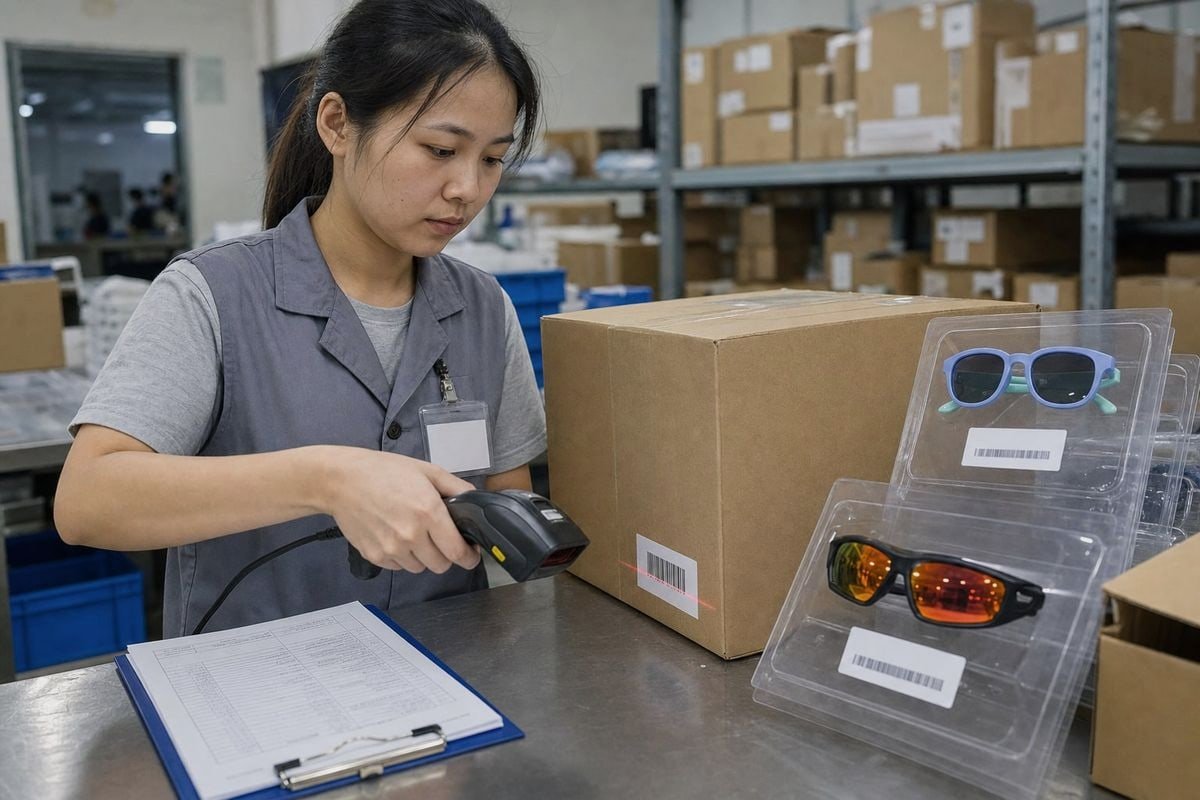
GS1 standards separate barcode use by packaging level, and your instructions should do the same. Mixing these levels is the single most common source of scan failures we see in new buyers' first orders.
The Three Labeling Levels
| Level | Typical Barcode | What It Carries | Who Scans It |
|---|---|---|---|
| Retail unit (hang tag or box) | EAN-13 / UPC-A | Item GTIN | Store checkout |
| Master carton | ITF-14 2 or GS1-128 3 | Case GTIN, plus dates or lot data if GS1-128 | Warehouse receiving |
| Marketplace fulfillment | FNSKU label | Amazon's internal identifier | Fulfillment center |
Use ITF-14 when the carton barcode only needs to identify the case. Use GS1-128 when your retailer requires extra data such as PO, lot, or batch information encoded in the symbol. Amazon FBA 4 requirements are stricter again: the FNSKU must be scannable on each sellable unit, and prep rules for polybags apply.
Placement Rules That Prevent Scan Failures
Placement is where precision pays off. Our standard instruction block, refined over fifteen years of eyewear exports, reads like this:
- Place the carton label on the longest side, lower right area.
- Keep the barcode bottom about 32 mm (1.25 in) from the carton base.
- Keep at least 19 mm (0.75 in) clearance from vertical edges.
- Allow no more than a 5-degree tilt.
- Apply to two adjacent sides if your 3PL requests it.
For retail units, we often use non-adhesive butterfly tags on the temple arms. Adhesive stickers can mark soft-touch TPEE surfaces, and a residue mark on a child's frame is an instant quality complaint. Thermal transfer printing keeps small barcodes crisp; direct thermal fades in transit heat.
What Common Labeling Mistakes Should I Avoid When Working with My Eyewear Supplier?
Early in our export history, we learned an expensive lesson: a freight forwarder stretch-wrapped a pallet directly over the carton barcodes, and the receiving warehouse relabeled every carton at the buyer's cost. Since then, our quality control inspection checklist includes label position after palletizing, not just after packing.
Avoid barcodes over seams or corners, labels covered by tape or stretch wrap, mixed SKUs in one carton, mismatched carton data versus packing lists, wrong symbology, tilted labels, and skipping scan tests. Each mistake risks rejected inbound shipments or chargebacks.

Most labeling failures are not exotic. They are small, preventable habits that appear when a supplier treats carton labels as optional shipping stickers rather than operational documents.
The Mistakes We See Most, and Their Consequences
| Mistake | Typical Consequence | Prevention Instruction |
|---|---|---|
| Barcode across a seam or corner | Scan failure at receiving | Flat placement only, one panel |
| Tape or wrap over the barcode | Glare defeats scanners | "No tape or film over label" rule |
| Mixed SKUs in one carton | Full carton audit, delays | One SKU per carton unless approved |
| Carton data ≠ packing list | Shipment held for reconciliation | Cross-check at final inspection |
| Wrong barcode symbology | Relabeling fees | Confirm format in writing pre-production |
| Low print contrast | Intermittent scan failures | Verify print grade on samples |
| Missing carton sequence | Shortages found too late | Mandatory "X of Y" numbering |
Why Kids' Eyewear Amplifies These Risks
Children's sunglasses orders are assortment-heavy. A single order from our catalog of roughly 800 styles might include a mirrored sport shield in black, the same shield in white with a gradient lens, and a pastel round frame in periwinkle and mint. Those SKUs look nothing alike inside the carton, but their cartons look identical from the outside. Only the label separates them. That is why we photograph every labeled carton face during final quality control inspection and send the photos to the buyer before the shipment leaves our floor. It takes ten minutes. It prevents days of downstream sorting.
How Can I Ensure My Supplier Follows My Country's Import Labeling Regulations?
Regulations are the part buyers underestimate most. When we prepare shipments for the US, Europe, Japan, or Australia, the labeling requirements differ enough that we keep separate market templates rather than one generic version.
Send your supplier a market-specific compliance sheet covering CPSIA tracking labels, ASTM F963 or EN 71 references where applicable, country of origin marking, choking hazard warnings for small parts, and required test documentation. Then verify compliance on pre-shipment samples, not after arrival.
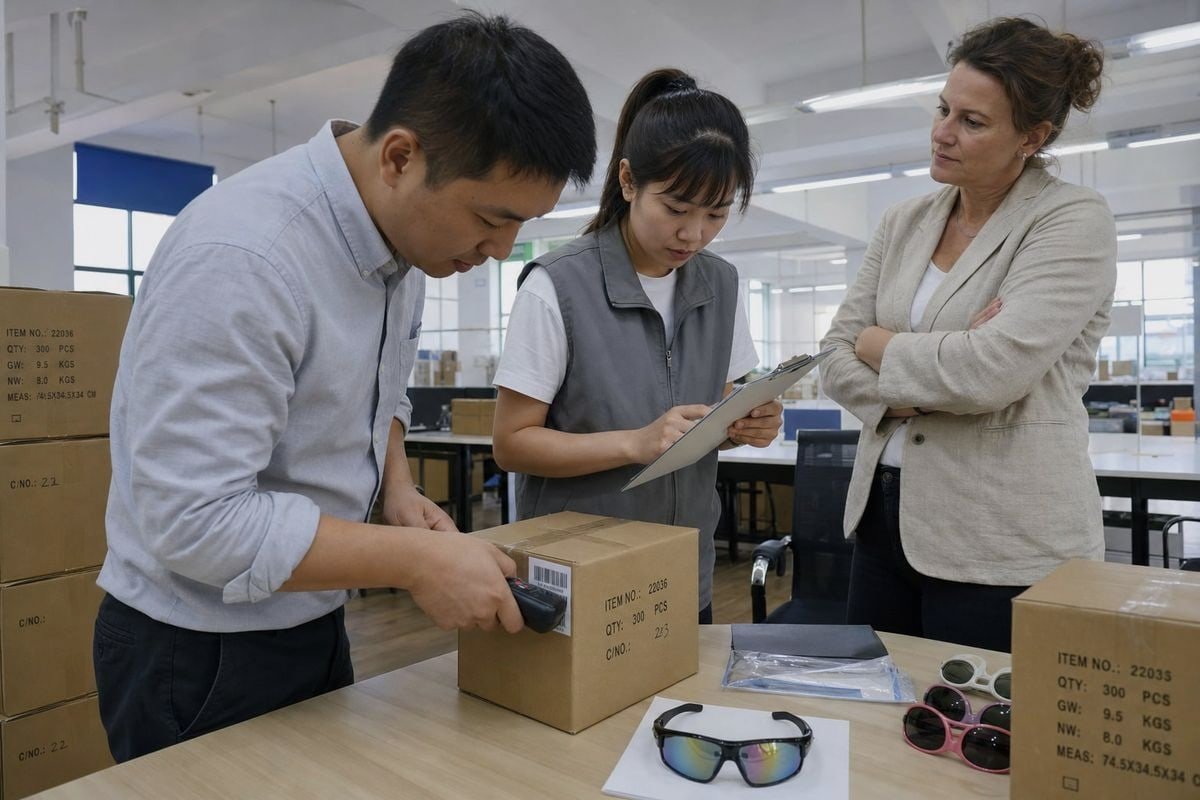
For children's products entering the US, CPSIA 5 compliance shapes labeling in ways general eyewear rules do not. Tracking label requirements mean the manufacturer identity, production date, and batch information must be traceable on the product or packaging. Your carton-level batch number tracking should mirror what appears on the retail unit, so a recall or complaint can be traced from a store shelf back to a specific production run. In our workshop, we assign batch codes at the injection molding stage, and that same code follows the goods onto inner boxes and master cartons.
A Practical Compliance Workflow
- Identify your market rules first. US buyers typically reference CPSIA e ASTM F963 6 concepts for children's products, plus FDA impact-resistance expectations for lenses. EU buyers look at EN standards and CE-related documentation EN 71 7. Confirm with your compliance advisor which apply to your exact product.
- Send a written labeling sheet. List every mandatory statement, warning, and mark. Include artwork files, not just descriptions.
- Require document alignment. The Children's Product Certificate, test reports, and drop-ball documentation should match the batch numbers printed on cartons.
- Approve a golden sample. We sign a labeled carton sample with each buyer before mass production. It becomes the reference for final inspection.
- Verify before shipping. Scan every barcode type, check origin marks, and photograph carton faces.
One caution from experience: never let a supplier apply compliance claims like "CPSIA Compliant" without the third-party test reports to back them. A mark without matching documents creates more legal risk than no mark at all. We hold all printing of compliance statements until the buyer confirms test results are in hand.
Conclusão
Vague carton instructions create unscannable, misrouted, non-compliant shipments. Specify fields, symbology, placement, and compliance marks in writing, verify samples before production, and your kids' sunglasses will arrive retail-ready.
Notas de rodapé
1. Concepto general de fondo sobre tecnología de códigos de barras discutida en el artículo. ↩︎
2. Referencia técnica del símbolo de barras usado en cartones master. ↩︎
3. Explica el estándar de simbología de código de barras mencionado en el artículo. ↩︎
4. Documentación oficial de requisitos de etiquetado FNSKU para cumplimiento logístico. ↩︎
Mais Artigos que Você Pode Gostar

1 de agosto de 2026
A Fábrica Deve Lidar com a Embalagem e Rotulagem de Óculos de Sol Infantis, ou Usar um Fornecedor Designado?

1 de agosto de 2026
Armazém Próprio vs. Envio Direto do Fornecedor: Qual Reduz os Custos de Devolução para Marcas de Óculos de Sol Infantis?

1 de agosto de 2026
Armazém Direto ao Porto ou Estiva no Exterior: Qual Economiza Mais no Envio de Óculos de Sol Infantis?
Procurando um Parceiro Confiável em Óculos Infantis?
Explore mais de 800 estilos prontos e suporte completo OEM/ODM adaptado à sua marca.
Entre em Contato English
  Español de México
  Deutsch
  Français
  日本語
日本語  العربية
  Português do Brasil