Como Evitar Danos em Lentes e Armações ao Enviar Óculos de Sol Infantis a Granel?
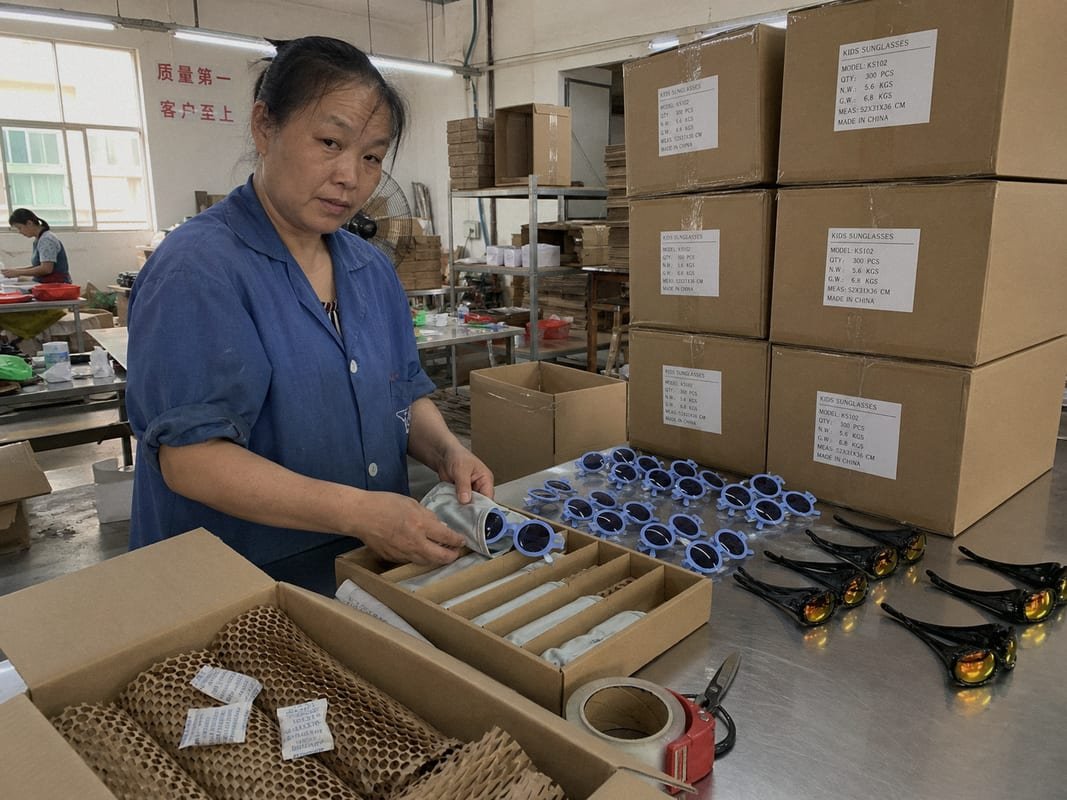
Danos em lentes e armações ao enviar óculos de sol infantis a granel custaram a um de nossos compradores uma temporada inteira de lançamento. Ainda me lembro de desembalar as fotos de danos deles em nossa fábrica de Taizhou.
Para evitar danos em lentes e armações ao enviar óculos de sol infantis a granel, embrulhe cada par individualmente, use proteção interna rígida, embale os pares em caixas internas compartimentadas, depois coloque-os em caixas master de papelão ondulado de parede dupla com preenchimento para que nada possa se mover, esfregar ou comprimir durante o transporte.
Essa é a resposta curta. O restante deste guia detalha os materiais, métodos de embalagem, verificações de qualidade e como escolher um fornecedor que realmente entregue mercadorias intactas.
Que Materiais de Embalagem Protegem Melhor os Óculos de Sol Infantis Durante o Envio de Longa Distância?
Anos exportando armações infantis TPEE e TR90 para compradores na Europa, Japão e Austrália ensinaram à nossa equipe de embalagem uma coisa: a escolha do material decide o resultado antes mesmo que a caixa saia do cais.
Os melhores materiais de embalagem protetora para óculos de sol infantis são sacos de armazenamento de microfibra ou papel de seda sem ácido para a superfície da lente, estojos rígidos ou bandejas de espuma para estrutura, papel alveolado ou plástico bolha para amortecimento e caixas de transporte de papelão ondulado de parede dupla como camada externa.
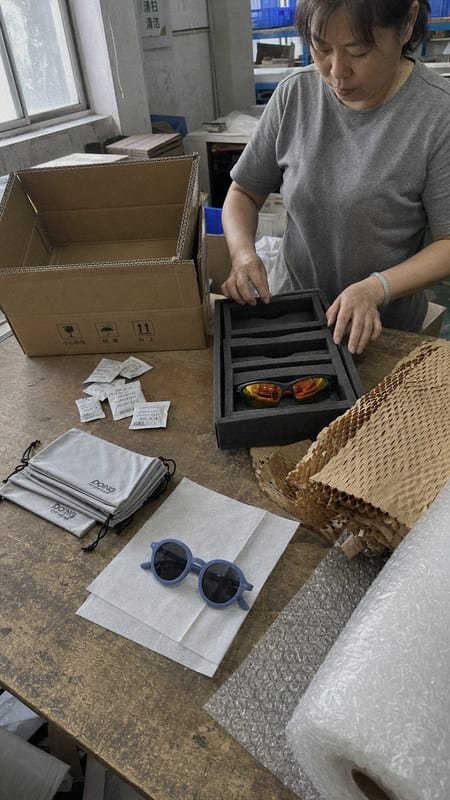
Cada par precisa ser protegido de três forças: impacto, compressão e abrasão. Nenhum material único lida com os três. É por isso que sistemas de embalagem em camadas 1 se tornaram o padrão para logística de óculos a granel. Cada camada tem uma função, e as camadas trabalham juntas.
O Sistema de Quatro Camadas Que Usamos
Veja como os materiais se empilham, da lente para fora:
| Camada | Material | O Que Protege Contra |
|---|---|---|
| Camada de contato com a lente | Bolsa de microfibra ou papel de seda sem ácido | Arranhões e abrasão no revestimento da lente |
| Camada estrutural | Estojo rígido, caixa interna rígida ou bandeja de espuma moldada | Amassamento e flexão da armação |
| Camada de amortecimento | Papel sanfonado ou plástico bolha | Choque de quedas e solavancos |
| Recipiente externo | Caixa de papelão ondulado de parede dupla ou de 5 dobras | Pressão de empilhamento e manuseio brusco |
A camada de contato com a lente é a mais importante para óculos de sol infantis. As lentes infantis são geralmente de policarbonato e, embora o policarbonato resista bem ao impacto, seu revestimento de superfície 2 arranha facilmente se poeira ficar presa sob o invólucro. A proteção da lente de policarbonato começa com uma lente limpa e uma barreira macia e sem fiapos. Nunca use jornal ou papel kraft áspero diretamente na lente.
A camada estrutural é onde as armações infantis flexíveis precisam de atenção extra. Nossas hastes TPEE são projetadas para dobrar com segurança no rosto de uma criança, mas essa mesma flexibilidade significa que uma bolsa macia sozinha não pode impedir que uma armação se torça sob peso empilhado. Um estojo rígido ou uma bandeja de espuma compartimentada mantém a armação em sua forma natural durante toda a viagem.
Para a camada externa, preferimos caixas menores e mais justas em vez de caixas grandes. Espaço vazio extra convida ao deslocamento. Quando uma lacuna é inevitável, soluções de preenchimento de espaço como almofadas de ar ou papel sanfonado amassado a fecham completamente. Um ponto de referência útil: permita cerca de meio centímetro a um centímetro de acolchoamento além das dimensões do item, e adicione uma base de acolchoamento mais espessa de cerca de dois centímetros na parte inferior da caixa master. Para rotas marítimas úmidas, também colocamos pacotes de sílica gel dessecante em todas as caixas, pois a umidade pode fazer com que as armações infantis emborrachadas fiquem pegajosas na chegada.
Como Evitar Arranhões nas Lentes e Deformação da Armação em Remessas de Contêineres a Granel?
Um comprador na Austrália uma vez me perguntou por que dois pedidos idênticos chegaram em condições diferentes. A resposta foi simples: um contêiner foi embalado com separadores, e o outro, embalado por um fornecedor anterior, não foi.
Evite arranhões e empenamento limpando cada lente antes de embalar, embrulhando cada par separadamente, usando caixas internas divididas para que os pares nunca se toquem, preenchendo todos os espaços vazios e aplicando protetores de borda às caixas mestras para que o peso empilhado não dobre as armações ou moa as lentes.
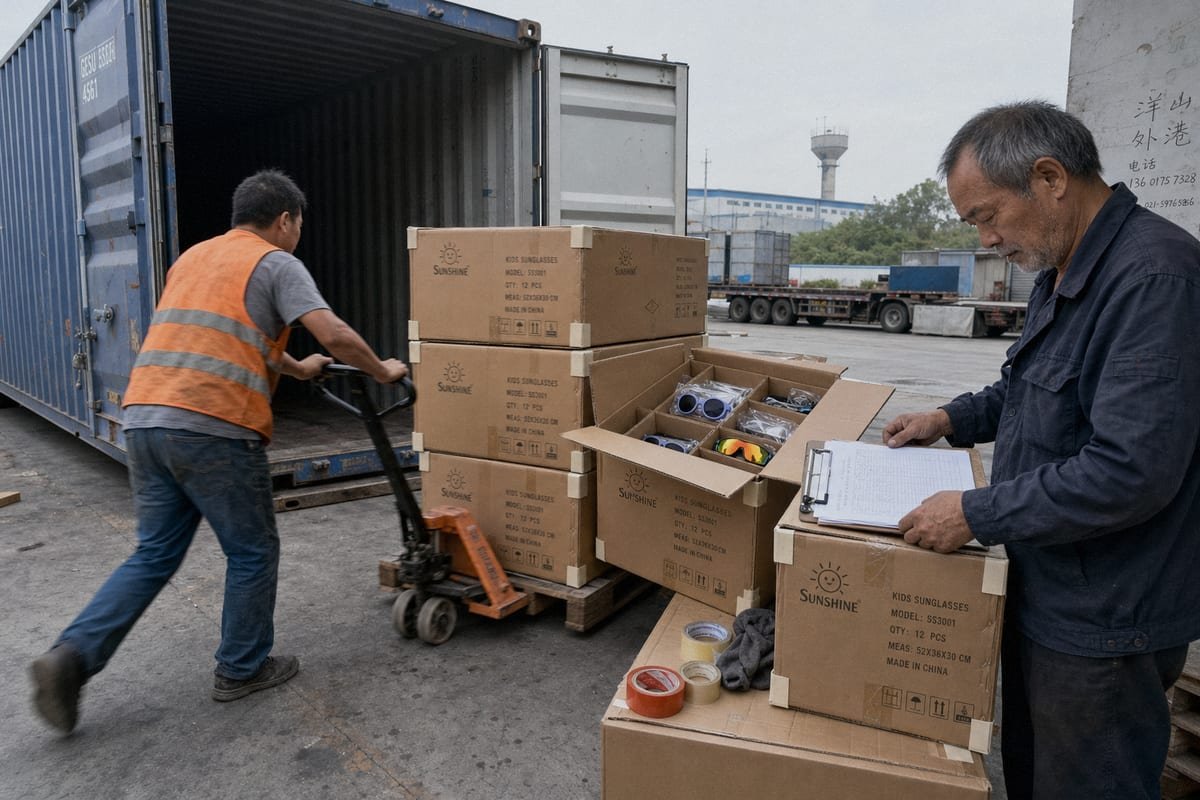
Movimento é o inimigo. Remessas a granel falham com mais frequência nos pontos de contato 3: lente-a-lente, haste-a-haste e pressão caixa-a-caixa. Um contêiner no mar rola e vibra por semanas. Qualquer par que possa se mover esfregará. Qualquer caixa que possa flexionar passará pressão para as armações internas. A prevenção de danos de trânsito é realmente apenas a disciplina de remover todos esses pontos de contato antes que a porta do contêiner se feche.
Nosso Fluxo de Trabalho Passo a Passo para Embalagem a Granel
Este é o processo que nossa oficina gerenciada por 5S 4 segue para cada pedido de exportação:
- Limpe primeiro. Limpe cada lente com um pano de microfibra. Poeira presa é a principal causa de micro-arranhões sob o invólucro.
- Inspecione e dobre. Verifique os parafusos das dobradiças, depois dobre as hastes para baixo sem tensão forçada.
- Embrulhe individualmente. Deslize cada par em uma bolsa de microfibra ou embrulhe-o em papel de seda sem ácido.
- Compartimente. Coloque os pares embrulhados em caixas internas compartimentadas ou bandejas moldadas para que nenhum par compartilhe uma parede.
- Caixa dentro de caixa. Acolchoe as caixas internas dentro de uma caixa master resistente com acolchoamento em todos os seis lados.
- Elimine os vazios. Adicione almofadas de ar ou papel em favo de mel até que nada chacoalhe quando a caixa for sacudida.
- Reforce a caixa. Sele todas as costuras com o padrão H e adicione protetores de borda de papelão reforçado para resistir ao colapso do canto sob empilhamento vertical.
Por que as armações flexíveis infantis precisam de cuidados extras
A deformação da armação é uma falha em câmera lenta. Raramente resulta de uma única queda. Resulta de semanas de compressão constante enquanto os paletes ficam empilhados em um contêiner. As armações TR90 e TPEE se recuperam de dobras breves, mas a pressão constante em altas temperaturas de contêiner pode causar uma torção nas hastes. A solução é estrutural, não de acolchoamento: a partição interna deve suportar a carga para que a armação não suporte nenhuma. Se a caixa puder chacoalhar quando sacudida, ela não está pronta para ser enviada.
Que Verificações de Controle de Qualidade Devo Exigir Antes do Envio do Pedido de Óculos de Sol dos Meus Filhos?
No início dos meus quinze anos nesta indústria, aprendi uma lição difícil: danos atribuídos à transportadora são frequentemente danos que saíram da fábrica. Verificações pré-embarque separam os dois.
Exigir uma inspeção pré-embarque cobrindo a condição da superfície da lente, aperto do parafuso da dobradiça, alinhamento da armação, verificação da lente UV400, integridade da embalagem e teste de resistência ao esmagamento da caixa, tudo documentado com fotos para que qualquer reclamação de dano de trânsito possa ser rastreada e comprovada posteriormente.
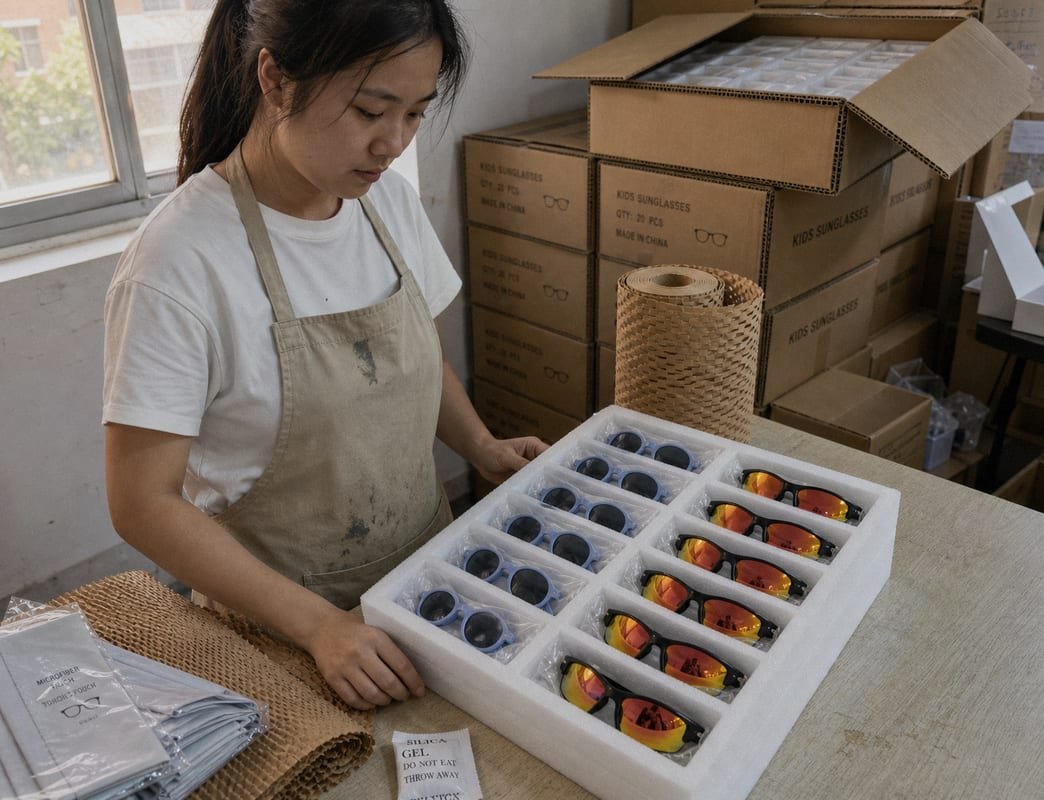
O controle de qualidade antes do despacho faz dois trabalhos. Primeiro, impede que pares defeituosos sejam enviados. Segundo, cria uma linha de base documentada. Se os produtos chegarem danificados, fotos e registros de inspeção provam se a falha foi de produção, embalagem ou manuseio de itens frágeis durante o trânsito. Sem essa linha de base, cada reclamação de dano se transforma em uma disputa.
A Lista de Verificação Que Recomendamos a Todos os Compradores
| Verifique | O que verificar | Por Que Importa |
|---|---|---|
| Superfície da lente | Sem arranhões, névoa ou defeitos de revestimento sob luz forte | Falhas existentes são culpadas no transporte depois |
| Dobradiças e parafusos | Parafusos apertados, hastes abrem e fecham suavemente | Dobradiças soltas pioram com a vibração em trânsito |
| Alinhamento da armação | Hastes niveladas, lentes encaixadas uniformemente nos aros | Armações desalinhadas deformam mais rápido sob pressão |
| Conformidade da lente | Proteção UV400 confirmada contra a especificação do pedido | A segurança infantil é inegociável para óculos infantis |
| Embalagem individual | Cada par embalado e acondicionado conforme o método acordado | Uma bolsa pulada pode arranhar uma bandeja inteira |
| Resistência da caixa | Placa de parede dupla, costuras seladas, protetores de borda instalados | Caixas fracas colapsam sob empilhamento de paletes |
| Amostra de teste de queda | Uma caixa master embalada passa em um teste de queda estilo ISTA-1A | Revela pontos de falha antes do envio do pedido completo |
A documentação faz parte do controle de qualidade
Peça ao seu fornecedor fotos das caixas internas embaladas, das caixas master carregadas 5, e das marcações da caixa antes de selar. Em nossa fábrica, fotografamos cada etapa como prática padrão. Leva minutos e protege ambos os lados. Também recomendamos concordar com um nível de amostragem AQL 6 por escrito, para que ambas as partes saibam exatamente quantos pares serão retirados e inspecionados. Para segurança da distribuição por atacado, essa papelada é tão importante quanto o plástico bolha. Um comprador que recebe fotos de inspeção antes do pagamento do saldo quase nunca enfrenta uma surpresa no porto de destino.
Como Posso Escolher um Fabricante Que Garanta Entrega Segura para Pedidos em Massa?
O compromisso que discuto com mais frequência com novos fundadores de marcas é este: uma cotação ligeiramente mais barata de um comerciante versus uma fábrica que controla a embalagem em seu próprio piso. A diferença aparece na entrega, não na cotação.
Escolha um fabricante com controle de embalagem interno, processos de CQ documentados, experiência na exportação de óculos frágeis para sua região, especificações de embalagem comprovadas como caixas de parede dupla e divisórias internas, fotos transparentes pré-embarque e termos claros de responsabilidade por danos em trânsito no contrato de vendas.
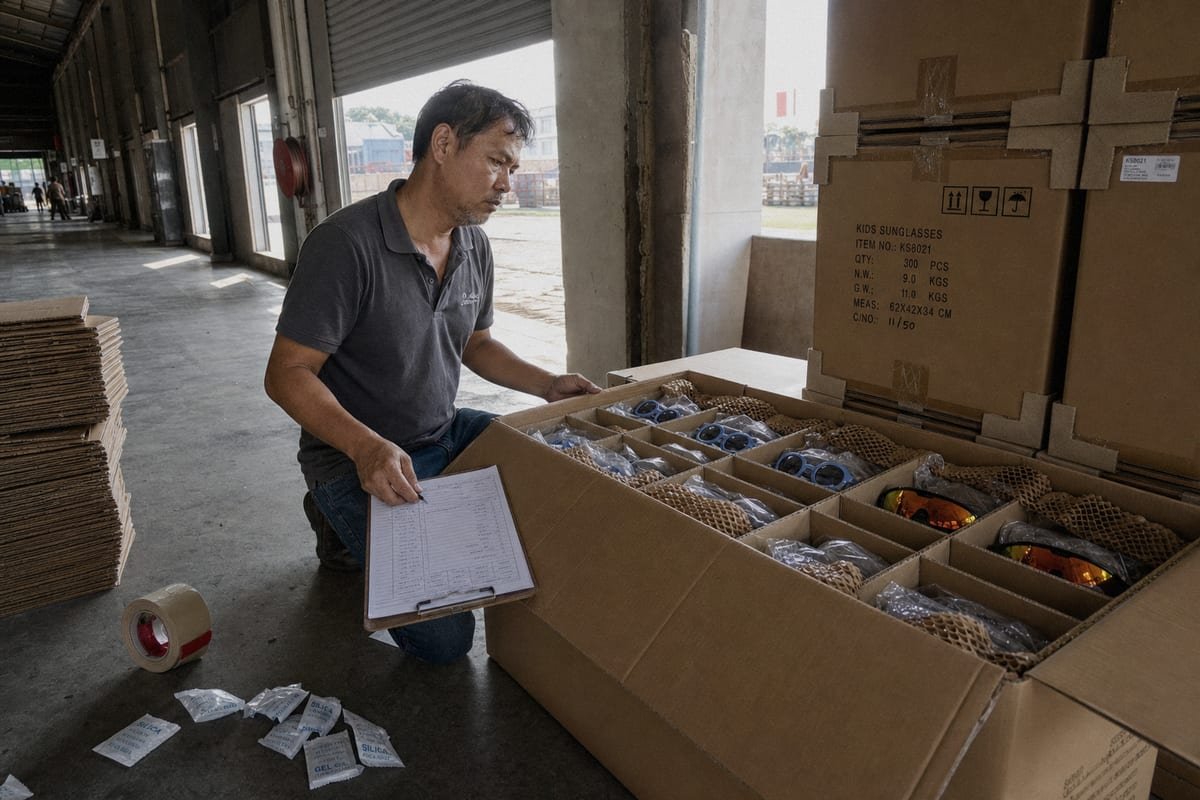
Uma caixa rígida protege a armação; a caixa externa protege a caixa; mas apenas o fabricante protege todo o processo. A qualidade da embalagem é uma questão de gestão antes de ser uma questão de materiais. Uma fábrica que opera uma oficina disciplinada 7 embalará consistentemente na caixa quinhentos, não apenas na caixa um.
Perguntas que revelam a capacidade real de um fornecedor
Pergunte isso antes de fazer um pedido em massa:
- Você embala internamente ou terceiriza? A embalagem interna significa uma equipe responsável. Em nossa instalação em Taizhou, os mesmos trabalhadores que montam as armações também seguem o SOP de embalagem, para que nada se perca entre as estações.
- Qual é a sua especificação padrão de embalagem para exportação? Um fornecedor sério pode declará-la com precisão: saco individual, quantidade da caixa interna, resistência da caixa de papelão, método de preenchimento de espaço vazio, dessecante e proteção de borda.
- Você pode personalizar a embalagem para minha marca? Completo Suporte OEM/ODM 8 deve cobrir caixas e sacos prontos para varejo que resistam ao transporte e ainda pareçam apresentáveis em uma prateleira.
- Como você lida com reclamações de danos? Procure um processo claro: evidências fotográficas, termos de substituição e uma pessoa de contato nomeada em vez de uma caixa de entrada genérica.
- Posso ver sua área de embalagem? Um chão limpo e organizado é um forte sinal. Nossa oficina gerenciada por 5S existe porque a consistência em pequenos passos evita grandes falhas.
Fábrica versus Comerciante: O que Muda para Mercadorias Frágeis
| Fator | Fábrica Direta | Empresa de Comércio |
|---|---|---|
| Supervisão da embalagem | Mesma equipe, mesmo andar, mesmo SOP | Depende de subcontratados não vistos |
| Mudanças na embalagem | Ajustado na linha em dias | Repassado através de uma camada intermediária |
| Responsabilidade por danos | Uma parte, responsabilidade clara | Frequentemente disputado entre as partes |
| Fotos pré-envio | Tiradas na origem, verificáveis | Às vezes recicladas ou genéricas |
Os termos de envio também importam. Rastreamento e seguro devem ser o básico para qualquer pedido em massa. Envio mais rápido reduz eventos de manuseio e tempo de trânsito, mas custa mais; trate isso como uma decisão de custo versus risco com base no valor do pedido. E começando a partir da biblioteca de estilos existente de um fornecedor, a maneira como os compradores usam nossos aproximadamente 800 estilos prontos, permite que você teste embalagens e logística em um primeiro pedido menor antes de se comprometer com um contêiner completo.
Conclusão
Remessas a granel danificadas drenam margens e atrasam lançamentos. Imobilize cada par, imobilize o contêiner, verifique a qualidade antes do despacho e faça parceria com uma fábrica que controla a embalagem de ponta a ponta.
Notas de rodapé
ISTA estabelece padrões globais de teste de embalagem de trânsito referenciados pela abordagem de proteção em camadas descrita. ↩︎
Explica as propriedades dos revestimentos ópticos e sua vulnerabilidade à abrasão. ↩︎
Visão técnica da mecânica de contato e pontos de pressão em engenharia. ↩︎
5S é uma metodologia reconhecida de organização de local de trabalho que fundamenta a disciplina do fluxo de trabalho de embalagem descrito. ↩︎
Detalhes técnicos sobre os padrões e uso de contêineres de transporte em logística. ↩︎
Norma oficial ISO para procedimentos de amostragem usados em inspeções de qualidade. ↩︎
Explica a metodologia 5S para manter uma oficina organizada e eficiente. ↩︎
OEM/ODM é um termo de arranjo de fabricação estabelecido relevante para a capacidade de embalagem e marca personalizadas. ↩︎
Mais Artigos que Você Pode Gostar
Procurando um Parceiro Confiável em Óculos Infantis?
Explore mais de 800 estilos prontos e suporte completo OEM/ODM adaptado à sua marca.
Entre em Contato English
  Español de México
  Deutsch
  Français
  日本語
日本語  العربية
  Português do Brasil